
- Nature
- The Horse is full of drive anyway, and the 1 makes it a natural leader: confident, decisive, with a mind of its own and always out in front.
- Strengths
- A real pioneer. Spots new chances early and gets a stuck team moving again.
- In love
- Loves openly and passionately, likes to set the tone and enjoys being admired.
- At work
- Running a business, working freelance or a leading role where the big picture and new ground matter.
Last verified: 5 Nov 2026
Chinese zodiac Horse: years, elements and your life number
The Horse 马 mǎ is the seventh of the twelve Chinese zodiac animals. It stands for strength, speed and a love of freedom, but also for loyalty: in China, wishing someone the Horse means wishing them success that “arrives at once”. Right now it is the Year of the Fire Horse, from 17 February 2026 to 5 February 2027. Below you will find every Horse year, the five Horses by element and a little sum game with your life number.
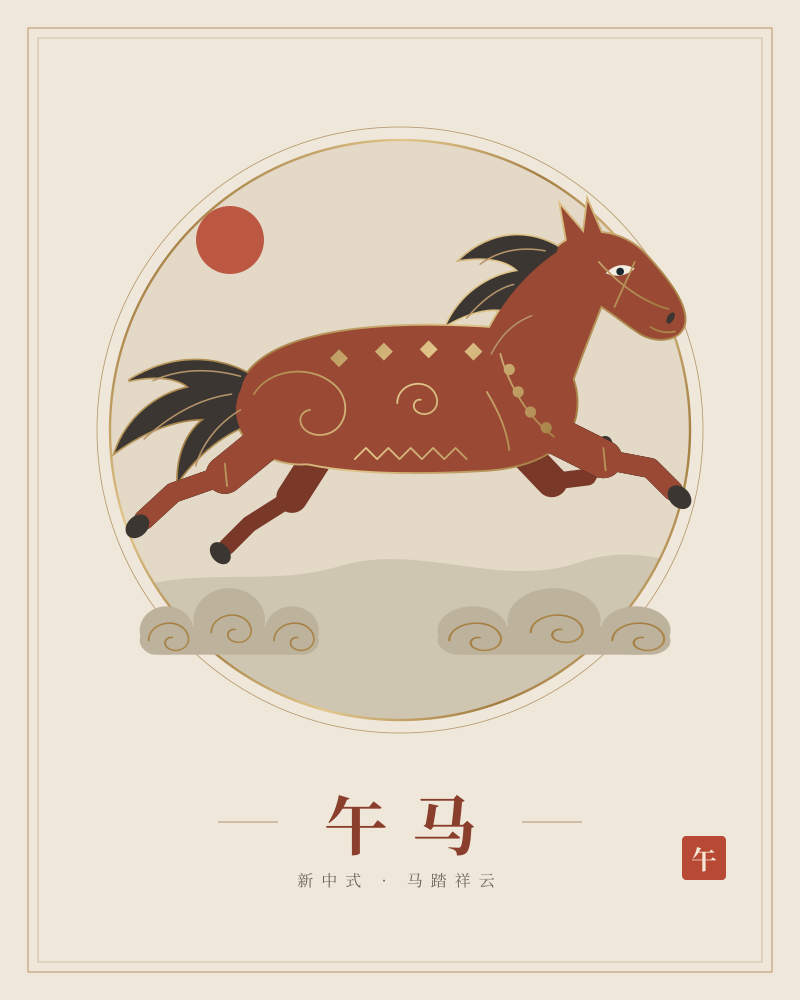
The Horse in the Chinese zodiac at a glance
- Character
- 马 mǎ
- Earthly branch
- 午 wǔ, 7th of 12
- Double hour
- 11:00 to 13:00
- Direction
- South
- Element of the branch
- Fire
- Month
- early June to early July
- Best matches
- Tiger, Dog, Goat
- Opposite
- Rat
Each of the twelve earthly branches has an animal. The Horse has the branch 午 wǔ, which stands for midday, the south and the heat of high summer, so it belongs to the element Fire. The hours from 11:00 to 13:00 are still called 午时, and midday in Chinese is 中午 zhōngwǔ. Why the animal has nothing to do with your Western star sign is explained in Chinese zodiac vs Western zodiac.
Years of the Horse from 1930 to 2038
The Chinese year does not start on 1 January but at Chinese New Year, between 21 January and 20 February. If you were born in January or February of a Horse year, check the exact dates: before New Year it is still the Snake.
| Year | Starts | Ends | Horse | Stem and branch |
|---|---|---|---|---|
| 1930 | 30 January 1930 | 16 February 1931 | Metal Horse | 庚午 |
| 1942 | 15 February 1942 | 4 February 1943 | Water Horse | 壬午 |
| 1954 | 3 February 1954 | 23 January 1955 | Wood Horse | 甲午 |
| 1966 | 21 January 1966 | 8 February 1967 | Fire Horse | 丙午 |
| 1978 | 7 February 1978 | 27 January 1979 | Earth Horse | 戊午 |
| 1990 | 27 January 1990 | 14 February 1991 | Metal Horse | 庚午 |
| 2002 | 12 February 2002 | 31 January 2003 | Water Horse | 壬午 |
| 2014 | 31 January 2014 | 18 February 2015 | Wood Horse | 甲午 |
| 2026now | 17 February 2026 | 5 February 2027 | Fire Horse | 丙午 |
| 2038 | 4 February 2038 | 23 January 2039 | Earth Horse | 戊午 |
New Year dates in China time, each checked against the astronomical new moon. All the other animals and their years are on the page with the twelve Chinese zodiac animals, and a finder for any birthday from 1924 is on the page about Chinese New Year 2027.
The five Horses: Metal, Wood, Water, Fire, Earth
The same Horse only comes back every 60 years, because the twelve animals are paired with ten heavenly stems that give each year an element. So there are five kinds of Horse. You can tell the element from the last digit of the year: 0 Metal, 2 Water, 4 Wood, 6 Fire, 8 Earth. How the elements relate to each other is explained on the page about the five elements.
 木马Wood Horse1954 · 2014
- Stem and branch:
- 甲午
- Nayin:
- 沙中金 shā zhōng jīn, “gold in the sand” (Metal)
- Colour of the element:
- 青 blue-green
- Folk traits:
- open, growing, curious
 火马Fire Horse1906 · 1966 · 2026
- Stem and branch:
- 丙午
- Nayin:
- 天河水 tiān hé shuǐ, “water of the Milky Way” (Water)
- Colour of the element:
- 赤 red
- Folk traits:
- passionate, energetic, inspiring
 土马Earth Horse1918 · 1978 · 2038
- Stem and branch:
- 戊午
- Nayin:
- 天上火 tiān shàng huǒ, “fire in the sky” (Fire)
- Colour of the element:
- 黄 yellow
- Folk traits:
- steady, reliable, grounded
 金马Metal Horse1930 · 1990
- Stem and branch:
- 庚午
- Nayin:
- 路旁土 lù páng tǔ, “earth by the roadside” (Earth)
- Colour of the element:
- 白 white
- Folk traits:
- decisive, clear, focused
 水马Water Horse1942 · 2002
- Stem and branch:
- 壬午
- Nayin:
- 杨柳木 yáng liǔ mù, “willow wood” (Wood)
- Colour of the element:
- 黑 black
- Folk traits:
- adaptable, nimble, observant
Chinese horoscope charts often add a second element next to each Horse, the nayin 纳音 nàyīn. It comes from the fortune tellers’ system of the 60 pairs and has poetic names such as “gold in the sand”. That is why the Metal Horse shows up there with “earth by the roadside”. When people in China talk about a Metal Horse, though, they almost always mean the element of the heavenly stem, the one in the table above. Gemstones and “lucky colours” for each Horse, which you also see a lot, are a modern invention of the trade.
Fire Horse 2026: why the Fire Horse in the Chinese zodiac has a reputation
In China: “red horse, red goat” 赤马红羊
In 1246 the scholar Chai Wang presented a work to the Song emperor, the 丙丁龟鉴. It listed 21 wars, uprisings and other disasters that had happened between 255 BC and AD 947 in the years 丙午 and 丁未, the years of the Fire Horse and the Fire Goat. Chai Wang briefly went to prison for it, but the saying stuck. As early as the 19th century the scholar Yu Yue called the list contrived, since golden ages fell in such years too. Because 2026 (丙午) is followed directly by 2027 (丁未), the saying is all over the Chinese internet again.
In Japan: hinoe-uma 丙午
In Japan there was a belief that women born in a Fire Horse year were too fiery and brought their husbands bad luck. It had measurable effects: in 1966 about a quarter fewer children were born in Japan than in 1965, and births rose again in 1967.
Anyone who is a Horse also has their own year in 2026, their 本命年 běnmìngnián. That means everyone turning 12, 24, 36, 48, 60, 72 or 84 this year. Your own year traditionally counts as a tricky one, so many Horses wear something red until 5 February 2027: red socks, underwear or a red bracelet, ideally a gift from a partner or parents.
Game: what does your life number say about you as a Horse?
On Chinese social media, charts that combine the Horse with the life number 生命数字 shēngmìng shùzì are everywhere: nine types of Horse with their strengths, love life and career. This is how you get your number: add up all the digits of your date of birth until only one is left. For 15 February 1993 that is 1 + 9 + 9 + 3 + 0 + 2 + 1 + 5 = 30, then 3 + 0 = 3. Try it with your own birthday:
✓ A Horse. Born in the Year of the Earth Horse 戊午, which began on 7 February 1978.
Play along: add up all the digits until only one is left
- Step 1:1978071437
- Step 2:3710
- Step 3:101
Your life number is 1.
See another number:
- Nature
- The Horse’s warmth meets the gentle, sensitive 2: lively but a good listener, and easy to get along with.
- Strengths
- Mediates, calms arguments and keeps teamwork running smoothly. Often a good writer.
- In love
- Tender and emotional, looks for a soulmate and needs lots of closeness and talk.
- At work
- Public relations, human resources, teaching: anywhere you work closely with people.
- Nature
- Horse plus the creative 3: artistic, full of energy and ideas, happy in the spotlight.
- Strengths
- The ideas keep coming, and they get done quickly too. Shines in art, music and on stage.
- In love
- Fiery and romantic, loves surprises and wants to be admired for talent and charm.
- At work
- Advertising and design, entertainment and the stage, creative planning.
- Nature
- The careful, practical 4 reins the Horse in a little: orderly, precise, looking for security and utterly reliable.
- Strengths
- A superb planner and organiser who stays calm with tricky jobs and never skips a step.
- In love
- Faithful and steady, wants a warm and secure home and keeps every promise.
- At work
- Project management, accounting and finance, engineering.
- Nature
- The Horse’s love of freedom and the adventurous 5 are a perfect fit: tries new things, thinks fast and feels at home almost anywhere.
- Strengths
- Settles quickly into new places and finds chances where others see none. A born explorer.
- In love
- Hates being tied down. Wants a partner who understands this way of life and comes along on the journey.
- At work
- Sales, tourism, sport and outdoor work, foreign trade: jobs with plenty of variety.
- Nature
- The kind 6 and the Horse’s warmth: caring, helpful, close to family and with a strong sense of duty.
- Strengths
- Senses what others need and loves to help. That is where it finds its own worth.
- In love
- Caring, builds a harmonious home and puts the family first.
- At work
- Medicine and nursing, charity work, counselling.
- Nature
- The lively Horse and the thoughtful 7: curious, analytical, logical and good at seeing what lies behind things.
- Strengths
- Enjoys deep research and finds in facts and figures what others miss.
- In love
- Careful and slow to open up. Once committed, fully committed, and looking for a meeting of minds.
- At work
- Research, financial analysis, investigation: work that needs careful thought.
- Nature
- The powerful 8 and the Horse’s drive: a head for business, clear goals and lots of ambition at work.
- Strengths
- Sees where a market is heading, brings people and resources together and leads teams to success.
- In love
- Wants a relationship of equals in which both grow, and has high expectations.
- At work
- Finance and investment, management, marketing.
- Nature
- Horse and the big-hearted 9: far-sighted, helpful and well-disposed to the world.
- Strengths
- Keeps the big picture in view and rallies people around a shared goal. Inspiring.
- In love
- Generous and understanding, wants to do something for others together with a partner.
- At work
- Charity work, education and culture, social projects.
A game from Chinese social media, not a prediction. Where the life number comes from is explained below.
Where does the life number come from?
Not from China. The life number, also called the life path number, belongs to Western numerology, which claims the Greek philosopher Pythagoras as its founder and became popular mainly in the 20th century. Chinese platforms mixed it with the zodiac, much as Western horoscope books combine your animal with your star sign. Old Chinese number lore, such as the Hetu diagram 河图 on the page about the five elements, works quite differently. Many Western numerology books keep 11 and 22 as “master numbers”, while the Chinese charts always add up to a single digit. Take the texts as a game, not a prediction. The same game exists for the Rat, Ox, Tiger, Rabbit, Dragon, Snake, Goat, Monkey, Rooster, Dog and Pig.
All nine life numbers for the Horse at a glance
1The leader
- Nature:
- The Horse is full of drive anyway, and the 1 makes it a natural leader: confident, decisive, with a mind of its own and always out in front.
- Strengths:
- A real pioneer. Spots new chances early and gets a stuck team moving again.
- In love:
- Loves openly and passionately, likes to set the tone and enjoys being admired.
- At work:
- Running a business, working freelance or a leading role where the big picture and new ground matter.
2The heart of the team
- Nature:
- The Horse’s warmth meets the gentle, sensitive 2: lively but a good listener, and easy to get along with.
- Strengths:
- Mediates, calms arguments and keeps teamwork running smoothly. Often a good writer.
- In love:
- Tender and emotional, looks for a soulmate and needs lots of closeness and talk.
- At work:
- Public relations, human resources, teaching: anywhere you work closely with people.
3The creative mind
- Nature:
- Horse plus the creative 3: artistic, full of energy and ideas, happy in the spotlight.
- Strengths:
- The ideas keep coming, and they get done quickly too. Shines in art, music and on stage.
- In love:
- Fiery and romantic, loves surprises and wants to be admired for talent and charm.
- At work:
- Advertising and design, entertainment and the stage, creative planning.
4The rock
- Nature:
- The careful, practical 4 reins the Horse in a little: orderly, precise, looking for security and utterly reliable.
- Strengths:
- A superb planner and organiser who stays calm with tricky jobs and never skips a step.
- In love:
- Faithful and steady, wants a warm and secure home and keeps every promise.
- At work:
- Project management, accounting and finance, engineering.
5The free spirit
- Nature:
- The Horse’s love of freedom and the adventurous 5 are a perfect fit: tries new things, thinks fast and feels at home almost anywhere.
- Strengths:
- Settles quickly into new places and finds chances where others see none. A born explorer.
- In love:
- Hates being tied down. Wants a partner who understands this way of life and comes along on the journey.
- At work:
- Sales, tourism, sport and outdoor work, foreign trade: jobs with plenty of variety.
6The warm heart
- Nature:
- The kind 6 and the Horse’s warmth: caring, helpful, close to family and with a strong sense of duty.
- Strengths:
- Senses what others need and loves to help. That is where it finds its own worth.
- In love:
- Caring, builds a harmonious home and puts the family first.
- At work:
- Medicine and nursing, charity work, counselling.
7The thinker
- Nature:
- The lively Horse and the thoughtful 7: curious, analytical, logical and good at seeing what lies behind things.
- Strengths:
- Enjoys deep research and finds in facts and figures what others miss.
- In love:
- Careful and slow to open up. Once committed, fully committed, and looking for a meeting of minds.
- At work:
- Research, financial analysis, investigation: work that needs careful thought.
8The achiever
- Nature:
- The powerful 8 and the Horse’s drive: a head for business, clear goals and lots of ambition at work.
- Strengths:
- Sees where a market is heading, brings people and resources together and leads teams to success.
- In love:
- Wants a relationship of equals in which both grow, and has high expectations.
- At work:
- Finance and investment, management, marketing.
9The humanitarian
- Nature:
- Horse and the big-hearted 9: far-sighted, helpful and well-disposed to the world.
- Strengths:
- Keeps the big picture in view and rallies people around a shared goal. Inspiring.
- In love:
- Generous and understanding, wants to do something for others together with a partner.
- At work:
- Charity work, education and culture, social projects.
Chinese zodiac Horse compatibility
The classical teaching works this out from where the animals sit on the circle. Tiger, Horse and Dog form a triangle 三合 sānhé, Horse and Goat a pair 六合 liùhé. The Rat sits exactly opposite the Horse. An old folk rhyme sums it up:
白马怕青牛,鼠马不相投,羊马多福寿,虎马永相求。
“The white horse fears the green ox, Rat and Horse do not get along, Goat and Horse: good fortune and a long life, Tiger and Horse seek each other forever.”
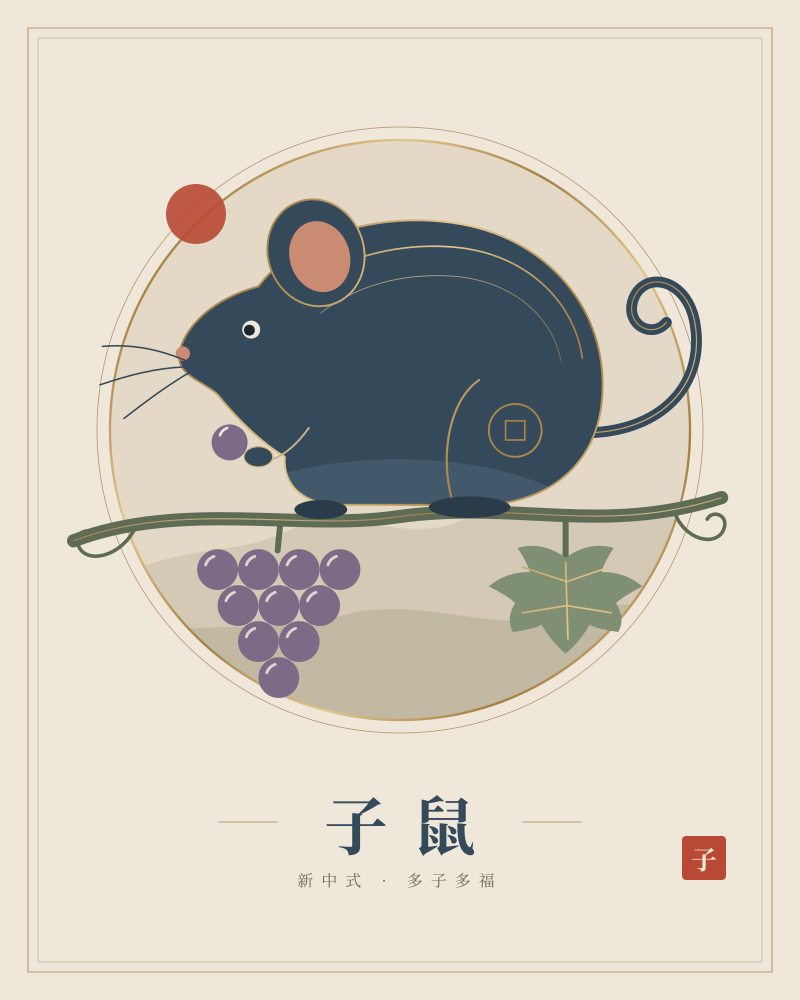 Rat 鼠Clash (冲 chōng)
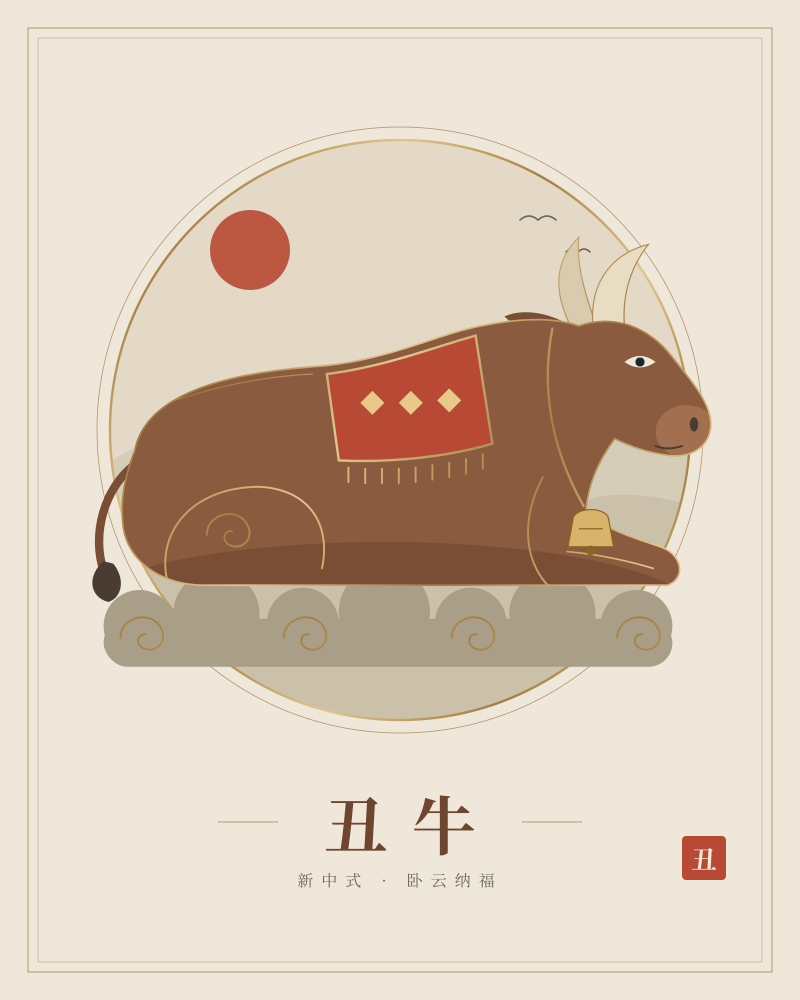 Ox 牛Friction (害 hài)
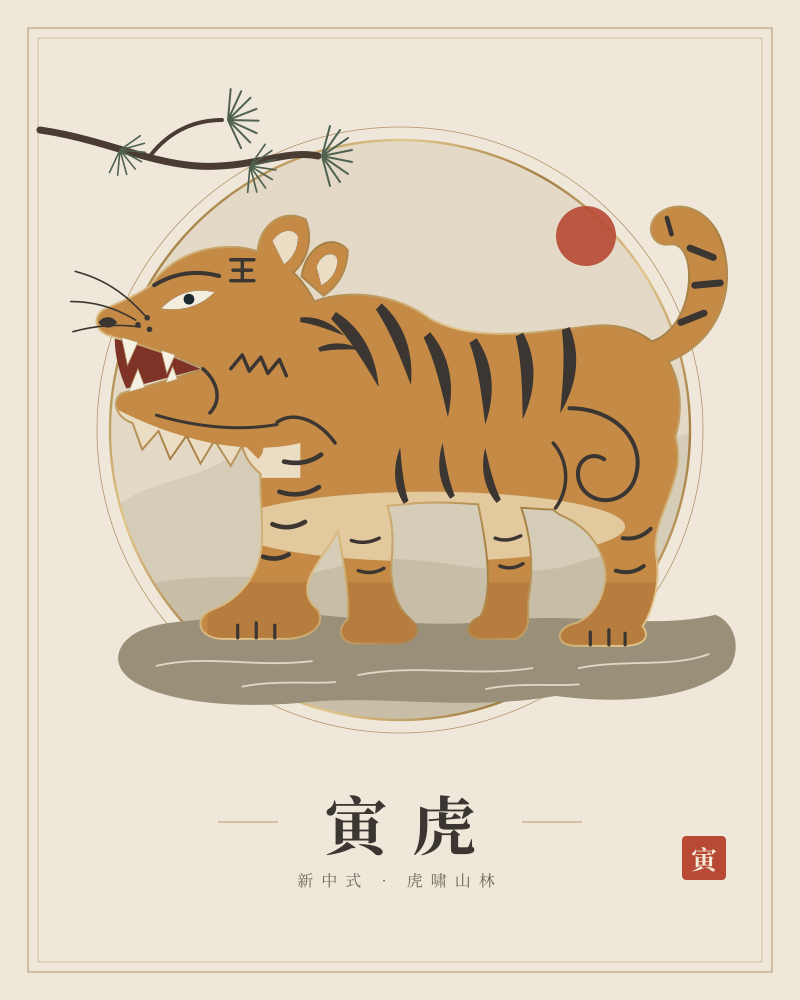 Tiger 虎Good match (三合 sānhé)
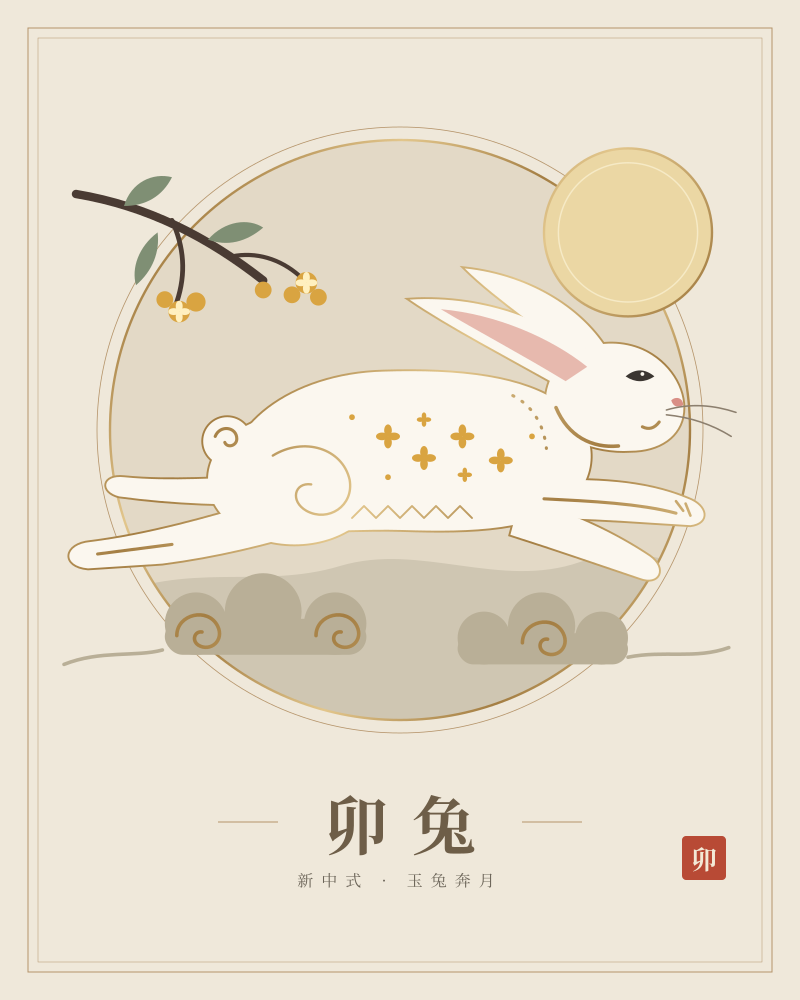 Rabbit 兔Tension (破 pò)
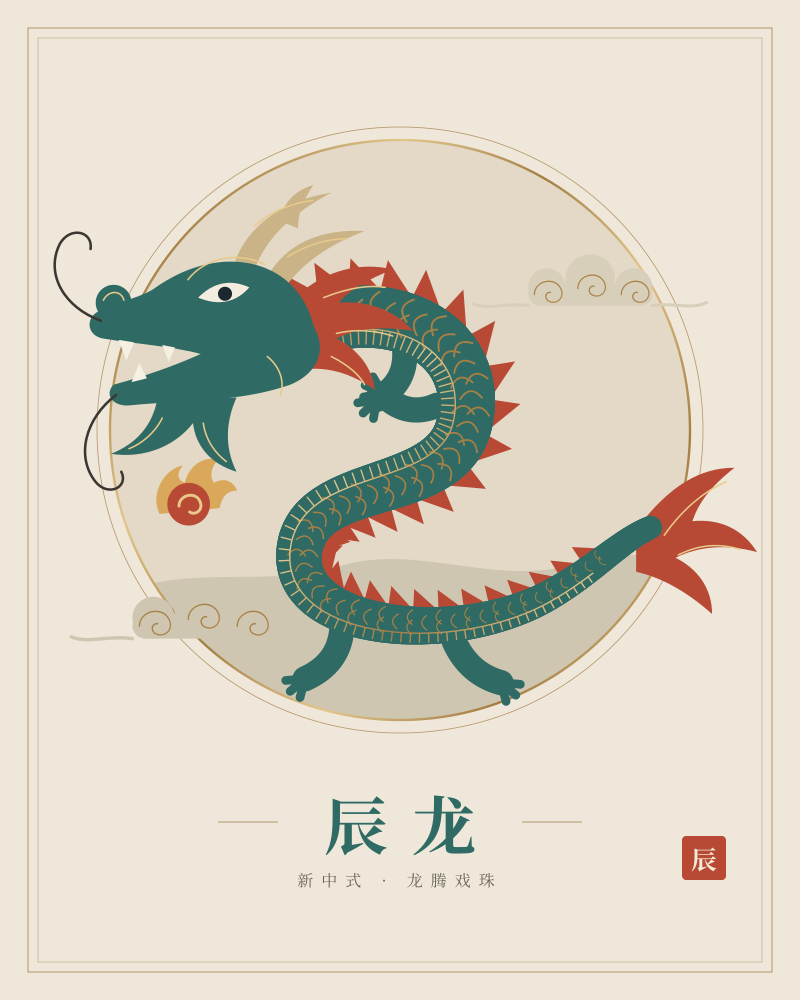 Dragon 龙Neutral
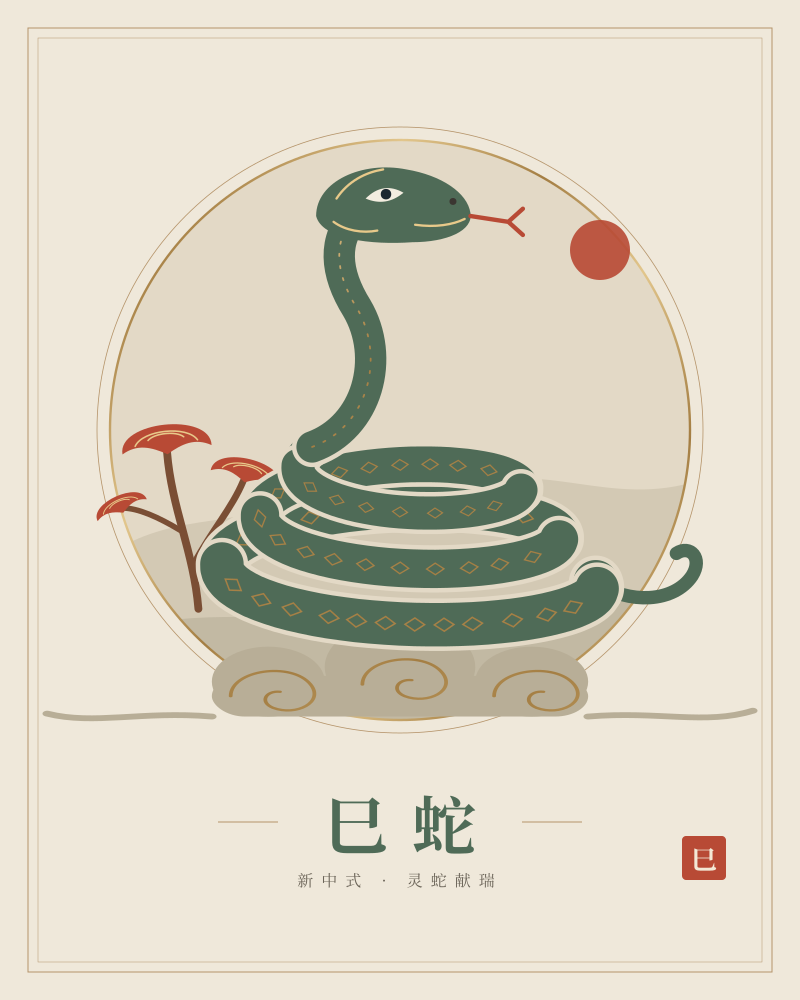 Snake 蛇Neutral
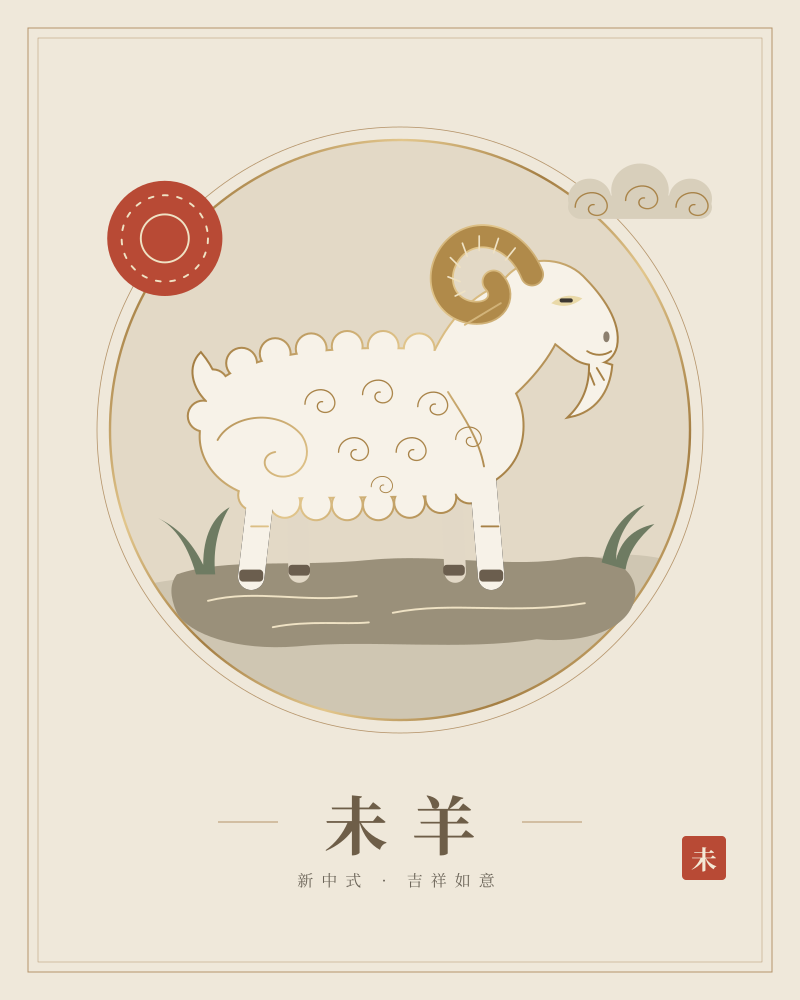 Goat 羊Good match (六合 liùhé)
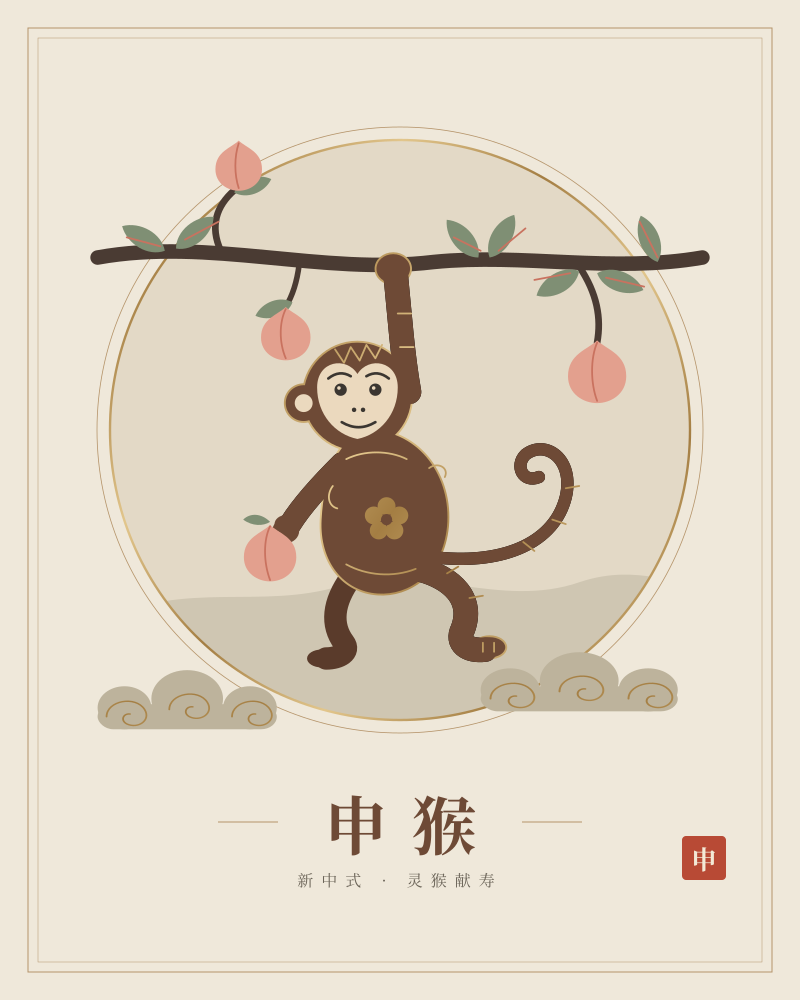 Monkey 猴Neutral
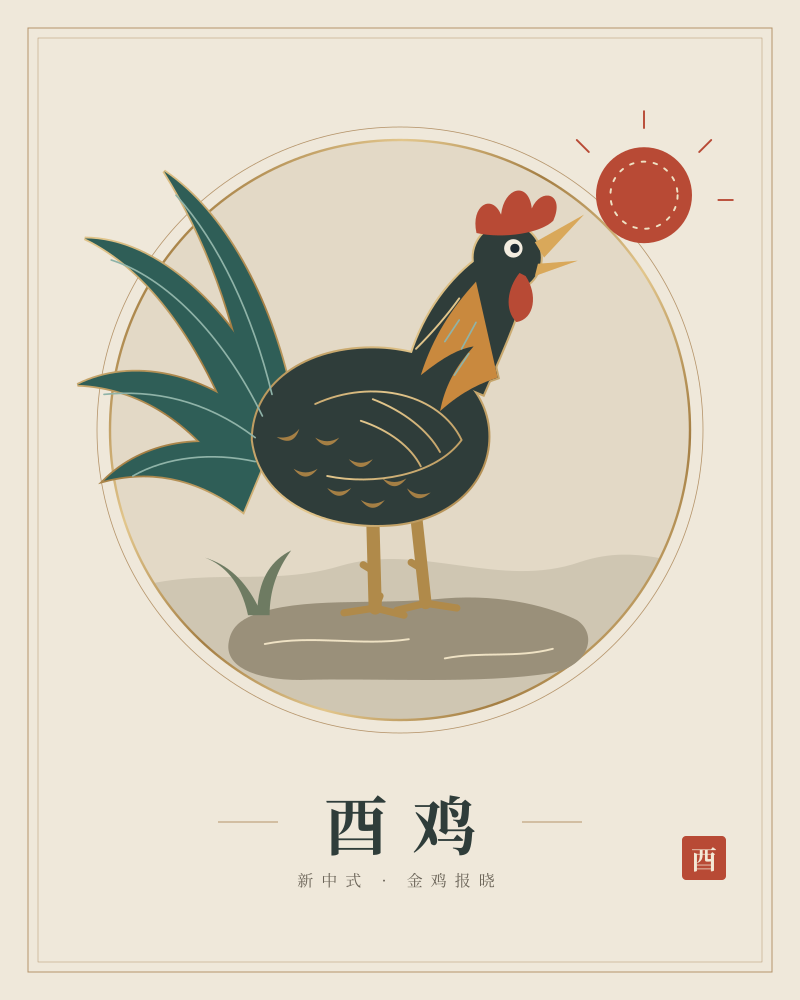 Rooster 鸡Neutral
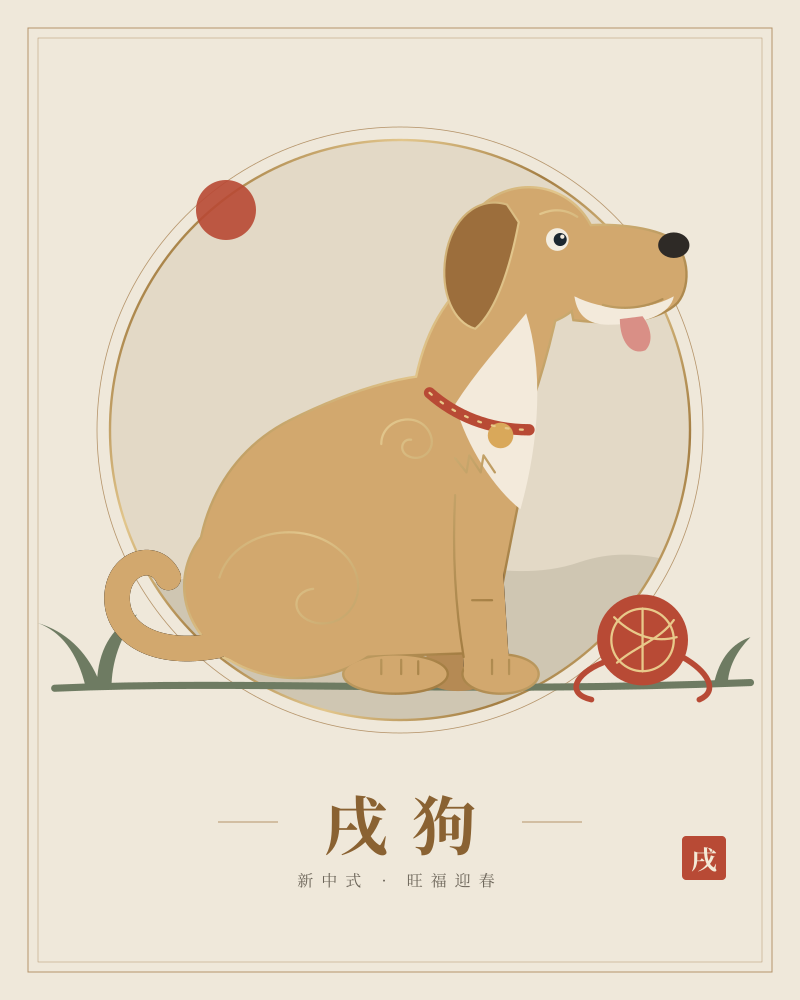 Dog 狗Good match (三合 sānhé)
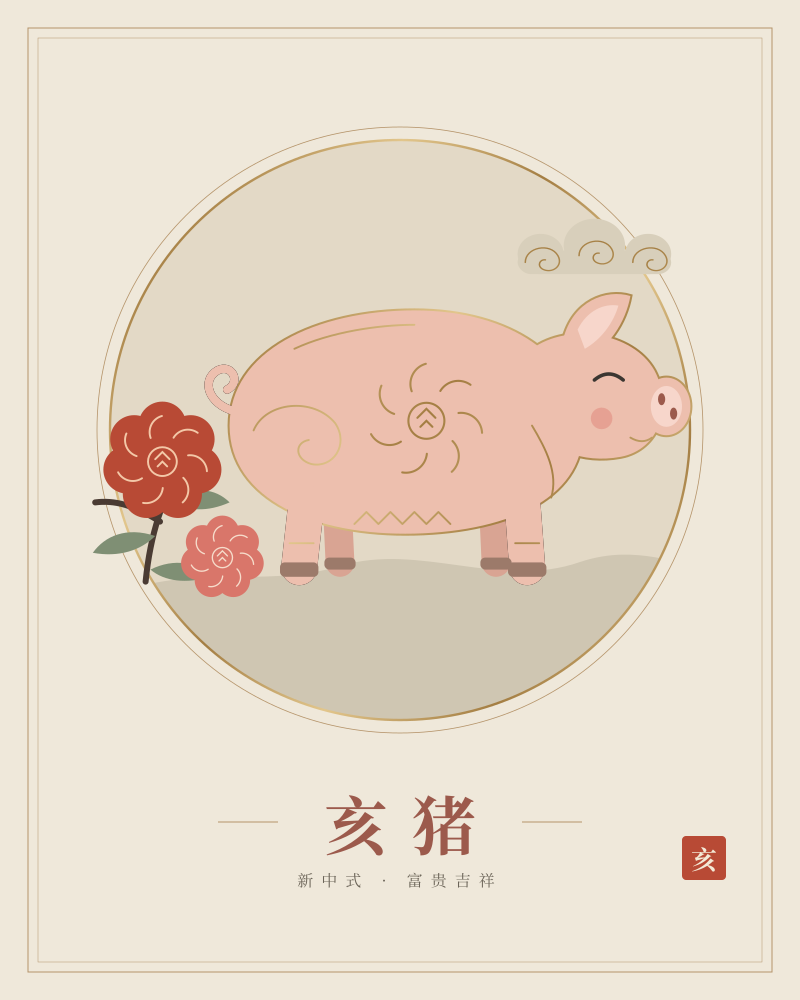 Pig 猪Neutral
Tradition, not a prediction. Some families in China still ask about it when planning a wedding, but most couples take it lightly.
The horse in ancient China: war machine, heavenly beast, symbol of talent
Long before the horse was a zodiac animal, it was power. A state was measured by its war chariots, and a “state of a thousand chariots” 千乘之国 was a great one. For a long time China had to bring good horses in from the steppe, and that made them all the more precious. Four ideas still shape how China sees the horse:
- 天马Heavenly horses from the west
- In 104 BC Emperor Wu of Han sent an army as far as the Ferghana Valley in Central Asia to bring back its “blood-sweating” horses 汗血马. He called them heavenly horses and wrote a song about them. A fine horse counted as a gift from heaven.
- 龙马Related to the dragon
- The ritual classic Zhouli calls horses over eight feet tall “dragons”. Legend says a dragon horse rose from the Yellow River carrying the Hetu diagram 河图 on its back. Hence the New Year wish 龙马精神.
- 伯乐The horse as a symbol of talent
- Bole was a legendary judge of horses. Around 800 the writer Han Yu wrote: “Horses that run a thousand li are always there. A Bole is not.” He meant gifted people nobody notices. In China a mentor who spots talent is still called a Bole.
- 明器Companions into the afterlife
- People of rank were buried with horses, first real ones and later clay figures. The Terracotta Army of the First Emperor and the colourful glazed horses of the Tang belong to this tradition. You can see one of them just below.
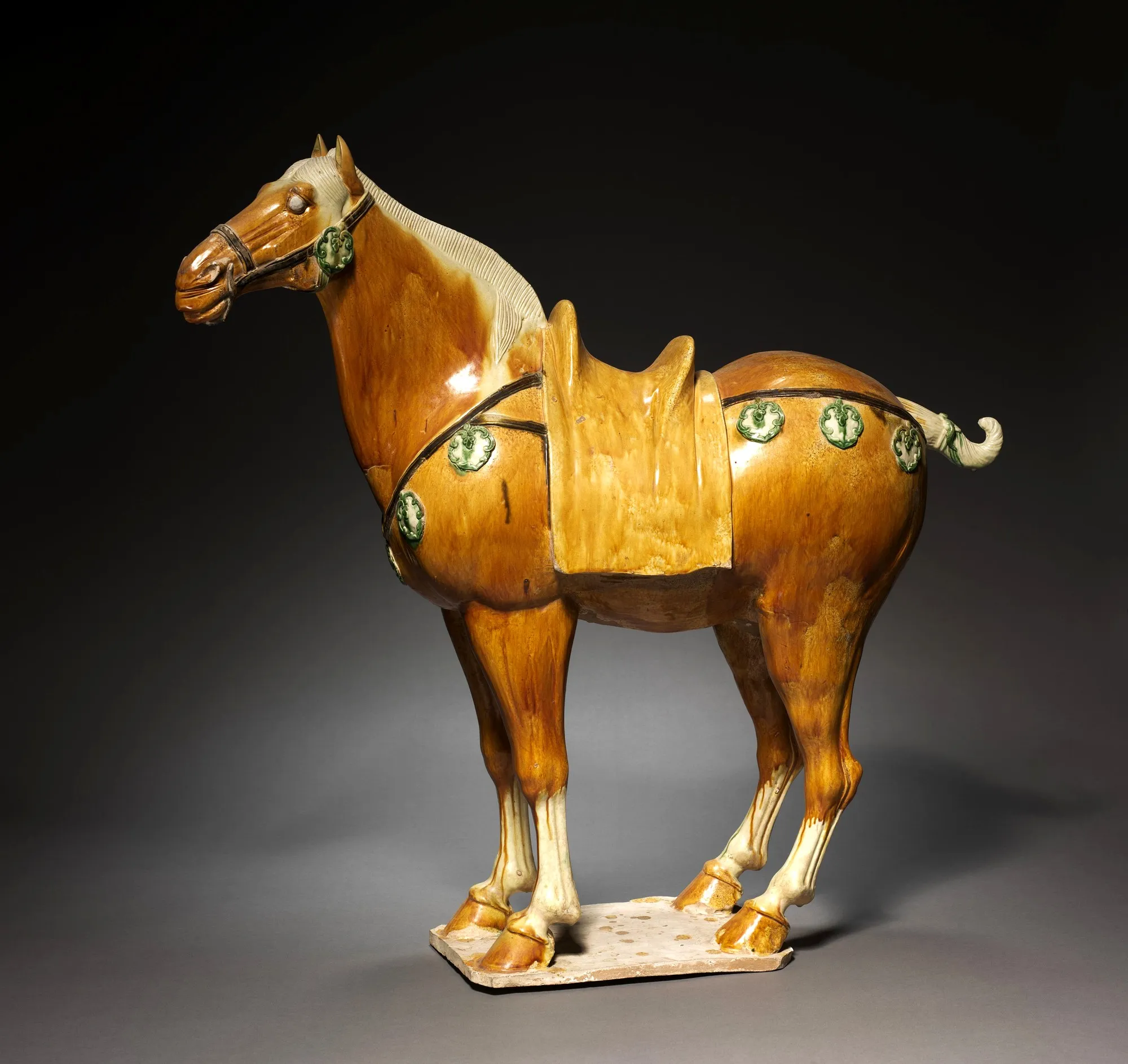
A horse for the afterlife: a Tang sancai horse 唐三彩马
Almost 77 centimetres tall, with a saddle and saddle cloth but no rider. This horse stood in a tomb, part of a procession of pottery figures made for a person of high rank. The dead were given what they would need in the afterlife, and the horse was the most important way to travel. The three-colour glaze 三彩 sāncǎi of amber, green and clear white was expensive and shows the status of the dead. Ware like this was made almost only for tombs and was hardly used in daily life.
Look at the body: broad chest, rounded rump, small head. This was the Tang idea of a noble horse, strong and well fed. The mane and tail are neatly combed and tied, and green discs hang from the straps, as on the horses of the court.
Horse, Tang dynasty, late 600s to 800, probably Henan province. Glazed earthenware, sancai (three-colour) ware, height 76.8 cm. The Cleveland Museum of Art, Anonymous Gift, 1955.295, public domain (CC0).
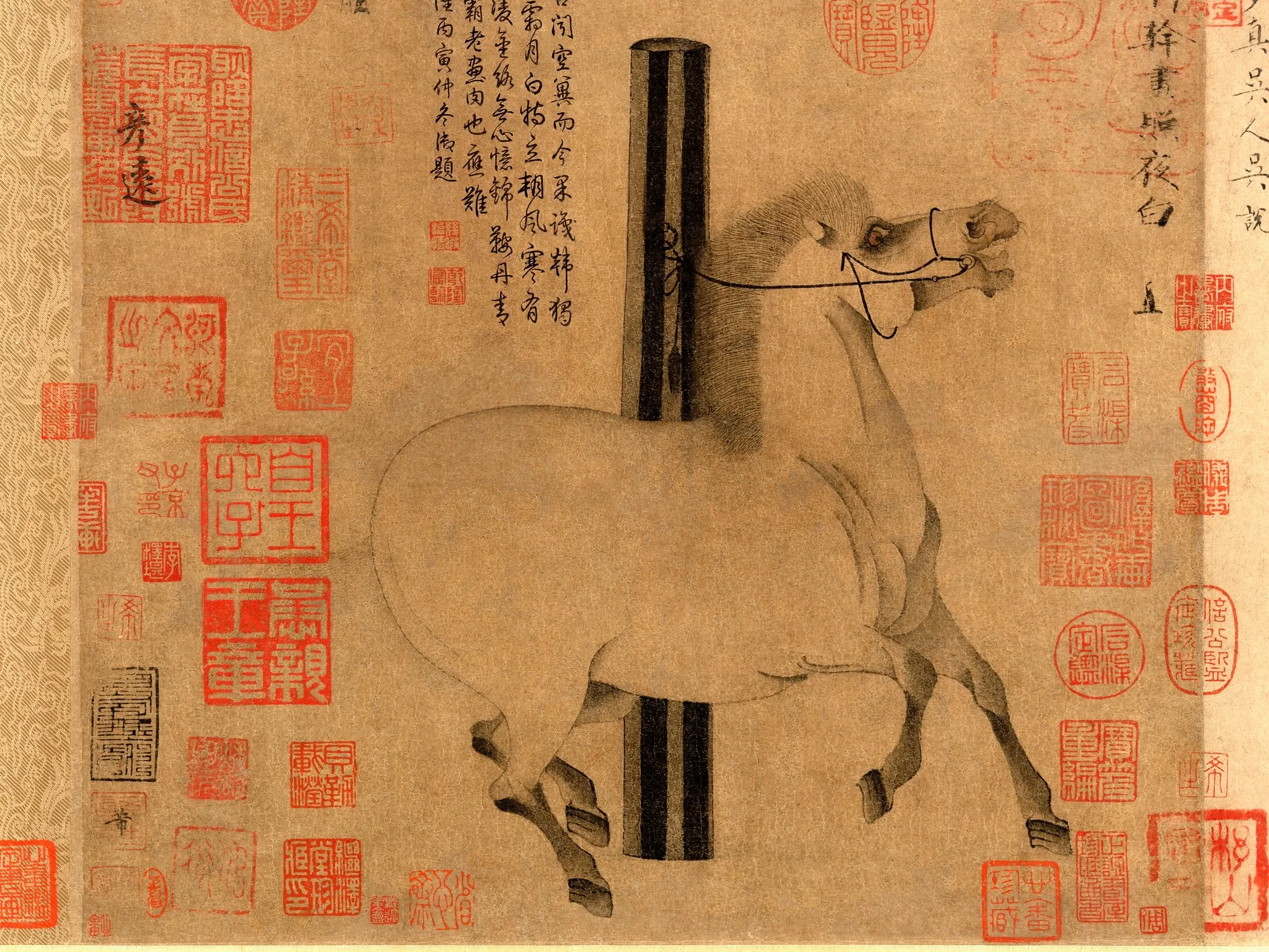
The emperor’s favourite horse: “Night-Shining White” by Han Gan 照夜白图
Zhaoyebai, “the one that lights up the night”, was a charger of Emperor Xuanzong, who reigned from 712 to 756. Han Gan, the most famous horse painter of his day, shows it tied to a post. The horse throws its head up, eyes wide, nostrils flared, hooves stamping. It wants to break free. Han Gan is said to have told the emperor that his teachers were the horses in the imperial stables.
Not everyone was impressed. The poet Du Fu wrote that Han Gan painted “only the flesh, not the bones” 幹惟画肉不画骨: his horses lacked the spirit of a warhorse. A later inscription at the top, left of the post, alludes to this. The inscription at the top right, “Han Gan painted Night-Shining White”, is attributed to Li Yu, the last ruler of the Southern Tang in the 10th century. The many red seals come from collectors over more than a thousand years, among them Emperor Gaozong of Song and the Qianlong Emperor. In China such a line of seals counts as part of the work.
Han Gan (active about 742–756): Night-Shining White, Tang dynasty, about 750. Handscroll, ink on paper, image 30.8 × 34 cm, detail. The Metropolitan Museum of Art, New York, Purchase, The Dillon Fund Gift, 1977, 1977.78, public domain (CC0).
The horse in the Chinese language: eight idioms
Horses carried farmers, messengers and armies, so they turn up in plenty of sayings. In the Year of the Horse the first three are on almost every greeting card.
马到成功
mǎ dào chénggōng · The horse arrives, and success is there.
Instant success. The most common good wish in the Year of the Horse, before exams and at shop openings.
一马当先
yī mǎ dāng xiān · One horse out in front.
To take the lead and be the first to get stuck in.
龙马精神
lóngmǎ jīngshén · The spirit of the dragon and the horse.
Hale and full of energy. A New Year wish, especially for older people.
老马识途
lǎo mǎ shí tú · The old horse knows the way.
Experience counts. According to the philosopher Han Fei, the minister Guan Zhong let old horses lead his army out of the snow on a campaign.
快马加鞭
kuài mǎ jiā biān · Whip a fast horse on.
To speed up even more.
走马观花
zǒu mǎ guān huā · Looking at flowers from horseback.
A quick, superficial look. Chinese people also use it for a tour of ten cities in two weeks.
塞翁失马
sài wēng shī mǎ · The old man at the frontier loses his horse.
A blessing in disguise. The story from the Huainanzi: the lost horse comes back with a second one, the son falls while riding it and so does not have to go to war.
马马虎虎
mǎmǎhūhū · Horse horse, tiger tiger.
So-so, careless. One of the first words many learners of Chinese fall in love with.
The great symbol of loyalty is Red Hare 赤兔, the horse of the general Guan Yu. In the novel “Romance of the Three Kingdoms” it refuses to eat after its master’s death and dies. Guan Yu himself is still worshipped in many temples today.
Famous horses you can see in China
The Flying Horse of Gansu 马踏飞燕
A bronze from the Eastern Han, about the 2nd century, found in 1969 in a tomb near Wuwei. The horse gallops so fast that only one hoof touches the ground, and that hoof rests on a flying bird. Today it is the logo of Chinese tourism. The original is in the Gansu Provincial Museum in Lanzhou.
The Six Steeds of Zhaoling 昭陵六骏
Stone reliefs of the six warhorses of Emperor Taizong of Tang, carved for his tomb in the 7th century. Four belong to the Beilin Museum 碑林 in Xi’an. Two went abroad in the early 20th century and are now in Philadelphia.
The horses of the Terracotta Army 兵马俑
Teams of four clay horses stand in front of the First Emperor’s chariots, with saddled cavalry horses beside them, all life-size. More on visiting on our Xi’an page.
The ink horses of Xu Beihong 徐悲鸿
The painter Xu Beihong (1895–1953) made galloping horses in ink famous, and every school child in China knows them. His work is shown in the Xu Beihong Memorial Hall 徐悲鸿纪念馆 in Beijing.
Horses on Chinese stamps
Every year since 1980, China Post has issued a special stamp for the new zodiac animal before the New Year. The Horse has had its turn four times so far: 1990 庚午年, 2002 壬午年, 2014 甲午年, 2026 丙午年. Horses also appear on stamps about art and history. The finest of them is in our own album.
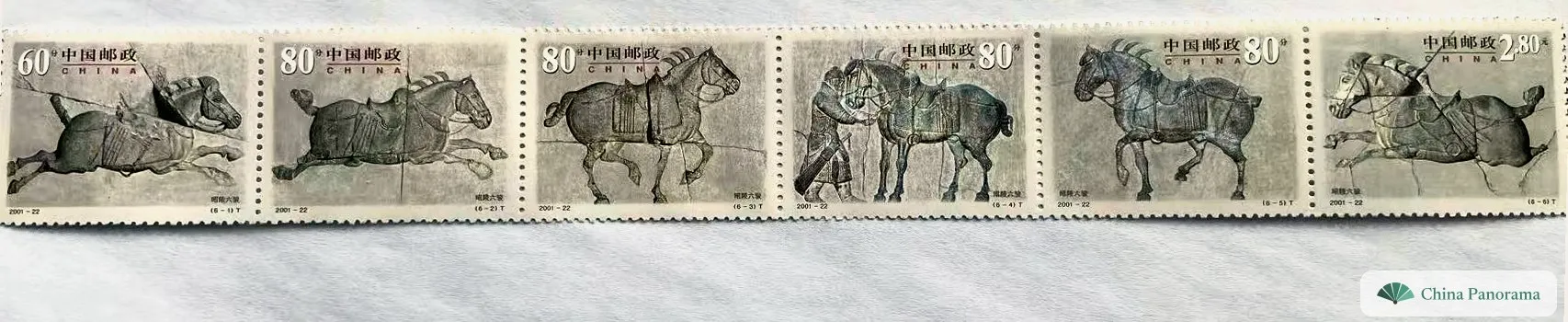
Swipe sideways to see the whole strip.
The Six Steeds of Zhaoling on stamps 昭陵六骏
This strip from our own collection is not a zodiac stamp. It is the special issue 2001-22, released by the State Post Bureau on 28 October 2001 with a ceremony at the Zhaoling tomb itself. Six stamps hang together in one strip and show the six stone reliefs that Emperor Taizong of the Tang dynasty had carved for his tomb in the 7th century. Each relief shows one of his war horses.
The designer, Wang Huming 王虎鸣, showed the stones as they are today, cracks and broken edges included. On the fourth stamp General Qiu Xinggong pulls an arrow from the chest of the horse Saluzi, a scene from the battle for Luoyang. The issue also came as a sheetlet with embossing, so the reliefs stand out from the paper and you can feel them. It was China’s first embossed sheetlet.
- 6-1Shifachi 什伐赤Original: Beilin Museum, Xi’an60 fen
- 6-2Qingzhui 青骓Original: Beilin Museum, Xi’an80 fen
- 6-3Telebiao 特勒骠Original: Beilin Museum, Xi’an80 fen
- 6-4Saluzi 飒露紫Original: Penn Museum, Philadelphia80 fen
- 6-5Quanmaogua 拳毛騧Original: Penn Museum, Philadelphia80 fen
- 6-6Baitiwu 白蹄乌Original: Beilin Museum, Xi’an2.80 yuan
Special stamps 2001-22 “Six Steeds of Zhaoling”, People’s Republic of China, 2001. Six values, 6.60 yuan in total. Photo: China Panorama, stamps from our collection.
The stamp for the Fire Horse 2026 丙午年
The zodiac issue “Bingwu” came out on 5 January 2026: two stamps at 1.20 yuan each. The first, 驰跃宏图 (roughly “leaping towards great plans”), shows a red horse jumping over clouds, its mane like flames. On the second, 万骏臻福 (“ten thousand steeds bring good fortune”), three horses gallop side by side. They were designed by Wang Hongwei and Zhao Enzhong. For the first time China Post chose the designs in an open competition, with 440 entries. The stamps were printed in offset combined with engraving, with a planned run of 26.68 million sets.
True or false? Six claims about the Horse
Guess first, then read the answer.
1People born in a Fire Horse year bring bad luck.
False
There is no evidence for it. The reputation goes back to a list of unlucky years compiled by the scholar Chai Wang in the 13th century, and to Japanese folk belief. As early as the 19th century the scholar Yu Yue called the list contrived.
2The life number is an ancient Chinese teaching.
False
It comes from Western numerology, which claims Pythagoras as its founder. In China it became known mainly through social media. Old Chinese number lore such as the Hetu diagram 河图 works quite differently.
3Anyone born in January 1990 is a Metal Horse.
False
Only from 27 January. The Year of the Metal Horse began on that day. Anyone born from 1 to 26 January 1990 still belongs to the Year of the Earth Snake.
4The hour of the Horse is midday.
True
The double hour 午时 runs from 11:00 to 13:00. That is why the character 午 is still in 中午 zhōngwǔ, midday, 午饭 wǔfàn, lunch, and 下午 xiàwǔ, afternoon.
5Far fewer babies were born in Japan in 1966.
True
About a quarter fewer than the year before. 1966 was a Fire Horse year, hinoe-uma in Japanese, and many couples did not want a daughter born that year. Births rose again in 1967.
6Under the old rule, Rat and Horse should not marry.
True
Rat 子 and Horse 午 sit exactly opposite each other on the circle, which counts as a clash 冲 chōng. The folk rhyme says 鼠马不相投, Rat and Horse do not get along. It is tradition, nothing more. Most couples in China today take it lightly.
More on the zodiac: the twelve Chinese zodiac animals and their years, Chinese New Year 2027, which ends the Year of the Horse, the zodiac in other Asian countries and the Chinese zodiac Monkey, which forms the lucky sign 马上封侯 together with the Horse.
FAQ
What years are the Year of the Horse?
1930, 1942, 1954, 1966, 1978, 1990, 2002, 2014, 2026, 2038. Each one begins at Chinese New Year, between 21 January and 20 February. Anyone born in January or February before that day still belongs to the animal of the year before, the Snake.
What year is 2026 in the Chinese zodiac?
The Year of the Fire Horse (丙午 bǐngwǔ), from 17 February 2026 to 5 February 2027. Until 16 February 2026 it was still the Year of the Wood Snake. The next animal, the Fire Goat, starts on 6 February 2027.
What is a Fire Horse in the Chinese zodiac?
Someone born in a 丙午 year, when the Horse meets the element Fire. That happens every 60 years: 1906, 1966 and 2026. The current Fire Horse year runs from 17 February 2026 to 5 February 2027. In China and Japan it has a dubious reputation, but history does not back it up.
What does the Year of the Horse 2026 mean for each sign?
In the classical teaching, Tiger and Dog (三合) and the Goat (六合) match the Year of the Horse best. The Rat (冲) and the Ox (害) are seen as difficult. Horses themselves have their own year, which traditionally counts as tricky. That is tradition, not a prediction, and we do not make any.
What kind of Horse am I if I was born in 1990?
A Metal Horse (庚午), if you were born between 27 January 1990 and 14 February 1991. Before that you are an Earth Snake. The other Horses: Wood 1954 and 2014, Fire 1966 and 2026, Earth 1978, Water 1942 and 2002.
Is 2026 an unlucky year for Horses?
It is their own year, 本命年 běnmìngnián, which lasts until 5 February 2027. Traditionally it counts as a tricky year, so many Horses wear something red, often red socks, underwear or a red bracelet. That is a custom, not a forecast.
Which zodiac signs are compatible with the Horse?
In the classical teaching, Tiger and Dog (三合 sānhé) and the Goat (六合 liùhé) are the best matches. The Rat is the opposite (冲 chōng), and the Ox is difficult (害 hài). That is tradition, not a prediction.
How do I work out my life number?
Add up all the digits of your date of birth until only one digit is left. Example 15 February 1993: 1 + 9 + 9 + 3 + 2 + 1 + 5 = 30, then 3 + 0 = 3. The life number comes from Western numerology, not from Chinese tradition.
When is the next Year of the Horse?
The current Fire Horse year runs from 17 February 2026 to 5 February 2027. The next Year of the Horse is 2038, an Earth Horse, starting on 4 February 2038.
Sources and status
The New Year dates come from our checked table, each one recomputed against the astronomical new moon in China time. The life number texts render popular Chinese social-media charts in our own words. The horse illustration is our own. The photo of the stamps is ours too, and so are the stamps. The Tang horse in Cleveland and Han Gan’s painting in New York are in the public domain (CC0), and the museums release them for any use. We only adjusted brightness and contrast slightly.
- Wikipedia: Horse (zodiac), years and elements
- Wikipedia: Earthly Branches, the branch 午, its hour and direction
- Wikipedia: 纳音, the 60 pairs and their nayin elements (Chinese)
- 汉典: 红羊劫, the “red goat” and the years 丙午 and 丁未 (Chinese)
- Wikipedia: Fire Horse, hinoe-uma and the births in Japan in 1966
- Wikipedia: Numerology, the life path number and Pythagoras
- Wikipedia: Flying Horse of Gansu, found in 1969, Gansu Provincial Museum
- Wikipedia: Six Steeds of Zhao Mausoleum, Xi’an and Philadelphia
- The Paper: Zhaoling Museum on the six steeds, stamp issue on 28 October 2001 (Chinese)
- Sina Collection: stamps 2001-22 Zhaoling Six Steeds, strip of six, designed by Wang Huming, embossed sheetlet (Chinese)
- China Daily: Bingwu Horse-year stamps 2026, designers, printing, print run (Chinese)
- Xinhua: two stamps at 1.20 yuan each, 驰跃宏图 and 万骏臻福 (Chinese)
- Han Feizi, 说林上: 老马识途, Guan Zhong and the old horses (Chinese)
- Huainanzi, 人间训: 塞翁失马 (Chinese)
- The Cleveland Museum of Art: Horse, 1955.295, Tang dynasty, CC0
- The Metropolitan Museum of Art: Han Gan, Night-Shining White, 1977.78, CC0
- InscrChArt: the inscriptions and seals on Night-Shining White
- Wikipedia: War of the Heavenly Horses, Emperor Wu and Ferghana
- Han Yu, 马说: Bole and the thousand-li horse (Chinese)
Changelog (2)
- 2026-11-06Added a section on horses on Chinese stamps, with our photo of the Six Steeds of Zhaoling issue.
- 2026-11-05Page created.