
Guangzhou
Canton, for centuries the one port where China traded with the West: a clan academy carved from the steps to the roof ridge, a sandbank of colonial villas, breakfast as a ritual — and a 600 m tower over the Pearl River.
广州 · Guǎngzhōu · Canton · capital of Guangdong province · 23.13° N, 113.26° E
Check the calendar
The Canton Fair fills the city’s hotels twice a year, from mid-April to early May and from mid-October to early November. Book early, or come between. Weather by month →
How long?
Two or three days: the old west around the Chen Clan Hall, a morning of tea and the old centre, the river at night — and a day out if you can. Each is a route below. The routes →
Where is Guangzhou?
Guangzhou is in the far south of China, at the head of the Pearl River Delta, and it is the capital of Guangdong province. Hong Kong is about 130 km to the south-east, down the delta, with Shenzhen on the way and Macau across the water to the south. Beijing is 1,890 km to the north and Shanghai 1,210 km to the north-east; Guilin, with its karst hills, is 380 km to the north-west. At 23.1° N, Guangzhou lies inside the tropics — the Tropic of Cancer passes about 35 km north of the centre — level with Havana, Muscat and Aswan. It sits at the head of the Pearl River Delta, an hour by high-speed train from Shenzhen and Hong Kong. Tap any city on the map to measure the distance.
Straight-line distances, rounded to the nearest 10 km — not travel distances.
Guangdong is highlighted. Tap a city to measure the distance from Guangzhou.
- Province
- Guangdong广东省 · capital
- Latitude
- 23.13° Ninside the tropics
- Airport
- CANBaiyun · Metro Line 3
- Metro
- 19 linesabout 780 km
- Time zone
- UTC+8
- City flower
- Kapok (red cotton tree)木棉
What’s Guangzhou weather like each month?
Subtropical and humid: no real winter — 19 °C by day in January — a damp, grey spring, a long hot summer at 34 °C by day in July with storms and the odd typhoon, and a short, dry, sunny autumn that is the best time to come. The sun rises at 05:41 in June and sets at 17:44 in December. Tap a month for temperatures, daylight and what is on.
Scale in °C. Bars run from the average daily low to the average daily high. Source: monthly temperature data, last checked 2026-07-30.
Guangzhou in October
Warm- Average high
- 30 °C
- Average low
- 21 °C
- Sunrise / sunset
- 06:23 – 18:02
- Daylight
- 11 h 39 min
On in Oct
- Golden Week crowds, 1–7 Oct
- Canton Fair, autumn session, from mid-month
How hot and humid is Guangzhou in summer?
Four months above 30 °C by day, with nights that barely cool below 27 °C and humidity that makes it feel hotter. Do the walking in the morning and after sunset, keep the afternoons for the Chen Clan Hall, the museums and a long lunch, and carry an umbrella against both sun and the daily downpour.
June
33° / 27°
Sun 05:41–19:13 · 13 h 33 min
July
34° / 27°
Sun 05:50–19:16 · 13 h 26 min
August
34° / 27°
Sun 06:03–19:01 · 12 h 58 min
September
33° / 25°
Sun 06:13–18:32 · 12 h 19 min
Spring
March – MayWarm, grey and damp — and the Canton Fair.
March averages 23 °C by day, April 27 °C and May 31 °C. Early spring brings what the Cantonese call huinantian, “the south wind returns”: warm, saturated air that condenses on cold walls and floors until they run with water. Our photographs of 2 and 3 April 2023 show the usual April sky, a flat grey with no rain. The kapok, the city flower, blooms red on bare branches in February and March. From mid-April to early May the spring session of the Canton Fair fills the hotels and pushes up their prices.
What to wear: Light layers and a rain jacket; shoes that do not mind wet stone.
Summer
June – SeptemberHot, humid, stormy: 33–34 °C by day.
July and August average 34 °C by day and 27 °C at night, with humidity that makes it feel hotter. Afternoon downpours are almost daily, and typhoons can arrive from the South China Sea between July and September, stopping boats and cancelling flights for a day or two. Plan indoor afternoons — the Chen Clan Hall, the museums, a long lunch — and go out again after sunset, when the river and the squares come alive.
What to wear: The lightest clothes you own, a hat, and an umbrella for sun and rain.
Autumn
October – NovemberThe best season: dry, sunny, still warm.
October averages 30 °C by day and November 25 °C, with the lowest rainfall and the clearest skies of the year. Avoid Golden Week, 1–7 October, and the autumn session of the Canton Fair, mid-October to early November, when hotel prices rise sharply.
What to wear: Summer clothes by day, a light layer for air-conditioning.
Winter
December – FebruaryMild by day, cool indoors.
January averages 19 °C by day and 10 °C at night. That sounds mild, but buildings in southern China have no central heating, so a cold, wet spell feels colder indoors than out — our photographs of 8 January 2018 are of a whole day of rain. Before the Spring Festival the city holds its flower fairs, streets of stalls selling blossoms and kumquat trees for the new year (the dates follow the lunar calendar).
What to wear: A warm jumper and a rain jacket; a scarf for indoors.
October, at about 30 °C by day, and November, at 25 °C, are the months we would pick; April, at 27 °C, is warm but grey and damp. For how Guangzhou compares with the rest of the country month by month, see the best time to visit China.
Things to do in Guangzhou
17 places, from a clan academy of 1894 to a 600 m tower and a day out among the fortified towers of Kaiping. Three things first: which of them are as old as they look, what you are looking at on the front of the Chen Clan Hall and across the river at night, and how the new city lines up along its axis.
Which of it is really old?
In Guangzhou the old things are younger than in Beijing or Xi’an, but they are real: the cathedral, the Chen Clan Hall, Shamian and the Sun Yat-sen Memorial Hall stand as they were built. Two famous places are not what they seem — the 1920s military academy is a rebuild of 1996, and the “old village” at University Town is mostly new. Tap a name on the time line, or filter.
Tang dynasty618–907
about a thousand years later
Late Qing dynasty1860s–1900s
Republic of China1912–1949
about 50 years later
Our own timesince 1990
Filled dot: original. Ring: ruin. Square: built in our time.
Tap a name on the time line or a card.
 Ruin618–907about 1,230 years old
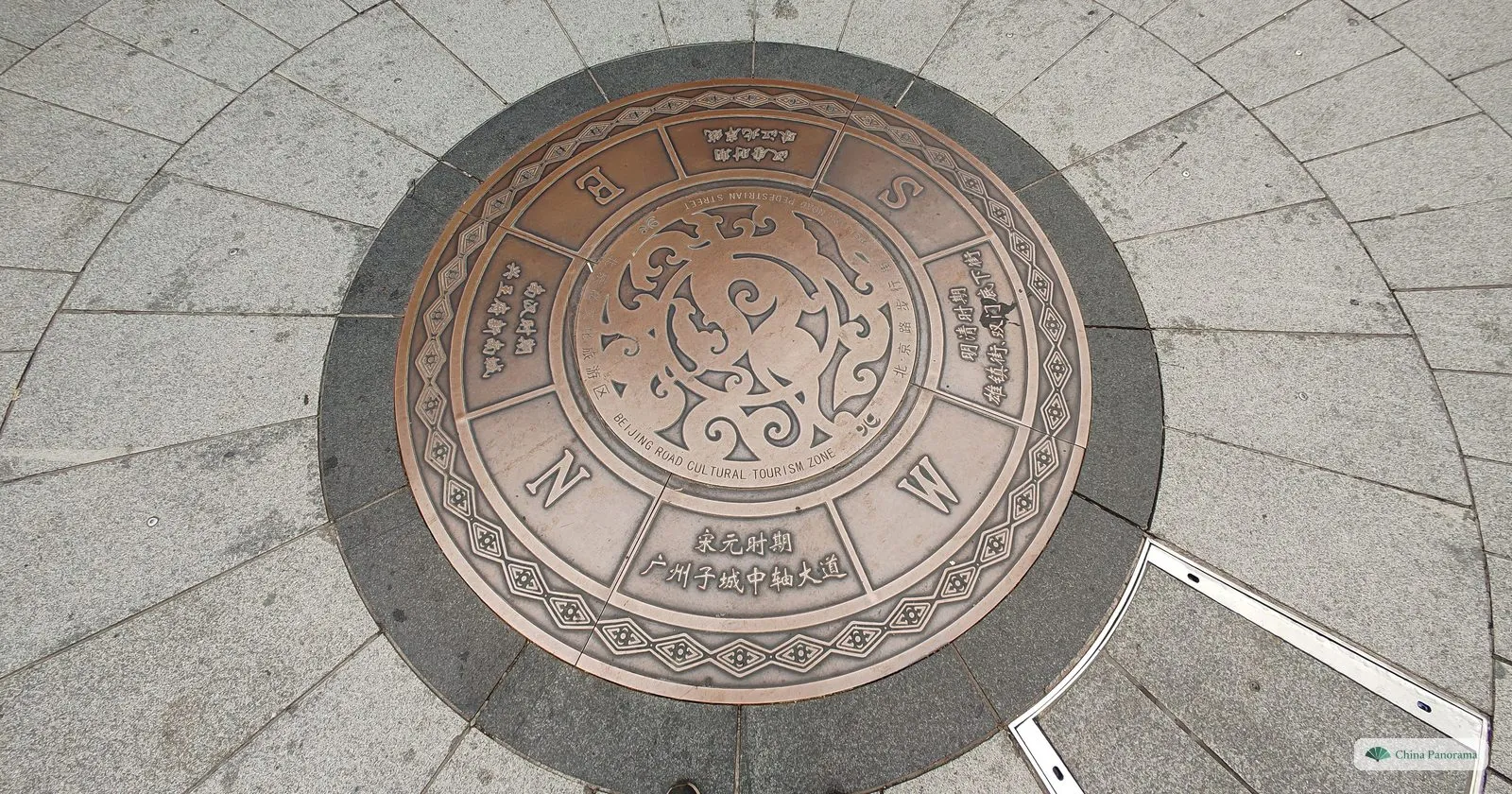
Archaeologists found eleven layers of paving from five periods under the street in 2002, the lowest from the Tang dynasty. Sections lie under glass in the pavement; everything above ground is modern.
- Original1861–1888about 140 years old
Begun in 1861 and finished in 1888, entirely in granite, by a French architect working from a Paris model. Still a working church.
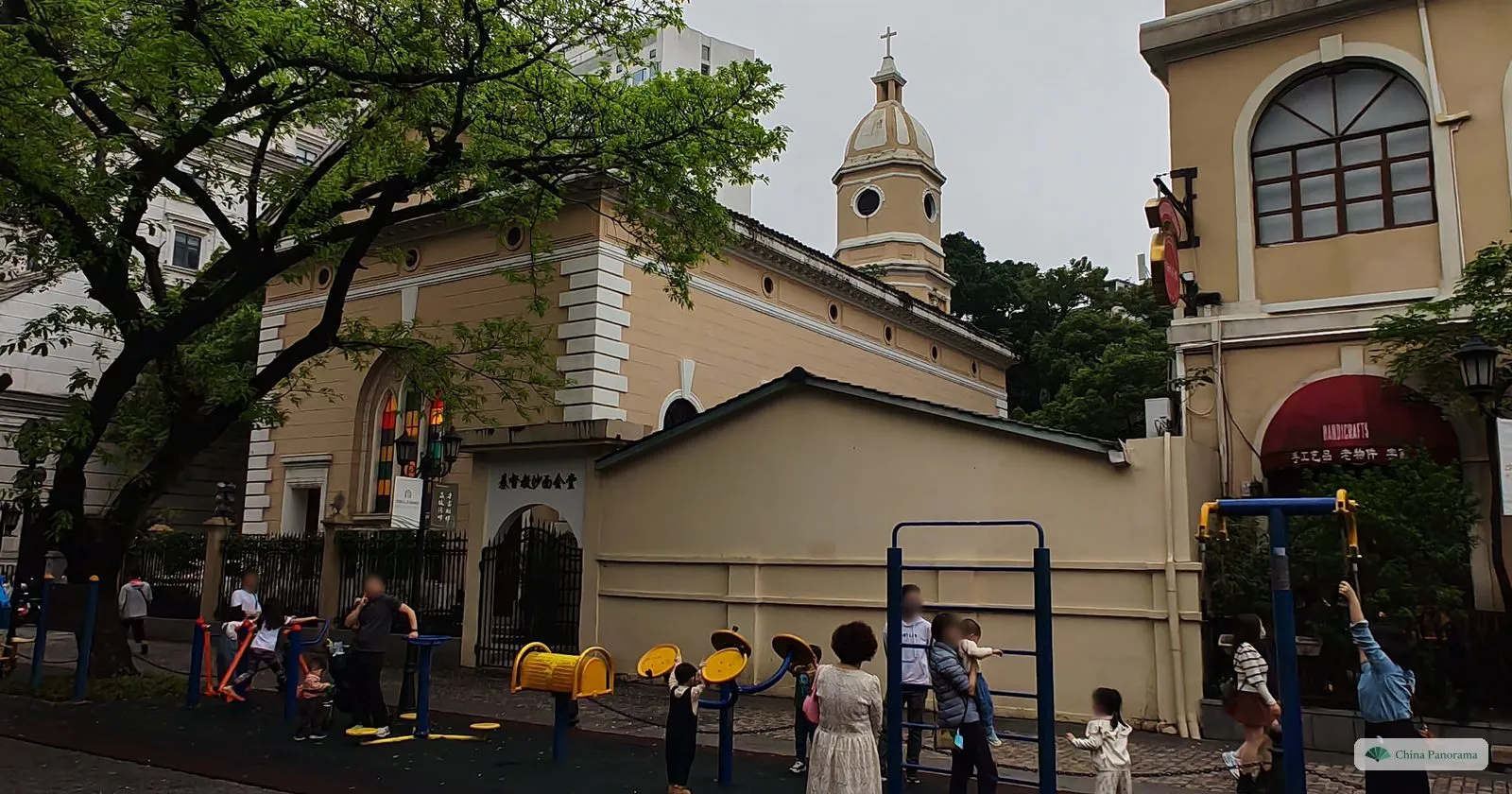 Original1892about 130 years old
A British and French concession from 1859. Our Lady of Lourdes Chapel dates from 1892; around it, banks, consulates and villas of the concession years still line the streets.
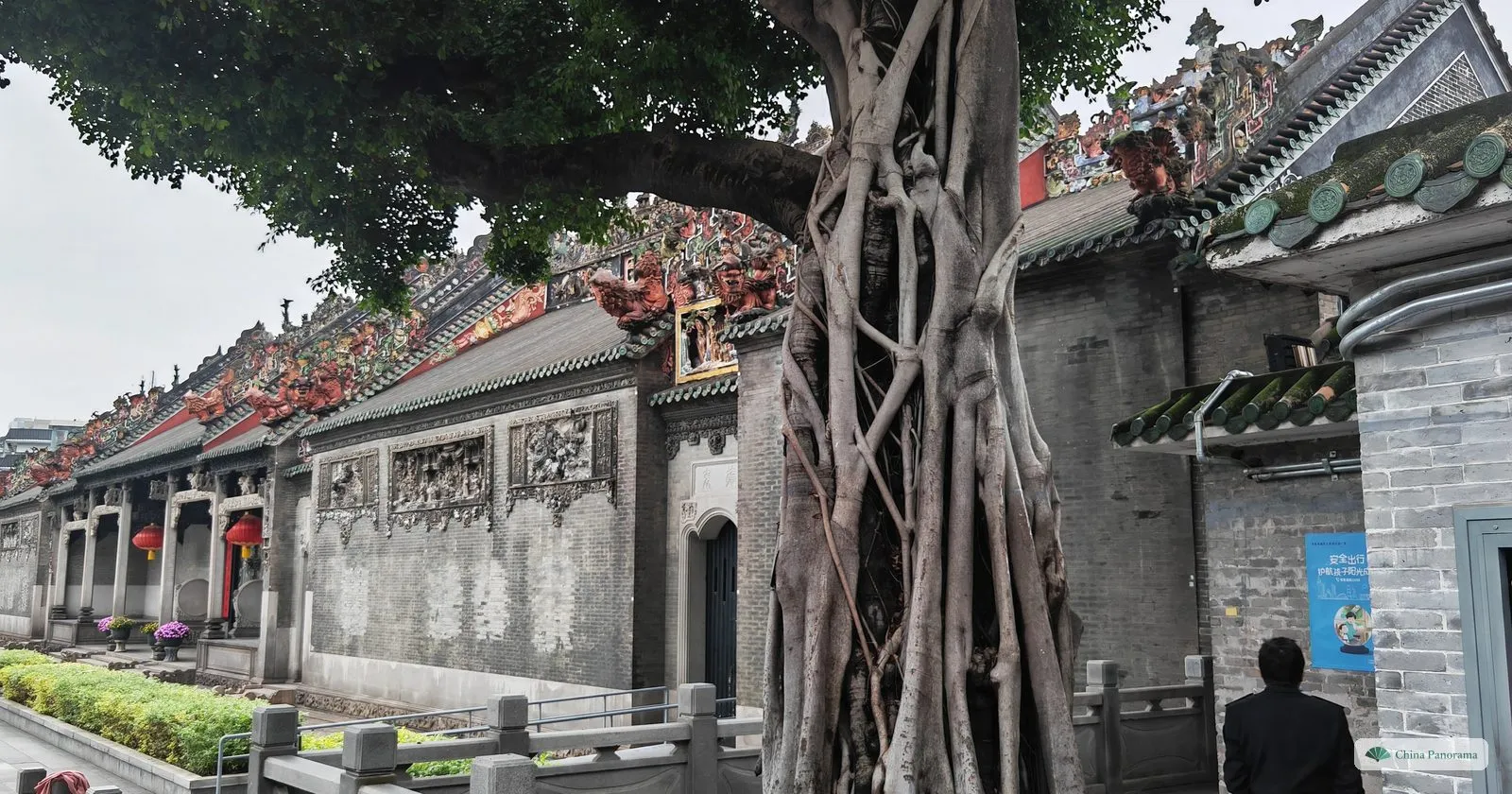 Original1894about 130 years old
Completed in 1894 and a museum since 1959. The wood, stone and brick carving and the ceramic figures on the ridges are what the clans paid for.
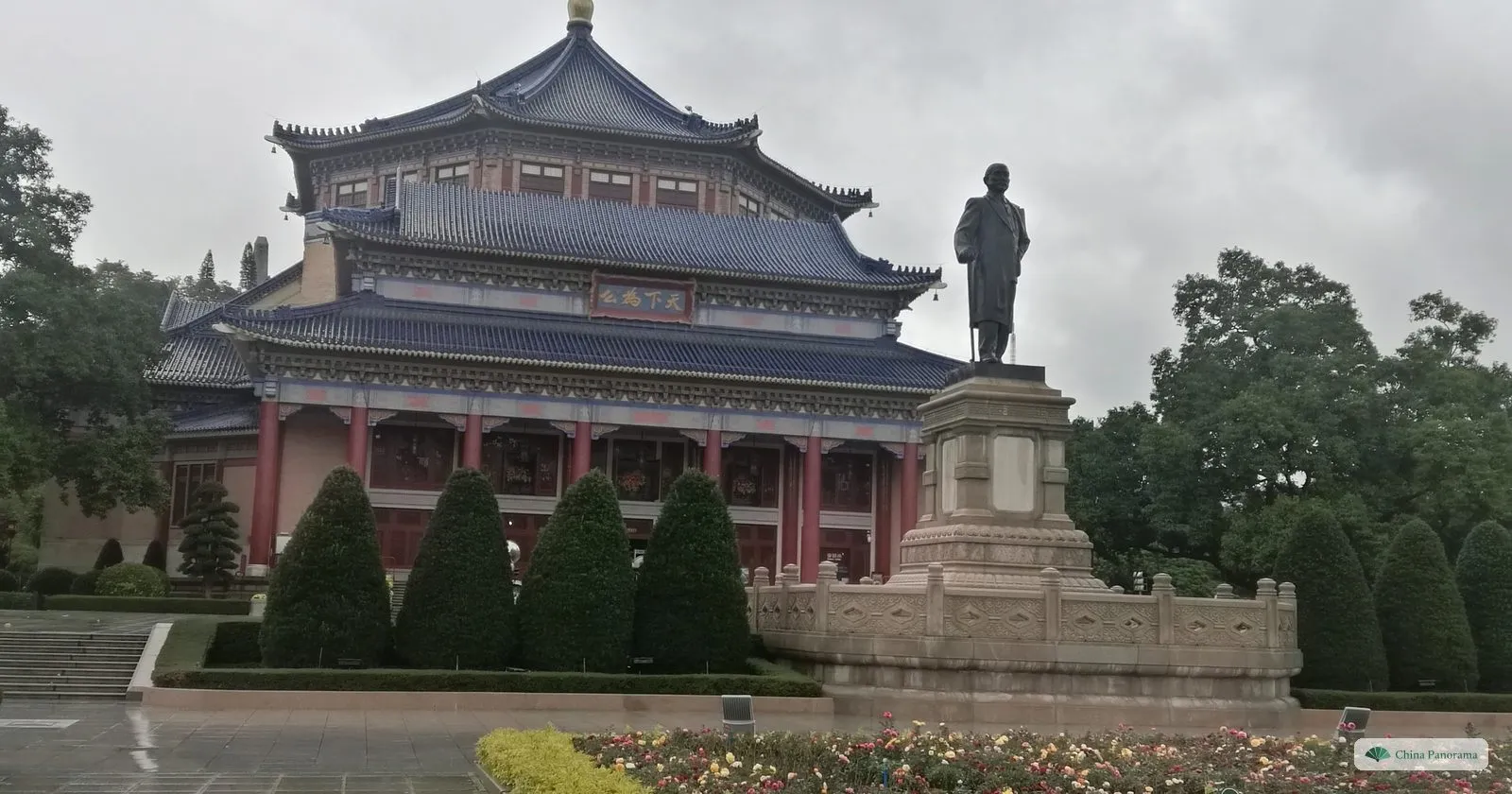 Original193195 years old
Lü Yanzhi’s octagonal hall, completed in 1931 and still in use as a concert hall. It was restored in 1998, not rebuilt.
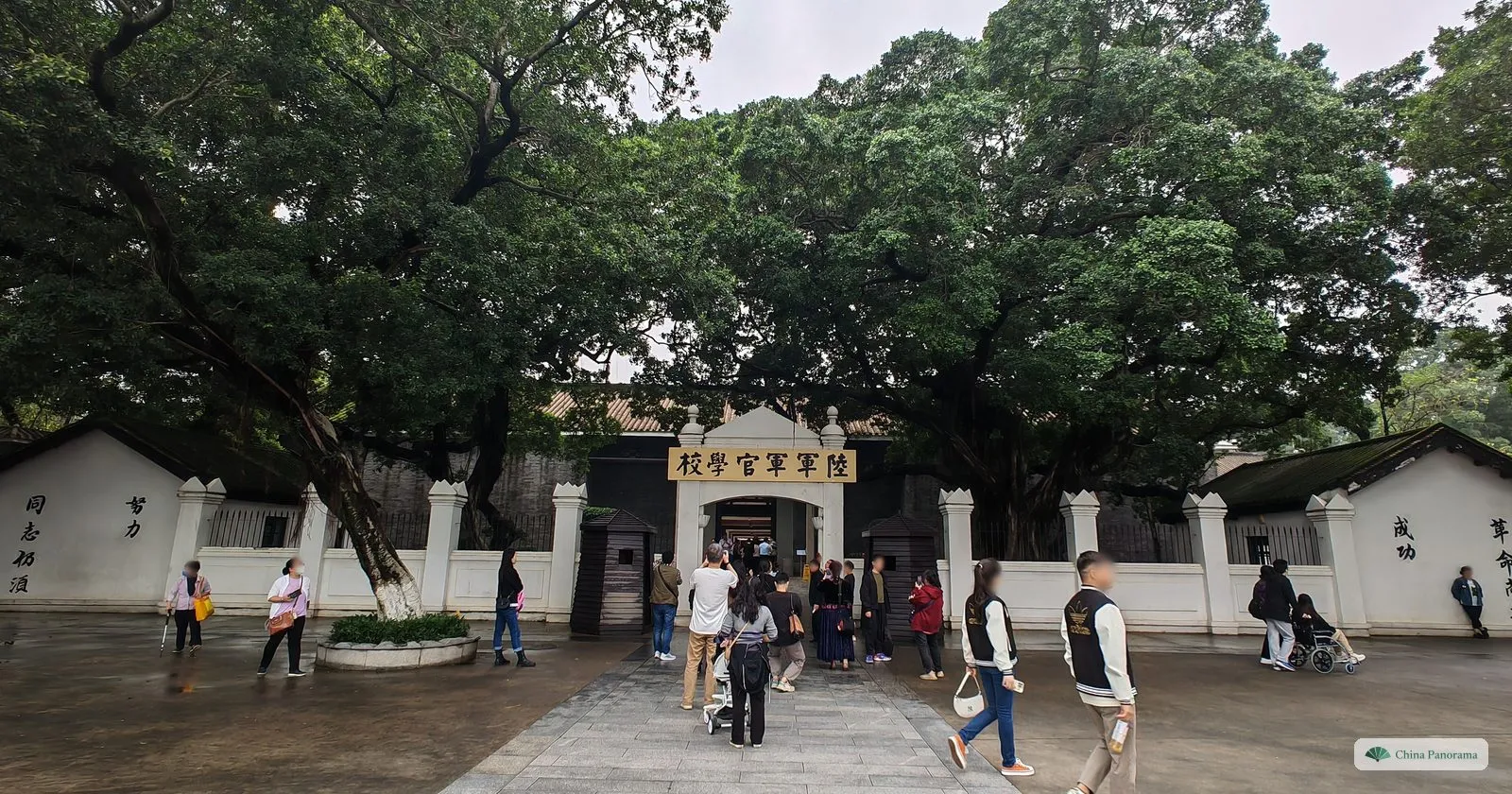 Built in our time199630 years old
The school was founded in 1924, but its main building was flattened by Japanese bombs in 1938. What stands today was rebuilt in 1996 on the original site, to the original plan and appearance.
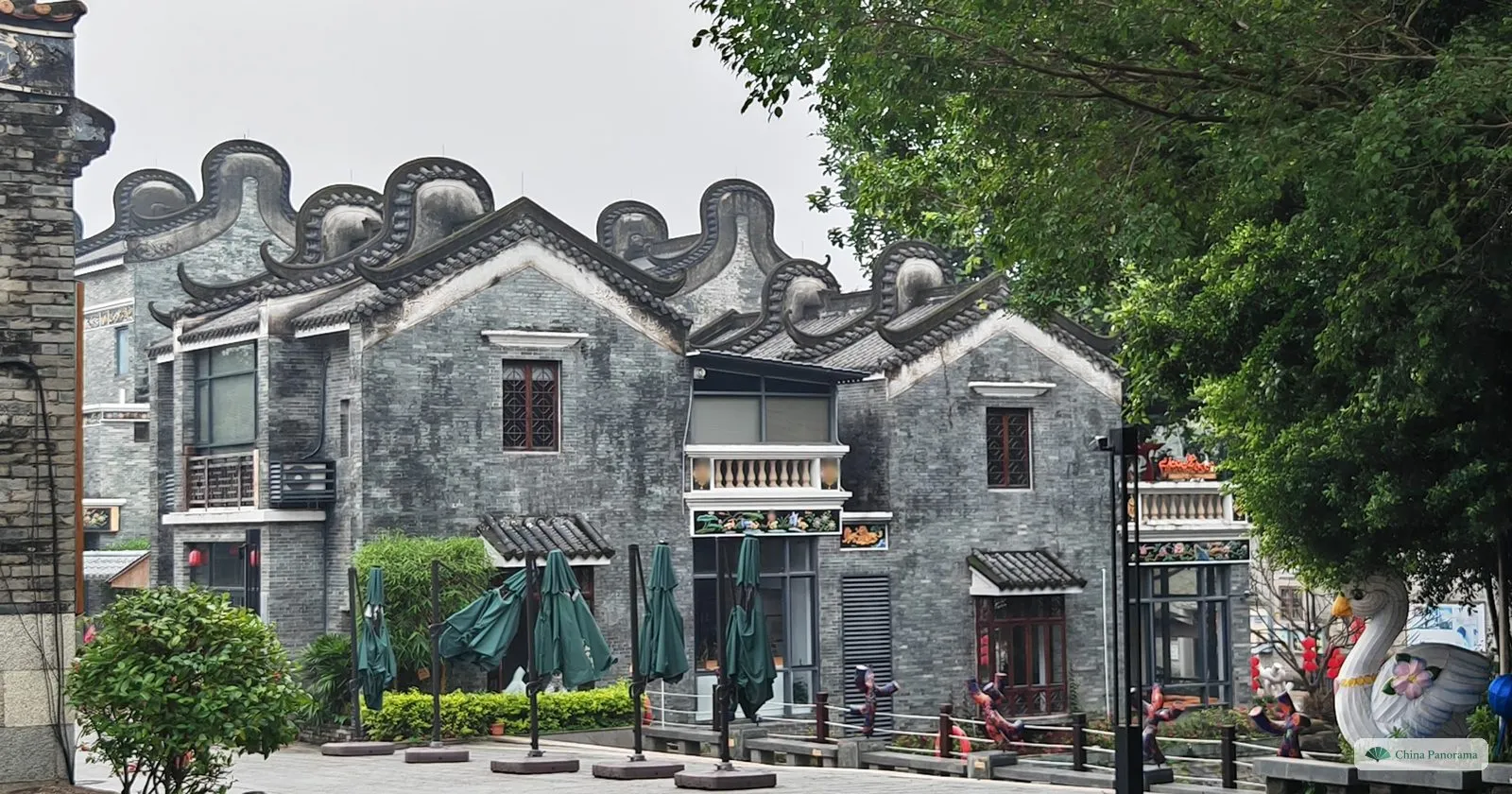 Built in our timeafter 200323 years old
When University Town was cleared in 2003, eleven buildings of the village of Lianxi were kept; 38 more in the same style were added around them. Most of what you see is new.
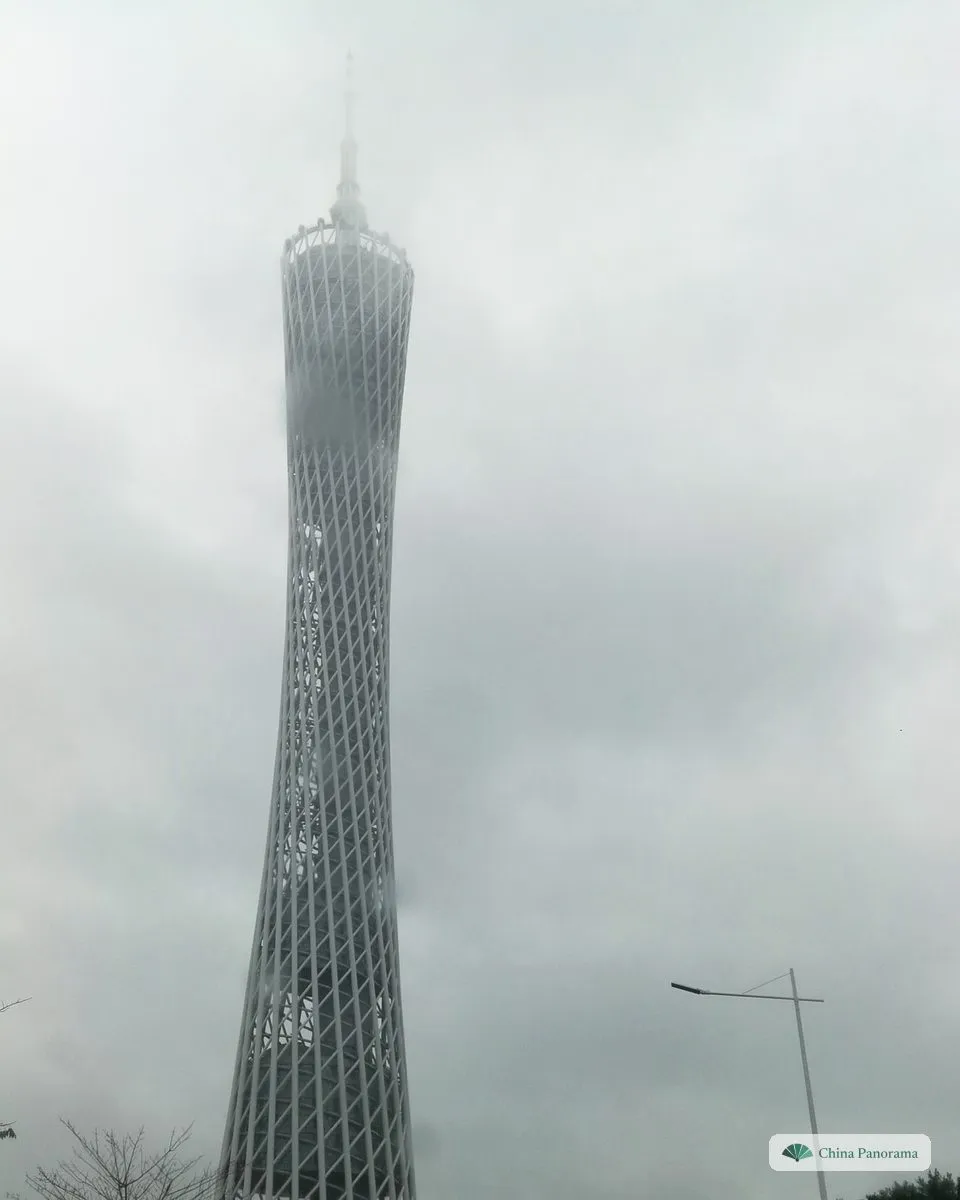 Built in our time201016 years old
Opened on 1 October 2010, six weeks before the Asian Games, 600 m to the tip of its mast.
What am I looking at?
The front of the Chen Clan Hall, and the new city across the river at night. Tap a number on the photograph.
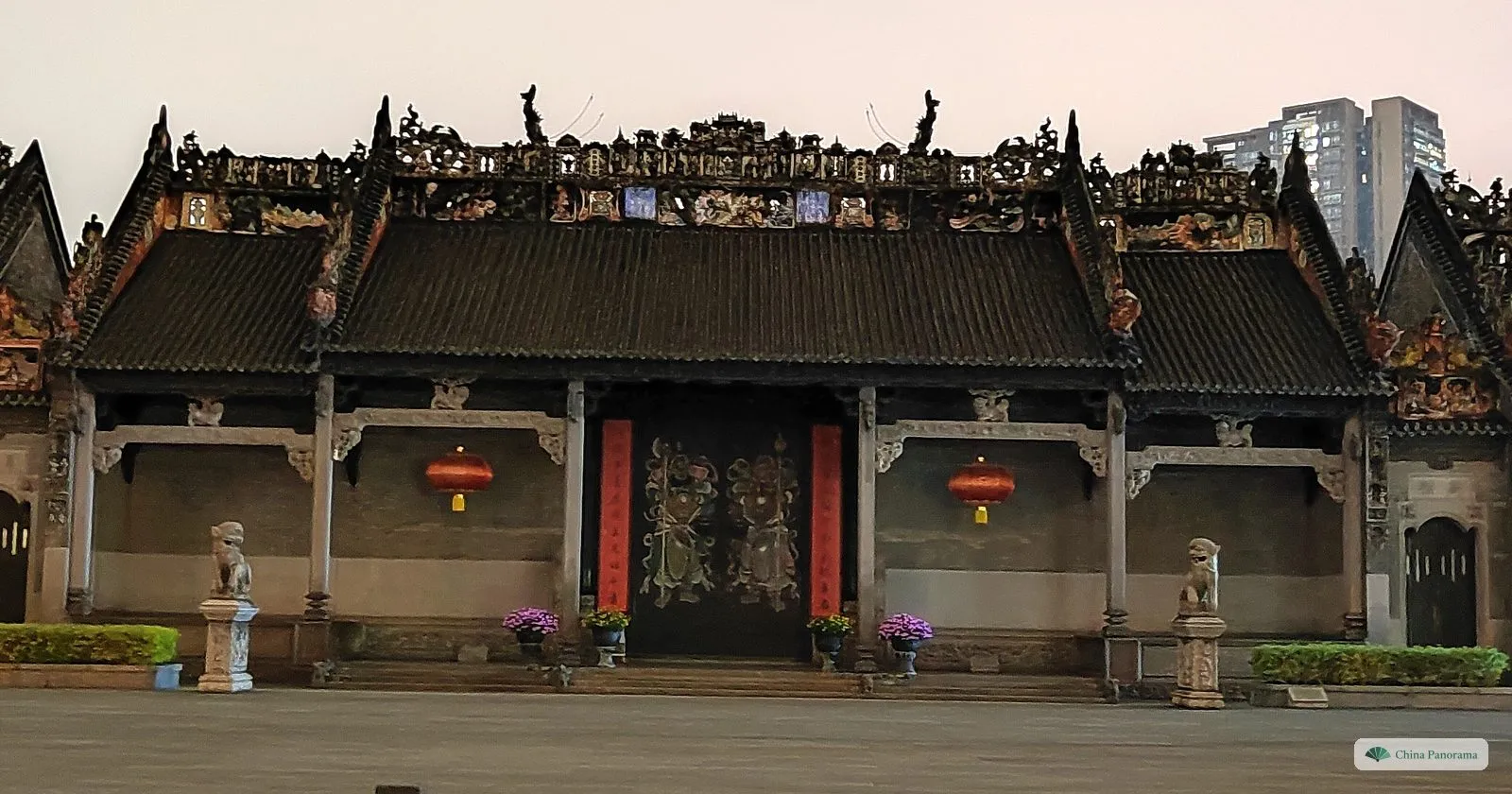
1The roof ridge
屋脊 · Glazed ceramic figures over painted lime
Along the ridge stand dozens of small figures in glazed pottery — people, buildings, animals and flowers — above a band of painted lime sculpture. The hall has eleven such ridges; the longest is 27 m with 224 figures acting out scenes from Cantonese opera.
The Chen Clan Hall in the list below →Tap a number on the photo, or a name in the list.
The new central axis, north to south
The new city is laid out on one straight line, about 4.8 km long: from Guangzhou East station south through the sports centre, down Huacheng Square between the two tallest towers, over the river island of Haixinsha to the Canton Tower on the far bank. The APM, a small driverless line, runs underneath most of it. Tap a stop on the line.
Tap a stop on the line or a card.
- On the axis4.8 km from the southern end
The railway station in Tianhe where the line begins, with trains towards Shenzhen.
Guangzhou East Railway Station (Lines 1 and 3)
- On the axis3.5 km from the southern end
The stadium and halls sit on the line; the shopping malls of Tianhe Road run along their south side.
Tiyu Zhongxin (Line 1)
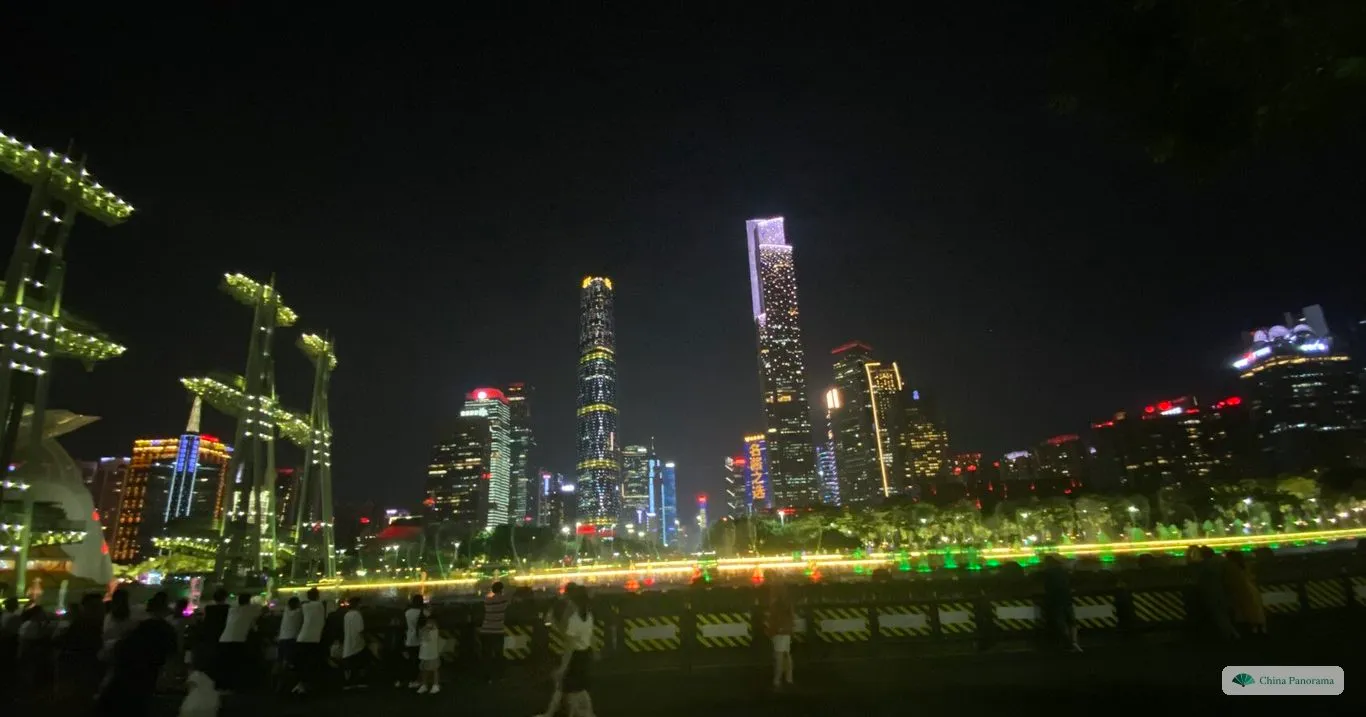 On the axis1.5 km from the southern end
The long open square, with the two tallest towers of the city on either side of it and shopping underneath.
Huacheng Avenue (APM)
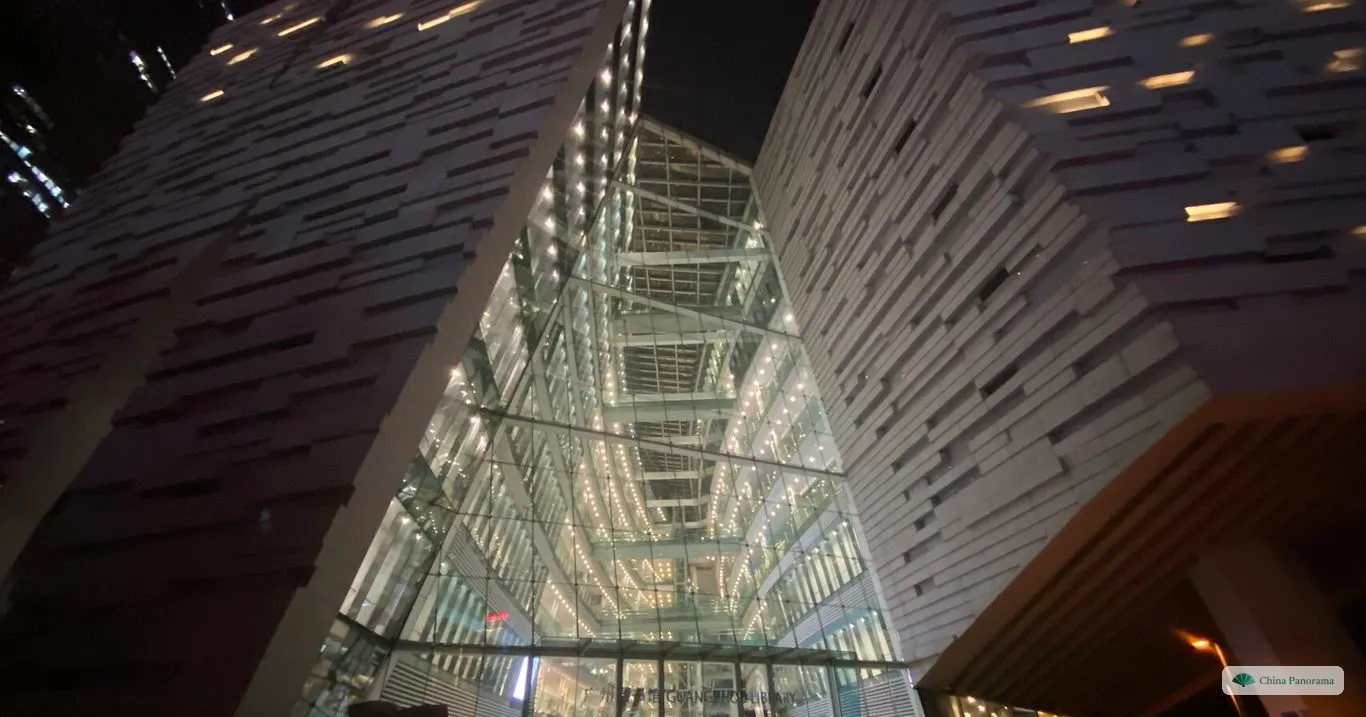 On the axis1.0 km from the southern end
Zaha Hadid’s Opera House and the Children’s Palace on the west side, the Guangdong Museum and the Guangzhou Library on the east.
Opera House (APM)
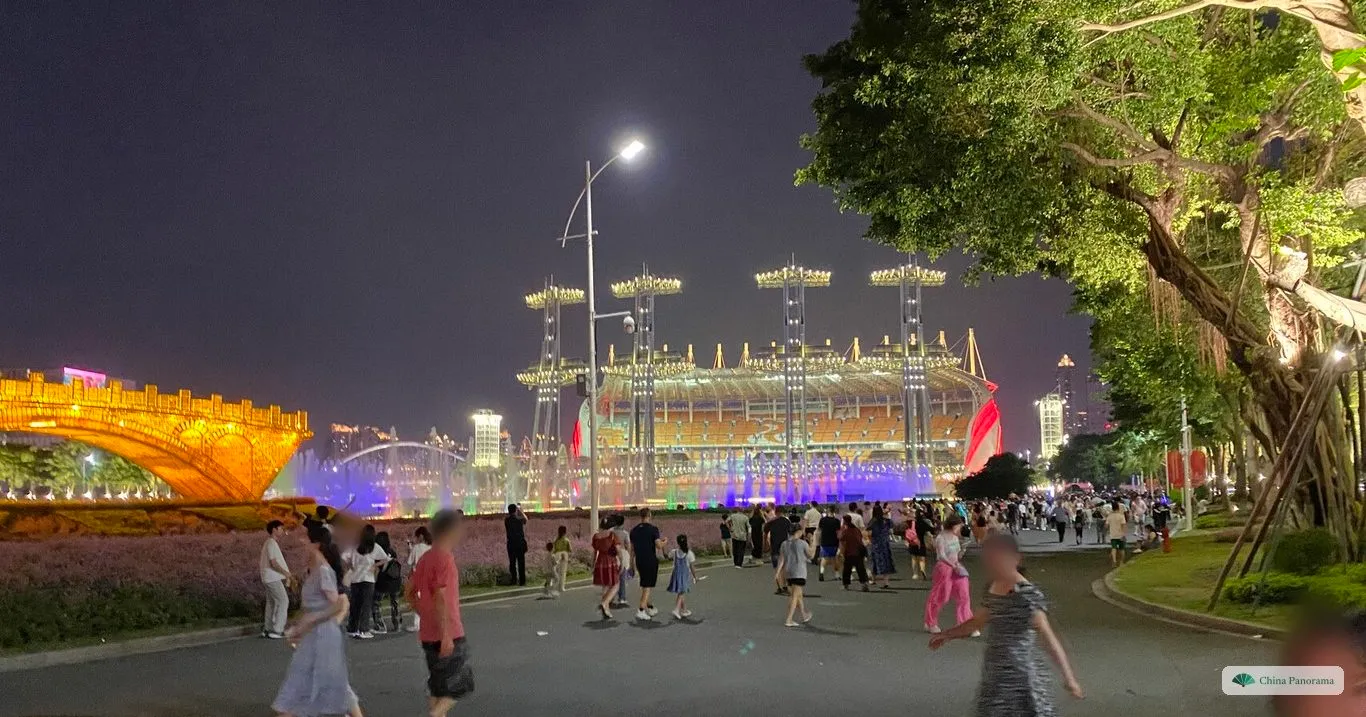 On the axis0.6 km from the southern end
The stage of the 2010 Asian Games opening ceremony, with the best view back up the line.
Haixinsha (APM)
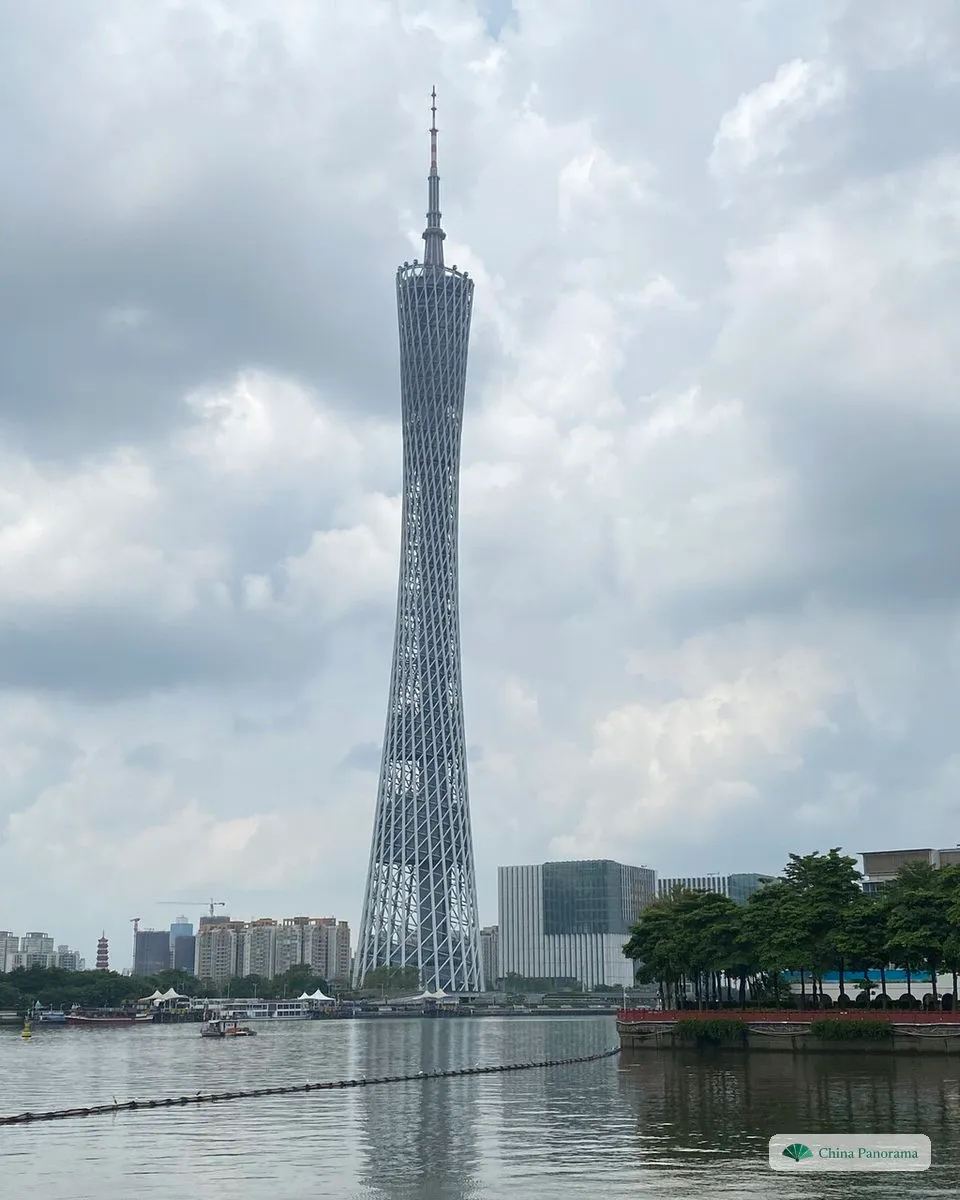 On the axis0.0 km from the southern end
600 m to the tip of the mast, on the south bank exactly opposite the square.
Canton Tower (Line 3, APM)
17 places in and around Guangzhou
Filter by district, or by whether you need to be indoors — useful on a wet afternoon.
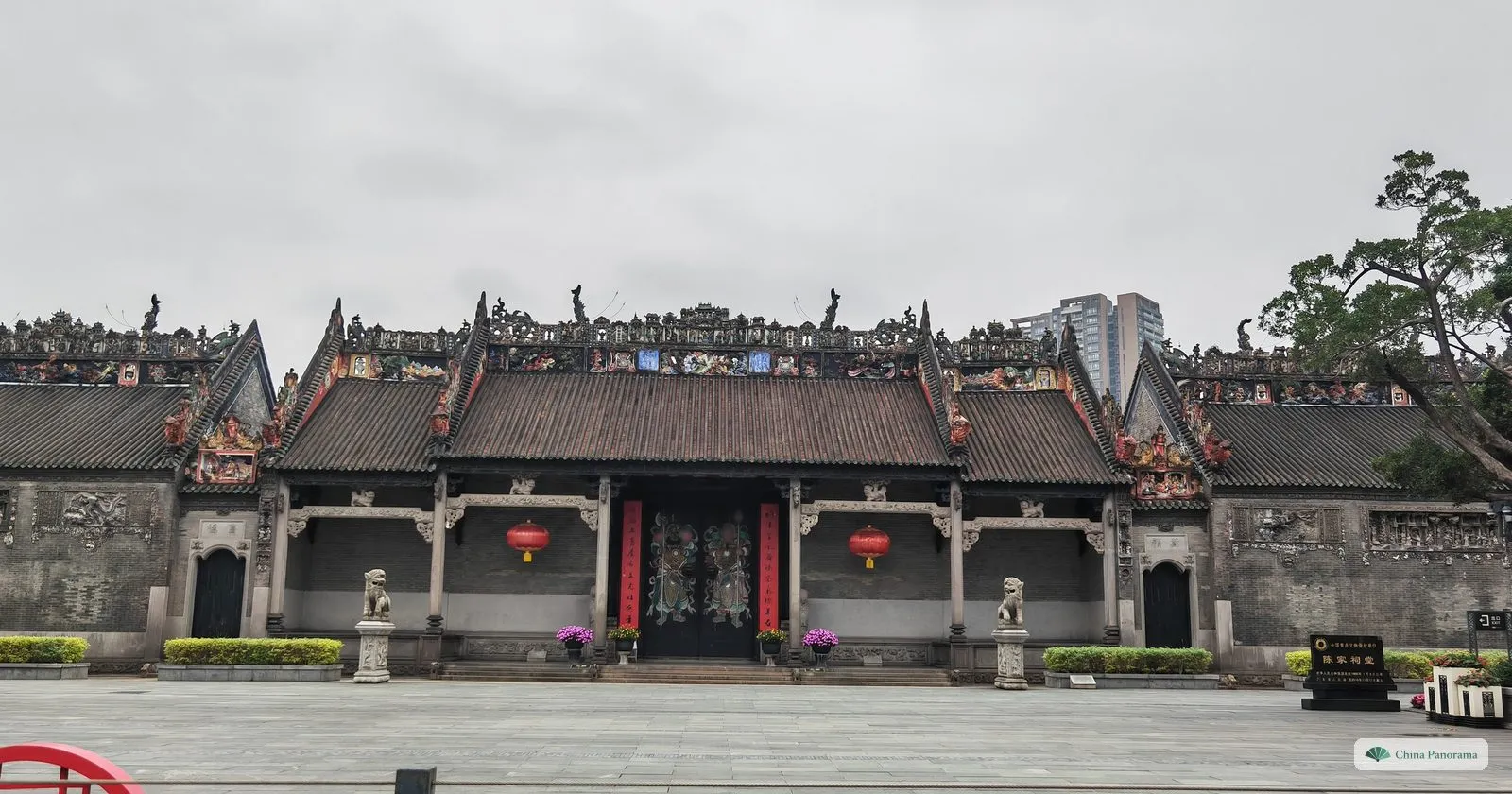
Chen Clan Ancestral Hall
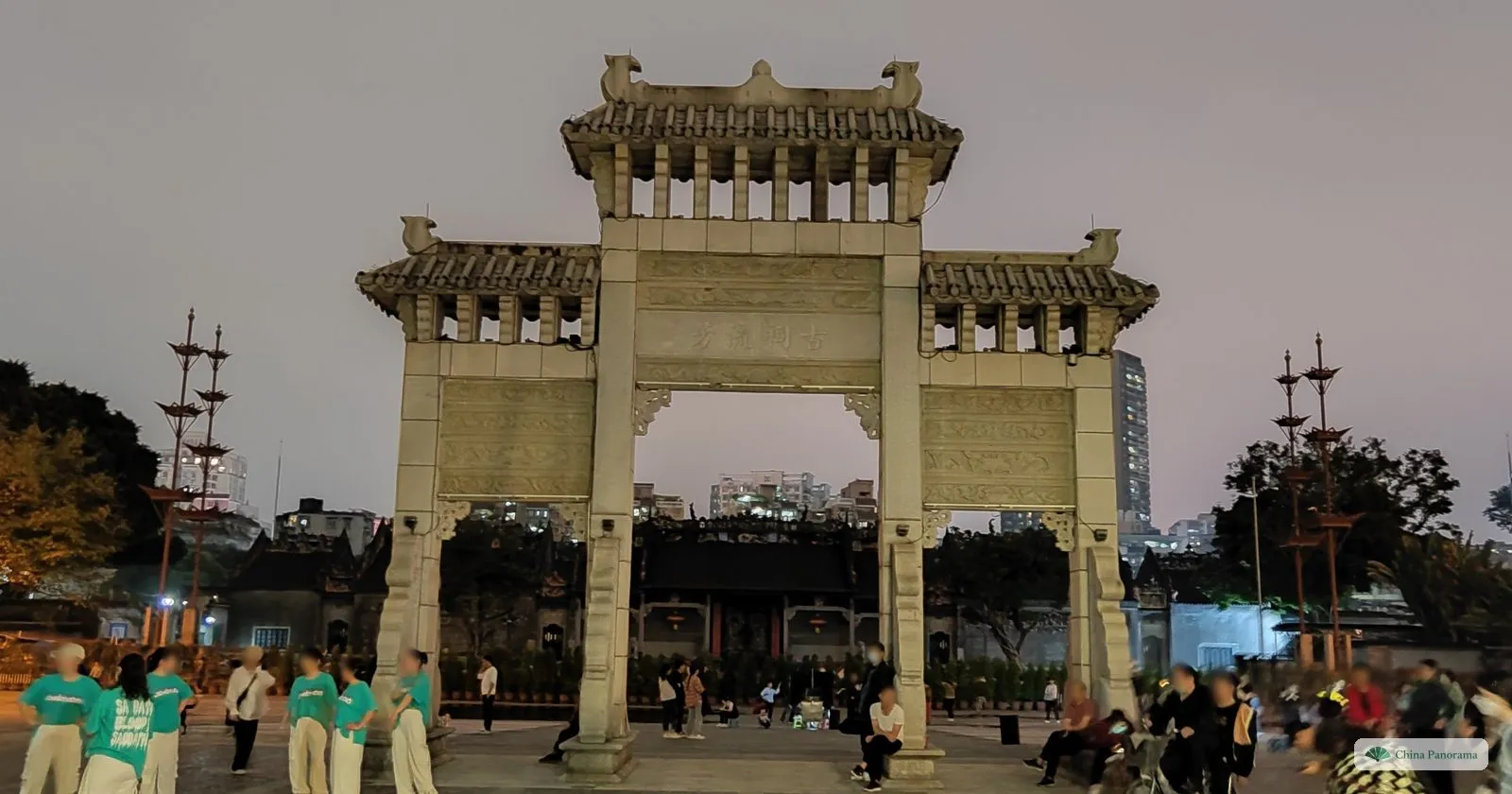
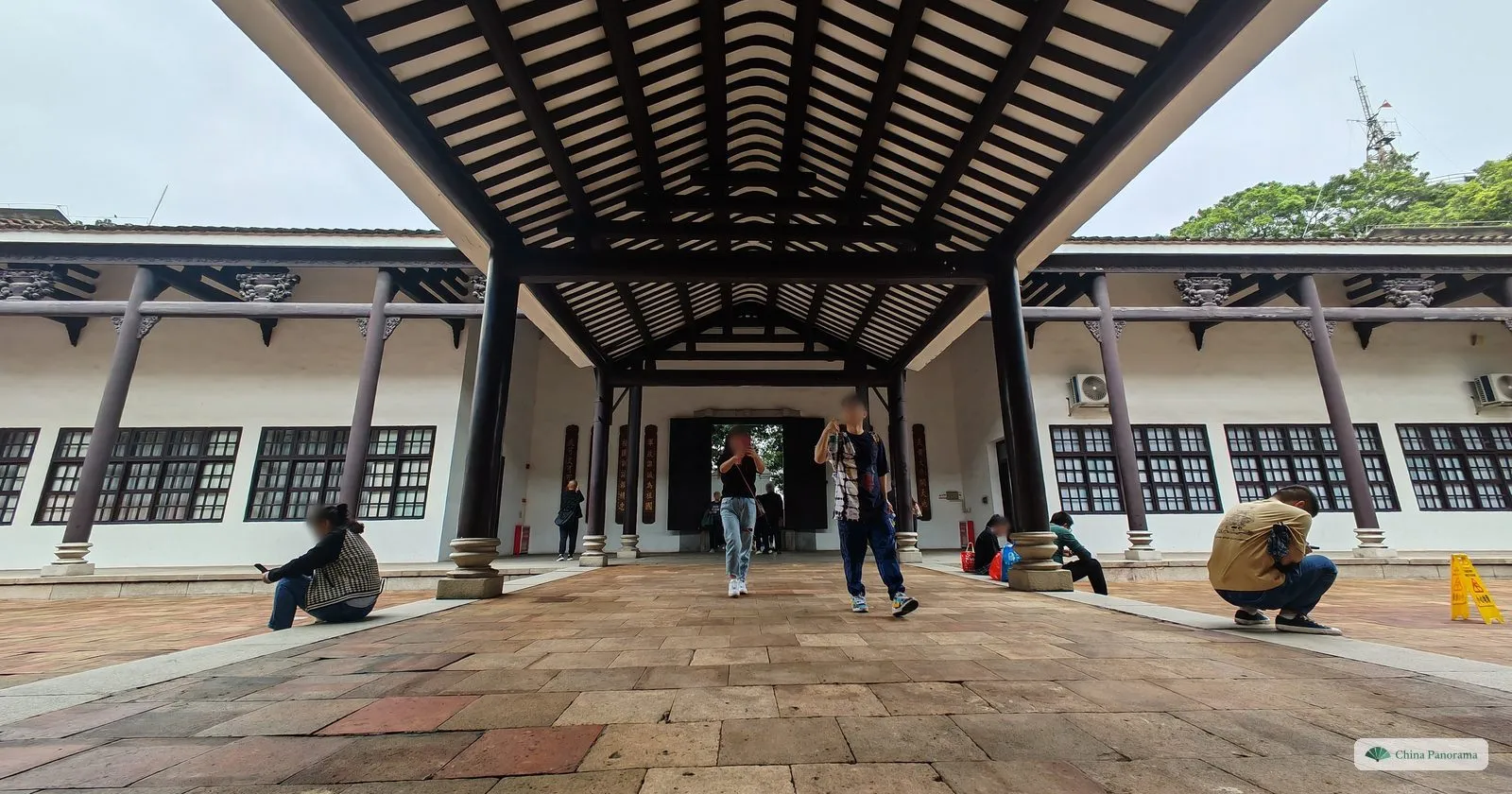
陈家祠 · 广东民间工艺博物馆MuseumLiwan · 荔湾区IndoorsOne of the most richly decorated buildings in southern China, completed in 1894 with money from 72 Chen clans across Guangdong. It was built as an academy: a place where young men of the Chen name could stay and study while they sat the imperial examinations in the provincial capital. Nineteen buildings — nine halls around six courtyards — cover 13,200 m², and hardly a surface is plain: carved wood, carved granite, grey brick carved like ivory on the front walls, painted ironwork, lime sculpture, and along the roof ridges whole crowds of glazed ceramic figures. There are eleven of these ridges; the longest, 27 m, carries 224 figures acting out scenes from Cantonese opera. Since 1959 the halls have housed the Guangdong Folk Arts Museum, with carving, embroidery and ceramics from the province. We stood on the empty square in front at seven in the morning on 3 April 2023, before opening; the evening before, the same square was full of dance groups.
Chen Clan Academy station (Line 1) is at the corner of the square. Reported: 10 CNY, 09:00–17:30 with last entry at 17:00, and until 18:00 from 15 April to 15 October; closed one day a week — sources disagree whether it is Monday or Tuesday, so check before you go. Tickets are sold through the museum's WeChat account and at the gate. The square in front is free and open at all hours, and the front of the hall with its carved walls and roof ridge is the part everyone photographs.
- Entry
- Price not verified — check on site
- Opening hours
- Hours not verified — check on site
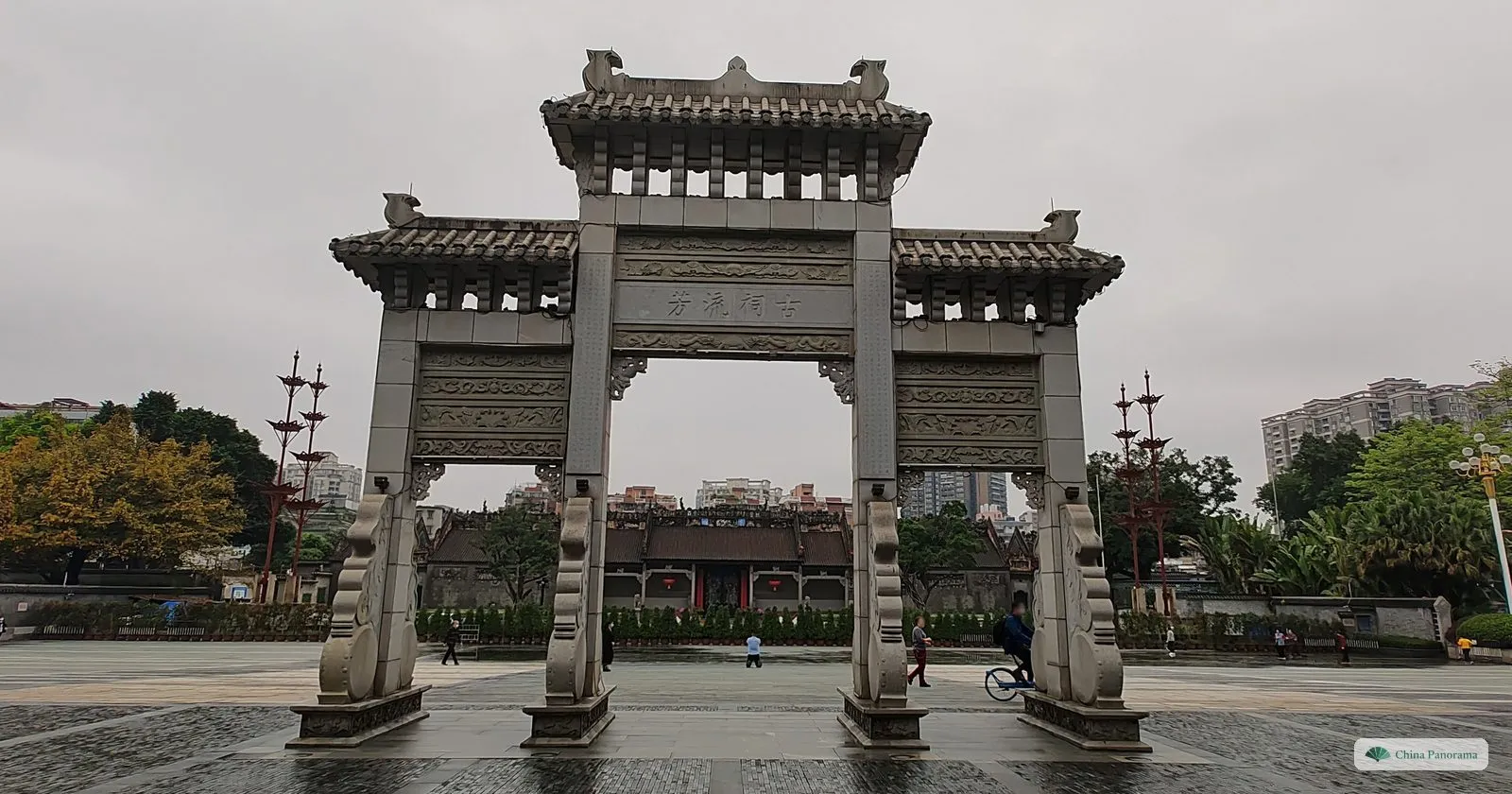
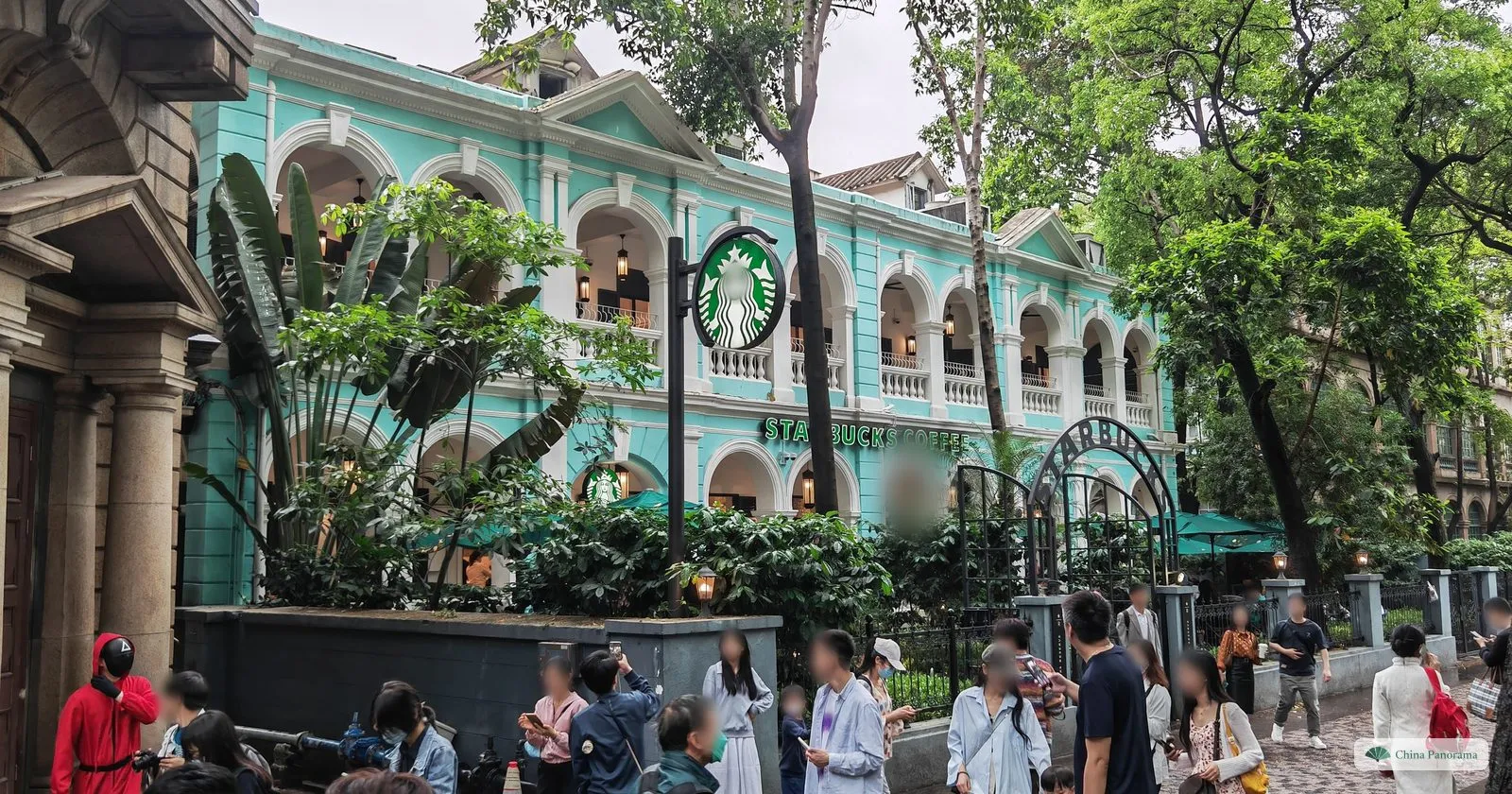
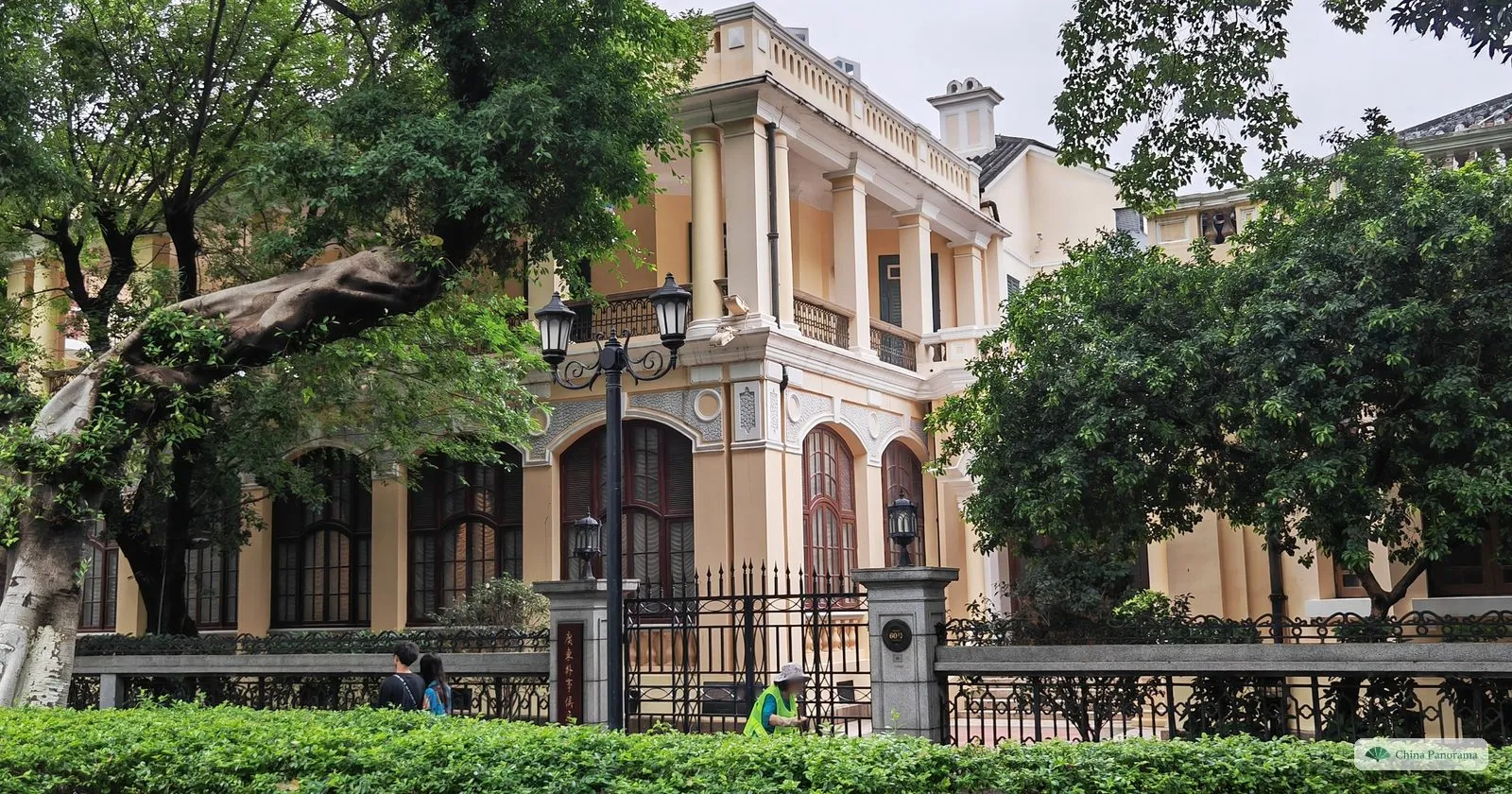 Treaty-port heritageLiwan · 荔湾区Outdoors
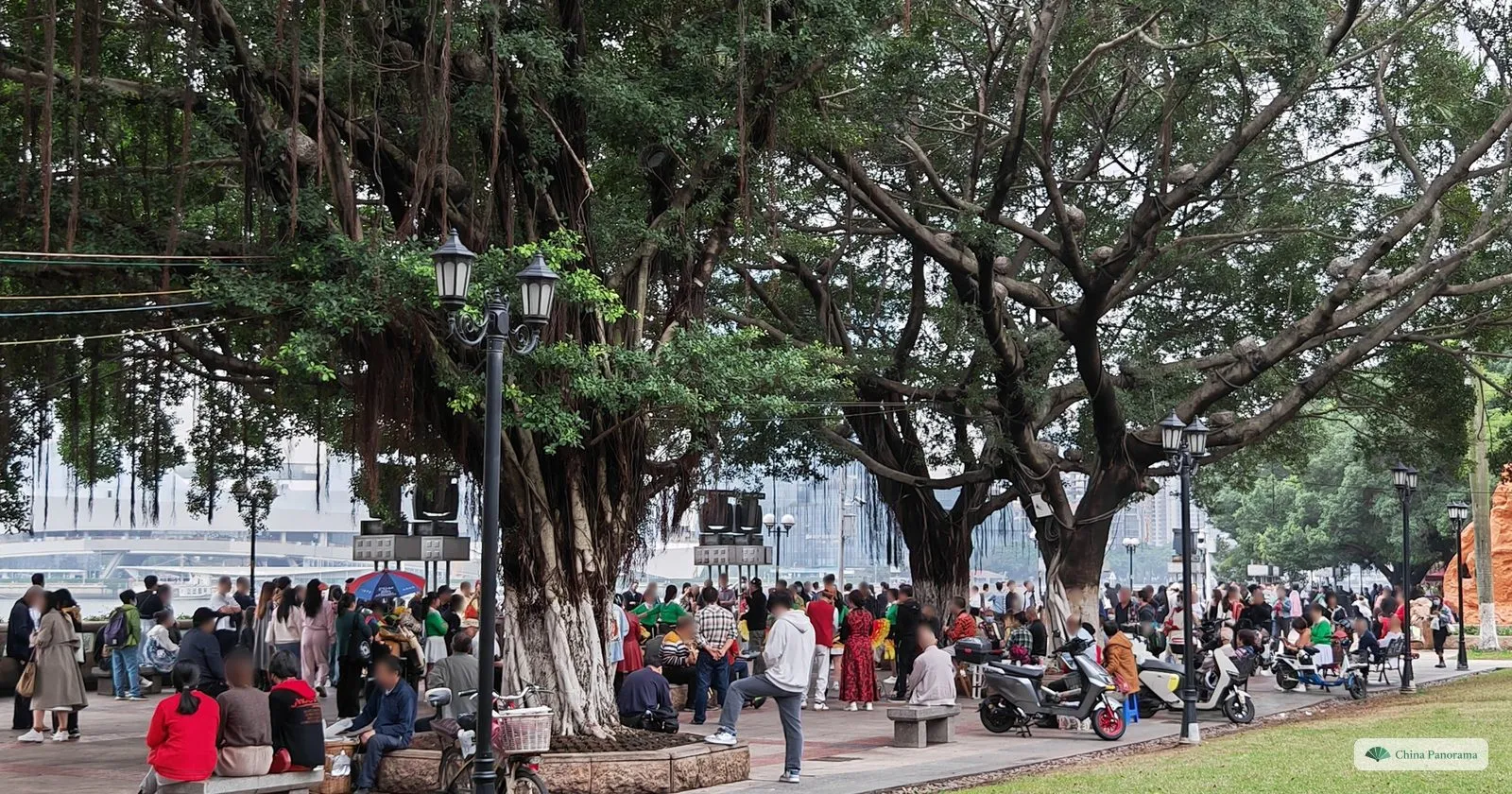
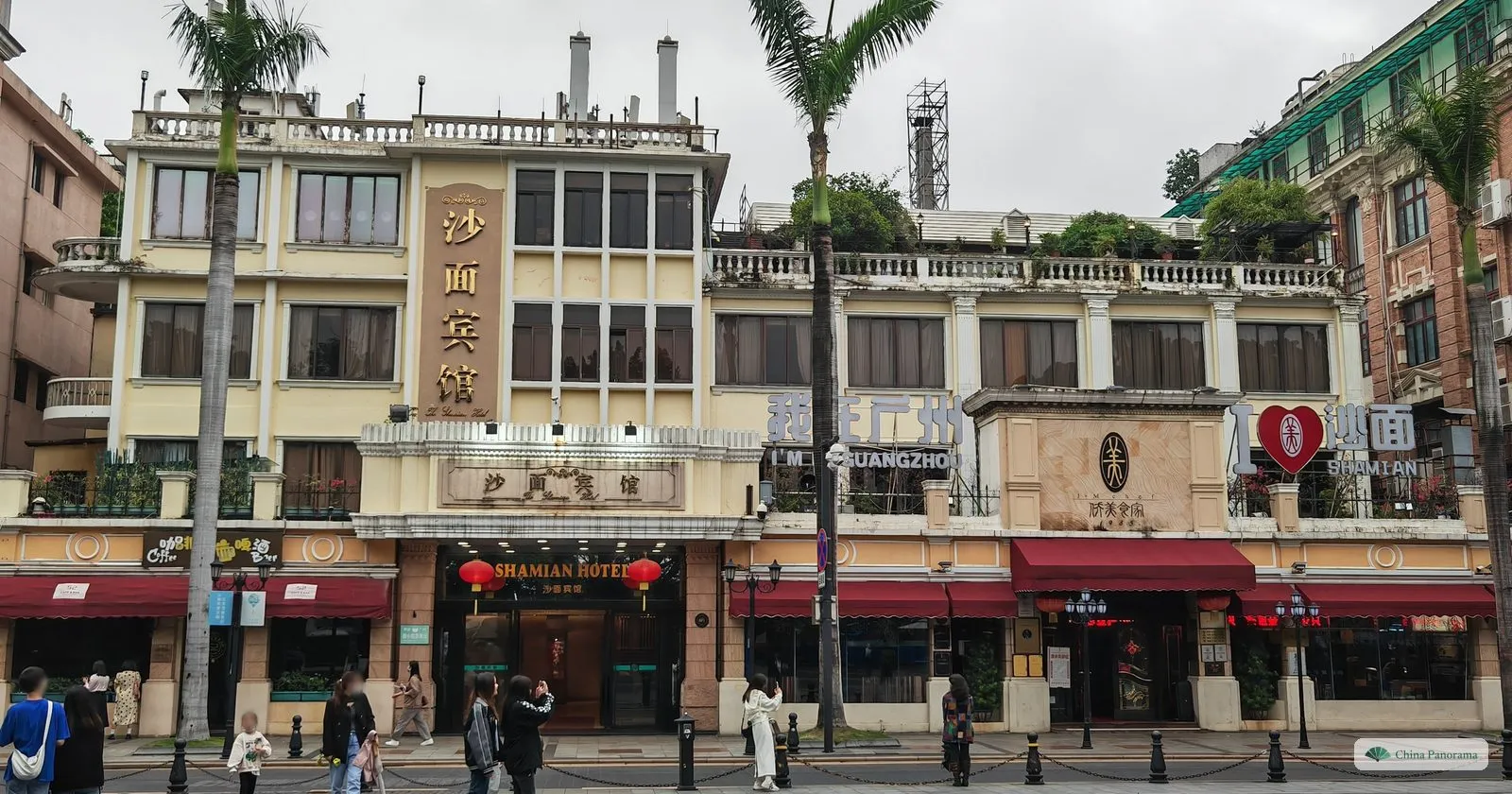
A sandbank in the Pearl River, 900 m long and 300 m wide, that Britain and France took as a concession in 1859, after the Second Opium War: Britain three fifths, France two. They cut a canal along its landward side, linked it to the city by two bridges that were shut at night, and built banks, consulates, trading houses, two churches and the villas of the merchants. The buildings are still there, under banyan trees, along three east–west streets and five numbered cross streets: the French Catholic chapel of Our Lady of Lourdes from 1892, Christ Church of the British from 1865, arcaded offices in pastel colours, red-brick banks, and on the south shore the Shamian Hotel. Cars are few, and on a Sunday afternoon in April 2023 the island belonged to photographers and, along the river, crowds of locals singing to loudspeakers under the banyans.
Huangsha station (Lines 1 and 6) is about 13 minutes' walk from the middle of the island. Free and open at all hours; most of the old buildings are offices, hotels and cafés and are seen from the street. We have not checked when the chapel is open.
- Entry
- Free
- Opening hours
- Open at all hours
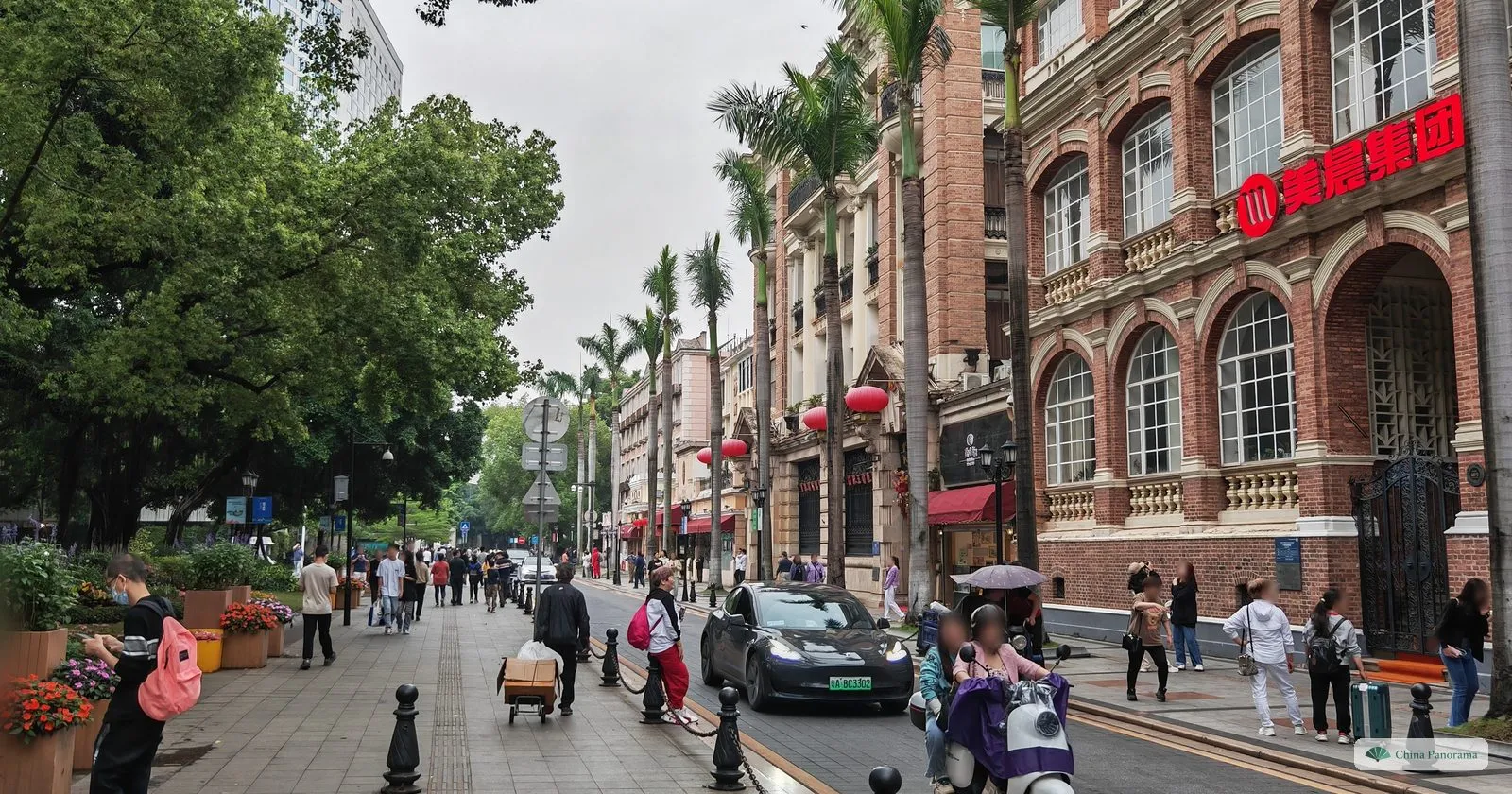
Yongqingfang and Enning Road
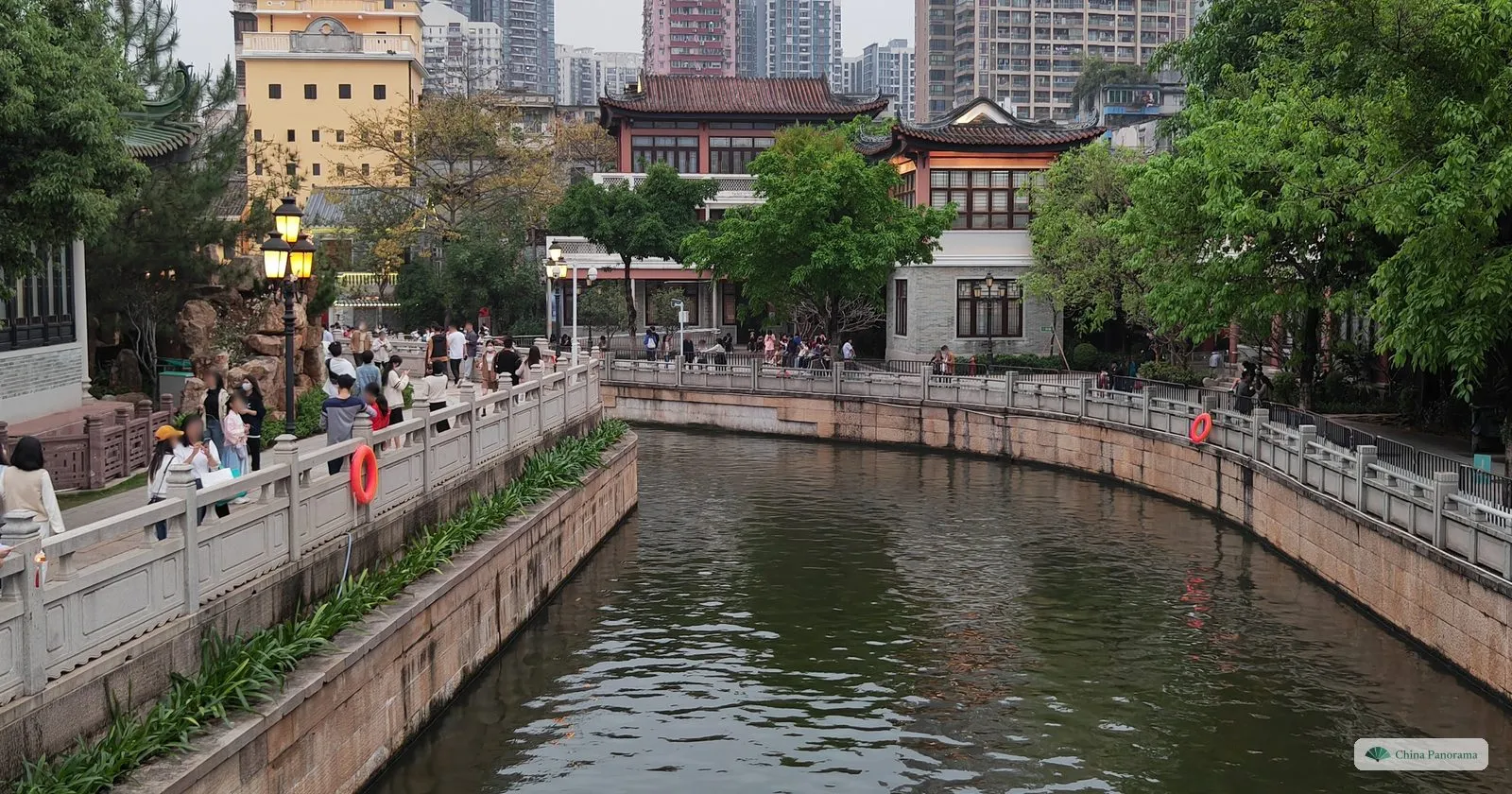
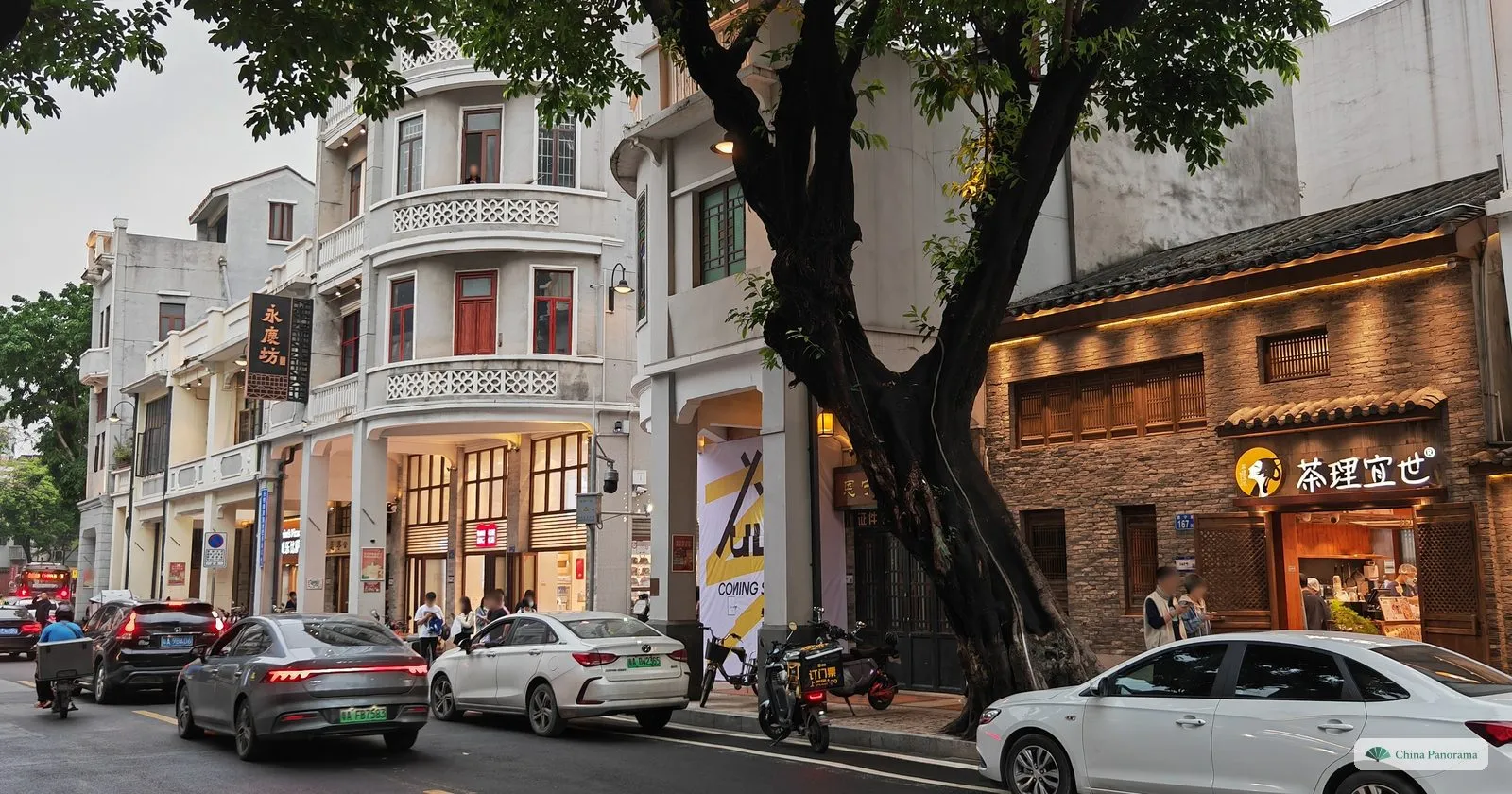
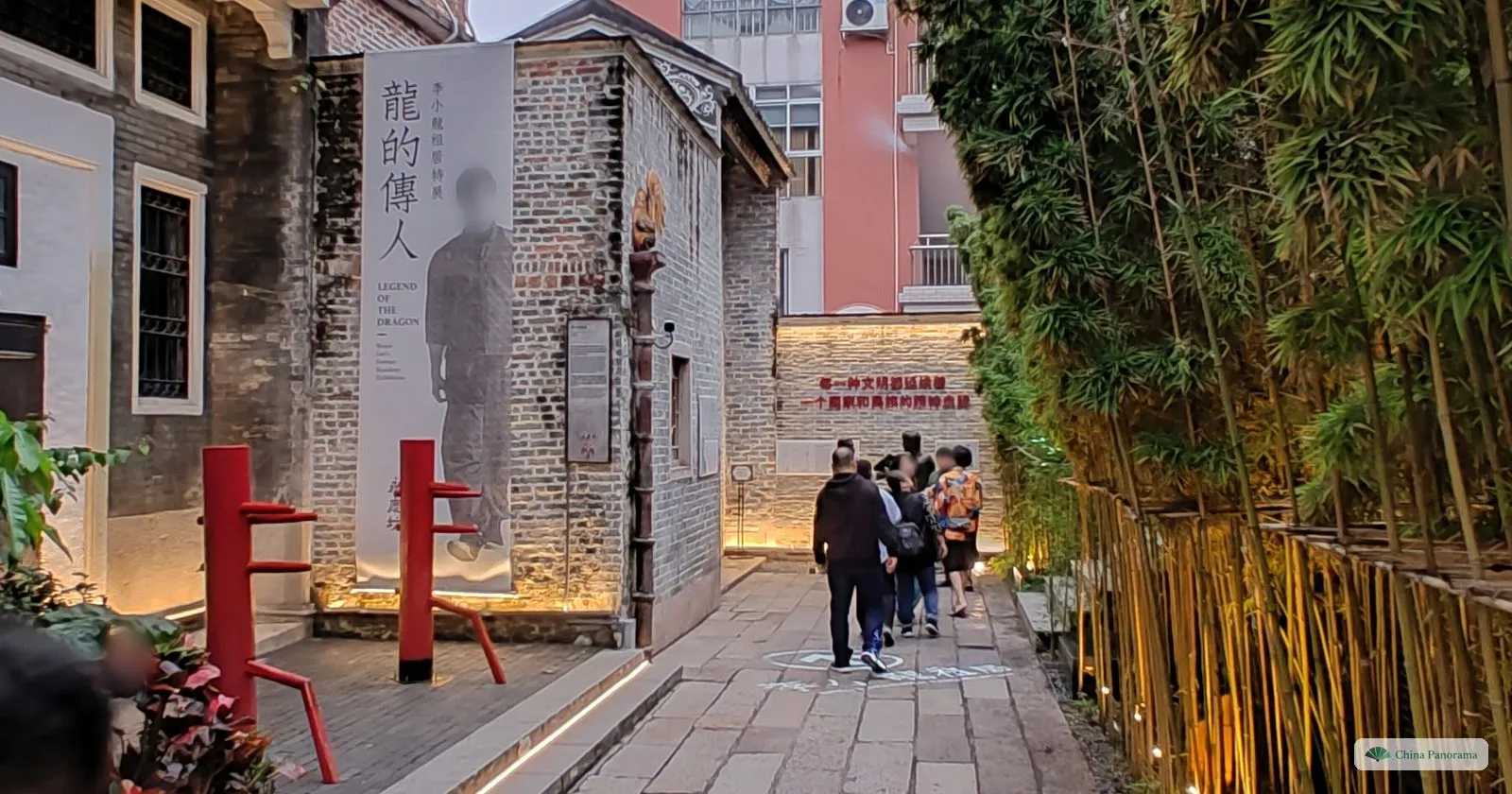
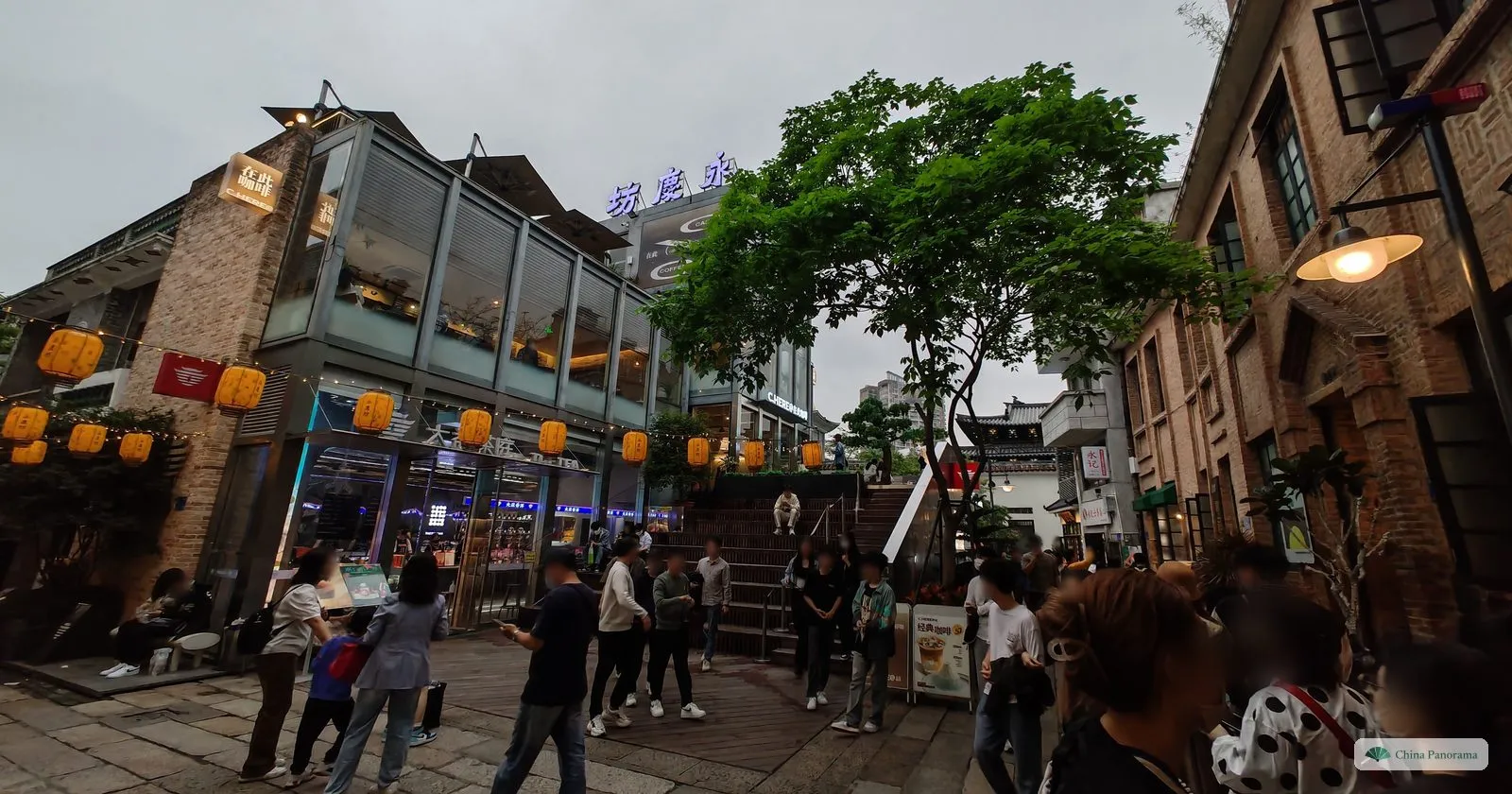
永庆坊 · 恩宁路StreetLiwan · 荔湾区OutdoorsEnning Road keeps Guangzhou's most complete row of qilou — shophouses whose upper floors reach over the pavement on columns, giving a covered walkway against sun and rain. Behind it lies Yongqingfang, a block of narrow lanes of the old Xiguan merchants' quarter. In 2016 it became the city's first pilot for “micro-renovation”: instead of being cleared, the houses kept their outer walls and were rebuilt inside as cafés, studios and shops. At No. 13 Yongqing First Lane is the ancestral home of Bruce Lee's family, a Xiguan house with a small exhibition; the lane leading to it is lined with wooden wing chun dummies. The Cantonese Opera Art Museum and the Lizhiwan canal are at the west end. We walked it from a quarter to six on 2 April 2023, as the lanterns came on and the lanes filled with young people out for the evening.
Changshou Lu station (Line 1) and Huangsha (Lines 1 and 6) are each about 11 minutes' walk away. The lanes are free and open at all hours; the shops and the Bruce Lee house keep their own hours, which we have not checked. Busiest in the evening and at weekends.
- Entry
- Free
- Opening hours
- Open at all hours
Cantonese Opera Art Museum
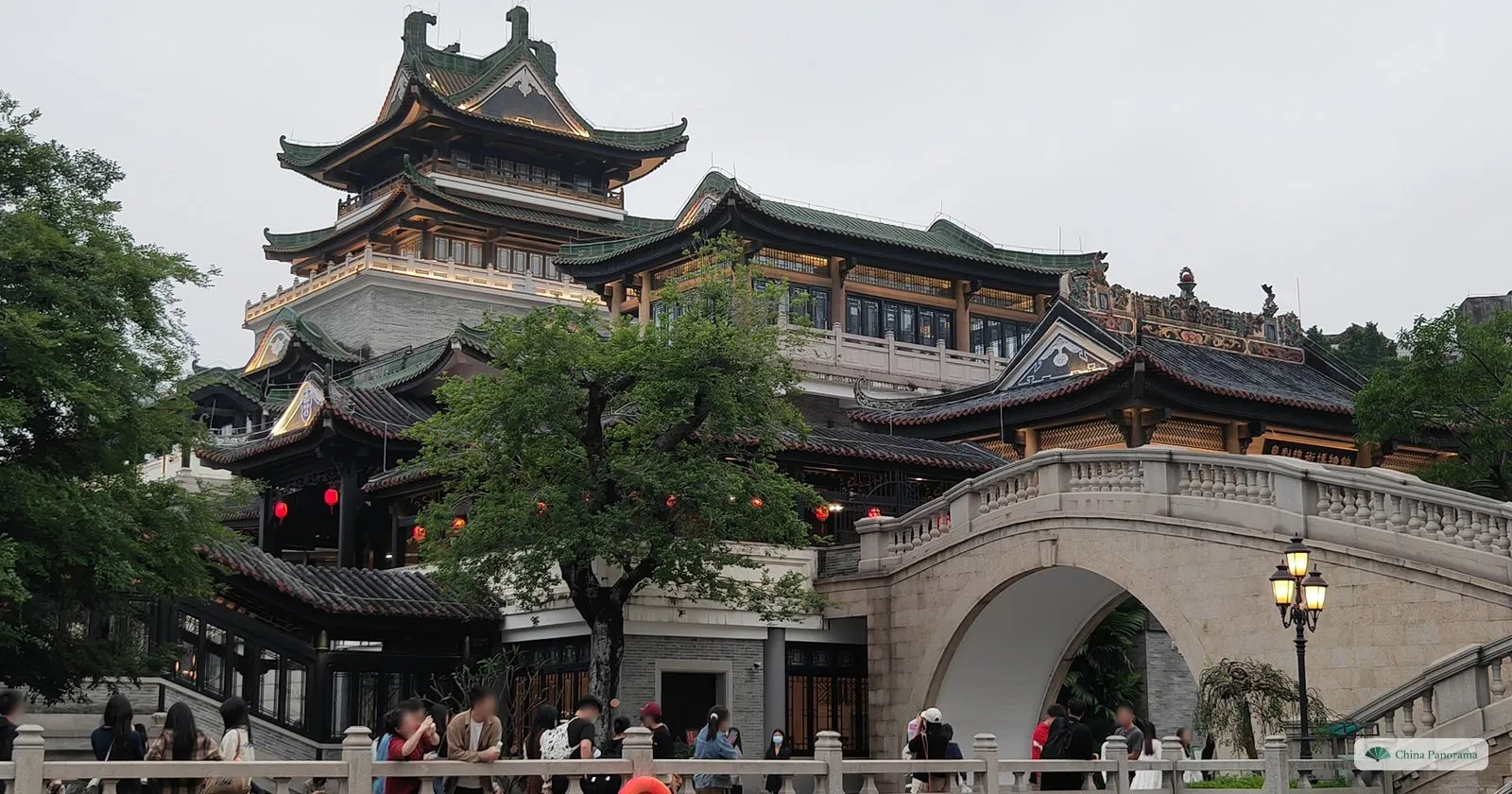
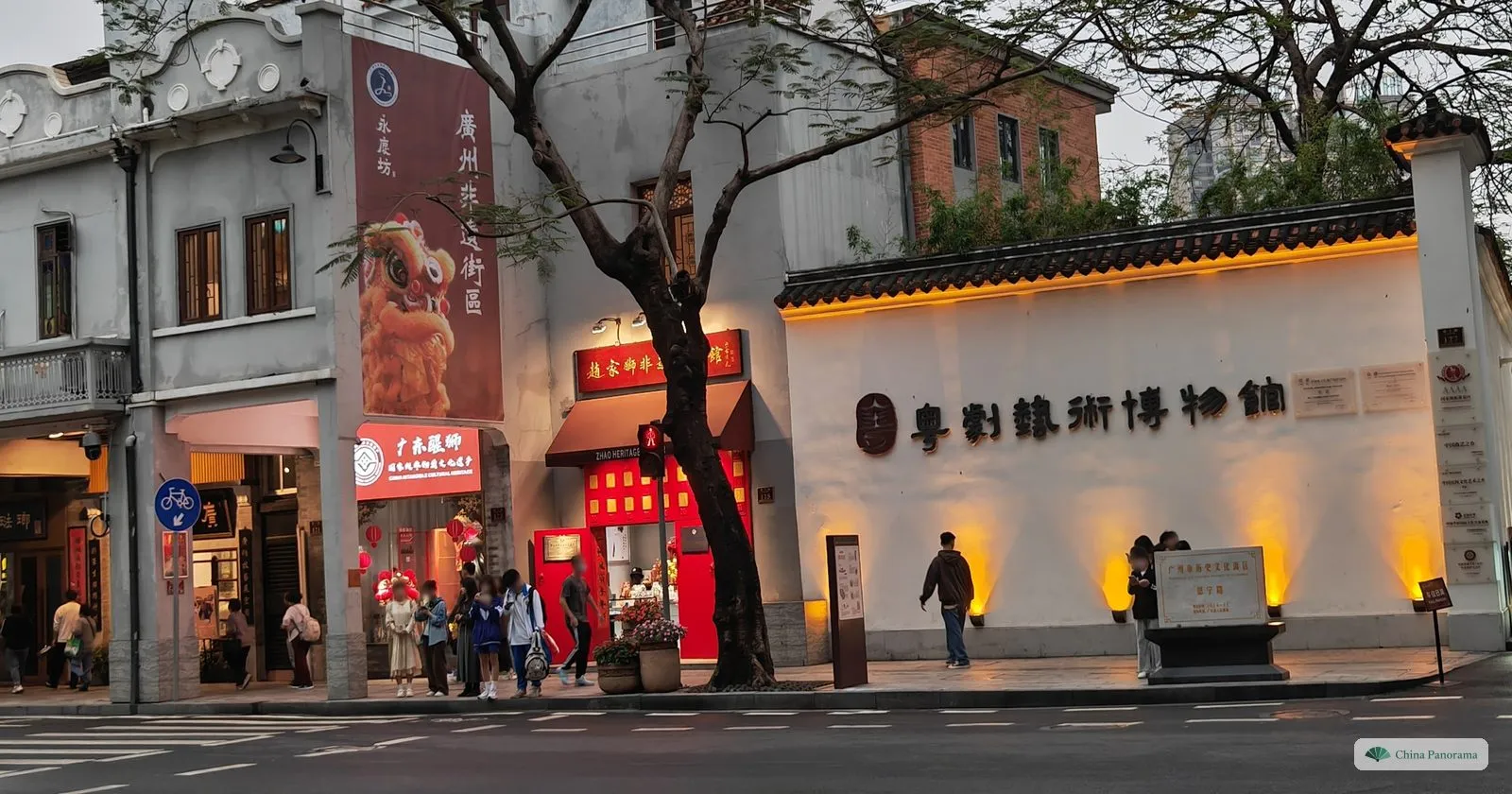
粤剧艺术博物馆MuseumLiwan · 荔湾区IndoorsA museum of Cantonese opera, the region's sung theatre with its painted faces and acrobatics, opened in 2016 at No. 127 Enning Road. The building is new but built the old way, as a Lingnan garden: grey-brick halls with carved ridges, a tiered pavilion, a stage, rockeries and ponds, set on both banks of the Lizhiwan canal and joined by a high arched bridge. Inside are costumes, headdresses, instruments and the history of the opera troupes that toured the Pearl River Delta by boat. Entry is free.
At the west end of Enning Road, five minutes from Yongqingfang. Free. Reported: closed on Mondays; we have not checked the opening hours or whether a reservation is needed.
- Entry
- Free
- Opening hours
- Hours not verified — check on site
Lizhiwan canal
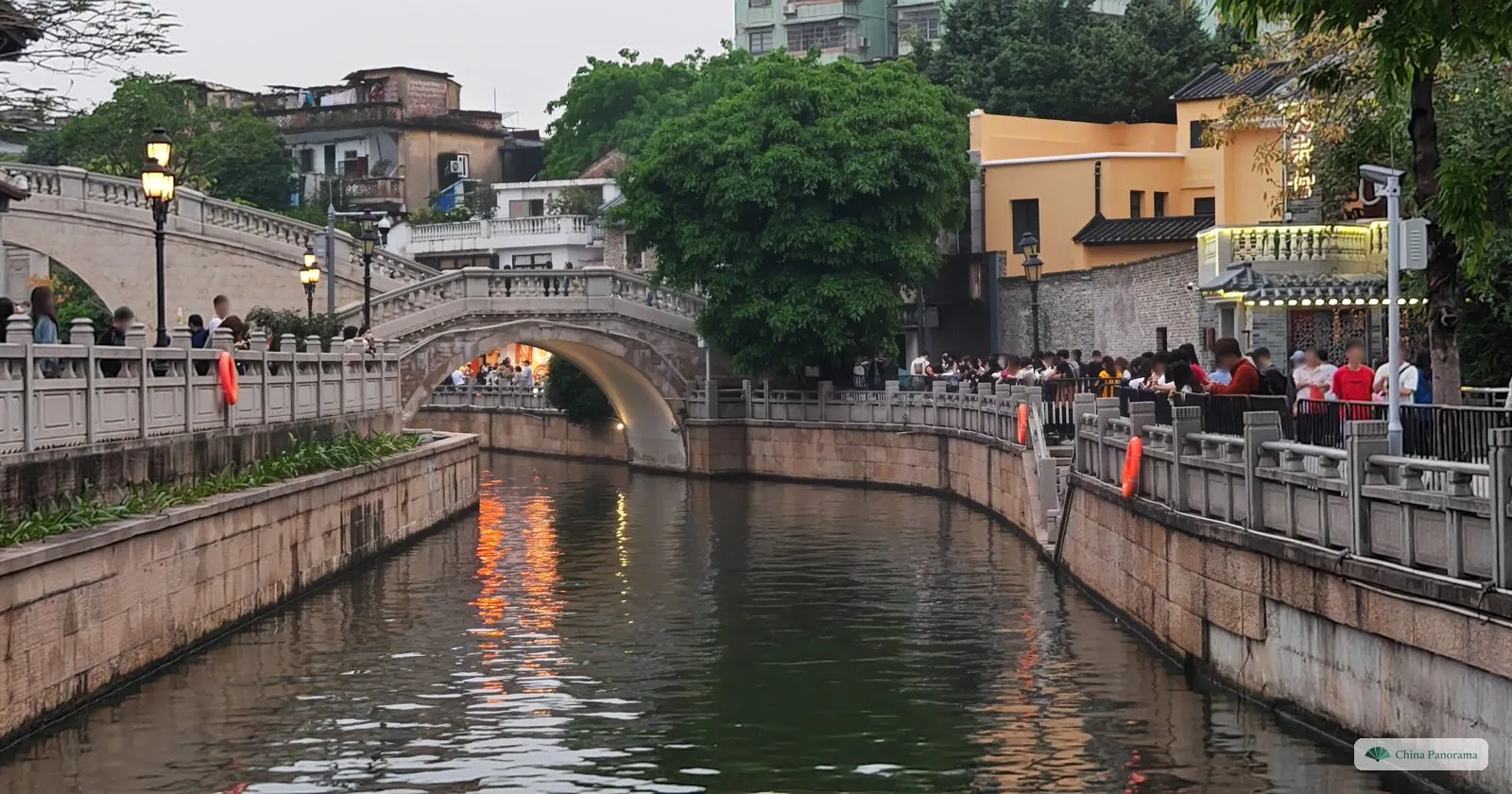
荔枝湾涌ParkLiwan · 荔湾区OutdoorsLiwan, the district, takes its name from Lizhiwan, “Lychee Bay”, the stretch of water west of the old city that was lined with lychee orchards and pleasure boats. Today it is a narrow canal between stone embankments, crossed by humpbacked bridges, with the Cantonese Opera Art Museum on its banks and lychee trees planted along it again. At dusk on 2 April 2023 the railings were lined with people watching the lights come on in the water.
Free and open at all hours. It runs north from Enning Road past the opera museum; Changshou Lu station (Line 1) is about ten minutes away. Boat trips on the canal are reported; we have not checked them.
- Entry
- Free
- Opening hours
- Open at all hours
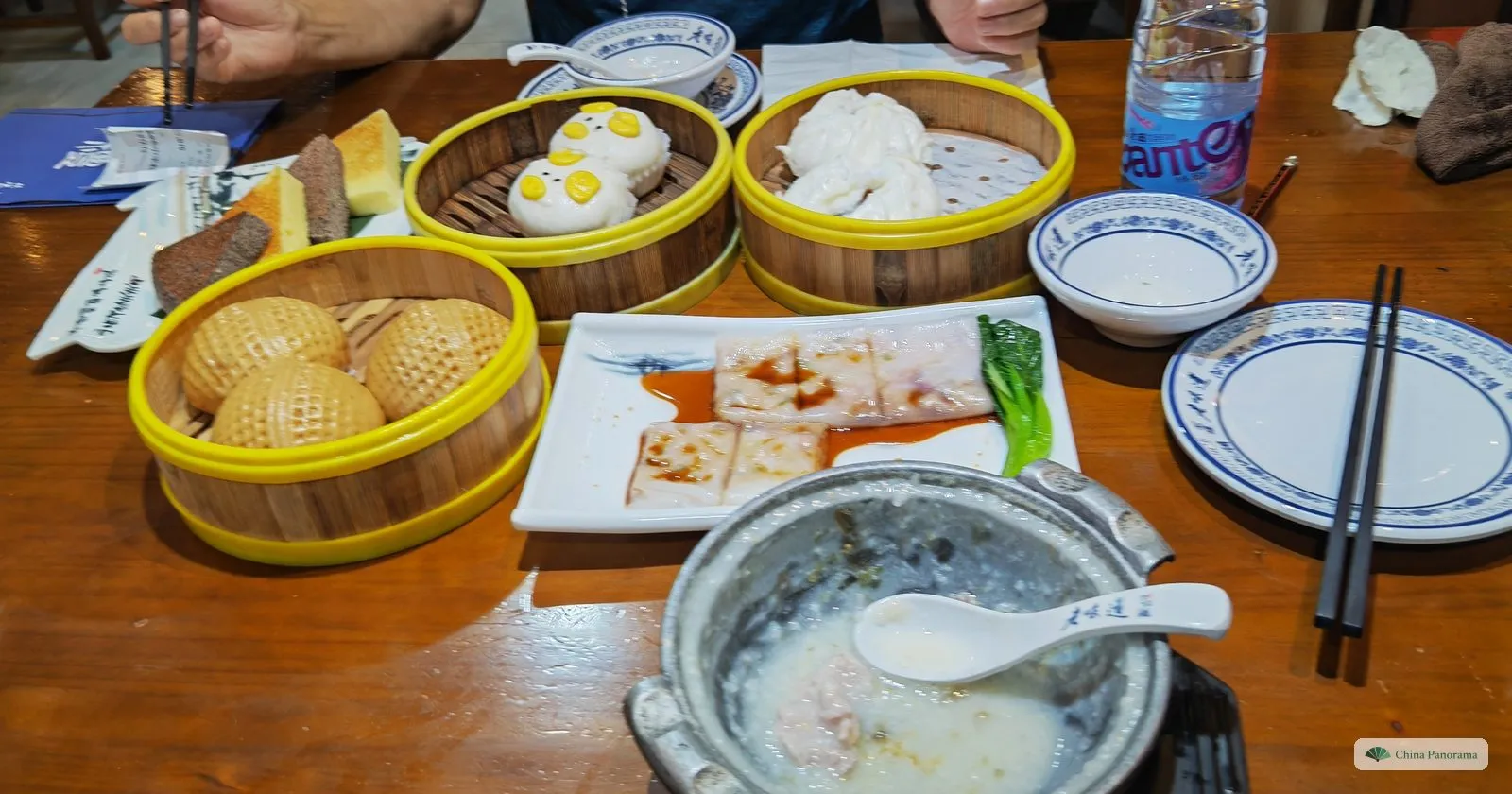
Morning tea (yum cha)
早茶 · 饮茶FoodCitywide · 全市IndoorsIn Guangzhou breakfast is something you sit down to. Yum cha — “drinking tea” — means a pot of tea and dim sum from bamboo steamers, ordered by ticking a printed list: shrimp dumplings (har gow), siu mai, char siu buns, rice-noodle rolls, congee, egg tarts. Families take a round table for the morning; older men read the paper over a single pot. Two customs you will see: when someone pours your tea, tap two fingers on the table to say thank you; and to ask for more hot water, leave the lid of the pot ajar. Our breakfast on 3 April 2023, at 08:25, was rice-noodle rolls with greens, congee in a clay pot, a steamed sponge cake and two kinds of sweet bun.
Teahouses open early, many around seven, and are fullest at weekends from nine. Most charge a small tea fee per person on top of the dishes; prices vary by house and we have not checked them. Ordering is by paper list or by scanning a QR code at the table — our page on ordering food shows both.
- Entry
- Price not verified — check on site
- Opening hours
- Hours not verified — check on site
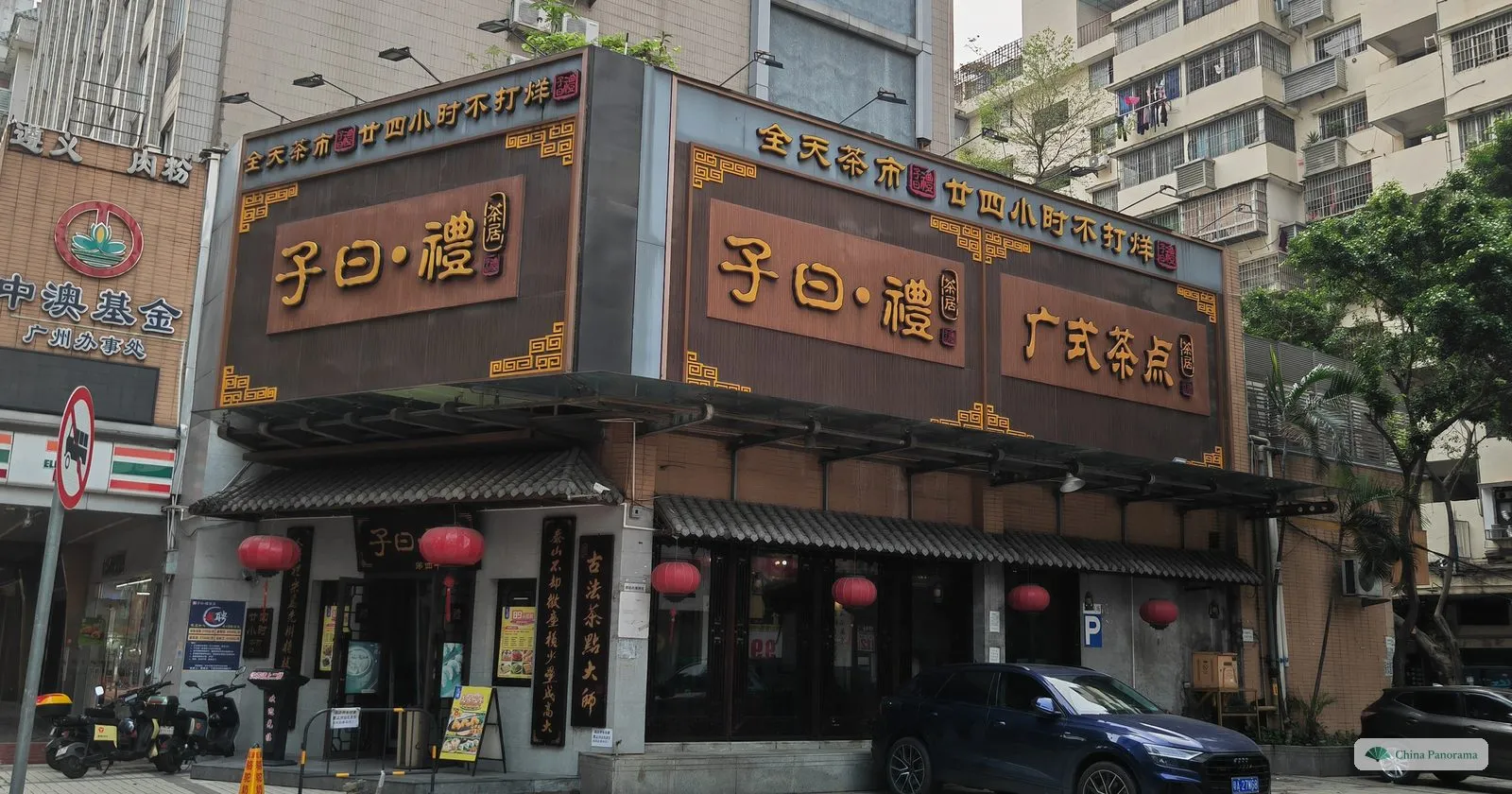
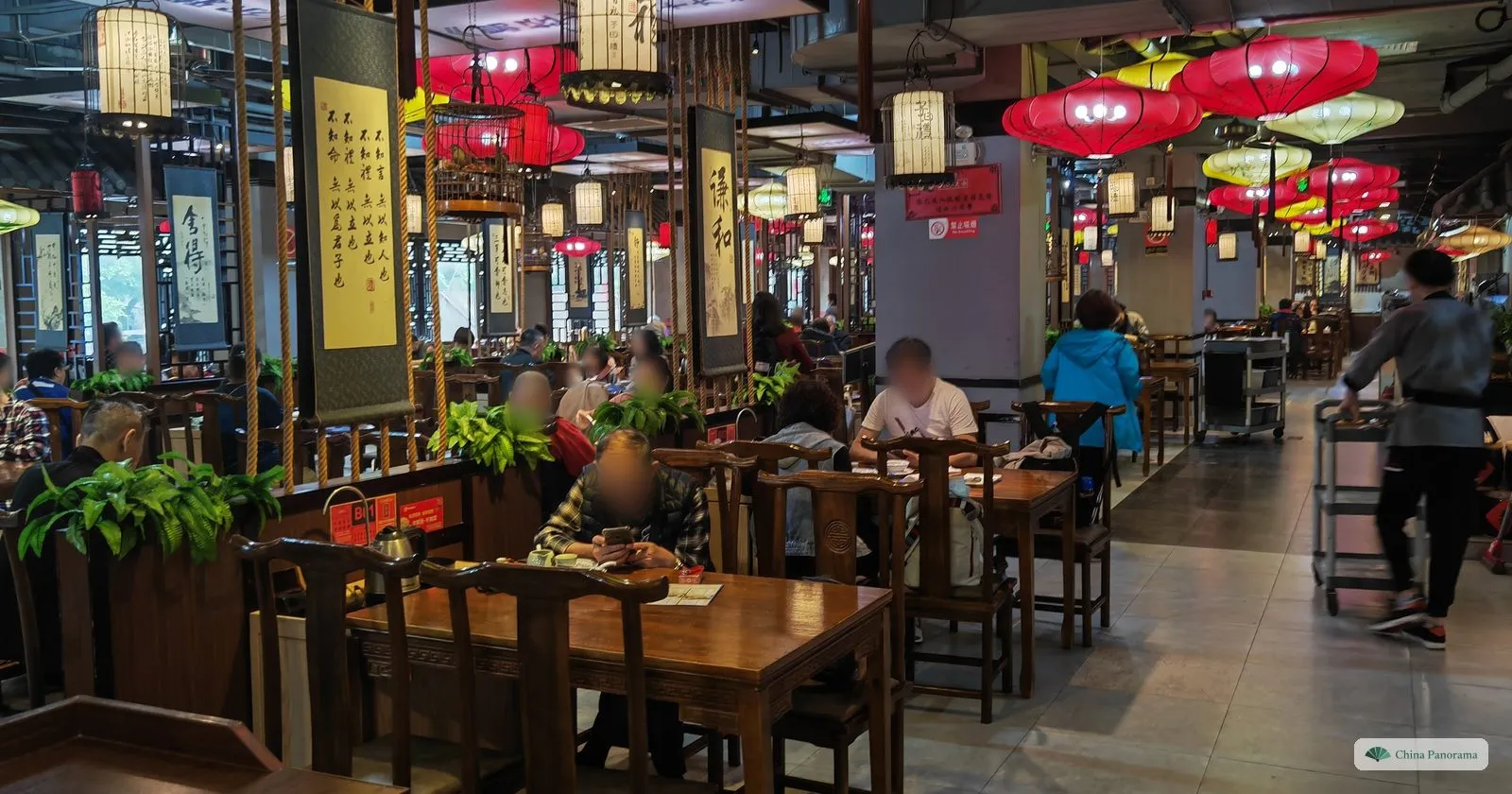
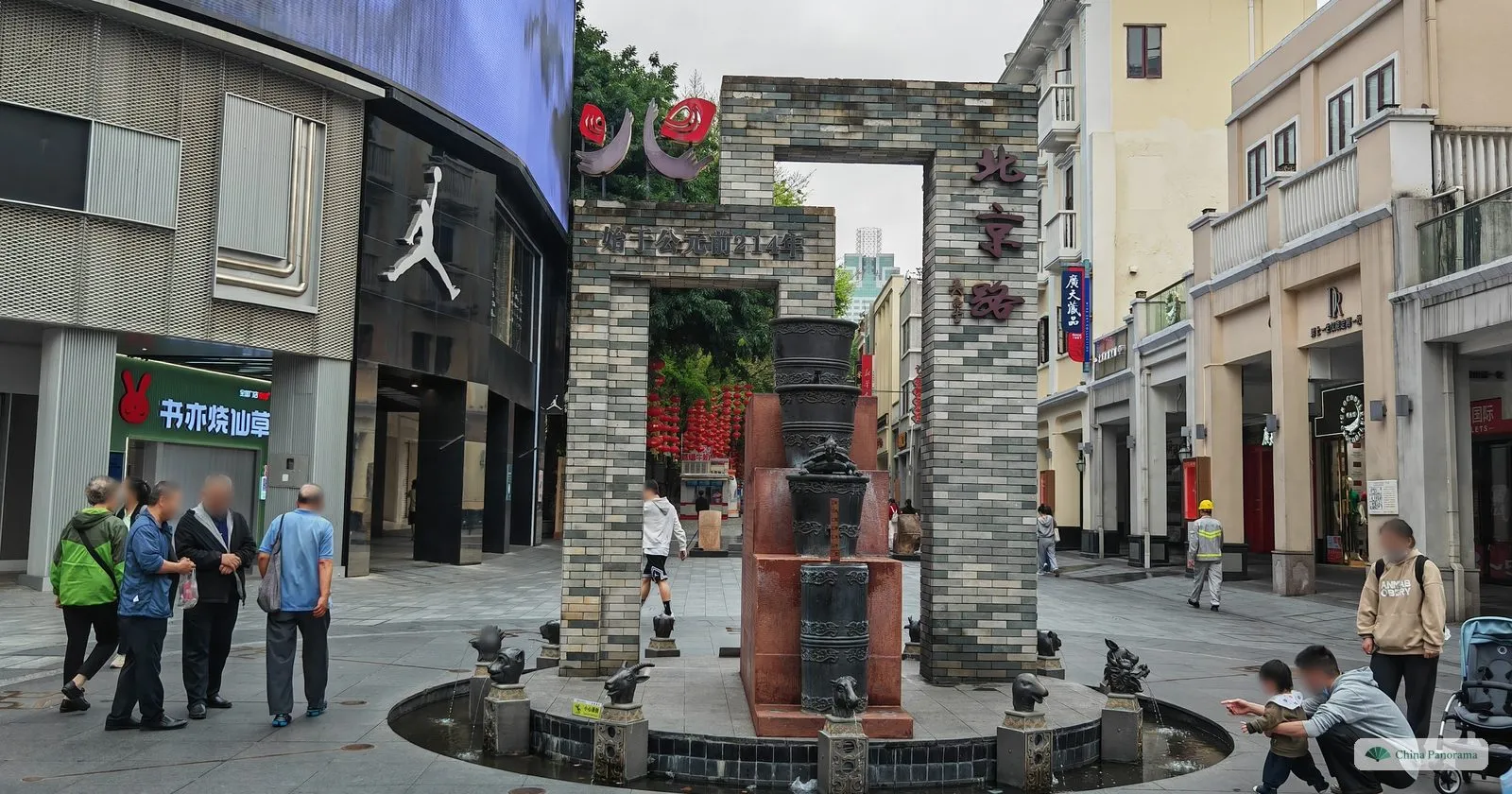
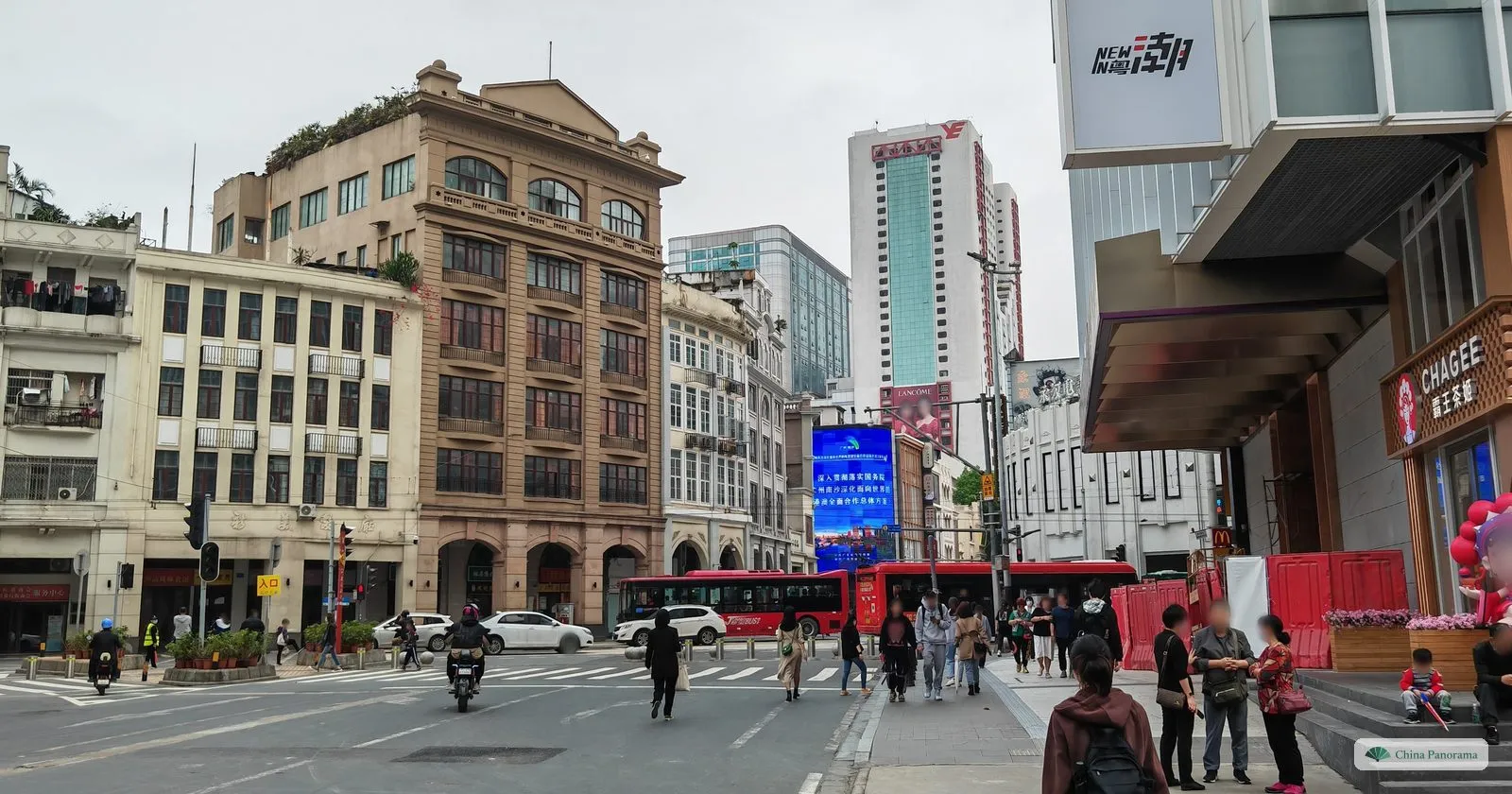
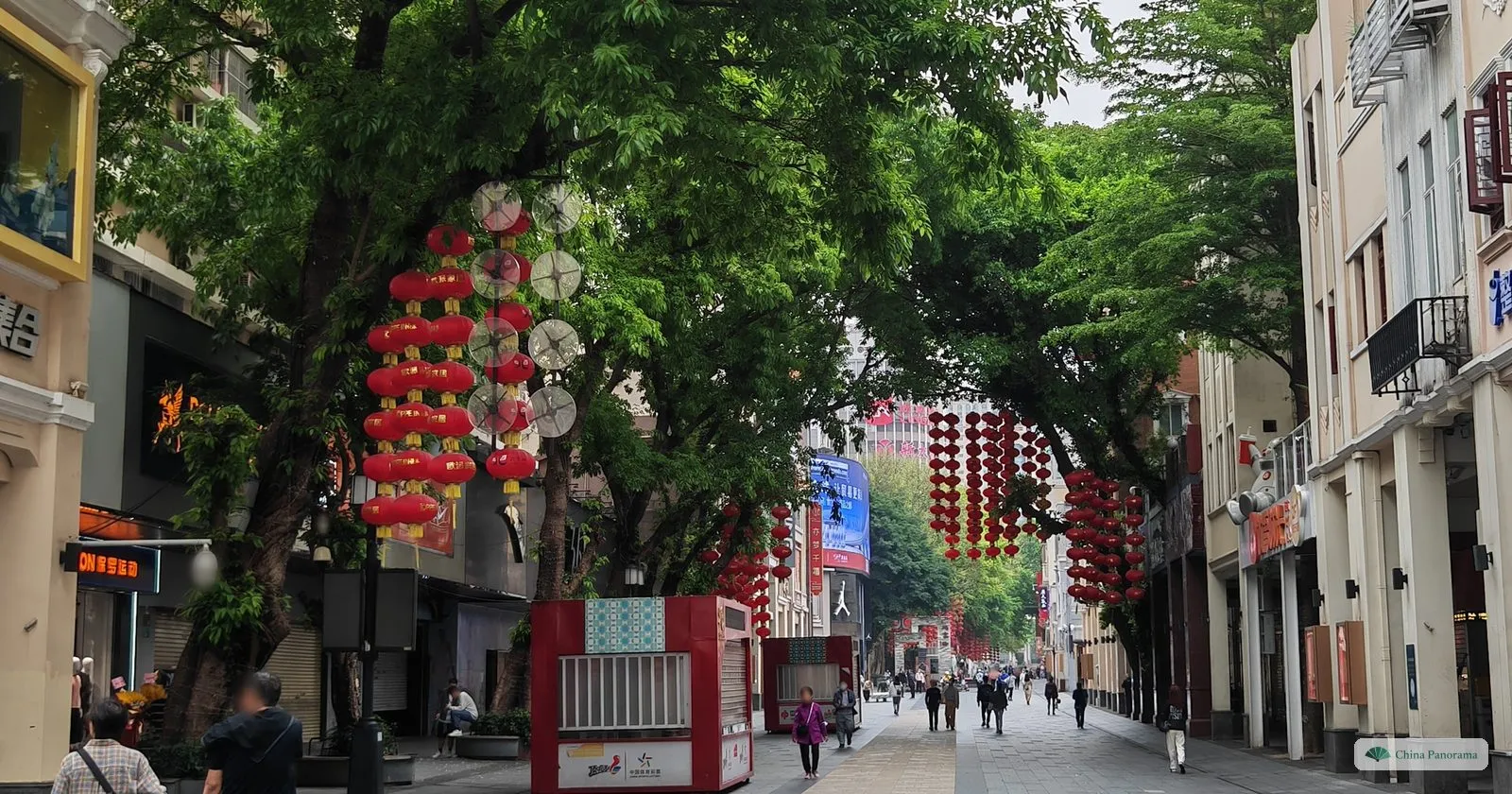 StreetYuexiu · 越秀区Outdoors
The main street of Guangzhou for more than a thousand years, and the proof is under your feet. In 2002 archaeologists digging along it found eleven layers of road surface between 0.5 and 3.3 m down, from five periods — Tang, Southern Han, Song and Yuan, Ming and Qing, and the Republic — together with the foundations of an old city gate tower. Sections are now shown under thick glass in the pavement. Bronze discs set in the paving name the eras: one reads 宋元时期 广州子城中轴大道, “Song and Yuan: the central avenue of the inner city”. Above ground it is a shopping street of department stores, old Cantonese brands and snack shops, hung with red lanterns. At twenty past nine on Monday 3 April 2023 the shutters were still down and we had it almost to ourselves.
Gongyuanqian station (Lines 1 and 2) is at the north end; Beijing Lu station (Line 6) is about eight minutes' walk from the middle. Free and open at all hours; the shops open around ten.
- Entry
- Free
- Opening hours
- Open at all hours
 TempleYuexiu · 越秀区Outdoors
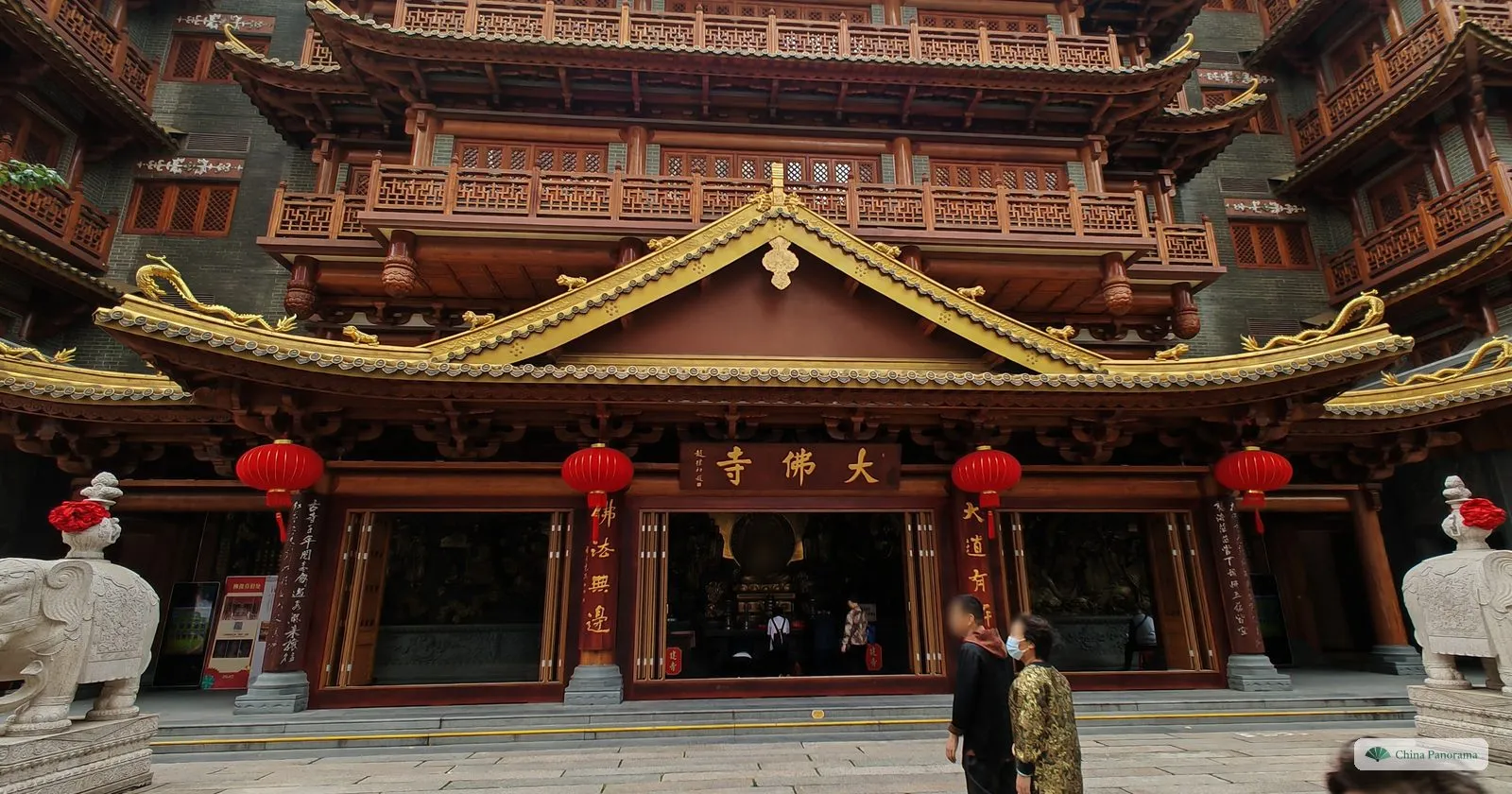
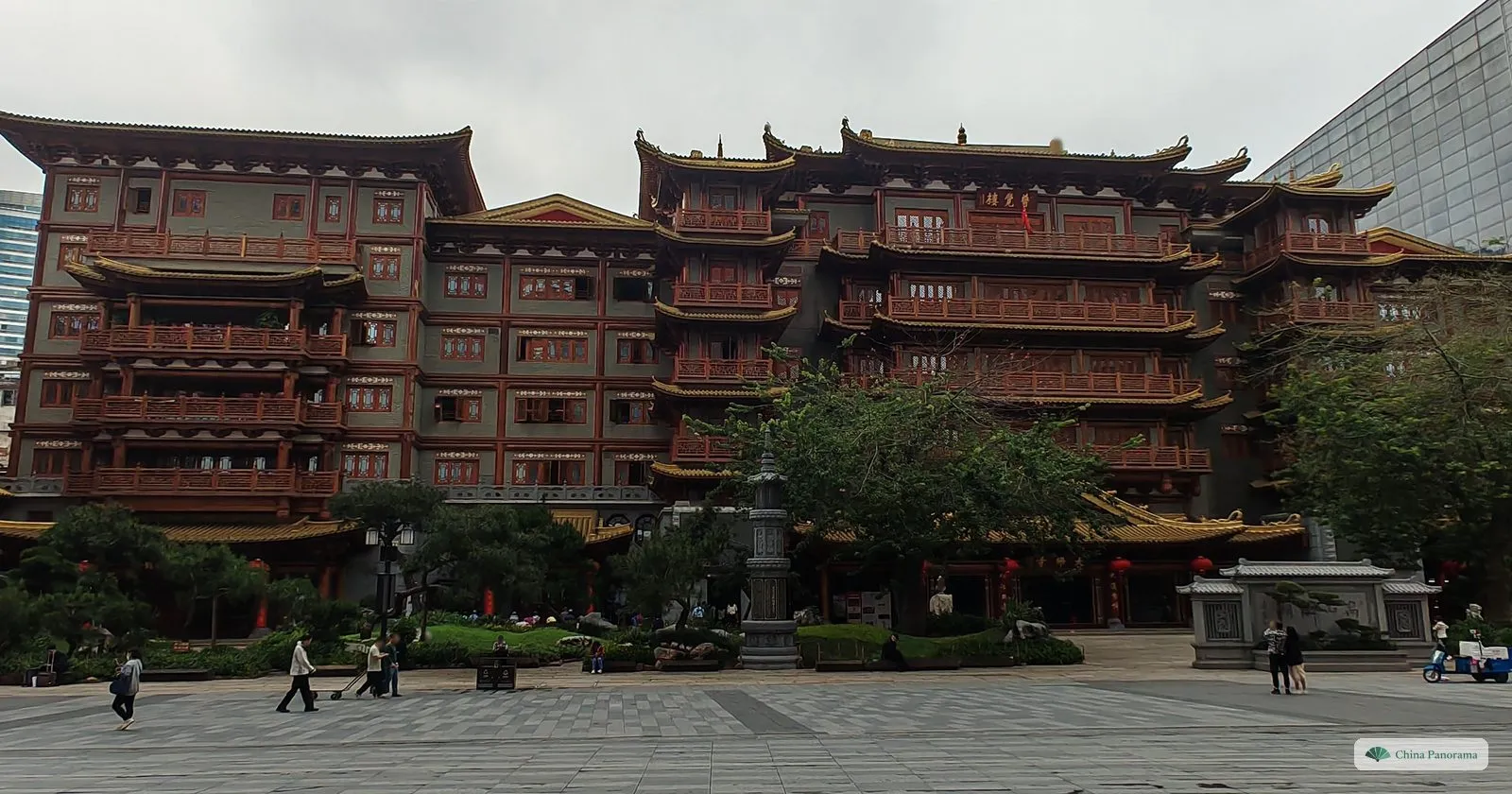
A Buddhist temple a few steps west of Beijing Road, founded under the Southern Han kingdom in the tenth century and rebuilt in 1663 by Shang Kexi, the prince the Qing had installed in Guangzhou. It is named after the three bronze Buddhas in its main hall, each 6 m high. The old halls, in red lacquer and gilt with stone elephants at the steps, are now backed by a much larger new block of halls in the same style, rising several storeys over the square. On a Monday morning in April 2023 it was busy with worshippers, and a service was under way in the main hall.
On Huifu East Road, about five minutes' walk from the middle of Beijing Road. Reported as free, 08:00–18:00; we have not checked either. Dress modestly and do not photograph people at prayer.
- Entry
- Price not verified — check on site
- Opening hours
- Hours not verified — check on site
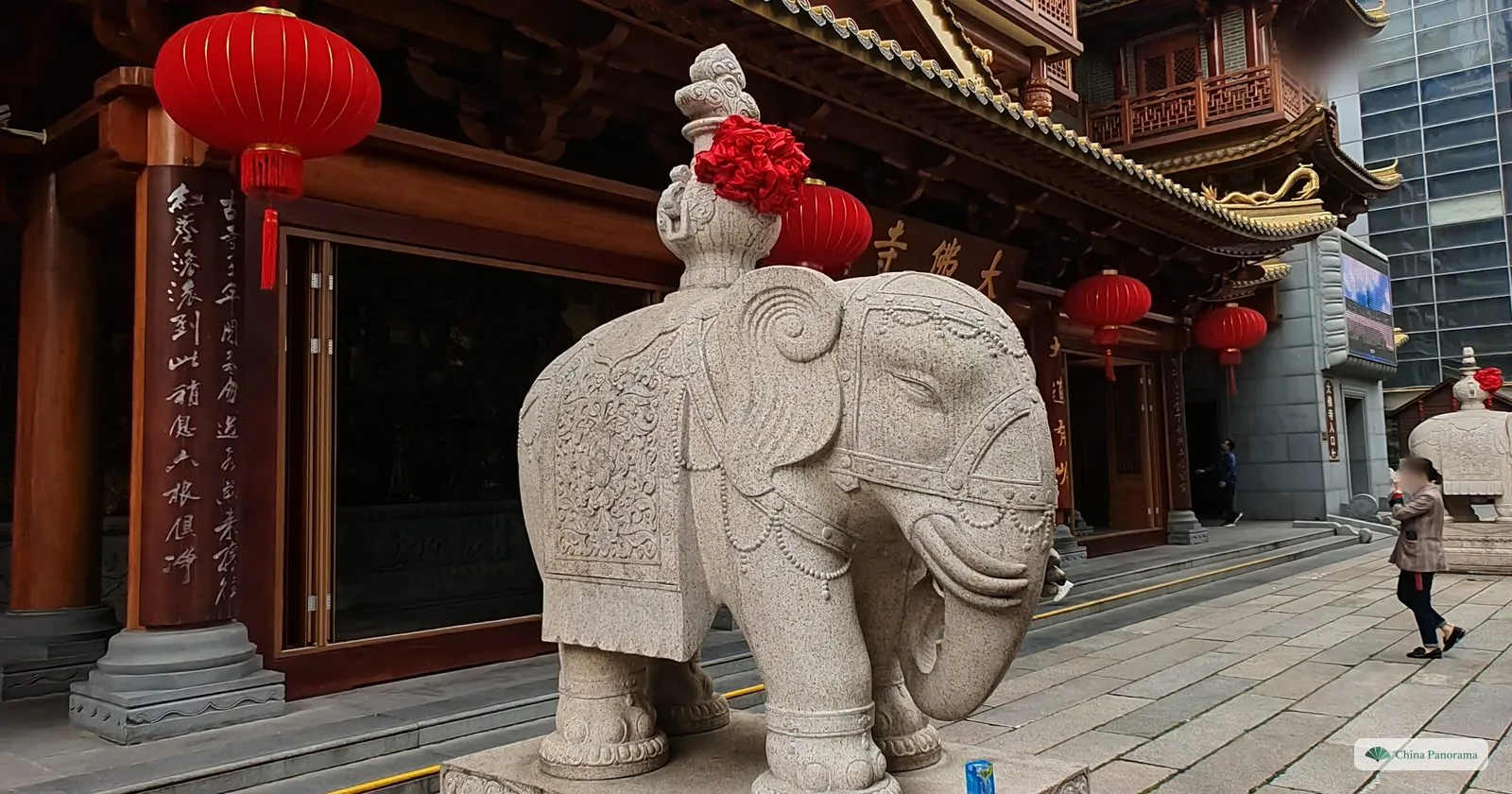
- LandmarkYuexiu · 越秀区Indoors
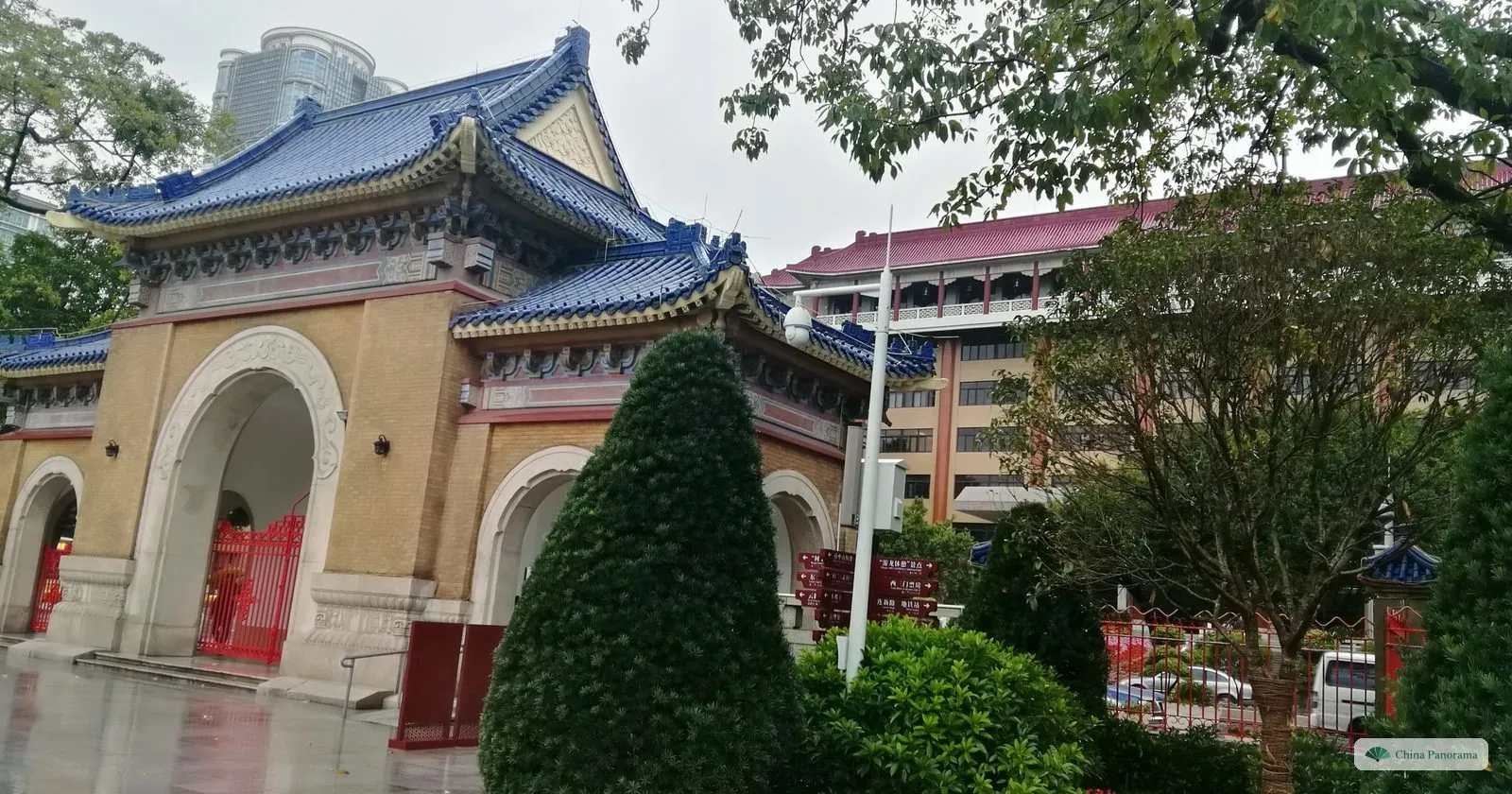
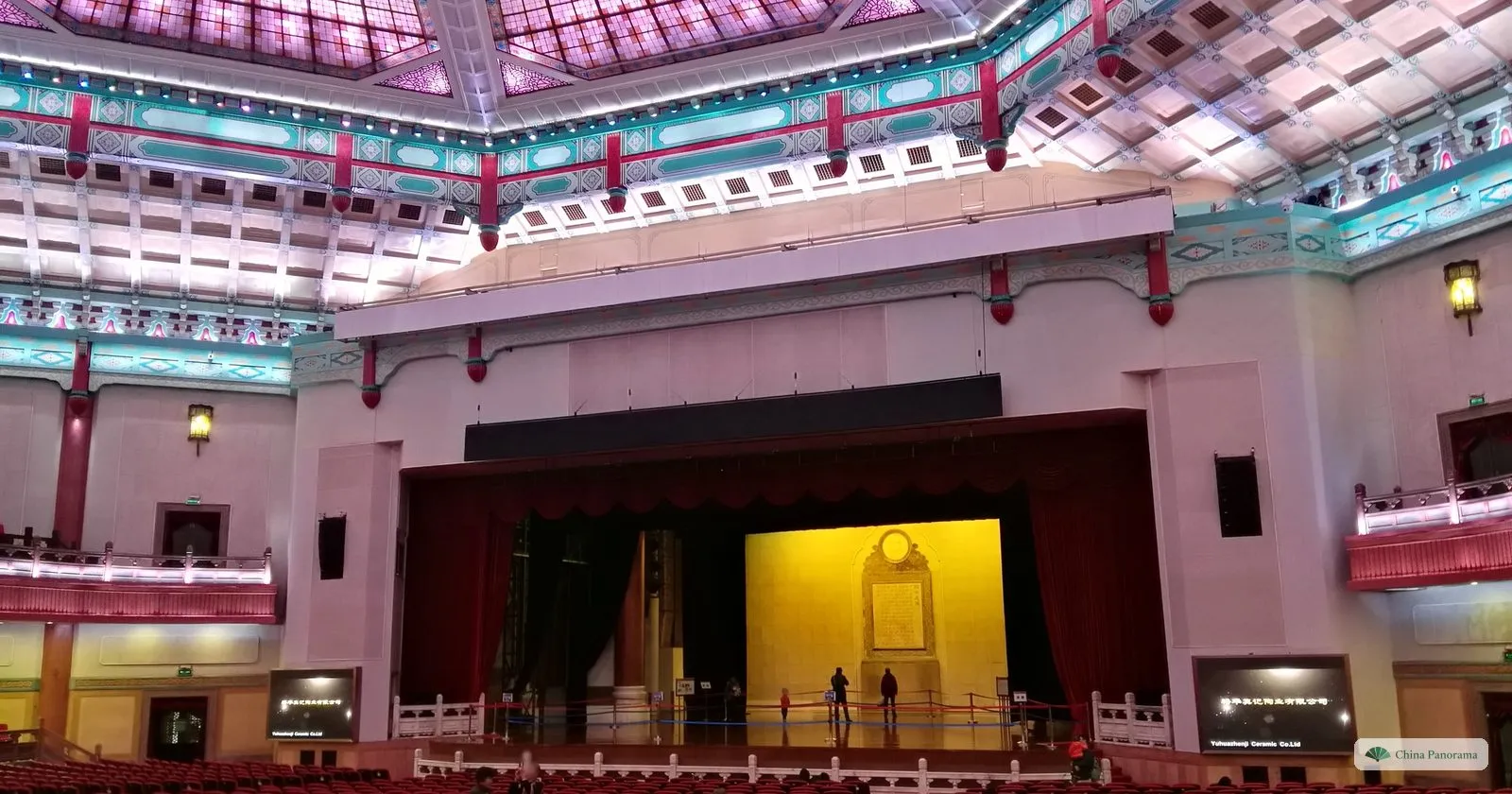
An octagonal hall under a vast roof of blue glazed tiles, built from 1929 to 1931 to the design of the architect Lü Yanzhi in memory of Sun Yat-sen, the first provisional president of the Republic of China. It stands where Sun had his presidential office in Guangzhou. The roof spans 71 m without a single column inside, the hall is 49 m high, and it seats more than 3,000: it is still the city's big concert and assembly hall. Over the entrance hangs Sun's motto 天下为公, “the world belongs to all”; his bronze statue stands in front. We walked round it in steady rain on 8 January 2018 and found the auditorium open.
Sun Yat-sen Memorial Hall station (Line 2) is at the south gate. Reported: 10 CNY, 08:00–18:00; we have not checked either. The auditorium can close for performances and rehearsals. Yuexiu Park begins just behind the hall.
- Entry
- Price not verified — check on site
- Opening hours
- Hours not verified — check on site
Yuexiu Park
越秀公园ParkYuexiu · 越秀区OutdoorsA park of 86 hectares of wooded hills and lakes at the northern edge of the old city. Two things to find: the Five Rams statue, carved in 1960 from more than 130 blocks of granite, which tells the legend that gave Guangzhou the name “City of Rams” — five immortals riding rams brought the first rice to the city; and the Zhenhai Tower, a five-storey red watchtower on the old city wall, first built in 1380 and 28 m high, which now houses the Guangzhou Museum.
Yuexiu Park station (Line 2) is at the west gate; the south gate is a few minutes behind the Sun Yat-sen Memorial Hall. We have not checked entry to the park or the museum's ticket and hours.
- Entry
- Price not verified — check on site
- Opening hours
- Hours not verified — check on site
Sacred Heart Cathedral
石室圣心大教堂ArchitectureYuexiu · 越秀区IndoorsA Gothic cathedral built entirely of granite — walls, pillars and both towers — which is why Guangzhou calls it Shishi, “the stone house”. The French architect Léon Vautrin modelled it on the Basilica of Sainte-Clotilde in Paris; work began in 1861 and took until 1888, with the granite shipped in from Kowloon. The two spires are 52.76 m high, one a clock tower, the other a bell tower. It is a working church, with Mass in Cantonese, Mandarin, Korean and English.
56 Yide Road, about 1 km south-west of Beijing Road, a short walk from Haizhu Square station (Lines 2 and 6). We have not checked visiting hours; outside Mass times the doors are not always open.
- Entry
- Price not verified — check on site
- Opening hours
- Hours not verified — check on site
Canton Tower
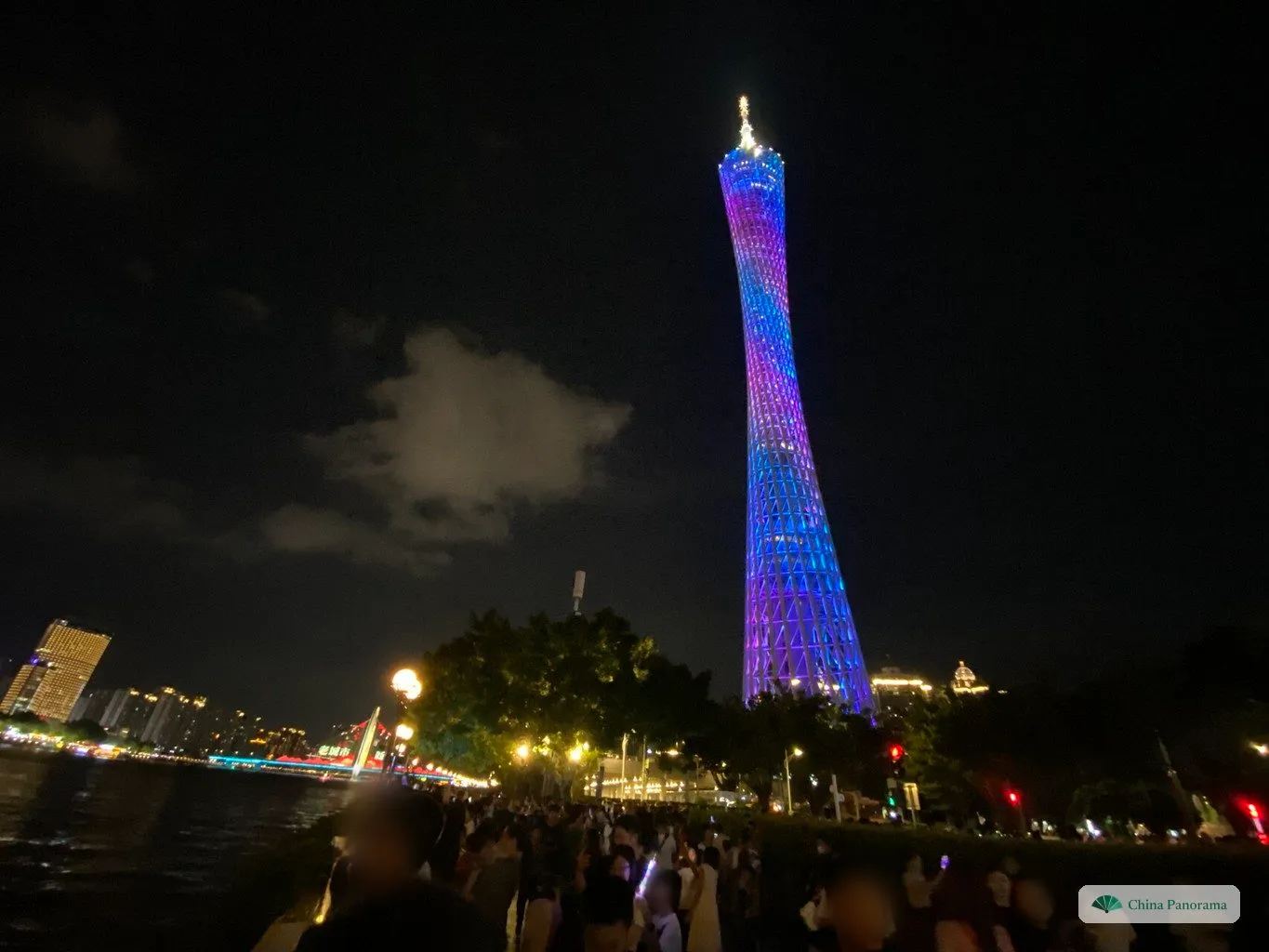
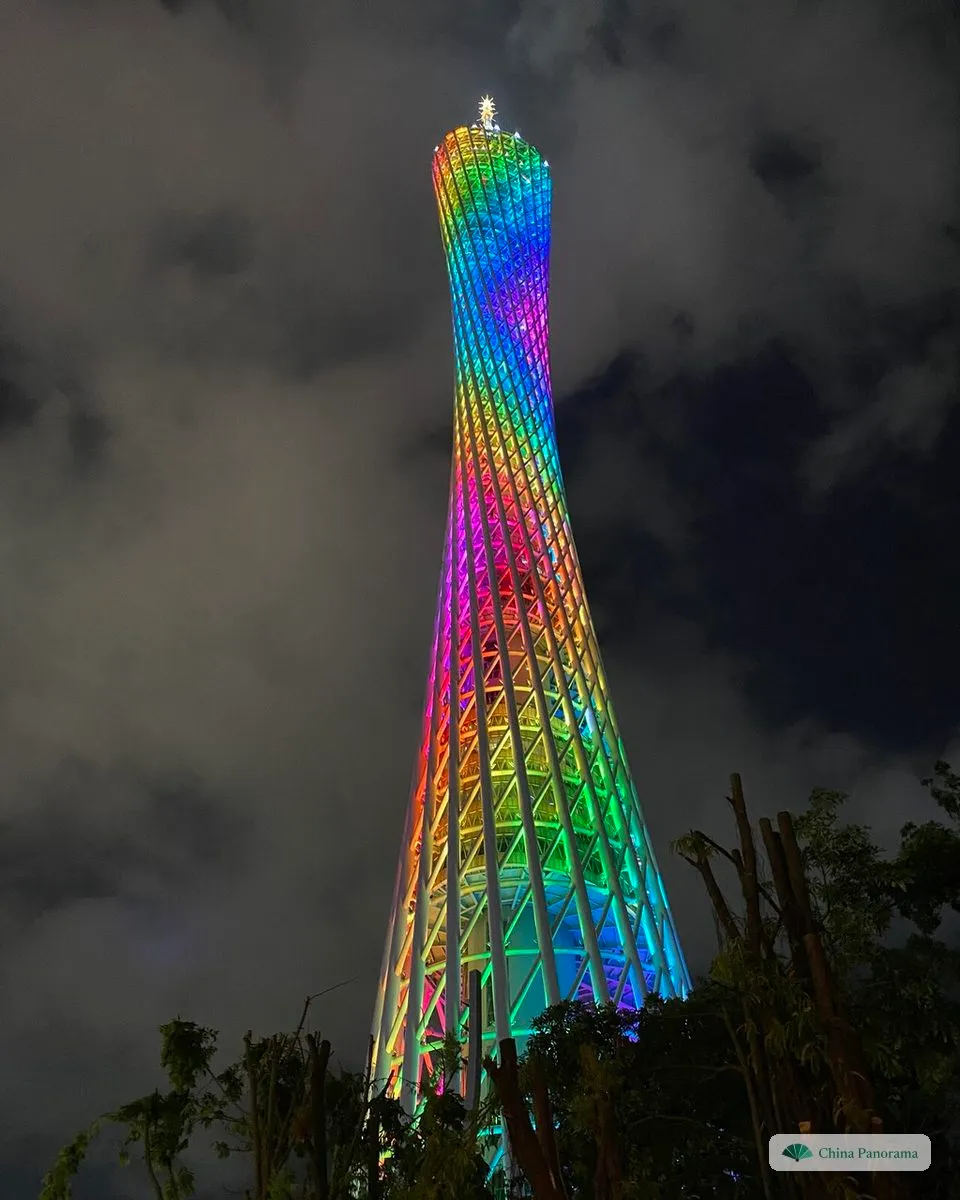
广州塔LandmarkHaizhu · 海珠区IndoorsThe television tower on the south bank of the river, opened on 1 October 2010 for the Asian Games: a 450 m lattice body twisted and pinched at the waist — the city calls it xiaomanyao, “slim waist” — with a 150 m mast on top, 600 m in all. It was designed by the Dutch architects Mark Hemel and Barbara Kuit with the engineers Arup. Inside are paid observation levels, an open-air deck at 488 m, a revolving restaurant, a drop ride and the Bubble Tram, glass cabins that circle the rim of the roof. You do not have to go up to enjoy it: after dark the whole lattice is lit and changes colour, best seen from the north bank at Haixinsha or Ersha Island, or from the Haixin Bridge, a footbridge opened in 2021 that leads across the river to its foot. Our photographs show it both ways — in January 2018 with its top lost in rain cloud, and lit in rainbow colours from the riverbank.
Canton Tower station (Line 3 and the APM) is at the foot. Tickets are priced by height and reported from about 150 CNY for the lowest observation level, with the 488 m deck and the Bubble Tram costing more; reported hours 09:30–22:30. We have not checked prices or hours. On a cloudy day the top is often in cloud — check the sky before you pay.
- Entry
- Price not verified — check on site
- Opening hours
- Hours not verified — check on site
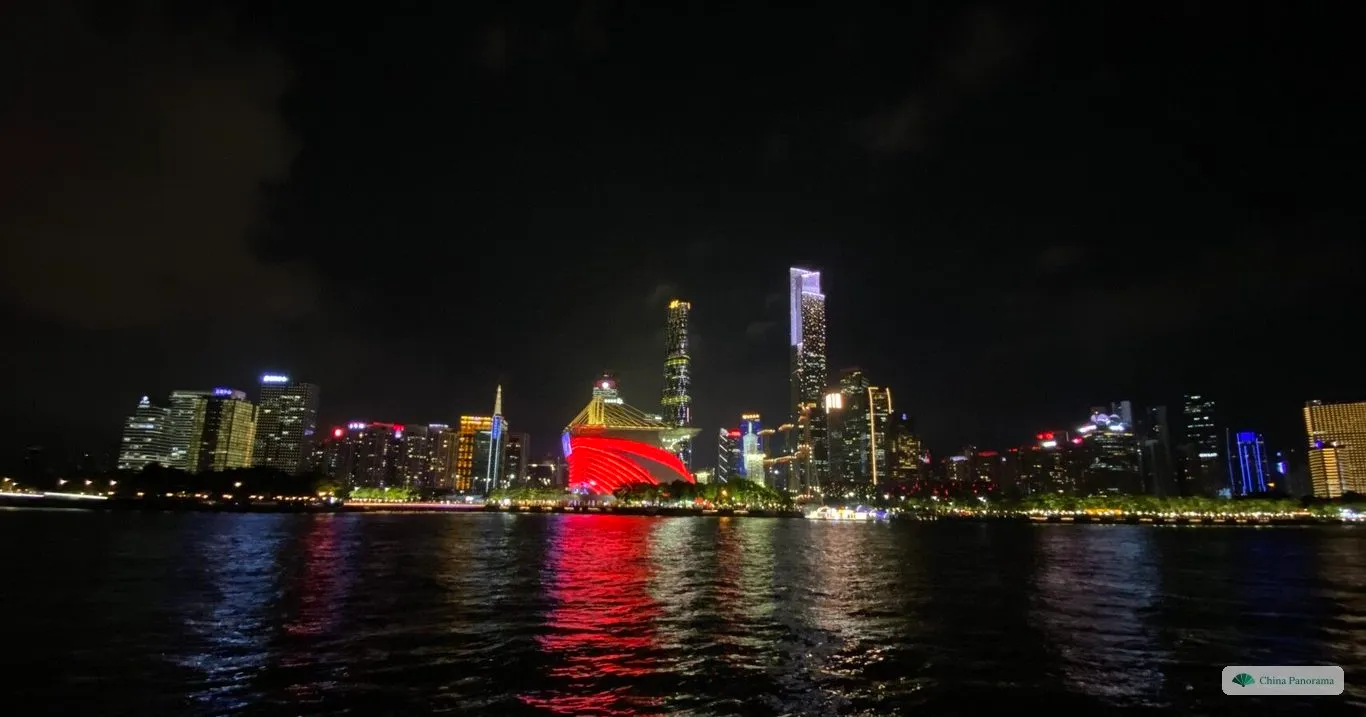
Huacheng Square and Zhujiang New Town
花城广场 · 珠江新城ArchitectureTianhe · 天河区OutdoorsGuangzhou's business district, built largely in the run-up to the 2010 Asian Games along the city's new central axis: a chain of open squares about 1.5 km long — Huacheng, “Flower City”, Square — running south to the river, with shopping and a people-mover underneath. The two tallest towers frame it: the Guangzhou International Finance Center, the West Tower, at 440 m, and the CTF Finance Centre, the East Tower, at 530 m, the tallest building in the city. At the river end stand four cultural buildings: Zaha Hadid's Opera House, the Guangdong Museum, the Children's Palace and the Guangzhou Library, whose two stacked halves with a glass canyon between them opened in 2013. In front, Haixinsha, an island in the river, was the stage for the opening ceremony of the 2010 Asian Games; at night its grandstand and fountains are lit and the promenade fills with families.
Zhujiang New Town station (Lines 3 and 5), or the APM, a small driverless line under the square with stations at Huacheng Avenue, the Opera House and Haixinsha (flat fare of 2 CNY). The squares and Haixinsha are free and open at all hours. The library is free; the Guangdong Museum is free but needs a timed reservation under your real name. We have not checked the library's hours.
- Entry
- Free
- Opening hours
- Open at all hours
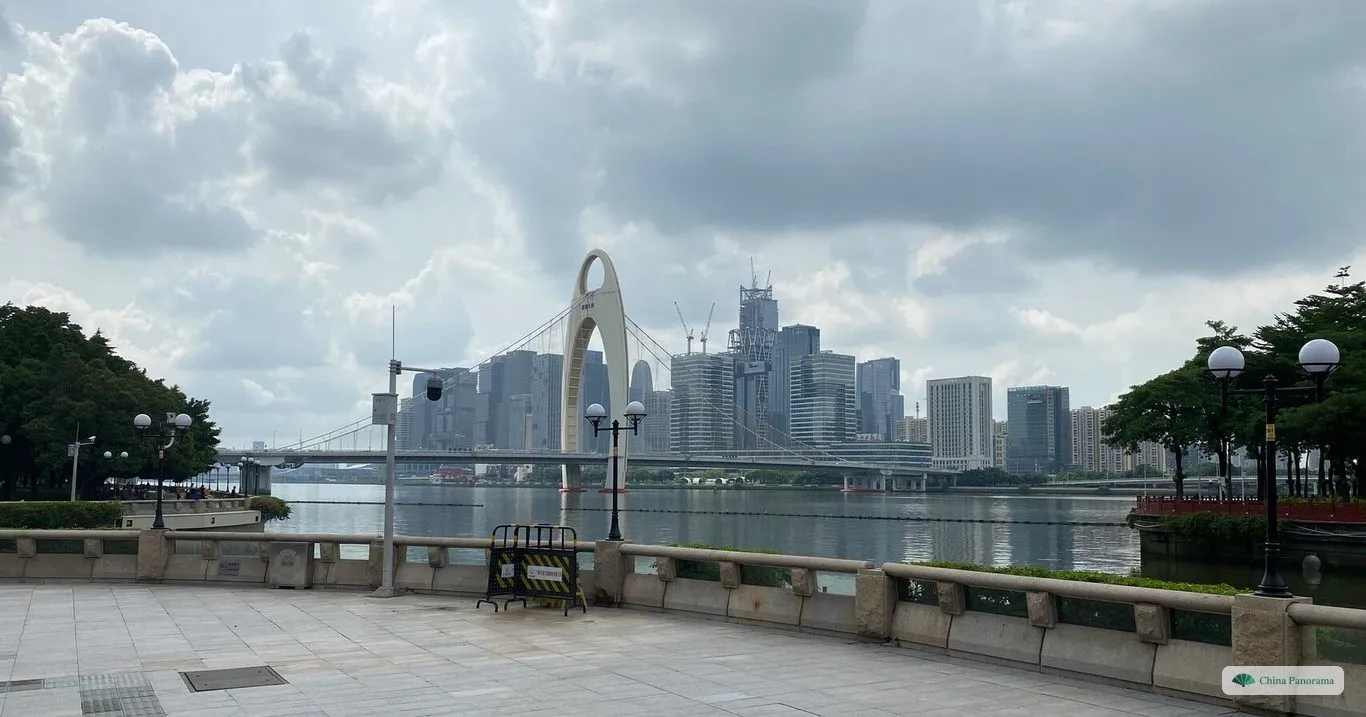
The Pearl River and the night cruise
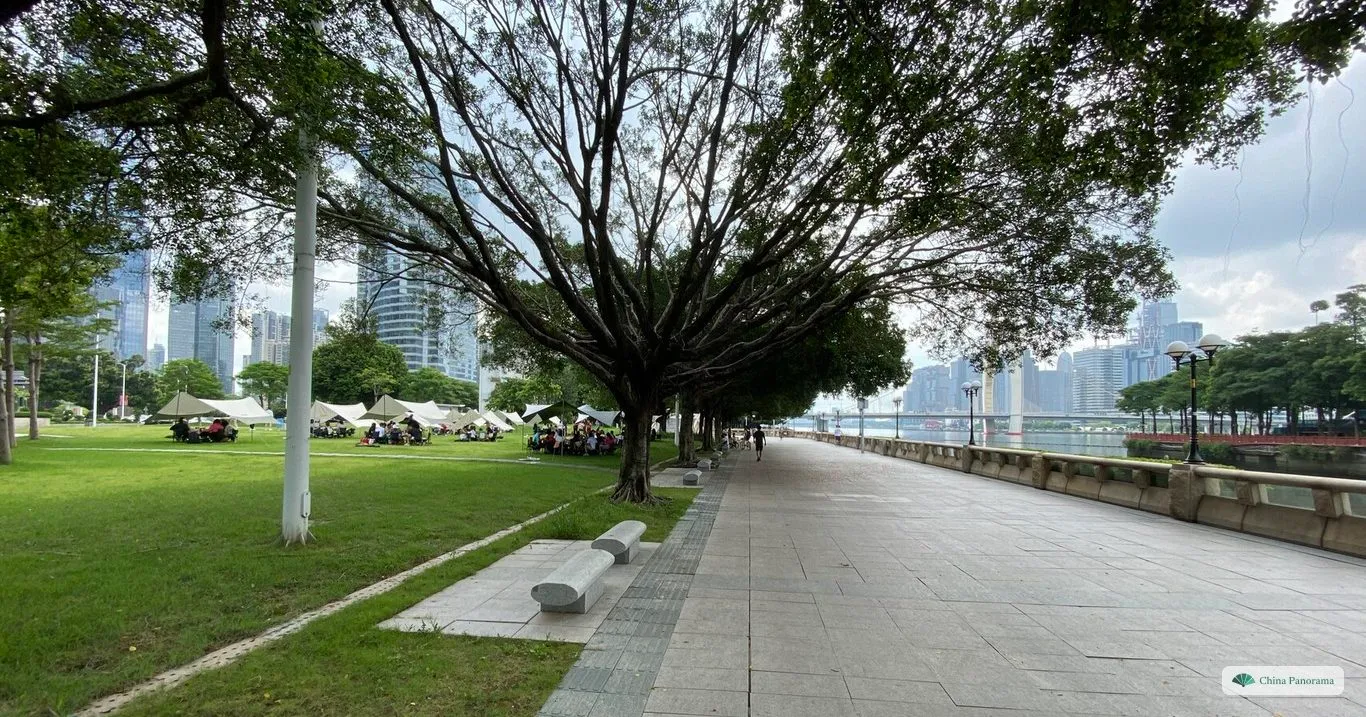
珠江夜游 · 滨江步道LandmarkTianhe · 天河区OutdoorsAfter dark the river is the city's stage. Evening cruises leave from three piers — Dashatou, Tianzi near Beijing Road, and the Canton Tower's own pier — and run past the lit towers of Zhujiang New Town and the tower itself and back. If you would rather walk, both banks have wide promenades under banyan trees, and the bridges are part of the show: the Liede Bridge, with a single pylon shaped like two shells, and the Haixin footbridge between Ersha Island and the Canton Tower.
Reported: departures between about 18:40 and 22:30, from roughly 88 CNY on the lower deck to over 300 CNY with a buffet, 60 to 90 minutes, passport needed to board. We have not checked any of it — book on the day at the pier or through a travel app. The promenades are free.
- Entry
- Price not verified — check on site
- Opening hours
- Hours not verified — check on site
Whampoa Military Academy
黄埔军校旧址MuseumHuangpu · 黄埔区OutdoorsThe officers' school that Sun Yat-sen's Nationalist party founded in May 1924, with Soviet advisers, on Changzhou Island in the Pearl River east of the city — Whampoa is the old spelling of Huangpu. Chiang Kai-shek was its commandant and Zhou Enlai headed its political department; the first class of 490 graduated that November, and men trained here led armies on both sides of China's civil war. The main school building was flattened by Japanese bombing in 1938 and rebuilt in 1996 on its original site, to its original dimensions and appearance: what you walk through — the gate under the plaque 陸軍軍官學校, the grey-roofed classrooms and dormitories around their courtyards — is the reconstruction. After a renovation the museum reopened on 16 June 2024, with a database of more than 170,000 cadets. The Xinhai Revolution Museum is on the same island, less than 2 km away.
Free, but you reserve a time slot under your real name in the WeChat mini programme 辛亥黄埔参观预约; whether it accepts a foreign passport without help we have not tested. Closed on Mondays except public holidays; reported hours 09:00–17:00, last entry 16:15. Metro Line 7 runs to Changzhou station, about 23 minutes' walk from the gate. We came by car, ten minutes from Lingnan Impression Park.
- Entry
- Free
- Opening hours
- Hours not verified — check on site
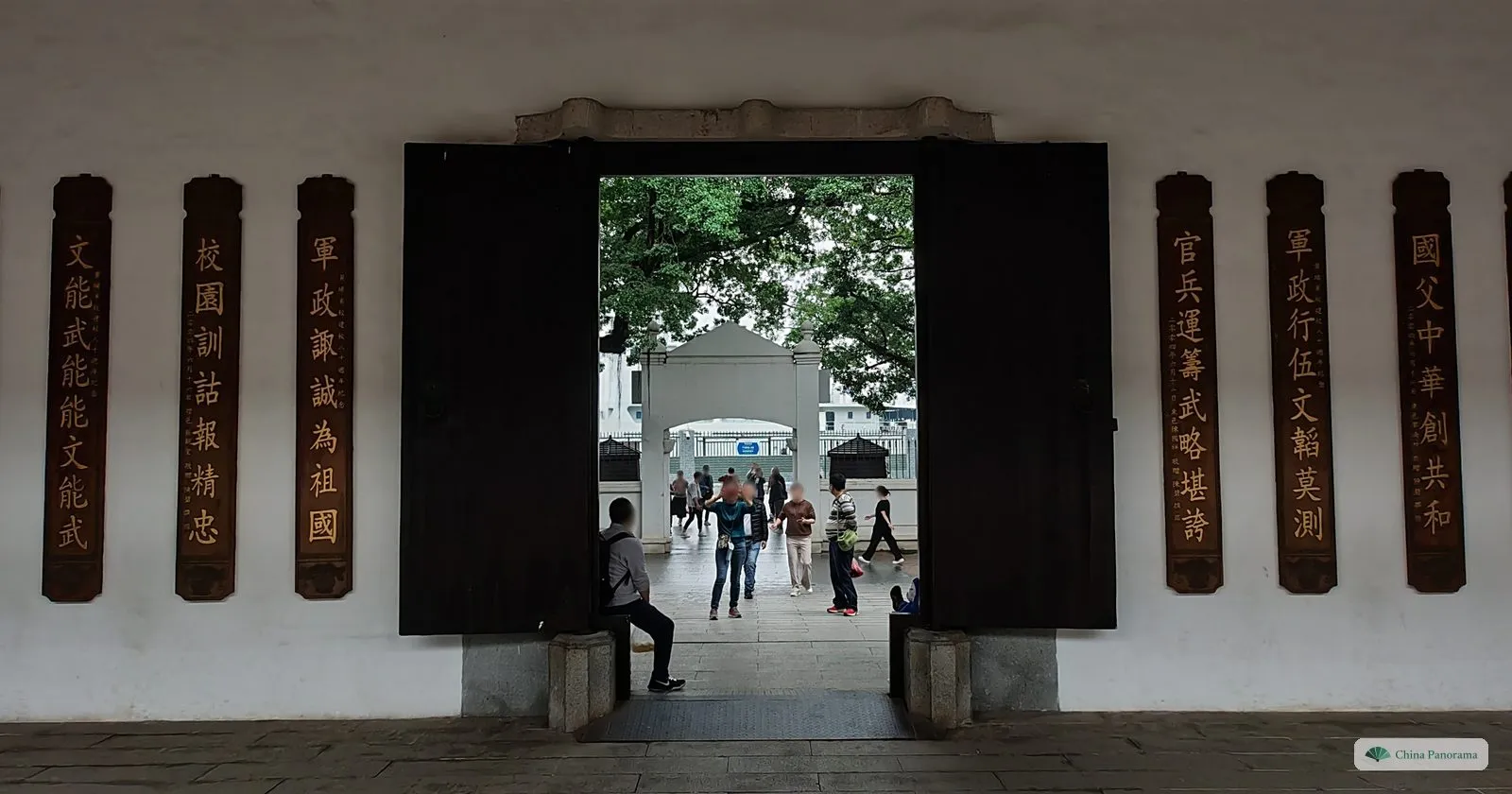
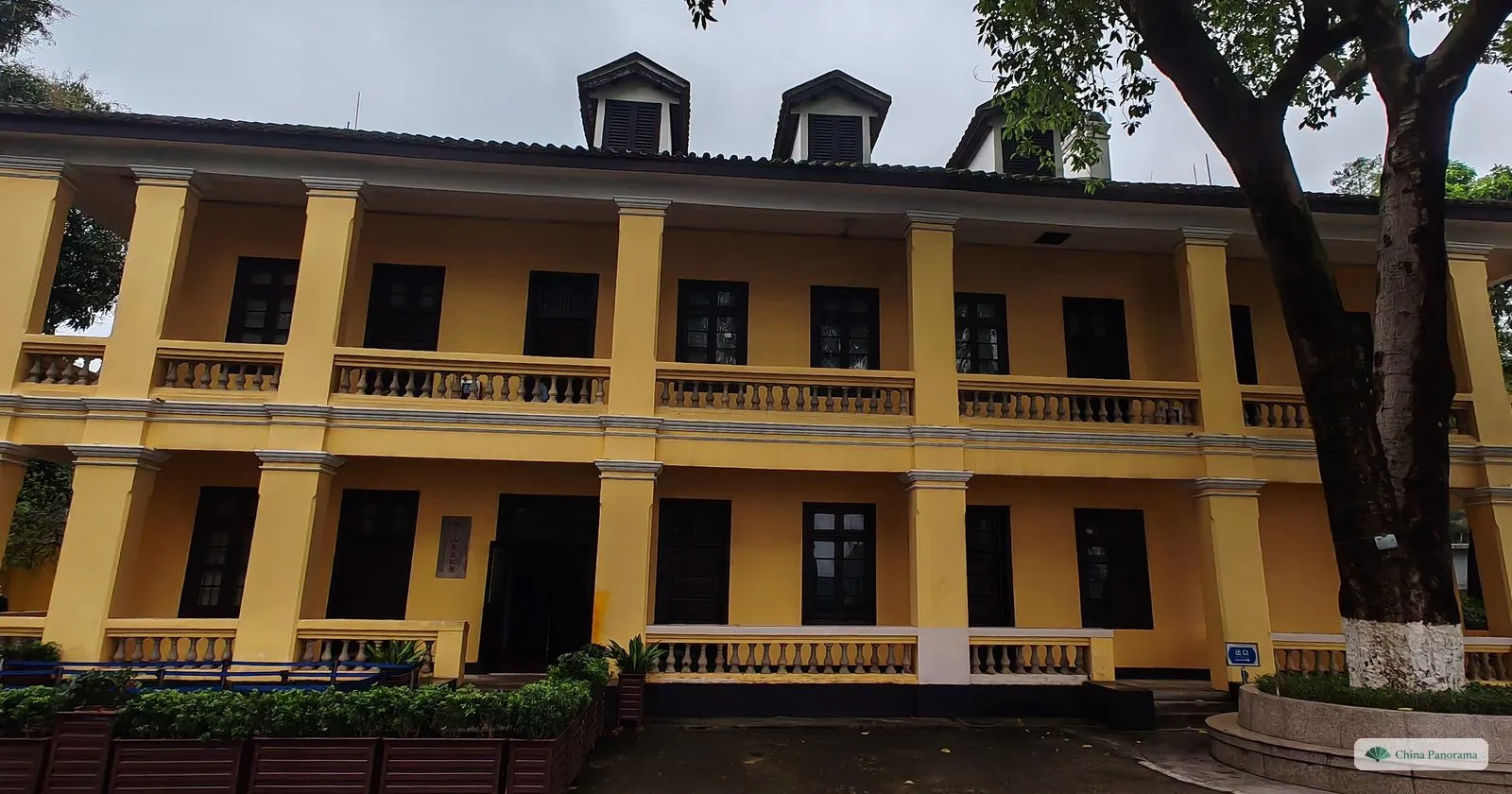
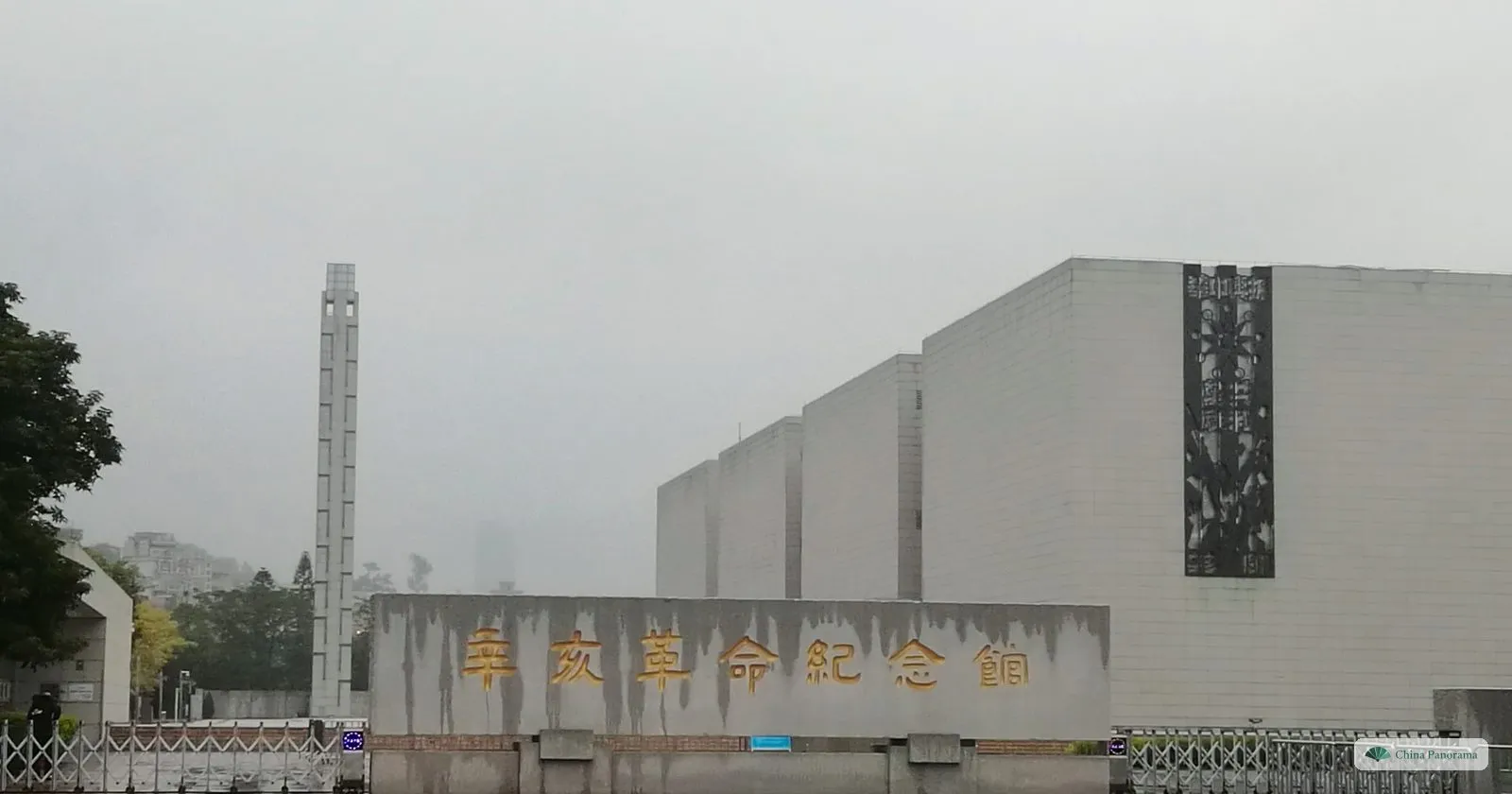
- ParkPanyu · 番禺区Outdoors
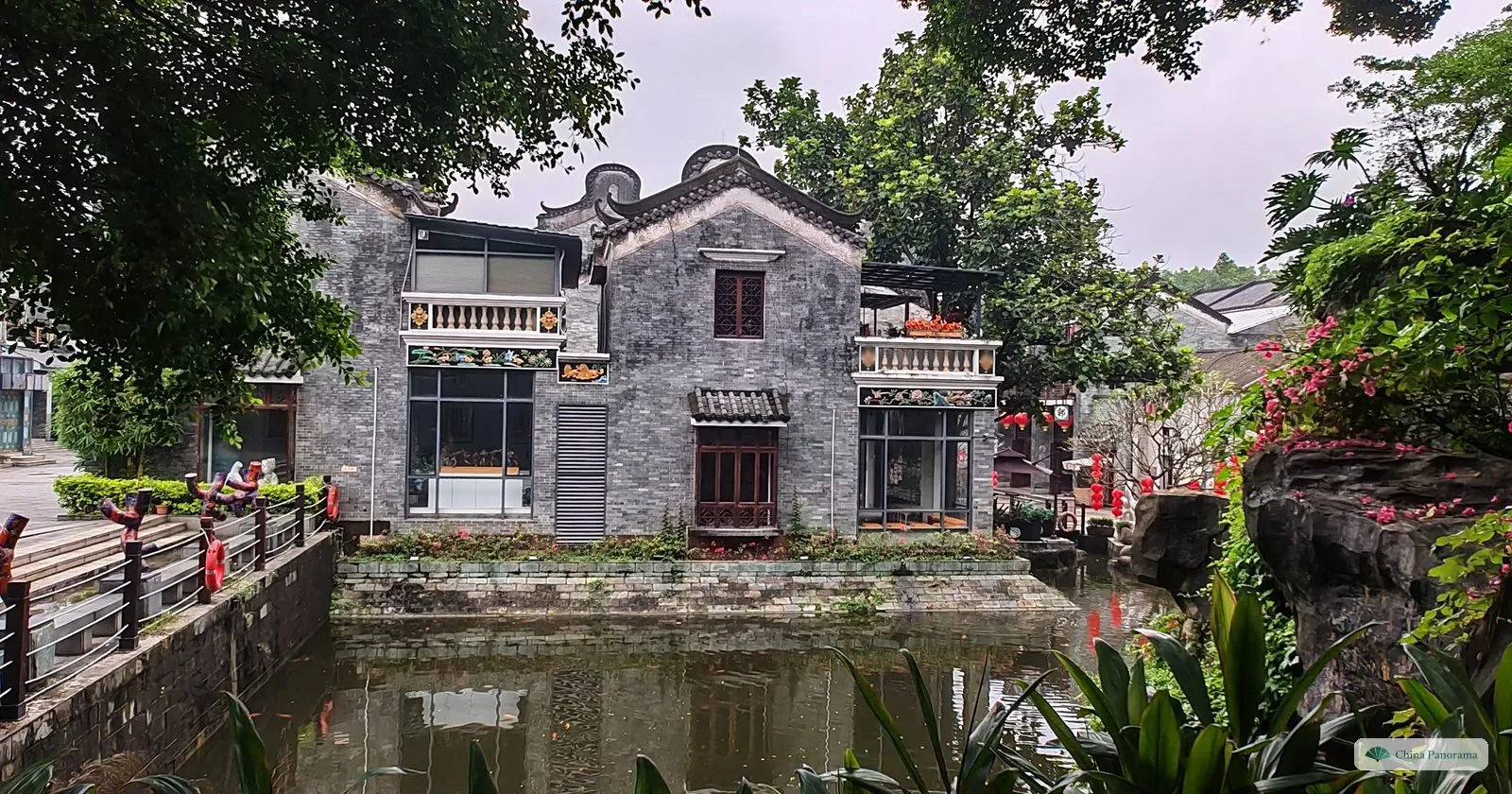
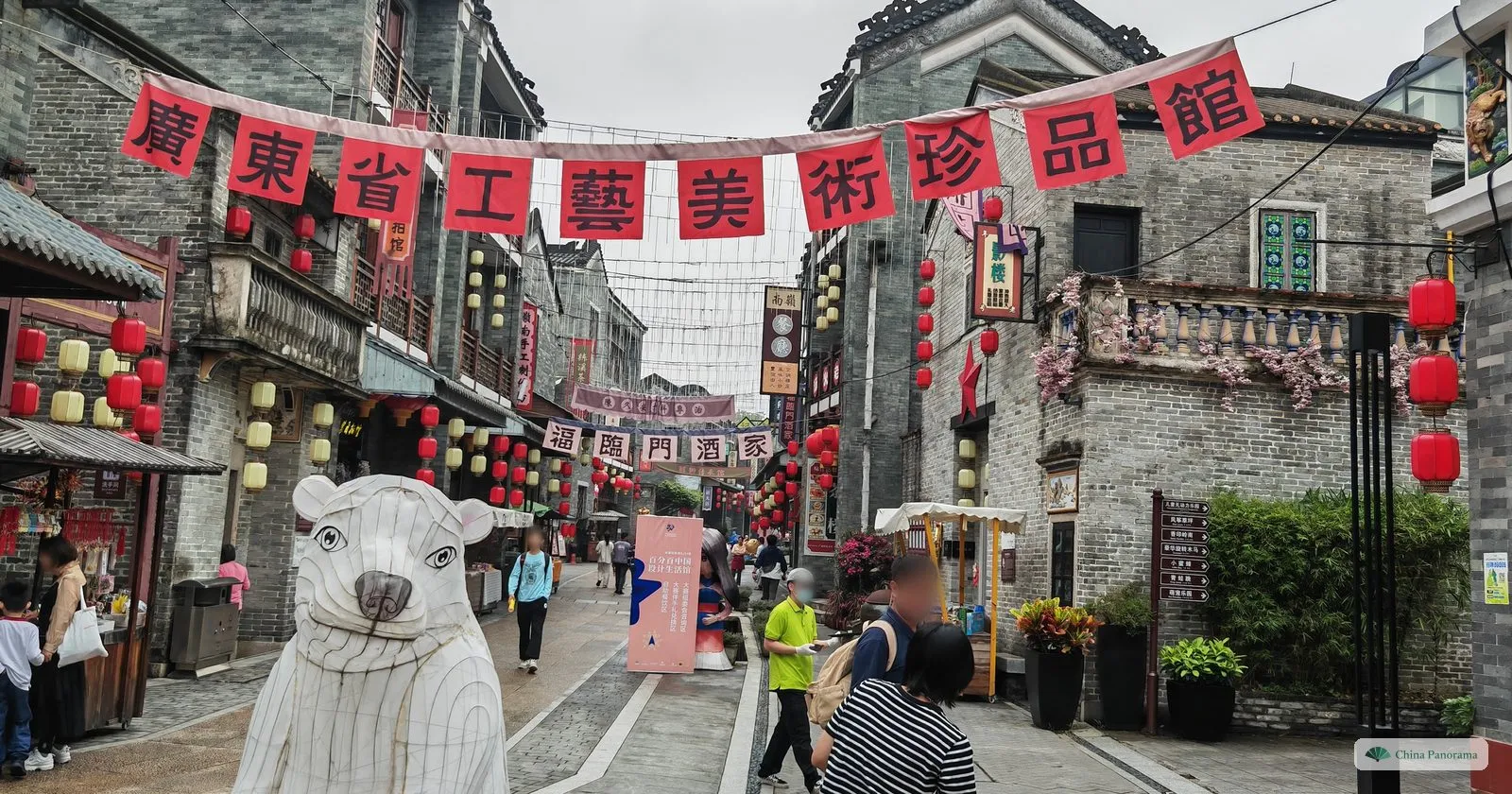
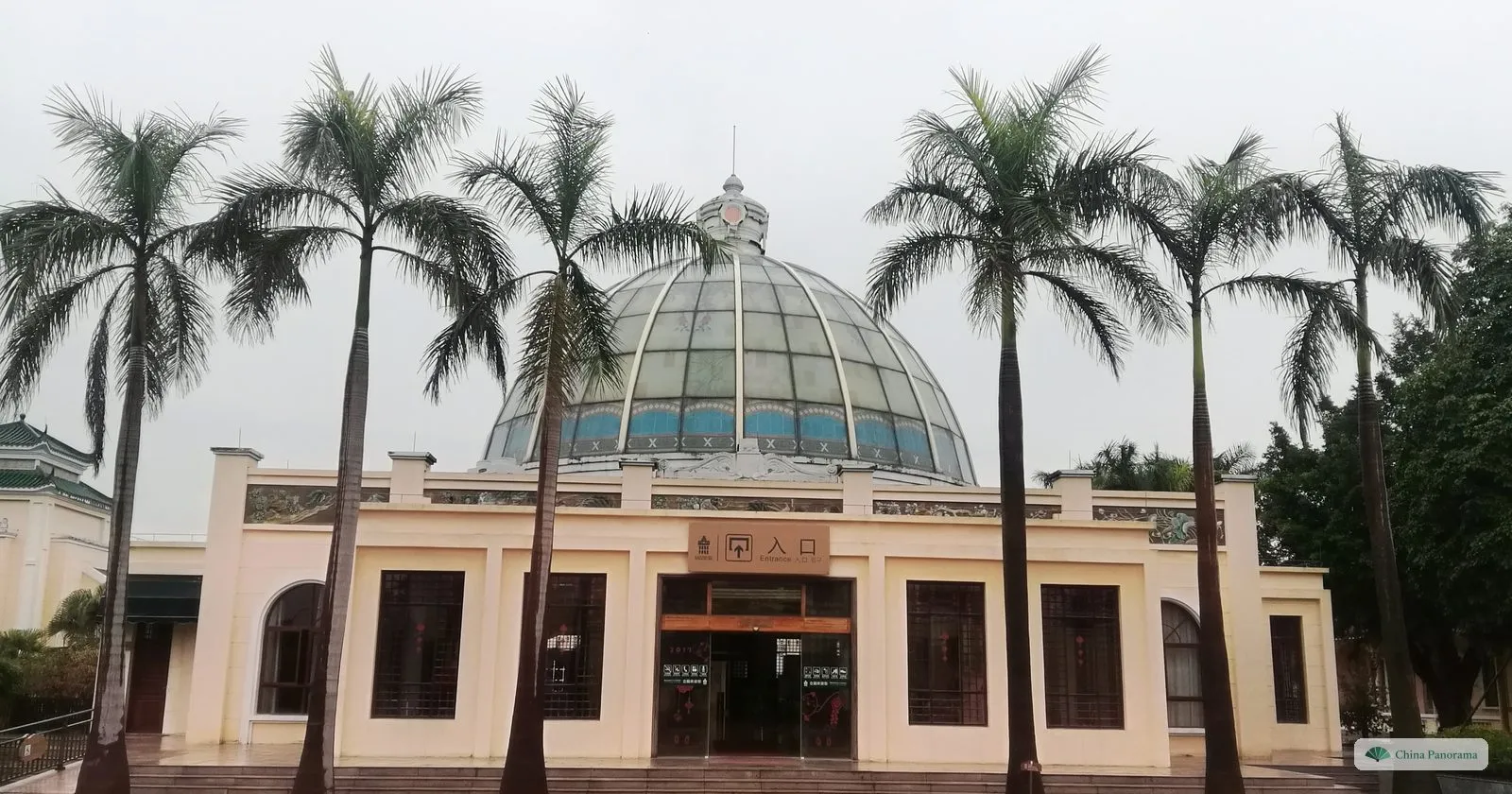
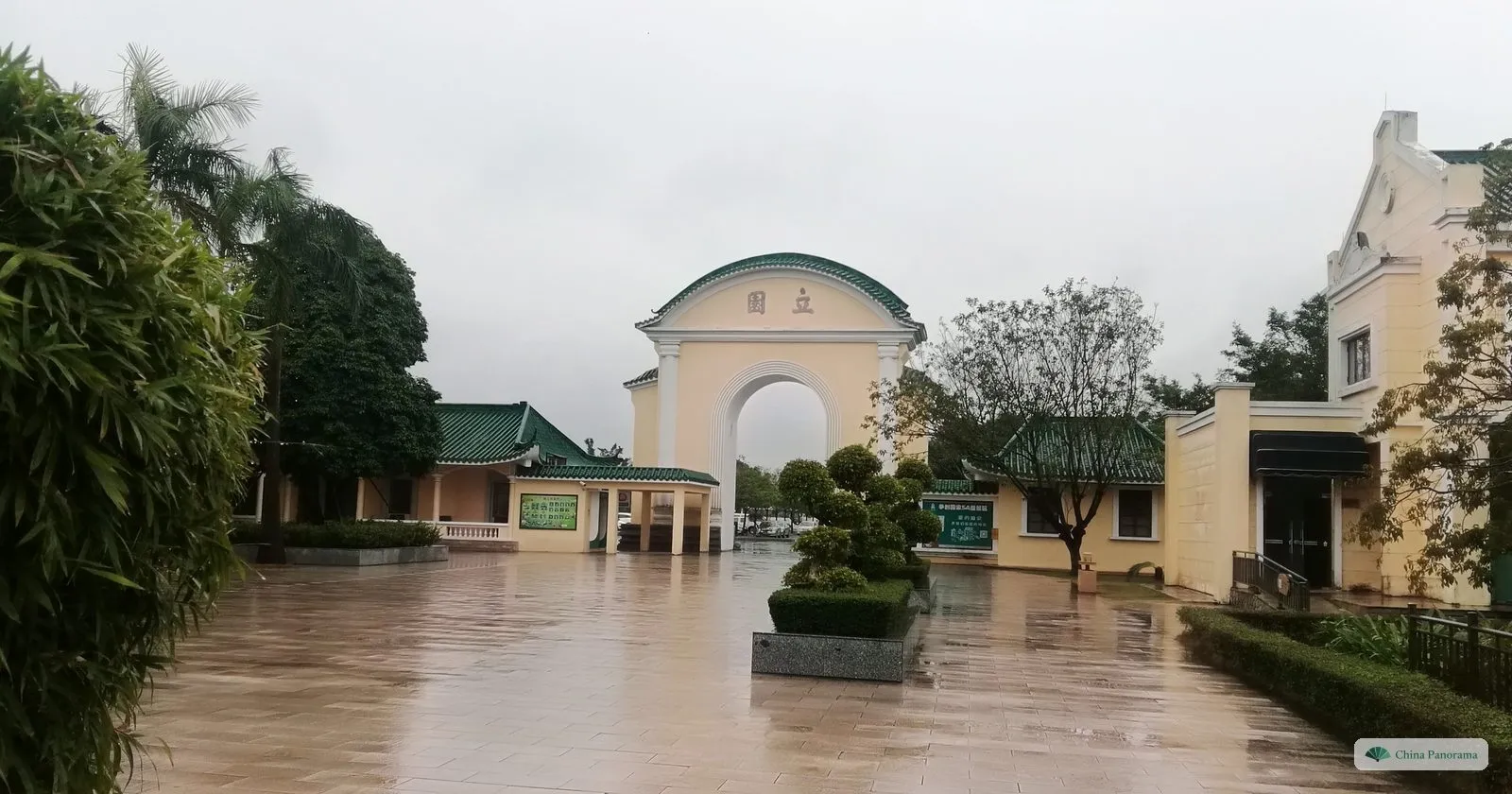
An open-air village museum at the southern tip of University Town, the island in the river that was cleared in 2003 for ten university campuses. Eleven buildings of the old village of Lianxi were kept, and 38 more in the regional style were added around them: ancestral halls with lions at the door, a lane of craft shops and snack stalls, a pond, and rows of houses with wok-ear gables — the curved gable ends that look like the handles of a wok, a mark of standing and a firebreak. Most of it is therefore new, and none of it pretends otherwise; it is the easiest place to see the Lingnan village style in one walk. On Sunday 2 April 2023 it was full of families.
About 25 minutes' walk from Higher Education Mega Center South station (Lines 4 and 7), or a short taxi ride. Reported: 54 CNY, 09:30–18:00 with last entry at 17:00; we have not checked either.
- Entry
- Price not verified — check on site
- Opening hours
- Hours not verified — check on site
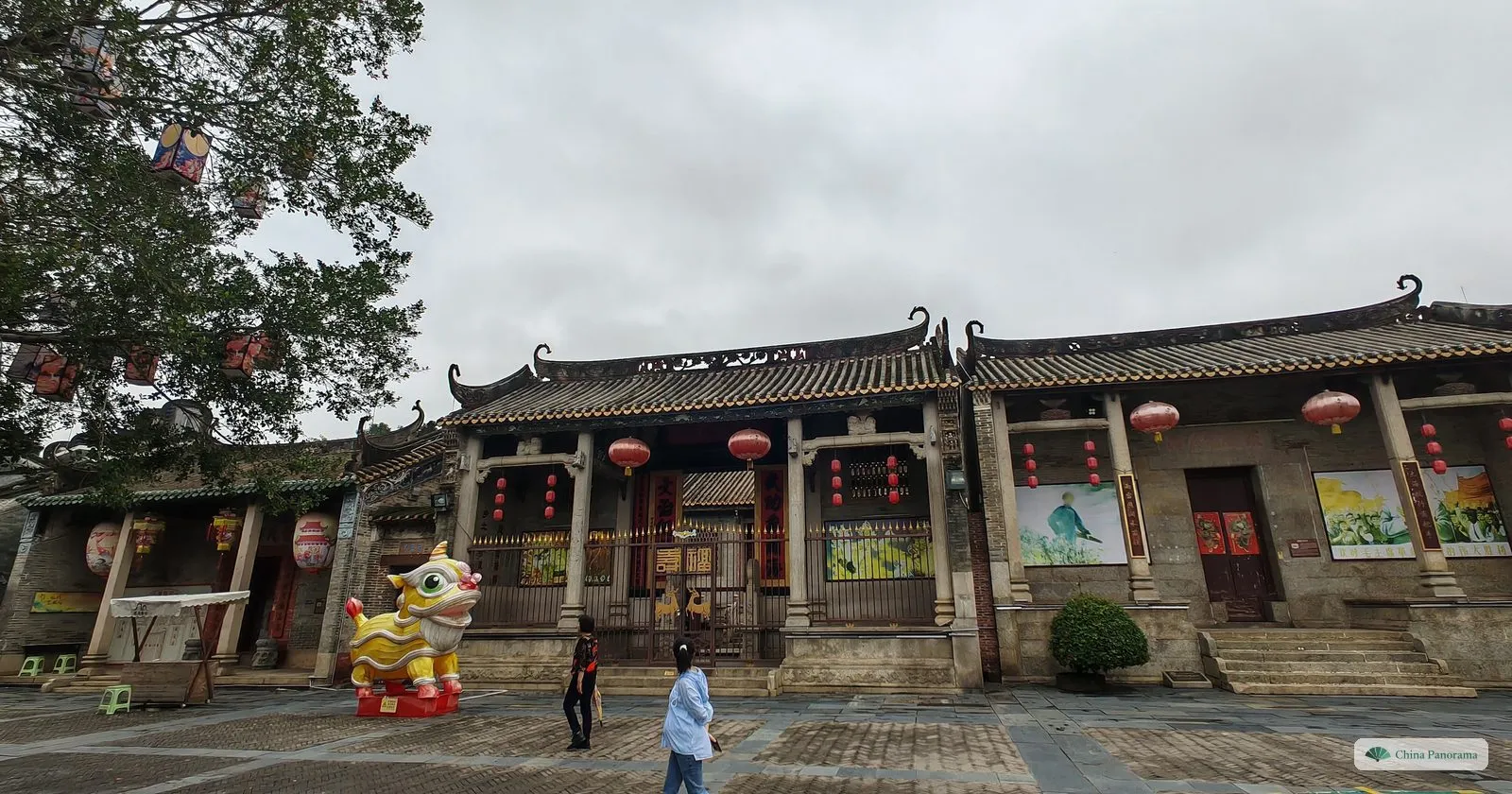
Kaiping Diaolou
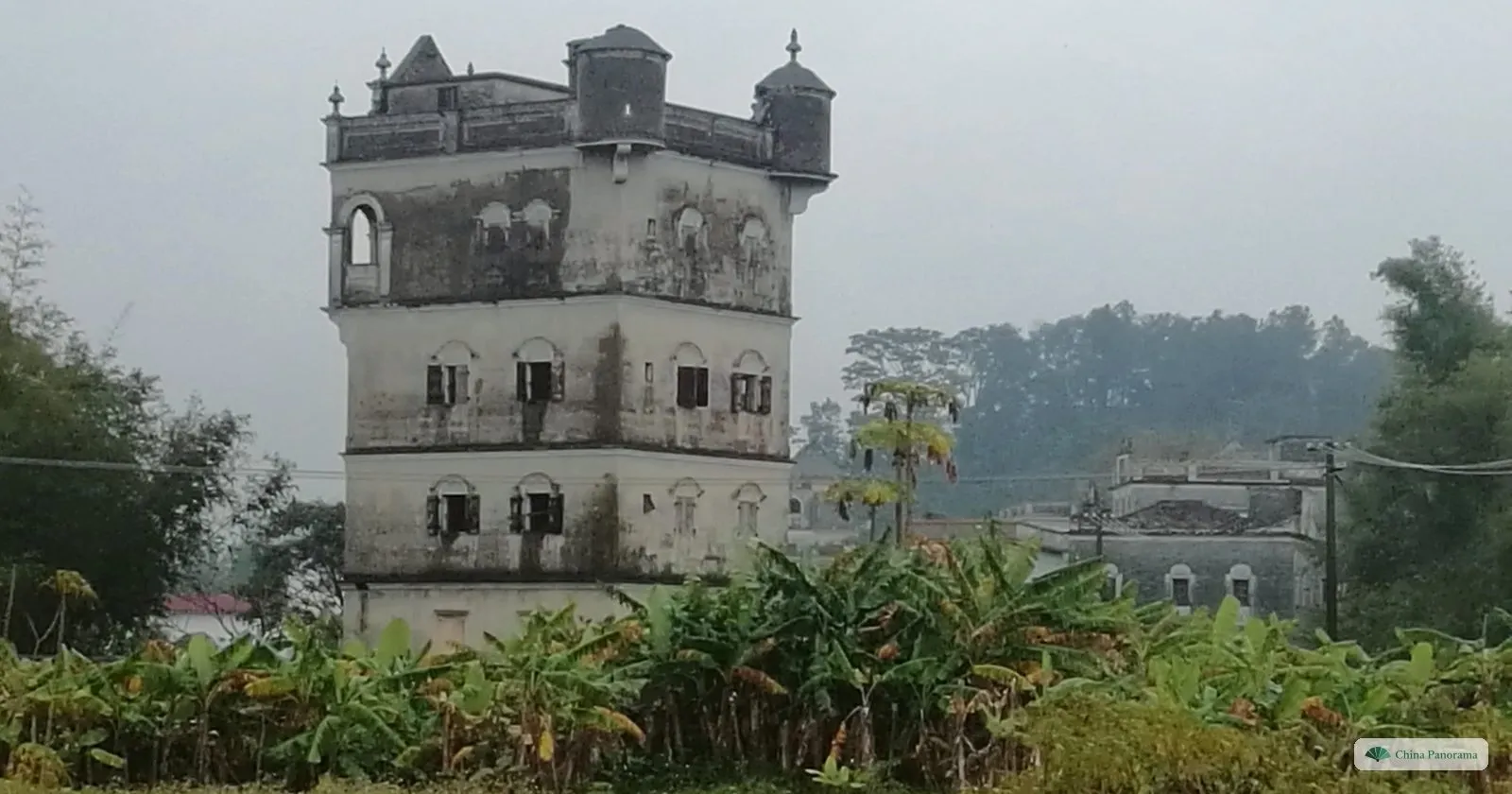
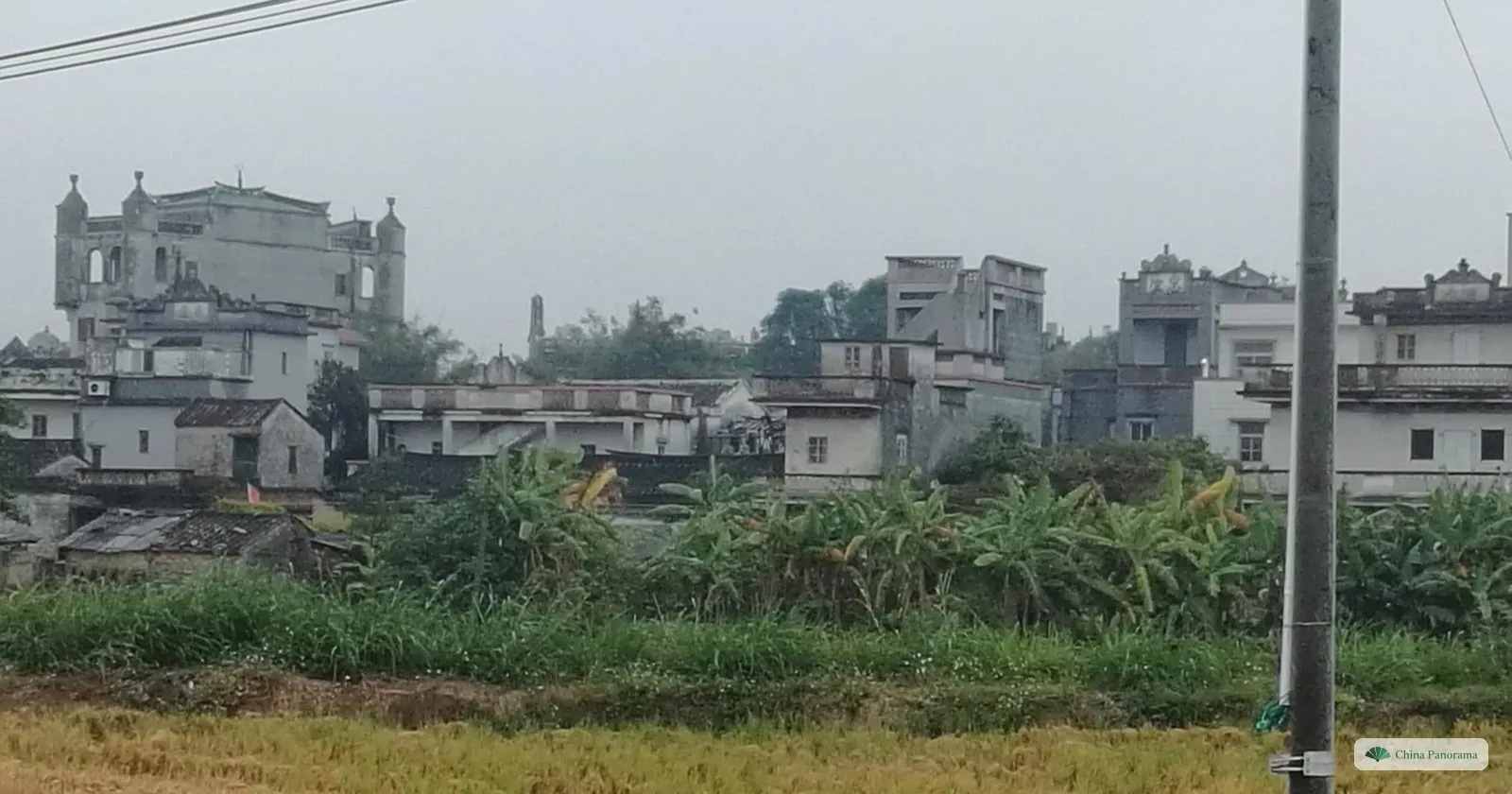
开平碉楼ArchitectureKaiping · 开平市OutdoorsIn the villages around Kaiping, about 110 km south-west of Guangzhou, stand some 1,800 diaolou — fortified tower houses, most of them built in the 1920s and 1930s with money sent home by emigrants in North America and South-East Asia, to protect their families from bandits. They are concrete towers several storeys high, with iron shutters and gun slits, crowned with whatever the owner had seen abroad: turrets, colonnades, domes, Roman arches. Four groups of them became a World Heritage Site in 2007. Li Garden, begun in 1936 by an emigrant returned from the United States, adds a villa garden in the same mix of East and West. We drove there on 6 January 2018, in drizzle, between banana groves.
A day trip. Long-distance buses run from Guangzhou to Kaiping; from there local buses or taxis reach the villages, which lie several kilometres apart — hiring a car for the day is easiest. A combined ticket for Li Garden, Zili village and Majianglong is reported at 180 CNY. We have not checked bus or train times, prices or opening hours.
- Entry
- Price not verified — check on site
- Opening hours
- Hours not verified — check on site
Entry prices and opening hours are marked unverified where we have not checked them against an official source. We would rather show a gap than a number we made up.
Routes and day trips
Most of the city sights are within a few kilometres of Beijing Road. Two are not: the Whampoa Military Academy is 16 km to the east, on an island in the river, with Lingnan Impression Park next to it, and the diaolou of Kaiping are 109 km to the south-west. Tap a place to see how far it is from the centre.
Tap a place on the map or in the list.
The high-speed station, for Shenzhen, Hong Kong and the rest of China. Metro Lines 2, 7 and 22.
The military academy on Changzhou Island. Lingnan Impression Park is 6 km to the south, on the next island. Details below ↓
Baiyun International Airport. Metro Line 3 for Terminals 1 and 2; Terminal 3 by the intercity line.
The fortified towers around Kaiping, in Jiangmen. A full day, by bus or with a hired car. Details below ↓
Straight-line distances from Beijing Road, rounded — not driving distances.
Four routes that don’t double back
Three in the city and one to the islands in the south-east. They are the walks in our photographs, with the time and distance between stops; each runs in one direction.
Afternoon into evening · about 4.7 km on foot
Shamian Island
Walk 23 min· 1.73 km
Enning Road and Yongqingfang
Walk 13 min· 960 m
Lizhiwan canal and the opera museum
Walk 26 min· 1.96 km
Chen Clan Ancestral Hall
4 stops · 62 min walking
A morning · about 1.5 km on foot
Morning tea
Beijing Road
Walk 5 min· 380 m
Dafo Temple
Walk 14 min· 1.05 km
Sun Yat-sen Memorial Hall
4 stops · 19 min walking
An evening · about 2.8 km on foot
Guangzhou Library and Huacheng Square
Walk 13 min· 940 m
Haixinsha
Walk 24 min· 1.81 km
Haixin Bridge and the Canton Tower
3 stops · 37 min walking
Most of a day · two islands in the river, 9 km apart
Lingnan Impression Park
Taxi 13 min· 9.02 km
Whampoa Military Academy
2 stops · 13 min by taxi
Stop by stop
Old Xiguan: Shamian to the Chen Clan Hall
The walk in our photographs of Sunday 2 April 2023: the colonial island in the afternoon, the renovated lanes of Yongqingfang as the lanterns came on, the canal at dusk, and the square of the Chen Clan Hall after dark. If you want to go inside the hall, swap the order and start there in the morning — it closes at half past five.
From Huangsha station cross the canal and walk the length of Shamian Main Street, then back along the river, under the banyans. We were there from 15:48 to 16:51.
- Entry
- Free
- Hours
- Open at all hours
Walk 23 min· 1.73 km
2Enning Road and Yongqingfang
恩宁路 · 永庆坊North across the main road to the arcaded shophouses of Enning Road, then into the lanes behind; Bruce Lee's ancestral home is in Yongqing First Lane. Our first photograph here: 17:44.
- Entry
- Free
- Hours
- Lanes open at all hours
Walk 13 min· 960 m
3Lizhiwan canal and the opera museum
荔枝湾涌 · 粤剧艺术博物馆At the west end of Enning Road the Cantonese Opera Art Museum straddles the canal; walk up the canal on either bank. Our photograph of the canal is from 18:29, as the lights came on.
- Entry
- Free
- Hours
- Museum hours not verified
Walk 26 min· 1.96 km
North-east through the streets to the square in front of the hall, lit at night and full of dance groups when we arrived at 20:18. The hall itself was closed by then.
- Entry
- Square free; hall reported 10 CNY
- Hours
- Not verified
Easy add-ons: Shangxiajiu, the long pedestrian shopping street of the old western city, runs east from Enning Road. Our breakfast route below starts with morning tea; the Chen Clan Hall opens at nine, so you can also see its halls first thing and walk this route backwards.
* Walking times and distances are computed from OpenStreetMap walking routes between the stops; the taxi leg is an OpenStreetMap driving time without traffic — allow about double at busy times. Clock times are from our own photographs (2 and 3 April 2023, 8 January 2018). Stops marked with a star have prices or opening hours we have not checked.
Getting there and getting around
By air
Guangzhou Baiyun International Airport (CAN) is about 29 km north of Beijing Road. Metro Line 3 serves Terminals 1 and 2 (Airport South and Airport North stations) and runs south through Tiyu Xilu and Zhujiang New Town to the Canton Tower. Terminal 3 opened on 30 October 2025 and is reached by the Guangzhou East Ring intercity line; check which terminal your airline uses. We have not timed the rides or checked the fares.
Schedules and journey times not yet verified against an official timetable.
By high-speed train
Guangzhou South is on the high-speed lines to Shenzhen and Hong Kong, to Changsha, Wuhan and Beijing, and to Guilin. It is about 15 km south of the centre, on Metro Lines 2, 7 and 22. We have not checked journey times against the 12306 timetable.
Schedules and journey times not yet verified against an official timetable.
From Hong Kong
High-speed trains run from Hong Kong West Kowloon to Guangzhou South, with immigration for both sides inside the West Kowloon station. Coaches also run from Hong Kong and its airport. Check entry rules for the mainland separately from Hong Kong's — they are different systems.
Schedules and journey times not yet verified against an official timetable.
Nonstop from Europe
Our flight list has nonstop routes to Guangzhou from 9 European airports: Amsterdam, Belgrade, Budapest, Frankfurt, Istanbul, London Gatwick, London Heathrow, Madrid, Paris. Airlines and frequencies →
Flight data checked 12 September 2026.
Three stations called Guangzhou
Your train ticket will name one of these. They are far apart.
- Guangzhou South 广州南站The high-speed hub, about 15 km south of Beijing Road: trains to Shenzhen and Hong Kong West Kowloon, Changsha, Wuhan and Beijing, and to Guilin. Metro Lines 2, 7 and 22.
- Guangzhou 广州站The old main station, north of the old city, on Metro Lines 2 and 5. Mostly conventional trains — check which station your ticket names.
- Guangzhou East 广州东站At the north end of the new central axis, in Tianhe, on Metro Lines 1 and 3. Trains towards Shenzhen leave from here as well.
The metro, in short
How Chinese metros work →Nineteen lines, 399 stations and about 780 km, among the largest networks in China. For a visitor, five do most of the work: Line 1 runs through the old city (Huangsha for Shamian, Chen Clan Academy, Gongyuanqian); Line 2 links Guangzhou South station, Haizhu Square, Gongyuanqian and the Sun Yat-sen Memorial Hall; Line 3 runs from the airport through Tiyu Xilu and Zhujiang New Town to the Canton Tower; Line 6 serves Huangsha and Beijing Lu; and the APM is a short driverless line under Huacheng Square to the Canton Tower. Line 7 goes out to University Town and Changzhou Island.
- Lines
- 19incl. Guangfo and APM
- Fare from
- 2 CNYfirst 4 km
- Network
- 399 stationsabout 780 km
- Pay with
- Contactless cardreported · or Alipay / WeChat
Since October 2025 the gates have been reported to take contactless Visa, Mastercard, JCB and American Express cards issued abroad: tap the card on the reader as you would in London. The transport code in Alipay or WeChat works too, and machines sell single-journey tokens. We have not tested a foreign card ourselves.
Fares by distance: 2 CNY up to 4 km, 3 CNY up to 8 km, 4 CNY up to 12 km, 5 CNY up to 18 km, 6 CNY up to 24 km. Beyond 24 km, 1 CNY more for every further 8 km. The APM has a flat fare of 2 CNY.
First and last trains differ by line and station; we have not checked them against the operator's timetable — look at the display in the station.
| Chen Clan Ancestral Hall | Chen Clan Academy 陈家祠 | Line 1 |
| Shamian Island | Huangsha 黄沙 | Line 1/6 |
| Yongqingfang, Lizhiwan canal, opera museum | Changshou Lu 长寿路 | Line 1 |
| Beijing Road, Dafo Temple | Beijing Lu 北京路 | Line 6 |
| North end of Beijing Road | Gongyuanqian 公园前 | Line 1/2 |
| Sun Yat-sen Memorial Hall | Sun Yat-sen Memorial Hall 纪念堂 | Line 2 |
| Yuexiu Park | Yuexiu Park 越秀公园 | Line 2 |
| Sacred Heart Cathedral | Haizhu Square 海珠广场 | Line 2/6 |
| Huacheng Square, library, Guangdong Museum | Zhujiang New Town 珠江新城 | Line 3/5 |
| Canton Tower, night cruise pier | Canton Tower 广州塔 | Line 3/APM |
| Lingnan Impression Park (then 25 min on foot) | Higher Education Mega Center South 大学城南 | Line 4/7 |
| Whampoa Military Academy (then 23 min on foot) | Changzhou 长洲 | Line 7 |
| High-speed trains | Guangzhou South Railway Station 广州南站 | Line 2/7/22 |
| Airport, Terminals 1 and 2 | Airport South / Airport North 机场南 / 机场北 | Line 3 |
Many stations have English names rather than pinyin — Chen Clan Academy, Sun Yat-sen Memorial Hall, Canton Tower, Higher Education Mega Center South — and others are pinyin, like Gongyuanqian and Tiyu Xilu. Match the Chinese characters if in doubt.
Source and date: Fare bands: Yangcheng Evening News, on the distance-based fare in use since 2006. Network size (19 lines, 399 stations, about 780 km): Guangzhou Metro figures reported in March 2026 — reported, not checked against the operator. Foreign cards at the gates: Yangcheng Evening News, October 2025. Station names and lines: the Wikipedia line articles and OpenStreetMap, read on 6 October 2026. First and last trains: not checked.
Guangzhou is one of the cities we price up on the trip cost calculator, if you want to model a budget.
Before you go
Most European passports are visa-free for a short trip — under a one-sided waiver with an end date worth checking before you book:
- UK passport
Visa-free up to 30 days per trip, currently until 31 December 2026.
- EU passports
Dutch, German, French, Irish, Nordic and most other EU passports: visa-free up to 30 days, currently until 31 December 2026.
- US passport
No general waiver: a visa, or the 10-day visa-free transit if you fly on to a third country.
China’s 10-day visa-free transit applies at designated entry ports, for travellers continuing to a third country. Coming from Hong Kong counts as entering the mainland, with its own border check. Check your passport.
- Pre-trip checklist
Payments, SIM, apps — the things to sort before you fly.
- How to order food
Paper lists and scan-to-order menus — both are used for morning tea.
- Wontons
云吞, wan tan, as Guangzhou writes it: the Cantonese wonton and how to order it.
- The Canton Fair and other trade hubs
When the fair is on — the weeks hotel prices in Guangzhou rise.
- Shenzhen
About 100 km down the delta, on the border with Hong Kong: Shekou, Huaqiangbei, urban villages.
- Theme parks
Chimelong, in Panyu, is Guangzhou’s big theme-park resort.
- Golden Week 2026
1–7 October: the week Shamian and the river promenades are at their fullest.
FAQ
What are the best things to do in Guangzhou?
Start with morning tea and a walk down Beijing Road, the city’s main street for more than a thousand years; see the carved Chen Clan Ancestral Hall and the colonial villas of Shamian Island; walk the lanes of Yongqingfang at dusk; and end on the river at night, with the Canton Tower lit up across the water. With a third day, go out to the Whampoa Military Academy or the fortified towers of Kaiping.
Is Guangzhou worth visiting?
Yes, especially if food and history are your reasons to travel. It is the old Canton, China’s door to the West for centuries, and that history is still standing: the Chen Clan Ancestral Hall, the colonial villas of Shamian, the Sun Yat-sen Memorial Hall. It is the home of Cantonese cooking and of morning tea. And the new city along the river, with the Canton Tower, is one of the most striking skylines in China.
How many days do you need in Guangzhou?
Two or three. One for the old west — Shamian, Yongqingfang and the Chen Clan Hall; a morning for morning tea, Beijing Road and the Sun Yat-sen Memorial Hall, with the new city and the river in the evening; and a third day for Whampoa and Lingnan Impression Park, or for the diaolou of Kaiping.
Is Guangzhou the same as Canton?
“Canton” is the old European name for Guangzhou, from the Portuguese rendering of the province’s name, Guangdong. It survives in the Canton Fair, the Canton Tower and the Cantonese language and cooking.
Do people in Guangzhou speak Cantonese?
Cantonese is the everyday language of many locals, but Mandarin is the language of schools, offices and the metro announcements, and almost everyone understands it. Signs use the same simplified characters as the rest of mainland China. A few words of Cantonese — m̀h gōi, for “thank you” or “excuse me” — are always welcome.
Can you go up the Canton Tower?
Yes. Tickets are priced by height; the lowest observation level is reported at about 150 CNY, and the open-air deck at 488 m and the Bubble Tram cost more. We have not checked prices or hours. You do not have to go up to enjoy the tower: it is lit in changing colours every evening, best seen from Haixinsha or the Haixin footbridge.
When is the best time to visit Guangzhou?
October and November: October averages 30 °C by day and November 25 °C, with the least rain of the year. Summer is hot and humid, around 34 °C by day, with storms and the chance of a typhoon. Winter is mild by day — 19 °C in January — but cool indoors, as buildings have no central heating. Avoid Golden Week, 1–7 October, and the two sessions of the Canton Fair, in April–May and October–November, when hotel prices rise.
How do I get from Guangzhou to Hong Kong?
High-speed trains run from Guangzhou South to Hong Kong West Kowloon, about 130 km in a straight line, with immigration for both sides in the West Kowloon station. Coaches run too. We have not checked journey times or fares. Hong Kong has its own entry rules, separate from the mainland’s.
Can I pay for the Guangzhou metro with a credit card?
Since October 2025 the gates are reported to accept contactless Visa, Mastercard, JCB and American Express cards issued abroad; we have not tested one ourselves. The transport code in Alipay or WeChat works too. Fares run by distance, from 2 CNY for the first 4 km.
How far is Guangzhou from Beijing and Shanghai?
About 1,890 km from Beijing and 1,210 km from Shanghai in a straight line. High-speed trains run to both from Guangzhou South; flights are quicker for Beijing. Hong Kong is about 130 km away and Guilin about 380 km.
Do I need a visa for Guangzhou?
Not for a short trip on a British, Irish, Dutch, German, French, Nordic or Australian passport: all are visa-free for up to 30 days per trip, under a one-sided waiver that currently runs until 31 December 2026. US passport holders have no general waiver; the 10-day visa-free transit applies only at designated entry ports and only if you fly on to a third country. Check your own passport on our visa check page.
Sources and status
All photographs on this page are ours: Lingnan Impression Park, Whampoa, Shamian, Yongqingfang, the Lizhiwan canal and the Chen Clan square at night on 2 April 2023; the Chen Clan Hall, morning tea, Beijing Road and Dafo Temple on 3 April 2023; the diaolou of Kaiping on 6 January 2018; the Xinhai Revolution Museum, the Canton Tower in rain and the Sun Yat-sen Memorial Hall on 8 January 2018. The pictures of the Canton Tower by night and by day, the skyline, Haixinsha, the library and the river promenade carry no date. Faces of passers-by have been blurred. Data sources: Monthly temperature data, Guangzhou; Chen Clan Ancestral Hall (Wikipedia); Shamian Island (Wikipedia); Canton Tower (Wikipedia); Sun Yat-sen Memorial Hall (Wikipedia); Whampoa Military Academy (Wikipedia); Whampoa academy rebuilt in 1996 “on the original site, to the original scale and appearance” (China News Service, Chinese); Whampoa Military Academy museum reopens, 16 June 2024 (Yangcheng Evening News, Chinese); Museums that need a reservation in Golden Week 2026, incl. Whampoa and the Guangdong Museum (Guangzhou Bendibao via ifeng, Chinese); Kaiping Diaolou and Villages (Wikipedia); Yuexiu Park (Wikipedia); Sacred Heart Cathedral, Guangzhou (Wikipedia); Guangzhou Library (Wikipedia); Beijing Road: eleven road layers from five periods (Sina, September 2002, Chinese); Yongqingfang and the micro-renovation of Enning Road (Xinhua, May 2025, Chinese); Lingnan Impression Park and the village of Lianxi (Our China Story, Chinese); Haixin Bridge, the first footbridge over the Pearl River, opens (Huacheng, June 2021); Guangzhou Metro (Wikipedia); Guangzhou Metro fares by distance (Yangcheng Evening News, Chinese); Guangzhou Metro gates accept foreign bank cards (Yangcheng Evening News, October 2025, Chinese); Baiyun Airport Terminal 3 opens, 30 October 2025 (Xinhua, Chinese).
Changelog (1)
- 2026-10-06Page created, with our own photographs from 2–3 April 2023, 6 and 8 January 2018, and undated iPhone pictures of the river. No entry price on this page could be checked against an official source on this date: the figures we found are quoted as reported and marked unverified.