
Harbin
China's coldest big city, built by a Russian railway — Orthodox domes, cobblestones, and a river that freezes hard enough to walk on.
哈尔滨 · Hā'ěrbīn · Heilongjiang 黑龙江省 · 45.80° N, 126.53° E
Where is Harbin?
Harbin is the capital of Heilongjiang, China's northernmost province, up in the corner the country shares with Russia. At 45.8° N, Harbin sits farther north than Vladivostok and on roughly the same latitude as Milan, Venice, Montreal and Portland, Oregon.
Straight-line distances, rounded to the nearest 10 km — not travel distances.
Heilongjiang is highlighted. Tap a city to measure the distance from Harbin.
- Province
- Heilongjiang黑龙江省
- Latitude
- 45.80° N
- Airport
- HRB
- Metro lines
- 1 · 2 · 3
- Time zone
- UTC+8
- City flower
- Lilac丁香
The time zone is the detail that catches people out. All of China runs on Beijing time, and Harbin sits far to the northeast of Beijing, so the sun is simply early here: it rises at 03:43 in June and sets at 15:50 in December. See time in China for what that does to the rest of the country.
How cold is it, really?
Harbin spans about 45 degrees between January and July. Tap a month for what to expect — including how much daylight you actually get, which is the other thing that changes what a day here feels like. Going in winter for the ice parks? The Harbin Ice Festival 2027 page turns these temperatures into a kit list.
Scale in °C. Bars run from the average daily low to the average daily high. Source: monthly temperature data, last checked 2026-07-30.
Harbin in October
Cool- Average high
- 12 °C
- Average low
- 1 °C
- Sunrise / sunset
- 05:49 – 16:50
- Daylight
- 11 h 1 min
Winter
December – FebruaryThe reason most people come.
Daytime highs sit around −14 °C in January and nights drop past −25 °C. The Songhua River freezes solid, the Ice and Snow World is built out of blocks cut from it, and the whole city switches into a mode it has had a century to practise. Everything indoors is heated hard — the real skill is dressing so you can move between −25 °C and +24 °C all day.
What to wear: Down jacket rated for well below −20 °C, thermal base layer, insulated boots with real grip, hat that covers the ears, gloves you can keep on. Phone batteries die fast in this cold — keep the phone in an inside pocket.
Summer
May – SeptemberThe version of Harbin almost nobody photographs.
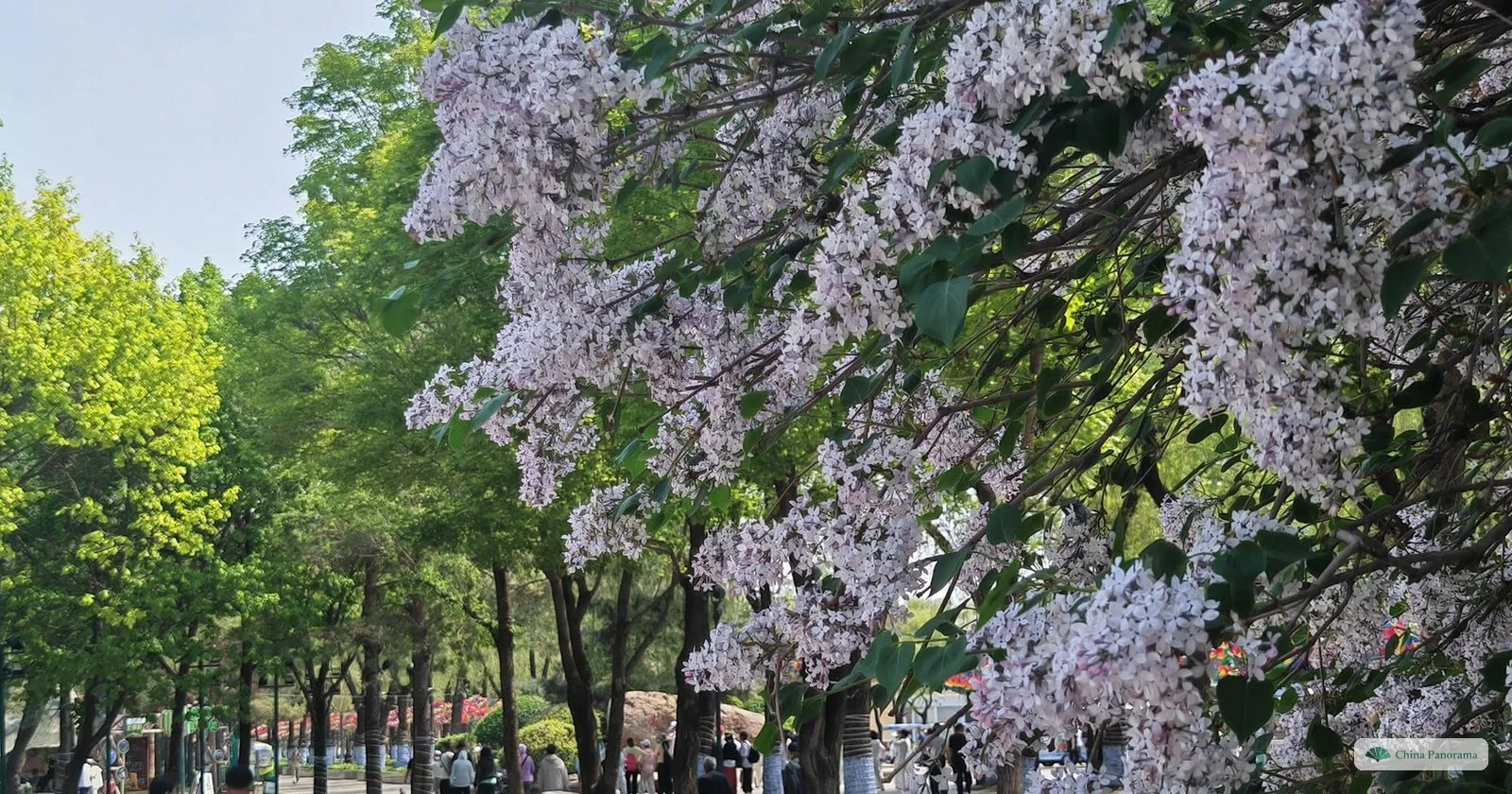
Highs of 22–29 °C while most of China is sweating — Harbin markets itself domestically as a summer escape (避暑). The lilacs, the city flower, come out in May. Sunrise in June is before 04:00 because the whole country runs on Beijing time and Harbin sits far to the northeast, so the light starts very early and the mornings are the best part of the day.
What to wear: Normal summer clothes plus a light jacket for the evening; it cools off quickly after dark even in July.
For how Harbin compares with the rest of the country month by month, see the best time to visit China.
What to see
11 places, every photograph our own. Filter by season, by district, or by whether you need to be indoors — which in January is a real question.
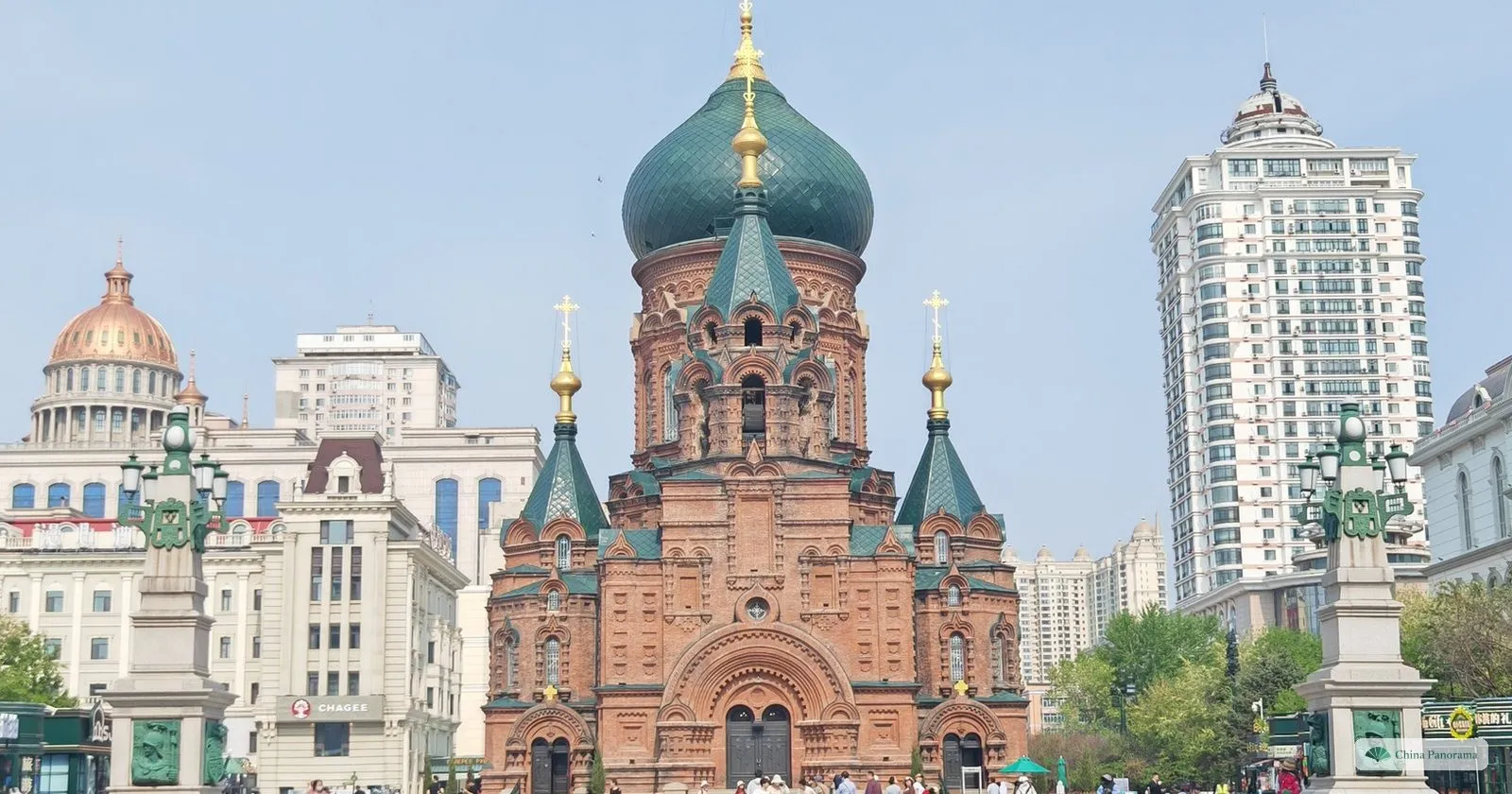
St. Sophia Cathedral
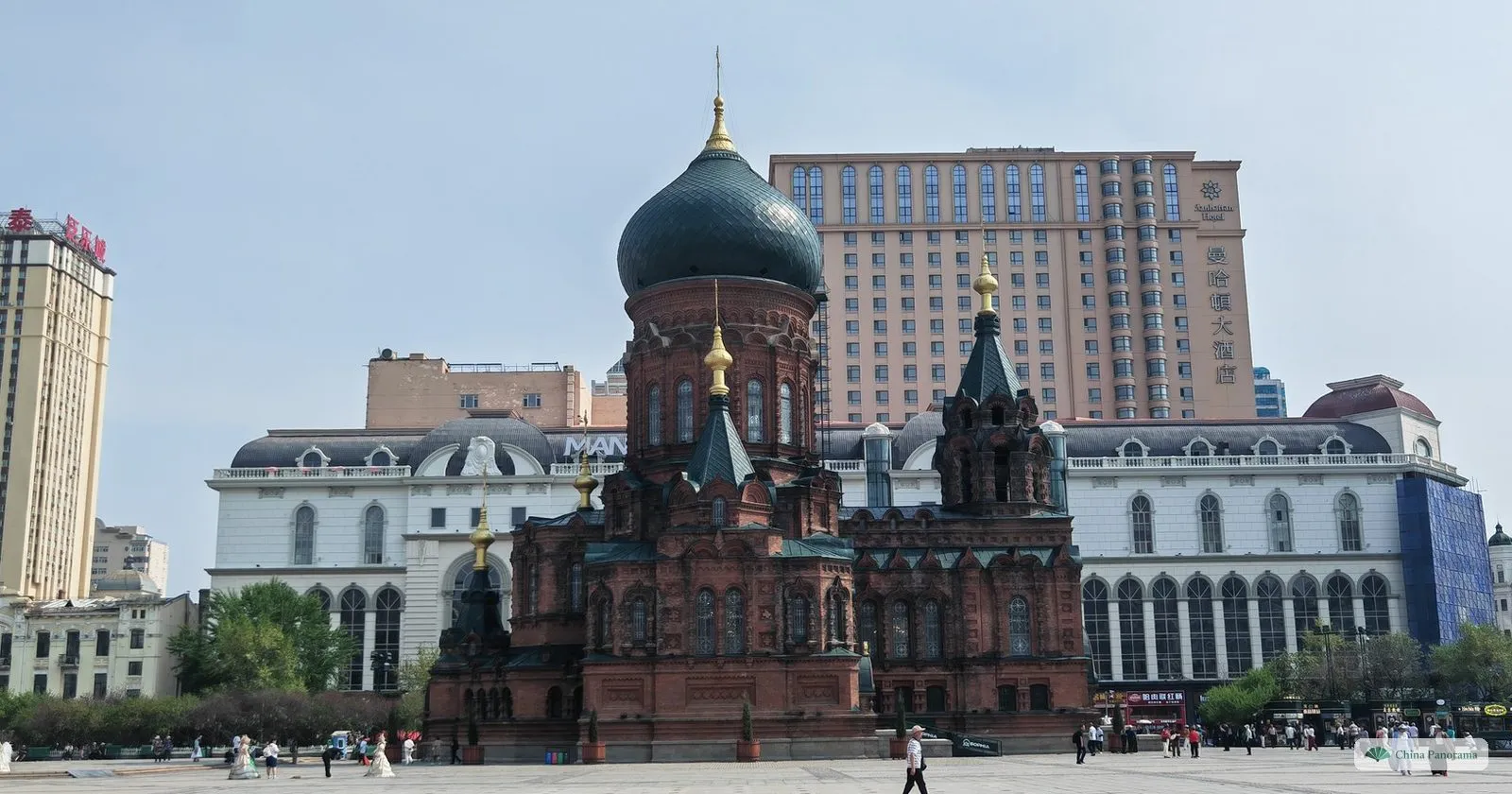
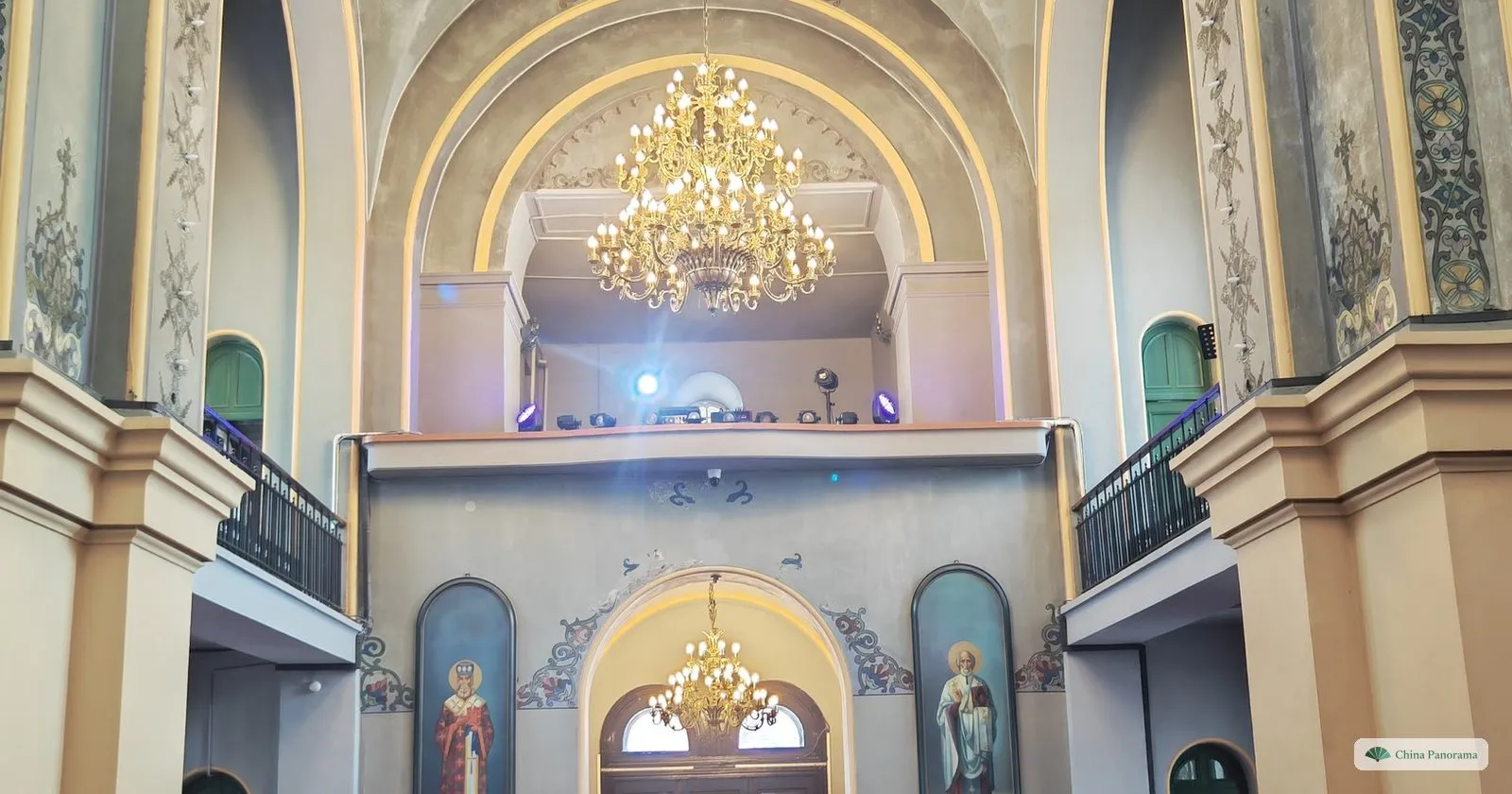
圣索菲亚大教堂Russian heritageDaoli · 道里区OutdoorsThe Byzantine-revival Orthodox church that ends up on every postcard of the city. Built in wood in 1907 for the Russian railway garrison and rebuilt in brick, finished 1932. It has not been a working church for decades — inside it is the Harbin Architecture Art Museum, with photographs of the city's Russian period.
Daoli district, about a five-minute walk east of Central Street. The square around it is open at all hours; the interior is ticketed.
- Entry
- Price not verified — check on site
- Opening hours
- Hours not verified — check on site
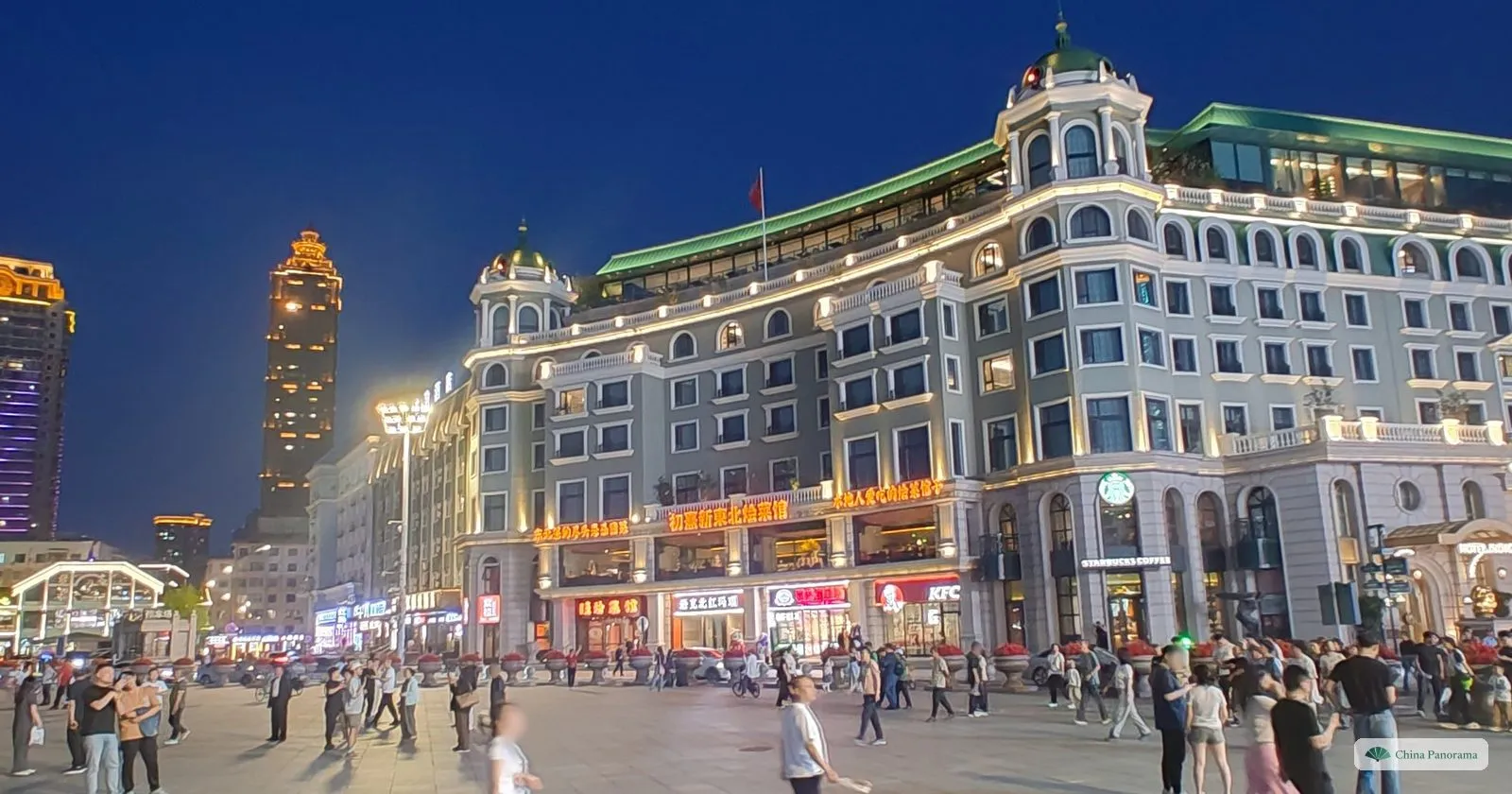 StreetDaoli · 道里区Outdoors
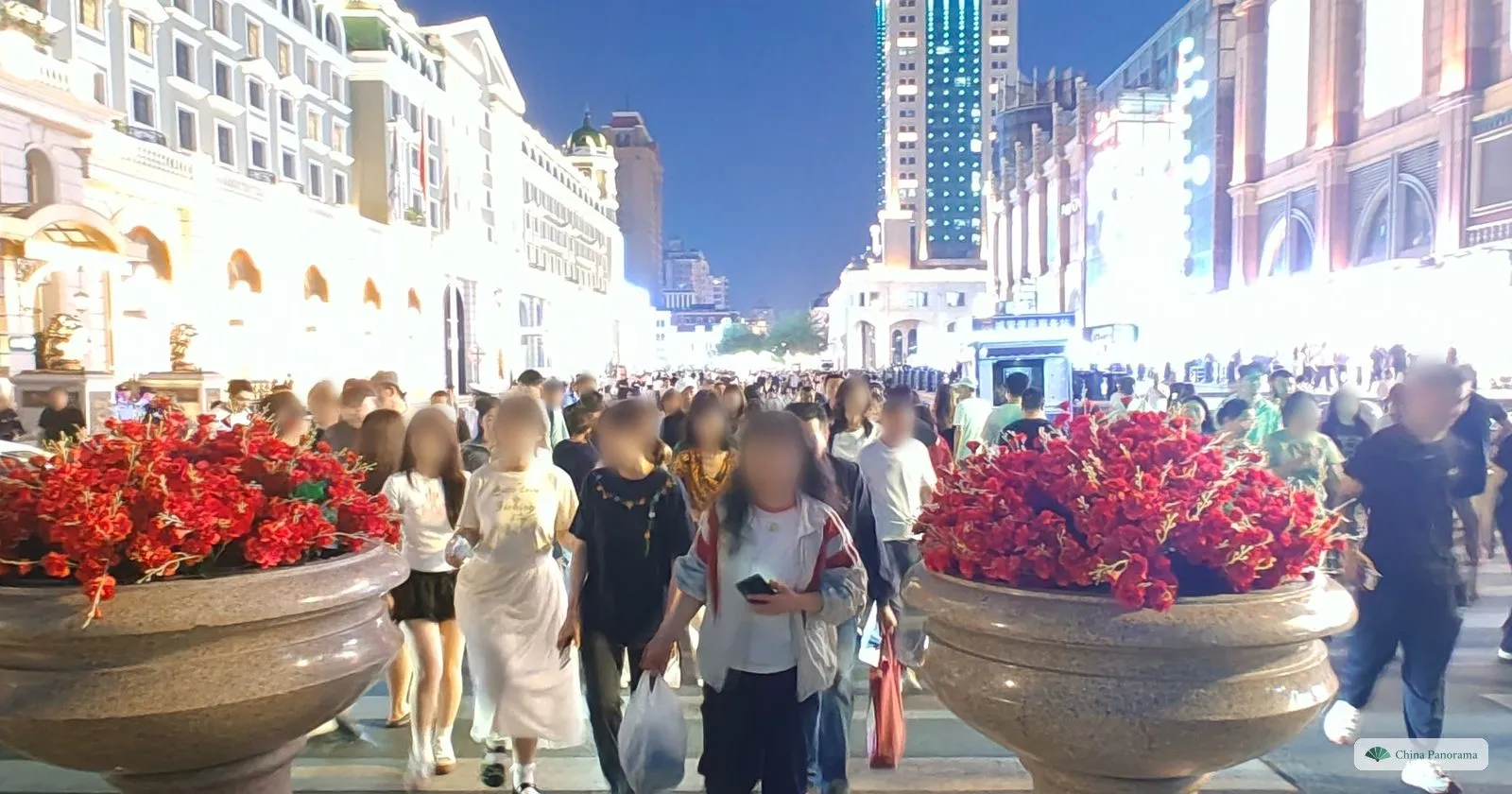
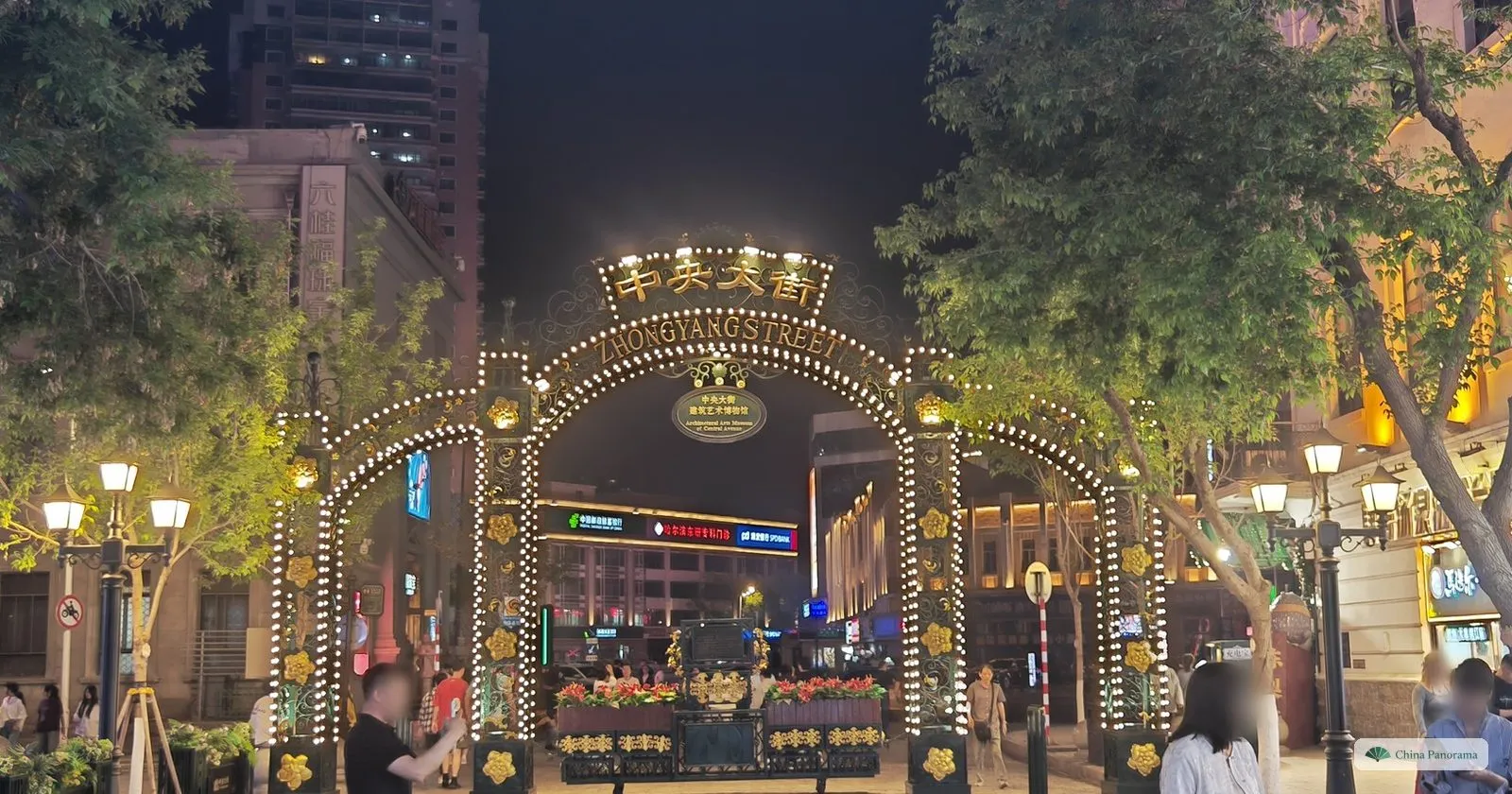
A 1.45 km pedestrian street paved with square granite setts, laid from 1898 as the main street of the Russian railway settlement. The facades along it run through Art Nouveau, Baroque revival and Renaissance revival, and the Modern Hotel (马迭尔, 1906) still sells the ice cream bar that people queue for outdoors in January — see below.
Runs north from Jingwei Street to the Songhua River embankment, ending at the Flood Control Monument. Free, open, and busiest after dark.
- Entry
- Free
- Opening hours
- Open at all hours
Modern ice cream kiosk
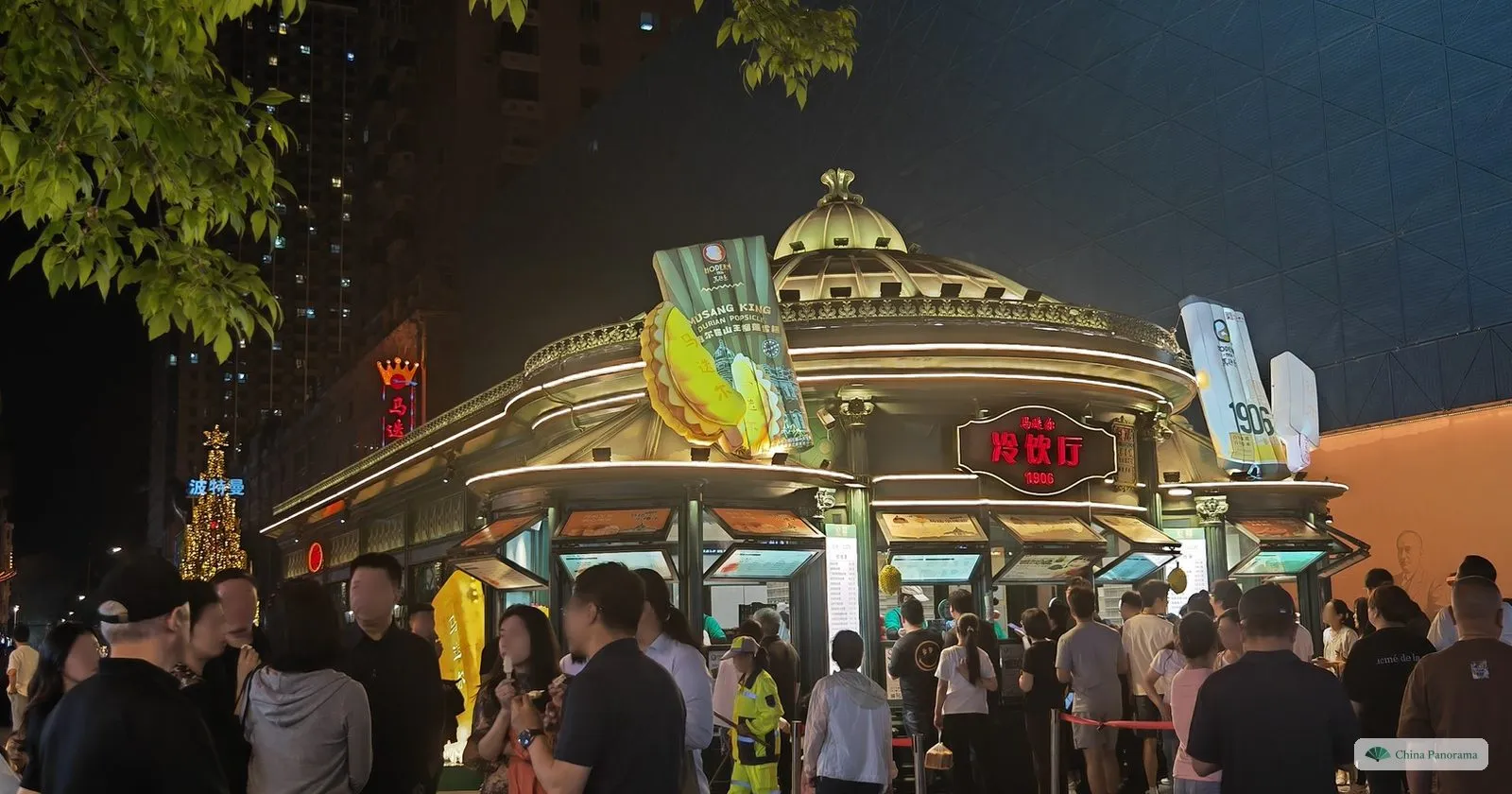
马迭尔冷饮厅FoodDaoli · 道里区OutdoorsIf there is one thing everyone who walks Central Street does, it is buy a Modern ice cream bar. The Modern Hotel opened here in 1906 and has been selling them from a kiosk on the pavement ever since; the queue is a permanent feature of the street. The part that surprises visitors is that it does not shorten in winter — people stand outside at −20 °C eating ice cream, and consider that entirely normal. Plain milk is the original; the kiosk rotates a set of other flavours alongside it.
On Central Street outside the Modern Hotel, in the middle of the pedestrian section. The queue looks long and moves fast. Prices change, so we do not list one — the board is above the window.
- Entry
- Price not verified — check on site
- Opening hours
- Hours not verified — check on site
 LandmarkDaoli · 道里区Outdoors
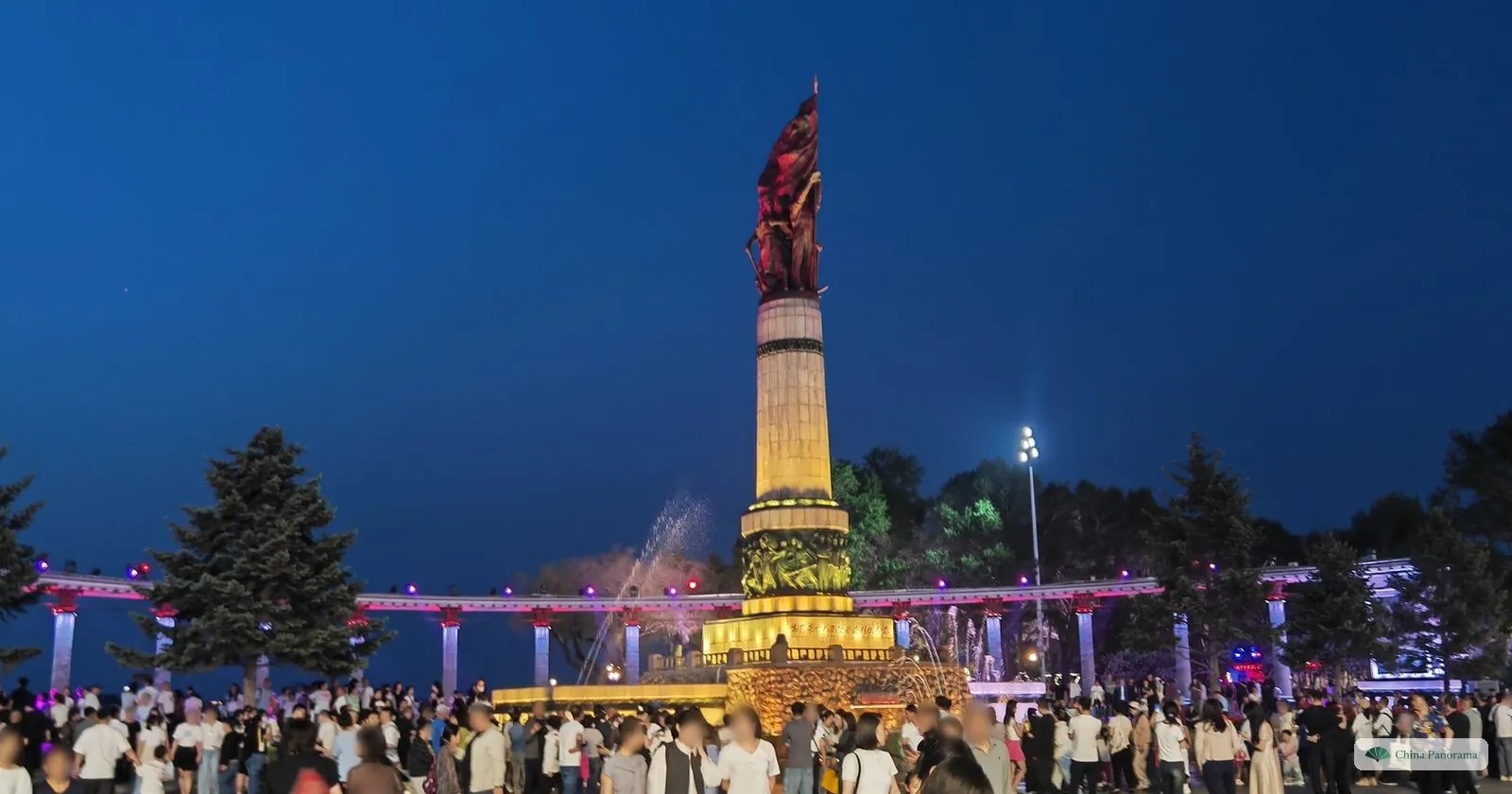
Built in 1958 to mark the city surviving the 1957 Songhua flood, and the place Harbin uses as its living room. The colonnade behind it faces the river; in the evening the square fills with dancing, buskers and people selling glow-in-the-dark toys.
At the northern end of Central Street, on the river embankment. Free and always open.
- Entry
- Free
- Opening hours
- Open at all hours
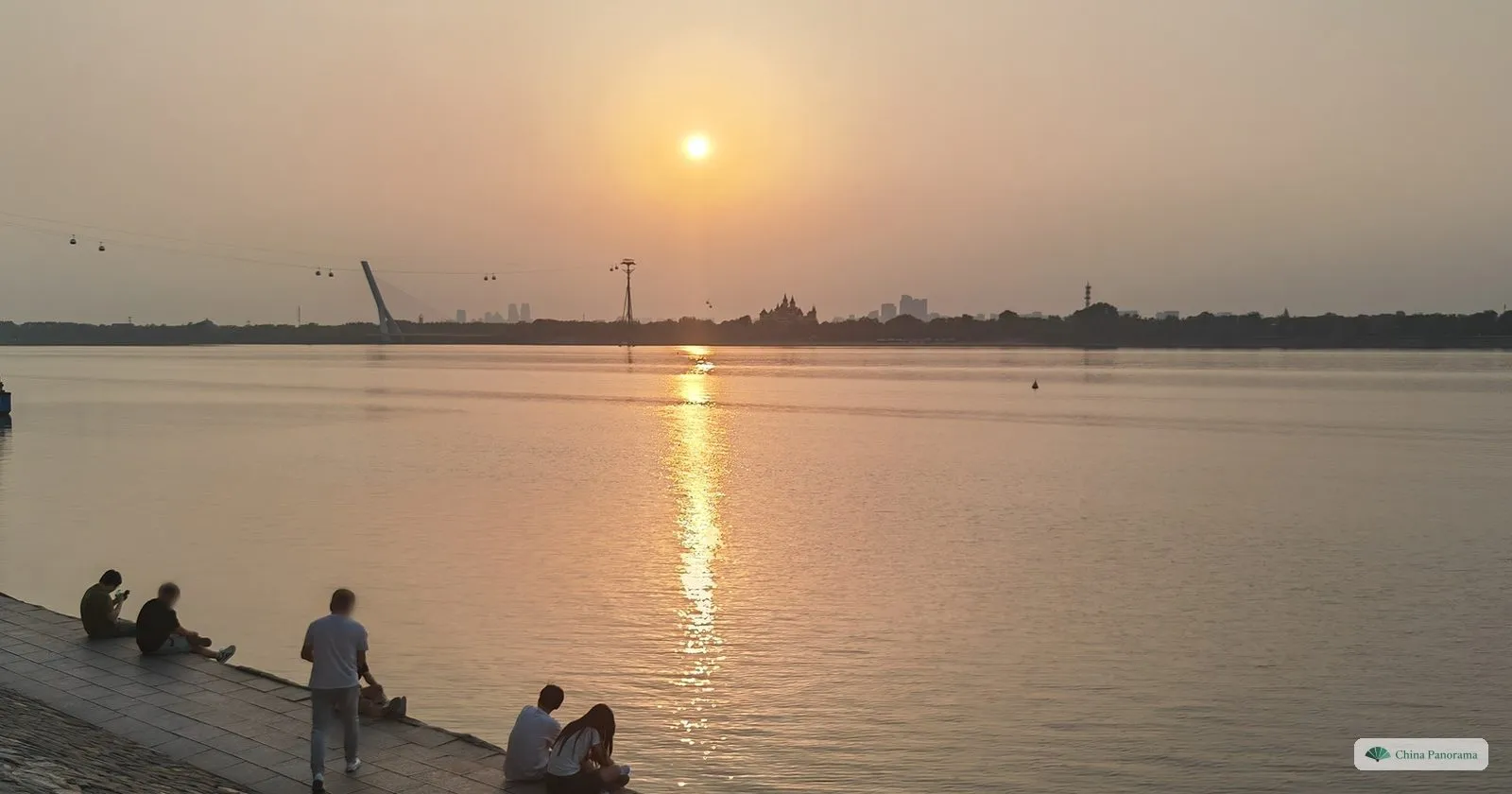 NatureDaoli · 道里区Outdoors
The river that decides what Harbin is in any given month. In summer it is a beach-and-boat strip with sunset crowds sitting on the concrete steps; in deep winter it freezes hard enough that people walk, cycle and drive sledges across it, and the ice cut from it becomes the Ice and Snow World.
Directly behind the Flood Control Monument. Free. Sun Island is on the far bank — ferry in summer, cable car, or over the road bridge.
- Entry
- Free
- Opening hours
- Open at all hours
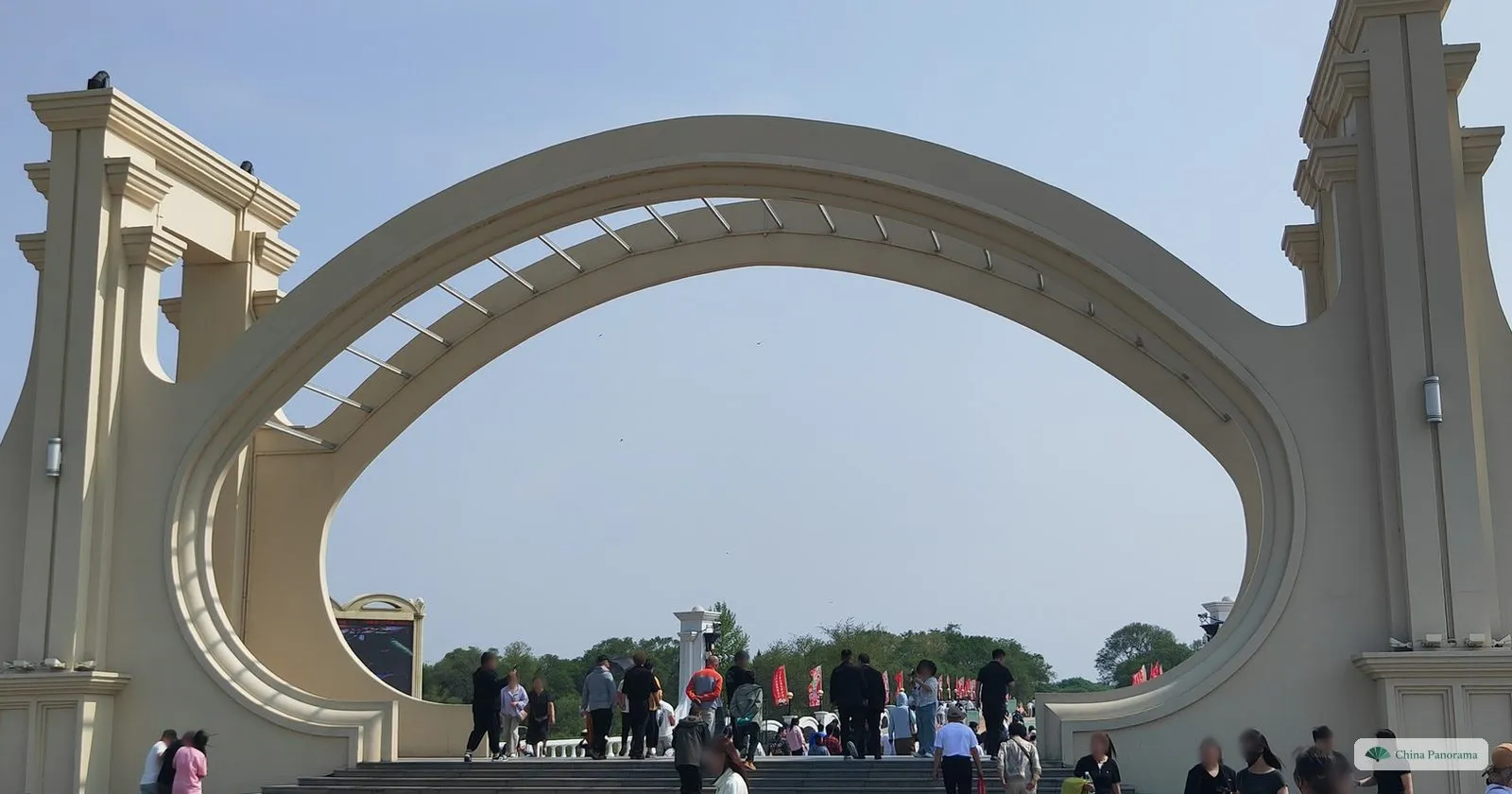
Sun Island
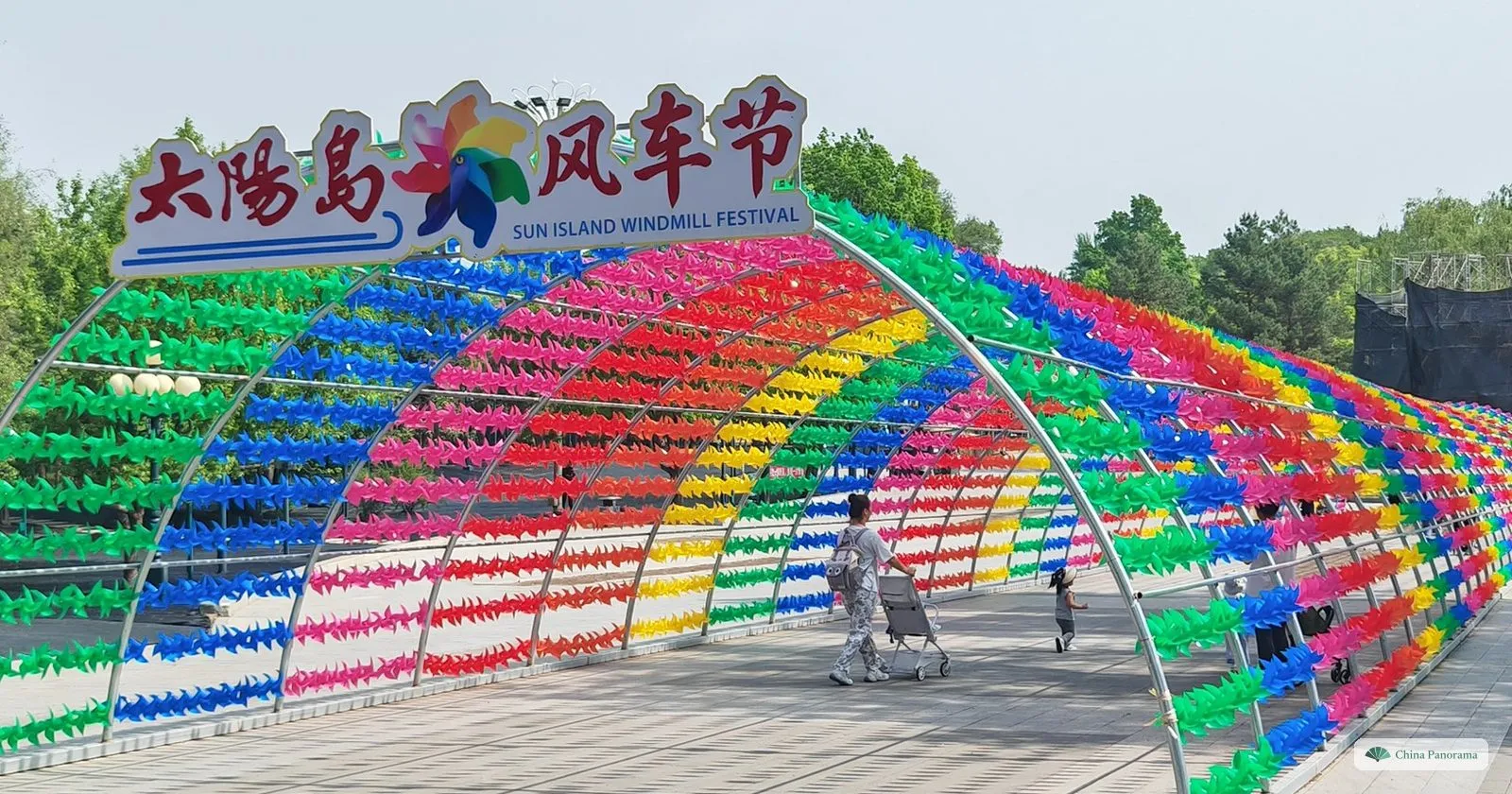
太阳岛ParkSongbei · 松北区OutdoorsA large park on the north bank of the Songhua, and the piece of ground that carries both of Harbin's seasons: the Snow Sculpture Expo and the Ice and Snow World in winter, a wooded park with a windmill festival and Harbin's lilacs in late spring.
Across the river from the city centre. Reachable by ferry (summer), by the Songhua cable car, or over the bridge. The park itself is free; the winter parks on the island — the Ice and Snow World and the Snow Sculpture Expo — are ticketed separately.
- Entry
- Free
- Opening hours
- 08:30–17:00
Harbin Ice and Snow World
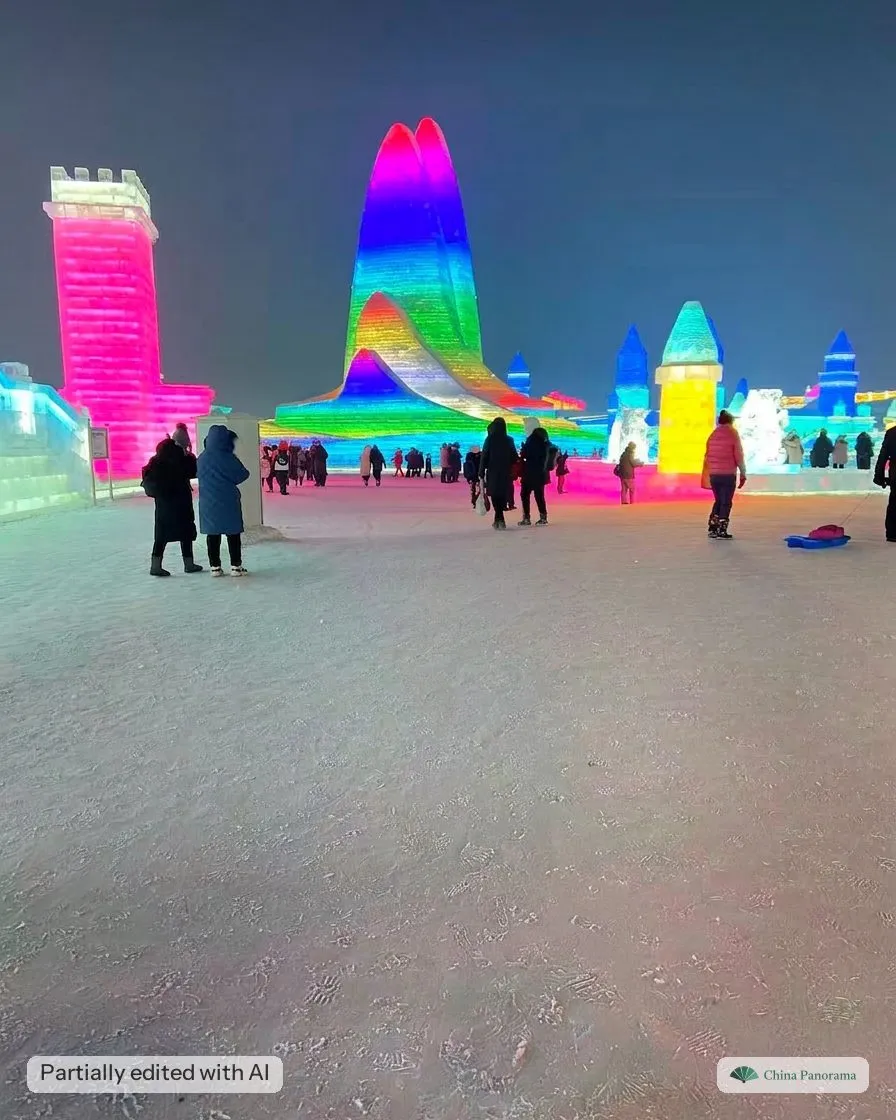
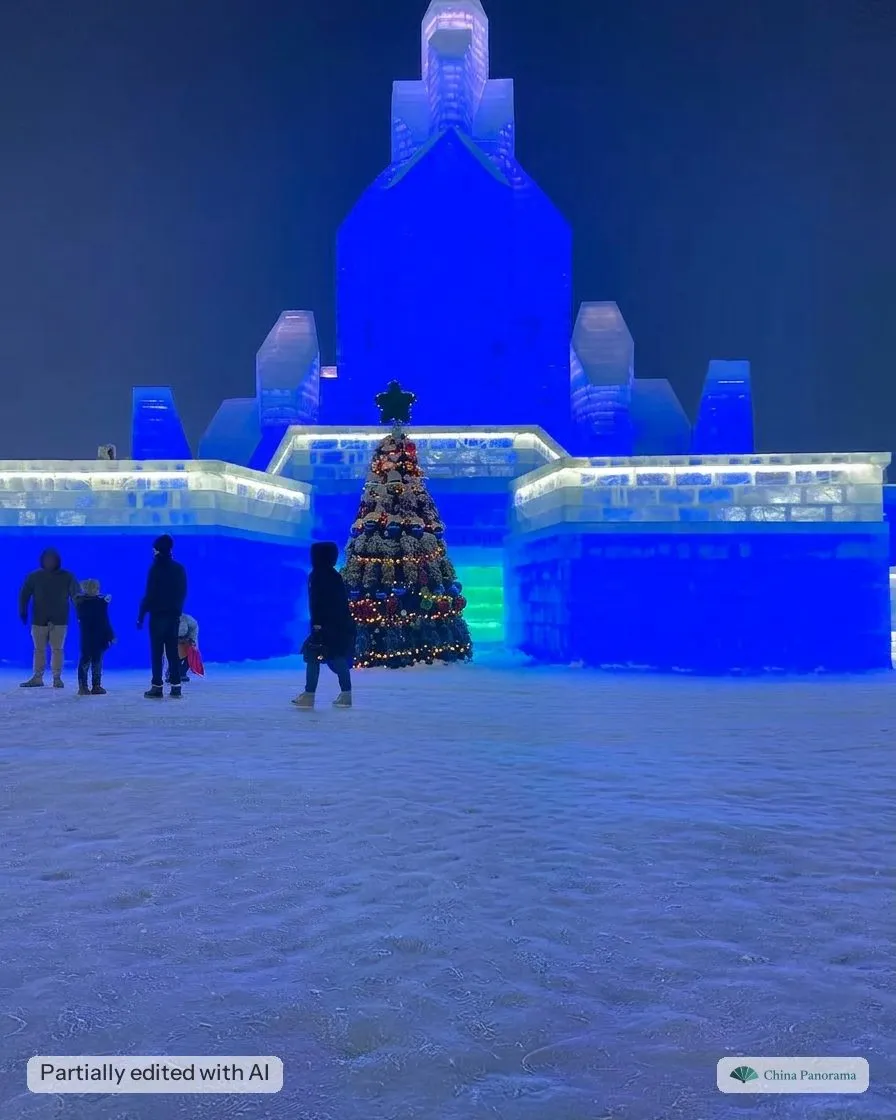
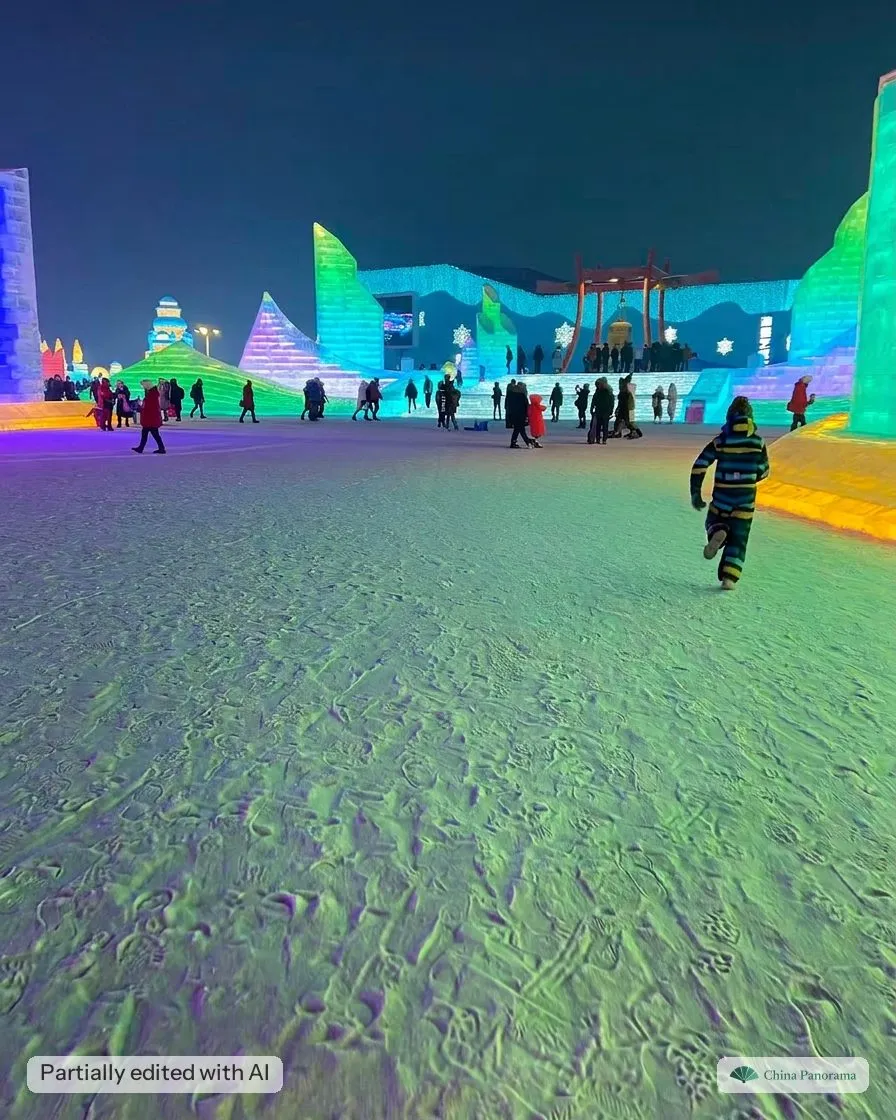
哈尔滨冰雪大世界Winter onlySongbei · 松北区OutdoorsWinter onlyA city built every year out of blocks sawn from the frozen Songhua, lit from inside with coloured LEDs, with ice slides several storeys high. It is the single reason most foreign visitors come to Harbin, and it exists for roughly two months a year.
On Sun Island, Songbei district. Usually opens in late December and runs into late February; the separate International Ice and Snow Sculpture Festival traditionally opens on 5 January. Dates and ticket prices for the coming season are announced each autumn — we do not list them until they are published.
- Entry
- Price not verified — check on site
- Opening hours
- Hours not verified — check on site
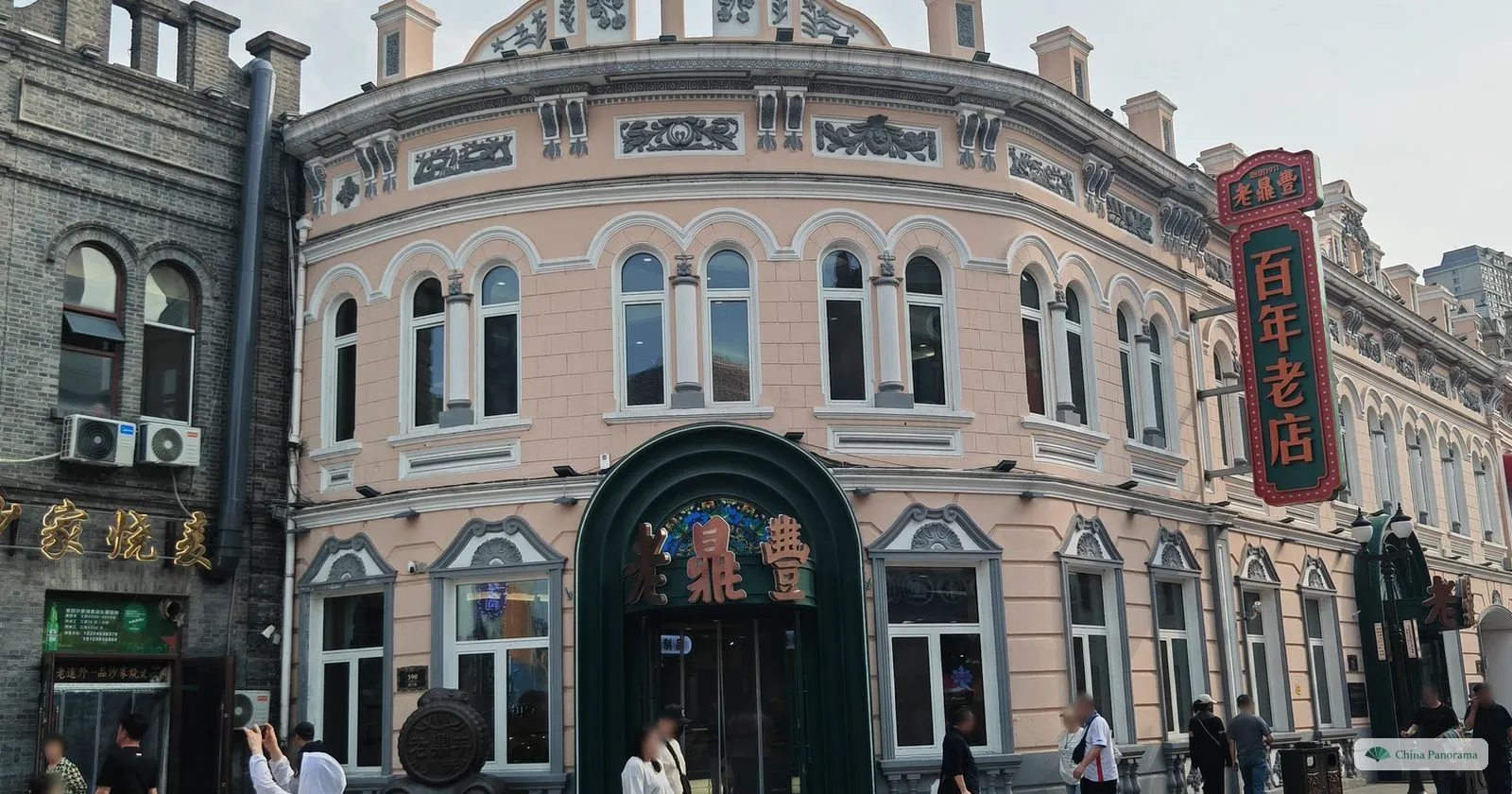
Chinese Baroque quarter (Old Daowai)
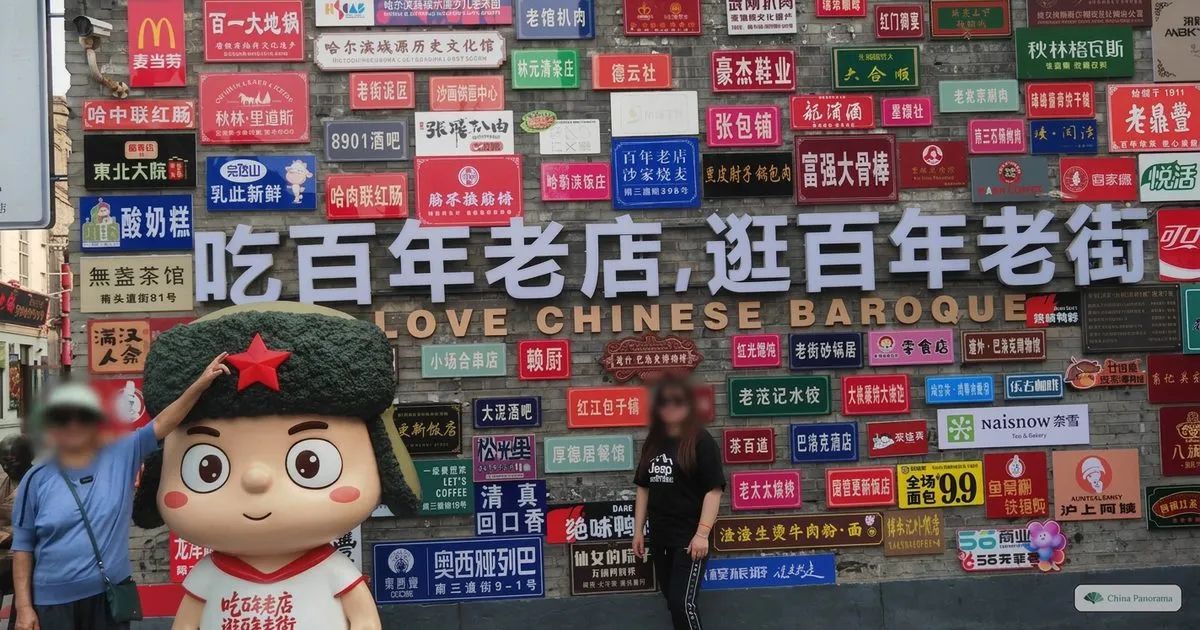
中华巴洛克历史文化街区ArchitectureDaowai · 道外区OutdoorsWhere Chinese merchants in the 1920s copied the European facades going up on the Russian side of town and put them on the front of traditional courtyard houses. The result — baroque plasterwork outside, siheyuan courtyard behind — exists at this scale nowhere else. Restored, and much less polished than Central Street.
Daowai district, east of the centre. Free to walk; the courtyards behind the street frontages are the point, so go through the archways.
- Entry
- Free
- Opening hours
- Open at all hours
 Partly edited with AI
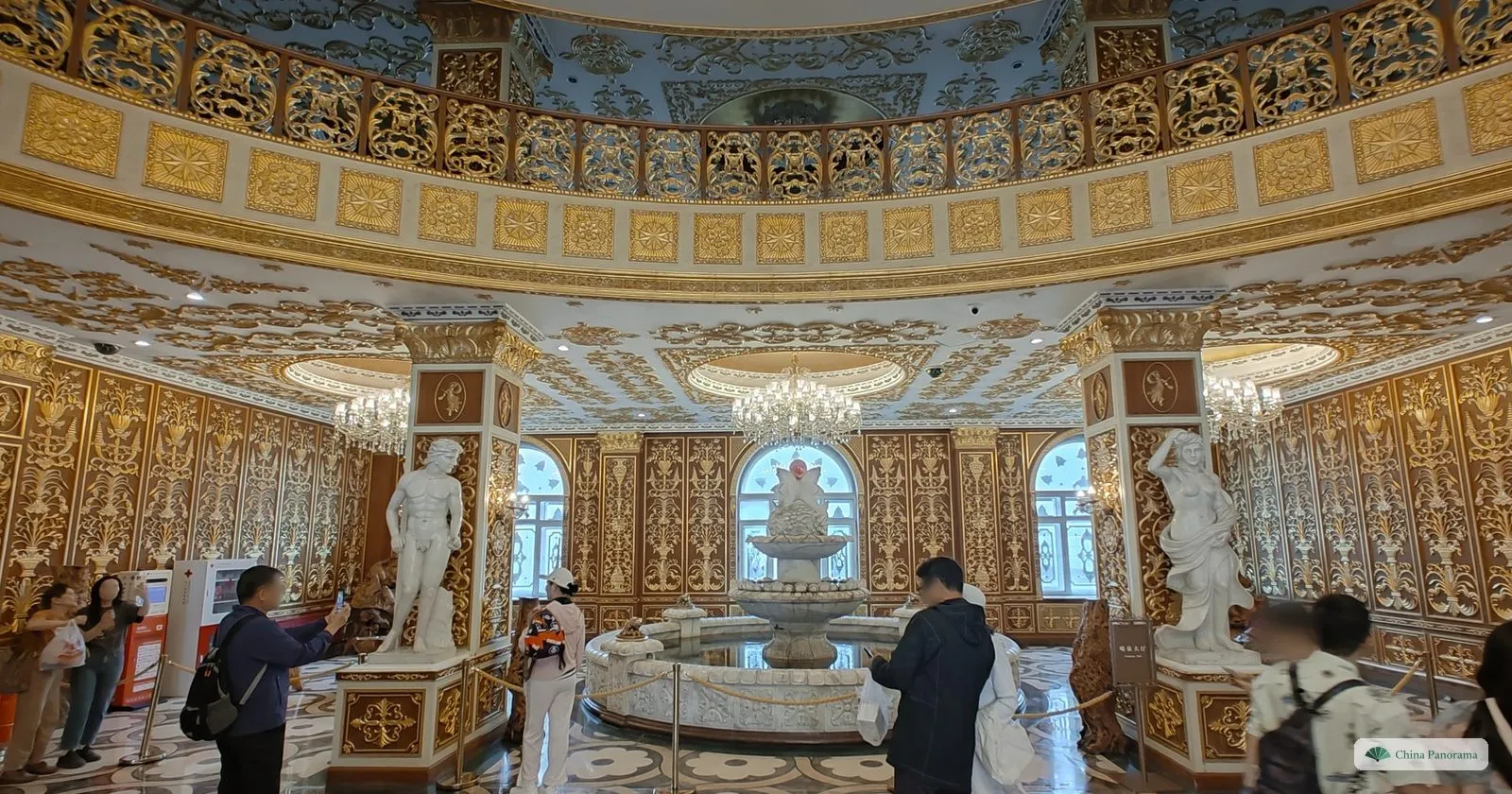
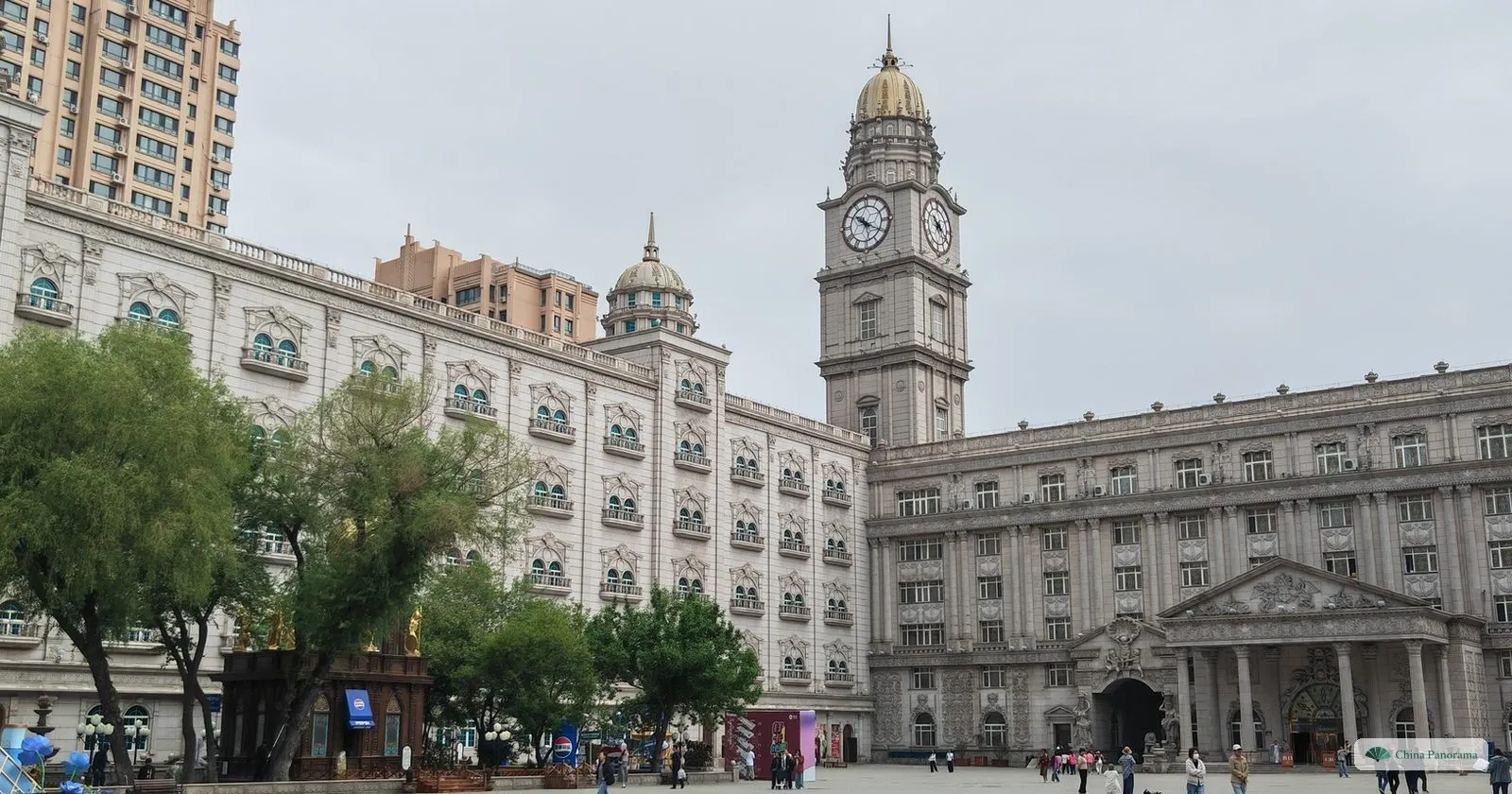 ArchitectureDaoli · 道里区Indoors
A working pharmaceutical company whose head office was built as a full-scale imitation palace — gilded halls, marble rotunda, copies of Renaissance sculpture, a chandelier over the lobby. Chinese visitors call it the Versailles of the Northeast. It is genuinely strange and genuinely free to enter.
Daoli district, away from the tourist core. Entry has been free, but access is managed and may need booking in advance through the company's WeChat account — check before travelling out there.
- Entry
- Price not verified — check on site
- Opening hours
- Hours not verified — check on site
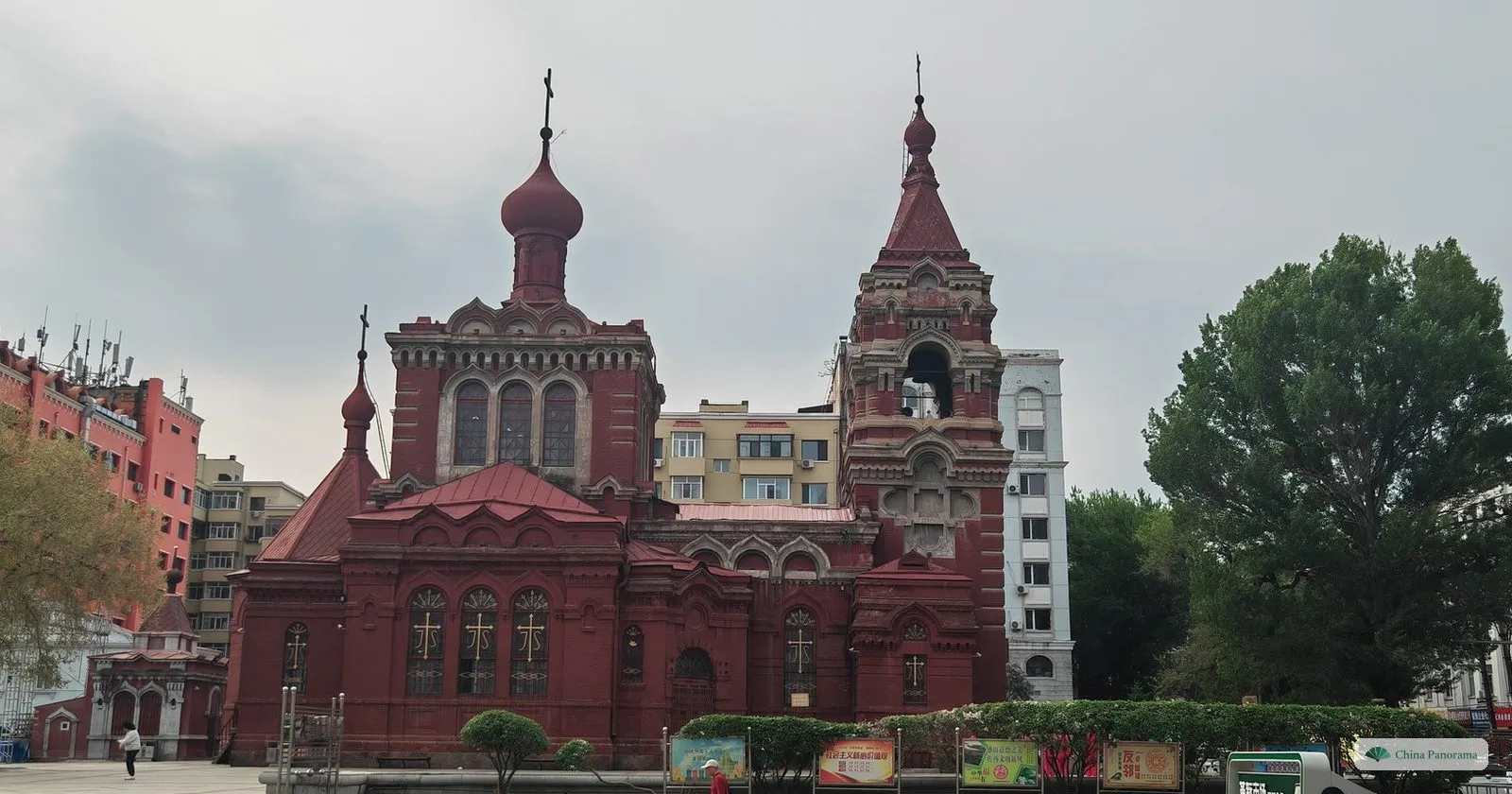
Gogol Street & St. Alexeyev Church
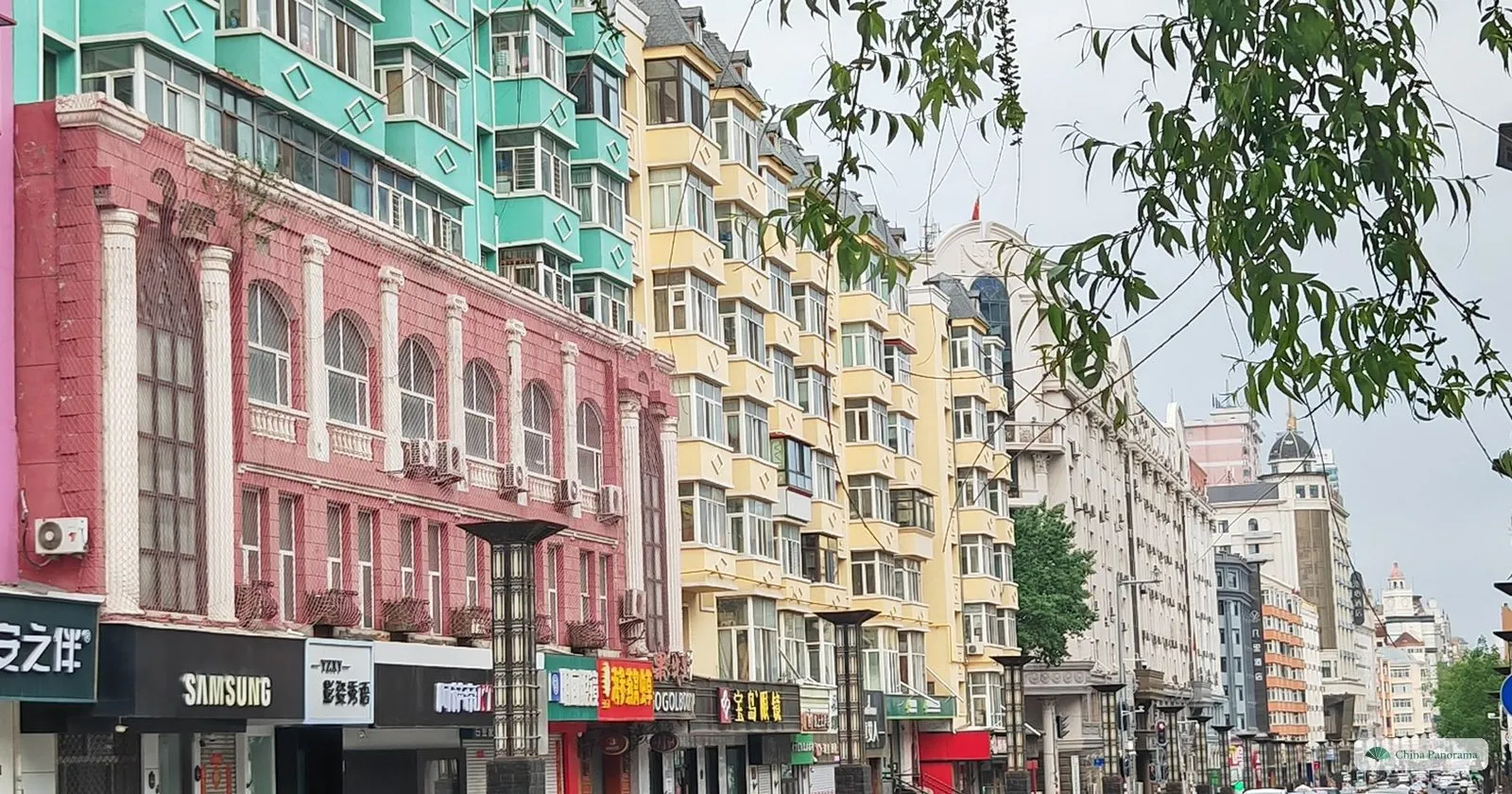
果戈里大街 · 圣阿列克谢耶夫教堂Russian heritageNangang · 南岗区OutdoorsThe other Russian street, in Nangang, and the one where people actually live. Pastel apartment blocks, a scattering of 1920s–30s facades, and at its northern end the red-brick St. Alexeyev Church — originally Russian Orthodox, now a Catholic parish.
Nangang district, near Harbin main station. Free to walk; the church is a working parish, so respect services.
- Entry
- Free
- Opening hours
- Open at all hours
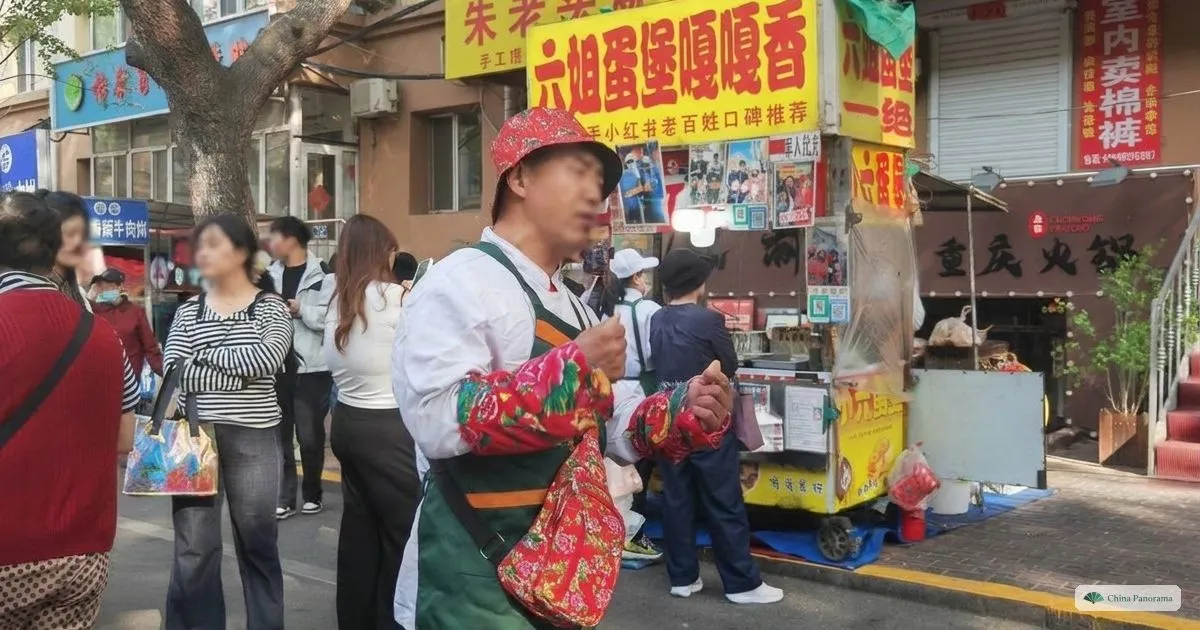 Partly edited with AIMarketDaoli · 道里区OutdoorsWarm months
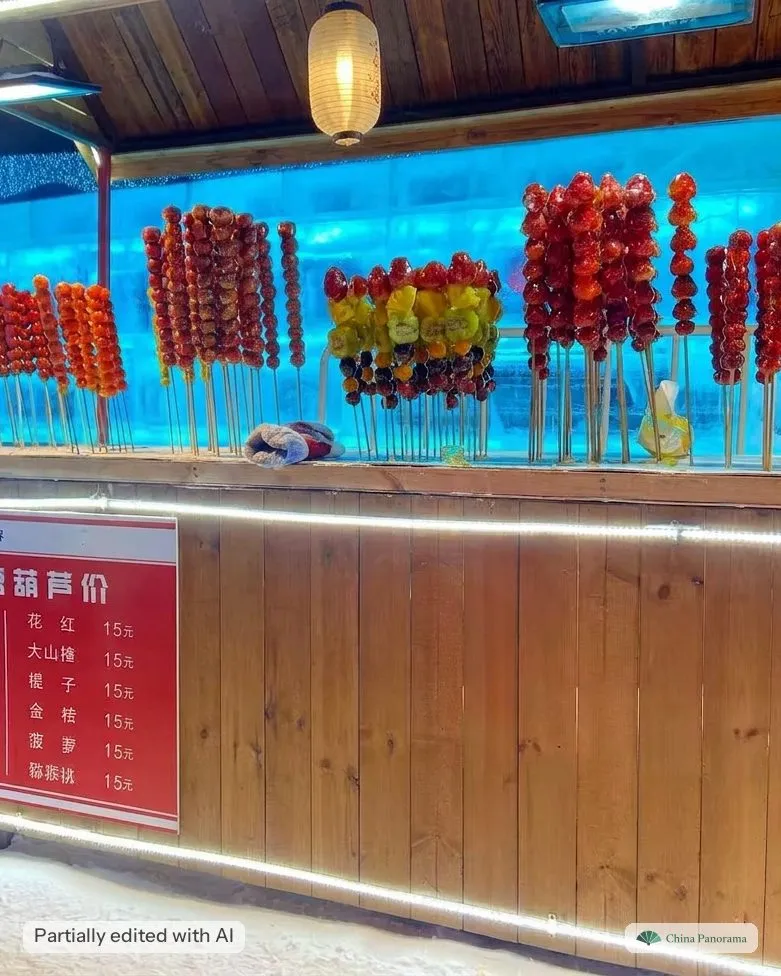
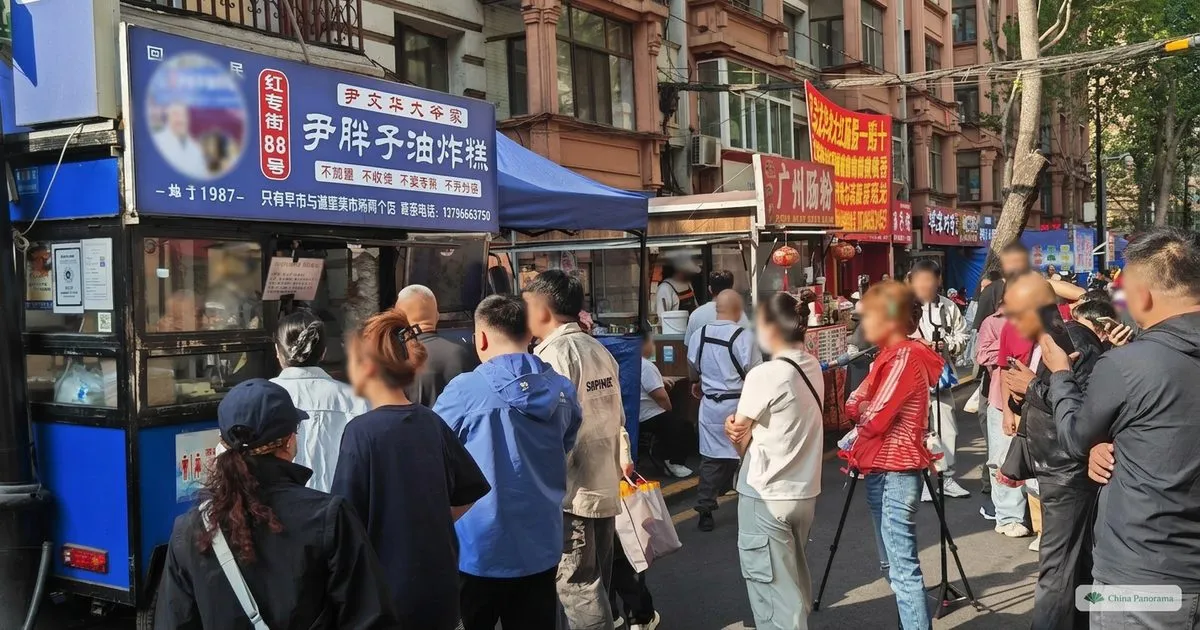
A street market that takes over Hongzhuan Street at dawn and is gone by mid-morning: fried dough, spring pancakes, soy milk, grilled skewers, tubs of pickles. This is the one entry on this list where you are surrounded entirely by people going about a normal Tuesday.
Daoli district, a short walk from Central Street. Runs very early — it is winding down by 09:00 — and operates seasonally, so it may not be running in deep winter.
- Entry
- Free
- Opening hours
- Hours not verified — check on site
 Partly edited with AI
Entry prices and opening hours are marked unverified where we have not checked them against an official source. We would rather show a gap than a number we made up.
Routes that don't double back
Three days is the number most people should plan for, and the order matters more than the list does — Harbin's sights sit on a few clear axes, so a day put together in the wrong sequence costs an hour in taxis. Each route below runs in one direction, with the time and distance between stops.
Half a morning · about 1.8 km on foot, then one short taxi
Hongzhuanjie morning market
Walk 7 min· 500 m
Central Street
Walk 9 min· 640 m
Flood Control Monument & Stalin Park
Walk 10 min· 700 m
Songhua River railway bridge
Taxi 10 min· 2.9 km
Chinese Baroque quarter
5 stops · 26 min walking · 10 min by taxi
Four stops on foot, one taxi at the end
Central Street
Walk 8 min· 900 m
St. Sophia Cathedral
Walk 7 min
Zhaolin Park
Walk 10 min· 640 m
Flood Control Monument
Taxi 10 min· 2.9 km
Chinese Baroque quarter
5 stops · 25 min walking · 10 min by taxi
Songbei district — taxi between stops
Sun Island
Taxi 10 min
Siberian Tiger Park
Taxi 12 min
Harbin Opera House
Walk 15 min
Harbin Music Park
Taxi 8 min
Lilac Park
5 stops · 15 min walking · 30 min by taxi
Spread out — budget for taxis
Unit 731 Museum
Taxi 10 min· 15 km
Harbin Institute of Technology
Taxi 7 min· 3 km
Gogol Street
Walk 6 min
Heilongjiang Provincial Museum
Taxi 25 min· 23 km
Volga Manor
5 stops · 6 min walking · 42 min by taxi
Stop by stop
Core city walk
The old town is smaller than it looks. Everything here is strung along one axis — the market, the cobbled street, the river — so you can do it start to finish without ever doubling back. Start early: the morning market is finished by nine.
- Partly edited with AI
Fried dough, spring pancakes, soy milk, skewers. Gone by mid-morning.
- Entry
- Free
- Hours
- Early morning only
Walk 7 min· 500 m
2Central Street
中央大街Walk its full 1.45 km of granite setts north towards the river. The Modern ice cream kiosk is halfway up — join the queue, everyone does.
- Entry
- Free
- Hours
- Open at all hours
Walk 9 min· 640 m
3Flood Control Monument & Stalin Park
防洪纪念塔 · 斯大林公园Where Central Street meets the embankment. The park runs along the river from here.
- Entry
- Free
- Hours
- Open at all hours
Walk 10 min· 700 m
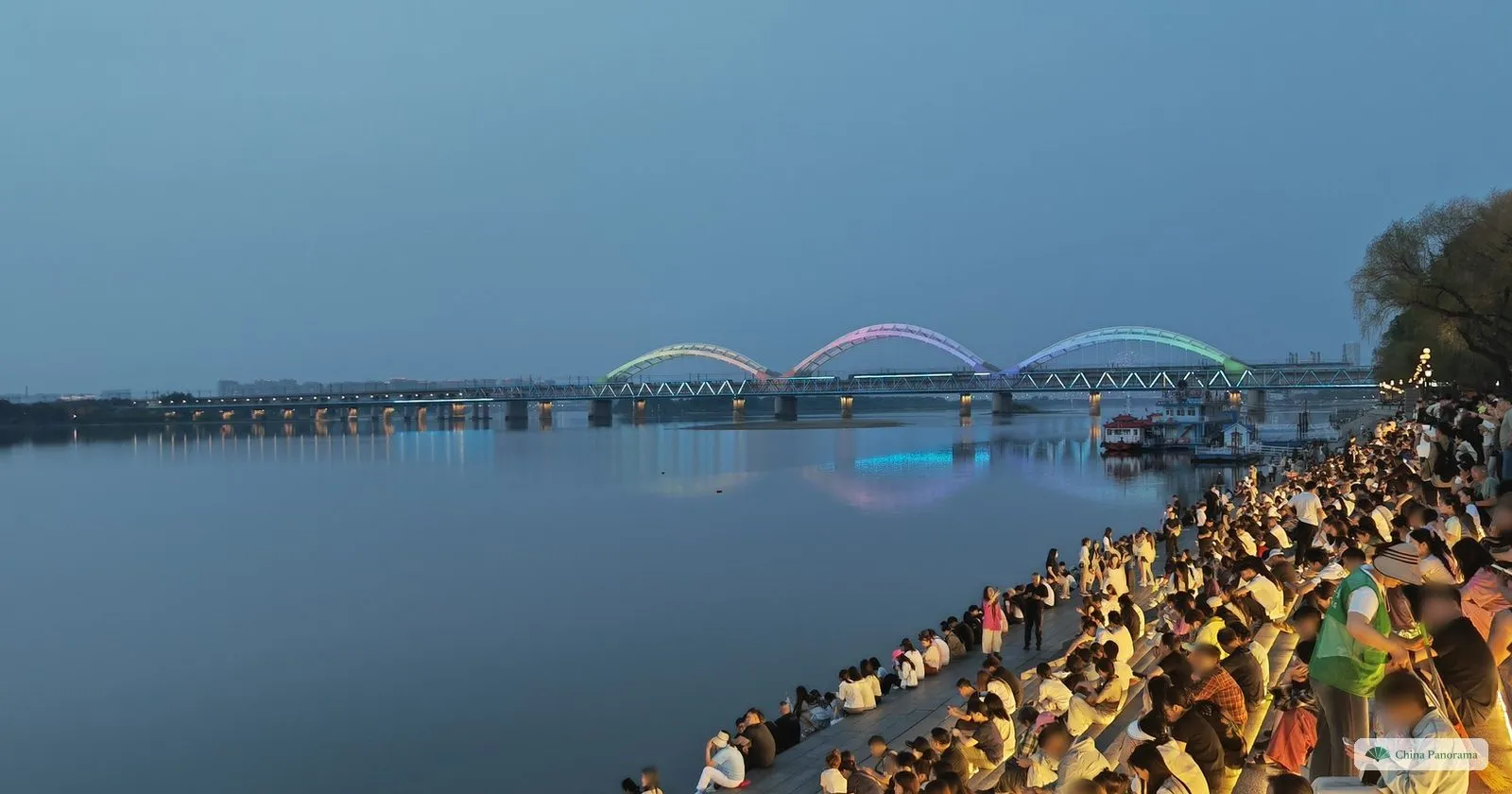
4Songhua River railway bridge
松花江铁路桥The 1901 Chinese Eastern Railway bridge, now a pedestrian deck, with its modern replacement alongside it. At dusk the whole embankment fills up with people sitting on the steps watching it light up.
- Entry
- Free
- Hours
- Open at all hours
Taxi 10 min· 2.9 km
5Chinese Baroque quarter
中华巴洛克历史文化街区Baroque facades on Chinese courtyard houses. Old teahouses and retro photo studios.
- Entry
- Free
- Hours
- Open at all hours
Easy add-ons: Two more things are within a short walk of Central Street and easy to bolt on: St. Sophia Cathedral (900 m) and the Old Synagogue concert hall (610 m).
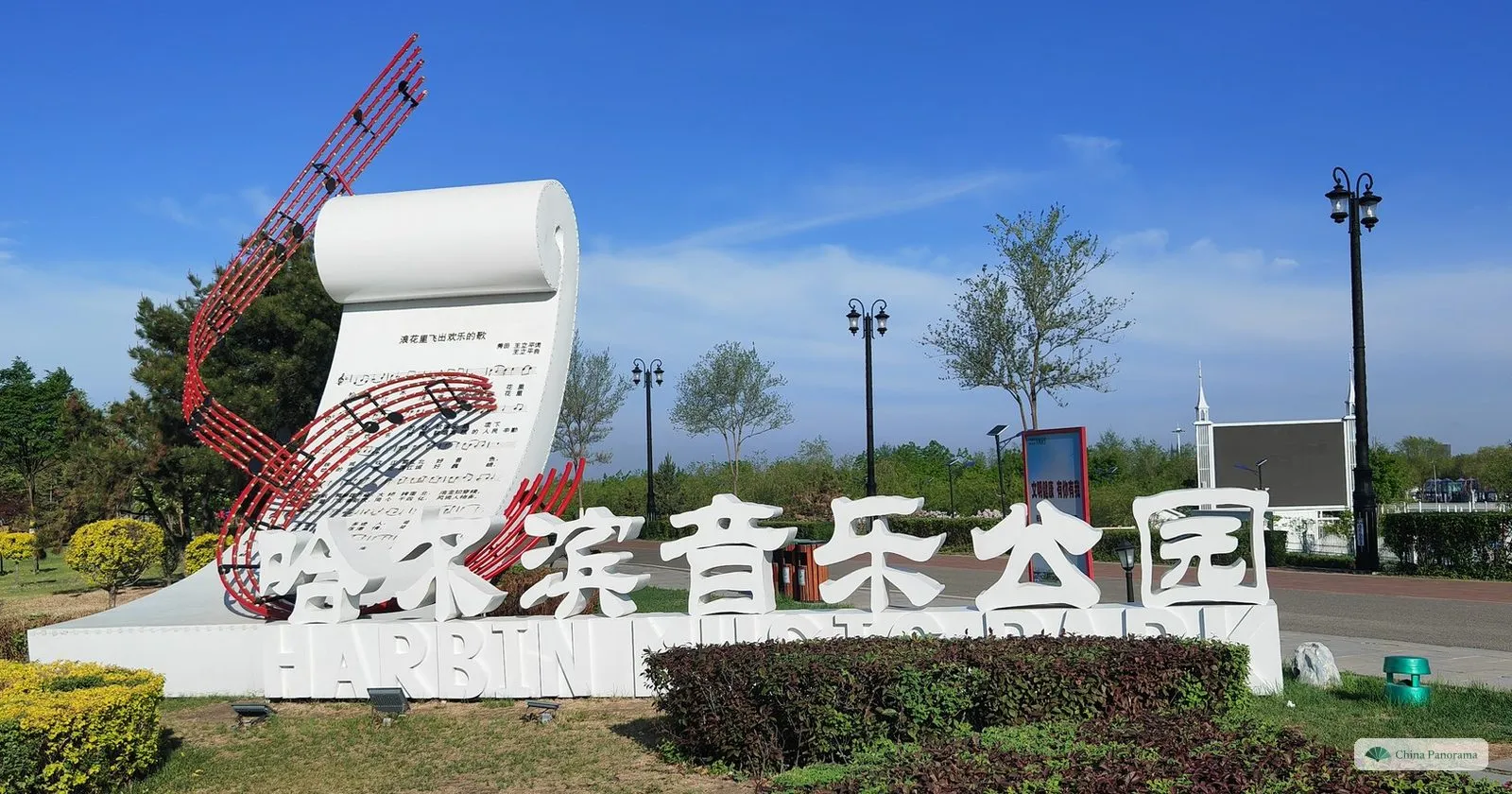
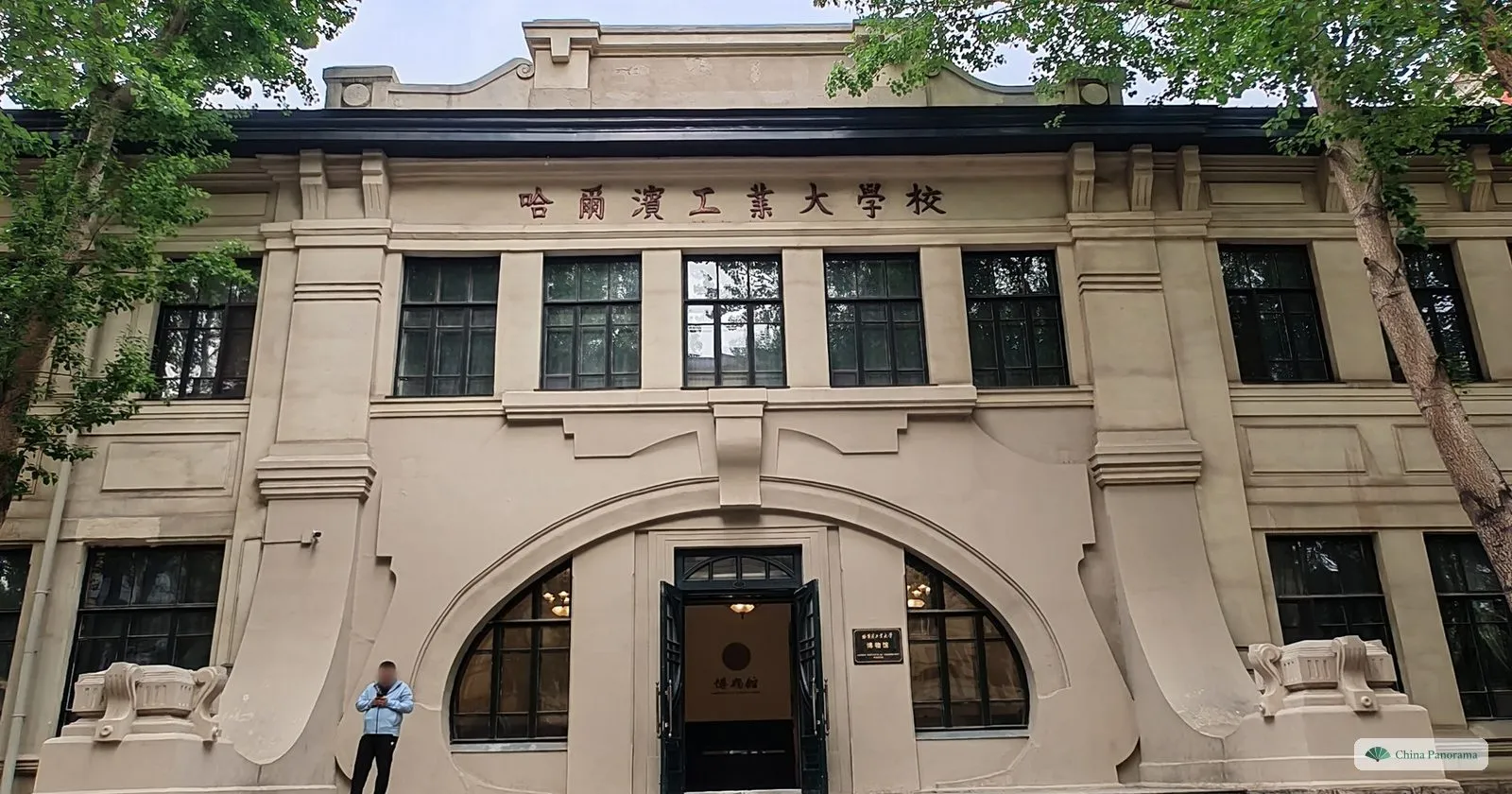
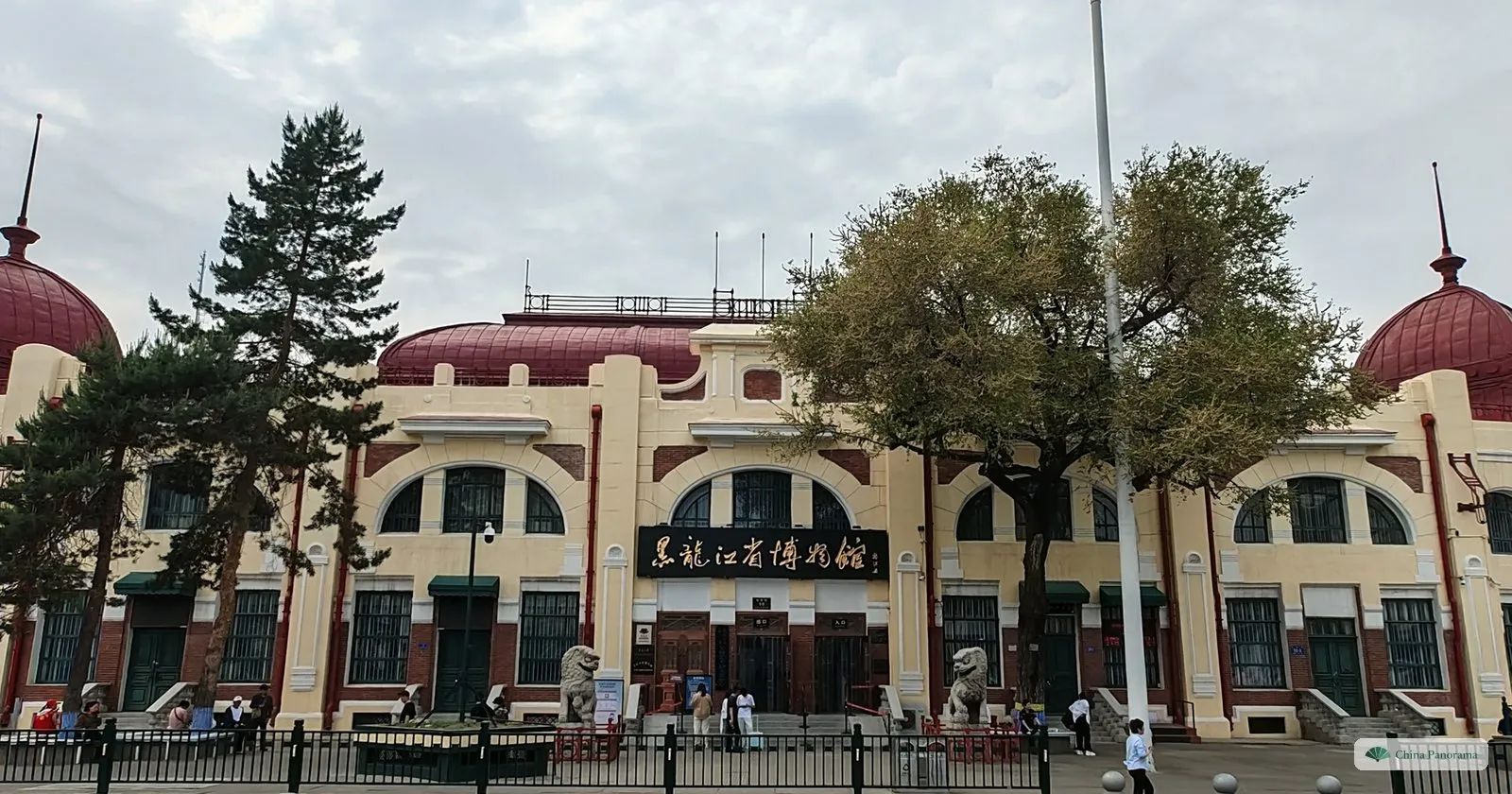
* Walking and taxi times, and the distances, come from local trip write-ups rather than from a timetable — treat them as good orientation, not a promise. Anything marked with a star below still carries that caveat for its price and opening hours; everything unmarked has been checked.
Distances between the main sights
Open the full-size map ↗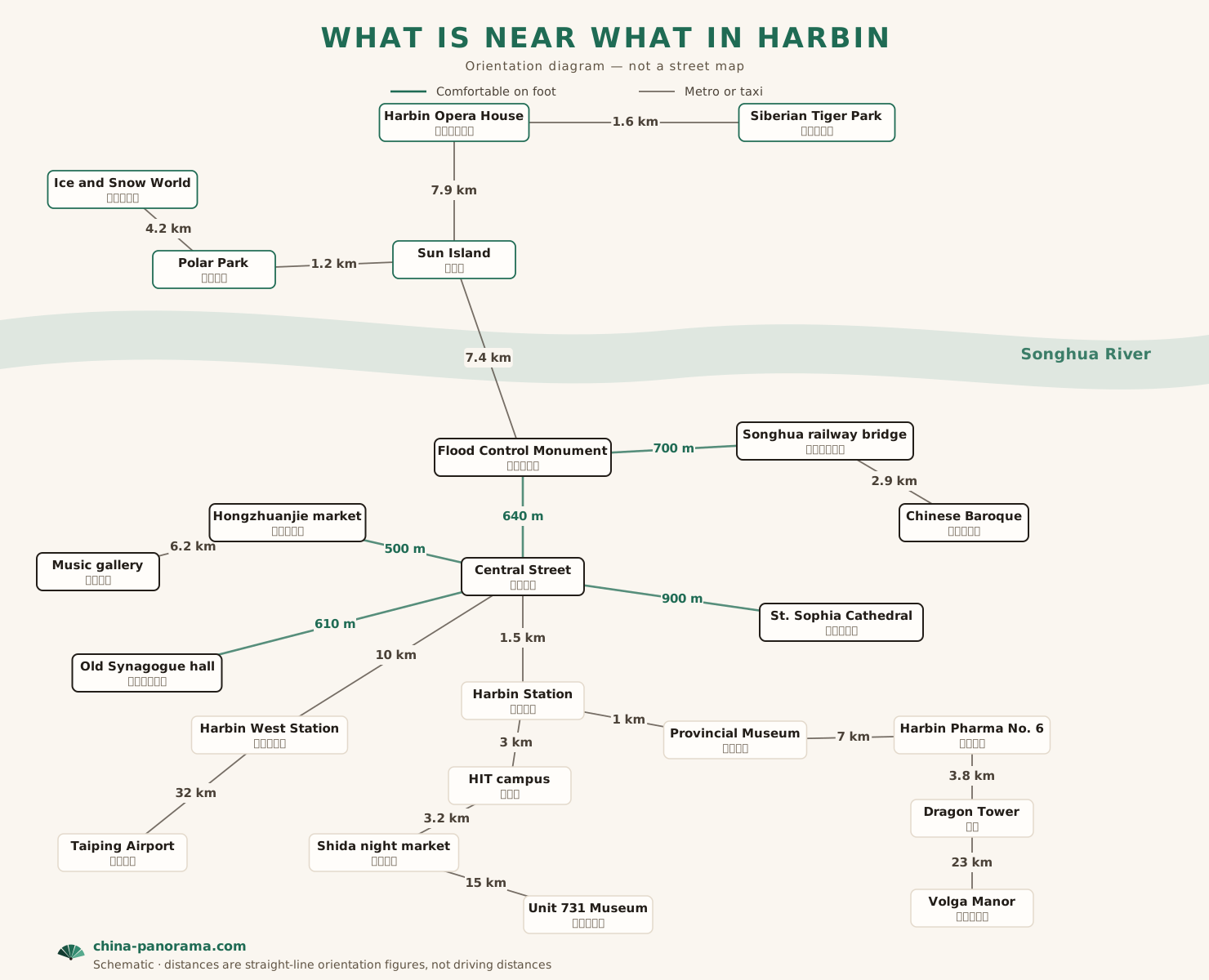
Not a street map — a diagram of what is near what. Distances are straight-line orientation figures taken from local trip write-ups, not driving distances, and the layout is schematic.
Getting there and getting around
High-speed rail from Beijing
G-trains run Beijing Chaoyang / Beijing South to Harbin West. Journey time is in the four-to-five-hour range. Book through 12306 or a reseller; passports are used as the ticket at the gate.
Journey times and frequencies not yet verified against an official timetable.
Flights
Harbin Taiping International (HRB) has domestic connections across China and a limited set of regional international routes. There are no direct flights from German-speaking Europe — you will connect, most commonly in Beijing or Shanghai.
Journey times and frequencies not yet verified against an official timetable.
Onward in the Northeast
Changchun and Shenyang are both on the same high-speed line south, which makes a three-city Northeast route straightforward.
Journey times and frequencies not yet verified against an official timetable.
Railway stations
- Harbin 哈尔滨站Central, walking distance to Gogol Street and a short ride from Central Street.
- Harbin West 哈尔滨西站Main high-speed station; most G-trains from Beijing terminate here.
- Harbin East 哈尔滨东站Mostly regional and slower services.
Three lines in service. Line 2 runs north–south across the Songhua River and links Harbin West station, the city centre and Sun Island; Line 3 is the circle line. Four interchanges: Museum, Taipingqiao, HMU Second Hospital and Zhujiang Road. Fares, hours and the map are on the Harbin Metro page; how the gates, security checks and card payments work is the same across Chinese cities and lives in the China metro guide. Harbin sits in the cheaper half of the Chinese cities we price up; you can model a trip on the trip cost calculator.
The metro, in short
Full Harbin Metro guide →- Lines
- 1 · 2 · 3
- Hours
- 05:30–22:30
- Fare from
- 2 CNY
- Exits
- Numbered, not lettered
| St. Sophia Cathedral | Shangzhi Street 尚志大街 | Line 2 |
| Central Street & Stalin Park | Central Street 中央大街 | Line 2 |
| Flood Control Monument | Central Street 中央大街 | Line 2 |
| Ice and Snow World | Ice and Snow World 冰雪大世界 | Line 2 |
| Sun Island & Polar Park | Sun Island 太阳岛 | Line 2 |
| Siberian Tiger Park | Shimao Avenue 世茂大道 | Line 2 |
| Heilongjiang Provincial Museum | Museum 博物馆 | Line 1/2 |
| Soviet Red Army Memorial | Museum 博物馆 | Line 1/2 |
| Confucian Temple | Harbin Eng. University 哈尔滨工程大学 | Line 1 |
| Chinese Baroque quarter | Jingyu Park 靖宇公园 | Line 3 |
| Russian Yellow House yard | Workers' Cultural Palace 工人文化宫 | Line 2 |
| Harbin No. 6 Pharma “Versailles” | Haihe East Road 海河东路 | Line 3 |
| Dragon Tower | Convention & Exhibition Centre 会展中心 | Line 3 |
| Harbin Art Museum | Shangzhi Street 尚志大街 | Line 2 |
| Unit 731 Museum | Xinjiang Street 新疆大街 | Line 1 |
Fares, opening hours, the full map and what the stations themselves look like are on the Harbin Metro page.
Before you go
Everything on this page assumes you have the country-level questions settled. Those live elsewhere on the site:
- Visa and visa-free entry
Whether your passport needs a visa at all, by nationality.
- Pre-trip checklist
Payments, SIM, apps — the things to sort before you fly.
- Public holidays
Including Spring Festival, which overlaps the ice season.
- School holidays in Harbin
Heilongjiang's winter break is long, and it drives the crowds.
- Harbin Ice Festival 2027
Which of the three winter parks is which, and what to wear at −25 °C.
- Harbin Metro
Map, fares, hours, and the station for every sight on this page.
- Qingdao
A German-era old town and Tsingtao beer, on the Yellow Sea.
- Shenyang
A little over two hours south on the same high-speed line: Mukden Palace, two Qing tombs — and BMW and ZF.
FAQ
How cold does Harbin actually get?
In January the average daily low is -25 °C and the average high is still -14 °C — it stays below freezing around the clock for roughly three months. Individual nights go colder. In July the average high is 29 °C, so the same city spans about 45 degrees over the year.
When is the Harbin Ice and Snow World open?
It is built fresh each winter from ice cut out of the Songhua River, usually opens in late December and runs into late February, and the separate International Ice and Snow Sculpture Festival traditionally opens on 5 January. Exact dates and ticket prices for each season are announced in the autumn — we do not publish them here until they are.
How many days do you need in Harbin?
Three is the number most people should plan for: one for the Russian-era centre, one for Sun Island and the ice, and one for Daowai and Nangang. Two works if Harbin is a stop on a longer Northeast trip; four lets you absorb a weather day.
Is Harbin worth visiting in summer?
Yes, and it is the version of the city almost nobody outside China photographs. Highs of 22–29 °C while the rest of the country is sweating, lilacs in May, and — because all of China runs on Beijing time while Harbin sits far to the northeast — sunrise just after 03:43 in June. The trade-off is that the ice parks, the single biggest reason to come, do not exist.
Why does Harbin look Russian?
It was effectively founded in 1898 as the junction town of the Chinese Eastern Railway, a Russian-built line, and grew with a large Russian population. Central Street, St. Sophia Cathedral and St. Alexeyev Church are all from that period, and the Chinese Baroque quarter in Daowai is what happened when Chinese merchants adopted the same facades on their own courtyard houses.
How do you get to Harbin from Beijing?
By high-speed rail to Harbin West, in the four-to-five-hour range, or by air to Harbin Taiping (HRB). There are no direct flights from German-speaking Europe, so an international trip connects, most often in Beijing or Shanghai.
Does Harbin have a metro?
Yes, three lines. Three lines in service. Line 2 runs north–south across the Songhua River and links Harbin West station, the city centre and Sun Island; Line 3 is the circle line. Four interchanges: Museum, Taipingqiao, HMU Second Hospital and Zhujiang Road. Trains run 05:30 to 22:30. Fares are by distance, from 2 CNY for the first 6 km. Exits are numbered rather than lettered, which catches people out who are used to Beijing or Shanghai.
What is the city flower of Harbin?
The lilac (丁香). It comes out in May and it is everywhere: Sun Island, the park strips along Gogol Street, the squares around St. Sophia. If you are in Harbin in late spring, that is what you are smelling.
Sources and status
Photographs on this page were taken in 2026-05 (the city) and 2025-12 (the Ice and Snow World). Temperature data: Monthly temperature data, Harbin.
Changelog (1)
- 2026-09-20Page created. Photographs from May 2026 (city) and December 2025 (Ice and Snow World).