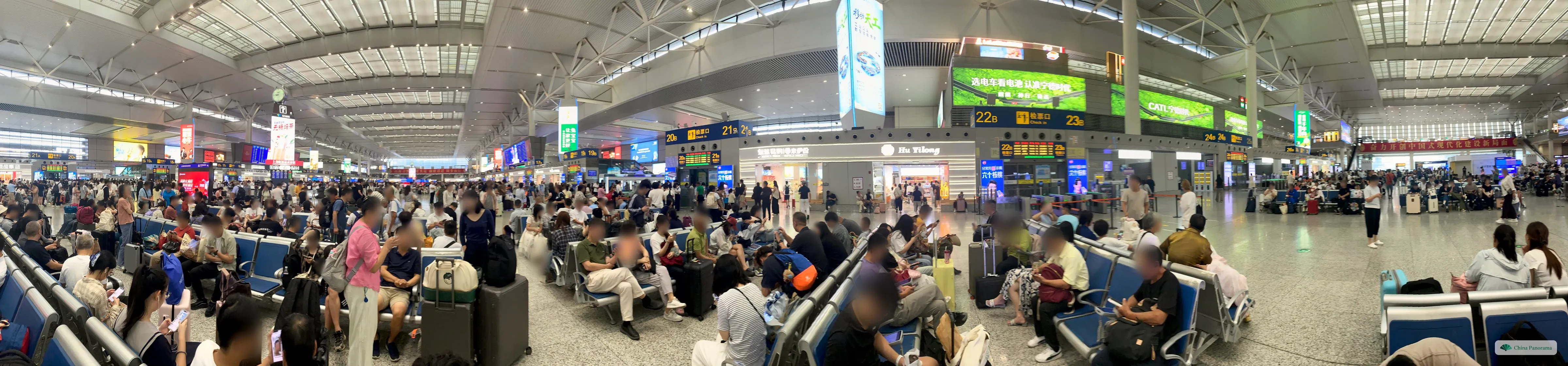
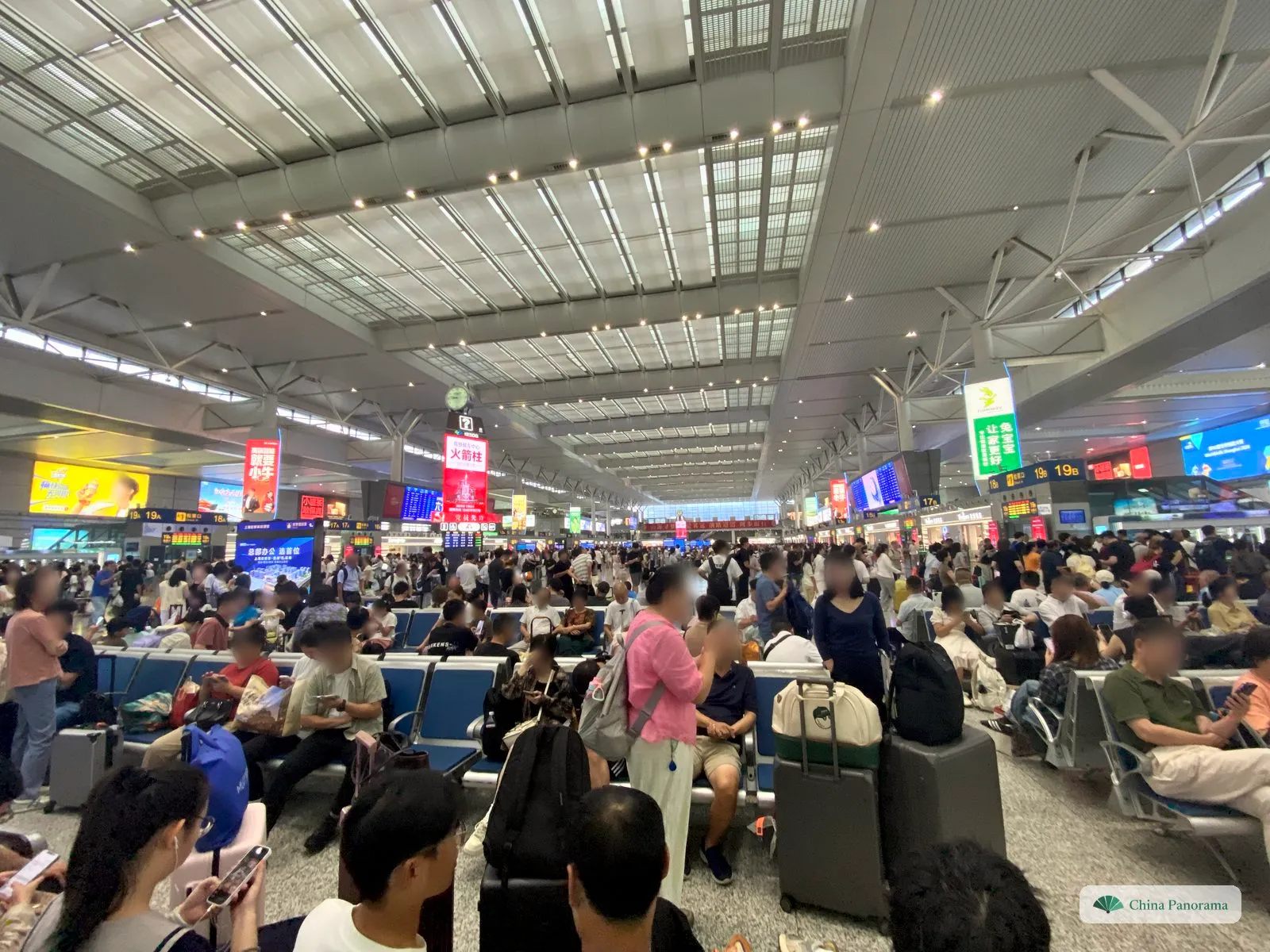
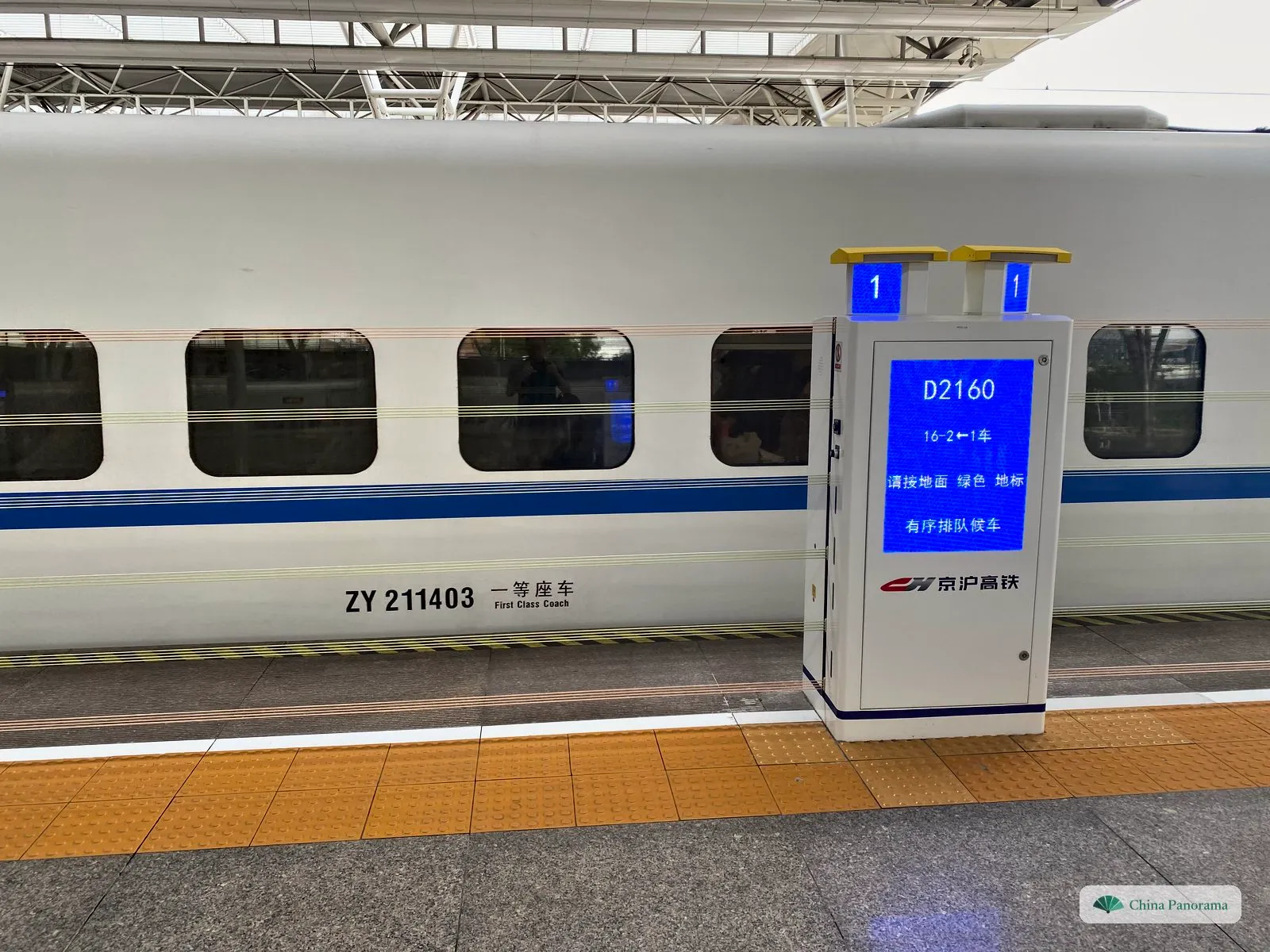
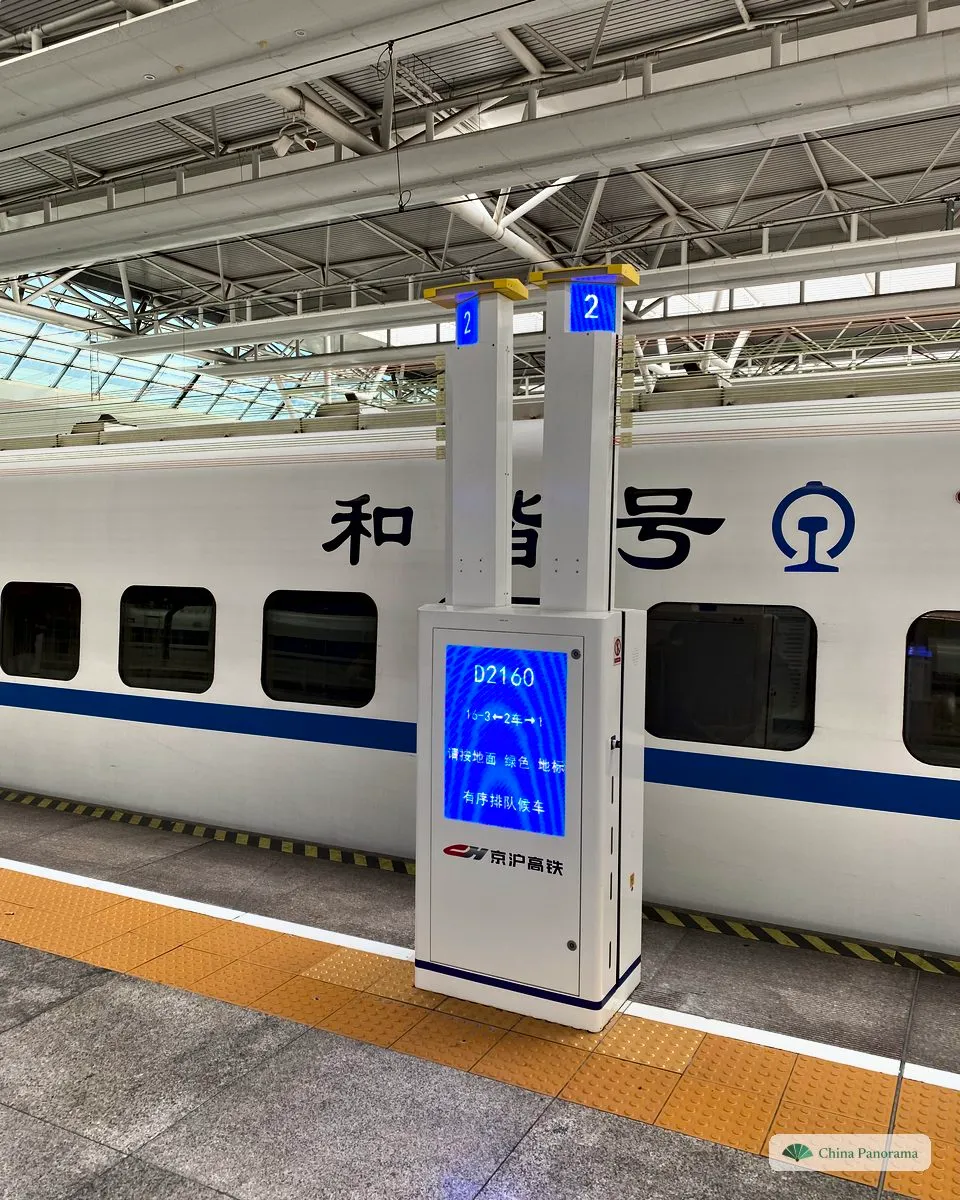
A station in Shanghai on Sunday, 30 August 2026, the last weekend of the summer holidays. No Chunyun, and already this full. On the peak days of the Spring Festival rush there can easily be twice as many people.
Last verified: 9 Nov 2026
Chunyun 2027: travelling in China over Chinese New Year
Chunyun (春运, chūnyùn) is the Spring Festival travel rush: forty days in which China goes home and comes back. In 2026 it counted 9.41 billion trips. For 2027 the holiday is fixed: Friday 5 February, to Saturday 13 February, nine days off. The rush itself is expected from 22 January to 2 March.
Can you travel to China over Chinese New Year? Yes, and it is the most atmospheric time of the year. It only goes wrong if you plan to change cities on the peak days. The calendar shows each day: how full the trains are, when tickets go on sale and what is open.
Chinese New Year
Saturday, 6 February 2027
Year of the Goat begins
Days off
Fri 5 Feb – Sat 13 Feb
9 days. Make-up workdays: Sun 31 January, Sun 14 February
Chunyun (expected)
Fri 22 Jan – Tue 2 Mar
40 days. Official dates come in January
Train tickets
15 days ahead
Travel day included: tickets for 22 January from 8 January
Chunyun 2027 day by day: crowds, ticket sales, what is open
January to March 2027 as in a Chinese calendar: 休 marks days off, 班 make-up workdays, under each date the lunar day or the festival. 售 is the day 12306 starts selling tickets for that date. The bar at the bottom shows how full the trains are likely to be. Tap a day for the sale time at your departure station, the motorway toll and what is open.
Spring Festival holiday 2027: Friday 5 February to Saturday 13 February (9 days)
Chunyun 2027 (expected): Friday 22 January to Tuesday 2 March
First Chunyun tickets: with the 15-day rule, tickets for 22 January go on sale on Friday 8 January
Tickets for New Year’s Eve: on sale from Friday 22 January
一Mon二Tue三Wed四Thu五Fri六Sat日Sun
休休 day off班班 make-up workdayChunyun (expected)sale day of the chosen date
Trains:QuietSlightly busierBusyVery busyPeak
Friday, 1 January 2027
Lunar calendar: 冬月廿四 · 元旦 New Year’s Day
Busy· New Year’s Day holiday (元旦)休 day off
Three days off for the Western New Year. Short trips and city breaks, trains and sights are busier than usual.
Train tickets for this day
On sale from Friday, 18 December 2026, 12:45 Beijing time
On this day 12306 starts selling tickets for 15 Jan
Motorway toll for cars
Normal toll
Open or closed
Small restaurants and shopsOpen · Open as usual
Bank countersPartly · Few branches, short hours. ATMs and mobile payment work
Government offices, visa countersClosed · Closed over the New Year’s Day holiday
Major sights and museumsOpen · Open, own opening days
Crowd levels and opening are our assessment from how 2024 to 2026 ran, not an official forecast.
Saturday, 2 January 2027
Lunar calendar: 冬月廿五
Busy· New Year’s Day holiday (元旦)休 day off
Three days off for the Western New Year. Short trips and city breaks, trains and sights are busier than usual.
Train tickets for this day
On sale from Saturday, 19 December 2026, 12:45 Beijing time
On this day 12306 starts selling tickets for 16 Jan
Motorway toll for cars
Normal toll
Open or closed
Small restaurants and shopsOpen · Open as usual
Bank countersPartly · Few branches, short hours. ATMs and mobile payment work
Government offices, visa countersClosed · Closed over the New Year’s Day holiday
Major sights and museumsOpen · Open, own opening days
Crowd levels and opening are our assessment from how 2024 to 2026 ran, not an official forecast.
Sunday, 3 January 2027
Lunar calendar: 冬月廿六
Busy· New Year’s Day holiday (元旦)休 day off
Three days off for the Western New Year. Short trips and city breaks, trains and sights are busier than usual.
Train tickets for this day
On sale from Sunday, 20 December 2026, 12:45 Beijing time
On this day 12306 starts selling tickets for 17 Jan
Motorway toll for cars
Normal toll
Open or closed
Small restaurants and shopsOpen · Open as usual
Bank countersPartly · Few branches, short hours. ATMs and mobile payment work
Government offices, visa countersClosed · Closed over the New Year’s Day holiday
Major sights and museumsOpen · Open, own opening days
Crowd levels and opening are our assessment from how 2024 to 2026 ran, not an official forecast.
Monday, 4 January 2027
Lunar calendar: 冬月廿七
Quiet· Normal January
Ordinary winter travel. A good time to buy tickets for the rush: sales for the first Chunyun days open now.
Train tickets for this day
On sale from Monday, 21 December 2026, 12:45 Beijing time
On this day 12306 starts selling tickets for 18 Jan
Motorway toll for cars
Normal toll
Open or closed
Small restaurants and shopsOpen · Open as usual
Bank countersOpen · Open as usual
Government offices, visa countersOpen · Open on workdays
Major sights and museumsOpen · Open, own opening days
Crowd levels and opening are our assessment from how 2024 to 2026 ran, not an official forecast.
Tuesday, 5 January 2027
Lunar calendar: 冬月廿八 · 小寒 solar term Minor Cold
Quiet· Normal January
Ordinary winter travel. A good time to buy tickets for the rush: sales for the first Chunyun days open now.
Train tickets for this day
On sale from Tuesday, 22 December 2026, 12:45 Beijing time
On this day 12306 starts selling tickets for 19 Jan
Motorway toll for cars
Normal toll
Open or closed
Small restaurants and shopsOpen · Open as usual
Bank countersOpen · Open as usual
Government offices, visa countersOpen · Open on workdays
Major sights and museumsOpen · Open, own opening days
Crowd levels and opening are our assessment from how 2024 to 2026 ran, not an official forecast.
Wednesday, 6 January 2027
Lunar calendar: 冬月廿九
Quiet· Normal January
Ordinary winter travel. A good time to buy tickets for the rush: sales for the first Chunyun days open now.
Train tickets for this day
On sale from Wednesday, 23 December 2026, 12:45 Beijing time
On this day 12306 starts selling tickets for 20 Jan
Motorway toll for cars
Normal toll
Open or closed
Small restaurants and shopsOpen · Open as usual
Bank countersOpen · Open as usual
Government offices, visa countersOpen · Open on workdays
Major sights and museumsOpen · Open, own opening days
Crowd levels and opening are our assessment from how 2024 to 2026 ran, not an official forecast.
Thursday, 7 January 2027
Lunar calendar: 冬月三十
Quiet· Normal January
Ordinary winter travel. A good time to buy tickets for the rush: sales for the first Chunyun days open now.
Train tickets for this day
On sale from Thursday, 24 December 2026, 12:45 Beijing time
On this day 12306 starts selling tickets for 21 Jan
Motorway toll for cars
Normal toll
Open or closed
Small restaurants and shopsOpen · Open as usual
Bank countersOpen · Open as usual
Government offices, visa countersOpen · Open on workdays
Major sights and museumsOpen · Open, own opening days
Crowd levels and opening are our assessment from how 2024 to 2026 ran, not an official forecast.
Friday, 8 January 2027
Lunar calendar: 腊月初一
Quiet· Normal January
Ordinary winter travel. A good time to buy tickets for the rush: sales for the first Chunyun days open now.
Train tickets for this day
On sale from Friday, 25 December 2026, 12:45 Beijing time
On this day 12306 starts selling tickets for 22 Jan
Motorway toll for cars
Normal toll
Open or closed
Small restaurants and shopsOpen · Open as usual
Bank countersOpen · Open as usual
Government offices, visa countersOpen · Open on workdays
Major sights and museumsOpen · Open, own opening days
Crowd levels and opening are our assessment from how 2024 to 2026 ran, not an official forecast.
Saturday, 9 January 2027
Lunar calendar: 腊月初二
Quiet· Normal January
Ordinary winter travel. A good time to buy tickets for the rush: sales for the first Chunyun days open now.
Train tickets for this day
On sale from Saturday, 26 December 2026, 12:45 Beijing time
On this day 12306 starts selling tickets for 23 Jan
Motorway toll for cars
Normal toll
Open or closed
Small restaurants and shopsOpen · Open as usual
Bank countersOpen · Open as usual
Government offices, visa countersOpen · Open on workdays
Major sights and museumsOpen · Open, own opening days
Crowd levels and opening are our assessment from how 2024 to 2026 ran, not an official forecast.
Sunday, 10 January 2027
Lunar calendar: 腊月初三
Quiet· Normal January
Ordinary winter travel. A good time to buy tickets for the rush: sales for the first Chunyun days open now.
Train tickets for this day
On sale from Sunday, 27 December 2026, 12:45 Beijing time
On this day 12306 starts selling tickets for 24 Jan
Motorway toll for cars
Normal toll
Open or closed
Small restaurants and shopsOpen · Open as usual
Bank countersOpen · Open as usual
Government offices, visa countersOpen · Open on workdays
Major sights and museumsOpen · Open, own opening days
Crowd levels and opening are our assessment from how 2024 to 2026 ran, not an official forecast.
Monday, 11 January 2027
Lunar calendar: 腊月初四
Quiet· Normal January
Ordinary winter travel. A good time to buy tickets for the rush: sales for the first Chunyun days open now.
Train tickets for this day
On sale from Monday, 28 December 2026, 12:45 Beijing time
On this day 12306 starts selling tickets for 25 Jan
Motorway toll for cars
Normal toll
Open or closed
Small restaurants and shopsOpen · Open as usual
Bank countersOpen · Open as usual
Government offices, visa countersOpen · Open on workdays
Major sights and museumsOpen · Open, own opening days
Crowd levels and opening are our assessment from how 2024 to 2026 ran, not an official forecast.
Tuesday, 12 January 2027
Lunar calendar: 腊月初五
Quiet· Normal January
Ordinary winter travel. A good time to buy tickets for the rush: sales for the first Chunyun days open now.
Train tickets for this day
On sale from Tuesday, 29 December 2026, 12:45 Beijing time
On this day 12306 starts selling tickets for 26 Jan
Motorway toll for cars
Normal toll
Open or closed
Small restaurants and shopsOpen · Open as usual
Bank countersOpen · Open as usual
Government offices, visa countersOpen · Open on workdays
Major sights and museumsOpen · Open, own opening days
Crowd levels and opening are our assessment from how 2024 to 2026 ran, not an official forecast.
Wednesday, 13 January 2027
Lunar calendar: 腊月初六
Quiet· Normal January
Ordinary winter travel. A good time to buy tickets for the rush: sales for the first Chunyun days open now.
Train tickets for this day
On sale from Wednesday, 30 December 2026, 12:45 Beijing time
On this day 12306 starts selling tickets for 27 Jan
Motorway toll for cars
Normal toll
Open or closed
Small restaurants and shopsOpen · Open as usual
Bank countersOpen · Open as usual
Government offices, visa countersOpen · Open on workdays
Major sights and museumsOpen · Open, own opening days
Crowd levels and opening are our assessment from how 2024 to 2026 ran, not an official forecast.
Thursday, 14 January 2027
Lunar calendar: 腊月初七
Quiet· Normal January
Ordinary winter travel. A good time to buy tickets for the rush: sales for the first Chunyun days open now.
Train tickets for this day
On sale from Thursday, 31 December 2026, 12:45 Beijing time
On this day 12306 starts selling tickets for 28 Jan
Motorway toll for cars
Normal toll
Open or closed
Small restaurants and shopsOpen · Open as usual
Bank countersOpen · Open as usual
Government offices, visa countersOpen · Open on workdays
Major sights and museumsOpen · Open, own opening days
Crowd levels and opening are our assessment from how 2024 to 2026 ran, not an official forecast.
Friday, 15 January 2027
Lunar calendar: 腊月初八 · 腊八 Laba Festival
Quiet· Normal January
Ordinary winter travel. A good time to buy tickets for the rush: sales for the first Chunyun days open now.
Train tickets for this day
On sale from Friday, 1 January 2027, 12:45 Beijing time
On this day 12306 starts selling tickets for 29 Jan
Motorway toll for cars
Normal toll
Open or closed
Small restaurants and shopsOpen · Open as usual
Bank countersOpen · Open as usual
Government offices, visa countersOpen · Open on workdays
Major sights and museumsOpen · Open, own opening days
Crowd levels and opening are our assessment from how 2024 to 2026 ran, not an official forecast.
Saturday, 16 January 2027
Lunar calendar: 腊月初九
Quiet· Normal January
Ordinary winter travel. A good time to buy tickets for the rush: sales for the first Chunyun days open now.
Train tickets for this day
On sale from Saturday, 2 January 2027, 12:45 Beijing time
On this day 12306 starts selling tickets for 30 Jan
Motorway toll for cars
Normal toll
Open or closed
Small restaurants and shopsOpen · Open as usual
Bank countersOpen · Open as usual
Government offices, visa countersOpen · Open on workdays
Major sights and museumsOpen · Open, own opening days
Crowd levels and opening are our assessment from how 2024 to 2026 ran, not an official forecast.
Sunday, 17 January 2027
Lunar calendar: 腊月初十
Quiet· Normal January
Ordinary winter travel. A good time to buy tickets for the rush: sales for the first Chunyun days open now.
Train tickets for this day
On sale from Sunday, 3 January 2027, 12:45 Beijing time
On this day 12306 starts selling tickets for 31 Jan
Motorway toll for cars
Normal toll
Open or closed
Small restaurants and shopsOpen · Open as usual
Bank countersOpen · Open as usual
Government offices, visa countersOpen · Open on workdays
Major sights and museumsOpen · Open, own opening days
Crowd levels and opening are our assessment from how 2024 to 2026 ran, not an official forecast.
Monday, 18 January 2027
Lunar calendar: 腊月十一
Slightly busier· Before the rush
Universities are out and the first students travel home. Trains are fuller than in December, but you still get seats on most routes.
Train tickets for this day
On sale from Monday, 4 January 2027, 12:45 Beijing time
On this day 12306 starts selling tickets for 1 Feb
Motorway toll for cars
Normal toll
Open or closed
Small restaurants and shopsOpen · Open as usual
Bank countersOpen · Open as usual
Government offices, visa countersOpen · Open on workdays
Major sights and museumsOpen · Open, own opening days
Crowd levels and opening are our assessment from how 2024 to 2026 ran, not an official forecast.
Tuesday, 19 January 2027
Lunar calendar: 腊月十二
Slightly busier· Before the rush
Universities are out and the first students travel home. Trains are fuller than in December, but you still get seats on most routes.
Train tickets for this day
On sale from Tuesday, 5 January 2027, 12:45 Beijing time
On this day 12306 starts selling tickets for 2 Feb
Motorway toll for cars
Normal toll
Open or closed
Small restaurants and shopsOpen · Open as usual
Bank countersOpen · Open as usual
Government offices, visa countersOpen · Open on workdays
Major sights and museumsOpen · Open, own opening days
Crowd levels and opening are our assessment from how 2024 to 2026 ran, not an official forecast.
Wednesday, 20 January 2027
Lunar calendar: 腊月十三 · 大寒 solar term Major Cold
Slightly busier· Before the rush
Universities are out and the first students travel home. Trains are fuller than in December, but you still get seats on most routes.
Train tickets for this day
On sale from Wednesday, 6 January 2027, 12:45 Beijing time
On this day 12306 starts selling tickets for 3 Feb
Motorway toll for cars
Normal toll
Open or closed
Small restaurants and shopsOpen · Open as usual
Bank countersOpen · Open as usual
Government offices, visa countersOpen · Open on workdays
Major sights and museumsOpen · Open, own opening days
Crowd levels and opening are our assessment from how 2024 to 2026 ran, not an official forecast.
Thursday, 21 January 2027
Lunar calendar: 腊月十四
Slightly busier· Before the rush
Universities are out and the first students travel home. Trains are fuller than in December, but you still get seats on most routes.
Train tickets for this day
On sale from Thursday, 7 January 2027, 12:45 Beijing time
On this day 12306 starts selling tickets for 4 Feb
Motorway toll for cars
Normal toll
Open or closed
Small restaurants and shopsOpen · Open as usual
Bank countersOpen · Open as usual
Government offices, visa countersOpen · Open on workdays
Major sights and museumsOpen · Open, own opening days
Crowd levels and opening are our assessment from how 2024 to 2026 ran, not an official forecast.
Friday, 22 January 2027
Lunar calendar: 腊月十五
Busy· Chunyun begins
Expected start of the 40-day travel rush. Students and the first migrant workers head home. Popular trains out of Shanghai, Beijing, Guangzhou and Shenzhen sell out on the day sales open.
Train tickets for this day
On sale from Friday, 8 January 2027, 12:45 Beijing time
On this day 12306 starts selling tickets for 5 Feb
Motorway toll for cars
Normal toll
Open or closed
Small restaurants and shopsOpen · Open as usual
Bank countersOpen · Open as usual
Government offices, visa countersOpen · Open on workdays
Major sights and museumsOpen · Open, own opening days
Crowd levels and opening are our assessment from how 2024 to 2026 ran, not an official forecast.
Saturday, 23 January 2027
Lunar calendar: 腊月十六
Busy· Chunyun begins
Expected start of the 40-day travel rush. Students and the first migrant workers head home. Popular trains out of Shanghai, Beijing, Guangzhou and Shenzhen sell out on the day sales open.
Train tickets for this day
On sale from Saturday, 9 January 2027, 12:45 Beijing time
On this day 12306 starts selling tickets for 6 Feb
Motorway toll for cars
Normal toll
Open or closed
Small restaurants and shopsOpen · Open as usual
Bank countersOpen · Open as usual
Government offices, visa countersOpen · Open on workdays
Major sights and museumsOpen · Open, own opening days
Crowd levels and opening are our assessment from how 2024 to 2026 ran, not an official forecast.
Sunday, 24 January 2027
Lunar calendar: 腊月十七
Busy· Chunyun begins
Expected start of the 40-day travel rush. Students and the first migrant workers head home. Popular trains out of Shanghai, Beijing, Guangzhou and Shenzhen sell out on the day sales open.
Train tickets for this day
On sale from Sunday, 10 January 2027, 12:45 Beijing time
On this day 12306 starts selling tickets for 7 Feb
Motorway toll for cars
Normal toll
Open or closed
Small restaurants and shopsOpen · Open as usual
Bank countersOpen · Open as usual
Government offices, visa countersOpen · Open on workdays
Major sights and museumsOpen · Open, own opening days
Crowd levels and opening are our assessment from how 2024 to 2026 ran, not an official forecast.
Monday, 25 January 2027
Lunar calendar: 腊月十八
Busy· Chunyun begins
Expected start of the 40-day travel rush. Students and the first migrant workers head home. Popular trains out of Shanghai, Beijing, Guangzhou and Shenzhen sell out on the day sales open.
Train tickets for this day
On sale from Monday, 11 January 2027, 12:45 Beijing time
On this day 12306 starts selling tickets for 8 Feb
Motorway toll for cars
Normal toll
Open or closed
Small restaurants and shopsOpen · Open as usual
Bank countersOpen · Open as usual
Government offices, visa countersOpen · Open on workdays
Major sights and museumsOpen · Open, own opening days
Crowd levels and opening are our assessment from how 2024 to 2026 ran, not an official forecast.
Tuesday, 26 January 2027
Lunar calendar: 腊月十九
Busy· Chunyun begins
Expected start of the 40-day travel rush. Students and the first migrant workers head home. Popular trains out of Shanghai, Beijing, Guangzhou and Shenzhen sell out on the day sales open.
Train tickets for this day
On sale from Tuesday, 12 January 2027, 12:45 Beijing time
On this day 12306 starts selling tickets for 9 Feb
Motorway toll for cars
Normal toll
Open or closed
Small restaurants and shopsOpen · Open as usual
Bank countersOpen · Open as usual
Government offices, visa countersOpen · Open on workdays
Major sights and museumsOpen · Open, own opening days
Crowd levels and opening are our assessment from how 2024 to 2026 ran, not an official forecast.
Wednesday, 27 January 2027
Lunar calendar: 腊月二十
Busy· Chunyun begins
Expected start of the 40-day travel rush. Students and the first migrant workers head home. Popular trains out of Shanghai, Beijing, Guangzhou and Shenzhen sell out on the day sales open.
Train tickets for this day
On sale from Wednesday, 13 January 2027, 12:45 Beijing time
On this day 12306 starts selling tickets for 10 Feb
Motorway toll for cars
Normal toll
Open or closed
Small restaurants and shopsOpen · Open as usual
Bank countersOpen · Open as usual
Government offices, visa countersOpen · Open on workdays
Major sights and museumsOpen · Open, own opening days
Crowd levels and opening are our assessment from how 2024 to 2026 ran, not an official forecast.
Thursday, 28 January 2027
Lunar calendar: 腊月廿一
Busy· Chunyun begins
Expected start of the 40-day travel rush. Students and the first migrant workers head home. Popular trains out of Shanghai, Beijing, Guangzhou and Shenzhen sell out on the day sales open.
Train tickets for this day
On sale from Thursday, 14 January 2027, 12:45 Beijing time
On this day 12306 starts selling tickets for 11 Feb
Motorway toll for cars
Normal toll
Open or closed
Small restaurants and shopsOpen · Open as usual
Bank countersOpen · Open as usual
Government offices, visa countersOpen · Open on workdays
Major sights and museumsOpen · Open, own opening days
Crowd levels and opening are our assessment from how 2024 to 2026 ran, not an official forecast.
Friday, 29 January 2027
Lunar calendar: 腊月廿二
Busy· Chunyun begins
Expected start of the 40-day travel rush. Students and the first migrant workers head home. Popular trains out of Shanghai, Beijing, Guangzhou and Shenzhen sell out on the day sales open.
Train tickets for this day
On sale from Friday, 15 January 2027, 12:45 Beijing time
On this day 12306 starts selling tickets for 12 Feb
Motorway toll for cars
Normal toll
Open or closed
Small restaurants and shopsOpen · Open as usual
Bank countersOpen · Open as usual
Government offices, visa countersOpen · Open on workdays
Major sights and museumsOpen · Open, own opening days
Crowd levels and opening are our assessment from how 2024 to 2026 ran, not an official forecast.
Saturday, 30 January 2027
Lunar calendar: 腊月廿三 · 北小年 Little New Year (north)
Peak· The way home
The big outbound wave from the cities in the east and south to the home towns. Long-distance trains out of the big cities are gone within minutes. Do not plan a city change on these days.
Train tickets for this day
On sale from Saturday, 16 January 2027, 12:45 Beijing time
On this day 12306 starts selling tickets for 13 Feb
Motorway toll for cars
Normal toll
Open or closed
Small restaurants and shopsOpen · Open as usual
Bank countersOpen · Open as usual
Government offices, visa countersOpen · Open on workdays
Major sights and museumsOpen · Open, own opening days
Crowd levels and opening are our assessment from how 2024 to 2026 ran, not an official forecast.
Sunday, 31 January 2027
Lunar calendar: 腊月廿四 · 南小年 Little New Year (south)
Peak· The way home班 make-up workday
The big outbound wave from the cities in the east and south to the home towns. Long-distance trains out of the big cities are gone within minutes. Do not plan a city change on these days.
Train tickets for this day
On sale from Sunday, 17 January 2027, 12:45 Beijing time
On this day 12306 starts selling tickets for 14 Feb
Motorway toll for cars
Normal toll
Open or closed
Small restaurants and shopsOpen · Open as usual
Bank countersOpen · Open as usual
Government offices, visa countersOpen · Open on workdays
Major sights and museumsOpen · Open, own opening days
Crowd levels and opening are our assessment from how 2024 to 2026 ran, not an official forecast.
Monday, 1 February 2027
Lunar calendar: 腊月廿五
Peak· The way home
The big outbound wave from the cities in the east and south to the home towns. Long-distance trains out of the big cities are gone within minutes. Do not plan a city change on these days.
Train tickets for this day
On sale from Monday, 18 January 2027, 12:45 Beijing time
On this day 12306 starts selling tickets for 15 Feb
Motorway toll for cars
Normal toll
Open or closed
Small restaurants and shopsPartly · Some owners leave early for home
Bank countersOpen · Open as usual
Government offices, visa countersOpen · Open on workdays
Major sights and museumsOpen · Open, own opening days
Crowd levels and opening are our assessment from how 2024 to 2026 ran, not an official forecast.
Tuesday, 2 February 2027
Lunar calendar: 腊月廿六
Peak· The way home
The big outbound wave from the cities in the east and south to the home towns. Long-distance trains out of the big cities are gone within minutes. Do not plan a city change on these days.
Train tickets for this day
On sale from Tuesday, 19 January 2027, 12:45 Beijing time
On this day 12306 starts selling tickets for 16 Feb
Motorway toll for cars
Normal toll
Open or closed
Small restaurants and shopsPartly · Some owners leave early for home
Bank countersOpen · Open as usual
Government offices, visa countersOpen · Open on workdays
Major sights and museumsOpen · Open, own opening days
Crowd levels and opening are our assessment from how 2024 to 2026 ran, not an official forecast.
Wednesday, 3 February 2027
Lunar calendar: 腊月廿七
Peak· The way home
The big outbound wave from the cities in the east and south to the home towns. Long-distance trains out of the big cities are gone within minutes. Do not plan a city change on these days.
Train tickets for this day
On sale from Wednesday, 20 January 2027, 12:45 Beijing time
On this day 12306 starts selling tickets for 17 Feb
Motorway toll for cars
Normal toll
Open or closed
Small restaurants and shopsPartly · Some owners leave early for home
Bank countersOpen · Open as usual
Government offices, visa countersOpen · Open on workdays
Major sights and museumsOpen · Open, own opening days
Crowd levels and opening are our assessment from how 2024 to 2026 ran, not an official forecast.
Thursday, 4 February 2027
Lunar calendar: 腊月廿八 · 立春 solar term Start of Spring
Peak· The way home
The big outbound wave from the cities in the east and south to the home towns. Long-distance trains out of the big cities are gone within minutes. Do not plan a city change on these days.
Train tickets for this day
On sale from Thursday, 21 January 2027, 12:45 Beijing time
On this day 12306 starts selling tickets for 18 Feb
Motorway toll for cars
Normal toll
Open or closed
Small restaurants and shopsPartly · Some owners leave early for home
Bank countersOpen · Open as usual
Government offices, visa countersOpen · Open on workdays
Major sights and museumsOpen · Open, own opening days
Crowd levels and opening are our assessment from how 2024 to 2026 ran, not an official forecast.
Friday, 5 February 2027
Lunar calendar: 腊月廿九 · 除夕 New Year’s Eve
Slightly busier· New Year’s Eve休 day off
The morning is still busy, from the afternoon trains empty out: everyone sits down to the family dinner. Many small restaurants and shops close.
Train tickets for this day
On sale from Friday, 22 January 2027, 12:45 Beijing time
On this day 12306 starts selling tickets for 19 Feb
Motorway toll for cars
Toll-free (expected, by the rule since 2012)
Open or closed
Small restaurants and shopsClosed · Many closed, chains and hotel restaurants open
Bank countersPartly · Few branches, short hours. ATMs and mobile payment work
Government offices, visa countersClosed · Closed for the whole holiday
Major sights and museumsPartly · Many close early on the Eve
Crowd levels and opening are our assessment from how 2024 to 2026 ran, not an official forecast.
Saturday, 6 February 2027
Lunar calendar: 正月初一 · 春节 Spring Festival, New Year’s Day
Quiet· New Year, the quietest days休 day off
The best days of the whole season for a long train journey: people stay with their families. Big cities are quiet, many small businesses are shut.
Train tickets for this day
On sale from Saturday, 23 January 2027, 12:45 Beijing time
On this day 12306 starts selling tickets for 20 Feb
Motorway toll for cars
Toll-free (expected, by the rule since 2012)
Open or closed
Small restaurants and shopsClosed · Many closed, chains and hotel restaurants open
Bank countersPartly · Few branches, short hours. ATMs and mobile payment work
Government offices, visa countersClosed · Closed for the whole holiday
Major sights and museumsOpen · Open, own opening days
Crowd levels and opening are our assessment from how 2024 to 2026 ran, not an official forecast.
Sunday, 7 February 2027
Lunar calendar: 正月初二
Quiet· New Year, the quietest days休 day off
The best days of the whole season for a long train journey: people stay with their families. Big cities are quiet, many small businesses are shut.
Train tickets for this day
On sale from Sunday, 24 January 2027, 12:45 Beijing time
On this day 12306 starts selling tickets for 21 Feb
Motorway toll for cars
Toll-free (expected, by the rule since 2012)
Open or closed
Small restaurants and shopsClosed · Many closed, chains and hotel restaurants open
Bank countersPartly · Few branches, short hours. ATMs and mobile payment work
Government offices, visa countersClosed · Closed for the whole holiday
Major sights and museumsOpen · Open, but crowded. Book time slots early
Crowd levels and opening are our assessment from how 2024 to 2026 ran, not an official forecast.
Monday, 8 February 2027
Lunar calendar: 正月初三
Busy· Visits and day trips休 day off
Families visit relatives and go out: sights, temple fairs and short trains fill up, the motorways too. Long-distance trains still have seats.
Train tickets for this day
On sale from Monday, 25 January 2027, 12:45 Beijing time
On this day 12306 starts selling tickets for 22 Feb
Motorway toll for cars
Toll-free (expected, by the rule since 2012)
Open or closed
Small restaurants and shopsClosed · Many closed, chains and hotel restaurants open
Bank countersPartly · Few branches, short hours. ATMs and mobile payment work
Government offices, visa countersClosed · Closed for the whole holiday
Major sights and museumsOpen · Open, but crowded. Book time slots early
Crowd levels and opening are our assessment from how 2024 to 2026 ran, not an official forecast.
Tuesday, 9 February 2027
Lunar calendar: 正月初四
Busy· Visits and day trips休 day off
Families visit relatives and go out: sights, temple fairs and short trains fill up, the motorways too. Long-distance trains still have seats.
Train tickets for this day
On sale from Tuesday, 26 January 2027, 12:45 Beijing time
On this day 12306 starts selling tickets for 23 Feb
Motorway toll for cars
Toll-free (expected, by the rule since 2012)
Open or closed
Small restaurants and shopsClosed · Many closed, chains and hotel restaurants open
Bank countersPartly · Few branches, short hours. ATMs and mobile payment work
Government offices, visa countersClosed · Closed for the whole holiday
Major sights and museumsOpen · Open, but crowded. Book time slots early
Crowd levels and opening are our assessment from how 2024 to 2026 ran, not an official forecast.
Wednesday, 10 February 2027
Lunar calendar: 正月初五
Busy· Visits and day trips休 day off
Families visit relatives and go out: sights, temple fairs and short trains fill up, the motorways too. Long-distance trains still have seats.
Train tickets for this day
On sale from Wednesday, 27 January 2027, 12:45 Beijing time
On this day 12306 starts selling tickets for 24 Feb
Motorway toll for cars
Toll-free (expected, by the rule since 2012)
Open or closed
Small restaurants and shopsClosed · Many closed, chains and hotel restaurants open
Bank countersPartly · Few branches, short hours. ATMs and mobile payment work
Government offices, visa countersClosed · Closed for the whole holiday
Major sights and museumsOpen · Open, but crowded. Book time slots early
Crowd levels and opening are our assessment from how 2024 to 2026 ran, not an official forecast.
Thursday, 11 February 2027
Lunar calendar: 正月初六
Peak· The way back休 day off
The last days off: everyone travels back at once. In 2026 the busiest rail day ever came on the last day off. Expect sold-out trains and full motorways, especially from 14:00 to 22:00.
Train tickets for this day
On sale from Thursday, 28 January 2027, 12:45 Beijing time
On this day 12306 starts selling tickets for 25 Feb
Motorway toll for cars
Toll-free (expected, by the rule since 2012)
Open or closed
Small restaurants and shopsClosed · Many closed, chains and hotel restaurants open
Bank countersPartly · Few branches, short hours. ATMs and mobile payment work
Government offices, visa countersClosed · Closed for the whole holiday
Major sights and museumsOpen · Open, but crowded. Book time slots early
Crowd levels and opening are our assessment from how 2024 to 2026 ran, not an official forecast.
Friday, 12 February 2027
Lunar calendar: 正月初七
Peak· The way back休 day off
The last days off: everyone travels back at once. In 2026 the busiest rail day ever came on the last day off. Expect sold-out trains and full motorways, especially from 14:00 to 22:00.
Train tickets for this day
On sale from Friday, 29 January 2027, 12:45 Beijing time
On this day 12306 starts selling tickets for 26 Feb
Motorway toll for cars
Toll-free (expected, by the rule since 2012)
Open or closed
Small restaurants and shopsClosed · Many closed, chains and hotel restaurants open
Bank countersPartly · Few branches, short hours. ATMs and mobile payment work
Government offices, visa countersClosed · Closed for the whole holiday
Major sights and museumsOpen · Open, but crowded. Book time slots early
Crowd levels and opening are our assessment from how 2024 to 2026 ran, not an official forecast.
Saturday, 13 February 2027
Lunar calendar: 正月初八
Peak· The way back休 day off
The last days off: everyone travels back at once. In 2026 the busiest rail day ever came on the last day off. Expect sold-out trains and full motorways, especially from 14:00 to 22:00.
Train tickets for this day
On sale from Saturday, 30 January 2027, 12:45 Beijing time
On this day 12306 starts selling tickets for 27 Feb
Motorway toll for cars
Toll-free (expected, by the rule since 2012)
Open or closed
Small restaurants and shopsClosed · Many closed, chains and hotel restaurants open
Bank countersPartly · Few branches, short hours. ATMs and mobile payment work
Government offices, visa countersClosed · Closed for the whole holiday
Major sights and museumsOpen · Open, but crowded. Book time slots early
Crowd levels and opening are our assessment from how 2024 to 2026 ran, not an official forecast.
Sunday, 14 February 2027
Lunar calendar: 正月初九 · 情人节 Valentine’s Day
Very busy· Back to work, until Lantern Festival班 make-up workday
Sunday 14 February is a working day. Offices open again, many small family businesses only after Lantern Festival on 20 February. Migrant workers keep the trains full.
Train tickets for this day
On sale from Sunday, 31 January 2027, 12:45 Beijing time
On this day 12306 starts selling tickets for 28 Feb
Motorway toll for cars
Normal toll
Open or closed
Small restaurants and shopsPartly · Some reopen only after Lantern Festival
Bank countersOpen · Open as usual
Government offices, visa countersOpen · Open on workdays
Major sights and museumsOpen · Open, own opening days
Crowd levels and opening are our assessment from how 2024 to 2026 ran, not an official forecast.
Monday, 15 February 2027
Lunar calendar: 正月初十
Very busy· Back to work, until Lantern Festival
Sunday 14 February is a working day. Offices open again, many small family businesses only after Lantern Festival on 20 February. Migrant workers keep the trains full.
Train tickets for this day
On sale from Monday, 1 February 2027, 12:45 Beijing time
On this day 12306 starts selling tickets for 1 Mar
Motorway toll for cars
Normal toll
Open or closed
Small restaurants and shopsPartly · Some reopen only after Lantern Festival
Bank countersOpen · Open as usual
Government offices, visa countersOpen · Open on workdays
Major sights and museumsOpen · Open, own opening days
Crowd levels and opening are our assessment from how 2024 to 2026 ran, not an official forecast.
Tuesday, 16 February 2027
Lunar calendar: 正月十一
Very busy· Back to work, until Lantern Festival
Sunday 14 February is a working day. Offices open again, many small family businesses only after Lantern Festival on 20 February. Migrant workers keep the trains full.
Train tickets for this day
On sale from Tuesday, 2 February 2027, 12:45 Beijing time
On this day 12306 starts selling tickets for 2 Mar
Motorway toll for cars
Normal toll
Open or closed
Small restaurants and shopsPartly · Some reopen only after Lantern Festival
Bank countersOpen · Open as usual
Government offices, visa countersOpen · Open on workdays
Major sights and museumsOpen · Open, own opening days
Crowd levels and opening are our assessment from how 2024 to 2026 ran, not an official forecast.
Wednesday, 17 February 2027
Lunar calendar: 正月十二
Very busy· Back to work, until Lantern Festival
Sunday 14 February is a working day. Offices open again, many small family businesses only after Lantern Festival on 20 February. Migrant workers keep the trains full.
Train tickets for this day
On sale from Wednesday, 3 February 2027, 12:45 Beijing time
On this day 12306 starts selling tickets for 3 Mar
Motorway toll for cars
Normal toll
Open or closed
Small restaurants and shopsPartly · Some reopen only after Lantern Festival
Bank countersOpen · Open as usual
Government offices, visa countersOpen · Open on workdays
Major sights and museumsOpen · Open, own opening days
Crowd levels and opening are our assessment from how 2024 to 2026 ran, not an official forecast.
Thursday, 18 February 2027
Lunar calendar: 正月十三
Very busy· Back to work, until Lantern Festival
Sunday 14 February is a working day. Offices open again, many small family businesses only after Lantern Festival on 20 February. Migrant workers keep the trains full.
Train tickets for this day
On sale from Thursday, 4 February 2027, 12:45 Beijing time
On this day 12306 starts selling tickets for 4 Mar
Motorway toll for cars
Normal toll
Open or closed
Small restaurants and shopsPartly · Some reopen only after Lantern Festival
Bank countersOpen · Open as usual
Government offices, visa countersOpen · Open on workdays
Major sights and museumsOpen · Open, own opening days
Crowd levels and opening are our assessment from how 2024 to 2026 ran, not an official forecast.
Friday, 19 February 2027
Lunar calendar: 正月十四 · 雨水 solar term Rain Water
Very busy· Back to work, until Lantern Festival
Sunday 14 February is a working day. Offices open again, many small family businesses only after Lantern Festival on 20 February. Migrant workers keep the trains full.
Train tickets for this day
On sale from Friday, 5 February 2027, 12:45 Beijing time
On this day 12306 starts selling tickets for 5 Mar
Motorway toll for cars
Normal toll
Open or closed
Small restaurants and shopsPartly · Some reopen only after Lantern Festival
Bank countersOpen · Open as usual
Government offices, visa countersOpen · Open on workdays
Major sights and museumsOpen · Open, own opening days
Crowd levels and opening are our assessment from how 2024 to 2026 ran, not an official forecast.
Saturday, 20 February 2027
Lunar calendar: 正月十五 · 元宵节 Lantern Festival
Very busy· Back to work, until Lantern Festival
Sunday 14 February is a working day. Offices open again, many small family businesses only after Lantern Festival on 20 February. Migrant workers keep the trains full.
Train tickets for this day
On sale from Saturday, 6 February 2027, 12:45 Beijing time
On this day 12306 starts selling tickets for 6 Mar
Motorway toll for cars
Normal toll
Open or closed
Small restaurants and shopsPartly · Some reopen only after Lantern Festival
Bank countersOpen · Open as usual
Government offices, visa countersOpen · Open on workdays
Major sights and museumsOpen · Open, own opening days
Crowd levels and opening are our assessment from how 2024 to 2026 ran, not an official forecast.
Sunday, 21 February 2027
Lunar calendar: 正月十六
Busy· Students go back
The second return wave: universities start again. Weekends are fuller than weekdays. The rush is expected to end on 2 March.
Train tickets for this day
On sale from Sunday, 7 February 2027, 12:45 Beijing time
On this day 12306 starts selling tickets for 7 Mar
Motorway toll for cars
Normal toll
Open or closed
Small restaurants and shopsOpen · Open as usual
Bank countersOpen · Open as usual
Government offices, visa countersOpen · Open on workdays
Major sights and museumsOpen · Open, own opening days
Crowd levels and opening are our assessment from how 2024 to 2026 ran, not an official forecast.
Monday, 22 February 2027
Lunar calendar: 正月十七
Busy· Students go back
The second return wave: universities start again. Weekends are fuller than weekdays. The rush is expected to end on 2 March.
Train tickets for this day
On sale from Monday, 8 February 2027, 12:45 Beijing time
On this day 12306 starts selling tickets for 8 Mar
Motorway toll for cars
Normal toll
Open or closed
Small restaurants and shopsOpen · Open as usual
Bank countersOpen · Open as usual
Government offices, visa countersOpen · Open on workdays
Major sights and museumsOpen · Open, own opening days
Crowd levels and opening are our assessment from how 2024 to 2026 ran, not an official forecast.
Tuesday, 23 February 2027
Lunar calendar: 正月十八
Busy· Students go back
The second return wave: universities start again. Weekends are fuller than weekdays. The rush is expected to end on 2 March.
Train tickets for this day
On sale from Tuesday, 9 February 2027, 12:45 Beijing time
On this day 12306 starts selling tickets for 9 Mar
Motorway toll for cars
Normal toll
Open or closed
Small restaurants and shopsOpen · Open as usual
Bank countersOpen · Open as usual
Government offices, visa countersOpen · Open on workdays
Major sights and museumsOpen · Open, own opening days
Crowd levels and opening are our assessment from how 2024 to 2026 ran, not an official forecast.
Wednesday, 24 February 2027
Lunar calendar: 正月十九
Busy· Students go back
The second return wave: universities start again. Weekends are fuller than weekdays. The rush is expected to end on 2 March.
Train tickets for this day
On sale from Wednesday, 10 February 2027, 12:45 Beijing time
On this day 12306 starts selling tickets for 10 Mar
Motorway toll for cars
Normal toll
Open or closed
Small restaurants and shopsOpen · Open as usual
Bank countersOpen · Open as usual
Government offices, visa countersOpen · Open on workdays
Major sights and museumsOpen · Open, own opening days
Crowd levels and opening are our assessment from how 2024 to 2026 ran, not an official forecast.
Thursday, 25 February 2027
Lunar calendar: 正月二十
Busy· Students go back
The second return wave: universities start again. Weekends are fuller than weekdays. The rush is expected to end on 2 March.
Train tickets for this day
On sale from Thursday, 11 February 2027, 12:45 Beijing time
On this day 12306 starts selling tickets for 11 Mar
Motorway toll for cars
Normal toll
Open or closed
Small restaurants and shopsOpen · Open as usual
Bank countersOpen · Open as usual
Government offices, visa countersOpen · Open on workdays
Major sights and museumsOpen · Open, own opening days
Crowd levels and opening are our assessment from how 2024 to 2026 ran, not an official forecast.
Friday, 26 February 2027
Lunar calendar: 正月廿一
Busy· Students go back
The second return wave: universities start again. Weekends are fuller than weekdays. The rush is expected to end on 2 March.
Train tickets for this day
On sale from Friday, 12 February 2027, 12:45 Beijing time
On this day 12306 starts selling tickets for 12 Mar
Motorway toll for cars
Normal toll
Open or closed
Small restaurants and shopsOpen · Open as usual
Bank countersOpen · Open as usual
Government offices, visa countersOpen · Open on workdays
Major sights and museumsOpen · Open, own opening days
Crowd levels and opening are our assessment from how 2024 to 2026 ran, not an official forecast.
Saturday, 27 February 2027
Lunar calendar: 正月廿二
Busy· Students go back
The second return wave: universities start again. Weekends are fuller than weekdays. The rush is expected to end on 2 March.
Train tickets for this day
On sale from Saturday, 13 February 2027, 12:45 Beijing time
On this day 12306 starts selling tickets for 13 Mar
Motorway toll for cars
Normal toll
Open or closed
Small restaurants and shopsOpen · Open as usual
Bank countersOpen · Open as usual
Government offices, visa countersOpen · Open on workdays
Major sights and museumsOpen · Open, own opening days
Crowd levels and opening are our assessment from how 2024 to 2026 ran, not an official forecast.
Sunday, 28 February 2027
Lunar calendar: 正月廿三
Busy· Students go back
The second return wave: universities start again. Weekends are fuller than weekdays. The rush is expected to end on 2 March.
Train tickets for this day
On sale from Sunday, 14 February 2027, 12:45 Beijing time
On this day 12306 starts selling tickets for 14 Mar
Motorway toll for cars
Normal toll
Open or closed
Small restaurants and shopsOpen · Open as usual
Bank countersOpen · Open as usual
Government offices, visa countersOpen · Open on workdays
Major sights and museumsOpen · Open, own opening days
Crowd levels and opening are our assessment from how 2024 to 2026 ran, not an official forecast.
Monday, 1 March 2027
Lunar calendar: 正月廿四
Busy· Students go back
The second return wave: universities start again. Weekends are fuller than weekdays. The rush is expected to end on 2 March.
Train tickets for this day
On sale from Monday, 15 February 2027, 12:45 Beijing time
On this day 12306 starts selling tickets for 15 Mar
Motorway toll for cars
Normal toll
Open or closed
Small restaurants and shopsOpen · Open as usual
Bank countersOpen · Open as usual
Government offices, visa countersOpen · Open on workdays
Major sights and museumsOpen · Open, own opening days
Crowd levels and opening are our assessment from how 2024 to 2026 ran, not an official forecast.
Tuesday, 2 March 2027
Lunar calendar: 正月廿五
Busy· Students go back
The second return wave: universities start again. Weekends are fuller than weekdays. The rush is expected to end on 2 March.
Train tickets for this day
On sale from Tuesday, 16 February 2027, 12:45 Beijing time
On this day 12306 starts selling tickets for 16 Mar
Motorway toll for cars
Normal toll
Open or closed
Small restaurants and shopsOpen · Open as usual
Bank countersOpen · Open as usual
Government offices, visa countersOpen · Open on workdays
Major sights and museumsOpen · Open, own opening days
Crowd levels and opening are our assessment from how 2024 to 2026 ran, not an official forecast.
Wednesday, 3 March 2027
Lunar calendar: 正月廿六
Quiet· Normal again
After Chunyun: normal spring travel.
Train tickets for this day
On sale from Wednesday, 17 February 2027, 12:45 Beijing time
On this day 12306 starts selling tickets for 17 Mar
Motorway toll for cars
Normal toll
Open or closed
Small restaurants and shopsOpen · Open as usual
Bank countersOpen · Open as usual
Government offices, visa countersOpen · Open on workdays
Major sights and museumsOpen · Open, own opening days
Crowd levels and opening are our assessment from how 2024 to 2026 ran, not an official forecast.
Thursday, 4 March 2027
Lunar calendar: 正月廿七
Quiet· Normal again
After Chunyun: normal spring travel.
Train tickets for this day
On sale from Thursday, 18 February 2027, 12:45 Beijing time
On this day 12306 starts selling tickets for 18 Mar
Motorway toll for cars
Normal toll
Open or closed
Small restaurants and shopsOpen · Open as usual
Bank countersOpen · Open as usual
Government offices, visa countersOpen · Open on workdays
Major sights and museumsOpen · Open, own opening days
Crowd levels and opening are our assessment from how 2024 to 2026 ran, not an official forecast.
Friday, 5 March 2027
Lunar calendar: 正月廿八
Quiet· Normal again
After Chunyun: normal spring travel.
Train tickets for this day
On sale from Friday, 19 February 2027, 12:45 Beijing time
On this day 12306 starts selling tickets for 19 Mar
Motorway toll for cars
Normal toll
Open or closed
Small restaurants and shopsOpen · Open as usual
Bank countersOpen · Open as usual
Government offices, visa countersOpen · Open on workdays
Major sights and museumsOpen · Open, own opening days
Crowd levels and opening are our assessment from how 2024 to 2026 ran, not an official forecast.
Saturday, 6 March 2027
Lunar calendar: 正月廿九 · 惊蛰 solar term Awakening of Insects
Quiet· Normal again
After Chunyun: normal spring travel.
Train tickets for this day
On sale from Saturday, 20 February 2027, 12:45 Beijing time
On this day 12306 starts selling tickets for 20 Mar
Motorway toll for cars
Normal toll
Open or closed
Small restaurants and shopsOpen · Open as usual
Bank countersOpen · Open as usual
Government offices, visa countersOpen · Open on workdays
Major sights and museumsOpen · Open, own opening days
Crowd levels and opening are our assessment from how 2024 to 2026 ran, not an official forecast.
Sunday, 7 March 2027
Lunar calendar: 正月三十
Quiet· Normal again
After Chunyun: normal spring travel.
Train tickets for this day
On sale from Sunday, 21 February 2027, 12:45 Beijing time
On this day 12306 starts selling tickets for 21 Mar
Motorway toll for cars
Normal toll
Open or closed
Small restaurants and shopsOpen · Open as usual
Bank countersOpen · Open as usual
Government offices, visa countersOpen · Open on workdays
Major sights and museumsOpen · Open, own opening days
Crowd levels and opening are our assessment from how 2024 to 2026 ran, not an official forecast.
Monday, 8 March 2027
Lunar calendar: 二月初一 · 妇女节 International Women’s Day
Quiet· Normal again
After Chunyun: normal spring travel.
Train tickets for this day
On sale from Monday, 22 February 2027, 12:45 Beijing time
On this day 12306 starts selling tickets for 22 Mar
Motorway toll for cars
Normal toll
Open or closed
Small restaurants and shopsOpen · Open as usual
Bank countersOpen · Open as usual
Government offices, visa countersOpen · Open on workdays
Major sights and museumsOpen · Open, own opening days
Crowd levels and opening are our assessment from how 2024 to 2026 ran, not an official forecast.
Tuesday, 9 March 2027
Lunar calendar: 二月初二
Quiet· Normal again
After Chunyun: normal spring travel.
Train tickets for this day
On sale from Tuesday, 23 February 2027, 12:45 Beijing time
On this day 12306 starts selling tickets for 23 Mar
Motorway toll for cars
Normal toll
Open or closed
Small restaurants and shopsOpen · Open as usual
Bank countersOpen · Open as usual
Government offices, visa countersOpen · Open on workdays
Major sights and museumsOpen · Open, own opening days
Crowd levels and opening are our assessment from how 2024 to 2026 ran, not an official forecast.
Wednesday, 10 March 2027
Lunar calendar: 二月初三
Quiet· Normal again
After Chunyun: normal spring travel.
Train tickets for this day
On sale from Wednesday, 24 February 2027, 12:45 Beijing time
On this day 12306 starts selling tickets for 24 Mar
Motorway toll for cars
Normal toll
Open or closed
Small restaurants and shopsOpen · Open as usual
Bank countersOpen · Open as usual
Government offices, visa countersOpen · Open on workdays
Major sights and museumsOpen · Open, own opening days
Crowd levels and opening are our assessment from how 2024 to 2026 ran, not an official forecast.
Thursday, 11 March 2027
Lunar calendar: 二月初四
Quiet· Normal again
After Chunyun: normal spring travel.
Train tickets for this day
On sale from Thursday, 25 February 2027, 12:45 Beijing time
On this day 12306 starts selling tickets for 25 Mar
Motorway toll for cars
Normal toll
Open or closed
Small restaurants and shopsOpen · Open as usual
Bank countersOpen · Open as usual
Government offices, visa countersOpen · Open on workdays
Major sights and museumsOpen · Open, own opening days
Crowd levels and opening are our assessment from how 2024 to 2026 ran, not an official forecast.
Friday, 12 March 2027
Lunar calendar: 二月初五
Quiet· Normal again
After Chunyun: normal spring travel.
Train tickets for this day
On sale from Friday, 26 February 2027, 12:45 Beijing time
On this day 12306 starts selling tickets for 26 Mar
Motorway toll for cars
Normal toll
Open or closed
Small restaurants and shopsOpen · Open as usual
Bank countersOpen · Open as usual
Government offices, visa countersOpen · Open on workdays
Major sights and museumsOpen · Open, own opening days
Crowd levels and opening are our assessment from how 2024 to 2026 ran, not an official forecast.
Saturday, 13 March 2027
Lunar calendar: 二月初六
Quiet· Normal again
After Chunyun: normal spring travel.
Train tickets for this day
On sale from Saturday, 27 February 2027, 12:45 Beijing time
On this day 12306 starts selling tickets for 27 Mar
Motorway toll for cars
Normal toll
Open or closed
Small restaurants and shopsOpen · Open as usual
Bank countersOpen · Open as usual
Government offices, visa countersOpen · Open on workdays
Major sights and museumsOpen · Open, own opening days
Crowd levels and opening are our assessment from how 2024 to 2026 ran, not an official forecast.
Sunday, 14 March 2027
Lunar calendar: 二月初七
Quiet· Normal again
After Chunyun: normal spring travel.
Train tickets for this day
On sale from Sunday, 28 February 2027, 12:45 Beijing time
On this day 12306 starts selling tickets for 28 Mar
Motorway toll for cars
Normal toll
Open or closed
Small restaurants and shopsOpen · Open as usual
Bank countersOpen · Open as usual
Government offices, visa countersOpen · Open on workdays
Major sights and museumsOpen · Open, own opening days
Crowd levels and opening are our assessment from how 2024 to 2026 ran, not an official forecast.
Monday, 15 March 2027
Lunar calendar: 二月初八
Quiet· Normal again
After Chunyun: normal spring travel.
Train tickets for this day
On sale from Monday, 1 March 2027, 12:45 Beijing time
On this day 12306 starts selling tickets for 29 Mar
Motorway toll for cars
Normal toll
Open or closed
Small restaurants and shopsOpen · Open as usual
Bank countersOpen · Open as usual
Government offices, visa countersOpen · Open on workdays
Major sights and museumsOpen · Open, own opening days
Crowd levels and opening are our assessment from how 2024 to 2026 ran, not an official forecast.
Tuesday, 16 March 2027
Lunar calendar: 二月初九
Quiet· Normal again
After Chunyun: normal spring travel.
Train tickets for this day
On sale from Tuesday, 2 March 2027, 12:45 Beijing time
On this day 12306 starts selling tickets for 30 Mar
Motorway toll for cars
Normal toll
Open or closed
Small restaurants and shopsOpen · Open as usual
Bank countersOpen · Open as usual
Government offices, visa countersOpen · Open on workdays
Major sights and museumsOpen · Open, own opening days
Crowd levels and opening are our assessment from how 2024 to 2026 ran, not an official forecast.
Wednesday, 17 March 2027
Lunar calendar: 二月初十
Quiet· Normal again
After Chunyun: normal spring travel.
Train tickets for this day
On sale from Wednesday, 3 March 2027, 12:45 Beijing time
On this day 12306 starts selling tickets for 31 Mar
Motorway toll for cars
Normal toll
Open or closed
Small restaurants and shopsOpen · Open as usual
Bank countersOpen · Open as usual
Government offices, visa countersOpen · Open on workdays
Major sights and museumsOpen · Open, own opening days
Crowd levels and opening are our assessment from how 2024 to 2026 ran, not an official forecast.
Thursday, 18 March 2027
Lunar calendar: 二月十一
Quiet· Normal again
After Chunyun: normal spring travel.
Train tickets for this day
On sale from Thursday, 4 March 2027, 12:45 Beijing time
On this day 12306 starts selling tickets for 1 Apr
Motorway toll for cars
Normal toll
Open or closed
Small restaurants and shopsOpen · Open as usual
Bank countersOpen · Open as usual
Government offices, visa countersOpen · Open on workdays
Major sights and museumsOpen · Open, own opening days
Crowd levels and opening are our assessment from how 2024 to 2026 ran, not an official forecast.
Friday, 19 March 2027
Lunar calendar: 二月十二
Quiet· Normal again
After Chunyun: normal spring travel.
Train tickets for this day
On sale from Friday, 5 March 2027, 12:45 Beijing time
On this day 12306 starts selling tickets for 2 Apr
Motorway toll for cars
Normal toll
Open or closed
Small restaurants and shopsOpen · Open as usual
Bank countersOpen · Open as usual
Government offices, visa countersOpen · Open on workdays
Major sights and museumsOpen · Open, own opening days
Crowd levels and opening are our assessment from how 2024 to 2026 ran, not an official forecast.
Saturday, 20 March 2027
Lunar calendar: 二月十三
Quiet· Normal again
After Chunyun: normal spring travel.
Train tickets for this day
On sale from Saturday, 6 March 2027, 12:45 Beijing time
On this day 12306 starts selling tickets for 3 Apr
Motorway toll for cars
Normal toll
Open or closed
Small restaurants and shopsOpen · Open as usual
Bank countersOpen · Open as usual
Government offices, visa countersOpen · Open on workdays
Major sights and museumsOpen · Open, own opening days
Crowd levels and opening are our assessment from how 2024 to 2026 ran, not an official forecast.
Sunday, 21 March 2027
Lunar calendar: 二月十四 · 春分 solar term Spring Equinox
Quiet· Normal again
After Chunyun: normal spring travel.
Train tickets for this day
On sale from Sunday, 7 March 2027, 12:45 Beijing time
On this day 12306 starts selling tickets for 4 Apr
Motorway toll for cars
Normal toll
Open or closed
Small restaurants and shopsOpen · Open as usual
Bank countersOpen · Open as usual
Government offices, visa countersOpen · Open on workdays
Major sights and museumsOpen · Open, own opening days
Crowd levels and opening are our assessment from how 2024 to 2026 ran, not an official forecast.
Monday, 22 March 2027
Lunar calendar: 二月十五
Quiet· Normal again
After Chunyun: normal spring travel.
Train tickets for this day
On sale from Monday, 8 March 2027, 12:45 Beijing time
On this day 12306 starts selling tickets for 5 Apr
Motorway toll for cars
Normal toll
Open or closed
Small restaurants and shopsOpen · Open as usual
Bank countersOpen · Open as usual
Government offices, visa countersOpen · Open on workdays
Major sights and museumsOpen · Open, own opening days
Crowd levels and opening are our assessment from how 2024 to 2026 ran, not an official forecast.
Tuesday, 23 March 2027
Lunar calendar: 二月十六
Quiet· Normal again
After Chunyun: normal spring travel.
Train tickets for this day
On sale from Tuesday, 9 March 2027, 12:45 Beijing time
On this day 12306 starts selling tickets for 6 Apr
Motorway toll for cars
Normal toll
Open or closed
Small restaurants and shopsOpen · Open as usual
Bank countersOpen · Open as usual
Government offices, visa countersOpen · Open on workdays
Major sights and museumsOpen · Open, own opening days
Crowd levels and opening are our assessment from how 2024 to 2026 ran, not an official forecast.
Wednesday, 24 March 2027
Lunar calendar: 二月十七
Quiet· Normal again
After Chunyun: normal spring travel.
Train tickets for this day
On sale from Wednesday, 10 March 2027, 12:45 Beijing time
On this day 12306 starts selling tickets for 7 Apr
Motorway toll for cars
Normal toll
Open or closed
Small restaurants and shopsOpen · Open as usual
Bank countersOpen · Open as usual
Government offices, visa countersOpen · Open on workdays
Major sights and museumsOpen · Open, own opening days
Crowd levels and opening are our assessment from how 2024 to 2026 ran, not an official forecast.
Thursday, 25 March 2027
Lunar calendar: 二月十八
Quiet· Normal again
After Chunyun: normal spring travel.
Train tickets for this day
On sale from Thursday, 11 March 2027, 12:45 Beijing time
On this day 12306 starts selling tickets for 8 Apr
Motorway toll for cars
Normal toll
Open or closed
Small restaurants and shopsOpen · Open as usual
Bank countersOpen · Open as usual
Government offices, visa countersOpen · Open on workdays
Major sights and museumsOpen · Open, own opening days
Crowd levels and opening are our assessment from how 2024 to 2026 ran, not an official forecast.
Friday, 26 March 2027
Lunar calendar: 二月十九
Quiet· Normal again
After Chunyun: normal spring travel.
Train tickets for this day
On sale from Friday, 12 March 2027, 12:45 Beijing time
On this day 12306 starts selling tickets for 9 Apr
Motorway toll for cars
Normal toll
Open or closed
Small restaurants and shopsOpen · Open as usual
Bank countersOpen · Open as usual
Government offices, visa countersOpen · Open on workdays
Major sights and museumsOpen · Open, own opening days
Crowd levels and opening are our assessment from how 2024 to 2026 ran, not an official forecast.
Saturday, 27 March 2027
Lunar calendar: 二月二十
Quiet· Normal again
After Chunyun: normal spring travel.
Train tickets for this day
On sale from Saturday, 13 March 2027, 12:45 Beijing time
On this day 12306 starts selling tickets for 10 Apr
Motorway toll for cars
Normal toll
Open or closed
Small restaurants and shopsOpen · Open as usual
Bank countersOpen · Open as usual
Government offices, visa countersOpen · Open on workdays
Major sights and museumsOpen · Open, own opening days
Crowd levels and opening are our assessment from how 2024 to 2026 ran, not an official forecast.
Sunday, 28 March 2027
Lunar calendar: 二月廿一
Quiet· Normal again
After Chunyun: normal spring travel.
Train tickets for this day
On sale from Sunday, 14 March 2027, 12:45 Beijing time
On this day 12306 starts selling tickets for 11 Apr
Motorway toll for cars
Normal toll
Open or closed
Small restaurants and shopsOpen · Open as usual
Bank countersOpen · Open as usual
Government offices, visa countersOpen · Open on workdays
Major sights and museumsOpen · Open, own opening days
Crowd levels and opening are our assessment from how 2024 to 2026 ran, not an official forecast.
Monday, 29 March 2027
Lunar calendar: 二月廿二
Quiet· Normal again
After Chunyun: normal spring travel.
Train tickets for this day
On sale from Monday, 15 March 2027, 12:45 Beijing time
On this day 12306 starts selling tickets for 12 Apr
Motorway toll for cars
Normal toll
Open or closed
Small restaurants and shopsOpen · Open as usual
Bank countersOpen · Open as usual
Government offices, visa countersOpen · Open on workdays
Major sights and museumsOpen · Open, own opening days
Crowd levels and opening are our assessment from how 2024 to 2026 ran, not an official forecast.
Tuesday, 30 March 2027
Lunar calendar: 二月廿三
Quiet· Normal again
After Chunyun: normal spring travel.
Train tickets for this day
On sale from Tuesday, 16 March 2027, 12:45 Beijing time
On this day 12306 starts selling tickets for 13 Apr
Motorway toll for cars
Normal toll
Open or closed
Small restaurants and shopsOpen · Open as usual
Bank countersOpen · Open as usual
Government offices, visa countersOpen · Open on workdays
Major sights and museumsOpen · Open, own opening days
Crowd levels and opening are our assessment from how 2024 to 2026 ran, not an official forecast.
Wednesday, 31 March 2027
Lunar calendar: 二月廿四
Quiet· Normal again
After Chunyun: normal spring travel.
Train tickets for this day
On sale from Wednesday, 17 March 2027, 12:45 Beijing time
On this day 12306 starts selling tickets for 14 Apr
Motorway toll for cars
Normal toll
Open or closed
Small restaurants and shopsOpen · Open as usual
Bank countersOpen · Open as usual
Government offices, visa countersOpen · Open on workdays
Major sights and museumsOpen · Open, own opening days
Crowd levels and opening are our assessment from how 2024 to 2026 ran, not an official forecast.
售 = ticket sale opens (12306, 15 days ahead incl. the travel day). Switch to “goes on sale today” to see which travel day each date sells. Under each date: festival, solar term or lunar day.
All phases at a glance
Dates
Phase
What to expect
Fri 1 Jan – Sun 3 Jan
New Year’s Day holiday (元旦)Busy
Three days off for the Western New Year. Short trips and city breaks, trains and sights are busier than usual.
Mon 4 Jan – Sun 17 Jan
Normal JanuaryQuiet
Ordinary winter travel. A good time to buy tickets for the rush: sales for the first Chunyun days open now.
Mon 18 Jan – Thu 21 Jan
Before the rushSlightly busier
Universities are out and the first students travel home. Trains are fuller than in December, but you still get seats on most routes.
Fri 22 Jan – Fri 29 Jan
Chunyun beginsBusy
Expected start of the 40-day travel rush. Students and the first migrant workers head home. Popular trains out of Shanghai, Beijing, Guangzhou and Shenzhen sell out on the day sales open.
Sat 30 Jan – Thu 4 Feb
The way homePeak
The big outbound wave from the cities in the east and south to the home towns. Long-distance trains out of the big cities are gone within minutes. Do not plan a city change on these days.
Fri 5 Feb
New Year’s EveSlightly busier
The morning is still busy, from the afternoon trains empty out: everyone sits down to the family dinner. Many small restaurants and shops close.
Sat 6 Feb – Sun 7 Feb
New Year, the quietest daysQuiet
The best days of the whole season for a long train journey: people stay with their families. Big cities are quiet, many small businesses are shut.
Mon 8 Feb – Wed 10 Feb
Visits and day tripsBusy
Families visit relatives and go out: sights, temple fairs and short trains fill up, the motorways too. Long-distance trains still have seats.
Thu 11 Feb – Sat 13 Feb
The way backPeak
The last days off: everyone travels back at once. In 2026 the busiest rail day ever came on the last day off. Expect sold-out trains and full motorways, especially from 14:00 to 22:00.
Sun 14 Feb – Sat 20 Feb
Back to work, until Lantern FestivalVery busy
Sunday 14 February is a working day. Offices open again, many small family businesses only after Lantern Festival on 20 February. Migrant workers keep the trains full.
Sun 21 Feb – Tue 2 Mar
Students go backBusy
The second return wave: universities start again. Weekends are fuller than weekdays. The rush is expected to end on 2 March.
Wed 3 Mar – Wed 31 Mar
Normal againQuiet
After Chunyun: normal spring travel.
How big is Chunyun? The 2026 numbers
The last rush ran from 2 February to 13 March 2026. Most of the 9.41 billion trips are by car and bus. For you the railway is what matters.
Trips between regions, all modes
9.41 bn
Forecast was 9.5 billion
Rail passengers in 40 days
538 million
Up 4.8 % on 2025, about 13.5 million a day
Busiest rail day: Monday 23 February
18.73 million
The last day off. A Chunyun record
Rail over the 9 days off
121 million
Almost all of it at the start and at the end
The trouble is not the total but the direction. In the week before New Year almost everyone leaves the big cities in the east and south at the same time, a week later they all come back. On those days a train from Shanghai to Chengdu can be sold out while the opposite direction still has seats.
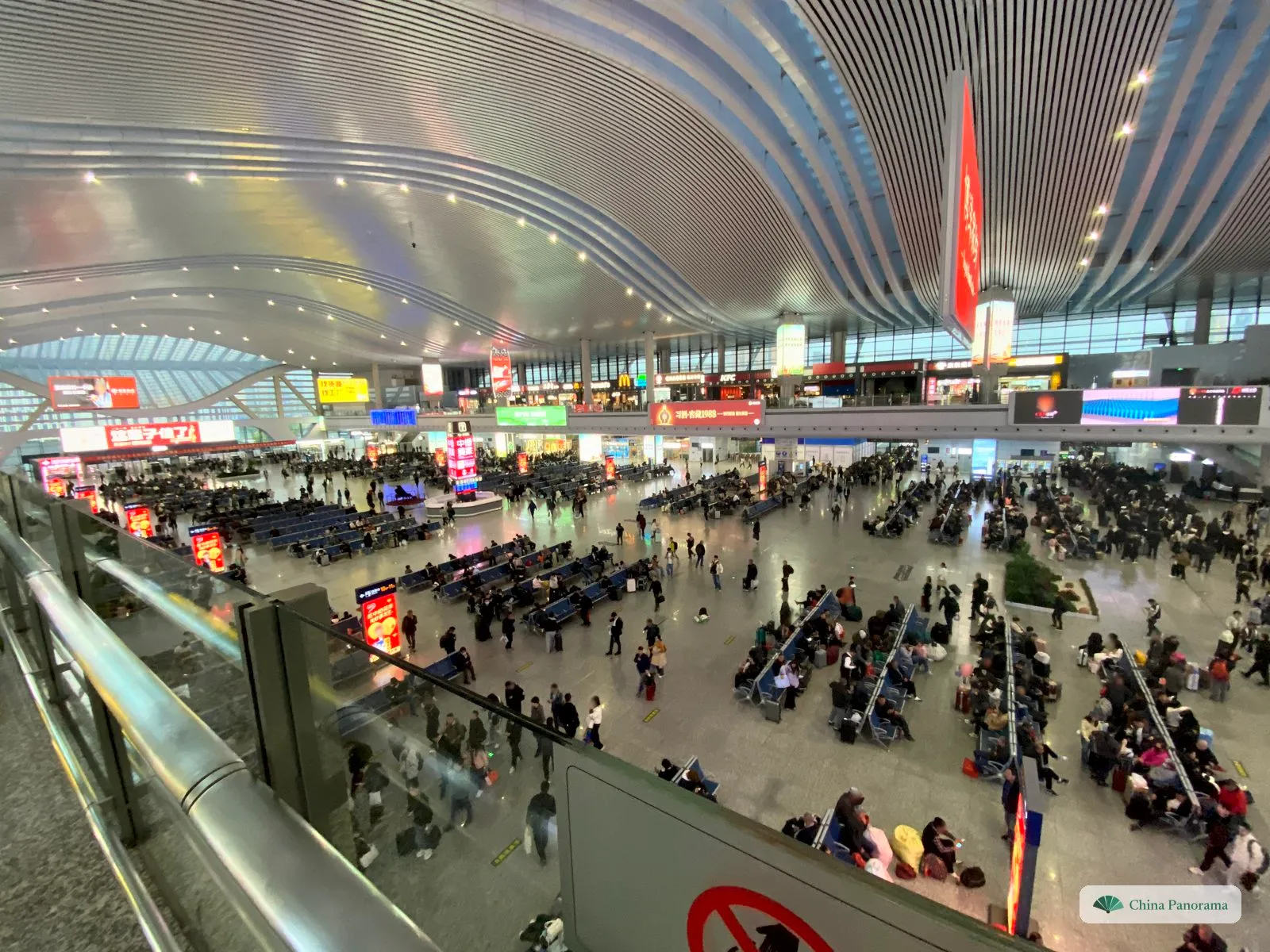
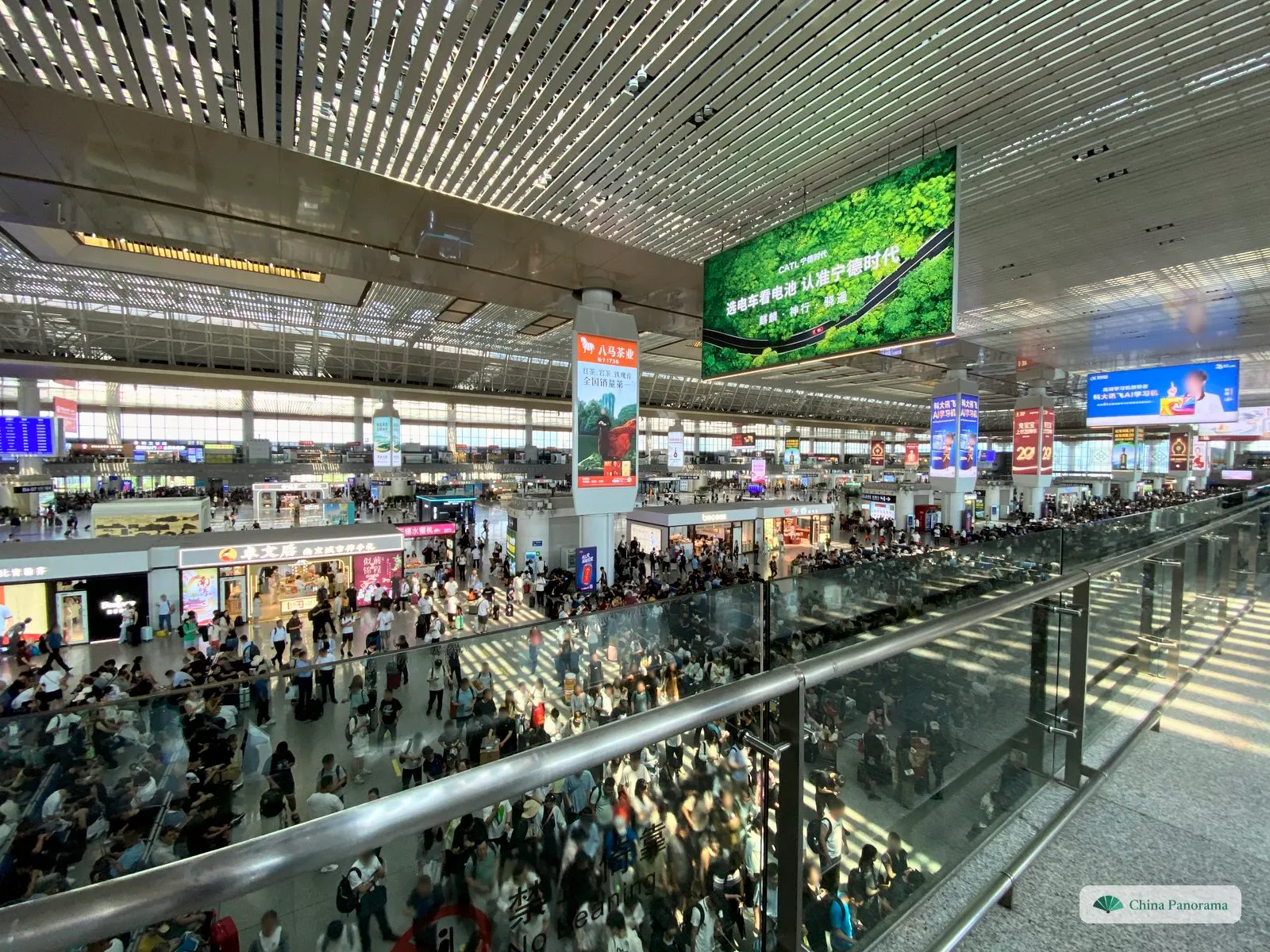
Shanghai, 30 August 2026, a quarter of an hour before boarding.A big station in April 2025, just before the Qingming holiday.Summer holidays, July 2025. In Chunyun the halls look like this for weeks.
How to read a Chinese train ticket: Chinese–English
You will hardly see a paper ticket any more. Since 2020 tickets are electronic and sit in the 12306 app, tied to your passport. Paper receipts ended on 1 October 2025. The blue ticket with a QR code now mainly exists as a keepsake: since July 2026 the 12306 app sells commemorative tickets for trips you took. Knowing the fields still helps, because the app shows the same information. Ours is redrawn, with sample trains, times and fares.
12306 sells this train from Wednesday, 20 January 2027, 12:45 Beijing time
Tap the numbers on the ticket.
1Ticket number票号Every ticket has its own number, printed in red. It matters at the counter, hardly ever to you.
2Departure station出发站In Chinese, with pinyin below. Watch the last character: 北京南 is Beijing South, not Beijing station. Many cities have several stations far apart. 南 south, 北 north, 东 east, 西 west.
3Train number车次The letter is the type. G: high-speed, up to 350 km/h. D: fast trains, mostly up to 250 km/h. C: intercity on short routes. Z, T, K: classic trains, often with sleepers.
4Arrival station到达站The station where you get off. Shanghai Hongqiao and Shanghai station are about 15 km apart.
5Date and departure开开 (kāi) means departure. All times are Beijing time, everywhere in China. Change the date above and the ticket changes with it.
6Coach and seat车 · 号05车 is coach 5, 08F号 is row 8, seat F. Second class has five seats a row: A and F by the window, C and D on the aisle, B in the middle. There is no E.AwindowBmiddleCaisleDaisleFwindow
7Fare票价In yuan. Ours is an example. 12306 shows the real fare when you search, and on many lines it depends on the day and time.
8Class席别二等座 second class, 一等座 first class, 商务座 business class. In sleepers: 硬卧 hard sleeper with six berths, 软卧 soft sleeper with four.
9This train only限乘当日当次车Valid only on this train on this day. If you miss it, you can change to a later train on the same day at the station.
10ID and name实名制Chinese train tickets carry your name. For you it is the passport number, partly hidden by stars. At the station you show the same passport.
11The dashed box买票请到12306“Buy tickets at 12306, send freight via 95306”, then “China Railway wishes you a pleasant journey”. 12306 is the railway’s website, app and phone line.
12QR code二维码On real paper tickets the code carries the ticket data for checks. Ours is only drawn and cannot be scanned.
13Code lineAn internal reference of the ticket and where it was issued. You never need it.
1Ticket number票号Every ticket has its own number, printed in red. It matters at the counter, hardly ever to you.
2Departure station出发站In Chinese, with pinyin below. Watch the last character: 北京南 is Beijing South, not Beijing station. Many cities have several stations far apart. 南 south, 北 north, 东 east, 西 west.
3Train number车次The letter is the type. G: high-speed, up to 350 km/h. D: fast trains, mostly up to 250 km/h. C: intercity on short routes. Z, T, K: classic trains, often with sleepers.
4Arrival station到达站The station where you get off. Shanghai Hongqiao and Shanghai station are about 15 km apart.
5Date and departure开开 (kāi) means departure. All times are Beijing time, everywhere in China. Change the date above and the ticket changes with it.
6Coach and seat车 · 号05车 is coach 5, 08F号 is row 8, seat F. Second class has five seats a row: A and F by the window, C and D on the aisle, B in the middle. There is no E.AwindowBmiddleCaisleDaisleFwindow
7Fare票价In yuan. Ours is an example. 12306 shows the real fare when you search, and on many lines it depends on the day and time.
8Class席别二等座 second class, 一等座 first class, 商务座 business class. In sleepers: 硬卧 hard sleeper with six berths, 软卧 soft sleeper with four.
9Keepsake only仅供纪念使用Printed on the commemorative ticket. It is not valid for travel or as a receipt. Since July 2026 you can order one in the 12306 app for a trip you took in the past month. It comes by post.
10ID and name实名制Chinese train tickets carry your name. For you it is the passport number, partly hidden by stars. At the station you show the same passport.
11The dashed box买票请到12306“Buy tickets at 12306, send freight via 95306”, then “China Railway wishes you a pleasant journey”. 12306 is the railway’s website, app and phone line.
12QR code二维码On real paper tickets the code carries the ticket data for checks. Ours is only drawn and cannot be scanned.
13Code lineAn internal reference of the ticket and where it was issued. You never need it.
1Paid已支付Once paid, the ticket sits in your 12306 account, linked to your passport. Nothing is printed.
2Train, coach, seat, fare车次 · 车厢 · 座位The same details as on the old paper ticket, with the arrival time.
3Gate检票口The boarding gate in the waiting hall. If the app does not show it yet, the boards in the station do. Boarding usually opens 15 to 20 minutes before departure and closes a few minutes before.
4Traveller and passport护照Who is travelling. At the station your passport is your ticket. If the automatic gate does not read it, use the staffed lane, 人工通道.
5Change and refund改签 · 退票Both work in the app. Within 30 minutes of buying, one refund a day is free if the train leaves more than 4 hours later.
At the station: from the entrance to your seat
1Come earlyIn Chunyun, be at a big station 1 to 2 hours before departure. Queues at the entrance and the security check can be long.
2Passport at the entranceYour passport is the ticket. Automatic gates are made for Chinese ID cards. If yours is not read, go to the staffed lane, 人工通道.
3Security checkBags go through the scanner as at an airport. Power banks up to 100 Wh are allowed. Leave self-heating meals and open spirits at home.
4Find your gateThe boards show train number, gate (检票口) and status. 正在检票 means boarding, 停止检票 means closed.
5Through the gate to the platformBoarding starts about 15 to 20 minutes before departure. On the platform, coach numbers on the floor or on posts show where to wait.
6Find your coachThe number is by the door. Luggage goes on the rack overhead or at the end of the coach.
Posts that rise: queueing on the platform in Shanghai
On some platforms in Shanghai, white posts show the train number and which coaches stop here, here D2160, coaches 1 and 2. Their tops rise and lower automatically and mark off the waiting area for the next train. Queue where your coach number is, green markings on the floor show the line.
Coach 1: the posts lowered. Shanghai, August 2026.Coach 2: the tops raised.
Hexie and Fuxing: the trains you will ride
Two families run China’s high-speed network. Hexie (和谐号, “harmony”) is the older one, from 2007. Fuxing (复兴号, “rejuvenation”) has run since 2017 and is the fastest, at up to 350 km/h. Which one you get shows in 12306 after the train number. For you the difference is small, the Fuxing usually has more sockets.
Hexie, the older family. August 2026.Fuxing, the CR400BF series. August 2026.
12306 sells 15 days ahead, counting the travel day. Each station starts at its own time between 08:00 and 18:00 Beijing time, which is between 1:00 and 11:00 in Germany in winter. On the peak days, popular trains are gone in minutes. Prepare everything the day before.
1Register with your passportIn the 12306 app (it has an English version) or on the website. Since November 2023 the passport is verified online. Add everyone travelling with you as a passenger now, with their passports.
2Look up the release timeIn the app, the time for each station is listed under 起售时间. Set a reminder and fill in the trip the day before, so you only have to confirm.
3PayWith Alipay or WeChat Pay, both of which take foreign cards. Setting up Alipay →
4Sold out? Join the waitlistThe waitlist (候补) books you automatically if a seat comes free, you pay up front and get a refund if not. You choose the deadline, from 12 hours down to 20 minutes before departure. Do not set it too late: one traveller was confirmed at 3 a.m. and missed the train.
5Bought the wrong train?Within 30 minutes of paying you can cancel for free, once a day and only if the train leaves more than 4 hours later. Not for changed tickets or waitlist orders.
6Travelling with older parents?For passengers over 60, 12306 gives lower berths in sleepers priority, and big stations have priority lanes.
Example: for Wednesday 3 February, the middle of the way home, Beijing South starts selling on Wednesday 20 January. Every other day and station is in the calendar.
By car: toll-free motorways over New Year
Over the four big holidays, Spring Festival among them, cars with up to 7 seats use China’s motorways for free. For 2027 that means 9 days, from Friday 5 February, 00:00, to Saturday 13 February, 24:00. What counts is the moment you leave the motorway, not when you joined it. The Ministry of Transport confirmed this for 2026 in late January and will likely do the same for 2027.
Free period 2027 (expected): Fri 5 Feb 00:00 to Sat 13 Feb 24:00, cars with up to 7 seats. Days marked ✓ are inside it.
»
Free
You leave the motorway inside the free period. When you joined does not matter.
Three cases (tap to try)
On
Off
Result
Thu 4 Feb, 20:00
Fri 5 Feb, 02:00
Free
Sun 7 Feb, 10:00
Sun 7 Feb, 15:00
Free
Sat 13 Feb, 20:00
Sun 14 Feb, 01:00
Toll to pay
Toll-free means full: free days are the busiest on the roads. In 2026 the jams came on the last days off, between 14:00 and 22:00. For 2027 expect that from 11 to 13 February.
Electric cars: chargers at service areas are busiest from 12:00 to 18:00. Charge in the morning or the evening.
Driving yourself? Your home licence is not valid in China, you need a Chinese one, a temporary licence for short stays. Most visitors take the train or hire a car with a driver.
Should you travel to China over Chinese New Year?
Short answer: yes, with a base. Arrive before 30 January or travel on 5 February to 7 February, stay in one place over the holiday, and move on after 14 February. What the festival itself looks like, with the zodiac and the customs, is on our Chinese New Year 2027 page.
For it
Lanterns, temple fairs, red decorations everywhere
Trains are at their emptiest on 6 February and 7 February
Big cities like Shanghai and Beijing are quieter than usual
Hotels, chain restaurants, metros and most sights stay open
Against it
Changing cities on the peak days is close to impossible by train
Many small restaurants close for a week or more
Holiday destinations such as Harbin, Sanya or Yunnan are full and more expensive (our assessment)
Offices are closed: no visa extensions during the holiday
Chunyun (春运, chūnyùn) is the travel rush around Chinese New Year: about 40 days in which hundreds of millions travel to their home towns and back. In 2026 China counted 9.41 billion trips between regions, 538 million of them by rail.
When is Chinese New Year 2027, and how long is the holiday?
New Year’s Day is Saturday, 6 February 2027. The official holiday runs nine days, from Friday, 5 February 2027, to Saturday, 13 February 2027. Sunday 31 January, and Sunday 14 February, are make-up workdays.
When is Chunyun 2027?
Expected from Friday, 22 January 2027, to Tuesday, 2 March 2027, 40 days. The Ministry of Transport announces the dates in January. The last three rushes all started 15 days before New Year’s Day and lasted 40 days, and New Year’s Day 2027 is Saturday, 6 February 2027.
When do train tickets for Chinese New Year 2027 go on sale?
15 days before departure, travel day included. Tickets for New Year’s Eve, 5 February, go on sale on Friday, 22 January 2027, those for the last day off, 13 February, on Saturday, 30 January 2027. Each departure station has its own release time between 08:00 and 18:00 Beijing time.
Can foreigners buy train tickets on 12306?
Yes. Register in the 12306 app or on the website with your passport. Since November 2023 the passport is checked online, so you no longer need a counter first. At the station your passport is the ticket.
Are there still paper train tickets in China?
Hardly. The ticket is electronic and tied to your passport. Paper receipts ended on 1 October 2025, since then there is only an electronic invoice. The one paper ticket you can still get is the commemorative ticket from the 12306 app, which is not valid for travel.
Is it a good idea to travel to China over Chinese New Year?
Yes, if you stay put during the holiday and move between cities outside the peak days. Avoid long train journeys from 30 January to 4 February and from 11 February to 13 February. On 6 February and 7 February trains are at their emptiest.
Are motorways in China free over Chinese New Year?
For cars with up to 7 seats, over the whole holiday: by the rule in force since 2012 that means from 00:00 on 5 February to 24:00 on 13 February 2027. What counts is when you leave the motorway. The Ministry of Transport usually confirms it in January.
What is closed over Chinese New Year?
Government offices and visa counters for the whole holiday, 5 February to 13 February. Many small family restaurants and shops close from the Eve, some until Lantern Festival on 20 February. Hotels, chain restaurants, malls, metros and trains run, and most big sights are open.
Sources and status
The 2027 holiday is official. The Chunyun dates and the toll-free period for 2027 are not announced yet: ours follow the past years and are marked as expected. We update the page when the Ministry of Transport publishes them.