
The Chinese lunar calendar: Moon, Sun or both?
In English it is usually called the Chinese lunar calendar. In Chinese it is 农历 nónglì, the farmers’ calendar, and in everyday speech many say 阴历 yīnlì, moon calendar. Both names tell only half the story. The Chinese calendar takes its months from the Moon and its year from the Sun. Astronomers call that a lunisolar calendar.
Three calendars, three ideas: the solar calendar 阳历 counts trips of the Earth around the Sun, the lunar calendar 阴历 counts moons, and the Chinese calendar 农历 does both and adds a leap month every two or three years. Below is a model to play with for each one, and a chart that shows the difference at a glance.
In short
- 1Solar calendar 阳历: 365 or 366 days, fixed months, our everyday calendar and China’s official one since 1912
- 2Lunar calendar 阴历: 12 moons make 354 days, festivals move through all seasons, as in the Islamic calendar
- 3Lunisolar calendar 农历: months by the Moon, the year by the Sun, 7 leap months in 19 years
- 4In China today: daily life by the solar calendar, festivals, zodiac years and some birthdays by the 农历
阳历Solar calendar
the Sun only
阴历Lunar calendar
the Moon only
农历Lunisolar calendar
Moon for the months, Sun for the year
Lunar, solar and lunisolar calendars at a glance
The three calendars side by side. The Chinese 农历 is on the right, because it combines the other two.
阳历 yánglìSolar calendarGregorian
- Follows
- the Earth’s orbit around the Sun
- A month
- 28 to 31 days, unrelated to the Moon
- A year
- 365 days, 366 in a leap year
- What is added
- one day every four years, not in 1700, 1800, 1900, 2100
- Seasons
- a date always falls in the same season
- Examples
- our calendar, used worldwide
- In China for
- ID cards, train tickets, school, work, holiday dates
阴历 yīnlìLunar calendarfor example Islamic
- Follows
- the phases of the Moon
- A month
- new moon to new moon, 29 or 30 days
- A year
- 354 or 355 days
- What is added
- no month, a day in some years
- Seasons
- 11 days earlier every year, through all seasons
- Examples
- Islamic calendar: Ramadan, Eid
- In China for
- not used
农历 nónglìLunisolar calendarthe Chinese calendar
- Follows
- the Moon for the months, the Sun for the year
- A month
- new moon to new moon, 29 or 30 days
- A year
- 353 to 355 days, 383 to 385 with a leap month
- What is added
- a whole month, 7 times in 19 years
- Seasons
- move by a month at most
- Examples
- Chinese and Jewish calendars, the date of Easter
- In China for
- Chinese New Year, Mid-Autumn, Dragon Boat, zodiac years, some birthdays
| 阳历 yánglìSolar calendarGregorian | 阴历 yīnlìLunar calendarfor example Islamic | 农历 nónglìLunisolar calendarthe Chinese calendar | |
|---|---|---|---|
| Follows | the Earth’s orbit around the Sun | the phases of the Moon | the Moon for the months, the Sun for the year |
| A month | 28 to 31 days, unrelated to the Moon | new moon to new moon, 29 or 30 days | new moon to new moon, 29 or 30 days |
| A year | 365 days, 366 in a leap year | 354 or 355 days | 353 to 355 days, 383 to 385 with a leap month |
| What is added | one day every four years, not in 1700, 1800, 1900, 2100 | no month, a day in some years | a whole month, 7 times in 19 years |
| Seasons | a date always falls in the same season | 11 days earlier every year, through all seasons | move by a month at most |
| Examples | our calendar, used worldwide | Islamic calendar: Ramadan, Eid | Chinese and Jewish calendars, the date of Easter |
| In China for | ID cards, train tickets, school, work, holiday dates | not used | Chinese New Year, Mid-Autumn, Dragon Boat, zodiac years, some birthdays |
The solar calendar 阳历: one orbit, one year
The calendar on your phone is a solar calendar. A year is one trip of the Earth around the Sun. The seasons come from the tilted axis of the Earth, not from its distance to the Sun. So a date always meets the same season: 21 June is early summer in Europe every year.
In Chinese it is 阳历 yánglì, sun calendar, or 公历 gōnglì, the common calendar. The Republic of China adopted it on 1 January 1912, its first day. On 27 September 1949 the Political Consultative Conference also adopted counting years from AD for the People’s Republic. Everything official runs on it today: ID cards, train tickets, the school year and the dates of public holidays.
21 March
Day 80 of 365 · Spring in the northern hemisphere
- N = North Pole. It leans the same way all year: towards the Sun in June, away from it in December.
- Each tick on the orbit is one of the 24 solar terms 节气, 15° apart. They are solar, so they fall on almost the same date every year.
- Schematic: the real orbit is a slight oval, so the dates can be a day or two off.
Why there is a 29 February
One orbit takes 365 days, 5 hours and 49 minutes. Choose how many years pass and see where the spring equinox, normally 20 or 21 March, would drift to:
- Always 365 days (no leap years at all)Equinox would be on 25 June · 96.9 days later
- Julian calendar (a leap year every 4 years, Caesar 45 BC)Equinox would be on 17 March · 3.1 days earlier
- Gregorian calendar (leap years, but not in 1700, 1800, 1900, 2100)Equinox would be on 20 March · stays put
Its months have nothing to do with the Moon, they are a Roman legacy. But the Chinese calendar also has dates that follow only the Sun: the 24 solar terms 节气 jiéqì, points on the Earth’s orbit just like our solstices. That is why Qingming 清明, the day for tending the graves, is always on 4 or 5 April.
Caesar’s Julian calendar added too many leap days. By 1582 the spring equinox had moved ten days too early, and Pope Gregory XIII dropped ten days: Thursday 4 October 1582 was followed by Friday 15 October.
The lunar calendar 阴历: one month, one moon
A lunar calendar counts moons. A month starts with the new moon: the Moon stands between the Earth and the Sun, and we only see its dark side. A good two weeks later it is full. From one new moon to the next it needs 29.53 days on average, so months have 29 or 30 days.
Strictly speaking, 阴历 means a calendar that follows only the Moon. The best known today is the Islamic calendar: twelve months, 354 or 355 days, no leap months. Ramadan, the month of fasting, therefore comes about 11 days earlier each year and moves through every season.
Seen from Earth
十五 · Full moon
Day 15 of the lunar month · 望 · 100% lit
One lunar month, day by day. Tap a day.
A month runs from new moon to new moon: 29.53 days on average, so months have 29 or 30 days. Day 1 is always the new moon, the full moon comes on day 15, 16 or 17.
Twelve moons are not a year
Twelve lunar months make 354 or 355 days, about 11 days less than the solar year. A calendar that only follows the Moon therefore drifts through the seasons. The Islamic calendar works this way. The ring is the normal calendar year, the dot is the first day of Ramadan.
1 Ramadan 2027
8 February · Winter
10 days earlier in the calendar than the year before
northern hemisphere
After about 33 years Ramadan is back in the same season.
All Ramadan start dates, 2000 to 2050
- 2000 · 27 November
- 2001 · 16 November
- 2002 · 6 November
- 2003 · 26 October
- 2004 · 15 October
- 2005 · 4 October
- 2006 · 24 September
- 2007 · 13 September
- 2008 · 1 September
- 2009 · 22 August
- 2010 · 11 August
- 2011 · 1 August
- 2012 · 20 July
- 2013 · 9 July
- 2014 · 28 June
- 2015 · 18 June
- 2016 · 6 June
- 2017 · 27 May
- 2018 · 16 May
- 2019 · 6 May
- 2020 · 24 April
- 2021 · 13 April
- 2022 · 2 April
- 2023 · 23 March
- 2024 · 11 March
- 2025 · 1 March
- 2026 · 18 February
- 2027 · 8 February
- 2028 · 28 January
- 2029 · 16 January
- 2030 · 5 January
- 2030 · 26 December
- 2031 · 16 December
- 2032 · 4 December
- 2033 · 23 November
- 2034 · 12 November
- 2035 · 1 November
- 2036 · 21 October
- 2037 · 10 October
- 2038 · 30 September
- 2039 · 19 September
- 2040 · 8 September
- 2041 · 28 August
- 2042 · 17 August
- 2043 · 6 August
- 2044 · 26 July
- 2045 · 16 July
- 2046 · 5 July
- 2047 · 25 June
- 2048 · 13 June
- 2049 · 2 June
- 2050 · 22 May
Umm al-Qura calendar of Saudi Arabia. Where the start depends on sighting the new crescent, it can be a day later.
China itself never had a pure lunar calendar. Even the oracle bones of the Shang dynasty, more than 3,000 years old, mention a thirteenth month 十三月, a leap month to keep the year in step with the seasons. When people in China say 阴历, they almost always mean the Chinese calendar 农历.
The lunisolar calendar 农历: months from the Moon, the year from the Sun
The Chinese calendar takes its months from the Moon: day 1 is always the new moon, and the full moon comes around day 15. That is why the Mid-Autumn Festival on the 15th day of month 8 and the Lantern Festival on the 15th day of month 1 always have an (almost) full moon.
The year, however, follows the Sun. Twelve principal terms 中气 zhōngqì, the Sun every 30° along its path, decide which month is which: the month with the winter solstice is always month 11. Twelve moons are 11 days too short, so roughly every third year has 13 months. The extra one is the leap month 闰月 rùnyuè. It goes where a month contains no principal term.
The three rules (Chinese national standard GB/T 33661-2017)
- 1A month starts on the day of the new moon, Beijing time.
- 2The month with the winter solstice is month 11.
- 3If there are 13 new moons from one month 11 to the next, the first month without a principal term is the leap month. It repeats the number of the month before.
19 Chinese years, 7 with a leap month. Tap a year.
Chinese New Year jumps back and forth
Each dot is Chinese New Year. Without a leap month it comes 10 to 12 days earlier than the year before. After a leap year it jumps about 19 days later. So it always stays between 21 January and 20 February.
The Chinese year 2026
12 months, 354 days · 17 Feb 2026 – 5 Feb 2027
No leap month
Next New Year: 6 Feb 2027, 11 days earlier in the calendar
The rule: a month takes its number from the principal term it contains (Rain Water → month 1, Spring Equinox → month 2 …). A month without one repeats the number of the month before.
| Month | Starts | Days | Principal term in it |
|---|---|---|---|
| 正月 · 1 | 17 Feb 2026 | 30 | 雨水 Rain Water (18 Feb) |
| 二月 · 2 | 19 Mar 2026 | 29 | 春分 Spring Equinox (20 Mar) |
| 三月 · 3 | 17 Apr 2026 | 30 | 谷雨 Grain Rain (20 Apr) |
| 四月 · 4 | 17 May 2026 | 29 | 小满 Grain Buds (21 May) |
| 五月 · 5 | 15 Jun 2026 | 29 | 夏至 Summer Solstice (21 Jun) |
| 六月 · 6 | 14 Jul 2026 | 30 | 大暑 Great Heat (23 Jul) |
| 七月 · 7 | 13 Aug 2026 | 29 | 处暑 End of Heat (23 Aug) |
| 八月 · 8 | 11 Sept 2026 | 29 | 秋分 Autumn Equinox (23 Sept) |
| 九月 · 9 | 10 Oct 2026 | 30 | 霜降 Frost’s Descent (23 Oct) |
| 十月 · 10 | 9 Nov 2026 | 30 | 小雪 Minor Snow (22 Nov) |
| 冬月 · 11 | 9 Dec 2026 | 30 | 冬至 Winter Solstice (22 Dec) |
| 腊月 · 12 | 8 Jan 2027 | 29 | 大寒 Major Cold (20 Jan) |
19 solar years are almost exactly 235 lunar months: 6,939.6 days against 6,939.7. 19 times 12 is 228, so 7 months are added in 19 years. In the West this is the Metonic cycle, after the Greek astronomer Meton. Chinese calendar makers called it 章 zhāng.
The West has a lunisolar date too: Easter. It is the first Sunday after the first full moon of spring, so it moves between 22 March and 25 April. The Jewish calendar is lunisolar as well, also with 7 leap months in 19 years.
The 24 solar terms 二十四节气: the Sun’s half of the Chinese calendar
The 24 solar terms 节气 jiéqì divide the Sun’s path into 24 steps of 15°. They follow only the Sun, not the Moon, so strictly speaking they are a solar calendar. That is why each term falls on the same date every year, or the day next to it: the Start of Spring 立春 on 3 or 4 February, the winter solstice on 21 or 22 December.
They alternate between 节 jié and 中气 zhōngqì. The twelve 中气 decide which number a lunar month gets, and where one is missing, the leap month goes. The twelve 节 start the months of the four pillars, more on that under heavenly stems and earthly branches. Tap a term:
小雪Minor Snow
xiǎoxuě · Sun at 240° along its path · Chinese winter
Sun 22 November 2026
The first light snow, at least in the north. The names describe the weather of the Yellow River plain, so in Guangzhou there is no snow at all.
中气 zhōngqì: the lunar month that contains it is month 10.
- 节 jié
- 中气 zhōngqì
Chinese seasons start with the four 立 terms: spring on about 4 February, six weeks before the equinox.
All 24 solar terms with their dates
| Term | 2026 | 2027 | Sun | Meaning |
|---|---|---|---|---|
| 立春 lìchūnStart of Spring节 | 4 Feb | 4 Feb | 315° | Spring begins in the Chinese calendar, six weeks before the equinox. Fortune tellers also start the year of the four pillars here. |
| 雨水 yǔshuǐRain Water中气 | 18 Feb | 19 Feb | 330° | Snow gives way to rain. The month that contains Rain Water is month 1 of the Chinese calendar. |
| 惊蛰 jīngzhéAwakening of Insects节 | 5 Mar | 6 Mar | 345° | The name means the first spring thunder startles the insects out of their winter sleep. |
| 春分 chūnfēnSpring Equinox中气 | 20 Mar | 21 Mar | 0° | Day and night are about equally long, in Beijing just over 12 hours of daylight. In Europe astronomical spring starts here, in China it is mid-spring. |
| 清明 qīngmíngClear and Bright节 | 5 Apr | 5 Apr | 15° | Families tend their ancestors’ graves. The only solar term that is a public holiday in China, always on 4 or 5 April. |
| 谷雨 gǔyǔGrain Rain中气 | 20 Apr | 20 Apr | 30° | Rain for the freshly sown grain. The last term of spring. |
| 立夏 lìxiàStart of Summer节 | 5 May | 6 May | 45° | Summer begins in the Chinese calendar, early in May. |
| 小满 xiǎomǎnGrain Buds中气 | 21 May | 21 May | 60° | “Small fullness”: the grains of the winter wheat fill out but are not yet ripe. |
| 芒种 mángzhòngGrain in Ear节 | 5 Jun | 6 Jun | 75° | Wheat with its awns is harvested and rice is planted out. One of the busiest weeks for farmers. |
| 夏至 xiàzhìSummer Solstice中气 | 21 Jun | 21 Jun | 90° | The longest day of the year in the northern hemisphere: 15 hours of daylight in Beijing. |
| 小暑 xiǎoshǔMinor Heat节 | 7 Jul | 7 Jul | 105° | The hot weeks begin. |
| 大暑 dàshǔMajor Heat中气 | 23 Jul | 23 Jul | 120° | Usually the hottest time of the year, in many cities with the rainy season at the same time. |
| 立秋 lìqiūStart of Autumn节 | 7 Aug | 8 Aug | 135° | Autumn begins in the Chinese calendar, early in August, while it is often still very hot. People call that heat the “autumn tiger” 秋老虎. |
| 处暑 chǔshǔEnd of Heat中气 | 23 Aug | 23 Aug | 150° | 处 means “to stop”: the heat ends. |
| 白露 báilùWhite Dew节 | 7 Sept | 8 Sept | 165° | Nights turn cool and dew forms in the morning. |
| 秋分 qiūfēnAutumn Equinox中气 | 23 Sept | 23 Sept | 180° | Day and night are about equally long again. Since 2018 China celebrates its Farmers’ Harvest Festival 中国农民丰收节 on this day. |
| 寒露 hánlùCold Dew节 | 8 Oct | 8 Oct | 195° | The dew turns cold, and in northern China the nights get chilly. |
| 霜降 shuāngjiàngFrost’s Descent中气 | 23 Oct | 23 Oct | 210° | The first frost in northern China. The last term of autumn. |
| 立冬 lìdōngStart of Winter节 | 7 Nov | 7 Nov | 225° | Winter begins in the Chinese calendar, early in November. |
| 小雪 xiǎoxuěMinor Snow中气 | 22 Nov | 22 Nov | 240° | The first light snow, at least in the north. The names describe the weather of the Yellow River plain, so in Guangzhou there is no snow at all. |
| 大雪 dàxuěMajor Snow节 | 7 Dec | 7 Dec | 255° | Heavier snow in the north. |
| 冬至 dōngzhìWinter Solstice中气 | 22 Dec | 22 Dec | 270° | The longest night: 9 hours 20 minutes of daylight in Beijing. In the north people eat dumplings, in the south sweet rice balls. The month with the solstice is always month 11. |
| 小寒 xiǎohánMinor Cold节 | 5 Jan | 5 Jan | 285° | Despite the name, often the coldest days of the year. |
| 大寒 dàhánMajor Cold中气 | 20 Jan | 20 Jan | 300° | The last term of the year. Chinese New Year usually falls around now. |
The months follow the Moon, the solar terms follow the Sun, and the leap month settles the difference.
The names come from the plain of the Yellow River and describe its weather and farm work: Rain Water, Grain Rain, Minor Snow. In the tropical south they only half fit. In 2016 UNESCO added the 24 solar terms to the Representative List of the Intangible Cultural Heritage of Humanity.
Three calendars in one chart
Each dot is a festival in one year, from January at the top to December at the bottom. Festivals by the Sun stay on a line, festivals by a lunisolar calendar wobble inside a narrow band, and Ramadan, by the pure lunar calendar, runs diagonally through the whole year.
- Solar calendar: same date every year
- Lunisolar, Chinese: moves within a month
- Lunisolar, church: moves within five weeks
- Lunar calendar: moves through the whole year
The dates as a table
| Year | Chinese New Year | Qingming | Easter | 1 Ramadan | Christmas |
|---|---|---|---|---|---|
| 2014 | 31 Jan | 5 Apr | 20 Apr | 28 Jun | 25 Dec |
| 2015 | 19 Feb | 5 Apr | 5 Apr | 18 Jun | 25 Dec |
| 2016 | 8 Feb | 4 Apr | 27 Mar | 6 Jun | 25 Dec |
| 2017 | 28 Jan | 4 Apr | 16 Apr | 27 May | 25 Dec |
| 2018 | 16 Feb | 5 Apr | 1 Apr | 16 May | 25 Dec |
| 2019 | 5 Feb | 5 Apr | 21 Apr | 6 May | 25 Dec |
| 2020 | 25 Jan | 4 Apr | 12 Apr | 24 Apr | 25 Dec |
| 2021 | 12 Feb | 4 Apr | 4 Apr | 13 Apr | 25 Dec |
| 2022 | 1 Feb | 5 Apr | 17 Apr | 2 Apr | 25 Dec |
| 2023 | 22 Jan | 5 Apr | 9 Apr | 23 Mar | 25 Dec |
| 2024 | 10 Feb | 4 Apr | 31 Mar | 11 Mar | 25 Dec |
| 2025 | 29 Jan | 4 Apr | 20 Apr | 1 Mar | 25 Dec |
| 2026 | 17 Feb | 5 Apr | 5 Apr | 18 Feb | 25 Dec |
| 2027 | 6 Feb | 5 Apr | 28 Mar | 8 Feb | 25 Dec |
| 2028 | 26 Jan | 4 Apr | 16 Apr | 28 Jan | 25 Dec |
| 2029 | 13 Feb | 4 Apr | 1 Apr | 16 Jan | 25 Dec |
| 2030 | 3 Feb | 5 Apr | 21 Apr | 5 Jan, 26 Dec | 25 Dec |
| 2031 | 23 Jan | 5 Apr | 13 Apr | 16 Dec | 25 Dec |
| 2032 | 11 Feb | 4 Apr | 28 Mar | 4 Dec | 25 Dec |
| 2033 | 31 Jan | 4 Apr | 17 Apr | 23 Nov | 25 Dec |
| 2034 | 19 Feb | 5 Apr | 9 Apr | 12 Nov | 25 Dec |
| 2035 | 8 Feb | 5 Apr | 25 Mar | 1 Nov | 25 Dec |
| 2036 | 28 Jan | 4 Apr | 13 Apr | 21 Oct | 25 Dec |
| 2037 | 15 Feb | 4 Apr | 5 Apr | 10 Oct | 25 Dec |
| 2038 | 4 Feb | 5 Apr | 25 Apr | 30 Sept | 25 Dec |
| 2039 | 24 Jan | 5 Apr | 10 Apr | 19 Sept | 25 Dec |
| 2040 | 12 Feb | 4 Apr | 1 Apr | 8 Sept | 25 Dec |
| 2041 | 1 Feb | 4 Apr | 21 Apr | 28 Aug | 25 Dec |
| 2042 | 22 Jan | 4 Apr | 6 Apr | 17 Aug | 25 Dec |
| 2043 | 10 Feb | 5 Apr | 29 Mar | 6 Aug | 25 Dec |
| 2044 | 30 Jan | 4 Apr | 17 Apr | 26 Jul | 25 Dec |
| 2045 | 17 Feb | 4 Apr | 9 Apr | 16 Jul | 25 Dec |
Born in January? Then your Chinese zodiac sign may be wrong
This is where the lunisolar calendar affects you directly. A zodiac year starts at Chinese New Year, which always falls on a day between 21 January and 20 February. So someone born on 20 January 2027 is still a Horse, not a Goat. The calendar shows January to March 2027, with the usual date on top and the day of the Chinese lunar month underneath.
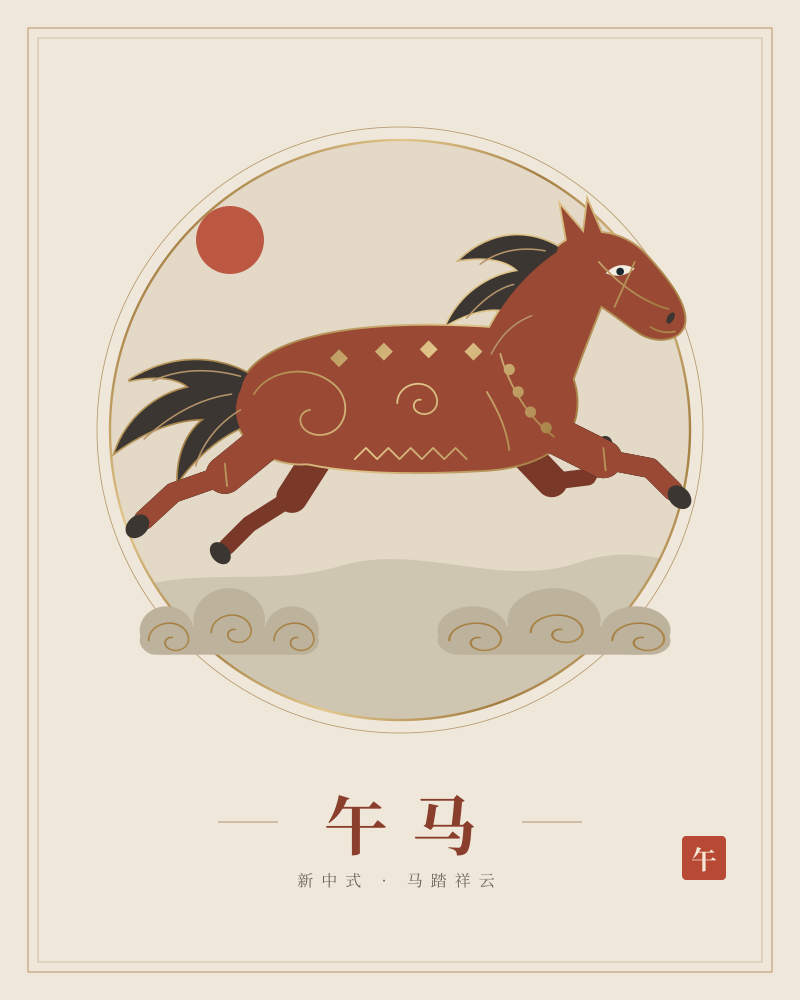 Year of the Horse 马, until 5 February
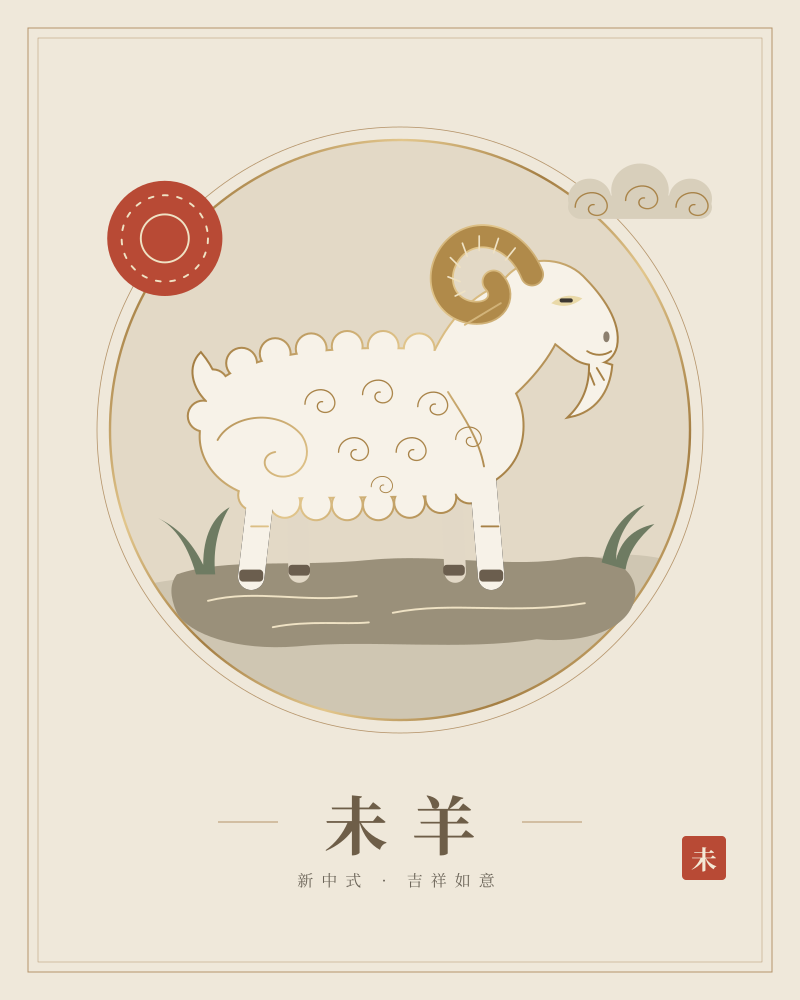 Year of the Goat 羊, from 6 February
- Chinese New Year: the first day of the Goat (6 February, 正月初一)
- Start of Spring (立春): fortune-tellers change the year here (4 February)
- Under each date: the day of the lunar month, in digits and as Chinese calendars write it (廿四 = 24). On the first day of a lunar month you see its number and Chinese name instead, for example Month 1 正月.
For your own birthday, use the finder on the zodiac page, which knows every New Year since 1924.
Which calendar China uses for what
On a trip to China you live by the solar calendar: visa, trains, hotels, opening hours. The big festivals follow the 农历, which is why their dates change every year. The next dates:
| Festival | Rule | 2027 | 2028 | 2029 |
|---|---|---|---|---|
| New Year’s Eve 除夕Last day of month 12, the 29th or 30th. Family dinner. | last day of month 12 | Fri 5 February | Tue 25 January | Mon 12 February |
| Chinese New Year 春节Always a new moon, between 21 January and 20 February. | month 1, day 1 | Sat 6 February | Wed 26 January | Tue 13 February |
| Lantern Festival 元宵节The first full moon of the year ends the New Year season. | month 1, day 15 | Sat 20 February | Wed 9 February | Tue 27 February |
| Qingming (Tomb Sweeping) 清明A solar term, so always 4 or 5 April. | solar term | Mon 5 April | Tue 4 April | Wed 4 April |
| Dragon Boat Festival 端午节Fifth day of month 5. | month 5, day 5 | Wed 9 June | Sun 28 May | Sat 16 June |
| Qixi (Chinese Valentine’s Day) 七夕Seventh day of month 7, a half moon. | month 7, day 7 | Sun 8 August | Sat 26 August | Thu 16 August |
| Mid-Autumn Festival 中秋节Full moon of month 8, mooncakes. | month 8, day 15 | Wed 15 September | Tue 3 October | Sat 22 September |
| Double Ninth Festival 重阳节Day for the elderly, people climb hills. | month 9, day 9 | Fri 8 October | Thu 26 October | Tue 16 October |
| Winter Solstice 冬至A solar term, 21 or 22 December. Dumplings in the north. | solar term | Wed 22 December | Thu 21 December | Fri 21 December |
| Laba Festival 腊八节Eighth day of month 12, Laba porridge. | month 12, day 8 | Fri 15 January | Tue 4 January | Mon 22 January |
Calendars and phones
Chinese wall calendars and phones show the lunar day next to the date, for example 十月初九, the 9th day of month 10.
Birthdays
Older people often celebrate their birthday by the 农历, so it falls on a different date every year. ID cards show the Gregorian date.
Public holidays
Chinese New Year, Dragon Boat and Mid-Autumn follow the 农历, Qingming the Sun, and New Year’s Day and National Day (1 October) the Gregorian calendar. The State Council publishes the dates each autumn for the following year, as Gregorian dates.
Lucky days
Many couples choose their wedding day from the almanac 黄历 huánglì, which says for each day of the 农历 what it is good for.
More on the festival, the holidays and travelling at that time: Chinese New Year 2027. How days and years are named with stems and branches: Heavenly stems and earthly branches.
How China ended up with two calendars
around 1200 BC
Shang dynasty
Oracle bones mention a 13th month: the oldest Chinese writing already knows the leap month.
104 BC
Taichu calendar 太初历
Under Emperor Wu of Han the rule still used today is introduced: the month without a principal term is the leap month.
1645
Shixian calendar 时宪历
The Qing, helped by the German Jesuit Johann Adam Schall von Bell, switch to computing the solar terms from the true position of the Sun.
1912 and 1914
Republic of China
The Gregorian calendar applies from 1 January 1912. In 1914 the old New Year’s Day is renamed Spring Festival 春节, and “New Year” 元旦 now means 1 January.
1949
People’s Republic of China
Years are counted from AD. The old calendar stays for the festivals and is now usually called 农历.
2017
National standard
GB/T 33661-2017 sets out how the 农历 is calculated and published.
True or false? Six claims about the Chinese calendar
1The Chinese lunar calendar is a lunar calendar.
False
It is lunisolar. The months follow the Moon, but leap months keep the year in step with the Sun. A pure lunar calendar like the Islamic one moves through all seasons, while Chinese New Year always stays between 21 January and 20 February.
2In China, 阴历 means the same as 农历.
True
In everyday speech, yes: people who say 阴历 mean the Chinese calendar, and dictionaries list that meaning. Technically, though, 阴历 is a pure lunar calendar, and the 农历 is not.
3The Moon is full on the 15th day of every Chinese month.
False
Only in about a third of months. From 2000 to 2040 the full moon fell on the 15th in 37% of months, on the 16th in 47% and on the 17th in 15%. A Chinese saying goes 十五的月亮十六圆: the moon of the 15th is round on the 16th.
4Qingming moves like the other Chinese festivals.
False
Qingming is a solar term, not a lunar day. From 1950 to 2050 it always falls on 4 or 5 April.
5China once used a pure lunar calendar and abolished it.
False
Shang dynasty oracle bones already have a 13th month. As far as the sources go back, the Chinese calendar was always lunisolar. In 1912 it was replaced for official use only, by the Gregorian calendar.
6Any month can become a leap month.
True
In principle yes, but in winter it is very rare. In early January the Earth is closest to the Sun and moves fastest, so the principal terms are closer together and hardly ever miss a month. The next winter leap month is the 闰十一月 of 2033.
FAQ
Is the Chinese calendar lunar or solar?
Both: it is lunisolar. Months start at the new moon, and the year follows the Sun. To keep it in step with the seasons, roughly every third year gets a 13th month, the leap month.
What is the difference between 农历, 阴历 and 阳历?
阳历 is the solar calendar, our Gregorian calendar. 阴历 strictly means a pure lunar calendar like the Islamic one, but in everyday Chinese it is mostly another word for 农历. 农历 is the Chinese calendar, a lunisolar calendar: months by the Moon, the year by the Sun.
Why does Chinese New Year fall on a different date every year?
It is always the first day of lunar month 1, so a new moon. Twelve lunar months are about 11 days shorter than a solar year, so New Year usually comes 11 days earlier than the year before. After a year with a leap month it jumps about 19 days later. That keeps it between 21 January and 20 February.
When is Chinese New Year 2027?
On 6 February 2027. It starts the Year of the Fire Goat. In 2028 it is on 26 January 2028.
How often is there a leap month?
7 times in 19 years, so every two or three years. The next ones: 2028 (闰五月, a second month 5), 2031 (闰三月, a second month 3), 2033 (闰冬月, a second month 11).
How many days does a Chinese year have?
A normal year has 353, 354 or 355 days, a year with a leap month 383, 384 or 385. The solar calendar has 365 or 366.
What is my birthday in the Chinese calendar?
The lunar month and day of your date of birth, for example the 9th day of month 10. It falls on a different Gregorian date every year. Chinese calendar apps and wall calendars show it when you switch on the 农历 display.
Does China use the Gregorian calendar?
Yes, officially since 1 January 1912, and since 1949 also with years counted from AD. ID cards, tickets, contracts and holiday dates are all Gregorian. Only the traditional festivals are set by the 农历.
Are the 24 solar terms part of the lunar calendar?
They are part of the Chinese calendar, but they follow only the Sun: one term every 15° along its path. So they fall on almost the same Gregorian date every year, Qingming on 4 or 5 April.
Sources and status
The lunar months come from the calendar library lunar (6tail), which implements the standard GB/T 33661-2017. We checked every first day of a month against the new moon in Beijing time with an astronomy program (ephem), and the principal terms the same way. The Ramadan dates follow the Umm al-Qura calendar, the Easter dates the Gregorian Easter formula.
- Wikipedia: Chinese calendar, with the rules of GB/T 33661-2017
- GB/T 33661-2017 Calculation and promulgation of the Chinese calendar, listing with status
- Wikipedia: 农历 (Chinese)
- Wikipedia: Lunisolar calendar
- Wikipedia: Metonic cycle
- Wikipedia: Gregorian calendar
- Wikipedia: Islamic calendar
- Xinhua: how 1 January became “New Year” and the old New Year became Spring Festival (Chinese)
- UNESCO: The Twenty-Four Solar Terms, Intangible Cultural Heritage since 2016
- 6tail: calendar library lunar / tyme (Chinese)
Changelog (1)
- 2026-11-07Page created, with three models for the solar, lunar and lunisolar calendars and the wheel of the 24 solar terms.