
Nanjing
The “Southern Capital” on the lower Yangtze, a city of 9.3 million that was China's capital under the early Ming and again under the Republic: the Ming city wall, Sun Yat-sen's mausoleum on Purple Mountain, the lantern-lit Qinhuai river at Fuzimiao — and avenues of plane trees.
南京 · Nánjīng · capital of Jiangsu · 32.04° N, 118.78° E
Paying for the metro?
Set up Alipay first: we could not confirm that Nanjing’s gates take foreign Visa or Mastercard cards, as Beijing’s and Shanghai’s do. The metro →
How long?
Two to three days: Purple Mountain, the old city and Fuzimiao at night, and half a day out. Four routes below, with times from our photographs. The routes →
Where is Nanjing?
At 32.0° N, Nanjing is level with Tel Aviv and Savannah, Georgia, a little north of Shanghai. It lies on the south bank of the lower Yangtze, about 270 km upriver from Shanghai, in Jiangsu province in eastern China. Hangzhou is 240 km to the south-east and Hefei 150 km to the west; Wuhan is 450 km up the Yangtze, Beijing 900 km to the north. Tap any city on the map to measure the distance.
Straight-line distances from Xinjiekou, rounded to the nearest 10 km — not travel distances.
Jiangsu province is highlighted. Tap a city to measure the distance from Nanjing.
- Province
- Jiangsu江苏省 · capital
- Latitude
- 32.04° Nlevel with Tel Aviv
- Airport
- NKGLukou · 36 km south
- Metro
- 16 linesfrom 2 CNY
- Time zone
- UTC+8Beijing time
- City flower
- Plum blossom梅花 · trees: cedar, plane
Purple Mountain, Niushoushan, the airport: how far is everything?
The old city sits inside the Ming wall on the south bank of the Yangtze, with Purple Mountain rising 7 km to the east. Everything else lies to the south: Nanjing South station 8 km away, Niushoushan 15 km and Lukou airport 36 km, in a straight line. Tap a place to see how far it is.
Tap a place on the map or in the list.
The Sun Yat-sen Mausoleum and Ming Xiaoling. Details below ↓
High-speed trains; Line S1 to the airport starts here.
The Usnisha Palace. About 20 minutes by car; no metro nearby. Details below ↓
Line S1 to Nanjing South.
Straight-line distances from Xinjiekou, rounded — not travel distances.
What’s Nanjing weather like each month?
Four clear seasons: hot and humid in summer — 34 °C by day in July — and damp and cold in winter, at 8 °C by day and 0 °C at night in January. Spring and autumn are mild and the best times to come. The sun rises at 04:58 in June and sets at 17:02 in December. Tap a month for temperatures, daylight and what is on.
Scale in °C. Bars run from the average daily low to the average daily high. Source: monthly temperature data, last checked 2026-07-30.
Nanjing in October
Mild- Average high
- 23 °C
- Average low
- 15 °C
- Sunrise / sunset
- 06:07 – 17:34
- Daylight
- 11 h 26 min
On in Oct
- Golden Week crowds, 1–7 Oct
How hot is Nanjing in summer?
Very: July averages 34 °C by day and 27 °C at night, August 33 °C, and the air is humid — Nanjing is one of the cities China calls its “furnaces”. June is the season of the plum rains. Climb the mausoleum and Lion Hill early, spend the afternoon in a museum, and go to Fuzimiao after dark.
June
30° / 22°
Sun 04:58–19:12 · 14 h 14 min
July
34° / 27°
Sun 05:09–19:13 · 14 h 4 min
August
33° / 26°
Sun 05:29–18:51 · 13 h 22 min
September
28° / 21°
Sun 05:48–18:13 · 12 h 25 min
Spring
March – MayPlum, magnolia and cherry: the best time.
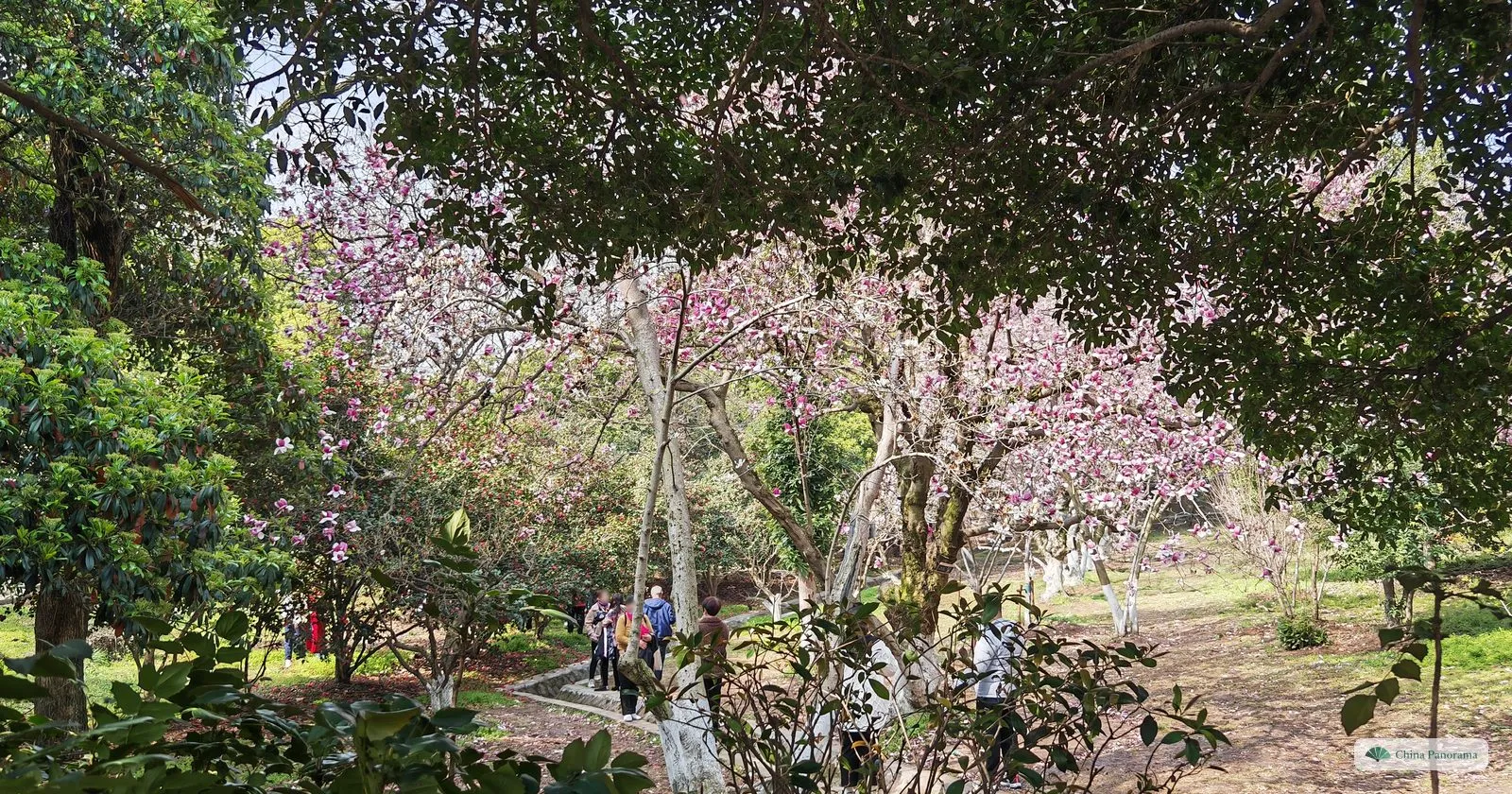
March averages 16 °C by day, April 23 °C and May 28 °C. The plum trees on Plum Blossom Hill flower from late February into March, then magnolias and cherries: on 18 March 2023 the magnolias beside the Sun Yat-sen Mausoleum and the cherries in the Yihe Road district were out, under a clear blue sky. The plane trees are still bare until April. Qingming in early April and May Day (1–5 May) bring crowds.
What to wear: Layers: cool mornings, warm afternoons. A light jacket.
Summer
June – AugustThe plum rains, then the heat: 33–34 °C by day in July and August.
June brings the meiyu, the “plum rains”, weeks of damp grey weather across the lower Yangtze. Then July averages 34 °C by day and 27 °C at night, August 33 °C — Nanjing is one of the cities China calls its “furnaces”. The plane trees shade the old avenues; plan the climbs (the mausoleum's 392 steps, Lion Hill) for early morning and the museums for the afternoon.
What to wear: Light clothes, a hat and an umbrella for sun and rain.
Autumn
September – NovemberMild and long; the plane trees turn gold in November.
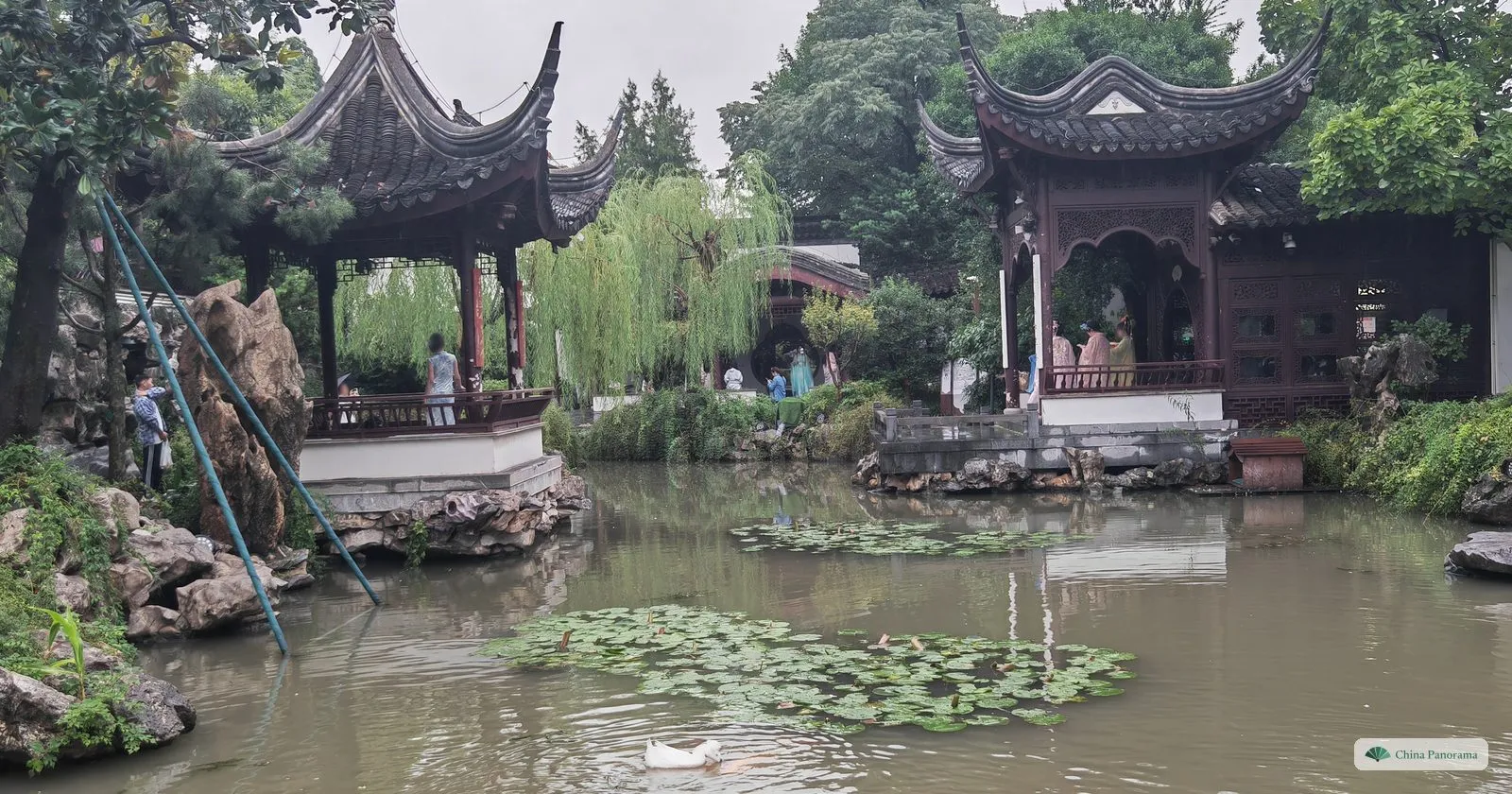
September averages 28 °C by day, October 23 °C and November 16 °C. Our late-September days in 2026 were warm and rainy: drizzle at Niushoushan on the 28th and steady rain all day on the 29th, at Lion Hill, in the Green Expo Park and in the Zhan Garden. Late autumn is the season of the yellow plane-tree avenues. Avoid Golden Week, 1–7 October, when Fuzimiao and the mausoleum are packed.
What to wear: Light layers in September, a jumper by November — and an umbrella.
Winter
December – FebruaryDamp and near freezing, with no central heating.
January averages 8 °C by day and 0 °C at night; snow falls on some days. Nanjing lies south of the Qinling–Huai River line, so buildings have no central heating and the damp cold follows you indoors. From Spring Festival to the Lantern Festival, Fuzimiao is lit for the Qinhuai lantern fair — the most crowded time of the year there.
What to wear: A warm coat and layers you can keep on indoors.
March, for the blossom at about 16 °C, and October, at 23 °C, are the months we would pick — outside the May Day and Golden Week holidays. For how Nanjing compares with the rest of the country month by month, see the best time to visit China.
Things to do in Nanjing
18 places, from Ming walls to a Buddhist palace opened in 2015. Nanjing was the capital of China several times — and much of what looks old was built in the 20th century or since. Four things first: a quiz on how old things are, what is left from each capital period, the mausoleum step by step, and what the gates and plaques tell you.
Ming, Republic or our time? Guess the age
Yellow tiles, red pillars and upturned eaves look the same whether they are 150 years old or 20. Nine of our photographs — guess when each building went up, and see the clue that gives it away.
 Photograph 1
When was it built?
Answer: Before 1912
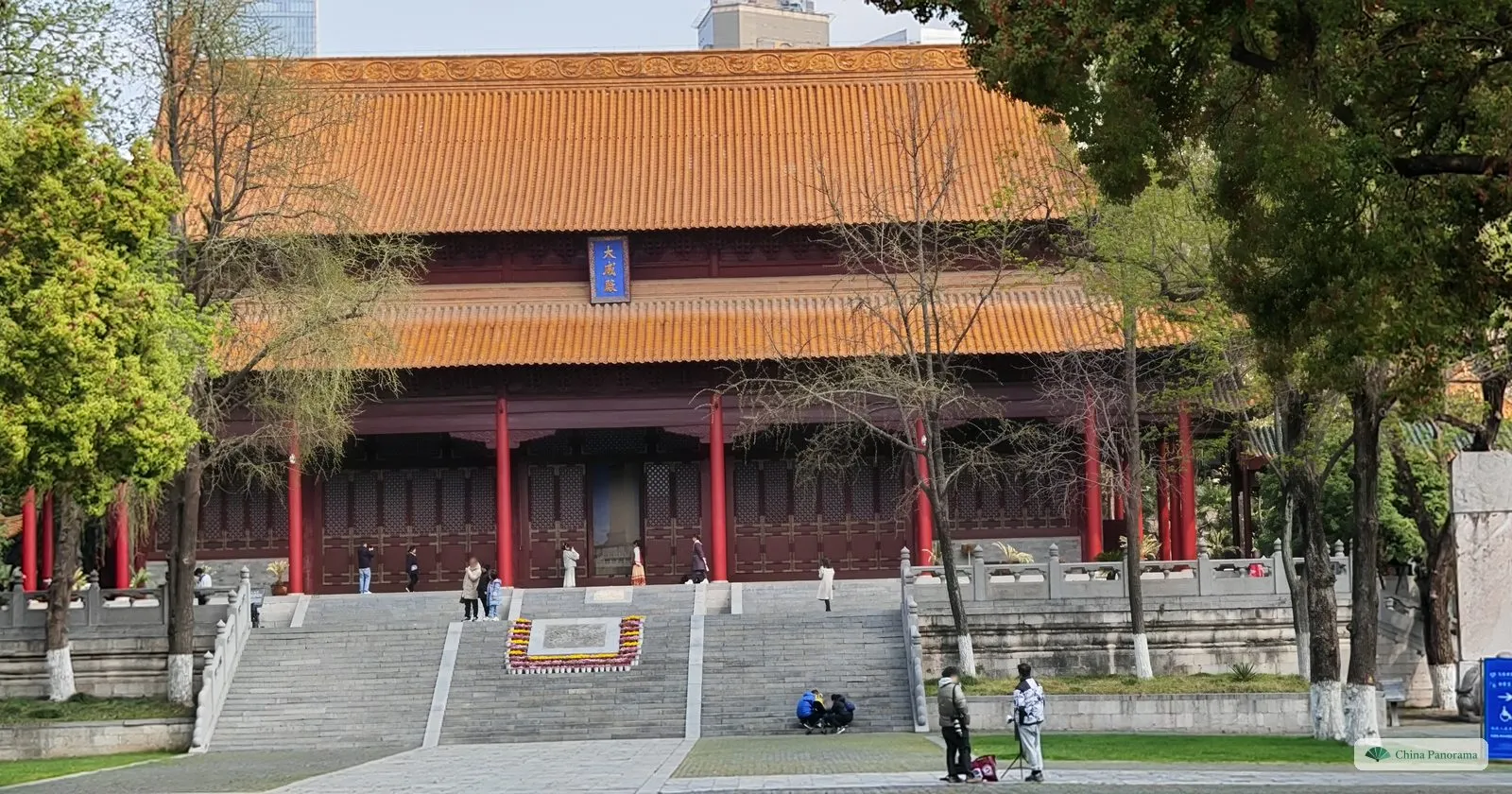
Built in 1866 for the Confucian temple and school of Jiangning prefecture, after the Taiping war had destroyed the Ming Taoist temple on the site. Qing, then — but not Ming.
The Dacheng Hall of Chaotian Palace, 11:36 on 18 March 2023.
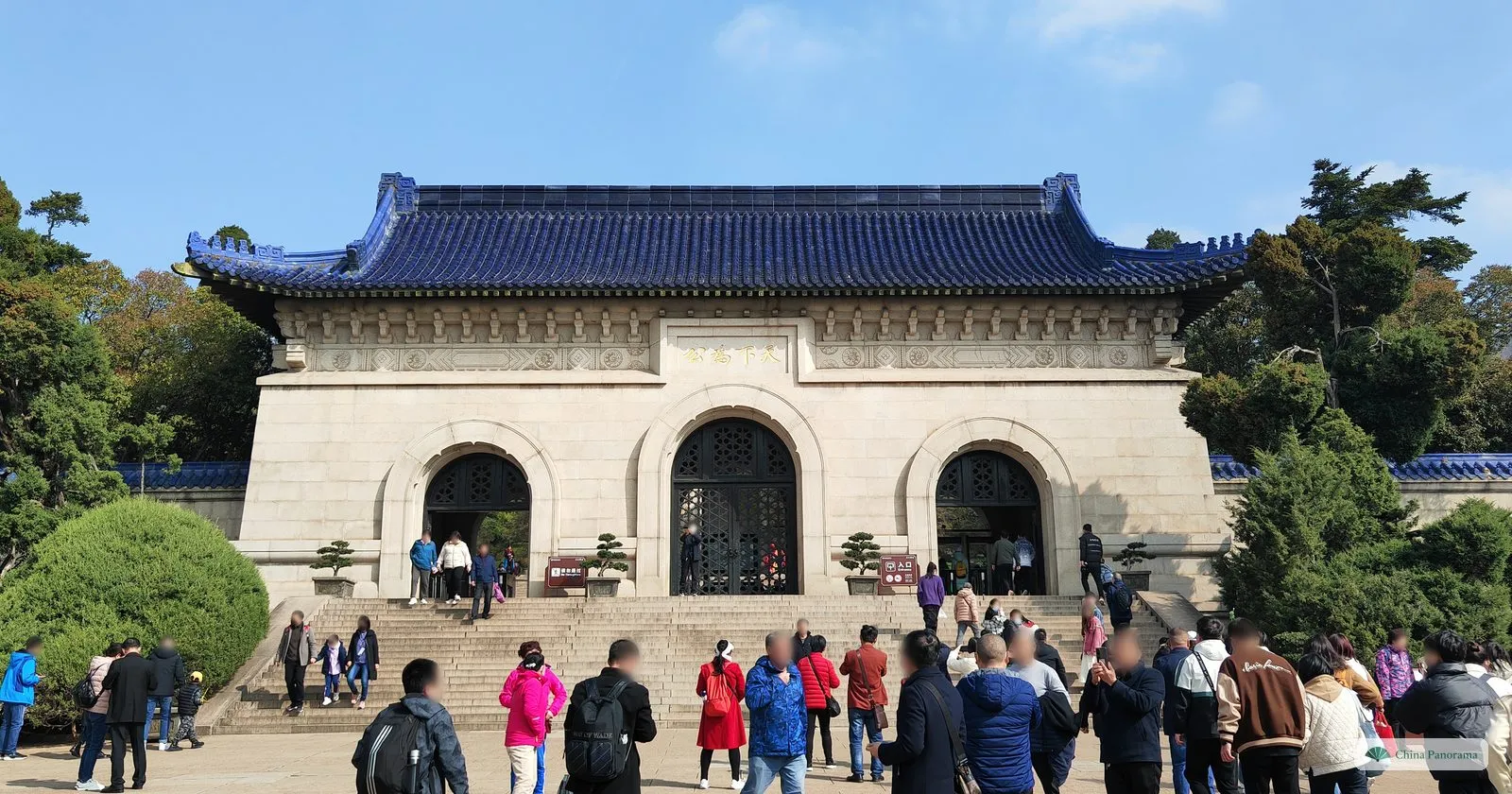 Photograph 2
When was it built?
Answer: Republic, 1912–1949
Granite walls, a blue glazed roof and Sun Yat-sen’s motto over the door: the gate of his mausoleum, built between 1926 and 1931 by the young architect Lu Yanzhi.
The gate of the Sun Yat-sen Mausoleum, 09:33 on 18 March 2023.
 Photograph 3
When was it built?
Answer: After 1949
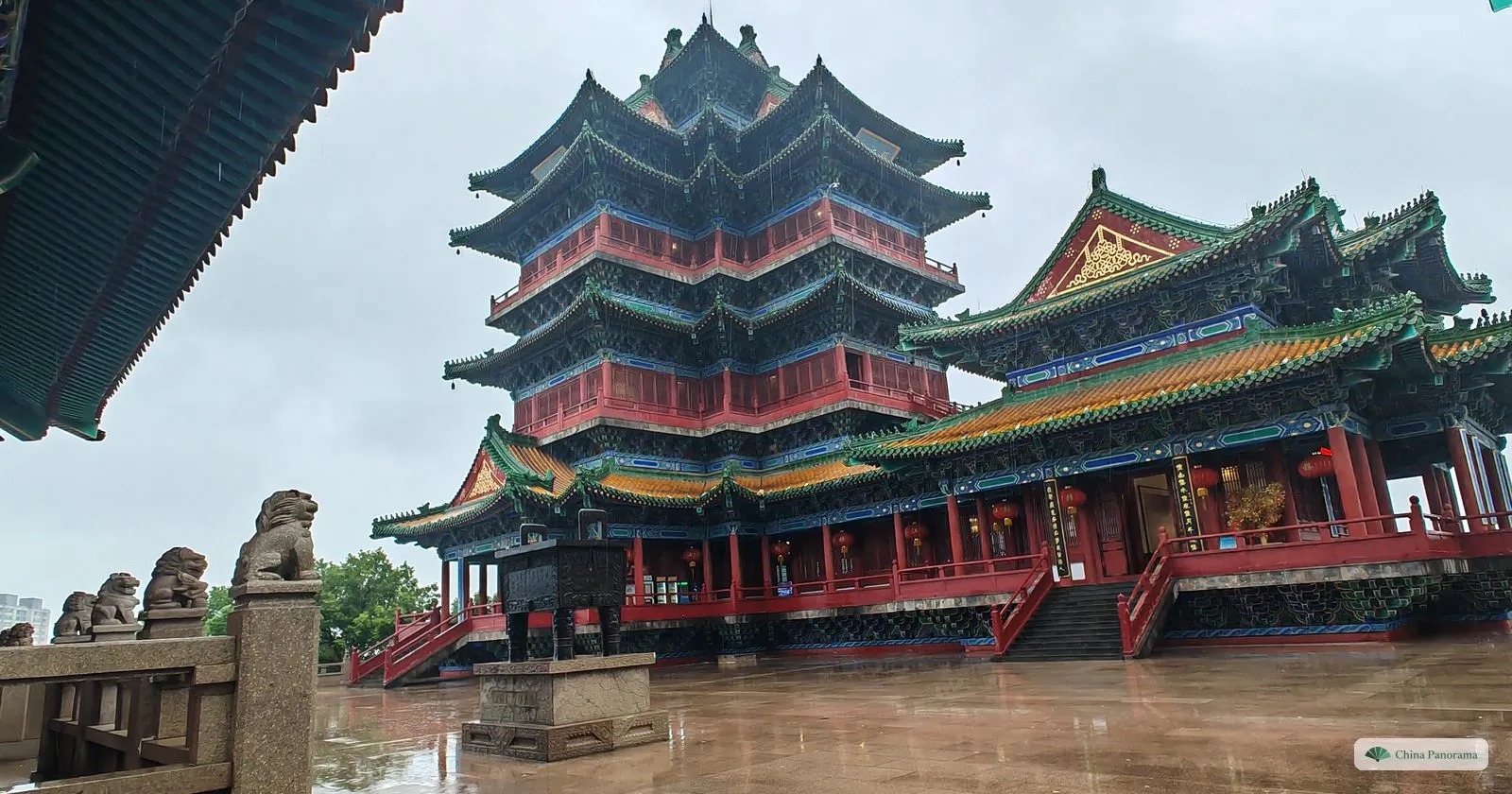
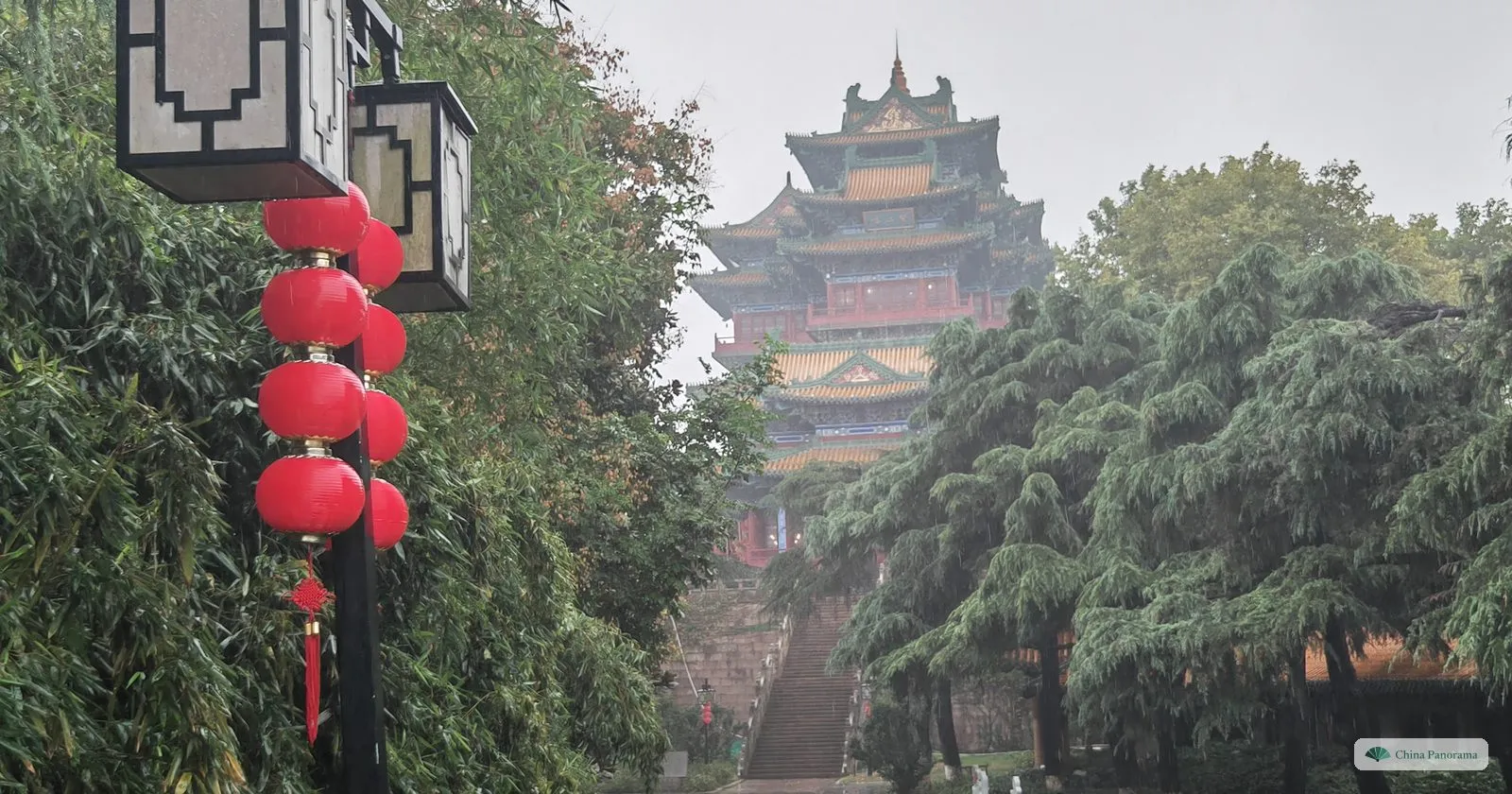
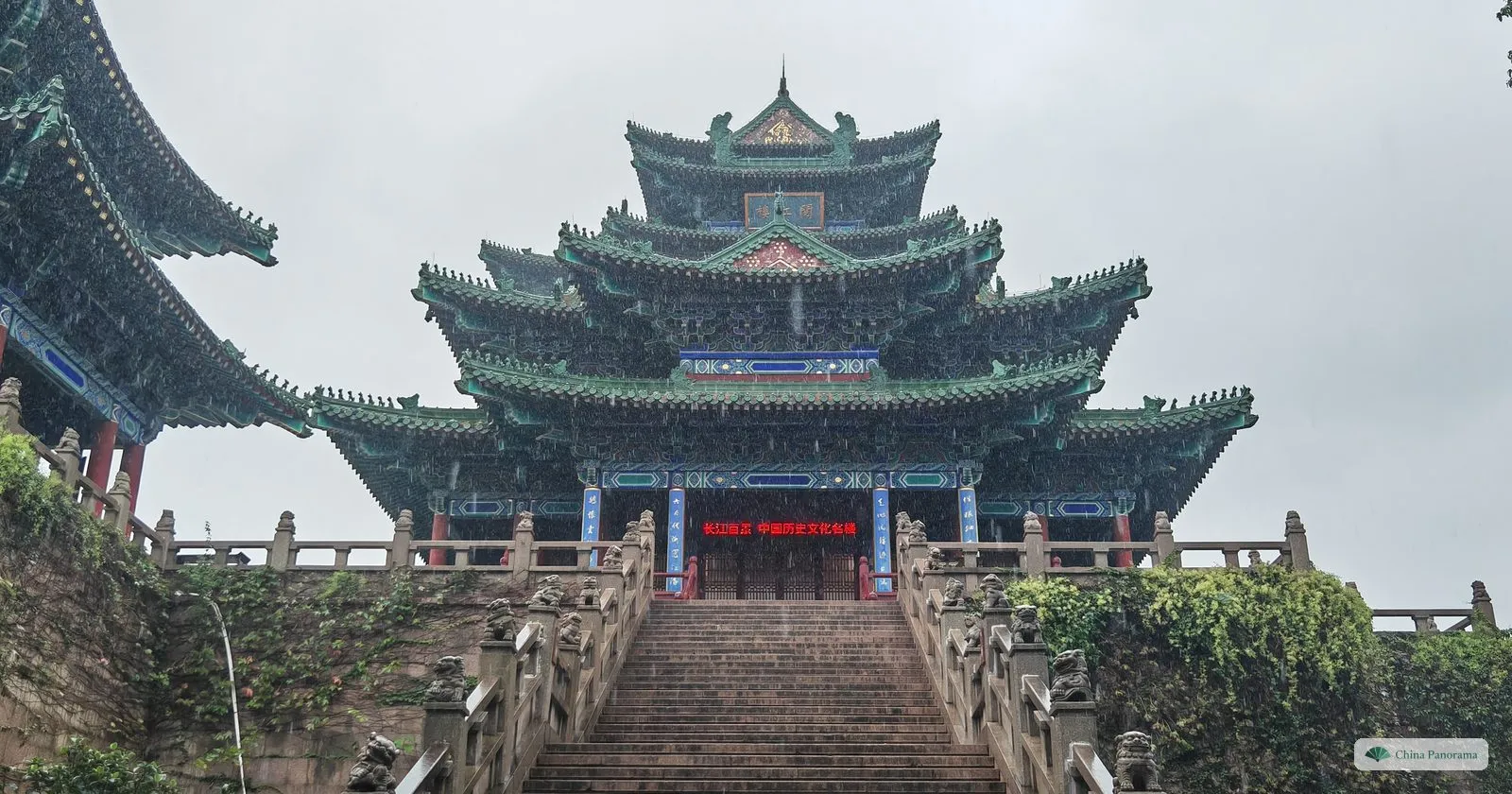
A Ming tower — on paper. The first Ming emperor planned it in 1374 and stopped the work; it was finally built and completed in 2001.
The Yuejiang Tower on Lion Hill, 09:19 on 29 September 2026.
 Photograph 4
When was it built?
Answer: Republic, 1912–1949
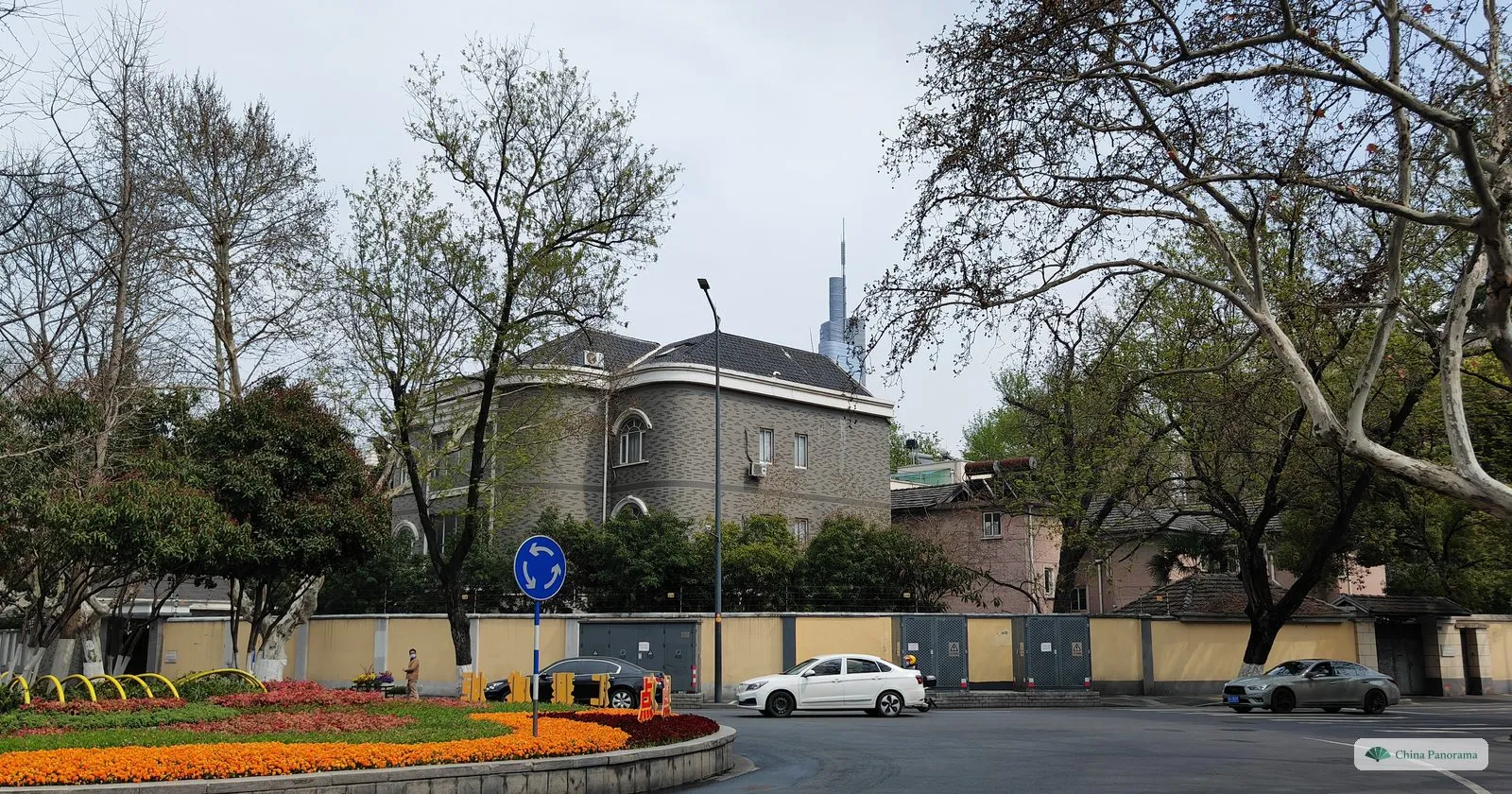
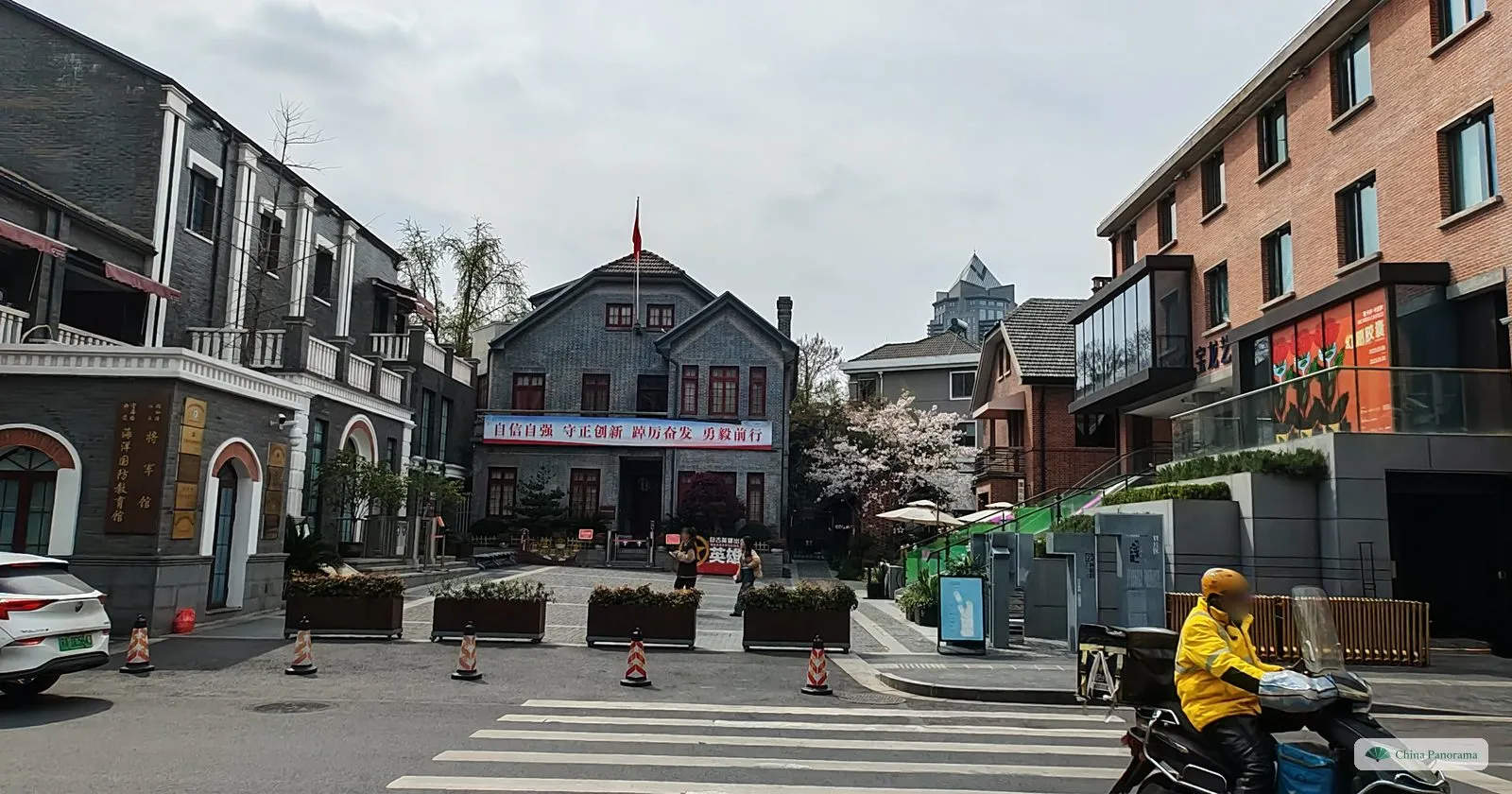
A Western-style villa behind a high wall in a quiet street of plane trees: the 1930s residential district for the Republic’s ministers, generals and embassies.
A villa in the Yihe Road district, 13:12 on 18 March 2023.
 Photograph 5
When was it built?
Answer: After 1949
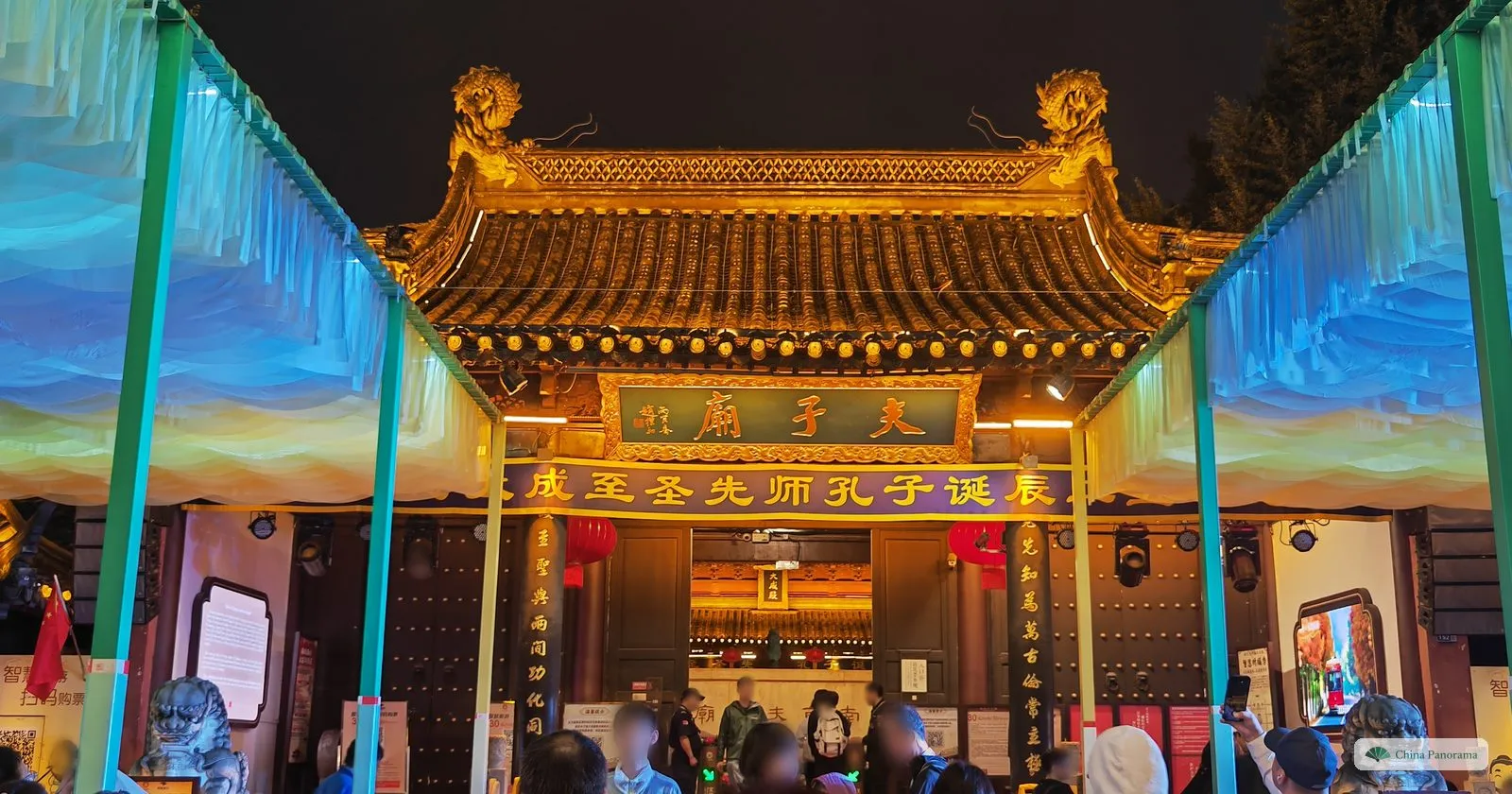
The temple was founded in 1034 — but it burnt in 1937, and what you see was rebuilt from 1984. The oldest piece on the site is the stone balustrade by the river, from 1514.
The gate of the Confucius Temple, 18:30 on 29 September 2026.
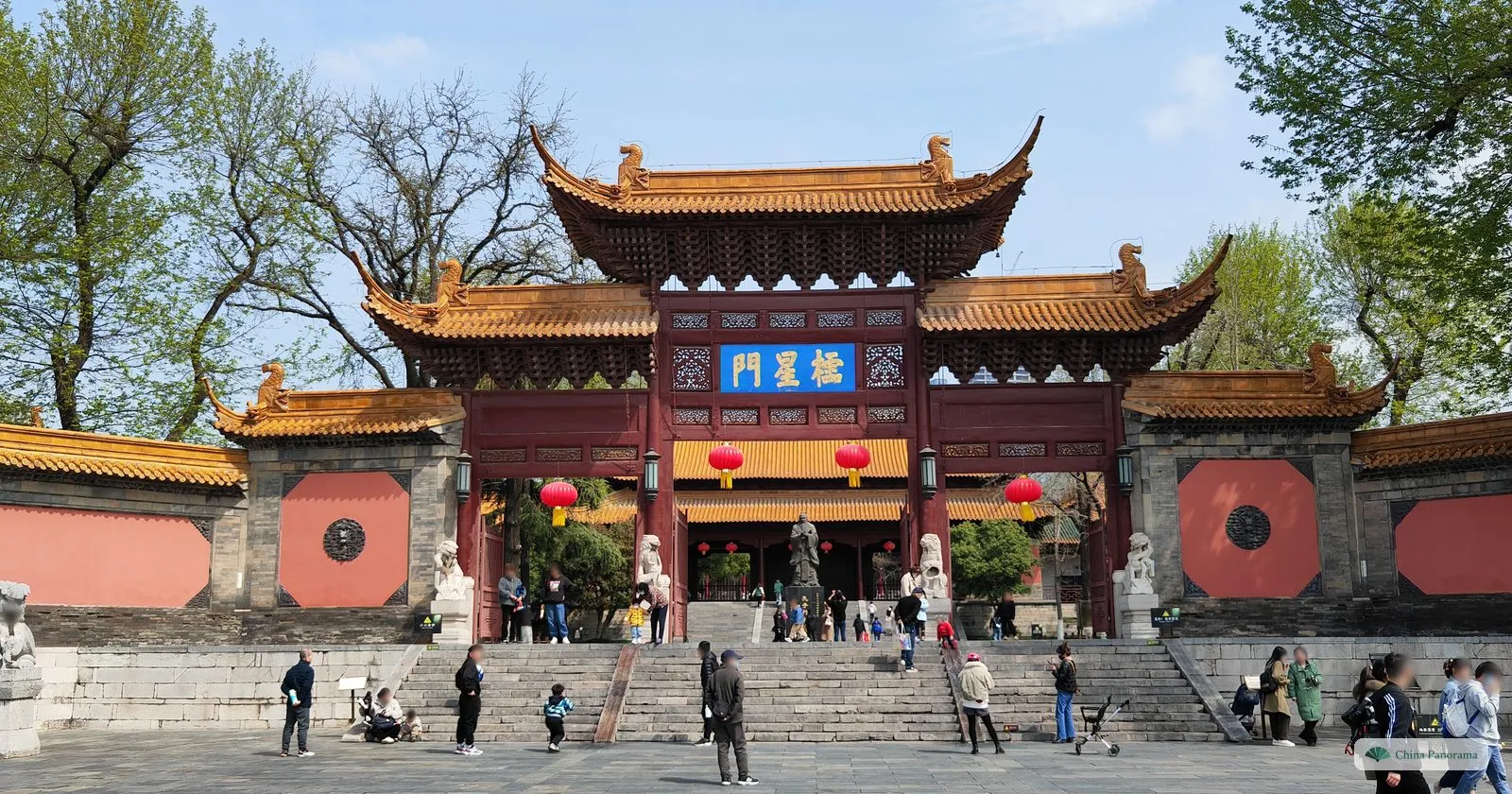 Photograph 6
When was it built?
Answer: Before 1912
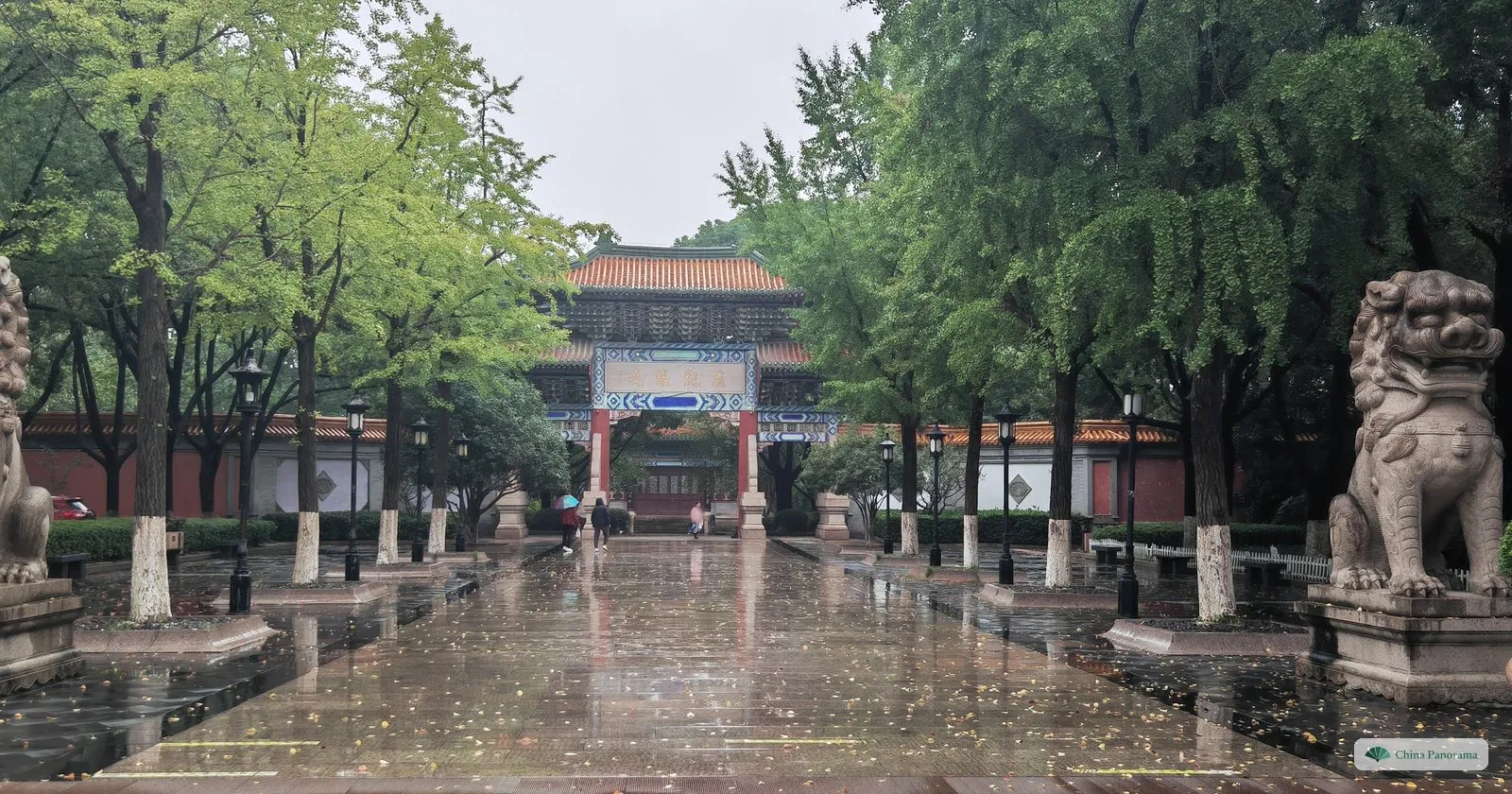
Read the plaque: 櫺星門, the Lingxing Gate that stands in front of every Confucian temple. This one belongs to the temple the Qing moved here in the 1860s.
The Lingxing Gate of Chaotian Palace, 11:29 on 18 March 2023.
 Photograph 7
When was it built?
Answer: After 1949
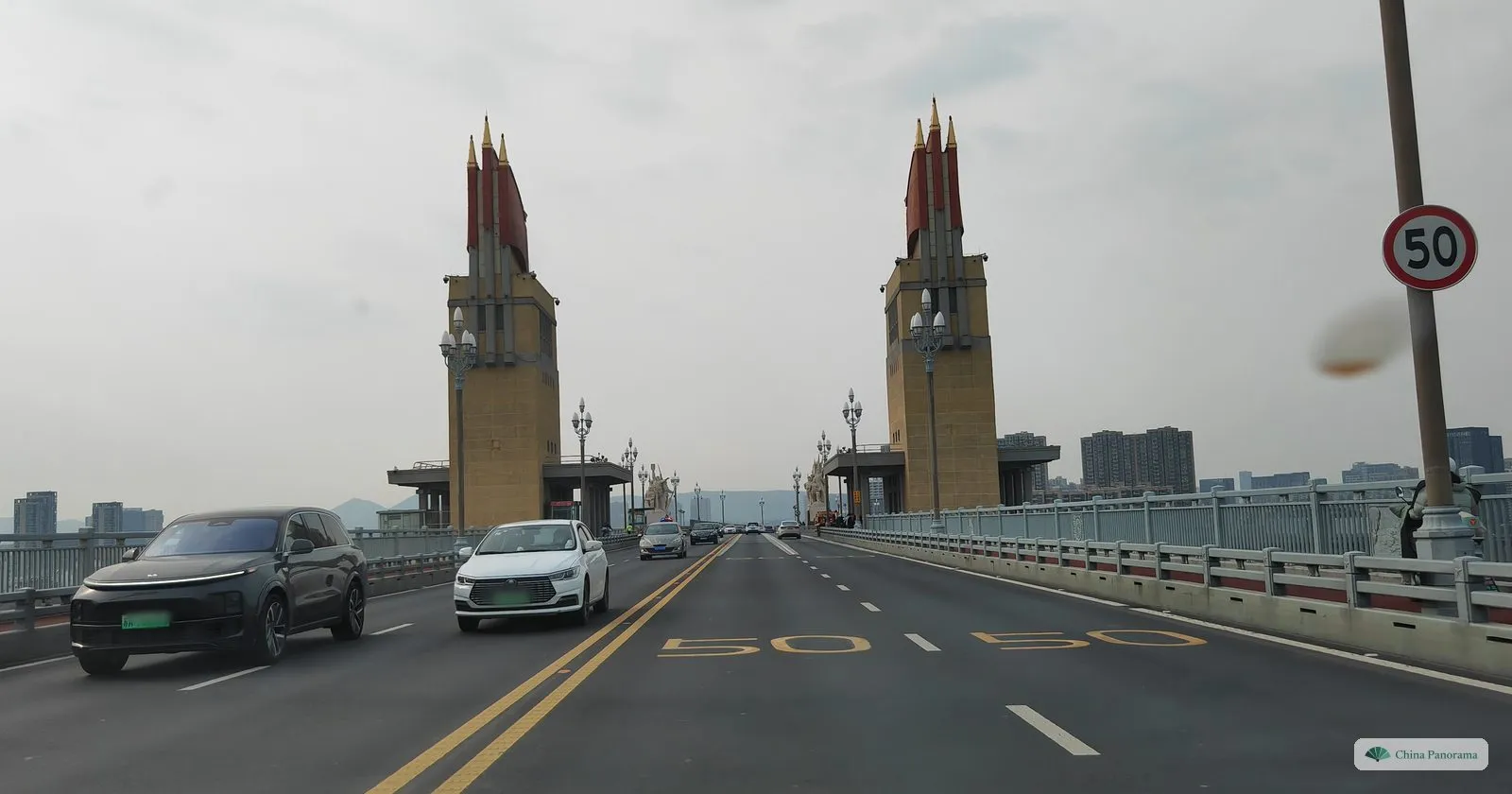
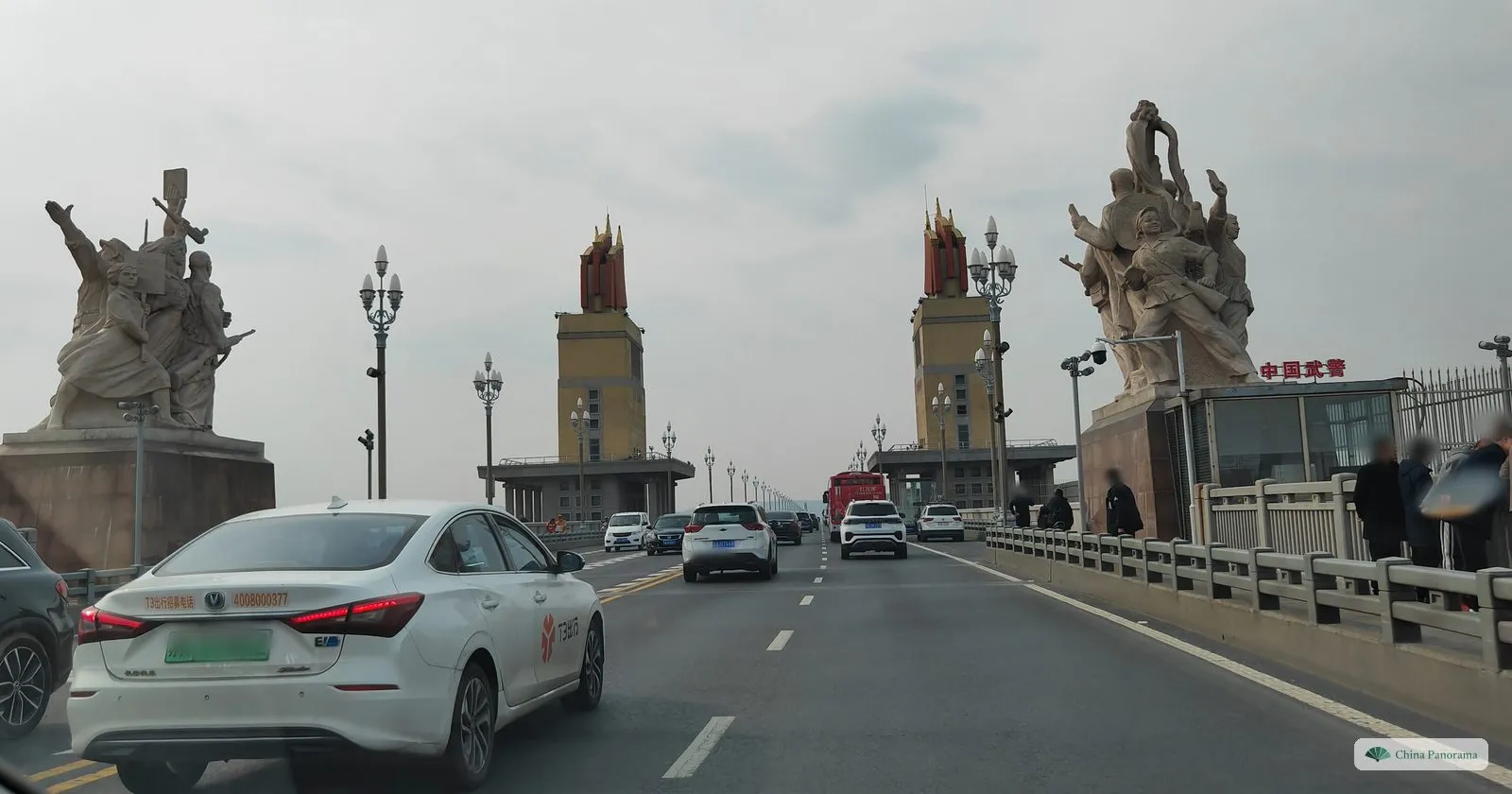
Red steel banners on yellow towers are the giveaway: the Nanjing Yangtze River Bridge, opened in 1968, the first big Yangtze bridge China built by itself.
The Yangtze River Bridge, 15:13 on 18 March 2023, from the car.
 Photograph 8
When was it built?
Answer: Republic, 1912–1949
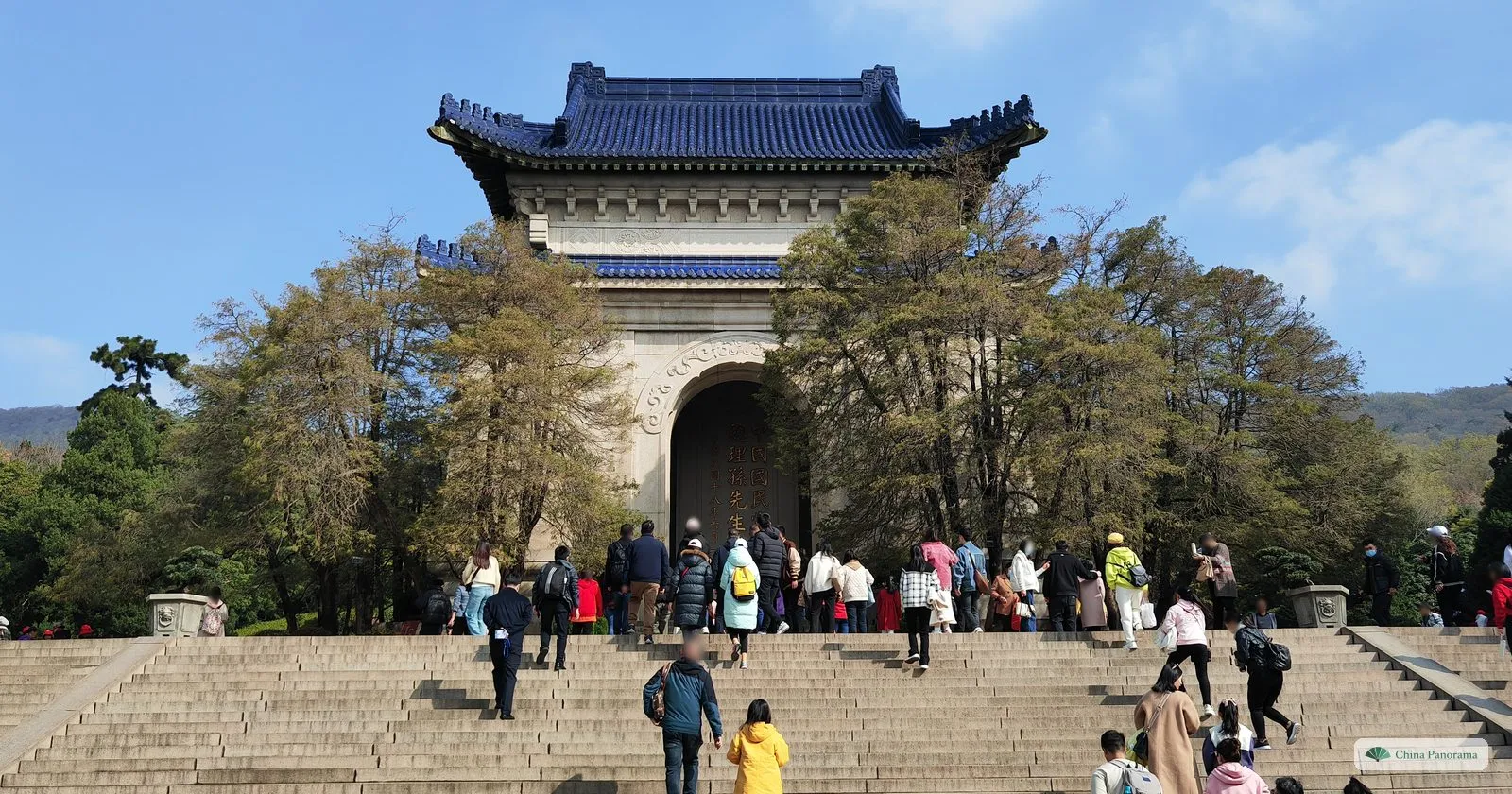
Blue tiles again, and stone where a Ming building would have wood: the pavilion behind the mausoleum gate. Its 9 m tablet records the burial of 1 June 1929.
The stele pavilion of the Sun Yat-sen Mausoleum, 09:34 on 18 March 2023.
 Photograph 9
When was it built?
Answer: After 1949
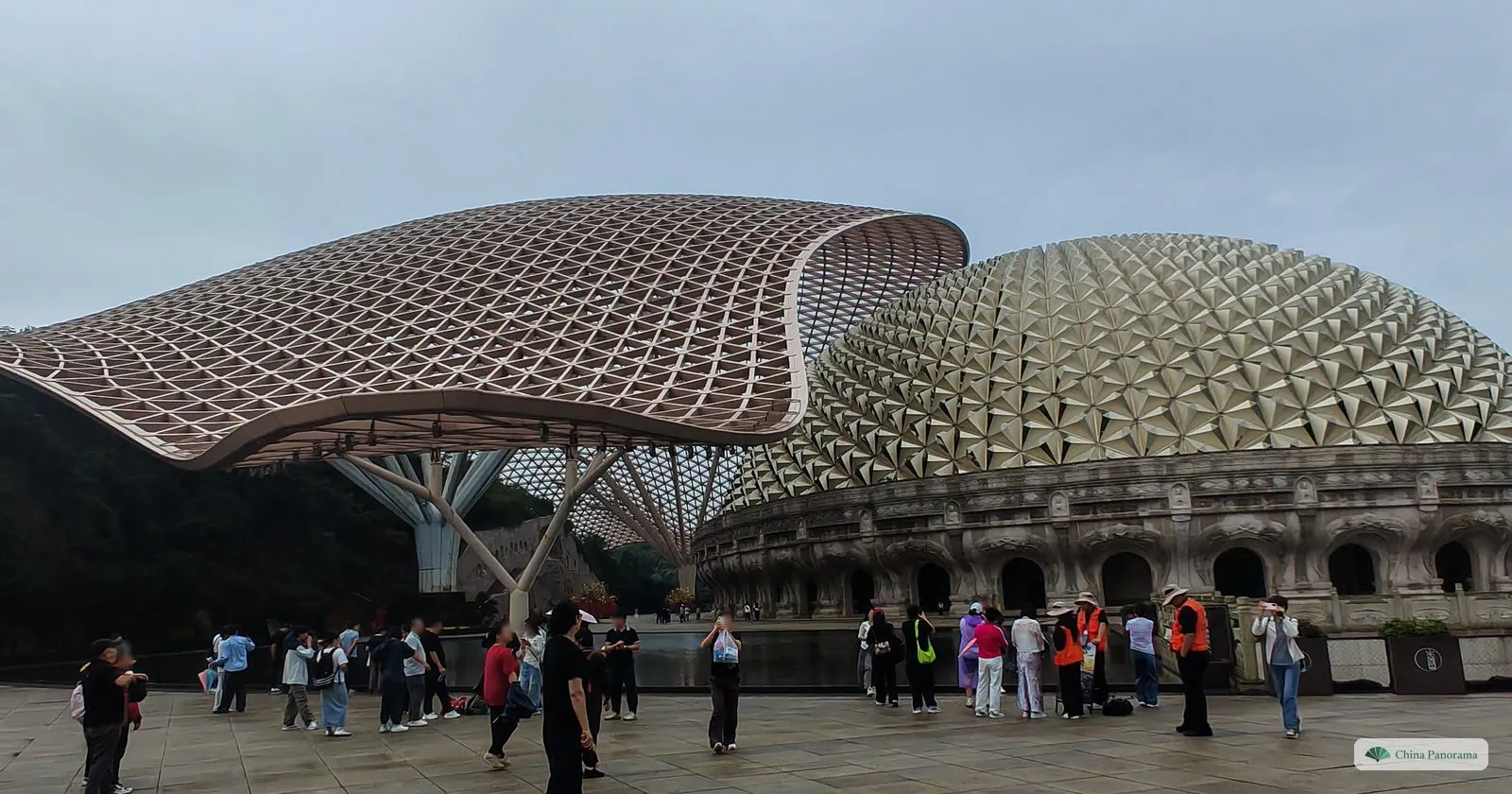
The easy one: a steel canopy and a dome of scales, built into an old iron-ore pit and opened on 27 October 2015 to house a Buddha relic found in the city in 2008.
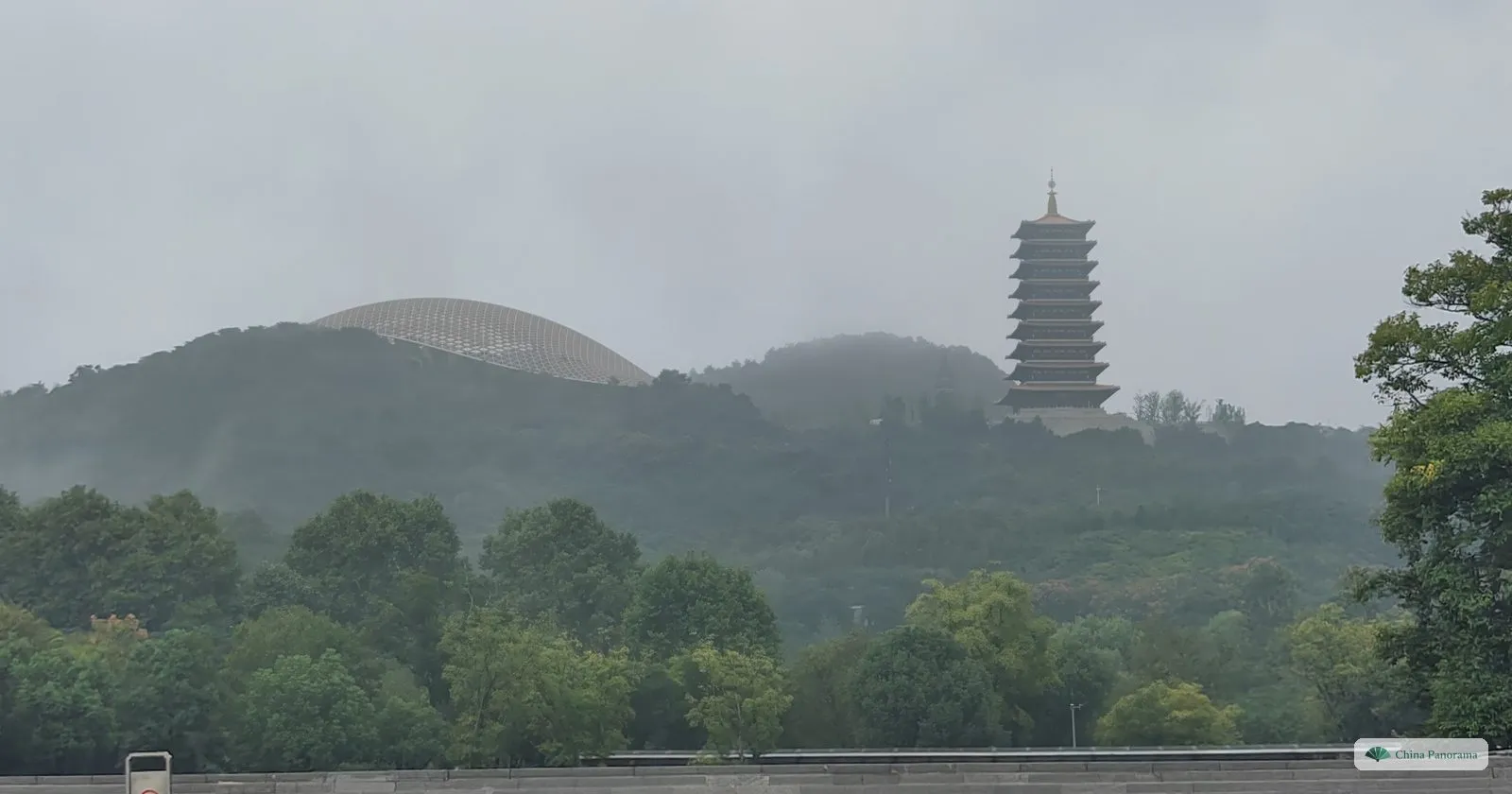
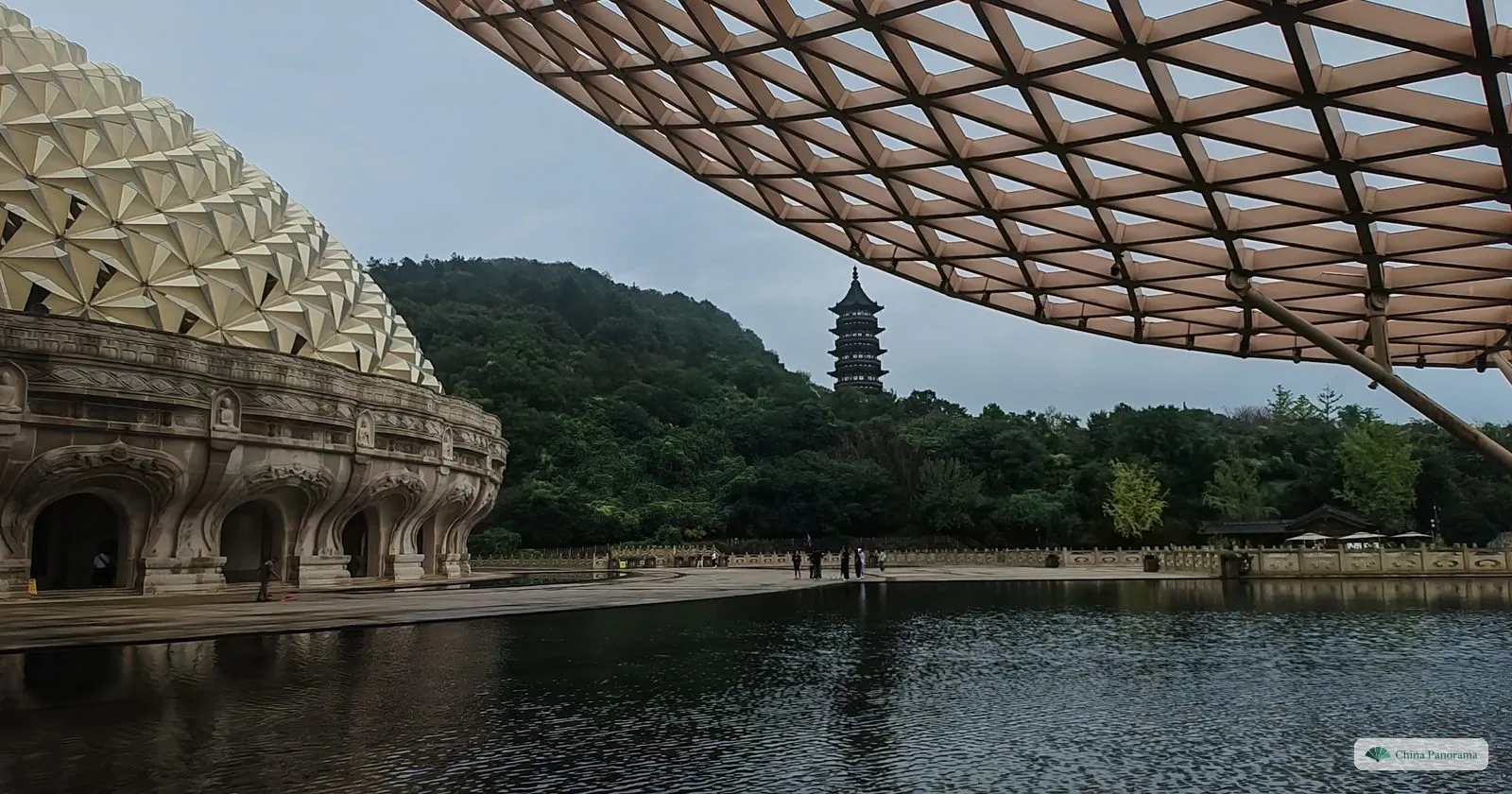
The Usnisha Palace on Niushoushan, 09:40 on 28 September 2026.
Capital of how many dynasties? What is left of each
Nanjing calls itself the capital of six — or ten — dynasties: Eastern Wu, the Eastern Jin and the four Southern Dynasties from 229 to 589, the Southern Tang, the early Ming from 1368 to 1421, the Taiping rebels and the Republic. Almost nothing above ground survives from the first period; the Ming left the wall and the tombs, the Republic its monuments. Tap a name on the time line, or filter.
Wu, Jin and the Southern Dynasties229–589
almost 800 years later, after the Southern Tang
The Ming capital1368–1421
Qing and the Taiping1644–1912
The Republic’s capital1912, 1927–1949
The People’s Republicsince 1949
Filled dot: original. Ring: ruin. Square: built in our time.
Tap a name on the time line or a card.
- Built in our timesite 527about 1,500 years old
By tradition where Emperor Wu of Liang built the Tongtai Temple; rebuilt by the Ming in 1387, the pagoda in 1991.
- Originalbegun 1366about 660 years old
Built over some twenty years by about 200,000 workers; long stretches survive, much of the facing repaired.
- Original1381–1405about 650 years old
Sacred Way with stone animals; World Heritage since 2000.
- Original16th centuryabout 490 years old
Laid out in the Jiajing era for the family of the general Xu Da; restored by Liu Dunzhen in the 1960s.
- Original1866–1869about 160 years old
Named by the first Ming emperor in 1384; the present Confucian halls went up after the Taiping war.
- Original1870s onwardsabout 160 years old
Burnt in 1864; rebuilt from the 1870s, and the seat of the Republic’s government from 1927.
- Original1926–193197 years old
Sun Yat-sen was laid in the tomb on 1 June 1929.
- Original1930s93 years old
The Capital Plan’s first residential district; embassies and generals’ villas.
- Originalfounded 193393 years old
Founded as the National Central Museum; more than 430,000 objects.
- Original1960–196858 years old
Rail deck opened 30 September, road deck 29 December 1968.
- Built in our timerebuilt 198442 years old
Founded in 1034, burnt in 1937; the halls are a reconstruction. The river screen wall of 1575 is older.
- Built in our time200125 years old
Planned in 1374 and stopped by an ill omen; completed in 2001.
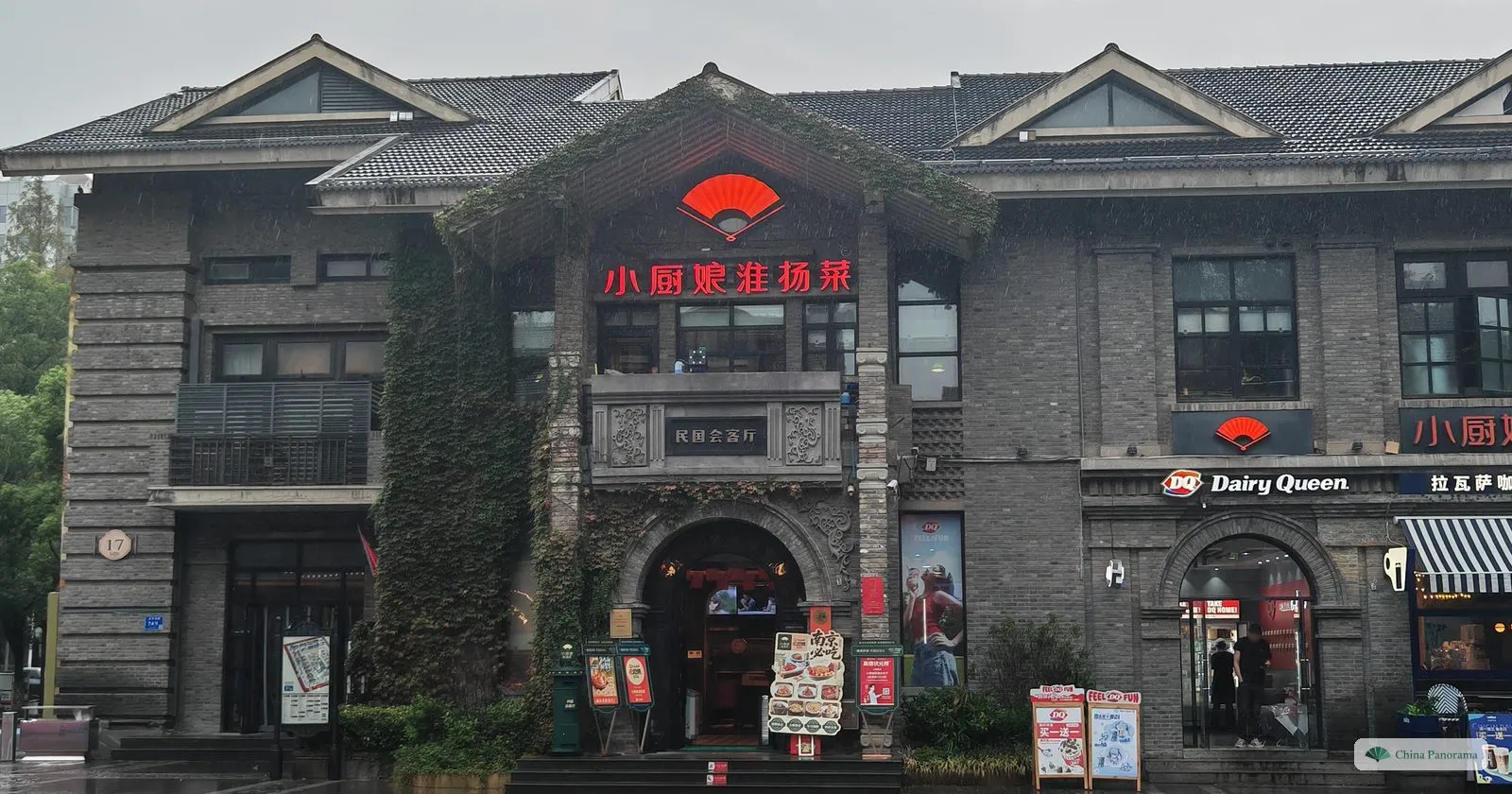 Built in our time200422 years old
Opened on 24 December 2004 beside the Presidential Palace; five of its 17 buildings are old.
- Built in our time201511 years old
Opened on 27 October 2015 in a disused iron-ore pit.
The Sun Yat-sen Mausoleum, from the archway to the tomb
The mausoleum is a single line up the slope of Purple Mountain: about 700 m from the archway to the hall and 73 m higher. Tap a stop on the line to see what it is.
Tap a stop on the line or a card.
- On the axis0.7 km from the southern end
A round chamber 18 m across and 11 m high; the door carries the words “His noble spirit lives for ever”. Sun Yat-sen’s coffin lies in a vault below the floor.
- On the axis0.7 km from the southern end
28 m wide, 22.5 m deep and 26 m high, on the tenth platform. Over its three doors are Sun’s Three Principles of the People — nationalism, democracy, the people’s livelihood — and “Righteousness of heaven and earth”.
- On the axis0.6 km from the southern end
From the pavilion, 290 steps in eight flights. Seen from the archway the steps disappear and you see only the platforms; from the top you see only the steps. Our climb, in a crowd: three minutes.
- On the axis0.5 km from the southern end
About 17 m high, of granite with a blue roof. The tablet records that the Kuomintang buried its leader Sun here on 1 June 1929, in the calligraphy of Tan Yankai.
- On the axis0.5 km from the southern end
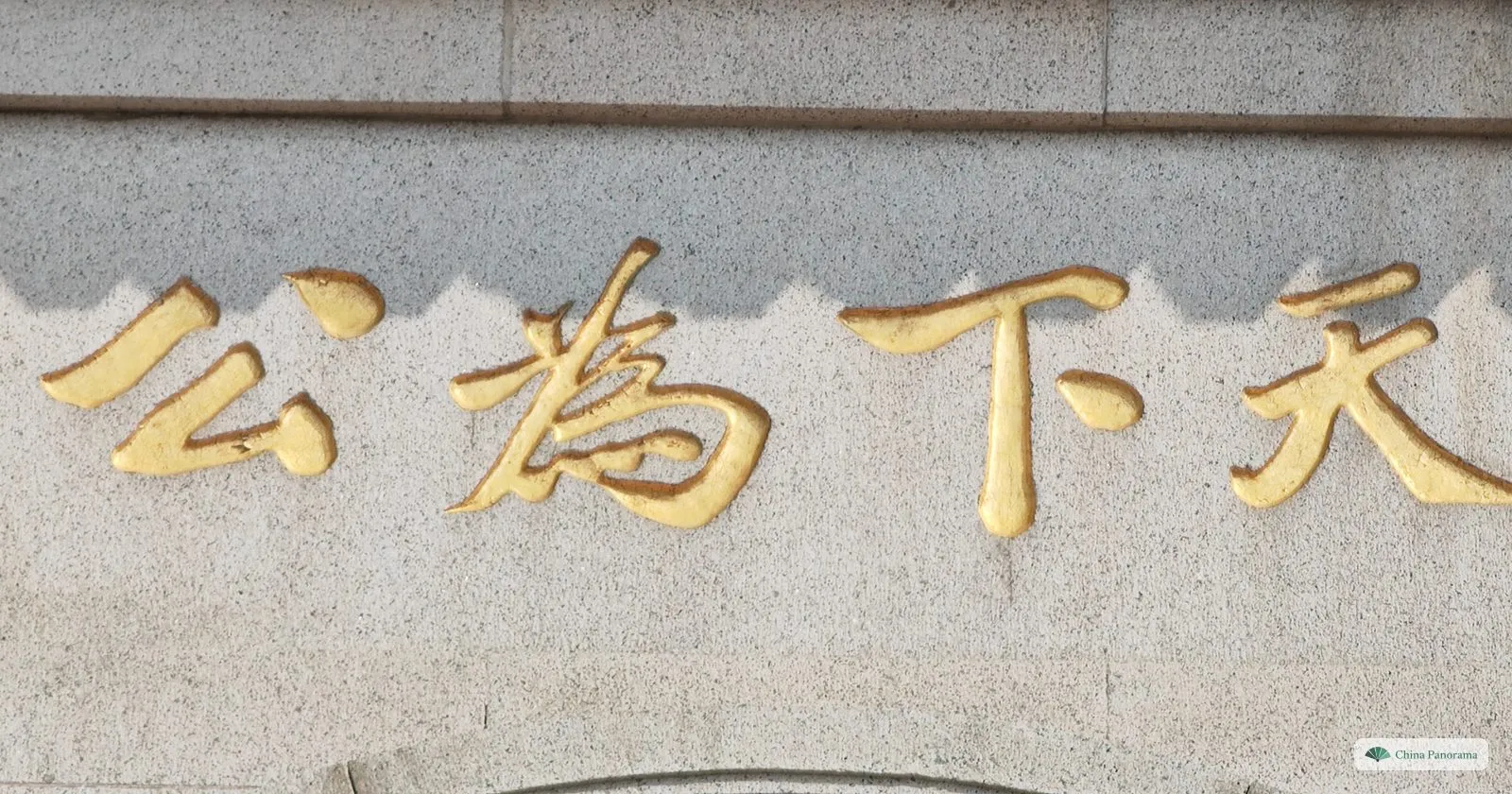
27 m wide and 16.5 m high, with three arched doors. Over the middle one, in Sun Yat-sen’s own hand: 天下為公, a line from the Book of Rites he made his motto.
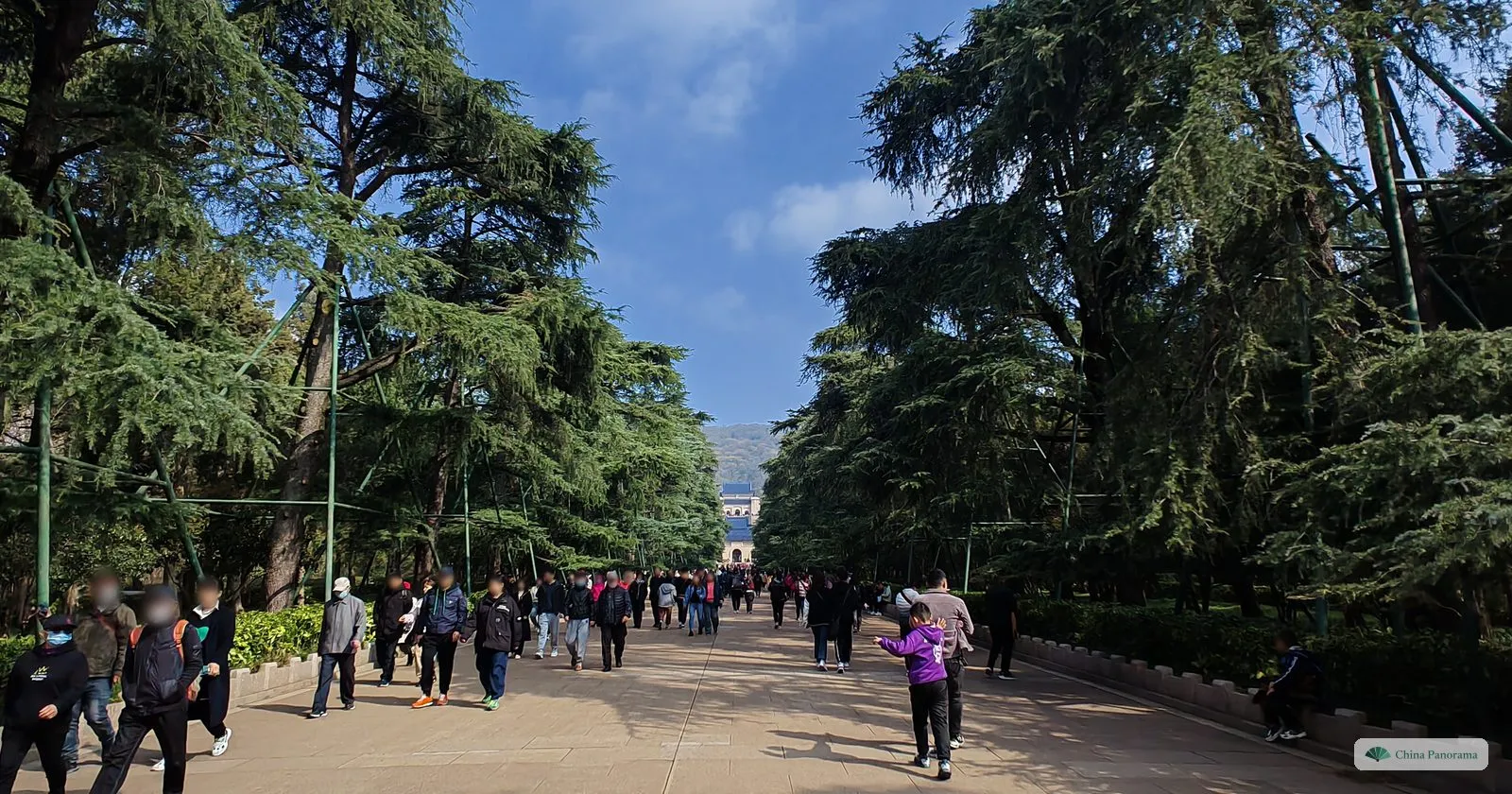 On the axis0.2 km from the southern end
An avenue between cedars and pines, rising gently. Deodar cedar is one of Nanjing’s city trees.
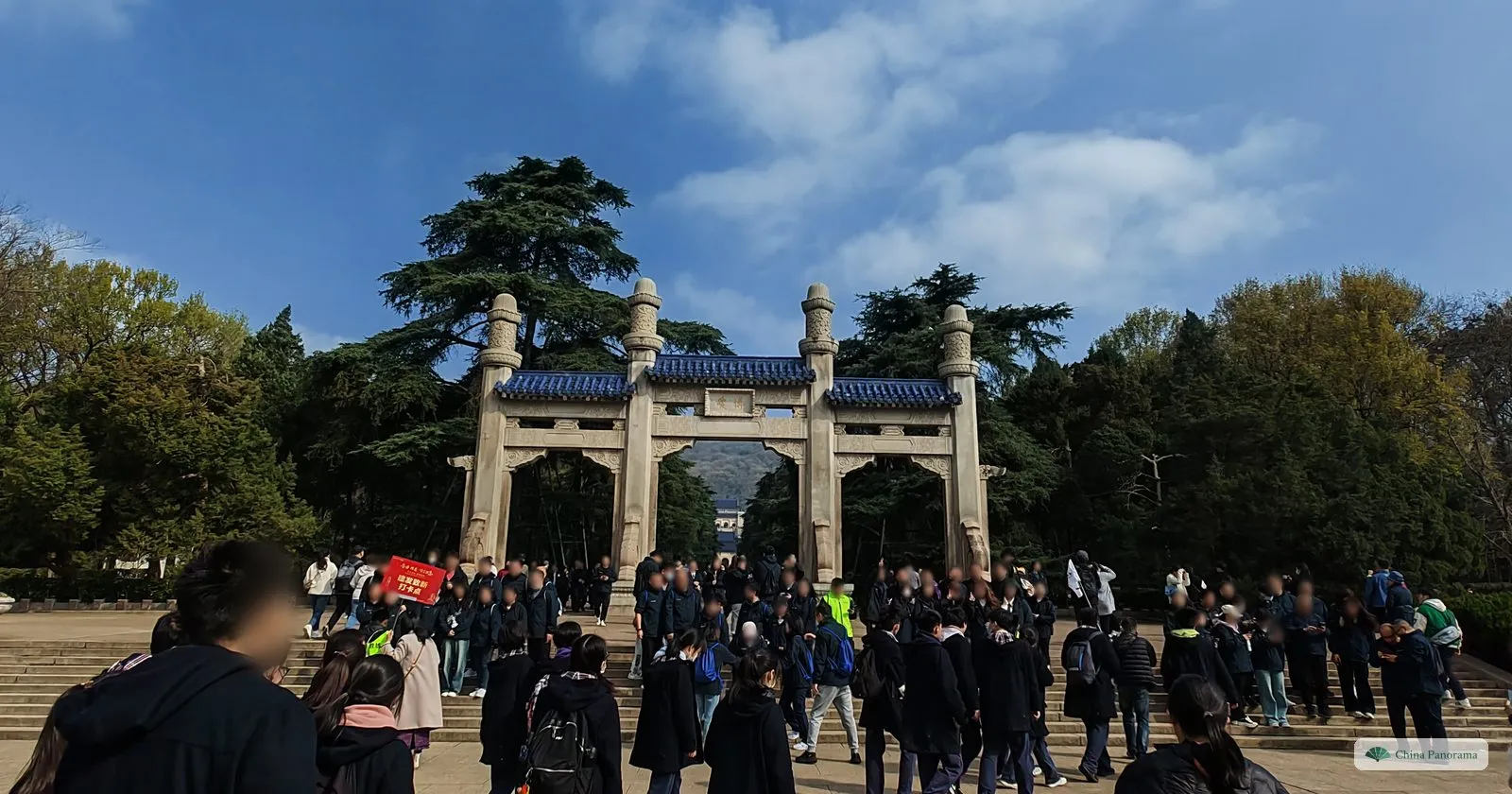 On the axis0.0 km from the southern end
11 m high and 17.3 m wide, the start of the axis. Car parks and the shuttle-bus stop are below it to the south.
Xiamafang (Line 2), about 2 km
What am I looking at?
The mausoleum gate and its steps, the plane trees, Chaotian Palace, Fuzimiao by night, the Usnisha Palace and the Yangtze bridge. Tap a number on the photograph.
1“All under heaven belongs to the people”
天下為公 · Sun Yat-sen’s motto, read right to left
A line from the Confucian Book of Rites about an ideal age when the world was shared by all. Sun wrote it out countless times; here it is in his own hand, in gold.
The mausoleum in the list below →Tap a number on the photo, or a name in the list.
18 places in and around Nanjing
Filter by type, or by whether you need to be indoors — useful in the June rains or a hot August afternoon.
- Republic-era heritageXuanwu · 玄武区Outdoors
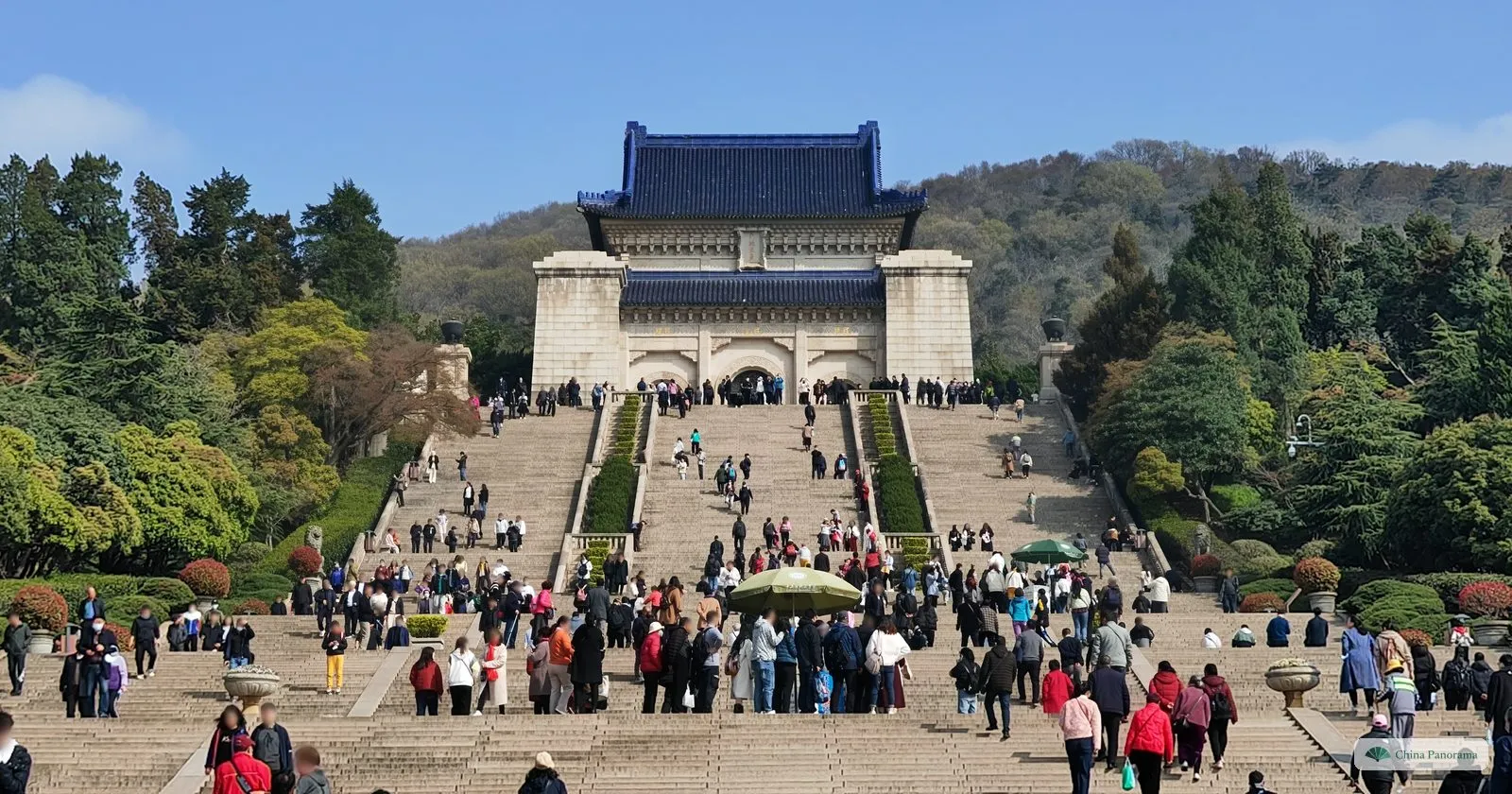
The tomb of Sun Yat-sen, the first provisional president of the Republic of China, on the southern slope of Purple Mountain. Sun died in Beijing in 1925 and had asked to be buried here; the architect Lu Yanzhi won the design competition, building began on 15 January 1926, and the coffin was laid in the tomb on 1 June 1929. Lu Yanzhi died on 18 March 1929 and did not see it finished; the whole complex was completed in 1931. It is one straight line up the hill: a stone archway with Sun's word “fraternity”, a 480 m avenue of cedars, the gate inscribed “All under heaven belongs to the people”, a pavilion with a 9 m stone tablet, and then 392 steps over ten platforms to the sacrificial hall, about 73 m above the archway. Granite walls and roofs of blue glazed tile give it its look. A national monument since 1961. We walked it on Saturday 18 March 2023, from 09:28 at the archway to the top at 09:38, in a crowd of tour groups — and with magnolias in flower beside the path.
Xiamafang station (Line 2) is about 2 km from the archway; the scenic area runs its own shuttle buses from the stations and car parks (not checked). Entry to the main mausoleum has been reported free with a timed booking in the Zhongshan scenic area's WeChat mini-program, which fills up quickly at weekends; the hall and the tomb chamber may have their own opening rules. We have not checked hours or booking rules. The climb is 392 steps; there is no lift.
- Entry
- Price not verified — check on site
- Opening hours
- Hours not verified — check on site
- Imperial heritageXuanwu · 玄武区Outdoors
The tomb of the Hongwu emperor, Zhu Yuanzhang, who founded the Ming dynasty in 1368 and made Nanjing his capital. Work began in 1381, during his lifetime, and was finished in 1405 under his son, the Yongle emperor — who then moved the capital to Beijing, where the later Ming emperors are buried. Its Sacred Way of about 1,800 m is lined with twelve pairs of stone animals — lions, xiezhi, camels, elephants, qilin and horses — and four pairs of stone ministers and generals; the burial mound itself has never been opened. It is a World Heritage Site, part of the Imperial Tombs of the Ming and Qing Dynasties (2000, extended 2003). Plum Blossom Hill to the south, the tomb of Sun Quan of the Three Kingdoms, is where Nanjing holds its plum blossom festival.
On Purple Mountain, about 1.5 km west of the Sun Yat-sen Mausoleum; Muxuyuan station (Line 2) is the nearest. We have not checked the ticket price, hours or the shuttle buses inside the scenic area.
- Entry
- Price not verified — check on site
- Opening hours
- Hours not verified — check on site
 StreetQinhuai · 秦淮区Outdoors
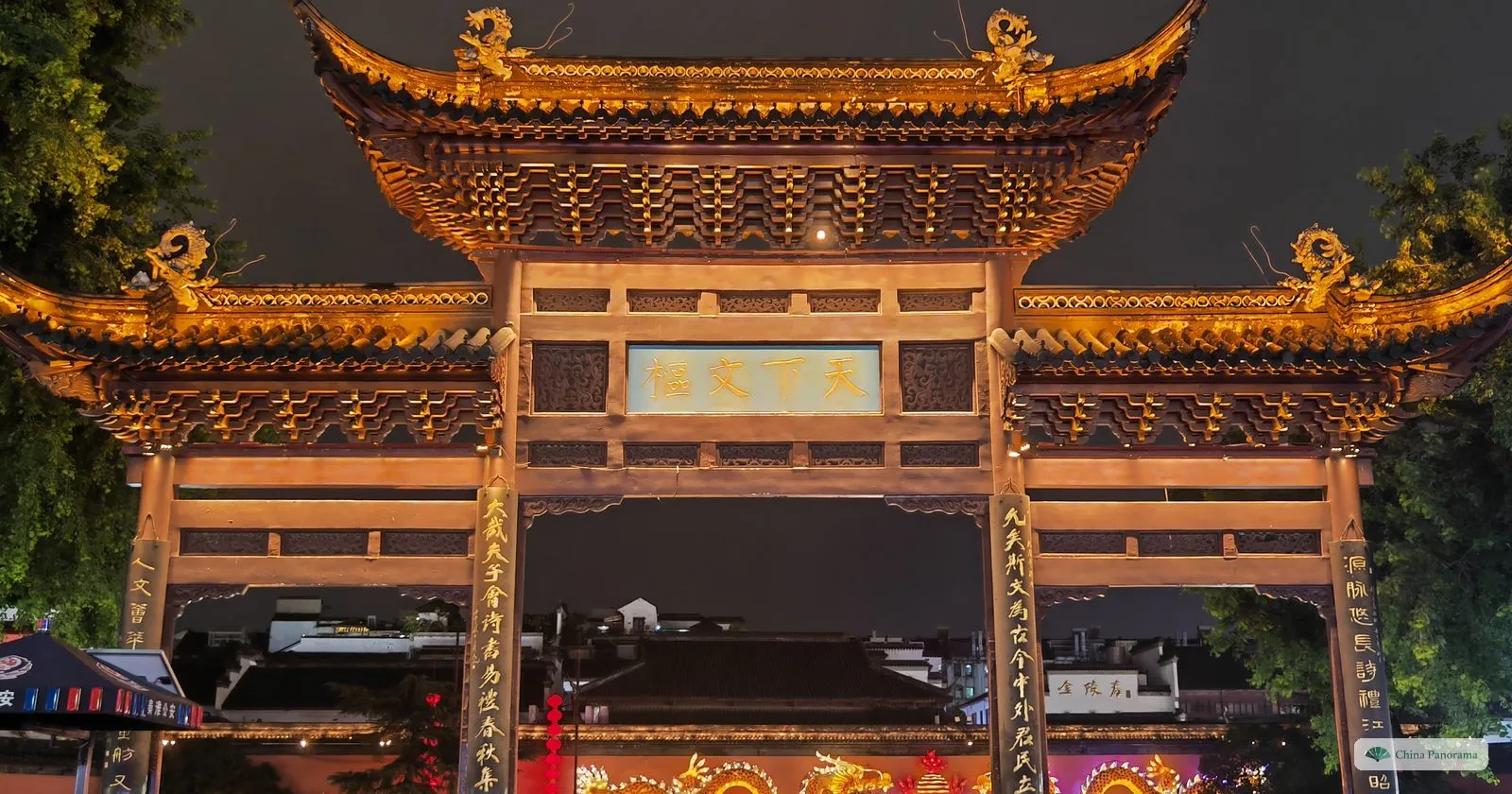
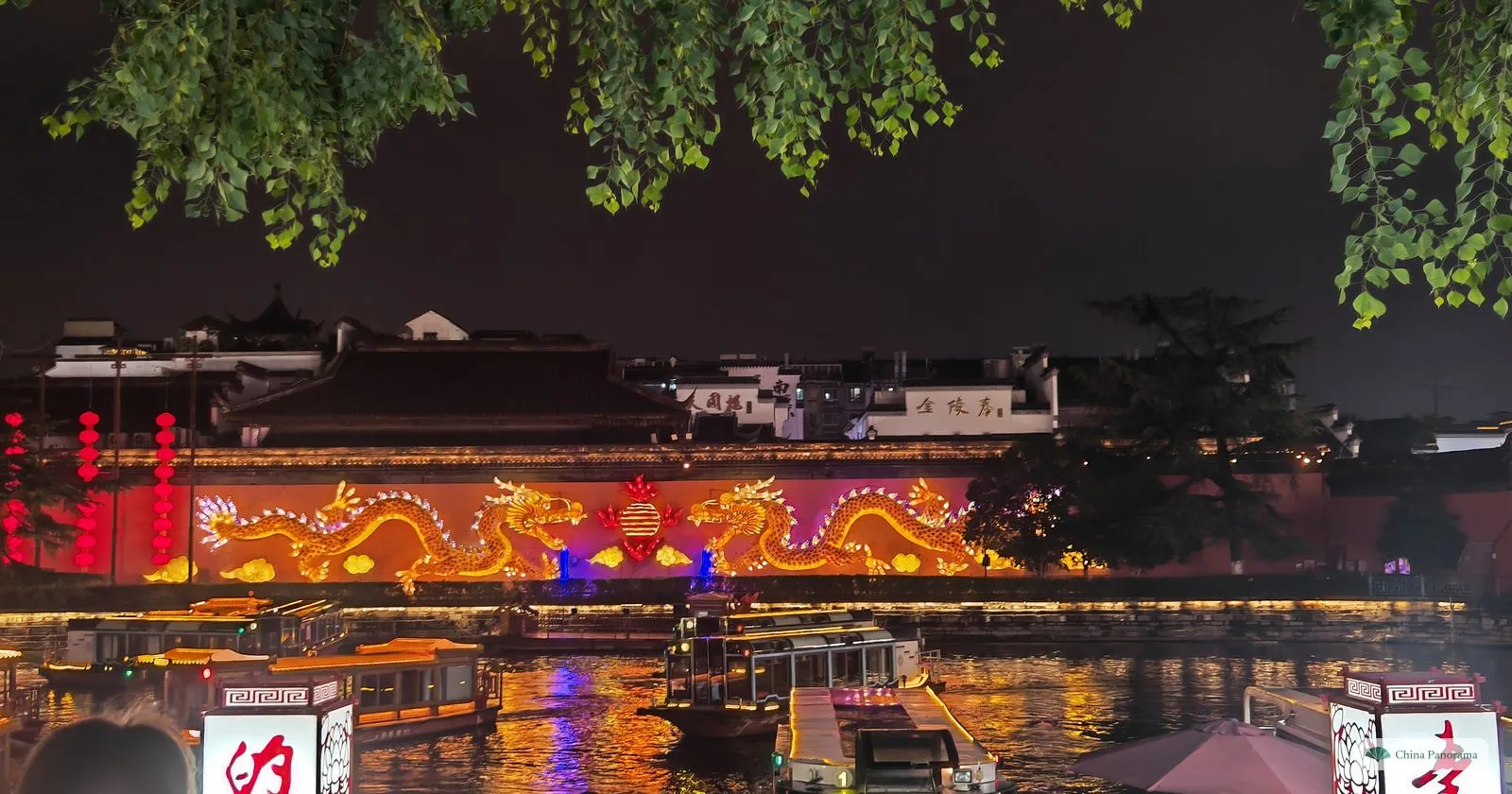
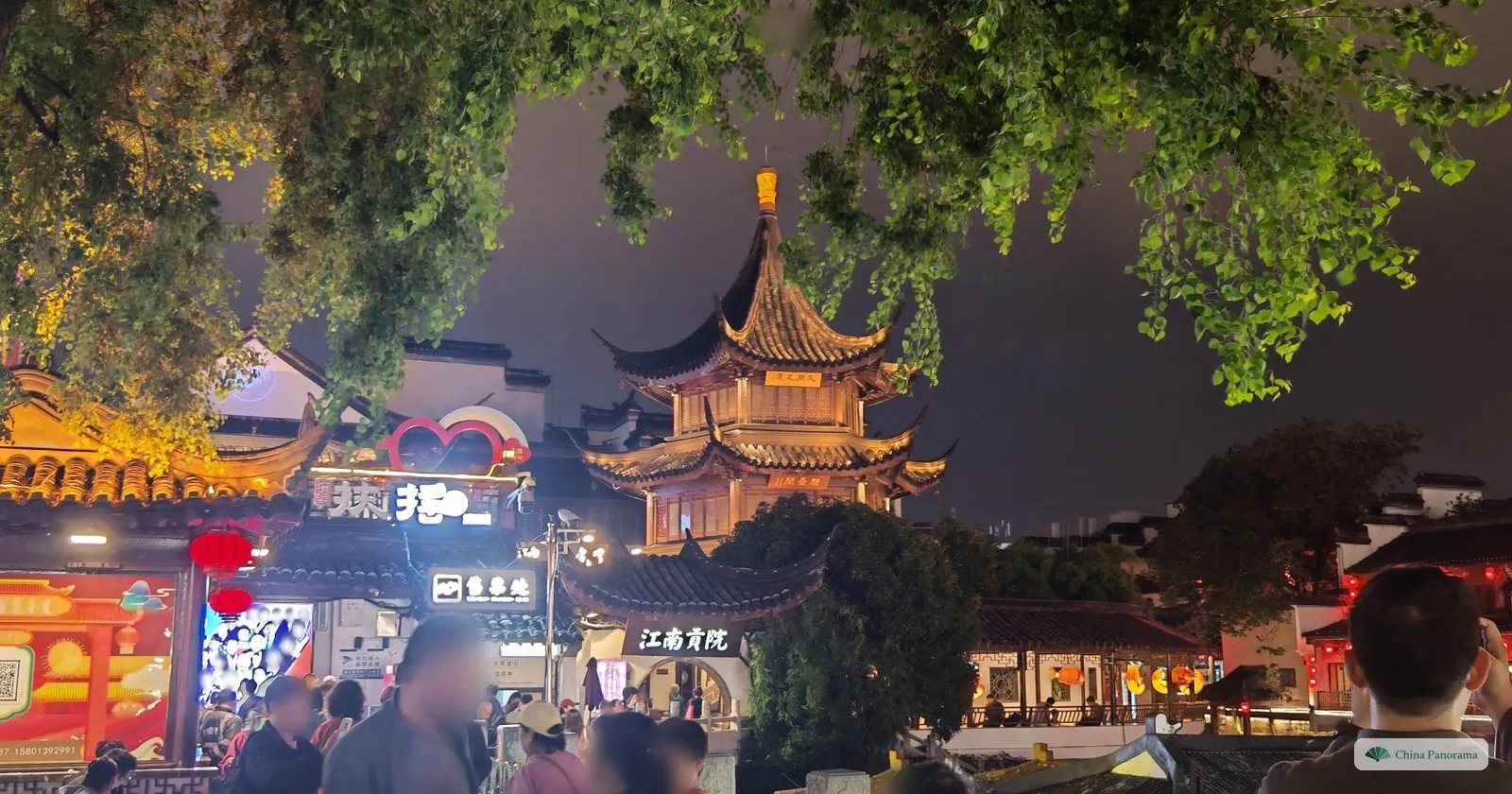
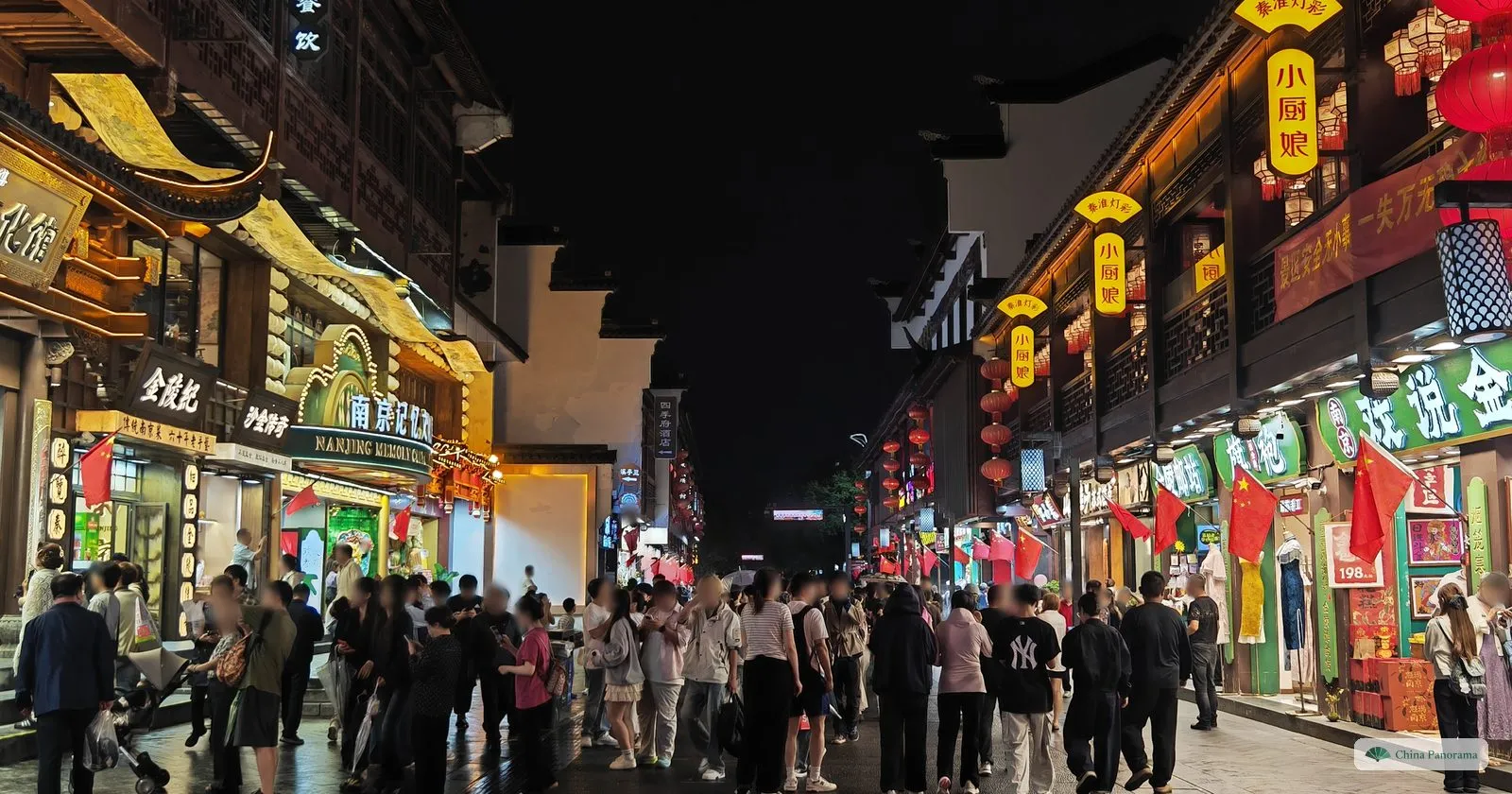
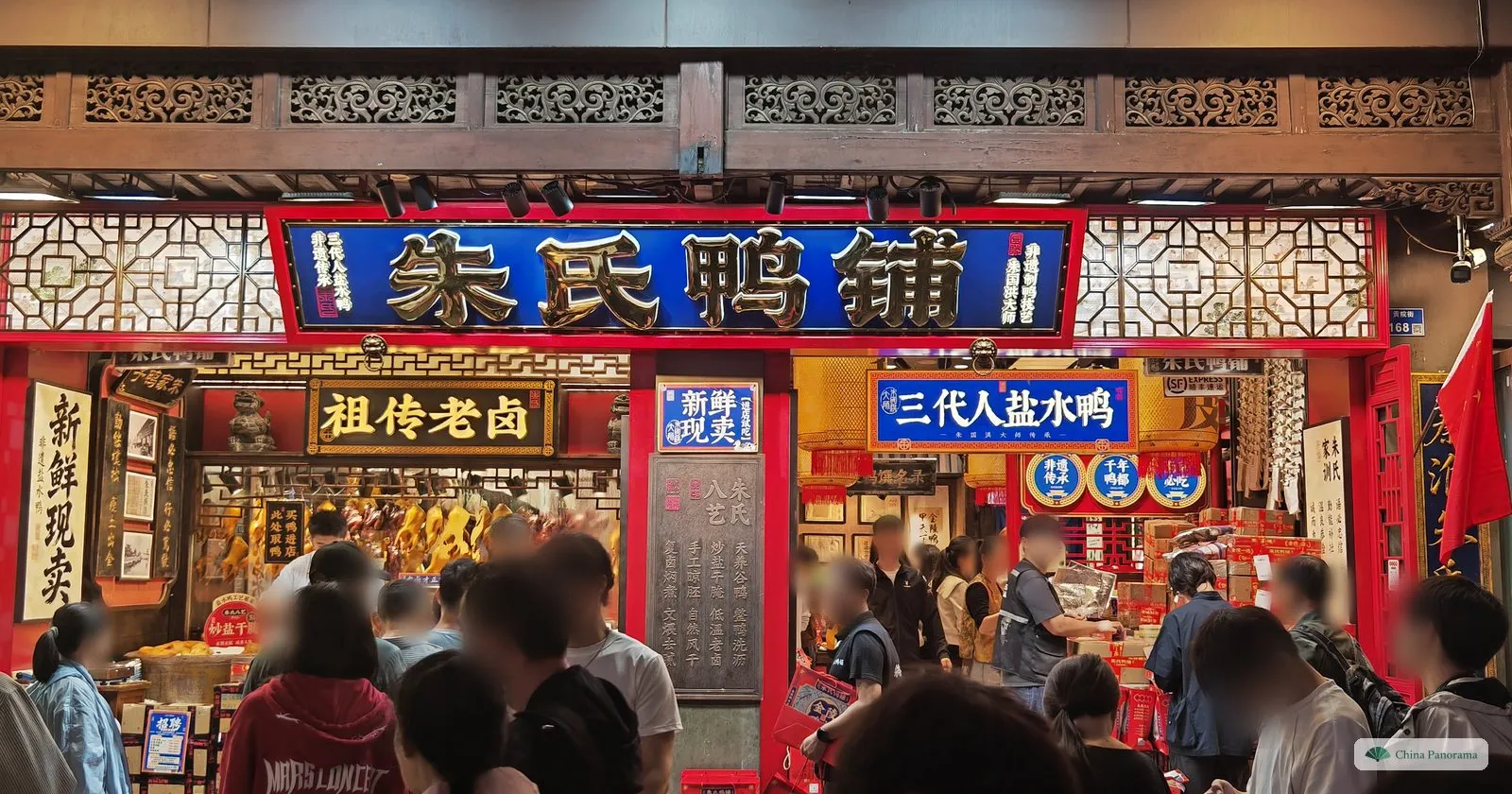
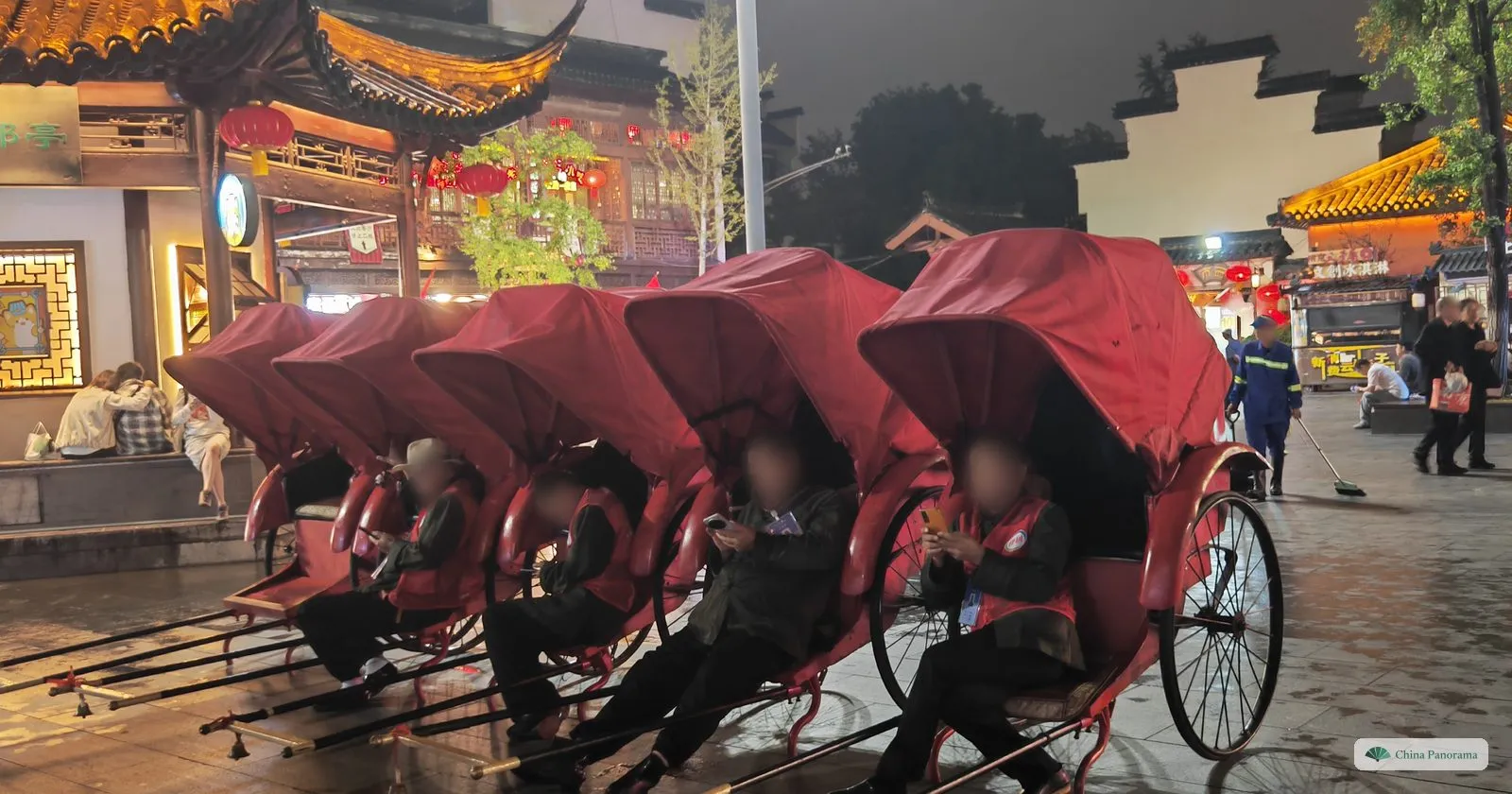
The temple of Confucius on the north bank of the Qinhuai, founded in 1034 and the centre of the old city's lantern-lit riverside quarter. The river itself serves as the temple's semicircular pond; across it stands a screen wall 110 m long from 1575, lit up at night with dragons, and the north-bank balustrade of 1514 is the best-preserved old piece on the site. The temple was burnt in 1937 and rebuilt from 1984, so the halls are recent; around them are streets of snack shops, salted-duck sellers, the Jiangnan Examination Hall and the Kuiguang Pavilion. From Spring Festival to the Lantern Festival, Fuzimiao holds the Qinhuai lantern fair. We were here on the evening of Tuesday 29 September 2026, from 18:12 to about 19:00, two days before Golden Week — wet streets, rickshaws waiting and a banner on the temple gate for Confucius's birthday, celebrated on 28 September.
Fuzimiao station (Lines 3 and 5) is about 500 m away. The streets and the riverfront are free and open into the night; the temple itself charges entry (price not checked). Evenings and holidays are very crowded; boat trips on the Qinhuai leave from the bank in front of the temple (prices and times not checked).
- Entry
- Free
- Opening hours
- Open at all hours
- MuseumQinhuai · 秦淮区Indoors
Next to Fuzimiao stood the largest examination hall of the Ming and Qing: at the examination of 1873 it had 20,644 cells, each just big enough for one candidate to sit, write and sleep for the days of the test. Tang Bohu, Zheng Banqiao, Wu Jingzi, Li Hongzhang and Zhang Jian, the last top scholar of the Qing, passed through it. Of the old buildings only the Mingyuan Tower and about twenty stone tablets survive; the China Imperial Examination Museum, opened on 28 January 2017, now fills the site, largely underground.
On the Qinhuai, east of the Confucius Temple; Fuzimiao station (Lines 3 and 5). We have not checked the ticket price, hours or booking rules.
- Entry
- Price not verified — check on site
- Opening hours
- Hours not verified — check on site
Zhan Garden and the Taiping museum
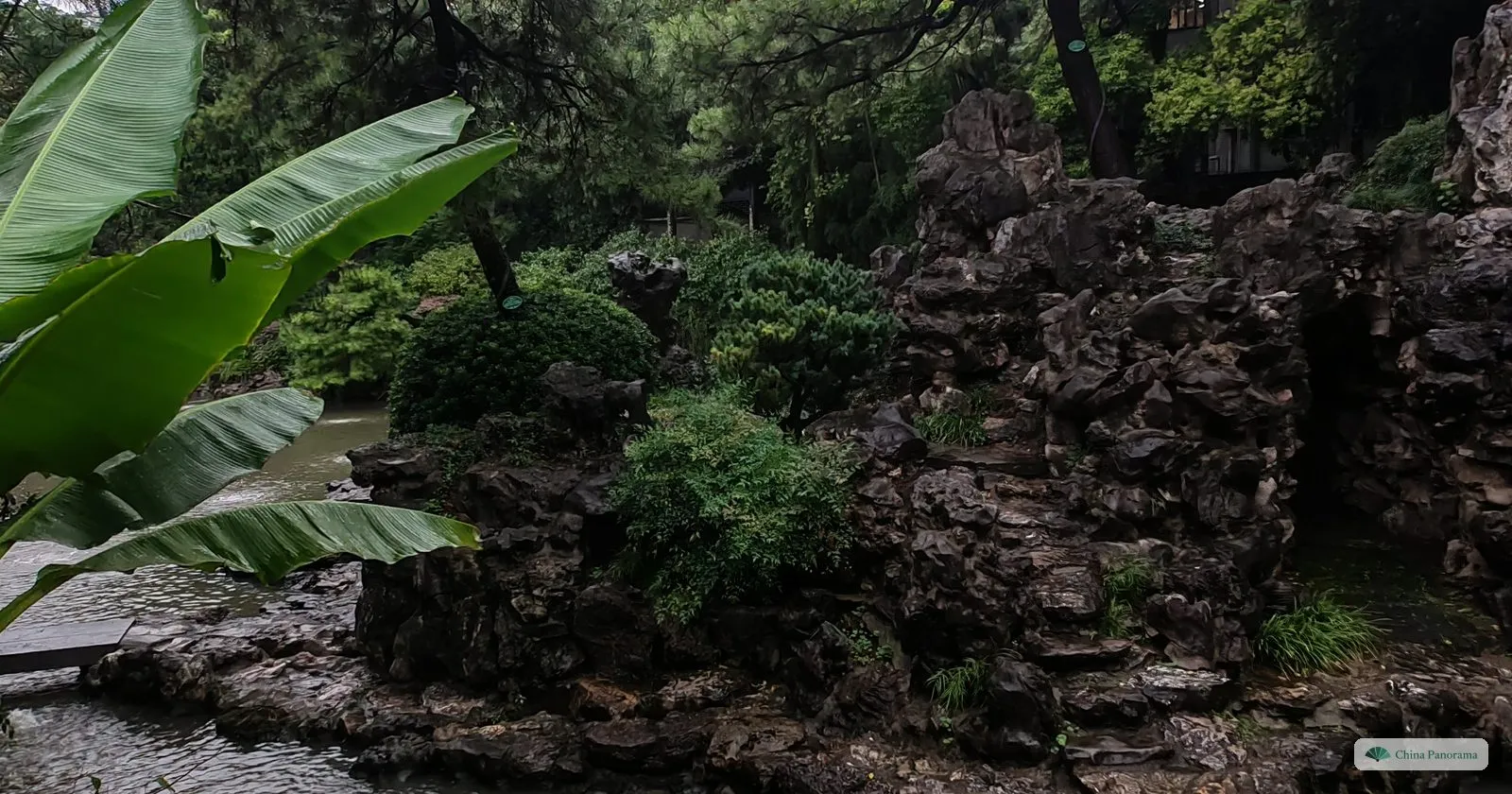
瞻园 · 太平天国历史博物馆Classical gardenQinhuai · 秦淮区OutdoorsThe oldest surviving private garden in Nanjing, called “the first garden of Jinling”, five minutes' walk from Fuzimiao. It began in the Ming Jiajing era as the western garden of the residence the first Ming emperor gave his general Xu Da; Xu Da's descendant Xu Pengju laid it out. The Qianlong emperor stayed here on a southern tour and gave it its name. In 1853 the Taiping rebels took Nanjing as their “Heavenly Capital”, and the garden served the Eastern King Yang Xiuqing and later other Taiping leaders — which is why the Taiping Heavenly Kingdom History Museum moved into it in 1958. The architect Liu Dunzhen restored the garden in the 1960s. Rockeries north and south of the Jingmiao Hall, a pond with pavilions, latticed windows and an ancient wisteria; a national monument since 2006. We came in on the wet afternoon of 29 September 2026, from 15:38 to 15:56, among students in Han-style costume posing for photographs.
Sanshanjie station (Lines 1 and 5) is about 400 m away, Fuzimiao (Lines 3 and 5) about 600 m. We have not checked the ticket price or hours.
- Entry
- Price not verified — check on site
- Opening hours
- Hours not verified — check on site
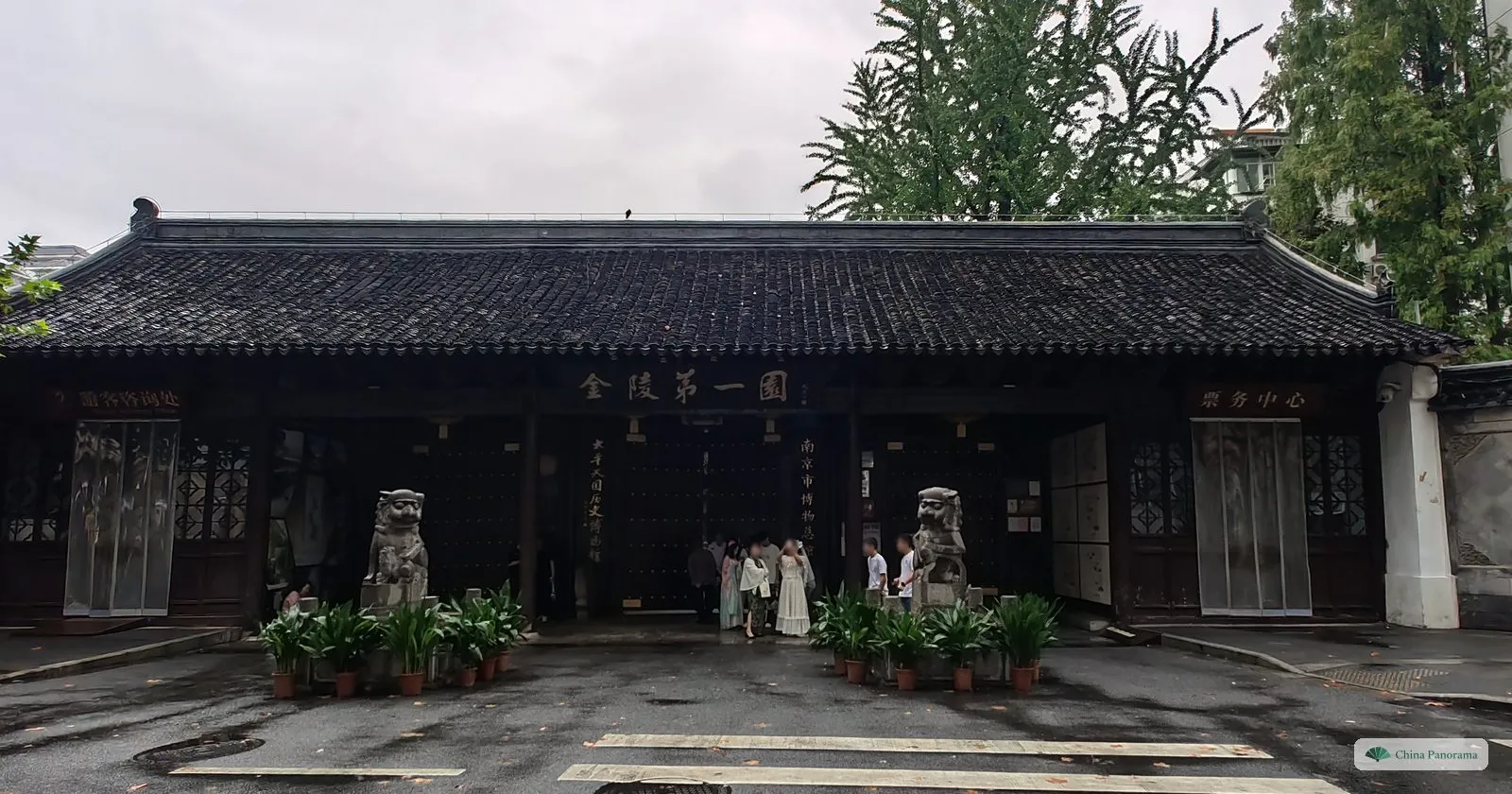
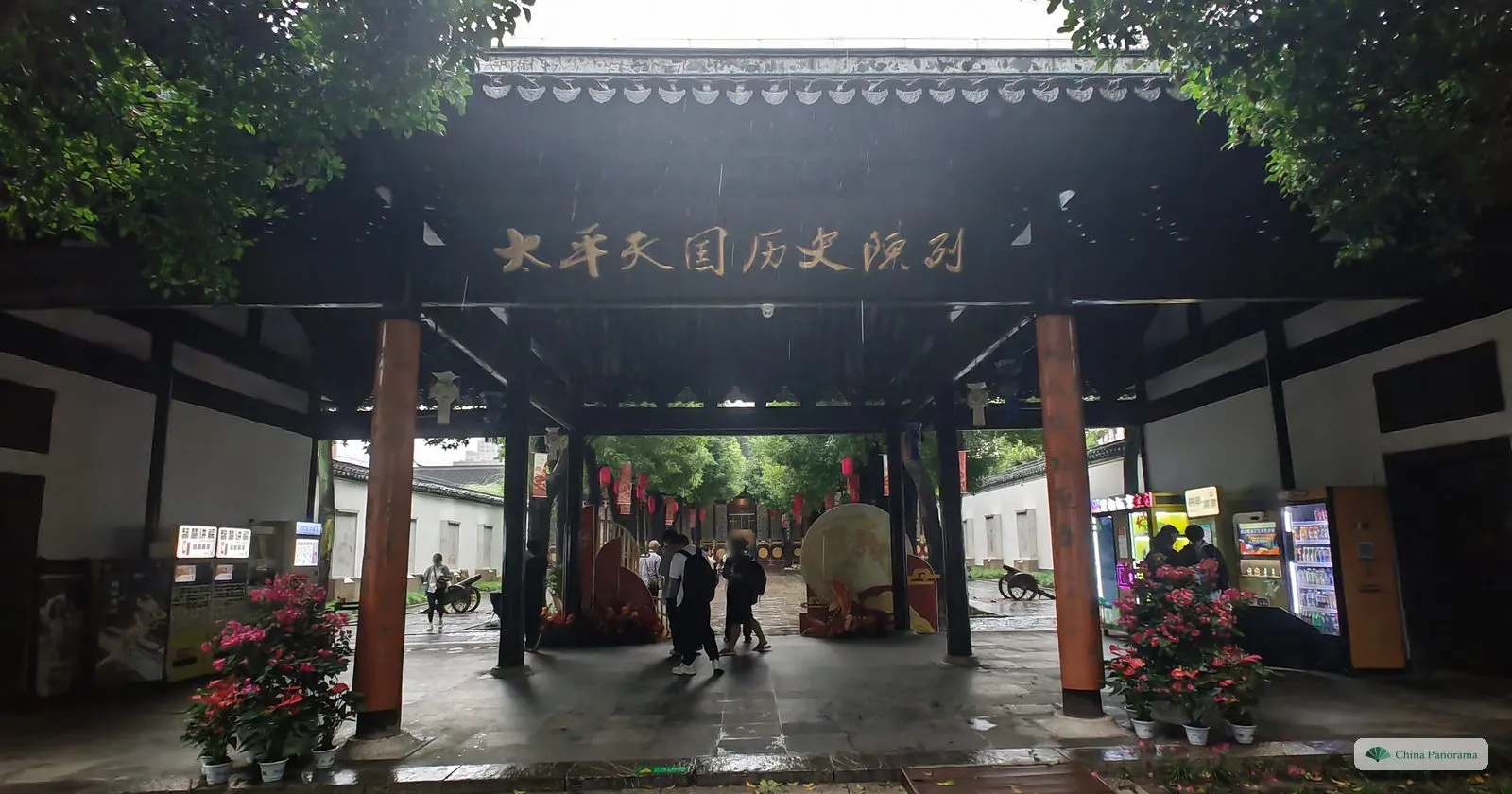
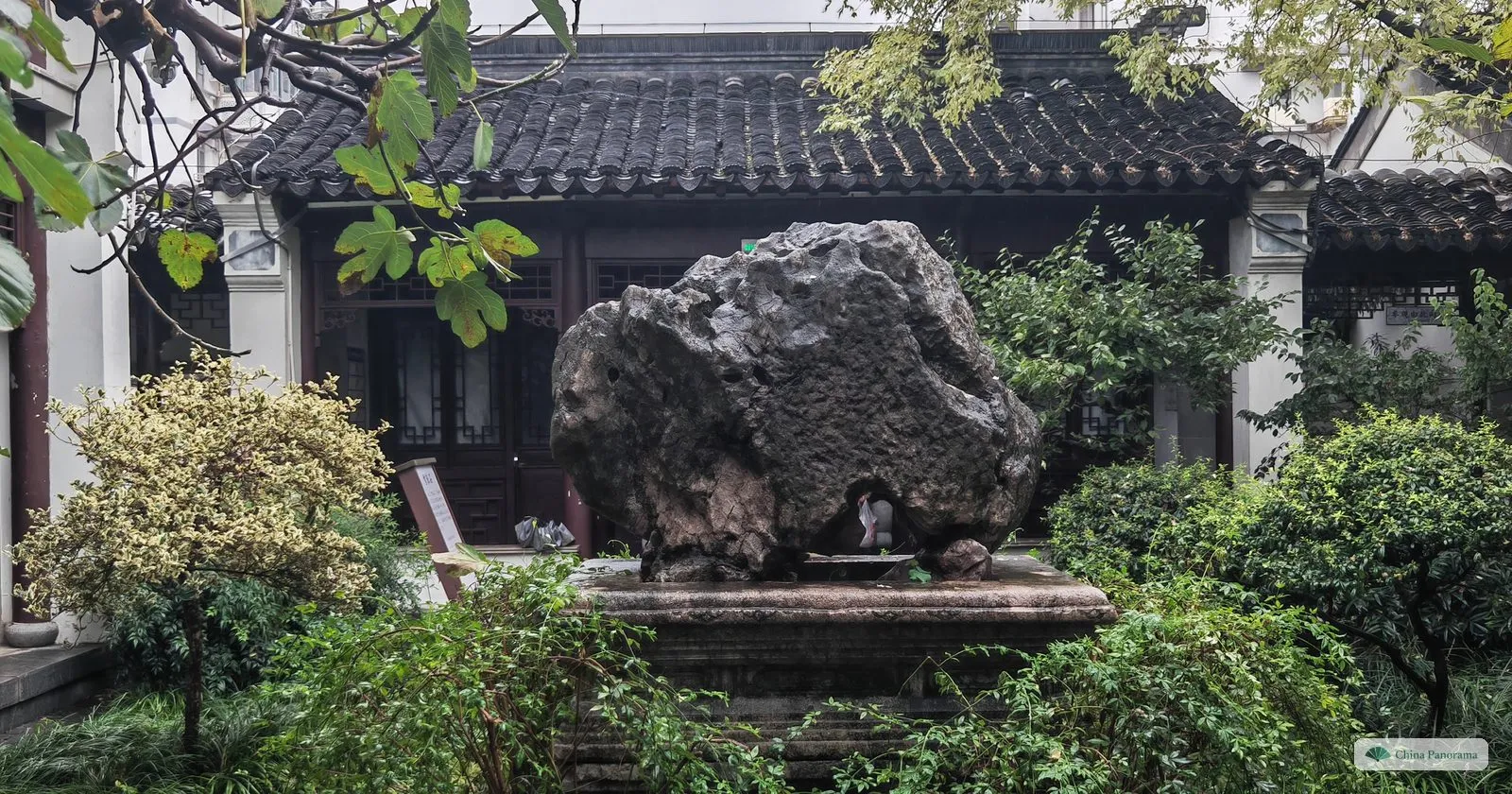
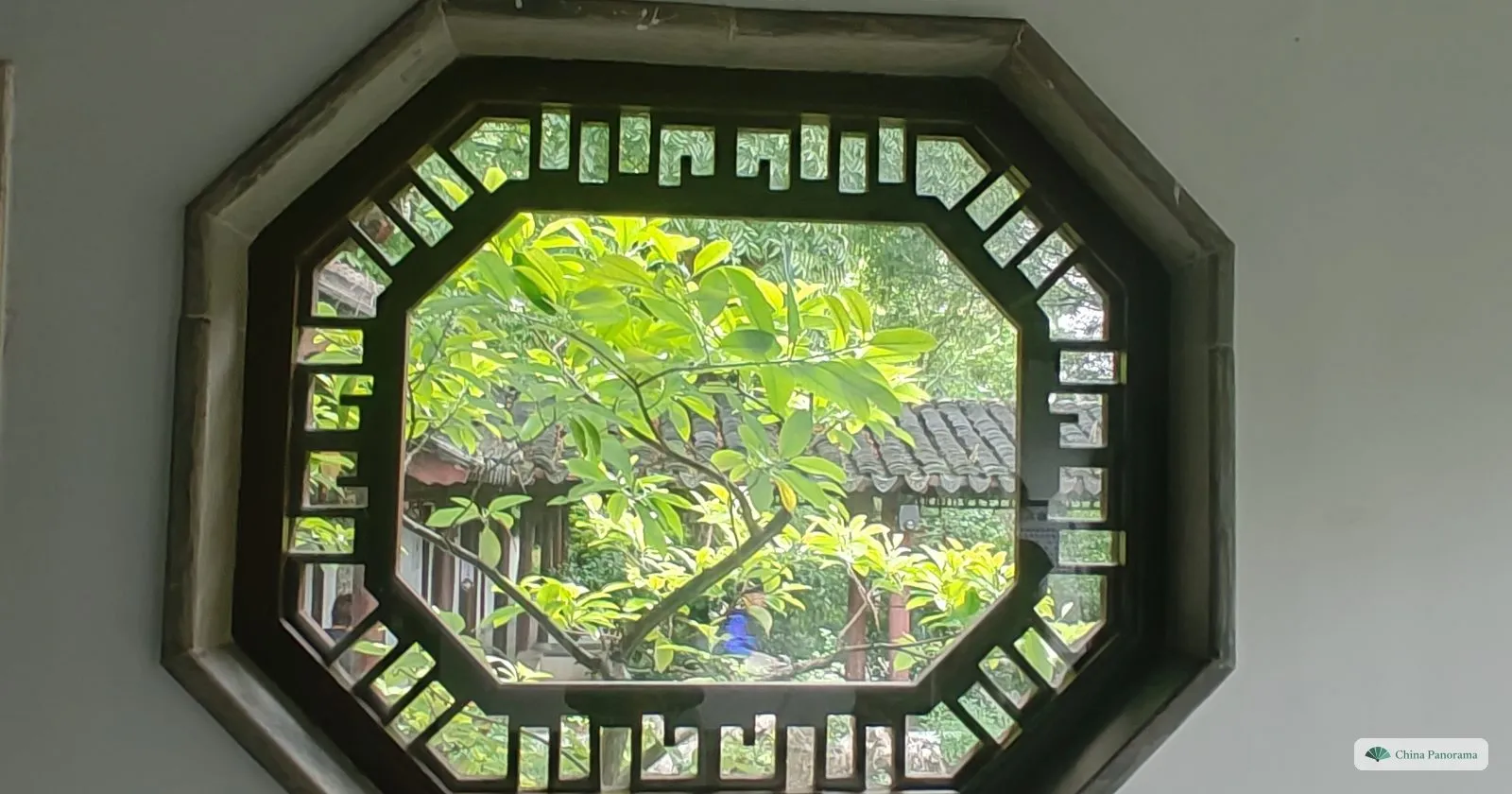
- TempleQinhuai · 秦淮区Outdoors
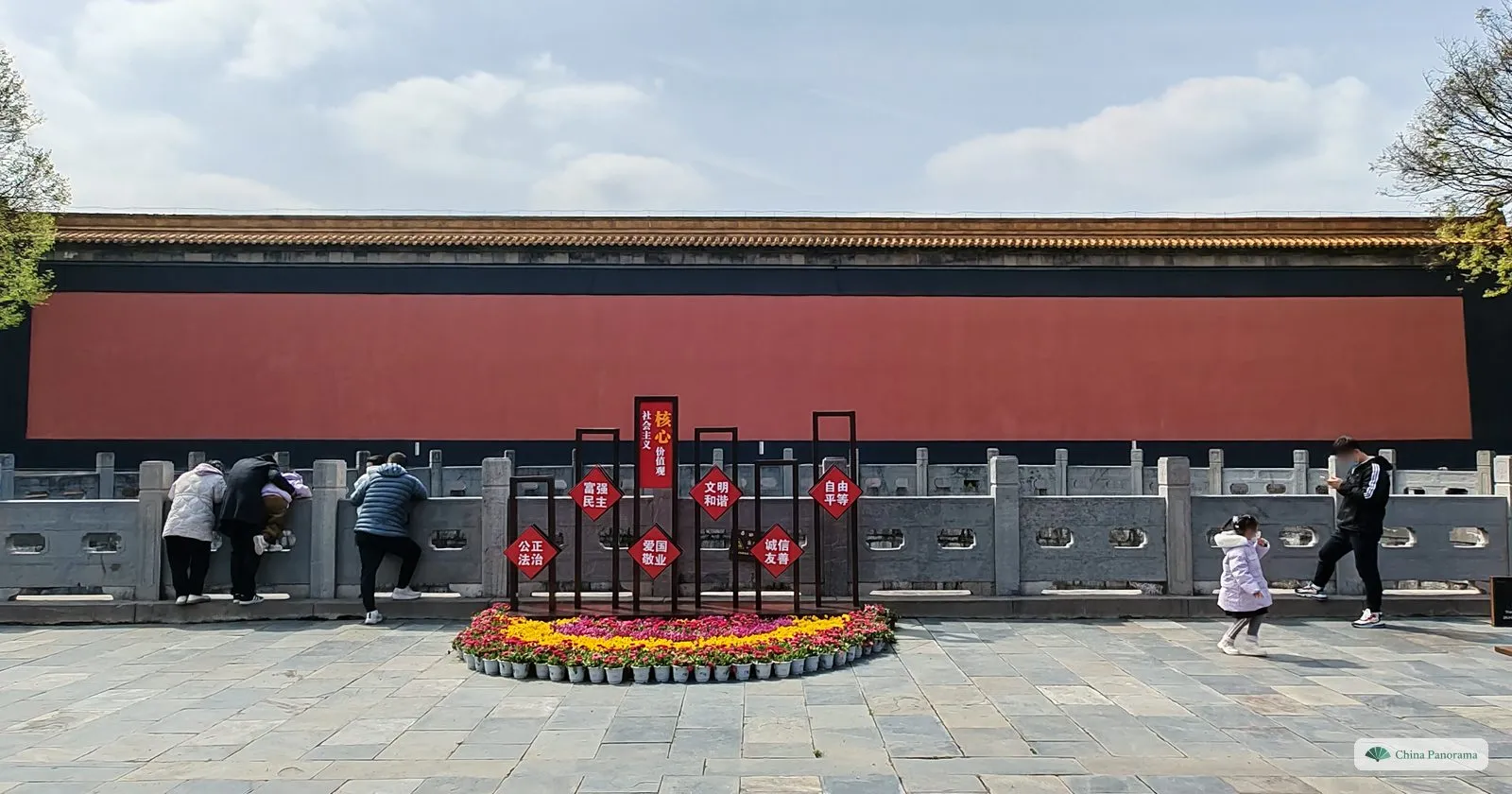
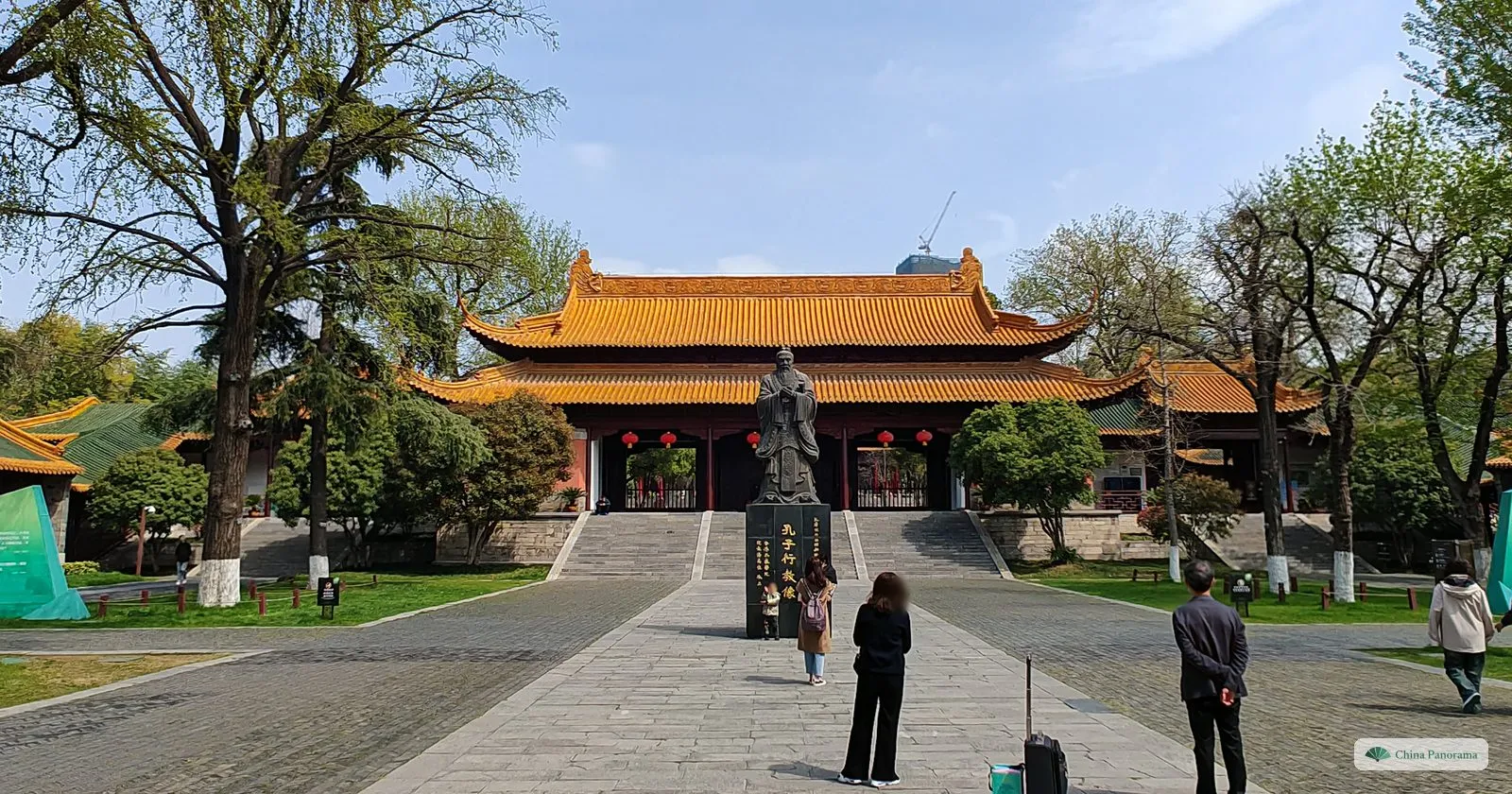
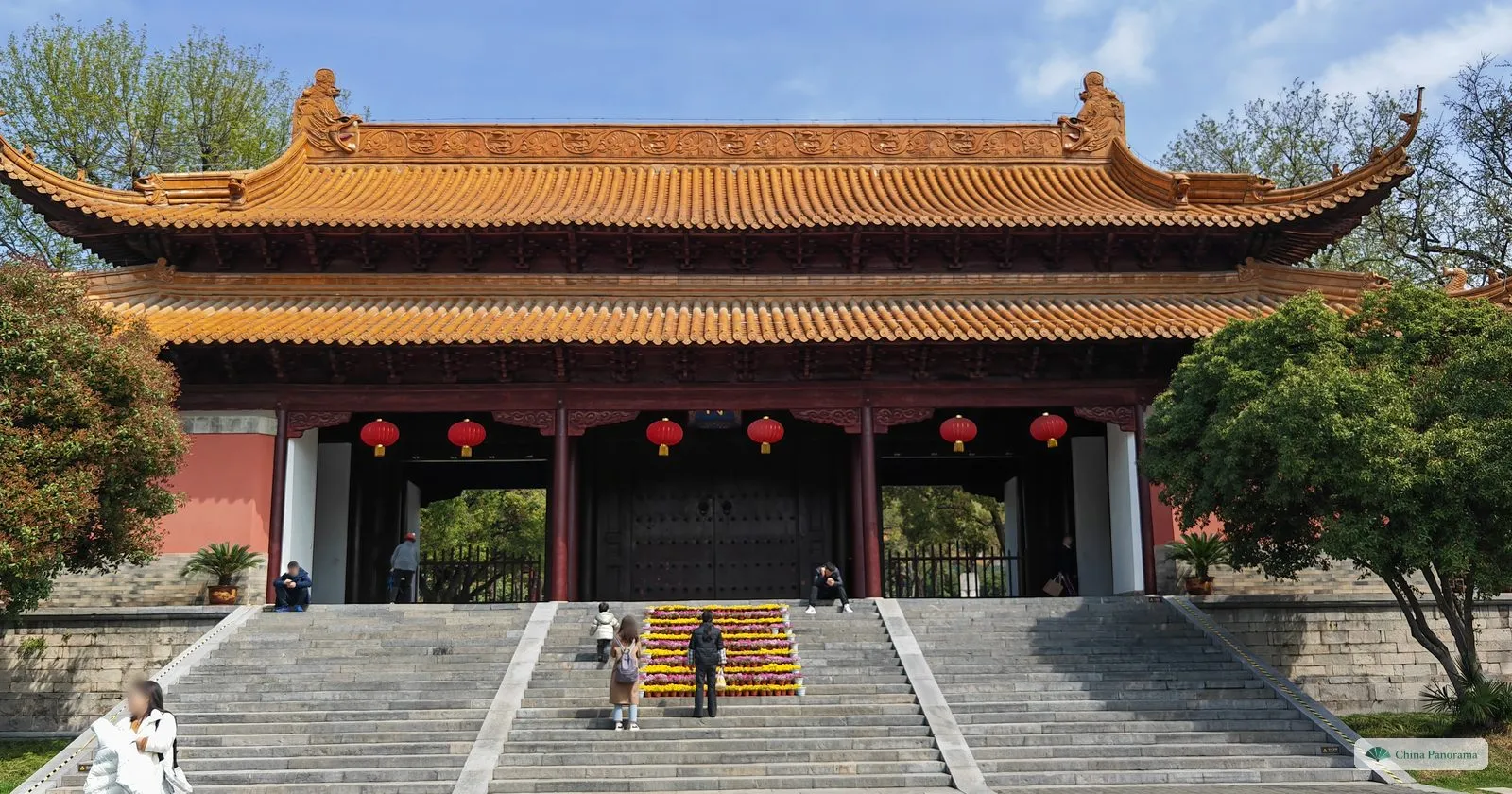
A Confucian temple and school with the yellow-tiled halls of a palace, on the small Yecheng hill in the west of the old city. Legend has King Fuchai of Wu casting bronze here in the 5th century BC; from the Jin dynasty there was a temple. In 1384 the first Ming emperor rebuilt the Taoist temple and named it Chaotian Gong, “palace for paying homage to heaven”: officials rehearsed court ceremonies here. The Taoist buildings were destroyed in the Taiping war; between 1865 and 1869 the Jiangning prefectural school and Confucian temple moved onto the site, and the halls you see — the red Wanren wall, the Lingxing Gate, the Dacheng Gate with a statue of Confucius in front, and the great Dacheng Hall — date from then. It now houses the Nanjing Municipal Museum. We were here from 11:29 to 11:36 on 18 March 2023, almost alone.
Chaotiangong station (Line 5) is at the door; Zhangfuyuan (Line 1) is about 1 km away. The square in front is free; we have not checked the museum's ticket price or hours.
- Entry
- Price not verified — check on site
- Opening hours
- Hours not verified — check on site
Ming city wall and Zhonghua Gate
明城墙 · 中华门Imperial heritageQinhuai · 秦淮区OutdoorsThe first Ming emperor began walling his capital in 1366; about 200,000 workers built it over some twenty years, of bricks often stamped with the name of the place and the official who made them, laid in a mortar of lime and sticky rice. Long stretches still run round the old city — along Xuanwu Lake, over Lion Hill and past the Yuejiang Tower. Its great south gate, Jubao Gate, renamed Zhonghua Gate in 1931, is a fortress of three enclosures behind one another, linked by four arched gates, 118.5 m by 128 m, with 27 vaulted chambers for troops in its walls — about 3,000 soldiers could shelter there.
Zhonghuamen station (Line 1) is about 1 km south of the gate; Sanshanjie (Lines 1 and 5) is about the same distance north. Several stretches of the wall can be walked on top; we have not checked which, the prices or the hours.
- Entry
- Price not verified — check on site
- Opening hours
- Hours not verified — check on site
- Republic-era heritageXuanwu · 玄武区Indoors
Six hundred years of Chinese government in one compound on Changjiang Road. In the Ming it was a prince's residence; under the Qing the office of the viceroy of Liangjiang, where the Qianlong emperor stayed; in 1853 the Taiping made it the palace of their Heavenly King, and after Qing troops retook the city in 1864 most of it was burnt. On 1 January 1912 Sun Yat-sen was sworn in here as provisional president of the new Republic; from 1927 to 1949 it was the seat of the Nationalist government, called the Presidential Palace from 1948. Today it is the China Modern History Museum, with offices kept as they were and the Xu Garden, a classical garden round a lake with a stone boat.
Daxinggong station (Lines 2 and 3) is about 350 m away; the 1912 quarter is next door. We have not checked the ticket price, hours or booking rules.
- Entry
- Price not verified — check on site
- Opening hours
- Hours not verified — check on site
1912 quarter
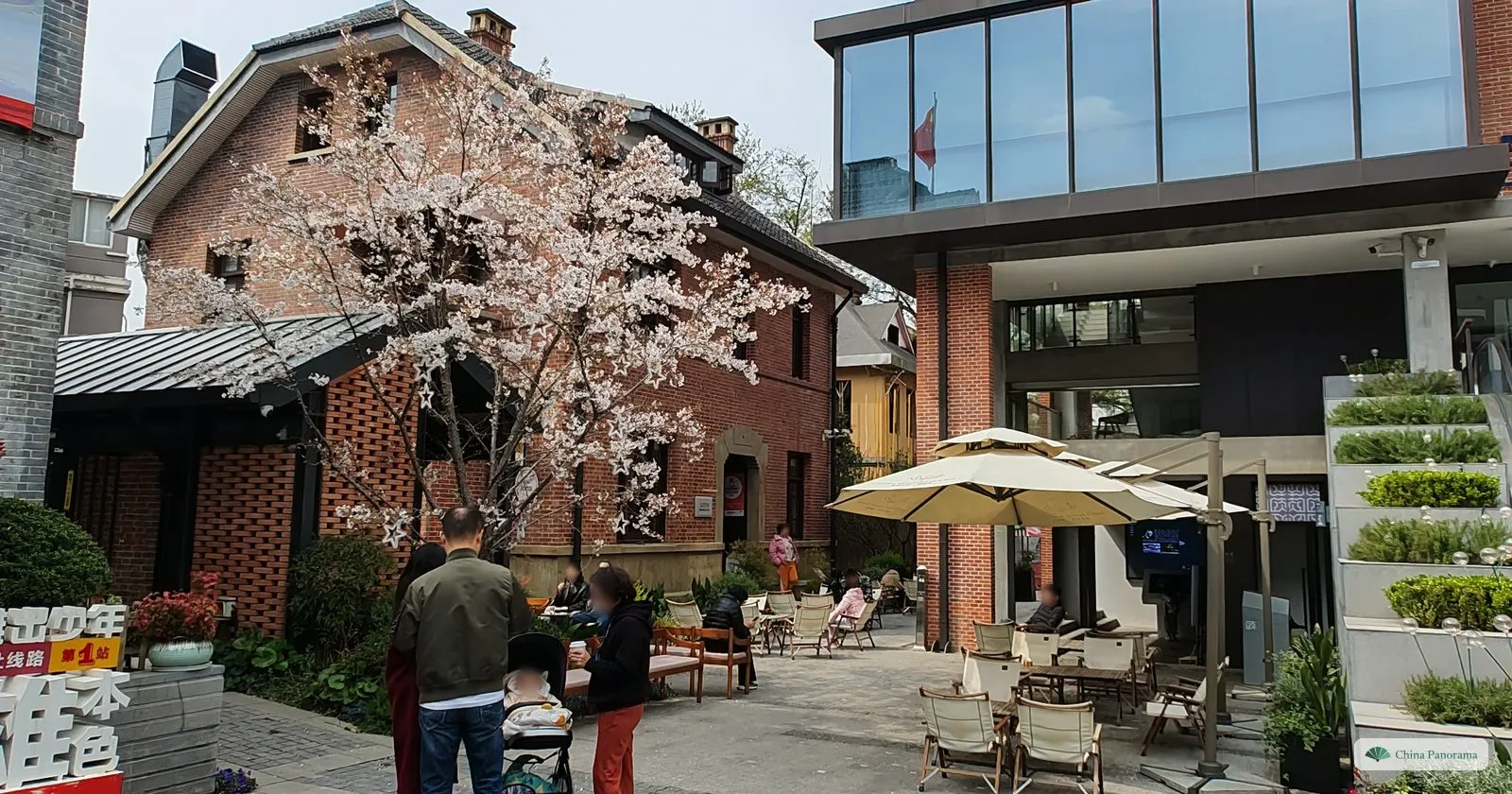
南京1912街区StreetXuanwu · 玄武区OutdoorsA block of grey-brick houses with bars, cafés and restaurants on the corner of Changjiang Road and Taiping North Road, right beside the Presidential Palace. The name is the first year of the Republic of China. It opened on 24 December 2004; of its 17 buildings, five are old — two late-Qing houses, among them a British residence of 1910, two Republic-era buildings and a house of 1923 for the Jiangsu warlord Qi Xieyuan, taken down and rebuilt with its own materials — and the rest are new, in the same style. It is a place to eat and drink after the Presidential Palace, liveliest at night. Our photographs are from a rainy afternoon, 28 September 2026, 15:54 to 16:03.
Daxinggong station (Lines 2 and 3), about 400 m. The lanes are free and open at all hours; bars and restaurants keep their own times.
- Entry
- Free
- Opening hours
- Open at all hours
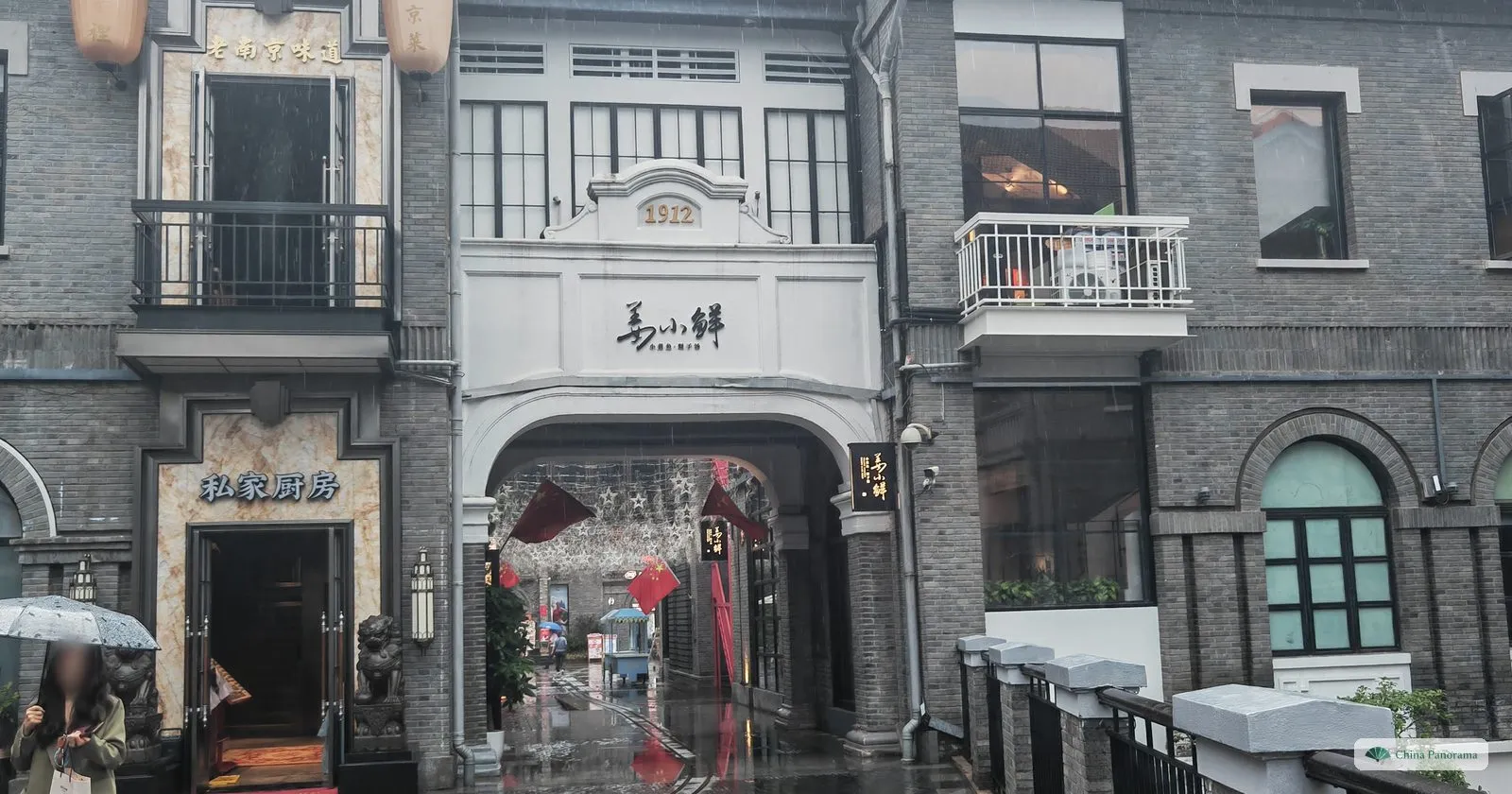
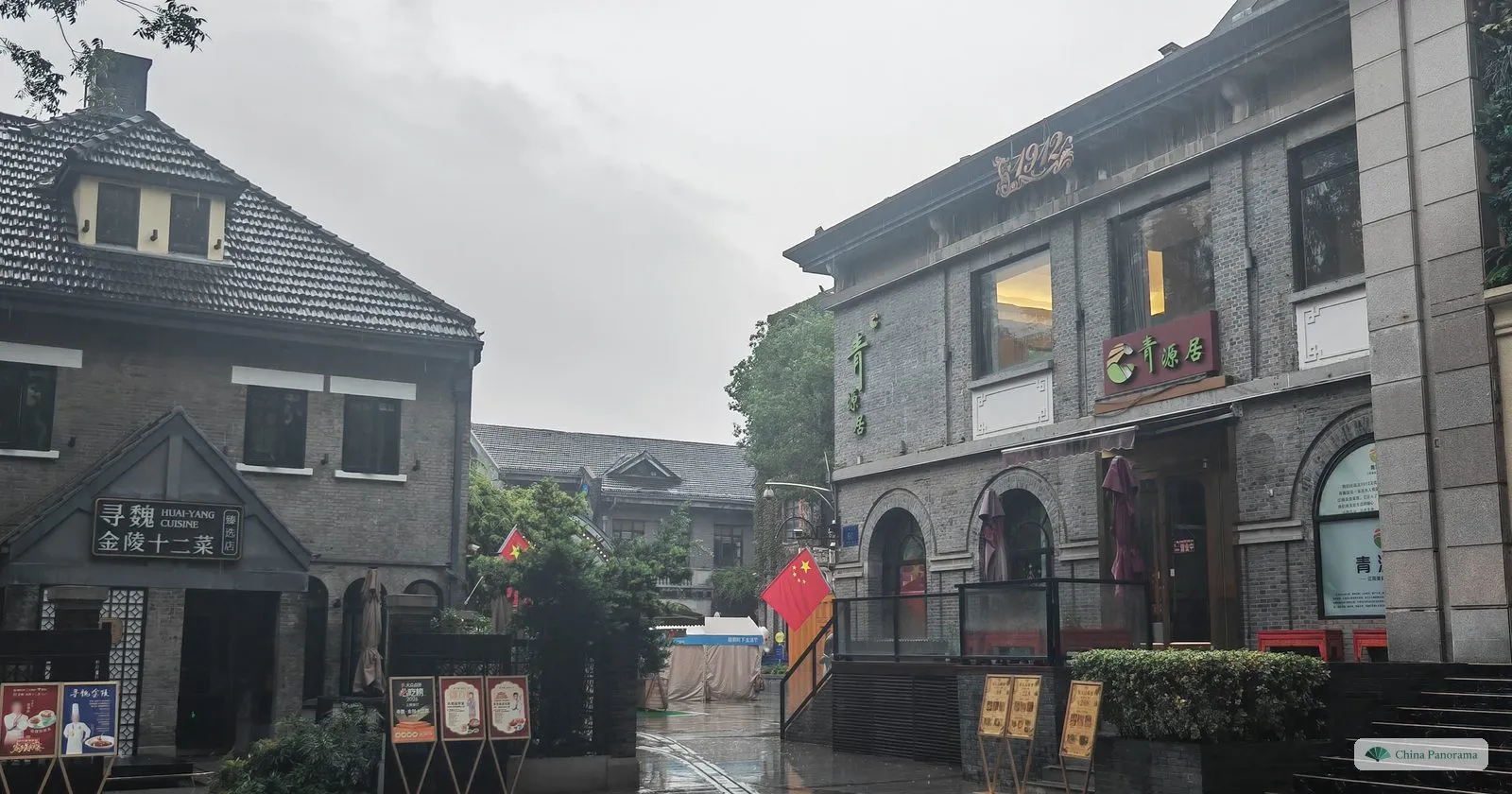
- Republic-era heritageGulou · 鼓楼区Outdoors
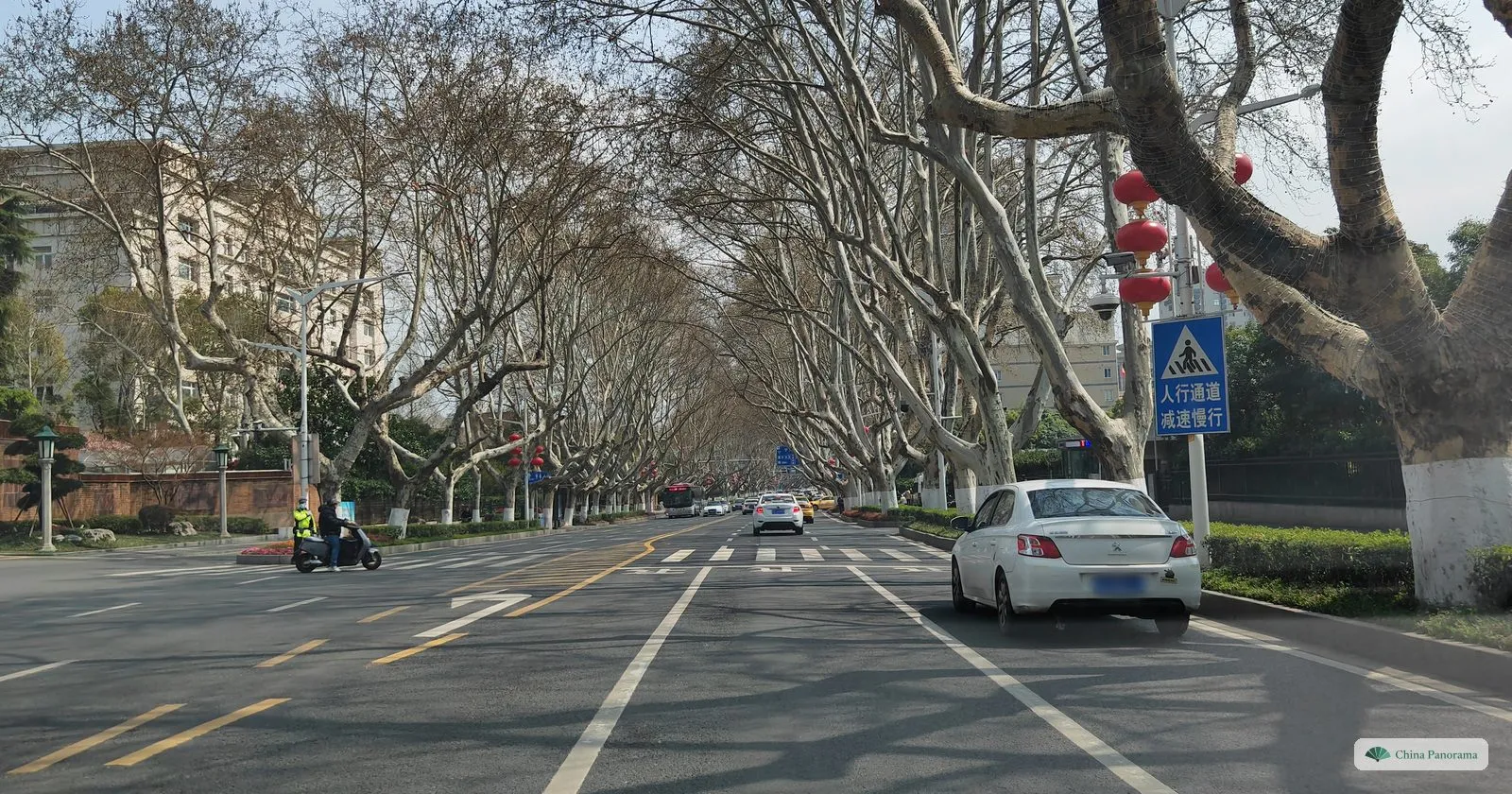
Quiet streets of walled villas under plane trees, laid out in the 1930s under the Capital Plan as Nanjing's first new residential district for the Republic's elite. Behind the yellow and grey walls lived generals and ministers — Yan Xishan at No. 8, Wang Jingwei at No. 38 — and several embassies, among them those of the United States at No. 28 and Australia at No. 32. For some seventy years there was no bus and no shop here. In 2015 the district was named one of China's first historic and cultural streets; one block of 26 villas, Yihe Gongguan, received a UNESCO Asia-Pacific heritage conservation award in 2014 and now holds cafés and a hotel. We walked here around midday on 18 March 2023, 12:07 to 13:33, with cherry trees in flower.
Yunnan Road (Lines 4 and 5) and Qingchun Guangchang (Line 5) stations are each about 900 m away. The streets are free; most villas are private or offices, so you see them from outside.
- Entry
- Free
- Opening hours
- Open at all hours
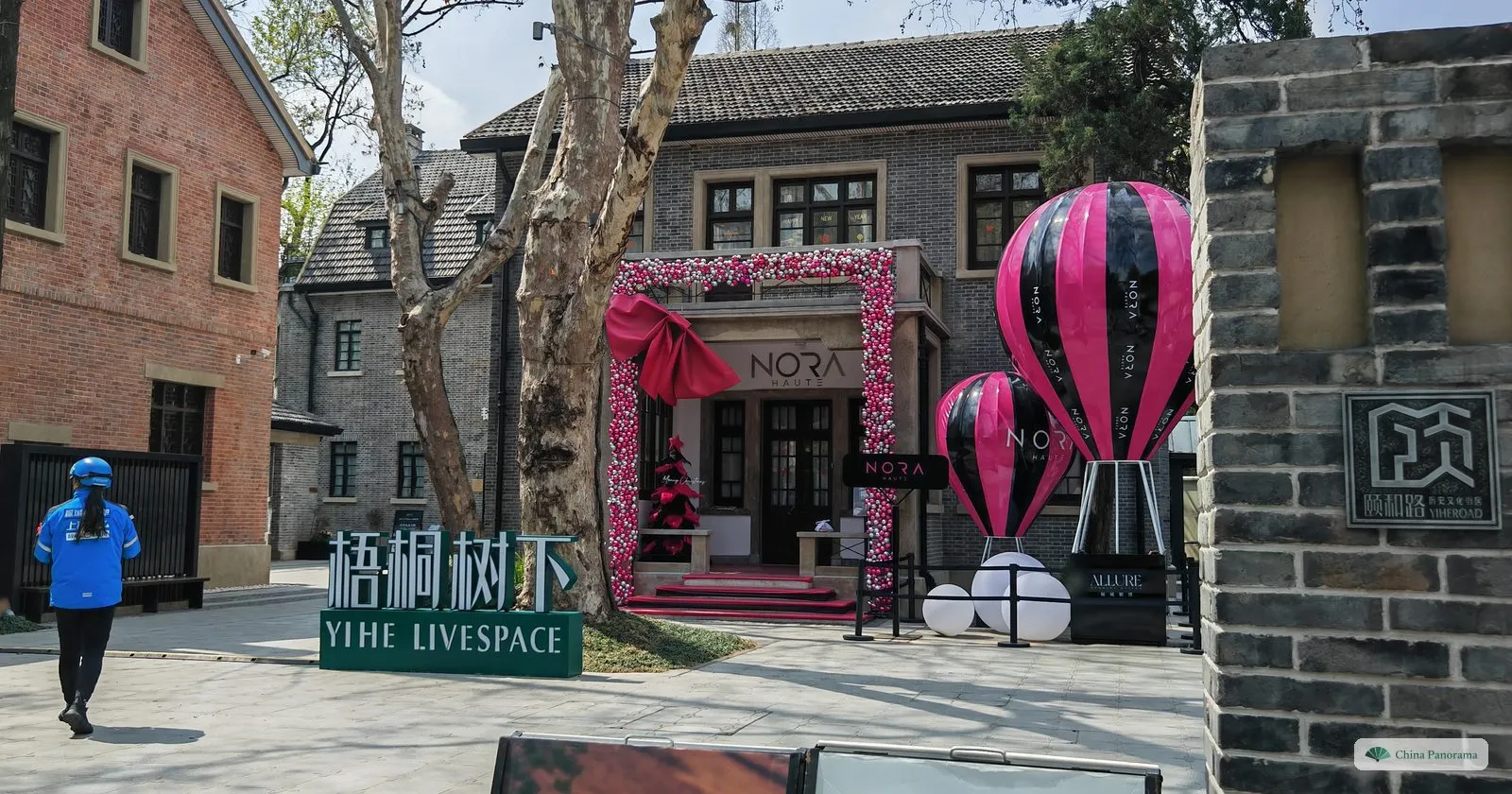
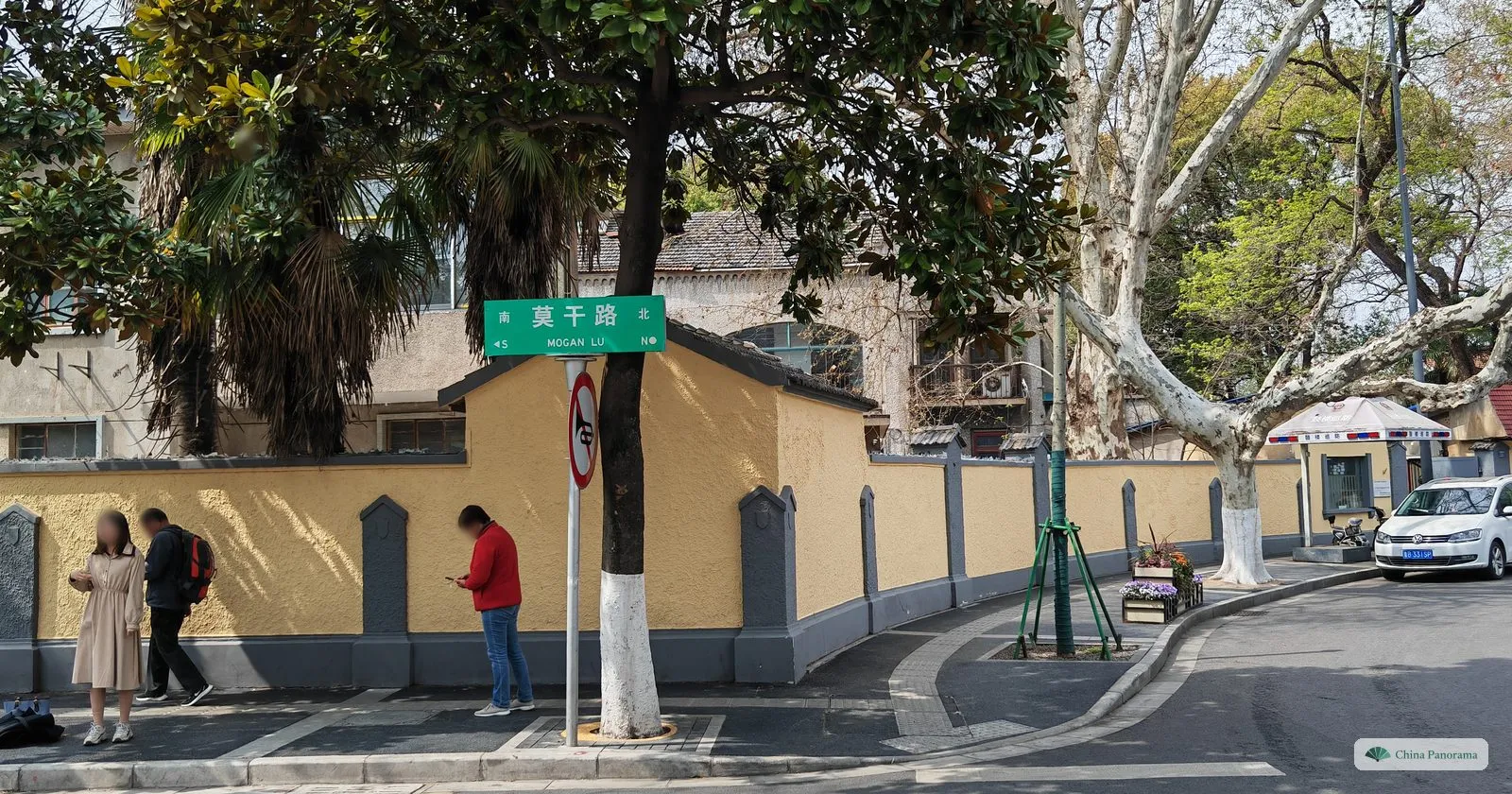
Yuejiang Tower on Lion Hill
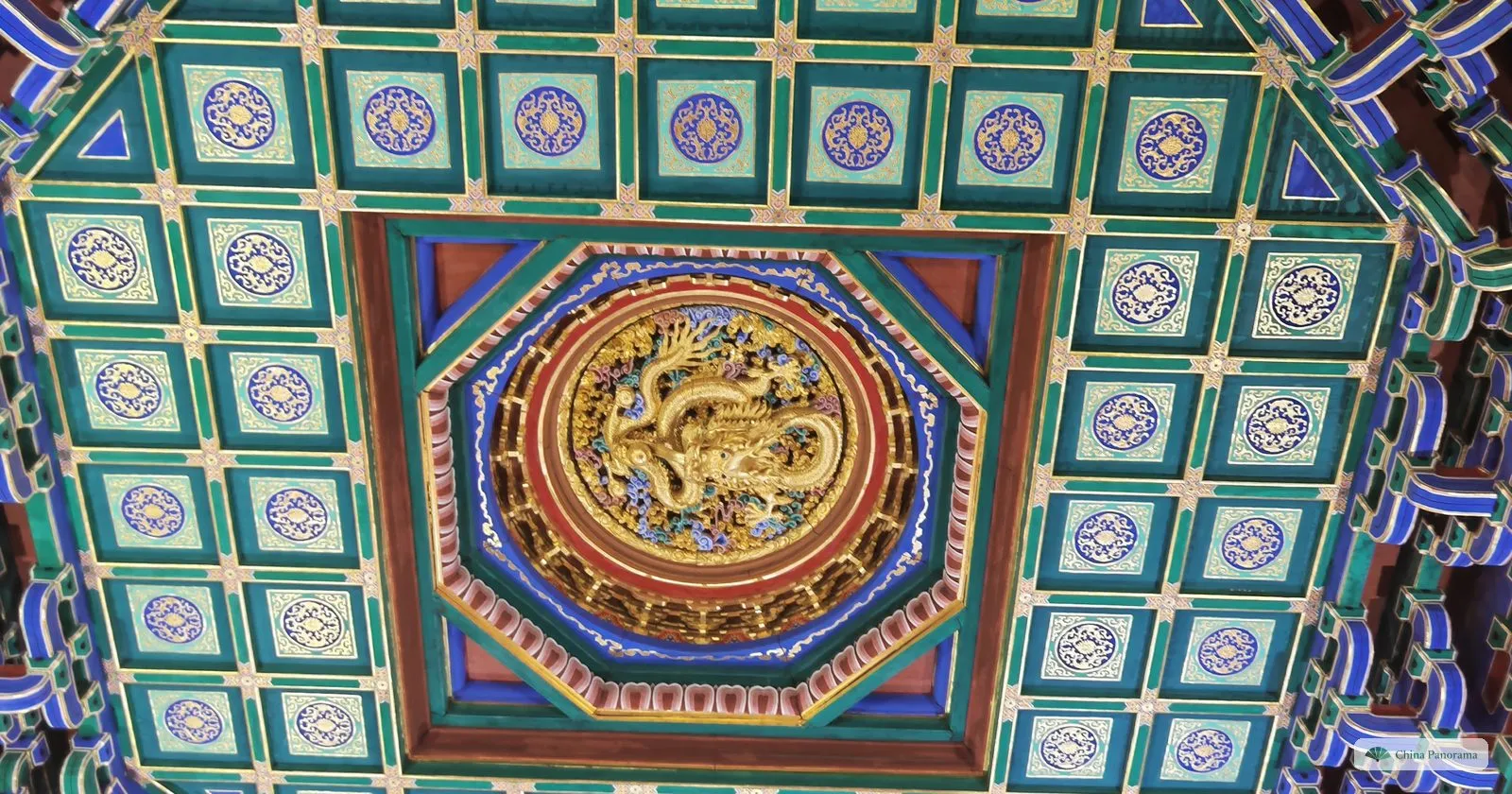
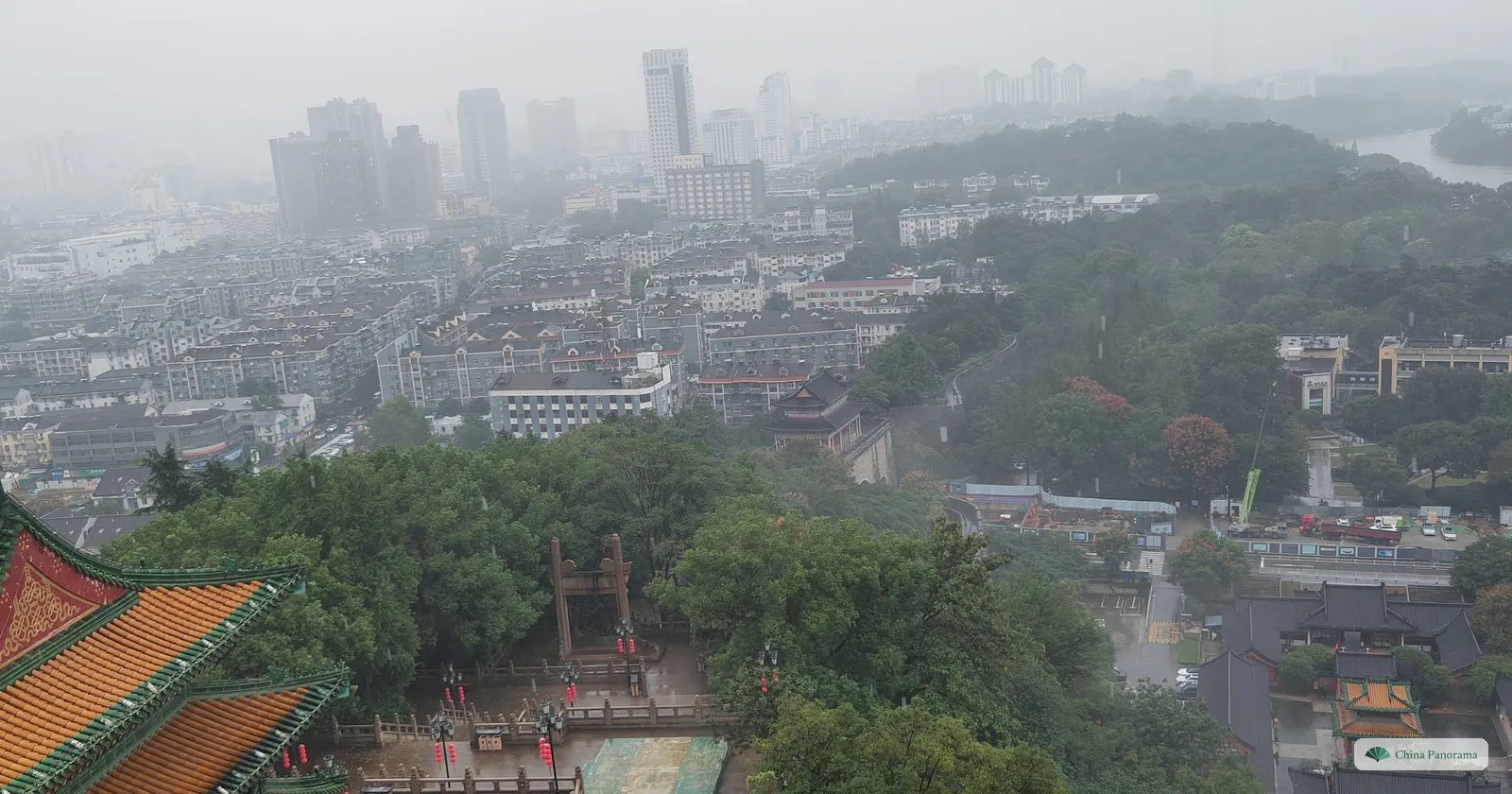
阅江楼 · 狮子山LandmarkGulou · 鼓楼区OutdoorsA tower that waited 627 years. In 1374 the first Ming emperor decided to build a tower on this hill by the Yangtze, where he had defeated his rival Chen Youliang, renamed the hill Lion Hill and had his officials write essays on the “Tower for Viewing the River”; Song Lian's became a classic. The foundations were levelled, then the emperor stopped the work because of an ill omen, and it was never built. The tower that stands there now was completed in 2001, to a Ming design: yellow and green tiles, red pillars and painted ceilings, with a mural of Zheng He's voyages inside. Some count it among the four great towers of the south. The Ming city wall runs over the hill. We climbed it in the rain on 29 September 2026, from the gate at 07:57 to the top at 09:03 — the river was a grey haze.
Nanjing Railway Station West (Line 5) is about 500 m from the tower; Jinghaisi (Line 5) about 800 m. There is a one-way escalator part of the way up the hill. We have not checked the ticket price or hours.
- Entry
- Price not verified — check on site
- Opening hours
- Hours not verified — check on site
 LandmarkGulou / Pukou · 鼓楼区 · 浦口区Outdoors
The first major bridge over the Yangtze that China designed and built entirely by itself, mostly from domestic materials — a matter of national pride in the 1960s, after the Soviet engineers left. Work began on 18 January 1960; trains crossed on the lower deck from 30 September 1968 and road traffic on the upper deck from 29 December 1968. The road bridge is 4,588 m long, the rail bridge 6,772 m, the main span over the river 1,576 m. At each end stands a tower about 70 m high topped by three red banners in steel, and socialist-realist sculpture groups line the approaches. The road deck was closed for repairs from October 2016 to 29 December 2018. Our photographs are from the car, through the windscreen, on 18 March 2023 at 15:11.
Bridge Park, below the south tower, is the usual viewpoint; Fangjiaying (Line 5) is the nearest station. The road deck has pavements; we have not checked whether and when pedestrians may walk across, or the park's hours.
- Entry
- Price not verified — check on site
- Opening hours
- Hours not verified — check on site
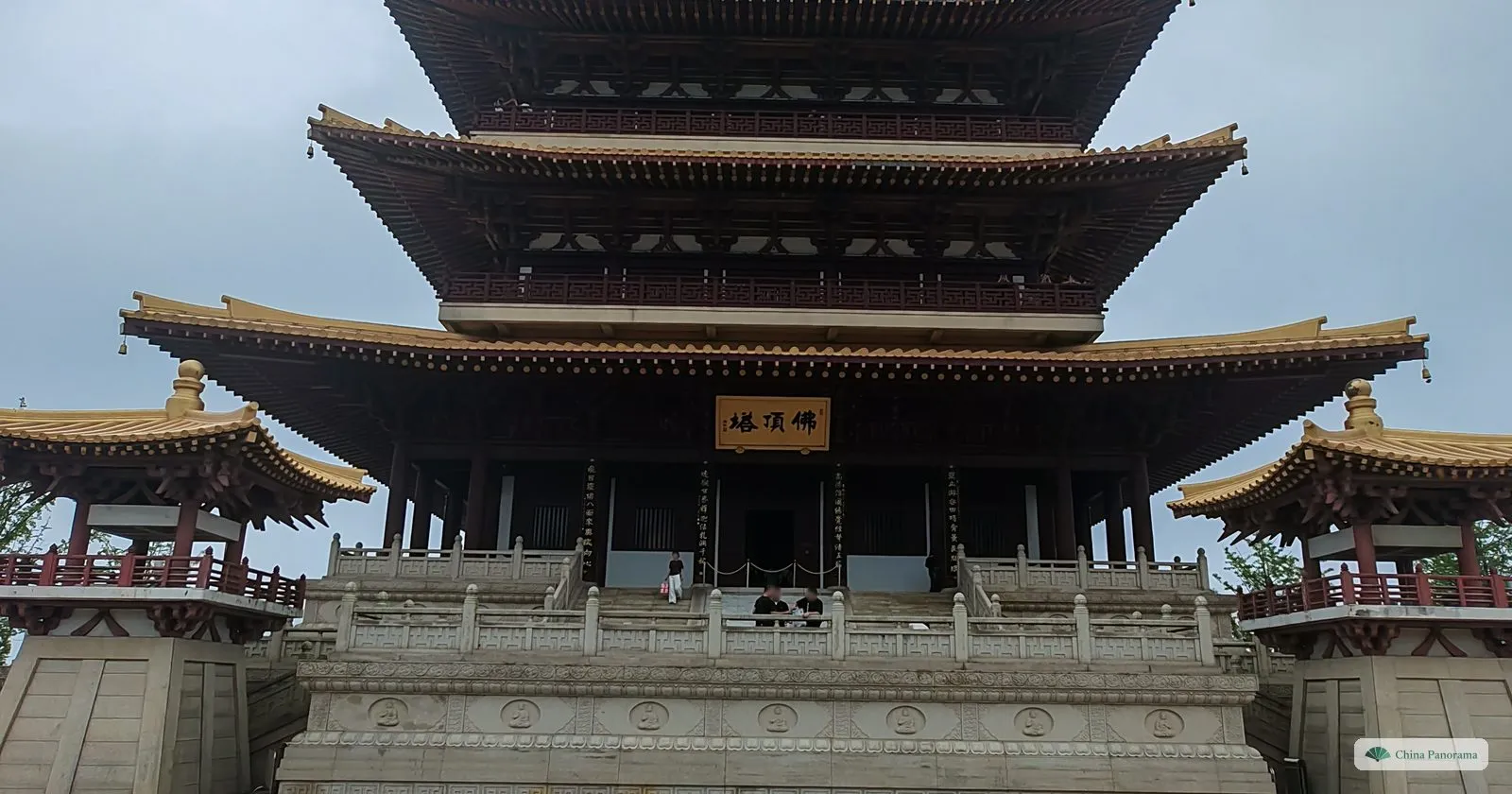
Niushoushan and the Usnisha Palace
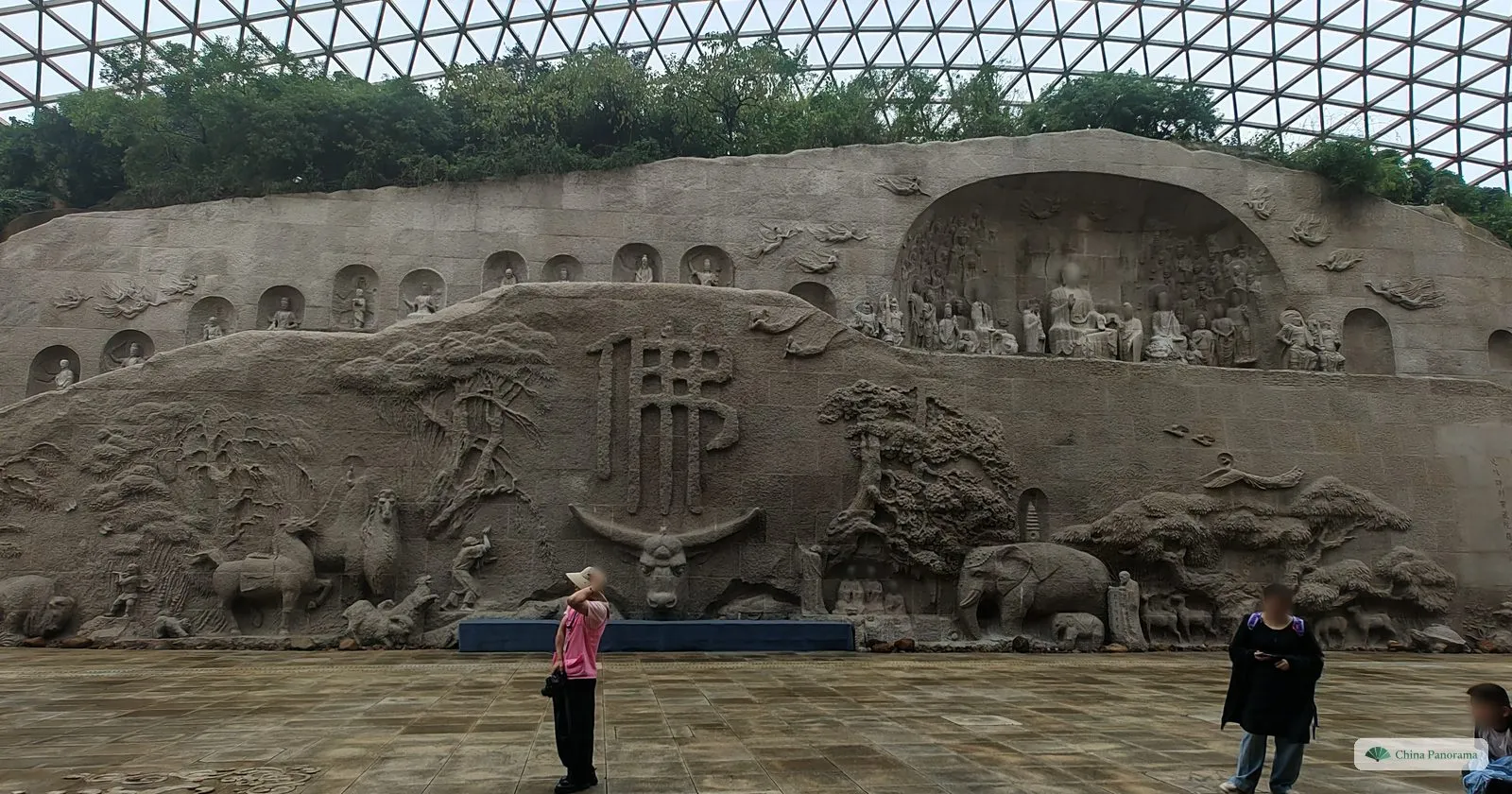
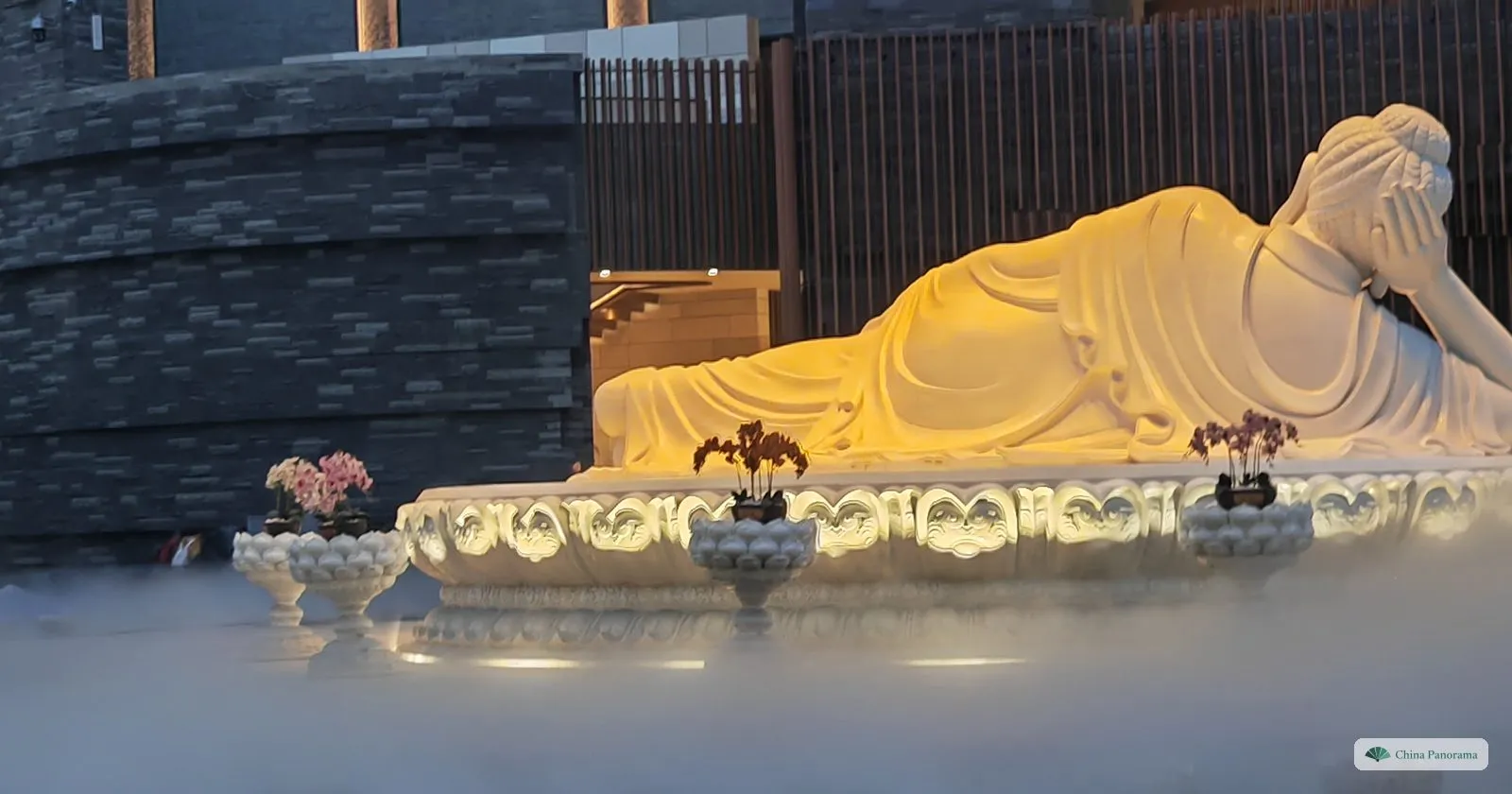
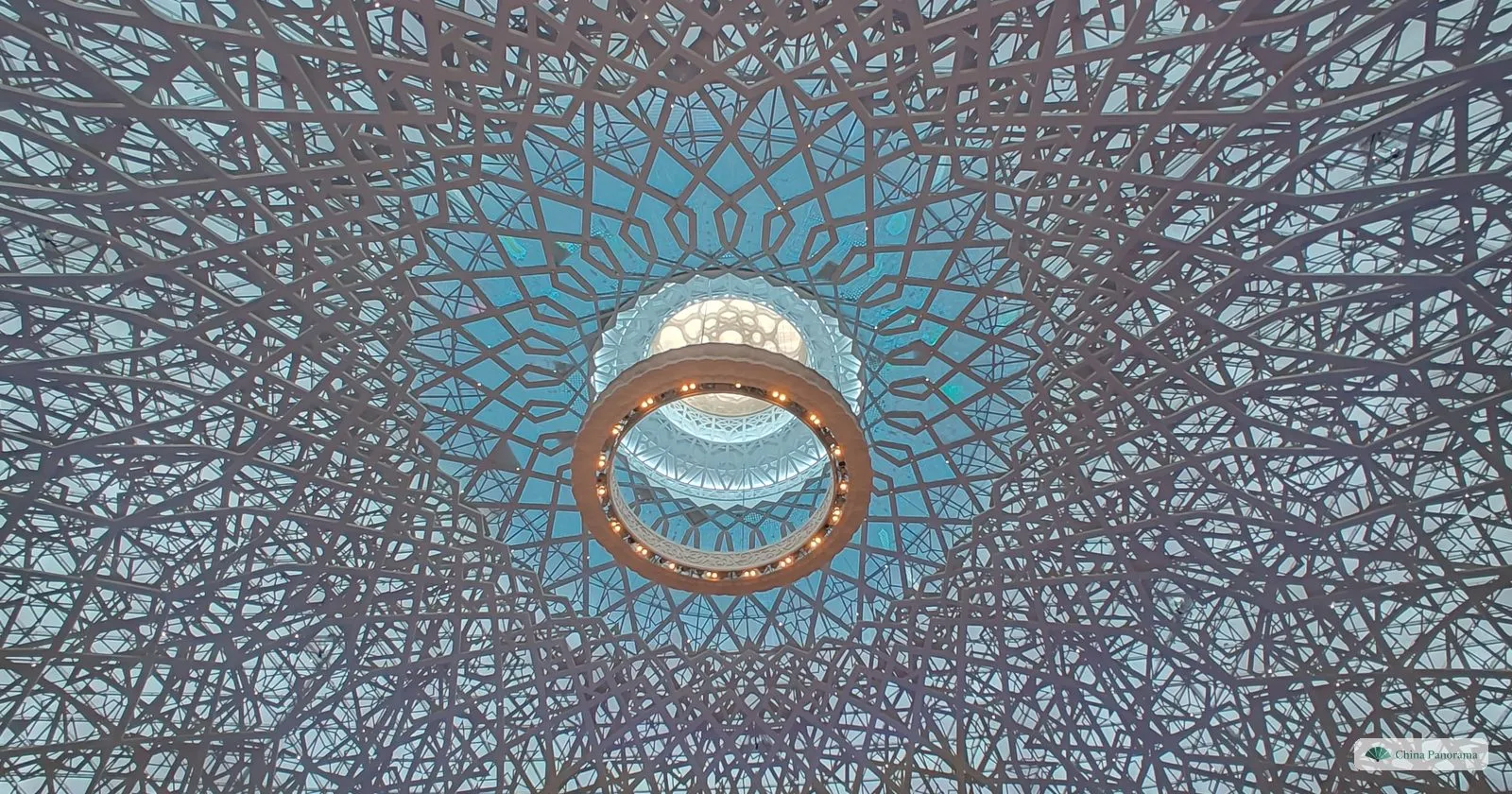
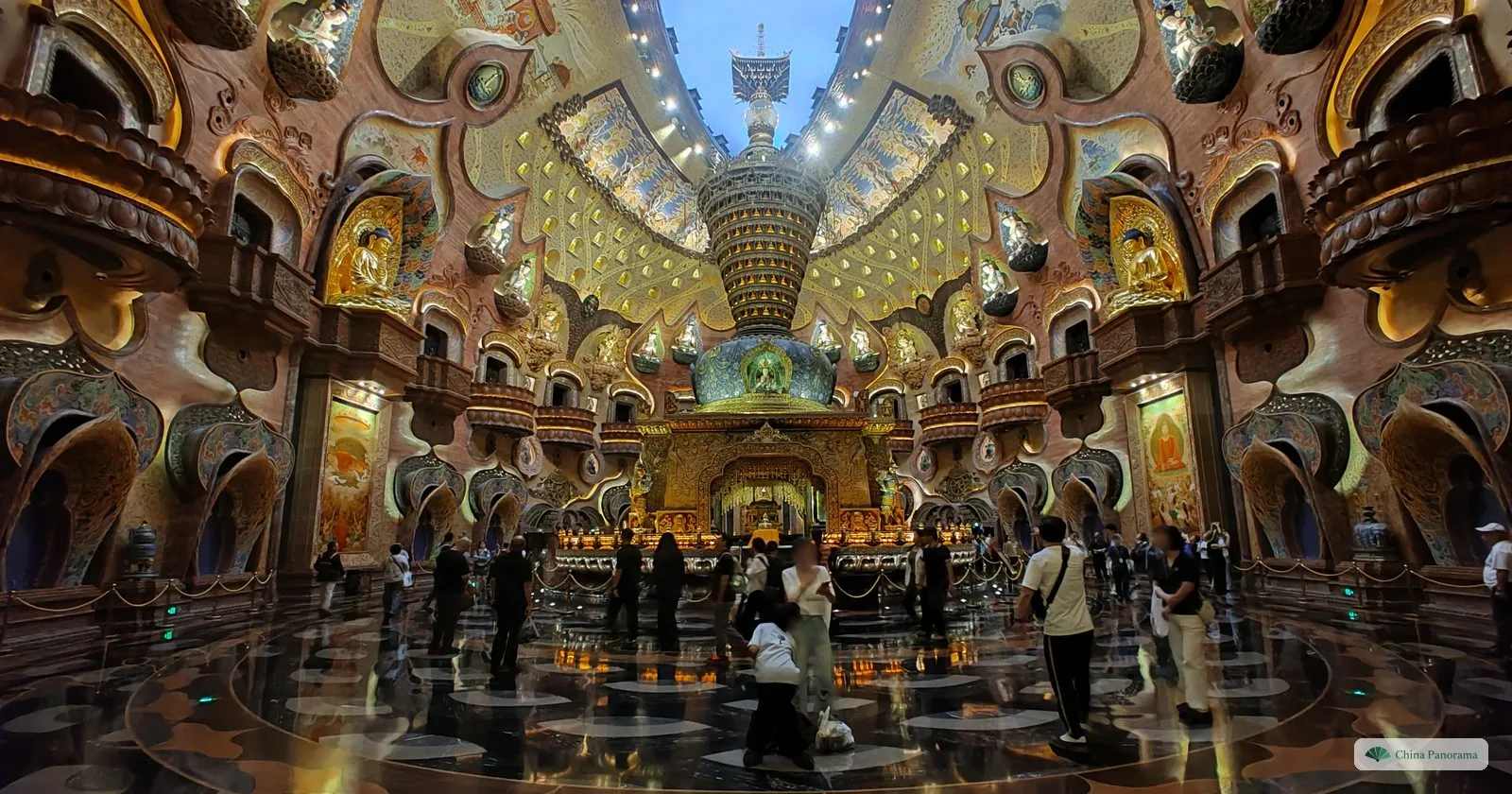
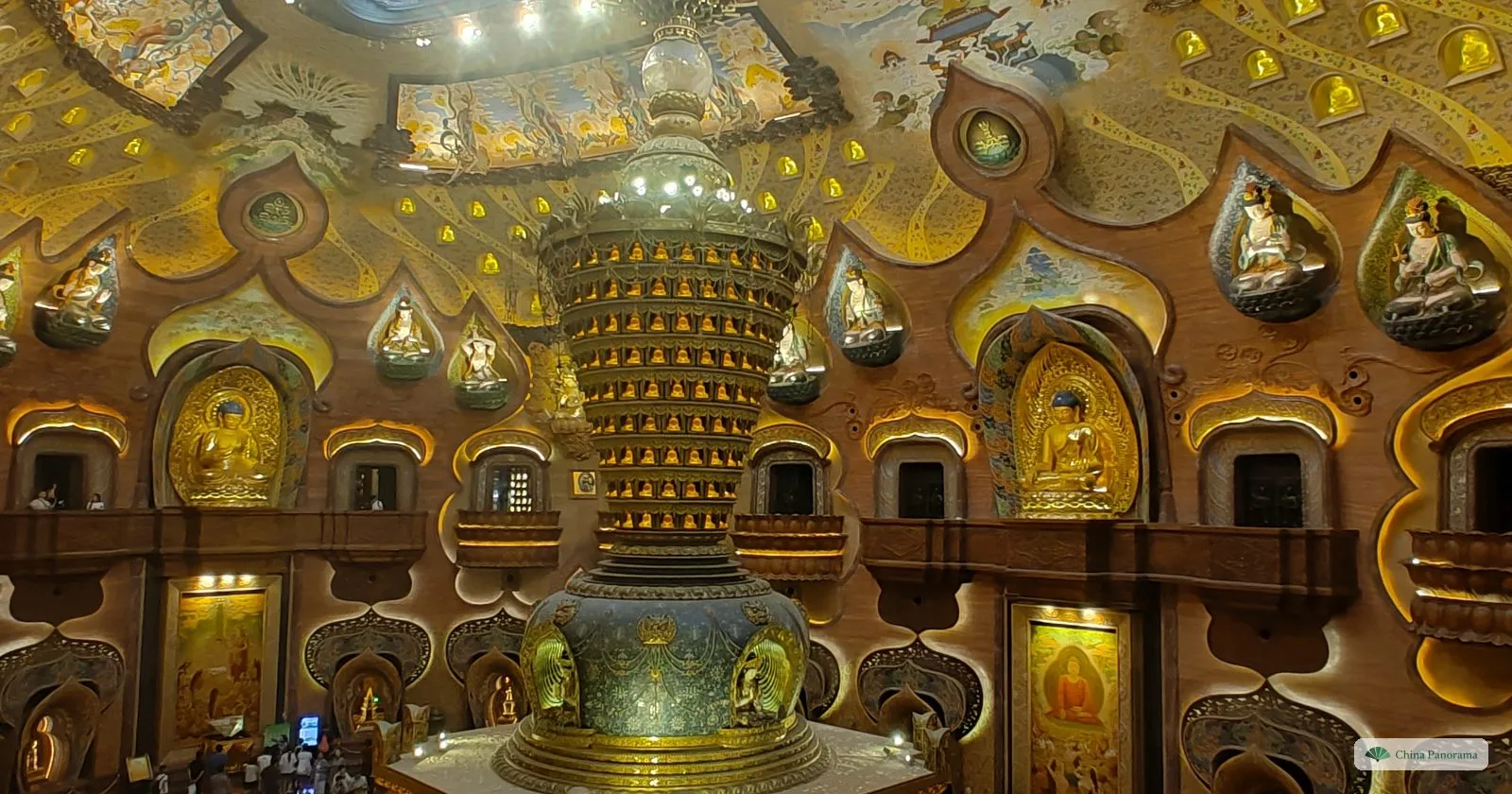
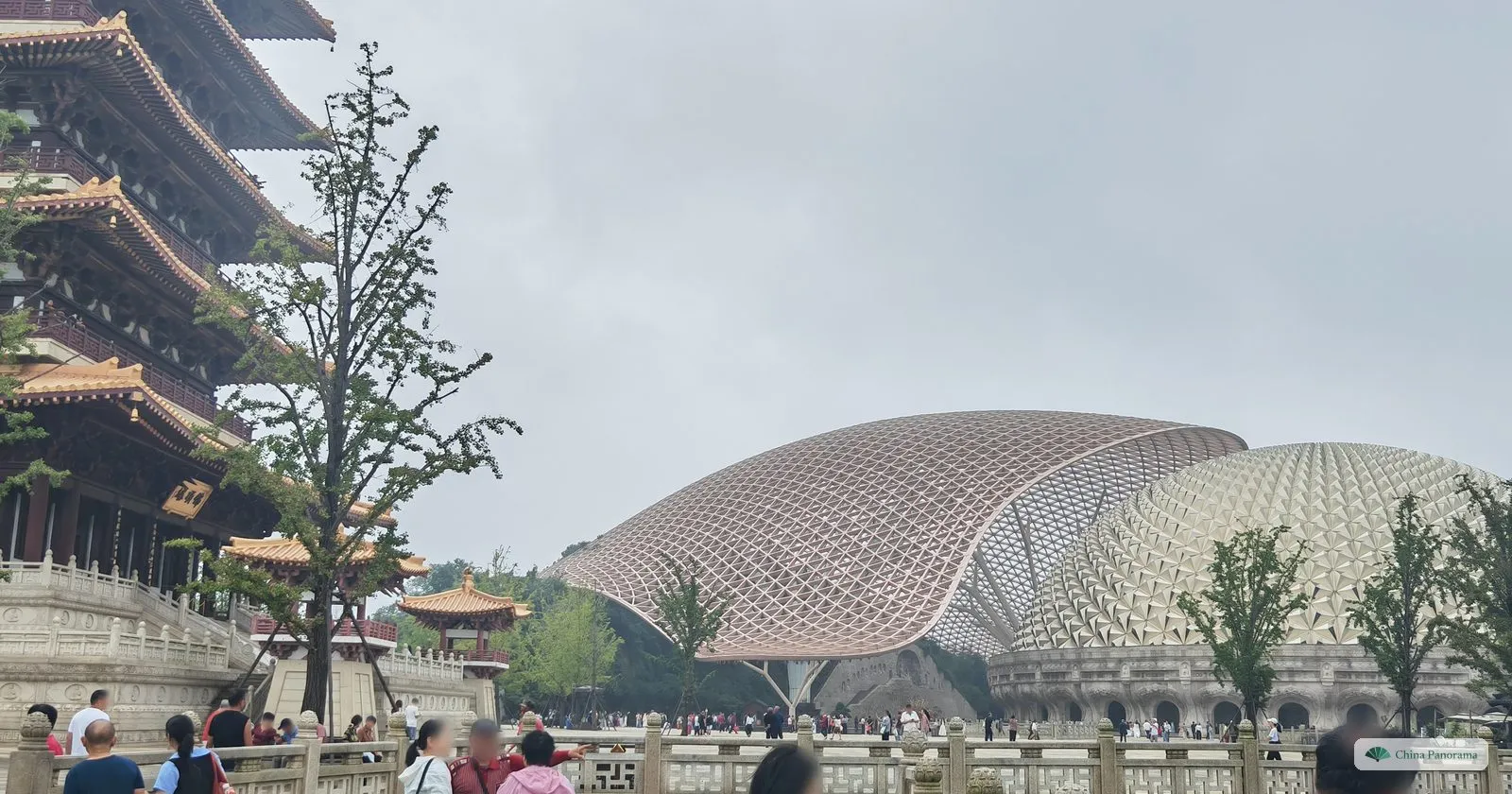
牛首山 · 佛顶宫TempleJiangning · 江宁区IndoorsOx Head Mountain, 242.9 m, about 15 km south of the centre, is named after its two peaks, which look like an ox's horns; it was a Buddhist mountain from the Southern Dynasties, and the Oxhead school of Chan was founded here in the Tang. In 2008 an iron casket with a relic said to be the skull bone of the Buddha was excavated at the site of the Bao'en Temple in the city. To house it, the Usnisha Palace was built into a disused iron-ore pit on the mountain: 220 m long, 160 m wide and 89.3 m high, a dome under a wave-shaped canopy. On 27 October 2015 the relic was installed and the cultural park opened. Above ground, the Grand Zen hall holds a jade reclining Buddha; below are halls of gold, lacquer and thousands of small Buddhas, and beside the palace rises the Foding Pagoda, 88 m tall, with the Ming pagoda of Hongjue Temple. Zheng He, the Ming admiral, is buried on the mountain. We spent the morning of 28 September 2026 here, in drizzle, from 08:41 to 11:38.
No metro: the nearest station, Hohai University · Fochengxilu (Line S1), is almost 5 km away, so most people come by taxi or car (about 18 km and 20 minutes from Xinjiekou without traffic). Inside, escalators and the park's buses link the parts. Ticket prices are set in the park's own channels and change with offers; we have not checked them, or the hours. Plan half a day.
- Entry
- Price not verified — check on site
- Opening hours
- Hours not verified — check on site
Memorial Hall of the Victims in Nanjing Massacre
侵华日军南京大屠杀遇难同胞纪念馆MuseumJianye · 建邺区IndoorsIn December 1937 Japanese troops took Nanjing, then China's capital, and in the weeks that followed killed a vast number of civilians and prisoners and raped tens of thousands of women. The memorial hall, opened on 15 August 1985 at Jiangdongmen, by a mass grave, and enlarged since, holds statues and reliefs, a wall with the names of victims, uncovered remains, and an exhibition of documents, photographs and testimony. Since 2014, 13 December is China's national memorial day, held here. A visit is harrowing; allow time afterwards.
Yunjinlu station (Line 2), about 500 m. Entry has been reported free with prior registration; we have not checked the booking rules, the hours or the closing day.
- Entry
- Price not verified — check on site
- Opening hours
- Hours not verified — check on site
Nanjing Museum
南京博物院MuseumXuanwu · 玄武区IndoorsOne of China's great museums, founded in 1933 as the preparatory office of the National Central Museum, with more than 430,000 objects, among them a Han-dynasty jade burial suit sewn with silver thread and a 1608 copy of Matteo Ricci's world map. The main hall, built for it in the 1930s, imitates a Liao-dynasty temple; its designers were advised by Liang Sicheng and Liu Dunzhen. Besides the history and art halls there is an underground Republic hall laid out as a street of the 1930s.
Minggugong station (Line 2), about 600 m, on Zhongshan East Road. Reported open Tuesday to Sunday, 09:00 to 17:00, with booking in the museum's WeChat mini-program; we have not checked this or the ticket rules.
- Entry
- Price not verified — check on site
- Opening hours
- Hours not verified — check on site
Xuanwu Lake
玄武湖ParkXuanwu · 玄武区OutdoorsA lake of about 470 hectares with five islands, between the Ming city wall and Nanjing station. The Ming kept the empire's household and tax registers, the Yellow Registers, in archives on its islands; it became a park in 1909 and opened to the public in 1928. Walking paths and causeways link the islands; the wall runs along its west and south shores, and Jiming Temple stands above its southern end.
Xuanwumen station (Line 1) is at the west gate, Nanjing Station (Lines 1 and 3) to the north-east. Entry to the park is free.
- Entry
- Free
- Opening hours
- Hours not verified — check on site
- TempleXuanwu · 玄武区Outdoors
A Buddhist temple on a hill above Xuanwu Lake, on the site where, by tradition, Emperor Wu of Liang built the Tongtai Temple in 527 — the first Buddhist site here dates from the year 300. The first Ming emperor rebuilt it in 1387 under its present name, “Cockcrow Temple”. Since 1958 it has been a temple for nuns. The seven-storey Medicine Buddha Pagoda, 44.8 m tall, was built in 1991.
Jimingsi station (Lines 3 and 4) is at the foot of the hill. We have not checked the ticket price or hours. It is a working temple: dress modestly and do not photograph people praying.
- Entry
- Price not verified — check on site
- Opening hours
- Hours not verified — check on site
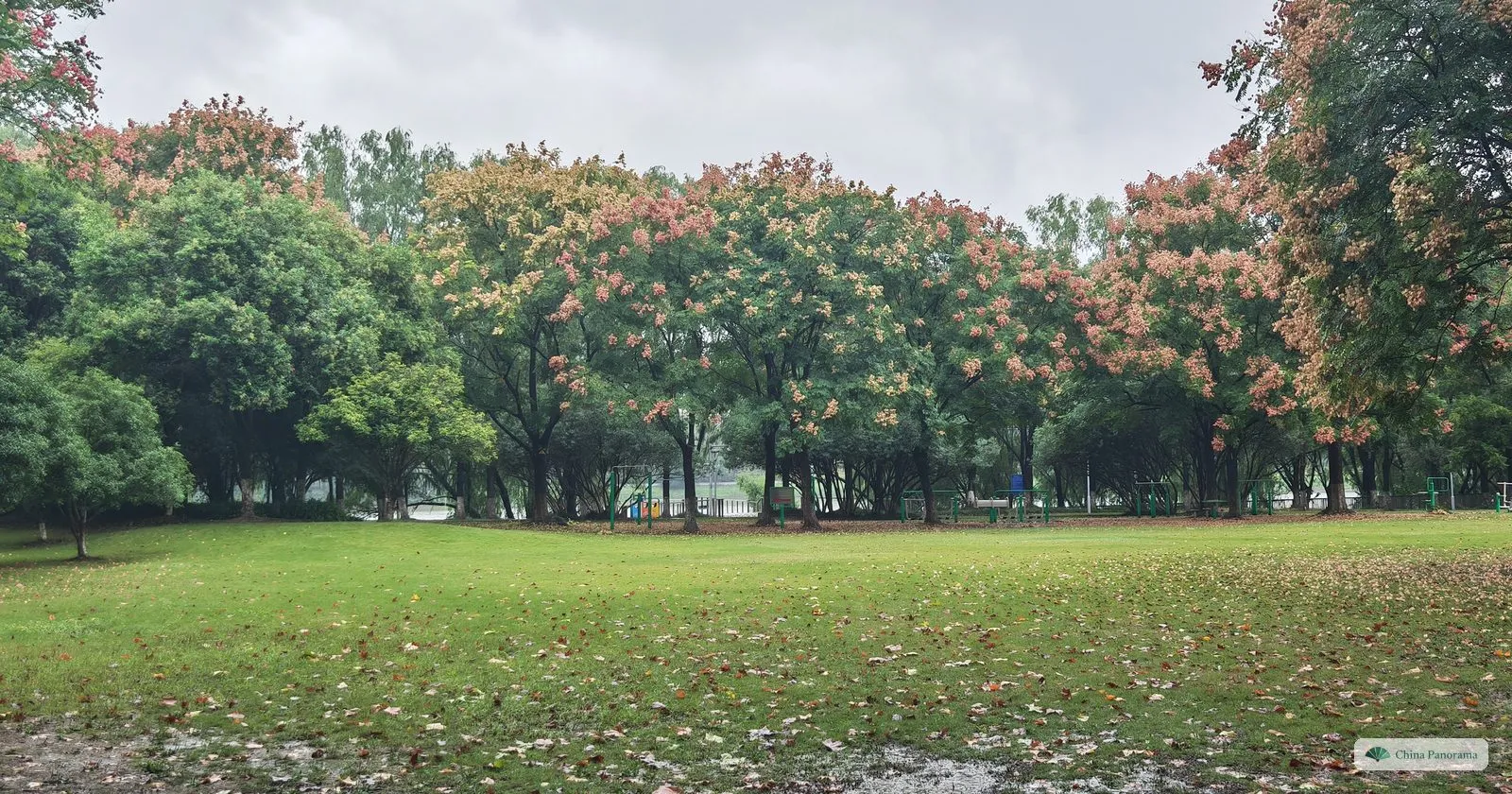
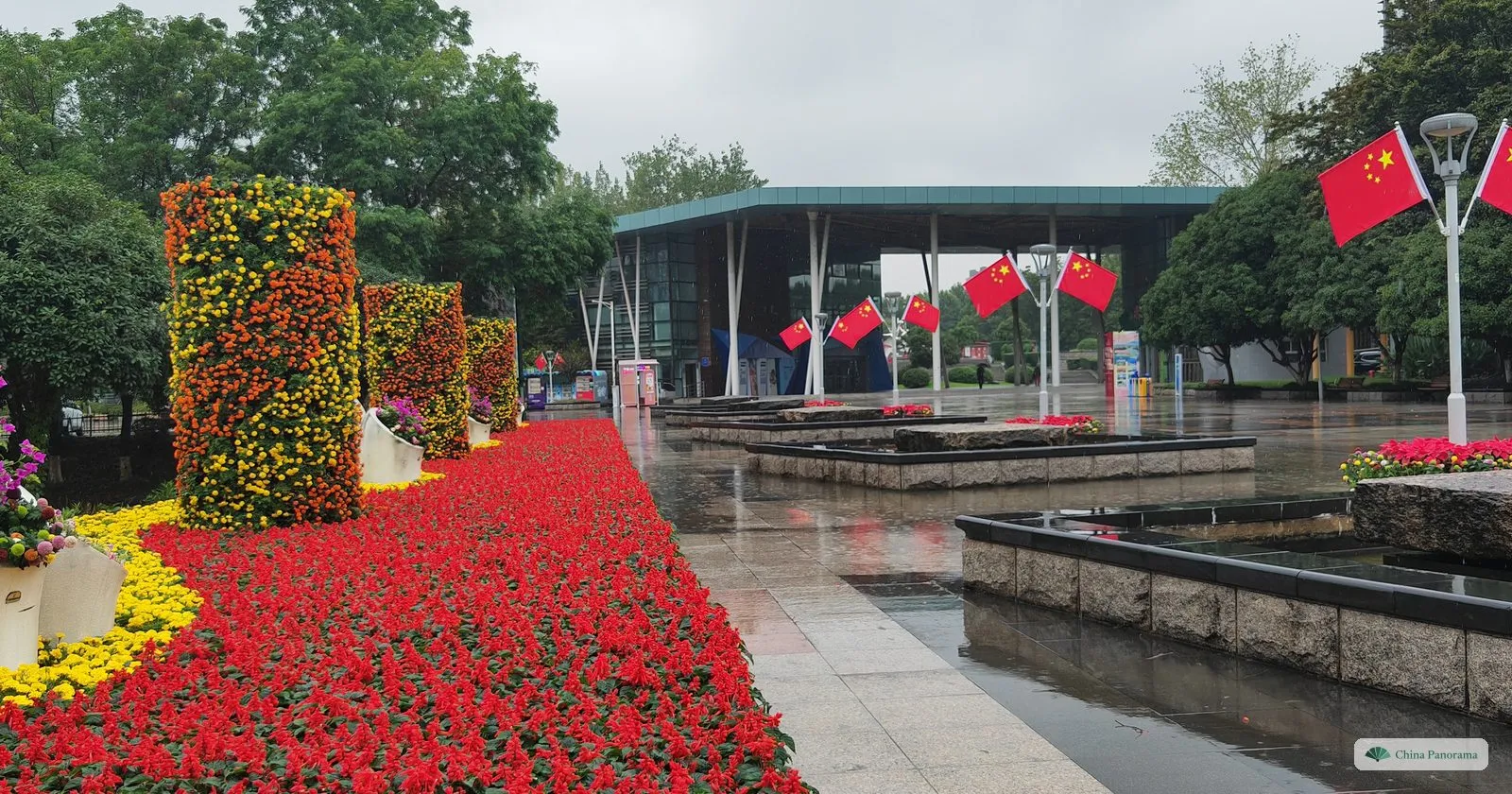
China Green Expo Park
中国绿化博览园ParkJianye · 建邺区OutdoorsA riverside park of lawns, flower beds and woods on the Jiajiang, the side channel of the Yangtze opposite Jiangxinzhou island, in the new district of Hexi. It was finished in September 2005 for the first China Greening Expo and is reported to cover about 160 hectares along 3 km of bank. A quiet green place far from the old city; we walked through it in steady rain on 29 September 2026, from 11:29 to 12:31, when it was decorated with flower beds for National Day.
Lvboyuan station (Line 10) is at the gate. We have not checked whether entry is free, or the hours.
- Entry
- Price not verified — check on site
- Opening hours
- Hours not verified — check on site
Entry prices and opening hours are marked unverified where we have not checked them against an official source. We would rather show a gap than a number we made up.
Purple Mountain, Niushoushan or Lion Hill: which half-day suits you?
Outside the old centre, four areas each fill half a day, and they suit different people. Tick what applies to you; the best match is marked, and each card says why.
What applies to you?
Tick a situation above and the option that fits best is marked.
Purple Mountain 紫金山 · 中山陵
Sun Yat-sen Mausoleum and Ming Xiaoling
Two of China’s great tombs on one wooded slope, 7 km east of the centre: the Republic’s founder and the Ming’s.
- From Xinjiekou
- about 7 km east
- Metro
- Line 2 to Xiamafang or Muxuyuan, then shuttle buses
- Time
- half a day for both
- Entry
- mausoleum reported free with a timed booking
- I want modern Chinese history: Sun Yat-sen’s tomb is the Republic’s great monument; the Ming founder lies 1.5 km away.
- I like temples and Buddhist art: Tombs, not temples.
- It is raining: Almost all of it is outdoors, with 392 steps.
- I am going by metro only: Line 2, but the last 2 km are by shuttle bus or on foot.
- I hate crowds: Booking slots sell out at weekends; tour groups from nine.
- I only have the evening: A daytime visit.
The Qinhuai quarter 夫子庙 · 瞻园 · 江南贡院
Fuzimiao, Zhan Garden, the examination hall
The old city’s riverside: a Confucius temple, a Ming garden, the hall where imperial exams were sat, and streets of snacks.
- From Xinjiekou
- about 2.5 km south
- Metro
- Fuzimiao (Lines 3 and 5), Sanshanjie (Lines 1 and 5)
- Time
- an afternoon and evening
- Entry
- streets free; temple, garden and museum paid
- I want modern Chinese history: The examination museum and the Taiping museum in Zhan Garden.
- I like temples and Buddhist art: The temple here is to Confucius.
- It is raining: The examination museum is largely underground; the streets are not.
- I am going by metro only: Two stations within 500 m.
- I hate crowds: Packed every evening and every holiday.
- I only have the evening: At its best after dark, when the river and the screen wall are lit.
Niushoushan 牛首山
The Usnisha Palace and the Foding Pagoda
A Buddhist park of 2015 on a mountain 15 km south: a dome built into an old mine, golden halls underground, an 88 m pagoda.
- From Xinjiekou
- about 15 km south (18 km by road)
- Metro
- none nearby: taxi, about 20 minutes
- Time
- half a day
- Entry
- paid; price not checked
- I want modern Chinese history: A new park, though Zheng He is buried on the mountain.
- I like temples and Buddhist art: The whole park is built round a relic of the Buddha.
- It is raining: The palace and its halls are under a roof; we were there in drizzle.
- I am going by metro only: The nearest station is almost 5 km away.
- I hate crowds: Busy, but the spaces are huge.
- I only have the evening: A daytime visit outside the city.
Lion Hill and the Yangtze 狮子山 · 阅江楼 · 长江大桥
The Yuejiang Tower and the 1968 bridge
In the north-west, where the Ming wall reaches the river: a tower planned in 1374 and built in 2001, and the bridge China built itself.
- From Xinjiekou
- about 7 km north-west
- Metro
- Line 5 to Nanjingxi Railway Station or Jinghaisi
- Time
- two to three hours
- Entry
- tower paid; price not checked
- I want modern Chinese history: A Ming story and a 1960s monument; the tower’s mural shows Zheng He’s fleet.
- I like temples and Buddhist art: Not a temple area.
- It is raining: A hill climb and a view — though the tower itself is indoors.
- I am going by metro only: Line 5 stops at the foot of the hill.
- I hate crowds: We met few people there on a wet weekday morning.
- I only have the evening: Best in daylight, for the view.
Distances are straight lines from Xinjiekou; entry prices and hours are not checked (amber).
Routes, and how the city is laid out
The centre is Xinjiekou, in the middle of the walled city. Fuzimiao and the Qinhuai are to the south, the Presidential Palace to the east, Yihe Road to the north-west. Further out are Purple Mountain 7 km east, Lion Hill and the Yangtze 7–8 km north-west, the Memorial Hall 4 km west and Nanjing South station 8 km south. Tap a place to see how far it is.
Tap a place on the map or in the list.
On Zhongshan East Road. Line 2 to Minggugong. Details below ↓
At Jiangdongmen. Line 2 to Yunjinlu. Details below ↓
The old main station, behind Xuanwu Lake. Lines 1 and 3.
On Purple Mountain; Ming Xiaoling is 1.5 km west. Line 2 to Xiamafang, then shuttle buses. Details below ↓
On the Yangtze side channel. Line 10 to Lvboyuan. Details below ↓
On Lion Hill by the Yangtze. Line 5. Details below ↓
The 1968 bridge; Bridge Park is below the south tower. Line 5 to Fangjiaying. Details below ↓
The main high-speed station. Lines 1, 3, S1 (airport) and S3.
Straight-line distances from Xinjiekou, rounded — not travel distances.
Four routes that don’t double back
Up the Sun Yat-sen Mausoleum in the morning, the Zhan Garden and Fuzimiao into the night, Lion Hill early, and half a day at Niushoushan. They follow our photographs, with the time and distance between stops.
About an hour · 1.4 km on foot, 392 steps
The archway
Walk 5 min· 360 m
The cedar avenue and the gate
Walk 1 min· 70 m
The stele pavilion
Walk 5 min· 250 m
The steps and the hall
4 stops · 11 min walking
Late afternoon to night · about 1.2 km on foot
Zhan Garden
Walk 5 min· 400 m
The old streets
Walk 4 min· 300 m
The river and the screen wall
Walk 2 min· 120 m
Tianxia Wenshu archway and the temple
Walk 2 min· 100 m
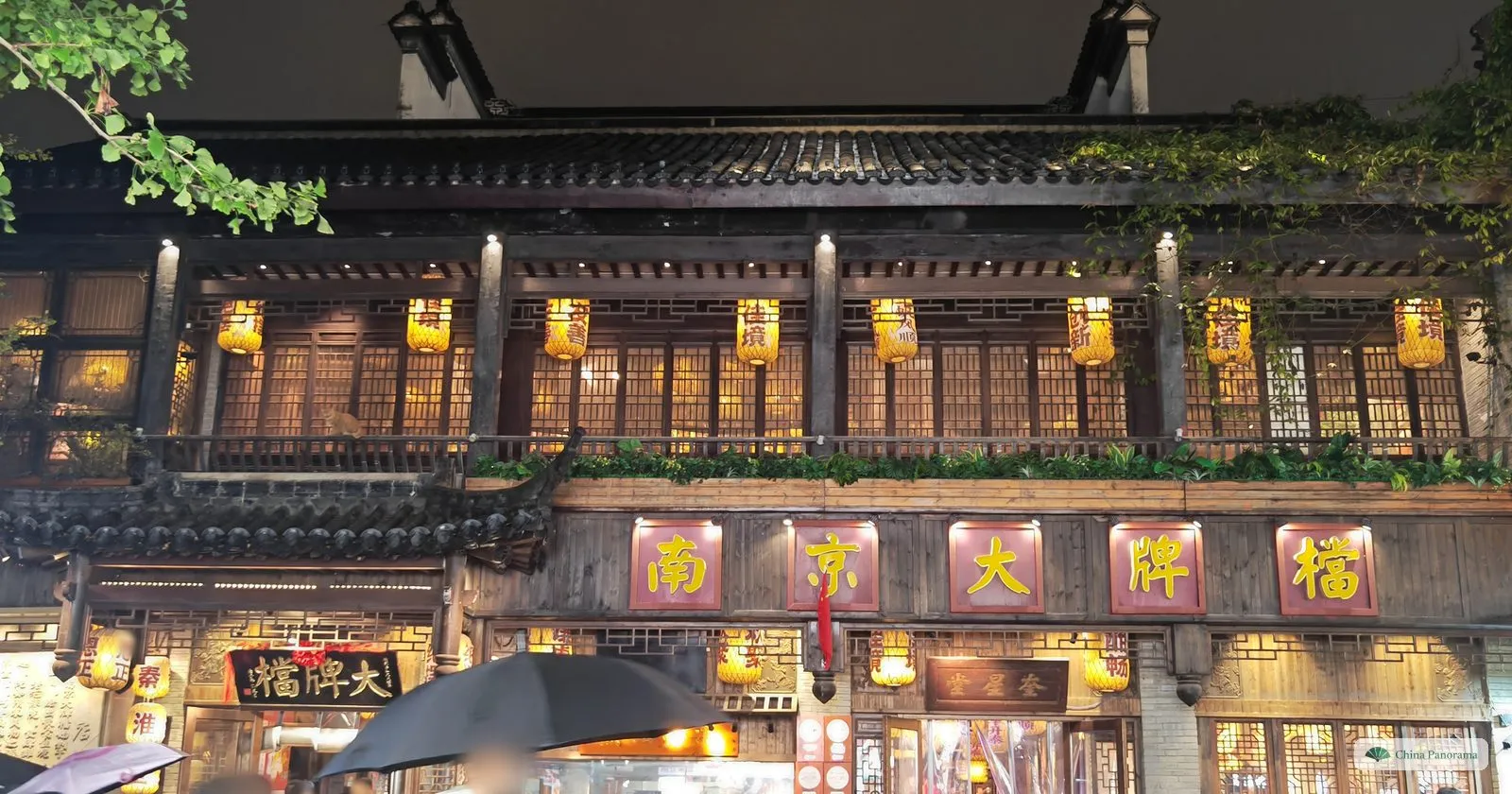
Nanjing Dapaidang
5 stops · 13 min walking
About 1½ hours · 0.8 km and a climb
The gate of Lion Hill
Walk 11 min· 830 m
Up the hill
Walk 3 min· 100 m
Yuejiang Tower
3 stops · 14 min walking
About 3 hours · 20 minutes by car, then about 2 km on foot
The entrance
Walk 23 min· 1.73 km
The Usnisha Palace
Walk 3 min· 100 m
The reclining Buddha
Walk 10 min· 150 m
The halls below ground
Walk 6 min· 300 m
The Foding Pagoda
5 stops · 42 min walking
Stop by stop
Morning: up the Sun Yat-sen Mausoleum
Our Saturday morning of 18 March 2023: by car along the plane trees of Lingyuan Road at 08:58, on foot from the car park at 09:17, through the archway at 09:28 and up the axis to the top at 09:38. Come early — by half past nine the tour groups fill the steps.
1The archway
博爱坊From the car park and shuttle stop south of it, about 900 m on foot (09:17–09:27). Stone archway with Sun's “fraternity”: 09:28.
- Entry
- Reported free, with a timed booking
- Hours
- Not verified
Walk 5 min· 360 m
2The cedar avenue and the gate
墓道 · 陵门480 m up the avenue to the gate inscribed “All under heaven belongs to the people”: 09:33.
- Entry
- Reported free, with a timed booking
- Hours
- Not verified
Walk 1 min· 70 m
Right behind the gate, the 9 m tablet: 09:34.
- Entry
- Reported free, with a timed booking
- Hours
- Not verified
Walk 5 min· 250 m
4The steps and the hall
石阶 · 祭堂290 of the 392 steps from here, over eight flights, to the sacrificial hall: we were at the bottom at 09:35 and at the top at 09:38. The view back down over the forest is the reward.
- Entry
- Reported free, with a timed booking
- Hours
- Not verified
Easy add-ons: The Ming Xiaoling Mausoleum and Plum Blossom Hill are about 1.5 km west on Purple Mountain — another two hours, best in February and March when the plum trees flower. In the city the same morning, the Nanjing Museum is about 5 km west on Zhongshan East Road.
* Walking times and distances are computed from OpenStreetMap walking routes between the stops; inside the mausoleum and the Usnisha Palace, where the router fails, they are straight-line distances and the minutes are those between our photographs. Car legs are OpenStreetMap driving times without traffic — allow about double at busy times. Clock times are from our own photographs (18 March 2023 and 28–29 September 2026). Stops marked with a star have prices or opening hours we have not checked.
Getting there and around
By air
Nanjing Lukou International Airport (NKG) is about 36 km south of Xinjiekou in a straight line. Metro Line S1 runs from the airport to Nanjing South station, where Lines 1 and 3 continue into the city. Most travellers from Europe fly into Shanghai and take the train. We have not checked journey times or taxi fares.
Schedules and opening hours not yet verified against an official source.
By high-speed train
Nanjing is on the Beijing–Shanghai high-speed line: Shanghai is about 270 km away in a straight line, with trains every few minutes from Nanjing South and many from Nanjing station; Beijing, Hangzhou, Suzhou and Hefei are direct too. We have not checked journey times against the 12306 timetable.
Schedules and opening hours not yet verified against an official source.
Nonstop from Europe
Our flight list has nonstop routes to Nanjing from 2 European airports: Milan, Paris. From elsewhere, most travellers fly to Shanghai and take the train. Airlines and frequencies →
Flight data checked 12 September 2026.
Two stations called Nanjing
Your train ticket will name one of these. They are 13 km apart.
- Nanjing South 南京南站The main high-speed station, about 8 km south of Xinjiekou: trains to Shanghai, Beijing and most of the country. Lines 1, 3, S1 (to the airport) and S3.
- Nanjing 南京站The old main station, about 5 km north of Xinjiekou on the shore of Xuanwu Lake; many trains to Shanghai still stop here. Lines 1 and 3.
The metro, in short
How Chinese metros work →Sixteen lines, eight in the city and eight “S” lines to the outer districts. For a visitor a few do most of the work: Line 1 runs north–south from Nanjing station through Xinjiekou to Nanjing South; Line 2 east–west from the Memorial Hall and Hexi through Xinjiekou and Daxinggong to Purple Mountain; Line 3 through Daxinggong and Fuzimiao to Nanjing South; Line 5, the newest, through the old city from Chaotian Palace and Fuzimiao to Lion Hill; and Line S1 from Nanjing South to Lukou airport.
- Lines
- 168 city, 8 suburban
- Fare
- from 2 CNYfirst 4 km
- Network
- about 312 stationsabout 658 km (reported)
- Pay with
- Alipay or WeChatforeign cards not confirmed
Pay with the transport code in Alipay or WeChat, or buy a single ticket at the machines. The operator lists UnionPay contactless cards at the gates; we found no report that Visa or Mastercard cards issued abroad work at the gates, as they now do in Beijing, Shanghai and Chengdu, and have not tested one — set up Alipay before you go.
Fares by distance: 2 CNY up to 4 km, 3 CNY up to 9 km, 4 CNY up to 14 km, 5 CNY up to 21 km, 6 CNY up to 28 km, 7 CNY up to 37 km, 8 CNY up to 48 km, 9 CNY up to 61 km. Beyond 61 km, 1 CNY more for every further 15 km or part of it. A ride across the old city, under 9 km, costs 2–3 CNY.
First and last trains differ by line and station, and some lines run later on Friday and Saturday nights; we have not checked them against the operator's timetable — look at the display in the station.
| Sun Yat-sen Mausoleum (2 km, shuttle buses) | Xiamafang 下马坊 | Line 2 |
| Ming Xiaoling Mausoleum | Muxuyuan 苜蓿园 | Line 2 |
| Fuzimiao, Jiangnan Examination Hall | Fuzimiao 夫子庙 | Lines 3/5 |
| Zhan Garden | Sanshanjie 三山街 | Lines 1/5 |
| Chaotian Palace | Chaotiangong 朝天宫 | Line 5 |
| Presidential Palace, 1912 quarter | Daxinggong 大行宫 | Lines 2/3 |
| Yihe Road | Yunnan Road 云南路 | Lines 4/5 |
| Yuejiang Tower | Nanjingxi Railway Station 南京西站 | Line 5 |
| Memorial Hall of the Nanjing Massacre | Yunjinlu 云锦路 | Line 2 |
| Nanjing Museum | Minggugong 明故宫 | Line 2 |
| Xuanwu Lake | Xuanwumen 玄武门 | Line 1 |
| Jiming Temple | Jimingsi 鸡鸣寺 | Lines 3/4 |
| Zhonghua Gate (1 km) | Zhonghuamen 中华门 | Line 1 |
| Green Expo Park | Lvboyuan 绿博园 | Line 10 |
| Lukou Airport (NKG) | Lukou International Airport 禄口机场 | Line S1 |
| Nanjing South station | Nanjing South Railway Station 南京南站 | Lines 1/3/S1/S3 |
| Nanjing station | Nanjing Railway Station 南京站 | Lines 1/3 |
Stations are signed in Chinese characters and pinyin. Xinjiekou, where Lines 1 and 2 cross under the shopping centre, is the busiest interchange; Nanjing South is a huge station where five lines meet the high-speed trains — allow time.
Source and date: Fare bands: in force since 31 March 2019, as given in the Chinese Wikipedia article on the Nanjing Metro (we found no current fare page on the operator's site to link). Lines: the same article lists 16 lines in operation on 29 September 2026; station and length totals differ within it (277 to 312 stations, 626 to 660 km), so treat them as approximate. Payment methods: the same article; foreign bank cards: no report found, 19 October 2026. Stations for the sights: OpenStreetMap stations and route relations, 19 October 2026. First and last trains: not checked.
Before you go
Most European passports are visa-free for a short trip — under a one-sided waiver with an end date worth checking before you book:
- UK passport
Visa-free up to 30 days per trip, currently until 31 December 2026.
- EU passports
Dutch, German, French, Irish, Nordic and most other EU passports: visa-free up to 30 days, currently until 31 December 2026.
- US passport
No general waiver: a visa, or the 10-day visa-free transit if you travel on to a third country.
China’s 10-day visa-free transit applies at designated entry ports, for travellers continuing to a third country. Check your passport.
- Set up Alipay
For the metro, the mausoleum booking and snack stalls that take no cards.
- Shanghai
Where most flights from Europe land, 270 km down the Yangtze.
- Xiaolongbao
The soup dumplings of the lower Yangtze — Nanjing has its own version.
- The arrival card
Fill it in online, or practise the paper form, before you land.
- Golden Week
Why 1–7 October is the worst week for Fuzimiao and the mausoleum.
- Chinese metros
Tickets, transport codes and security checks, city by city.
FAQ
What are the best things to do in Nanjing?
Climb the 392 steps of the Sun Yat-sen Mausoleum on Purple Mountain early in the morning and see the Ming Xiaoling Mausoleum next to it; walk the Qinhuai riverside at Fuzimiao after dark; visit the Zhan Garden, the Jiangnan Examination Hall and Chaotian Palace in the old city; walk on the Ming city wall or through Zhonghua Gate; see the Presidential Palace and the villas of the Yihe Road district; and spend time in the Memorial Hall of the Nanjing Massacre and the Nanjing Museum. With half a day more, go out to Niushoushan for the Usnisha Palace.
Is Nanjing worth visiting?
Yes, for two or three days. It was China’s capital under the early Ming and again under the Republic, and both periods are still standing: long stretches of the Ming city wall and Zhonghua Gate, the Ming Xiaoling Mausoleum, the Sun Yat-sen Mausoleum on Purple Mountain, the Presidential Palace and the villas of the Yihe Road district. Add the Qinhuai river at Fuzimiao by night, the Nanjing Museum and the Memorial Hall of the Nanjing Massacre. It is on the high-speed line from Shanghai, so it fits easily into a first trip to China.
How many days do you need in Nanjing?
Two to three. One day for Purple Mountain (the Sun Yat-sen Mausoleum and Ming Xiaoling) and the Nanjing Museum; one for the old city — Chaotian Palace, the Zhan Garden, the Presidential Palace and Fuzimiao in the evening; and half a day for Niushoushan or the Memorial Hall. Our routes below follow our own days.
Is the Sun Yat-sen Mausoleum free?
Entry to the main mausoleum has been reported free, but you need a timed booking in advance, made in the WeChat mini-program of the Zhongshan scenic area, and weekend slots go fast. The hall and the tomb chamber may have their own rules. We have not checked this against an official page; Ming Xiaoling, next to it, charges entry.
Can I pay for the Nanjing metro with a credit card?
We cannot confirm it. Beijing, Shanghai and Chengdu now take Visa and Mastercard cards issued abroad at the gates; for Nanjing we found no such report, only UnionPay contactless cards. Use the transport code in Alipay or WeChat, or buy a single ticket at the machines. Fares run by distance, from 2 CNY for the first 4 km.
How far is Nanjing from Shanghai?
About 270 km in a straight line. The two cities are on the Beijing–Shanghai high-speed line, with trains every few minutes from Nanjing South and many from Nanjing station; we have not checked journey times against the 12306 timetable. Most travellers from Europe fly into Shanghai and come on by train.
Do I need a visa for Nanjing?
Not for a short trip on a British, Irish, Dutch, German, French, Nordic or Australian passport: all are visa-free for up to 30 days per trip, under a one-sided waiver that currently runs until 31 December 2026. US passport holders have no general waiver; the 10-day visa-free transit applies only at designated entry ports and only if you travel on to a third country. Check your own passport on our visa check page.
When is the best time to visit Nanjing?
Spring and autumn. March brings the plum and magnolia blossom at about 16 °C by day, April 23 °C; October averages 23 °C, and in November the plane-tree avenues turn gold. June is the rainy “plum rain” season, July and August are hot at 34–33 °C, and January is damp at 8 °C by day. Avoid May Day (1–5 May) and Golden Week (1–7 October).
Is Fuzimiao worth visiting?
Yes, in the evening: the Qinhuai river, the lit screen wall and the archway are at their best after dark, and the streets are full of food. Know that the temple halls are a reconstruction from the 1980s and that it is crowded every night. The Zhan Garden and the Jiangnan Examination Hall, a few minutes away, are the real old pieces of the quarter.
How do I get to Niushoushan?
By taxi or car: about 15 km south of Xinjiekou in a straight line, roughly 20 minutes without traffic. There is no metro station nearby — the closest, on Line S1, is almost 5 km away. Inside the park, escalators and the park’s buses link the parts; plan half a day. We have not checked ticket prices or hours.
What should I eat in Nanjing?
Salted duck (盐水鸭, yánshuǐyā), sold in duck shops all over the old city, duck blood and vermicelli soup (鸭血粉丝汤), and the snacks of the Qinhuai: small dumplings, tofu skins, sweet rice cakes. Restaurants such as Nanjing Dapaidang at Fuzimiao serve a range of them in one place.
Sources and status
All photographs on this page are ours: Purple Mountain, Chaotian Palace, the Yihe Road district and the Yangtze bridge on 18 March 2023 (the bridge from a moving car, through the windscreen); Niushoushan and the 1912 quarter on 28 September 2026; Lion Hill, the Green Expo Park, the Zhan Garden and Fuzimiao on 29 September 2026, a day of rain. Faces of passers-by and number plates have been blurred. Data sources: Monthly temperature data, Nanjing; Nanjing (Wikipedia): 2020 census, city flower and trees, capital periods; Sun Yat-sen Mausoleum: dates, architect, dimensions, 392 steps (Wikipedia, Chinese); Ming Xiaoling Mausoleum (Wikipedia); Fuzimiao: 1034, the screen wall of 1575, rebuilding from 1984 (Wikipedia, Chinese); Jiangnan Examination Hall: 20,644 cells, museum opened 2017 (Wikipedia, Chinese); Zhan Garden: Xu Da, Qianlong, the Taiping, Liu Dunzhen (Wikipedia, Chinese); Chaotian Palace: 1384, rebuilt 1865–1869, Nanjing Municipal Museum (Wikipedia, Chinese); Zhonghua Gate: three enclosures, 27 troop chambers (Wikipedia, Chinese); Presidential Palace (Wikipedia); 1912 quarter: opened 24 December 2004, five old buildings of 17 (Wikipedia, Chinese); Yihe Road: the 1930s district, residents and embassies (Wikipedia, Chinese); Yuejiang Tower: 1374 and 2001 (Wikipedia, Chinese); Nanjing Yangtze River Bridge: dates and lengths (Wikipedia, Chinese); Niushoushan: the Usnisha Palace, the Foding Pagoda, 27 October 2015 (Wikipedia, Chinese); Memorial Hall of the Victims in Nanjing Massacre (Wikipedia); Nanjing Museum: 1933, 430,000 objects, opening hours (Wikipedia, Chinese); Xuanwu Lake (Wikipedia, Chinese); Jiming Temple (Wikipedia, Chinese); Nanjing Metro: lines, fares since 2019, payment (Wikipedia, Chinese).
Changelog (1)
- 2026-10-19Page created, with our own photographs from 18 March 2023 and 28–29 September 2026. No entry price on this page could be checked against an official source on this date. Metro: fares from the distance scale in force since March 2019; whether foreign bank cards work at the gates is not confirmed.