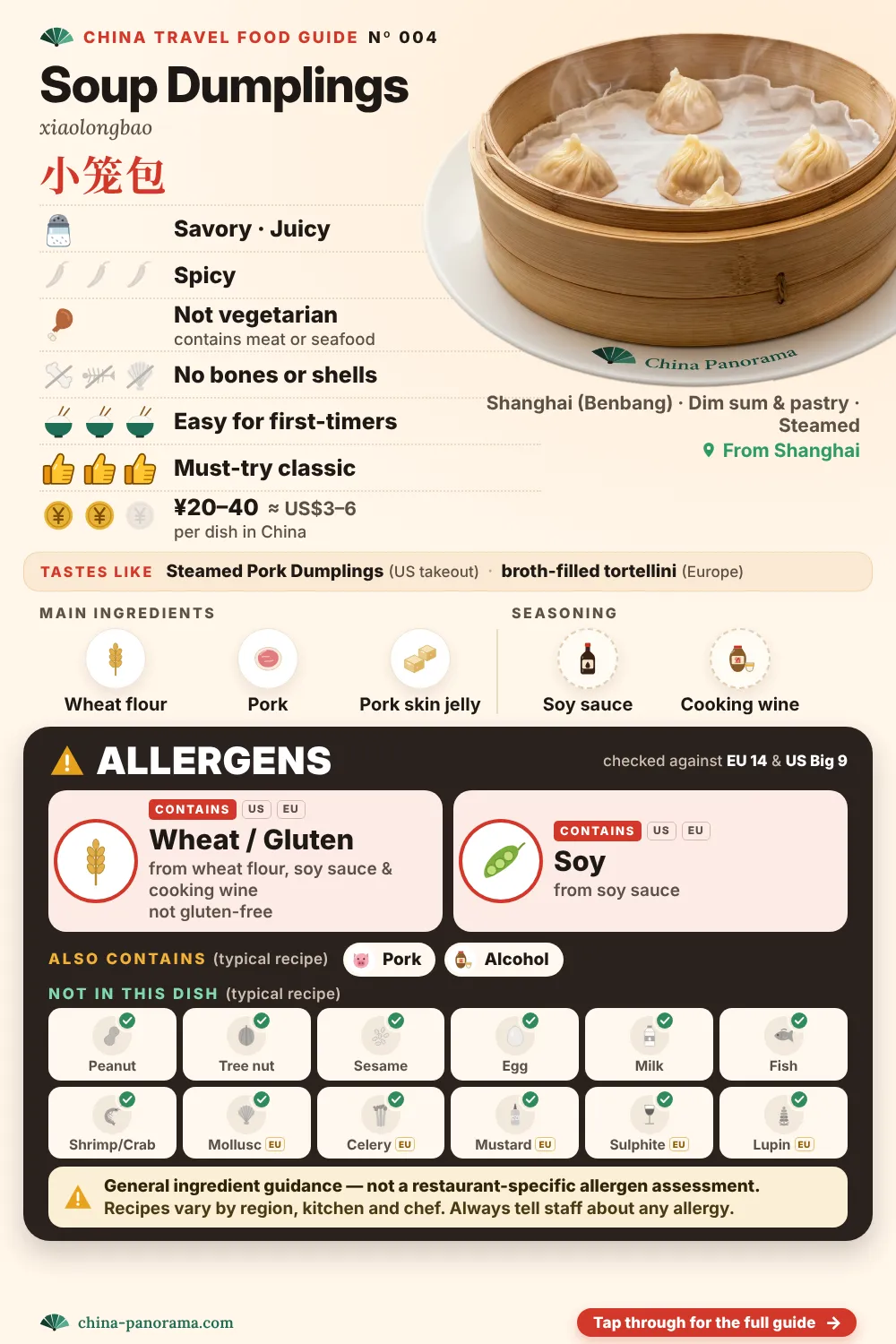
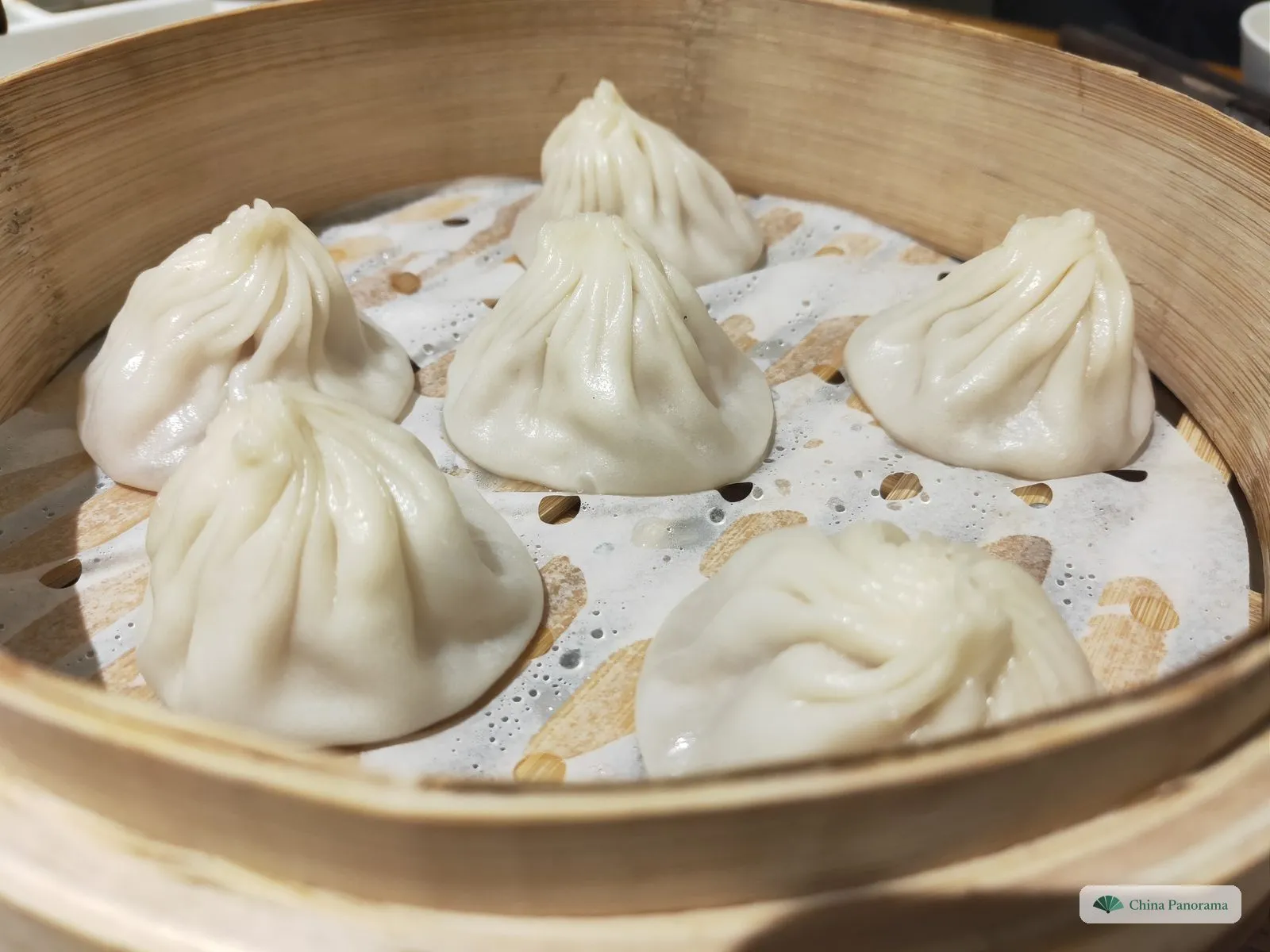
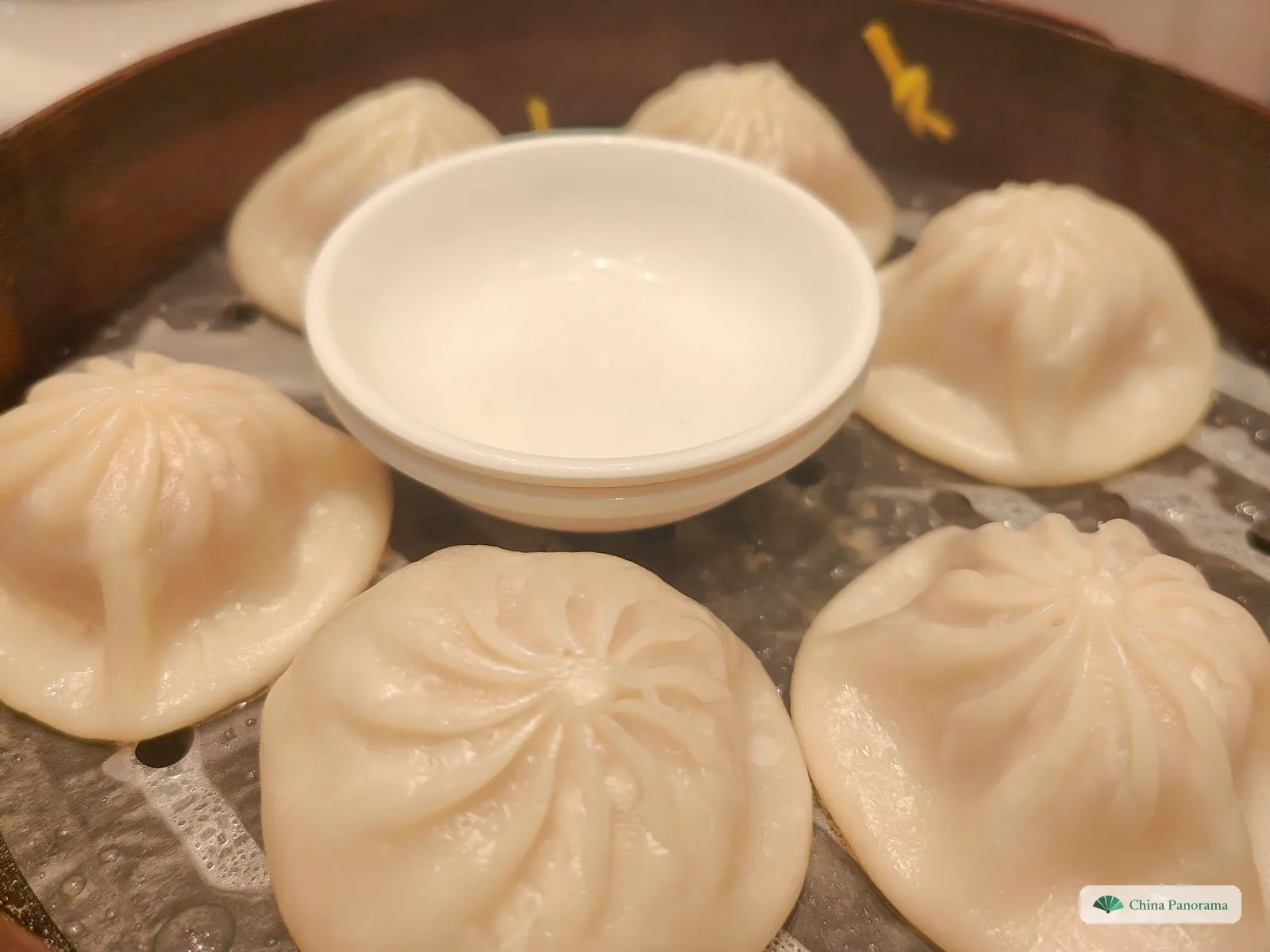
The name says what it is: 小 (xiǎo) small, 笼 (lóng) steamer basket, 包 (bāo) bun – small buns from the basket. A thin wheat wrapper is pleated by hand, a dozen folds or more, around minced pork mixed with jelly made from simmered pork skin (肉皮冻, ròu pí dòng). In the steamer the jelly melts, so every dumpling holds a spoonful of hot broth. They come to the table in the bamboo basket they were steamed in, usually six to ten to a basket, with black vinegar and shredded ginger to dip.
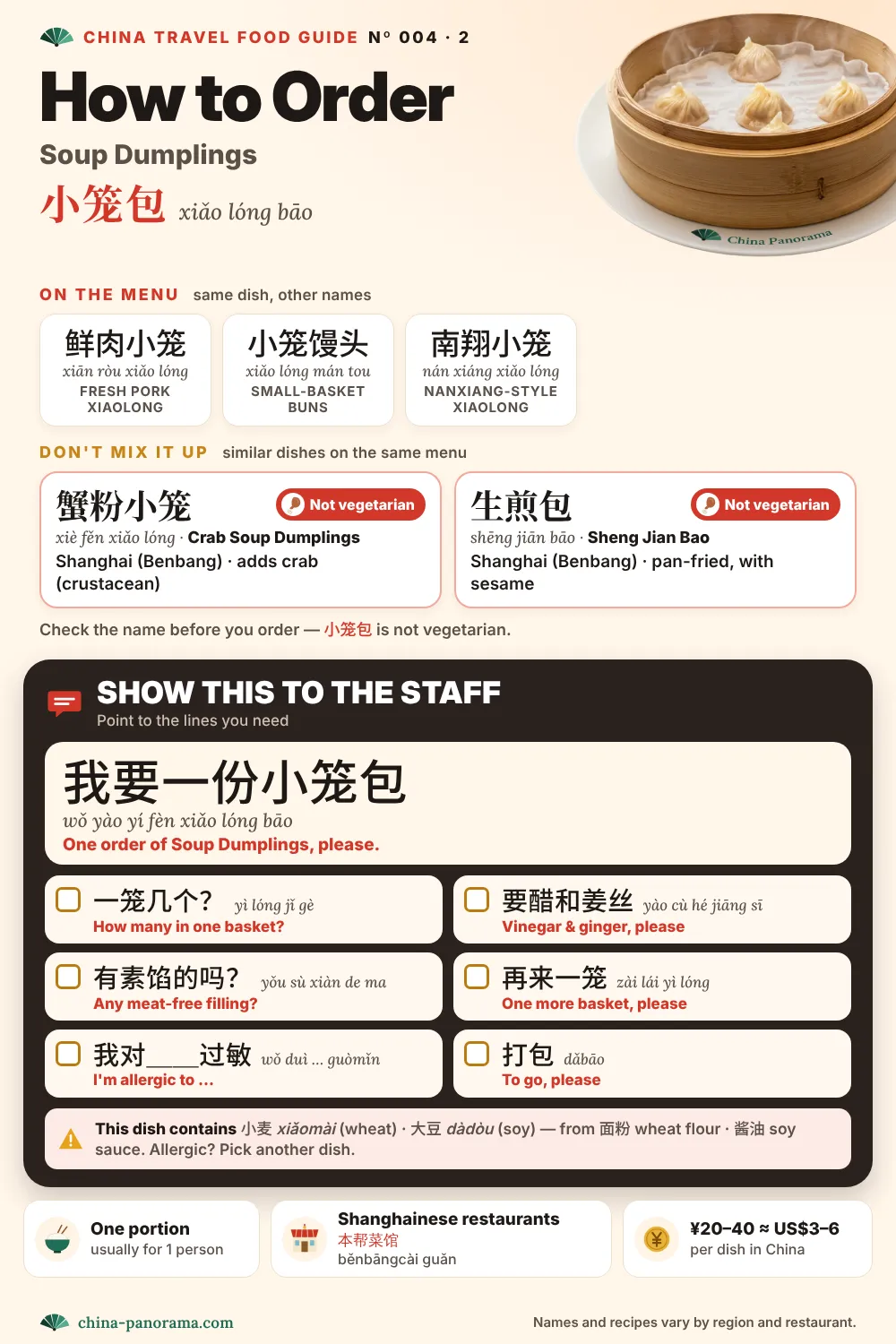
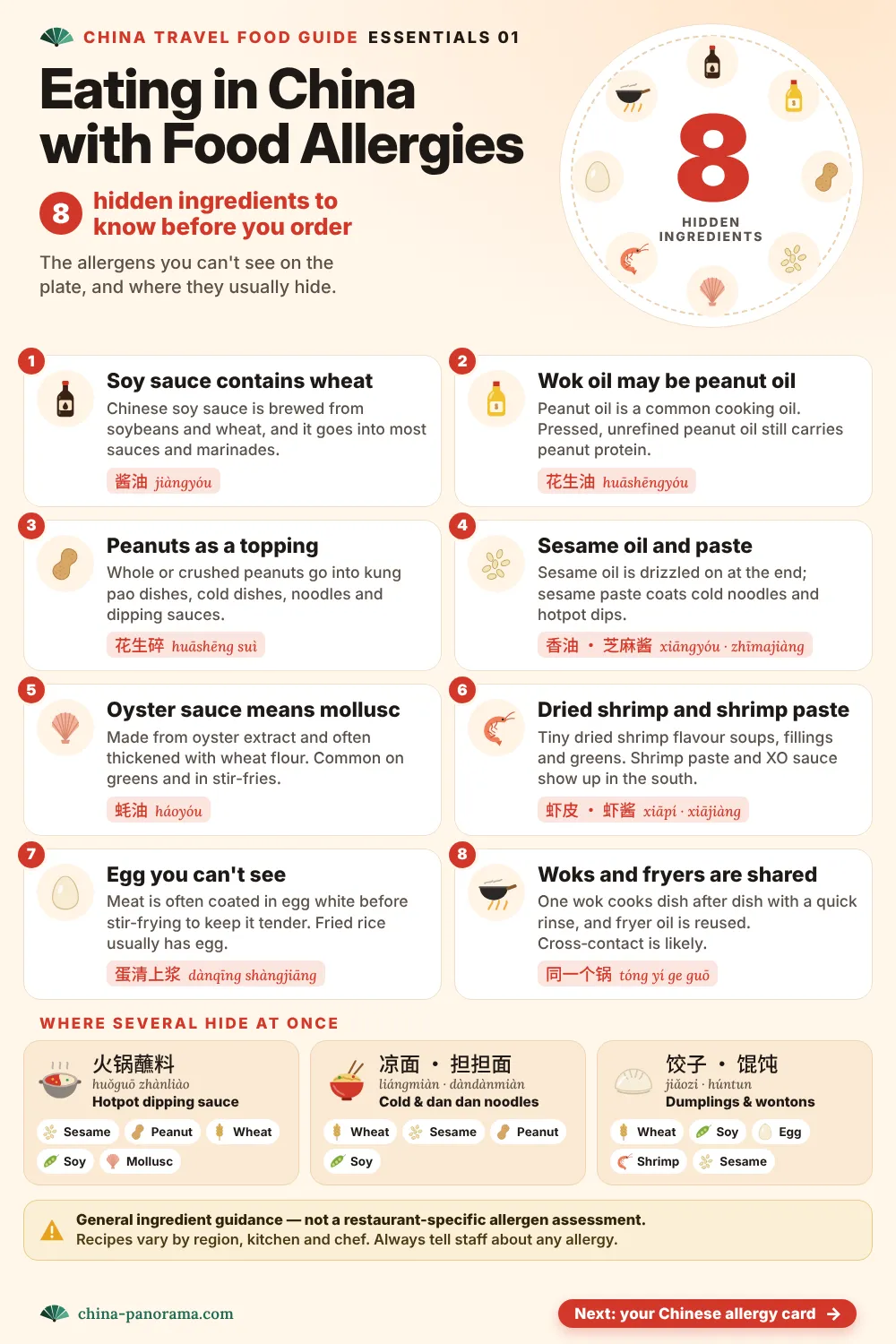
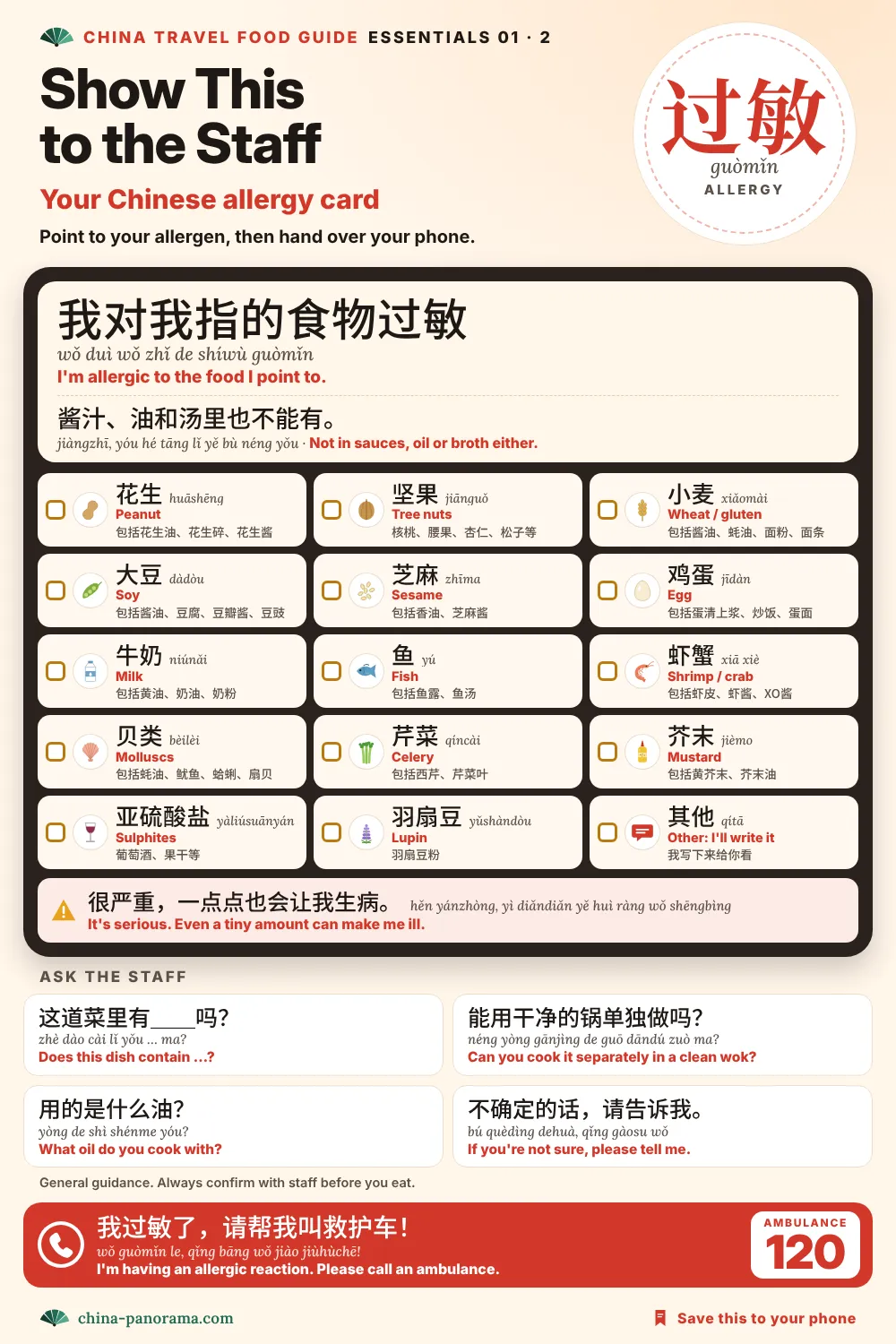
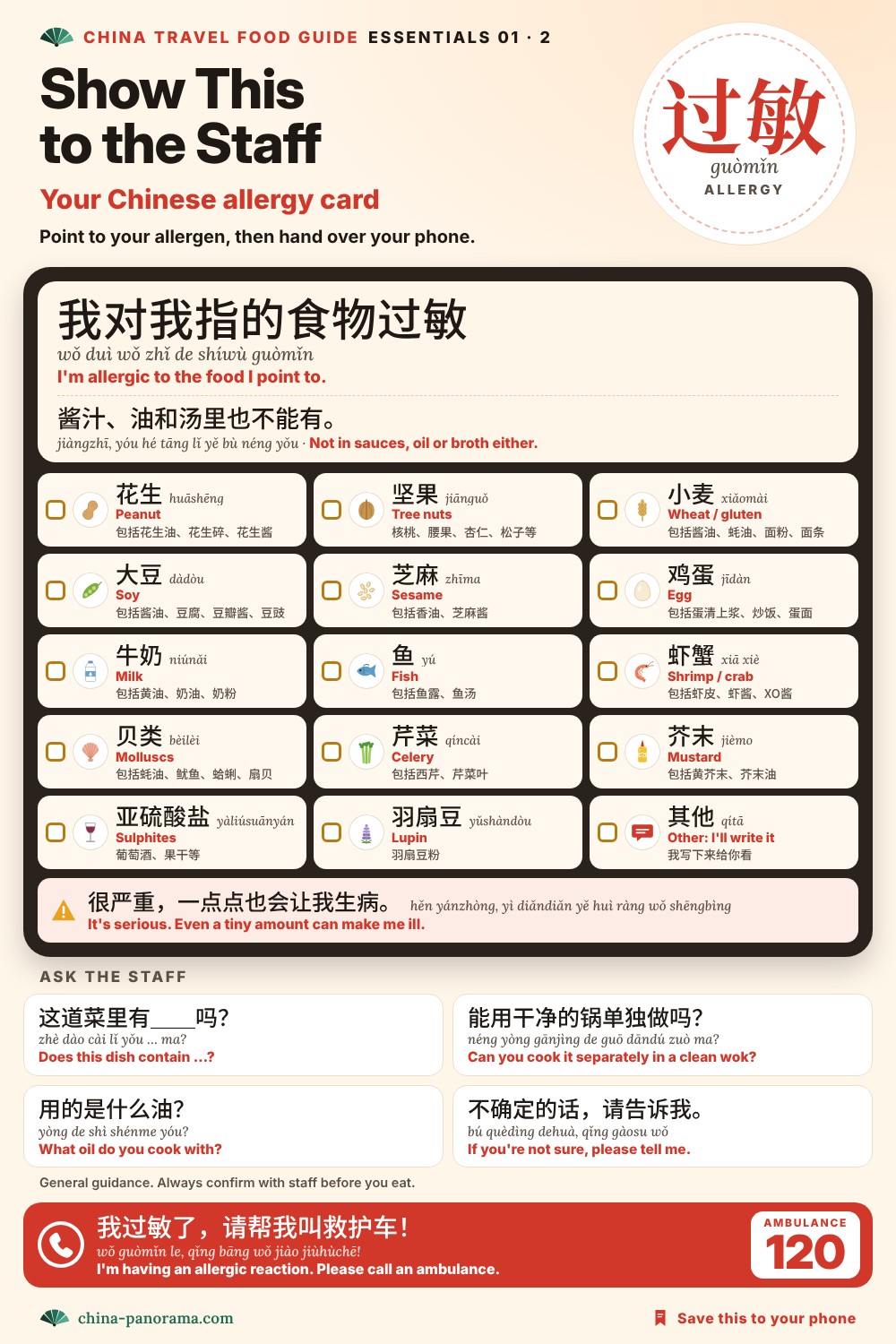
It is a classic of Jiangnan (江南, jiāng nán), the region south of the lower Yangtze: Shanghai, Jiangsu and Zhejiang, or 江浙沪 (jiāng zhè hù) for short. The usual story traces it to Nanxiang, a market town now in Shanghai’s Jiading district, in the 1870s. In Shanghai the menu often says 南翔小笼 after the town, or 小笼馒头 (xiǎo lóng mán tou) – in Shanghainese a filled bun is a 馒头 too. People eat them for breakfast or as a snack (点心, diǎn xin) at any time of day, in dumpling shops, teahouses and Shanghainese restaurants (本帮菜馆, běn bāng cài guǎn) all over China. Plain pork (鲜肉小笼, xiān ròu xiǎo lóng) is the classic; crab (蟹粉小笼) and shrimp (虾仁小笼, xiā rén xiǎo lóng) cost more and add shellfish – check the name if you are allergic.
It costs about ¥20–40 (US$3–6) in an ordinary restaurant in a big city (2026).
What does it taste like?
Savory and rich: the broth inside is a pork stock, a little sweet in the Jiangnan way, and the filling is soft and juicy. The wrapper is thin and a little chewy. Black vinegar with ginger cuts through the fat – most people in China would not eat them without it. Mild and warm; in Wuxi they are clearly sweeter.
Tastes like… Steamed pork dumplings from American Chinese takeout – but with hot broth sealed inside, a much thinner wrapper and a twisted knot on top. In Europe, think of broth-filled tortellini: a small pasta parcel with the soup inside instead of around it.