
- Type
- The Pig’s good nature meets the 1’s pioneering spirit: can settle a quarrel and is at the same time the centre everyone gathers around. Calm, down to earth and very conscientious at work.
- Talents
- Turns conflict into team spirit, keeps a clear goal in sight and works towards it step by step.
- In love
- Takes the first step in love, likes to lead and can be rather possessive.
- At work
- Opening up new fields and leading a team. With a clear goal and patience this type stands out, above all in young industries.
Last verified: 13 Nov 2026
Chinese Zodiac Pig: Meaning, Personality, Years and the 2027 Horoscope
The Pig 猪 zhū is the twelfth and last of the Chinese zodiac animals. It stands for generosity, honesty and good nature, the one who enjoys life and brings wealth into the house. The next Year of the Pig starts on 23 January 2031, a Metal Pig, and lasts until 10 February 2032. Below you will find every Pig year, the five Pigs by element with what Chinese horoscopes advise each of them for 2026, a game with your life number, pigs from two museums, the oldest more than 5000 years old, and the 1983 Pig stamp.
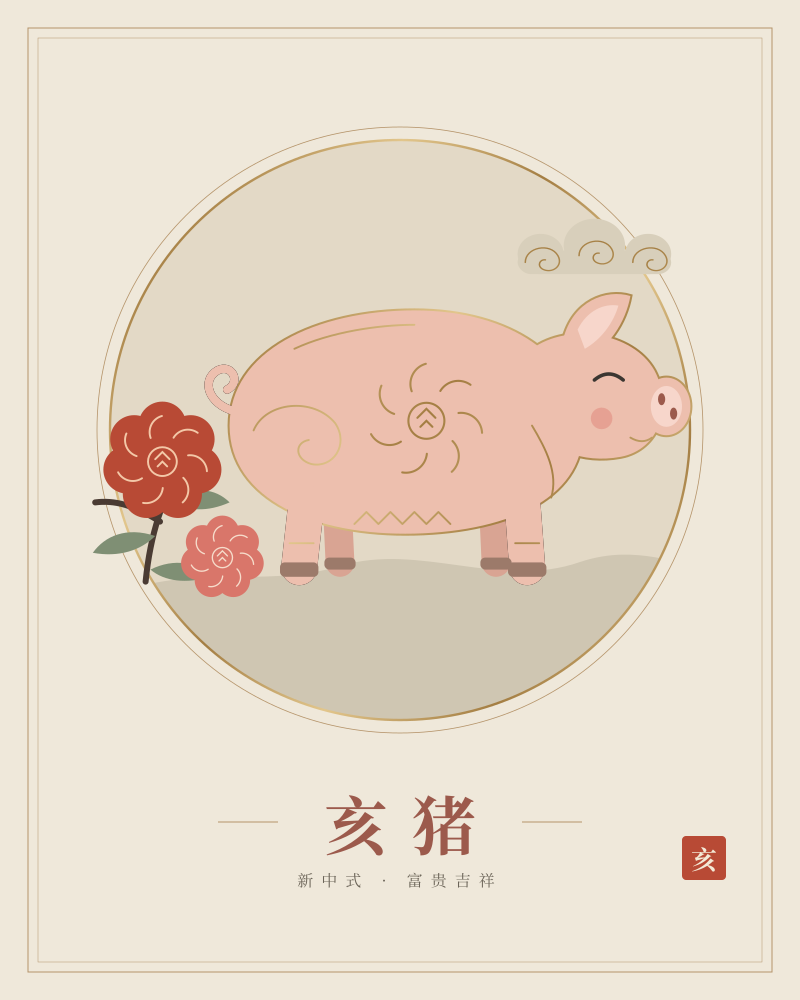
Profile: the Pig in the Chinese zodiac
- Character
- 猪 zhū
- Earthly branch
- 亥 hài, 12th of 12
- Double hour
- 9 to 11 pm
- Direction
- North-northwest
- Element of the branch
- Water
- Month
- Early November to early December
- Best matches
- Rabbit, Goat, Tiger
- Opposite
- Snake
Each of the twelve earthly branches has an animal. The Pig has the branch 亥 hài, which stands for late night, the north-northwest and the start of winter. It belongs to the element water, and the hours from 9 to 11 pm are still called 亥时 hàishí. You will sometimes read “Boar” instead of Pig, it is the same sign. Why it has nothing to do with your Western star sign is explained in the comparison of the Chinese and Western zodiac.
Meaning and personality of the Chinese zodiac Pig
What people in China say about the Pig comes from the farmyard and the festive table: it eats, sleeps and grows round, and a round pig means a good year. From that came the picture of someone who enjoys life, shares what they have and attracts good luck. That is folk belief, not a personality test.
Strengths
- generous and hospitable
- honest, without ulterior motives
- good-natured and easy to get along with
- hard-working when it counts
- enjoys life and makes others enjoy it too
Weaknesses
- gullible, easy to take advantage of
- comfort-loving, puts off unpleasant things
- tends to overdo food and pleasure
- finds it hard to say no
The Pig in love
In love the Pig counts as warm-hearted, tender and faithful. It likes to spoil its partner, cooks, gives presents and makes things cosy, and it trusts quickly, sometimes too quickly. In the classical teaching the Rabbit, Goat and Tiger match it best, the Snake is its opposite. All twelve animals compared are further down.
The Pig woman and the Pig man
Chinese tradition does not distinguish the sign by gender. Horoscope sites like to describe the Pig woman as warm, caring and cheerful, the host everyone feels at home with. They paint the Pig man as good-natured, reliable and generous, with a weakness for good food. These are the same traits as above, just shared out differently.
Lucky numbers and lucky colours
Many horoscope sites give the Pig the lucky numbers 2, 5 and 8 and the colours yellow, grey, brown and gold. There is no old Chinese source for that. What is certain: the branch 亥 belongs to water, and in the five elements the colour of water is black 黑 hēi. Which colours Chinese horoscope charts advise each Pig to wear in 2026 is shown under the five Pigs.
Which years are Pig years? Every one from 1935 to 2031
The Chinese year does not start on 1 January but with the New Year festival between 21 January and 20 February. If you were born in January or February of a Pig year, check the exact days: before New Year it is still the Dog.
| Year | Starts | Ends | Pig | Stem and branch |
|---|---|---|---|---|
| 1935 | 4 February 1935 | 23 January 1936 | Wood Pig | 乙亥 |
| 1947 | 22 January 1947 | 9 February 1948 | Fire Pig | 丁亥 |
| 1959 | 8 February 1959 | 27 January 1960 | Earth Pig | 己亥 |
| 1971 | 27 January 1971 | 14 February 1972 | Metal Pig | 辛亥 |
| 1983 | 13 February 1983 | 1 February 1984 | Water Pig | 癸亥 |
| 1995 | 31 January 1995 | 18 February 1996 | Wood Pig | 乙亥 |
| 2007 | 18 February 2007 | 6 February 2008 | Fire Pig | 丁亥 |
| 2019 | 5 February 2019 | 24 January 2020 | Earth Pig | 己亥 |
| 2031next | 23 January 2031 | 10 February 2032 | Metal Pig | 辛亥 |
New Year dates in China time, each checked against the astronomical new moon. All the other animals and a finder for any birthday since 1924 are in the overview of the twelve Chinese zodiac signs.
The Pig’s five elements: Metal Pig 1971, Water Pig 1983, Wood Pig 1995, Fire Pig 2007, Earth Pig 2019
The same Pig comes back every 60 years, because the twelve animals are combined with ten heavenly stems that give each year an element. So there are five versions of the Pig. You can tell the element by the last digit of the year: 1 metal, 3 water, 5 wood, 7 fire, 9 earth. The branch 亥 itself is water, yin water, the still water of a winter night. How the elements fit together is explained on the page about the five elements.
The cards also show what a widely shared Chinese horoscope chart advises each Pig for the Year of the Fire Horse 2026. Its idea: 丙午 is double fire, and fire is water’s opponent. Depending on the element a Pig brings along, it should strengthen a different element. That is fortune-telling, not fixed tradition, but it shows nicely how people in China calculate with the five elements.
 木猪
Wood Pig1935 · 1995
- Stem and branch:
- 乙亥
- How stem and branch get on:
- 水生木, wood over water: water feeds wood
- Nayin:
- 山头火 shān tóu huǒ, “fire on the mountain top” (Fire)
- Colour of the element:
- 青 blue-green
2026: 补水固本 “top up the water, strengthen the root”
Water feeds wood, wood feeds the fire of the year: the strength drains away along a chain. The chart says to top up at the source, that is to strengthen water and go easy on wood.
Colours in the chart: blue, black
It suggests: dark stones counted as water, such as a bracelet of obsidian or aquamarine
 火猪
Fire Pig1947 · 2007
- Stem and branch:
- 丁亥
- How stem and branch get on:
- 水克火, fire over water: water puts out fire
- Nayin:
- 屋上土 wū shàng tǔ, “earth on the roof” (Earth)
- Colour of the element:
- 赤 red
2026: 水火相克 “water and fire at odds”
Fire (stem) and water (branch) already quarrel within the birth year, and 2026 adds the year’s fire. The chart suggests a bridge: water feeds wood, wood feeds fire, and the quarrel turns into a chain.
Colours in the chart: yellow, brown
It suggests: wood, such as a bracelet of agarwood or sandalwood
 土猪
Earth Pig1959 · 2019
- Stem and branch:
- 己亥
- How stem and branch get on:
- 土克水, earth over water: earth dams water
- Nayin:
- 平地木 píng dì mù, “wood on the plain” (Wood)
- Colour of the element:
- 黄 yellow
2026: 土金相生 “metal eases the pressure”
Earth dams its own water, and the year’s fire makes the earth even stronger: pressure from inside and out. The chart bets on metal, because it weakens earth and feeds water at the same time, two birds with one stone.
Colours in the chart: white, silver
It suggests: a silver bracelet or one of rock crystal
 金猪
Metal Pig1911 · 1971 · 2031
- Stem and branch:
- 辛亥
- How stem and branch get on:
- 金生水, metal over water: metal feeds water
- Nayin:
- 钗钏金 chāi chuàn jīn, “metal of hairpins and bracelets” (Metal)
- Colour of the element:
- 白 white
2026: 强金生水 “strengthen metal so it can feed water”
Metal feeds the water of the branch, but the year’s fire melts metal, so 2026 attacks the source. The chart says to firm up the metal so it can keep feeding water.
Colours in the chart: white, black, blue
It suggests: rock crystal or rutilated quartz (metal) together with black agate or aquamarine (water)
 水猪
Water Pig1923 · 1983 · 2043
- Stem and branch:
- 癸亥
- How stem and branch get on:
- 水水比和, water over water: twice as strong
- Nayin:
- 大海水 dà hǎi shuǐ, “water of the great sea” (Water)
- Colour of the element:
- 黑 black
2026: 金水相生 “metal feeds water”
Double water is in harmony with itself, but in 2026 it has to fight the year’s fire, and that is tiring. The chart recommends metal as a supply, so the water keeps the fire under control.
Colours in the chart: white, gold, silver
It suggests: gold or silver jewellery, rock crystal
Charts like this often add a second element, the nayin 纳音 nàyīn. It comes from the teaching of the 60 pairs that fortune-tellers use and has picturesque names like “water of the great sea” for the Water Pig. When someone in China talks about a Water Pig, though, they almost always mean the element of the heavenly stem, the one in the card’s heading. The stones and bracelets in the charts are business, not tradition: the old texts on the five elements do not mention them.
Pig horoscope 2026 and 2027, and the Year of the Pig 2031
2026: Year of the Horse
Between the Horse 午 and the Pig 亥 the classical teaching of the branches knows neither harmony nor clash, so the year is neutral for the Pig. Chinese horoscope charts still count with the elements: 丙午 is double fire, and the Pig brings water. So each of the five Pigs gets its own advice until 5 February 2027, see above.
2027: Year of the Goat
A good year: Pig, Rabbit and Goat together form the wood trine 三合 亥卯未. From 6 February 2027 to 25 January 2028 the Goat counts as the Pig’s ally. More on the year of the Fire Goat is on the page about the Chinese zodiac Goat.
2031: What colour is the Year of the Pig?
White. Every year gets an element from its heavenly stem. In 2031 it is 辛 xīn, yin metal, and in the five elements metal has the colour white 白 bái. Because metal feeds the water of the branch 亥, 辛亥 counts as a harmonious pair. The last Pig, in 2019, was an Earth Pig and so yellow. Other “lucky colours” for 2031 that you find online differ from site to site.
猪, 豕 and 彘 Three words for the pig
In everyday speech it is 猪 zhū, and that is the name of the sign too. The oldest word is 豕 shǐ, a picture of the animal with snout, belly and tail, the one hidden in 家 “home”. A third, 彘 zhì, appears in old texts. And in 豚 tún “piglet” the pig stands next to the character for meat.
If you are a Pig yourself, 2031 is your own year, your 本命年 běnmìngnián. That is everyone who turns 12, 24, 36, 48, 60, 72 or 84 in 2031. Your own year traditionally counts as tricky, so many Pigs wear something red from 23 January 2031 to 10 February 2032: red socks, underwear or a red bracelet, ideally a gift from a partner or parents. How the New Year festival works is on the page about Chinese New Year 2027.
Game: what does your life number say about you as a Pig?
On Chinese social media there are charts that combine the Pig with the life number 生命数字 shēngmìng shùzì: nine Pig types with character, talents, love and work. First you need your number.
How to calculate your life number
- Write down your date of birth with all its digits: day, month and year, the year with four digits.
- Add up all the digits. The order does not matter, zeros change nothing.
- If the result has two digits, add those together again.
- Repeat until a single digit from 1 to 9 is left. That is your life number.
Example 29 July 1983, a Water Pig:
1+9+8+3+0+7+2+9=39
3+9=12
1+2=3
Example 24 November 2007, a Fire Pig:
2+0+0+7+1+1+2+4=17
1+7=8
Some numerologists stop at 11, 22 and 33 and call them “master numbers”. The Chinese charts only know 1 to 9 and always add down to the last digit.
Or let the game do the sums. It also checks whether your birthday really falls in a Pig year:
✓ A Pig. Born in the Year of the Water Pig 癸亥, which began on 13 February 1983.
Play along: add up all the digits until only one is left
- Step 1:1983072939
- Step 2:3912
- Step 3:123
Your life number is 3.
See another number:
- Type
- Easy-going and balancing, keeps the mood good in any team. Leads a calm life and knows how to enjoy it.
- Talents
- Talks well with people, senses at once how someone feels and smooths out quarrels. The oil in every group’s machinery.
- In love
- Attached to the partner, wants a harmonious, stable relationship and values talking things through together.
- At work
- Human resources, customer service, any job that means bringing people together.
- Type
- Has an outgoing, playful side and a quiet, inward one. Likes to live well and has what it takes to earn it.
- Talents
- Creative and versatile, thinks nimbly, settles into new things fast and brings fresh ideas.
- In love
- Passionate and romantic, loves planning surprises and enjoys being in love to the full.
- At work
- Art, design, marketing, anywhere ideas and charisma draw the eye.
- Type
- Orderly and with both feet on the ground, and so comes across as reliable and trustworthy. Family and a secure job matter a lot.
- Talents
- Thinks logically, organises superbly, works carefully and pays attention to every detail.
- In love
- Faithful and centred on the family, quietly gives a lot for it and protects its own.
- At work
- Finance, administration, project management, work that needs thoroughness and planning.
- Type
- Cheerful and open, wants to be free and dislikes being tied down. Adapts very fast and soon feels at home anywhere new.
- Talents
- Reacts flexibly, enjoys trying new things, has a taste for adventure and seizes the chance to change things.
- In love
- Wants a free love with room of its own, looks for novelty and loves romantic dates.
- At work
- Sales, tourism, freelancing, varied jobs where freedom is an advantage.
- Type
- Kind and compassionate, enjoys looking after others and is the support family and friends rely on. Harmony at home comes first.
- Talents
- Lots of empathy, helps others out of a fix and gets on well with almost everyone.
- In love
- Tender and caring, puts the partner’s wishes first and makes a warm home, an ideal companion.
- At work
- Services, education, medicine, jobs in which caring earns recognition.
- Type
- Clever and sharp, loves to think and is curious about anything mysterious. Quickly sees what lies behind things.
- Talents
- A keen mind with great analytical power, thinks deeply and gets to the root of problems.
- In love
- Careful with feelings, above all looks for a meeting of minds and a soulmate for deep conversations.
- At work
- Research, financial analysis, investigation, work that needs deep thought and insight.
- Type
- Strong leadership and organising power, ambitious with big plans. Stands up to pressure when things get hard.
- Talents
- A born leader, decides fast, has a head for business and takes a team to success.
- In love
- Likes to set the tone in a relationship and wants a partner who understands and backs the career, so both move forward.
- At work
- Your own business, company management, leading roles in which you decide and steer.
- Type
- Combines the 9’s wisdom with the Pig’s good nature: generous, big-hearted, happy to help others.
- Talents
- Wise and far-sighted, can show others the way and thinks beyond its own horizon.
- In love
- Full of affection and sincere, gives everything for love, with deep feelings.
- At work
- Charity work, education, cultural exchange, anywhere you pass on love and knowledge.
A game from Chinese social media, not a prediction. Where the life number comes from is explained below.
Where does the life number come from?
Not from China. The life number belongs to Western numerology, which claims the Greek philosopher Pythagoras as its founder and became popular mainly in the 20th century. Chinese platforms have mixed it with the zodiac, much as Western horoscope books combine the animal with the star sign. Ancient Chinese number lore, such as the Hetu diagram 河图 on the page about the five elements, works quite differently. Take the texts as a game, not a forecast. The same game exists for the Rat, Ox, Tiger, Rabbit, Dragon, Snake, Horse, Goat, Monkey, Rooster and Dog.
All nine life numbers for the Pig at a glance
1The calm leader
- Type:
- The Pig’s good nature meets the 1’s pioneering spirit: can settle a quarrel and is at the same time the centre everyone gathers around. Calm, down to earth and very conscientious at work.
- Talents:
- Turns conflict into team spirit, keeps a clear goal in sight and works towards it step by step.
- In love:
- Takes the first step in love, likes to lead and can be rather possessive.
- At work:
- Opening up new fields and leading a team. With a clear goal and patience this type stands out, above all in young industries.
2The peacemaker
- Type:
- Easy-going and balancing, keeps the mood good in any team. Leads a calm life and knows how to enjoy it.
- Talents:
- Talks well with people, senses at once how someone feels and smooths out quarrels. The oil in every group’s machinery.
- In love:
- Attached to the partner, wants a harmonious, stable relationship and values talking things through together.
- At work:
- Human resources, customer service, any job that means bringing people together.
3The ideas person
- Type:
- Has an outgoing, playful side and a quiet, inward one. Likes to live well and has what it takes to earn it.
- Talents:
- Creative and versatile, thinks nimbly, settles into new things fast and brings fresh ideas.
- In love:
- Passionate and romantic, loves planning surprises and enjoys being in love to the full.
- At work:
- Art, design, marketing, anywhere ideas and charisma draw the eye.
4The rock
- Type:
- Orderly and with both feet on the ground, and so comes across as reliable and trustworthy. Family and a secure job matter a lot.
- Talents:
- Thinks logically, organises superbly, works carefully and pays attention to every detail.
- In love:
- Faithful and centred on the family, quietly gives a lot for it and protects its own.
- At work:
- Finance, administration, project management, work that needs thoroughness and planning.
5The free spirit
- Type:
- Cheerful and open, wants to be free and dislikes being tied down. Adapts very fast and soon feels at home anywhere new.
- Talents:
- Reacts flexibly, enjoys trying new things, has a taste for adventure and seizes the chance to change things.
- In love:
- Wants a free love with room of its own, looks for novelty and loves romantic dates.
- At work:
- Sales, tourism, freelancing, varied jobs where freedom is an advantage.
6The big heart
- Type:
- Kind and compassionate, enjoys looking after others and is the support family and friends rely on. Harmony at home comes first.
- Talents:
- Lots of empathy, helps others out of a fix and gets on well with almost everyone.
- In love:
- Tender and caring, puts the partner’s wishes first and makes a warm home, an ideal companion.
- At work:
- Services, education, medicine, jobs in which caring earns recognition.
7The one who sees through things
- Type:
- Clever and sharp, loves to think and is curious about anything mysterious. Quickly sees what lies behind things.
- Talents:
- A keen mind with great analytical power, thinks deeply and gets to the root of problems.
- In love:
- Careful with feelings, above all looks for a meeting of minds and a soulmate for deep conversations.
- At work:
- Research, financial analysis, investigation, work that needs deep thought and insight.
8The boss
- Type:
- Strong leadership and organising power, ambitious with big plans. Stands up to pressure when things get hard.
- Talents:
- A born leader, decides fast, has a head for business and takes a team to success.
- In love:
- Likes to set the tone in a relationship and wants a partner who understands and backs the career, so both move forward.
- At work:
- Your own business, company management, leading roles in which you decide and steer.
9The sage
- Type:
- Combines the 9’s wisdom with the Pig’s good nature: generous, big-hearted, happy to help others.
- Talents:
- Wise and far-sighted, can show others the way and thinks beyond its own horizon.
- In love:
- Full of affection and sincere, gives everything for love, with deep feelings.
- At work:
- Charity work, education, cultural exchange, anywhere you pass on love and knowledge.
The texts give a widely shared Chinese chart in our own words.
Pig compatibility: which signs match the Pig?
The classical teaching derives this from the animals’ positions in the circle. Pig, Rabbit and Goat form a trine 三合 sānhé, the “wood trine”, and Tiger and Pig a pair 六合 liùhé. Curiously, the same two also form a break 破, so the teaching sees attraction with friction in them. With the Rat and Ox the Pig shares the north and winter 三会 sānhuì. The Snake is directly opposite the Pig, and with the Monkey it has friction 害. Two Pigs form a “self-punishment” 自刑: too much of the same is not good either. A folk rhyme still heard when weddings are planned:
猪猴不到头
“Pig and Monkey do not last to the end.”
 Rat 鼠Neutral
 Ox 牛Neutral
 Tiger 虎Good match (六合 liùhé)
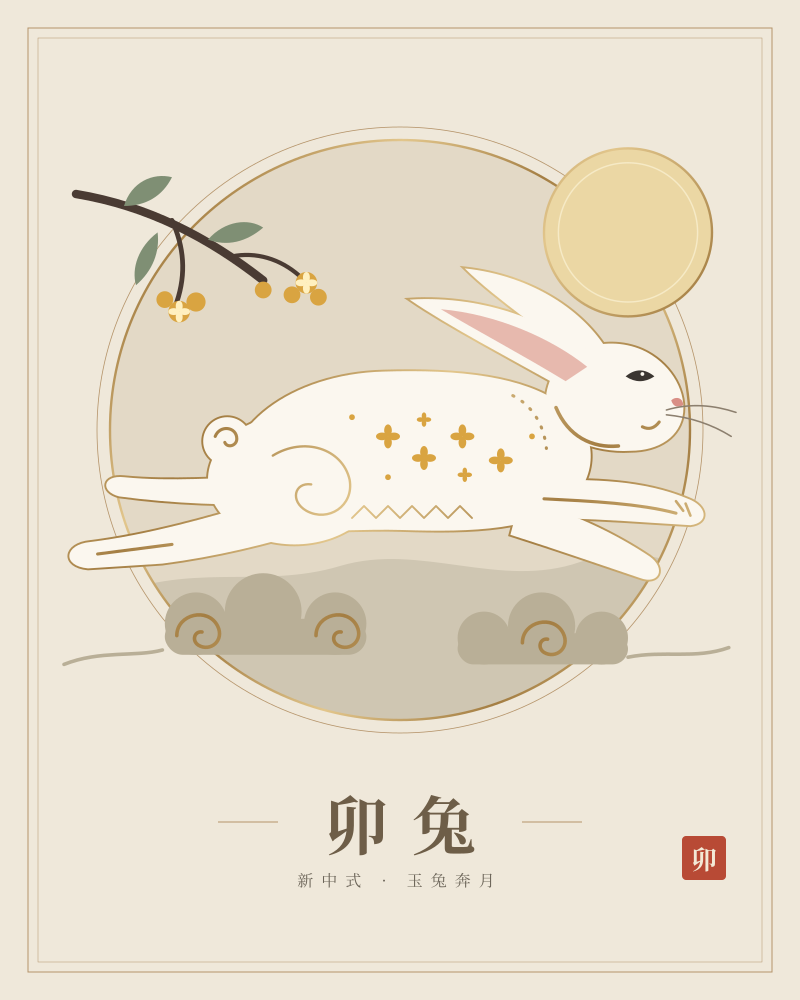 Rabbit 兔Good match (三合 sānhé)
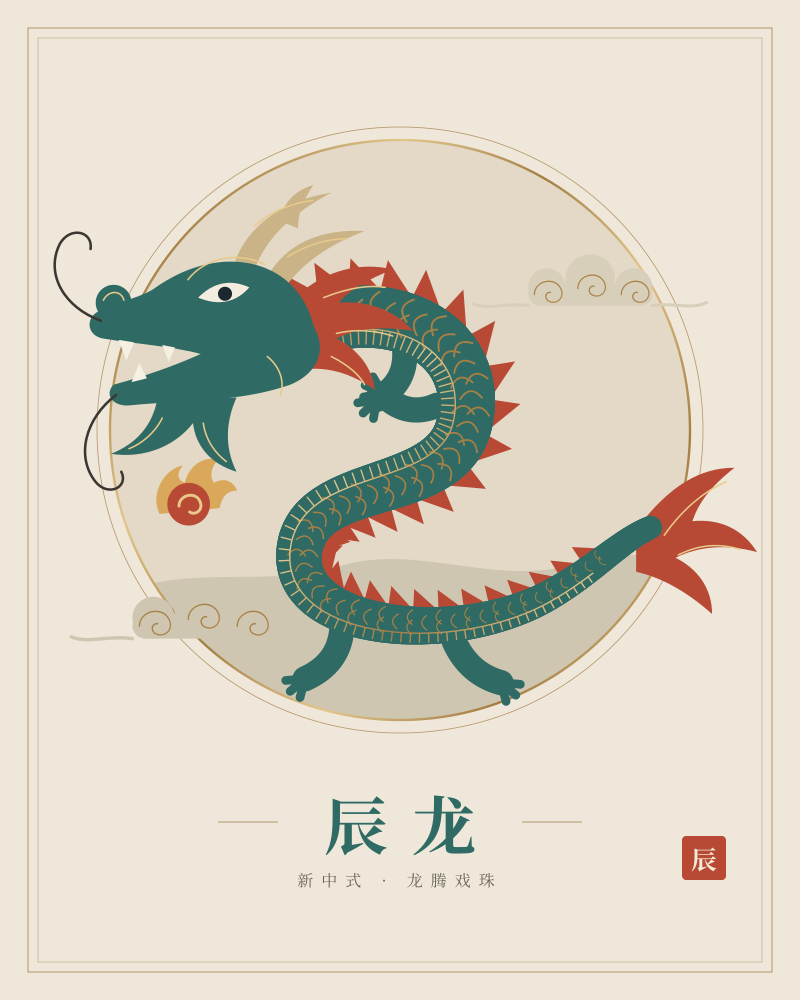 Dragon 龙Neutral
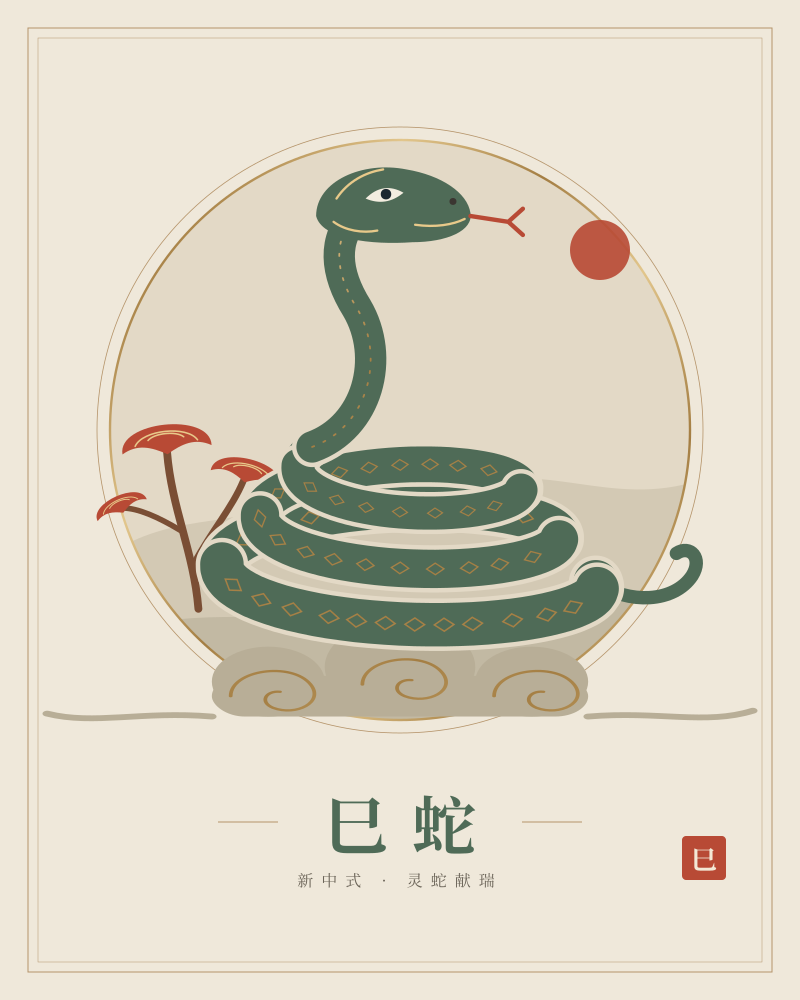 Snake 蛇Clash (冲 chōng)
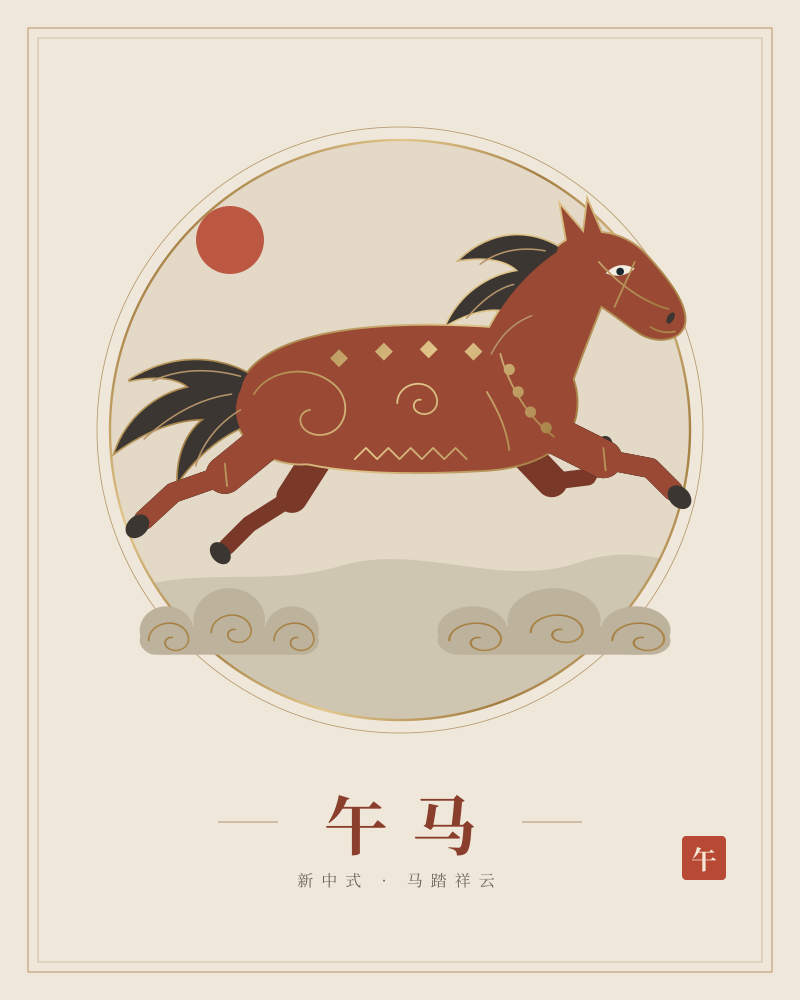 Horse 马Neutral
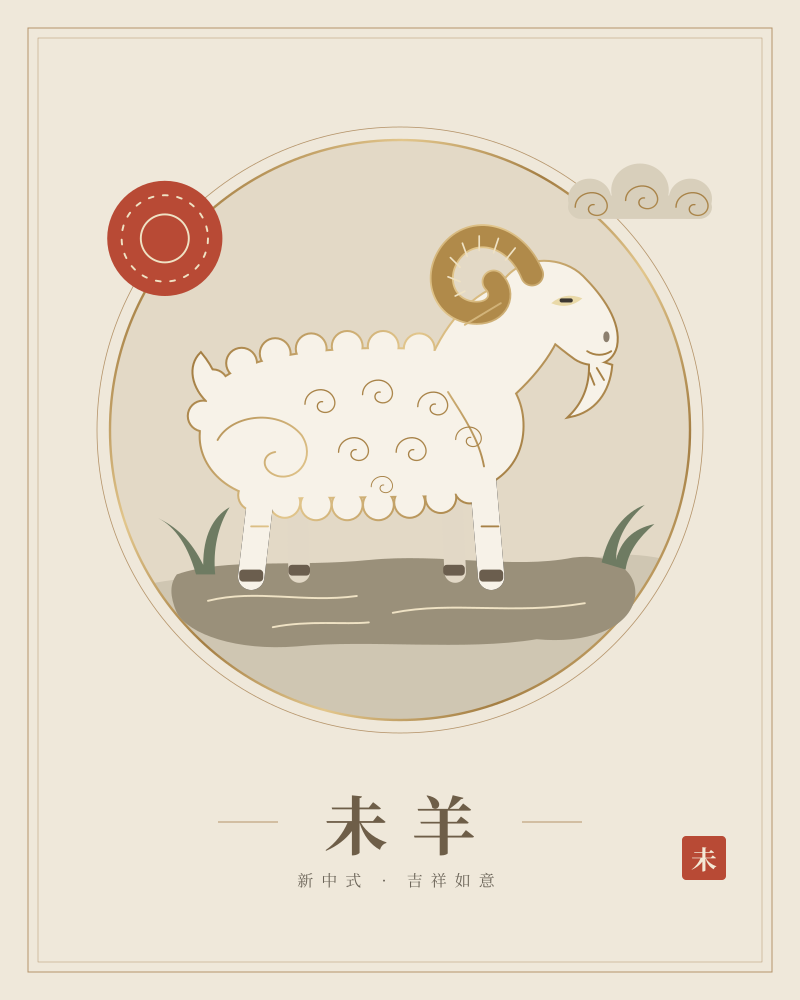 Goat 羊Good match (三合 sānhé)
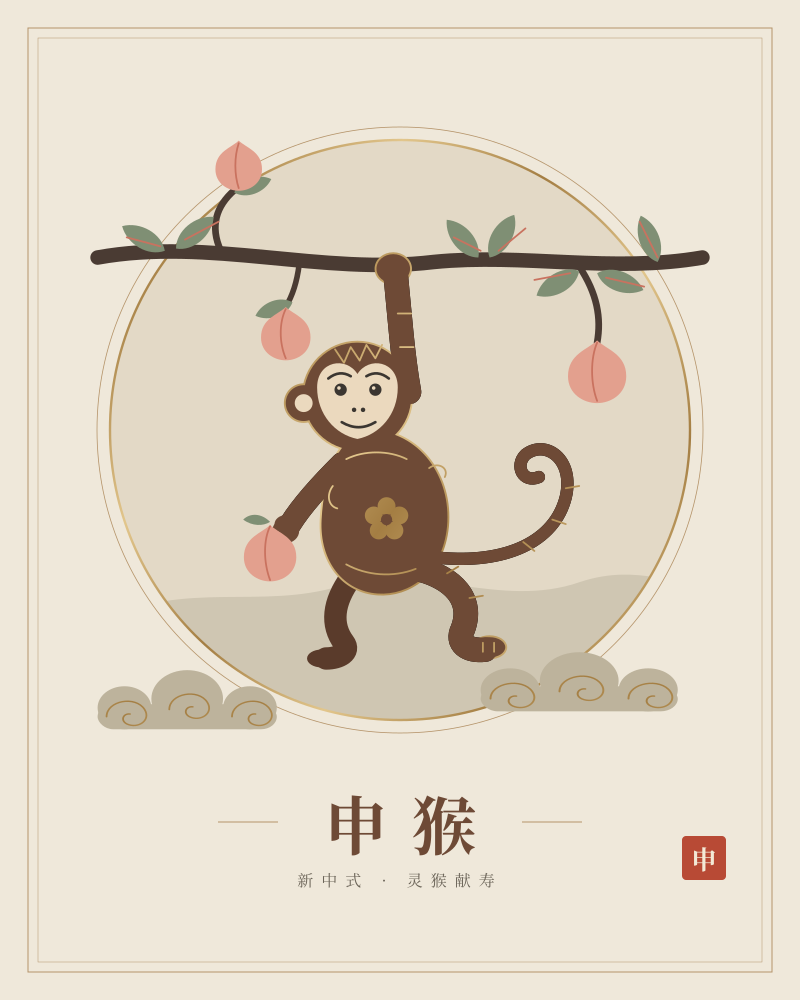 Monkey 猴Friction (害 hài)
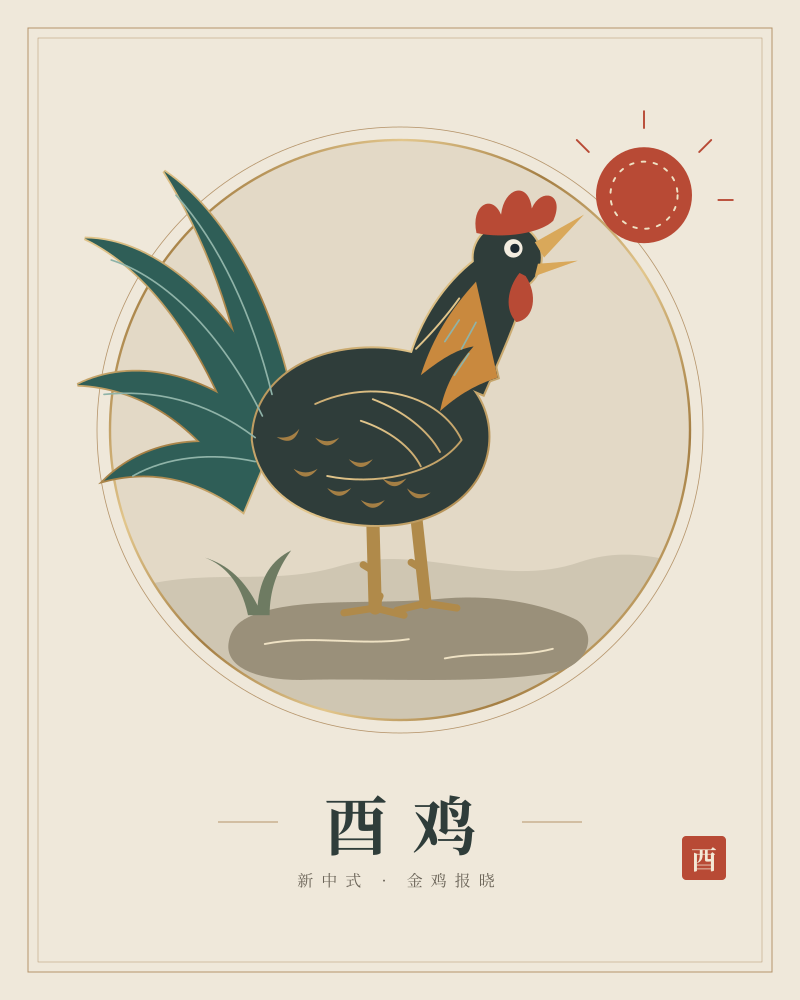 Rooster 鸡Neutral
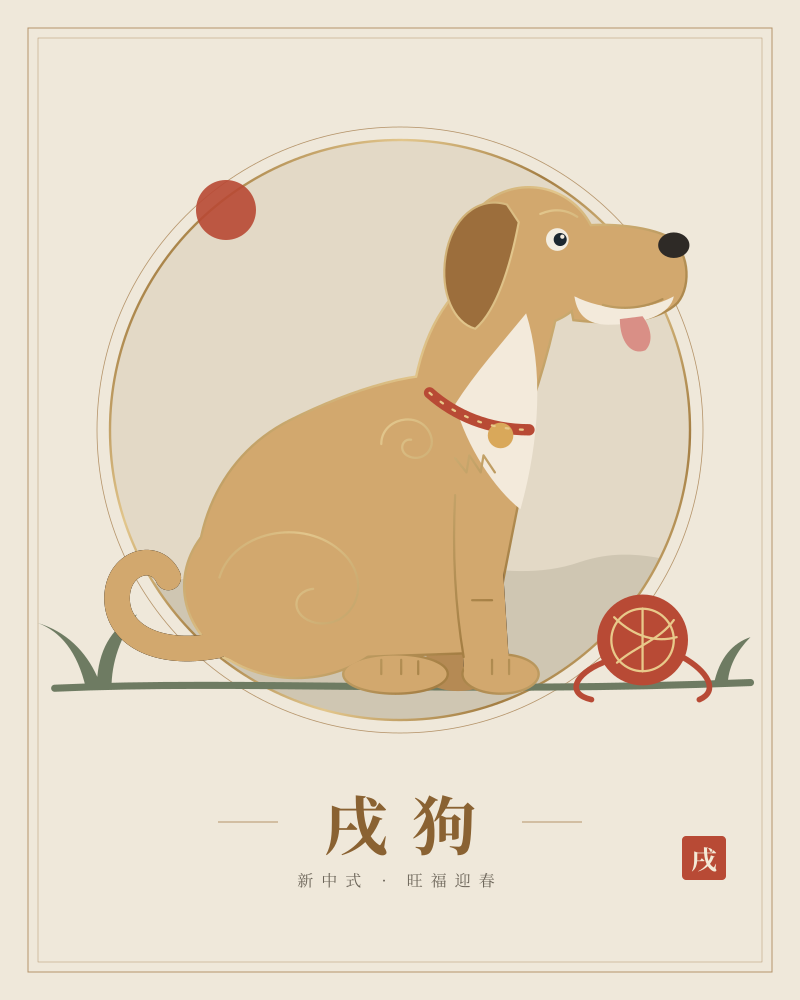 Dog 狗Neutral
Tradition, not a forecast. Some families in China still ask about it when planning a wedding, most couples take it lightly.
The Pig in ancient China: home, wealth and Zhu Bajie
China is one of the places where the pig was first domesticated. Four ideas still shape how people see it:
- 家A pig under the roof
- The character for family and home, 家 jiā, shows a roof 宀 with 豕 shǐ, the old word for pig, underneath. People along the Yellow River and the Yangtze were keeping domestic pigs 8000 years ago. Owning a pig meant meat for the feasts and a settled life.
- 亥The last animal in the circle
- The branch 亥 hài stands for the hours from 9 to 11 pm, when everyone is asleep, and for the start of winter. The circle ends with it, and then everything begins again with the Rat 子. The character 亥 looks so much like 豕 “pig” that scribes were already mixing them up 2000 years ago.
- 福The pig as a lucky charm
- A fat pig means wealth: on New Year prints the “fat pig pushes the door open” 肥猪拱门 féizhū gǒng mén and brings treasure into the house. Piggy banks are just as familiar in China, and in a Pig year pink piglets with the character 福 fú “good fortune” fill every shop window.
- 八戒Zhu Bajie, China’s most famous pig
- In the 16th-century novel Journey to the West, Zhu Bajie 猪八戒 travels with the monk Tang Sanzang to India. He used to be a heavenly marshal but was punished by being reborn from a sow. He is greedy, lazy and falls for every pretty woman, and that is exactly why the Chinese still love him.
The Pig in the museum: a jade pig-dragon and four pieces from New York
First comes the oldest piece, a jade pig-dragon from the Palace Museum in Taipei. The other four are in New York: for the Year of the Pig 2019 the Metropolitan Museum of Art in New York showed the exhibition “Celebrating the Year of the Pig” from 4 February to 23 July, with pigs by Chinese artists from 2000 years. The museum set out to show why the pig is a symbol of wealth everywhere and what place it had in people’s lives. Besides two complete sets of the twelve zodiac figures, it singled out one piece: a recumbent pig of clay. Both museums have released the photos into the public domain.
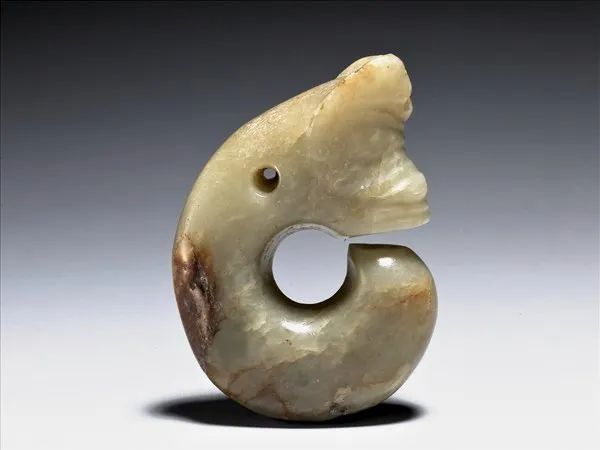
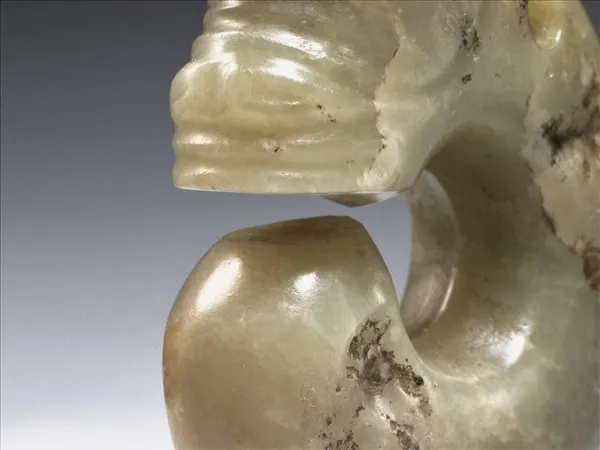
A pig-dragon from the Neolithic 红山文化玉猪龙
The oldest pig on this page is more than 5000 years old. The Hongshan culture flourished in the Neolithic in northeast China, in today’s Inner Mongolia and Liaoning, and is famous for its jade work. Its best-known form is this coiled body with a large head. Archaeologists call it 玉猪龙 yù zhūlóng, “jade pig-dragon”: the head with upright ears, bulging eyes and a wrinkled snout recalls a pig, the body curls like a dragon.
This piece of pale yellow-green jade is just under 8 centimetres tall. Arcs run around the eyes, and the bridge of the nose and the snout are covered in dense folds, clearly visible in the close-up on the right. A cord through the hole in the back let people wear it. Whether it really shows a pig is open: some scholars see the embryo of a tiger in it. Many consider such figures early ancestors of the Chinese dragon, but that is debated too.
Jade pig-dragon, late Hongshan culture, about 4500–3000 BC. Pale yellow-green jade, L. 7.8 cm, W. 5.6 cm, Th. 2.1–2.6 cm. Palace Museum, Taipei, no. 購玉000316, photo public domain (CC0).
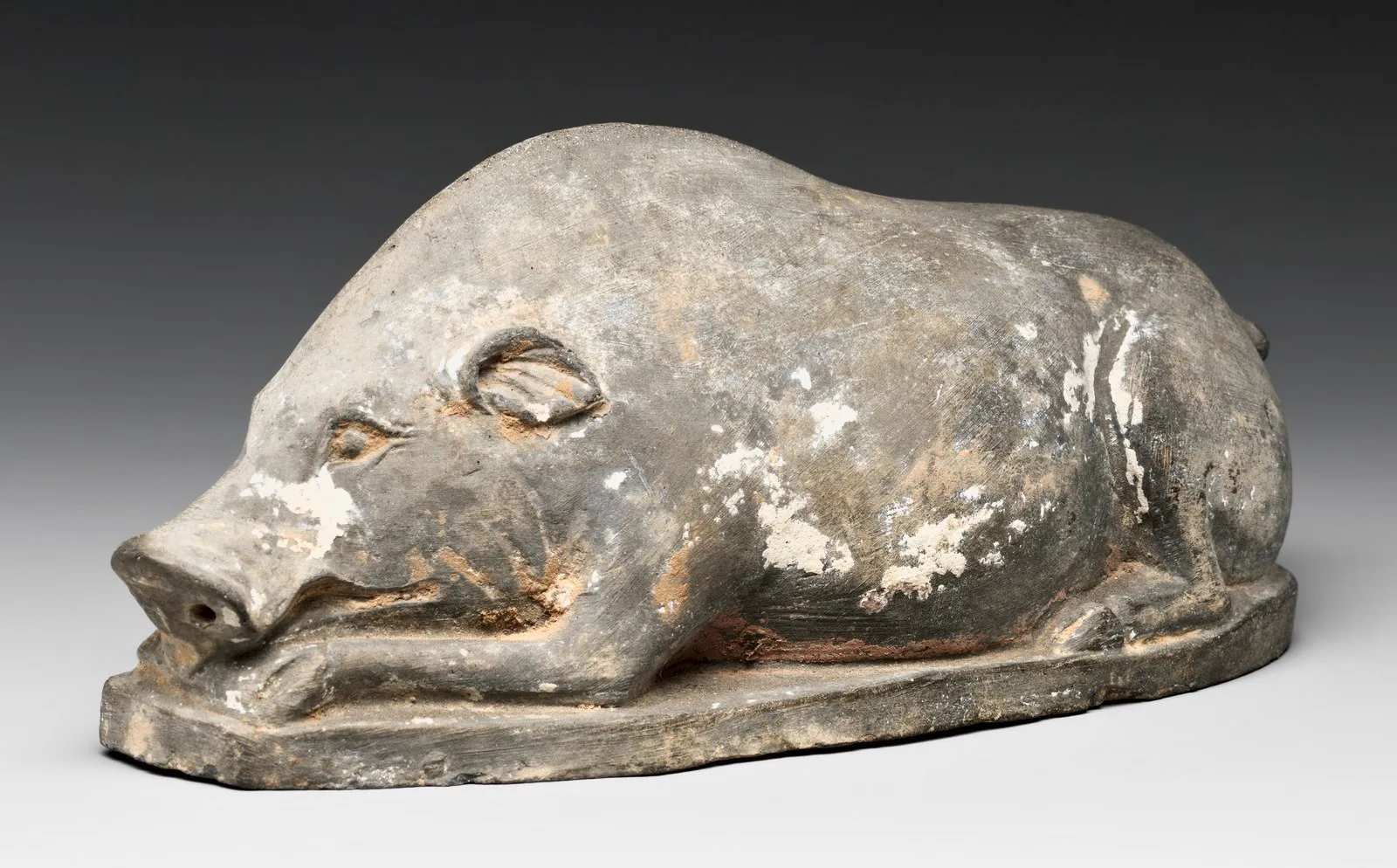
A recumbent pig, 6th century 北朝陶卧猪
Broad and heavy, this pig lies on its base with its snout on its front legs, as if about to fall asleep. It is only 7.6 centimetres high but 17 centimetres long and dates from the Northern Dynasties, between the Northern Wei and the Northern Qi. With its long snout and stocky body it still looks a lot like a wild boar.
Figures like this went into the grave together with clay pigsties, chickens and granaries: the dead were to have a well-stocked farm in the afterlife. The figure was once painted, and the white and reddish patches are the last traces of it.
Pig, China, Northern Wei (386–534) to Northern Qi (550–577), 6th century. Earthenware with pigment, H. 7.6 cm, L. 17.1 cm. The Metropolitan Museum of Art, New York, Gift of Mr. and Mrs. Ezekiel Schloss, 1985, accession no. 1985.208.1, public domain (CC0). Not on view.
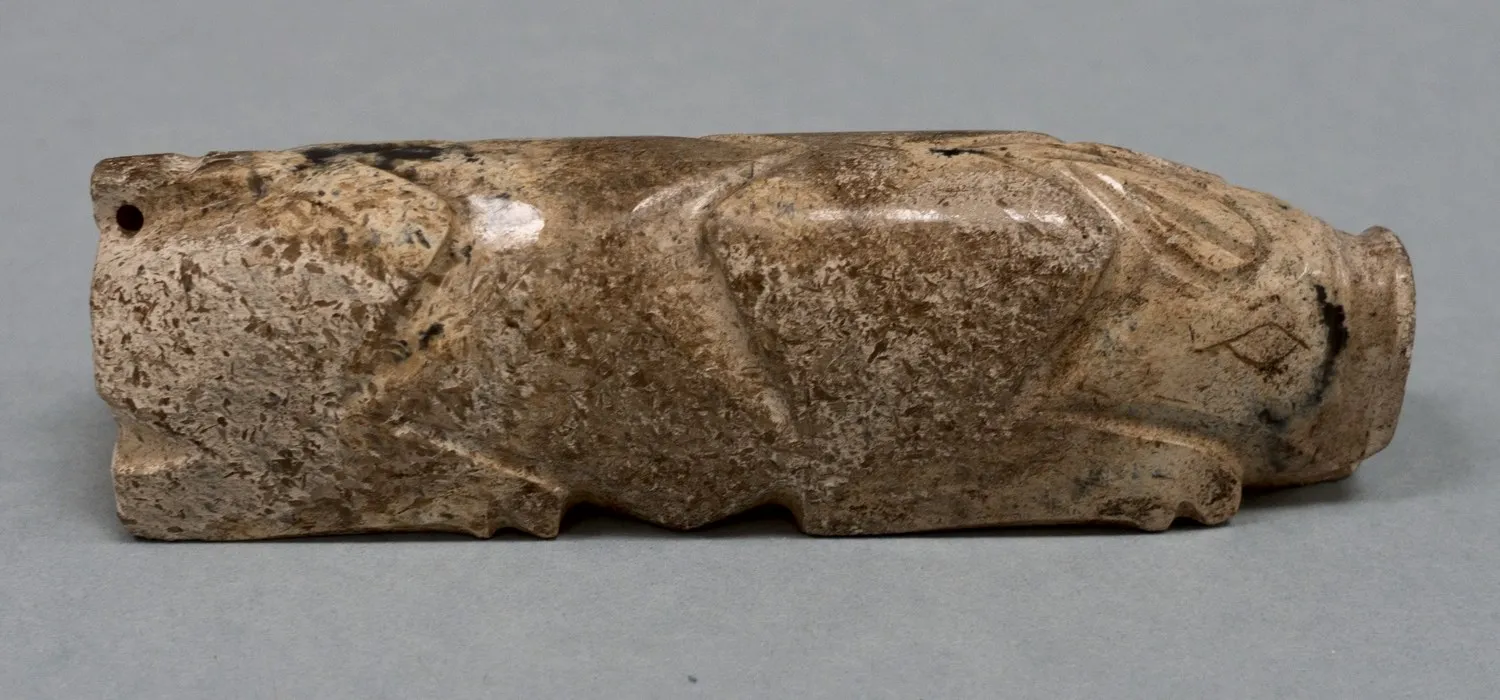
Jade pigs for the hands of the dead, Han period 东汉玉握猪
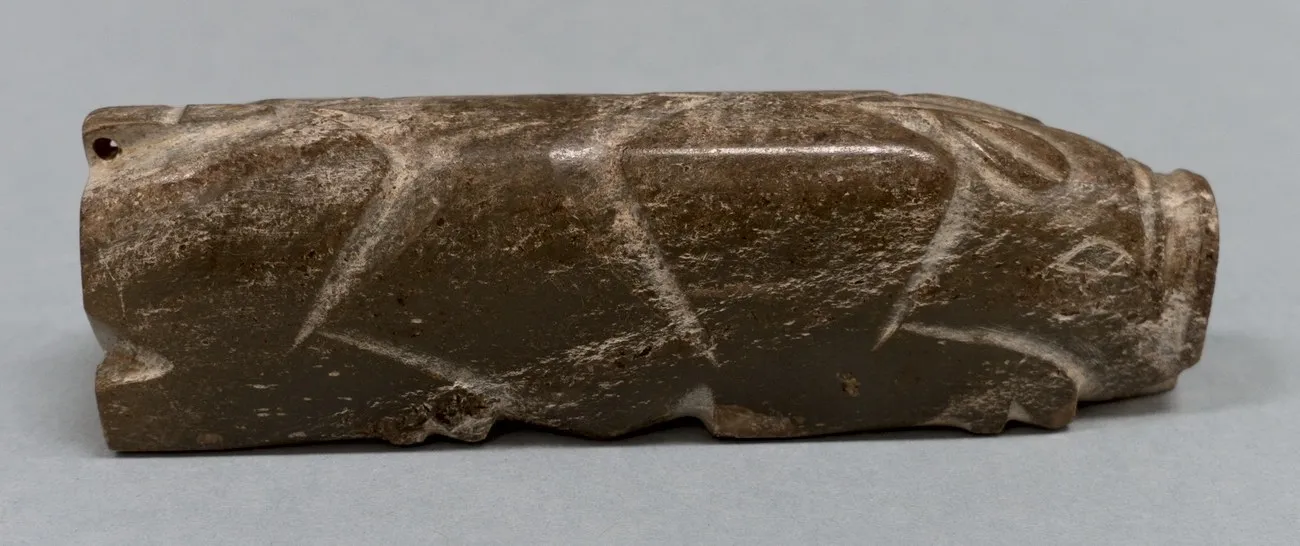
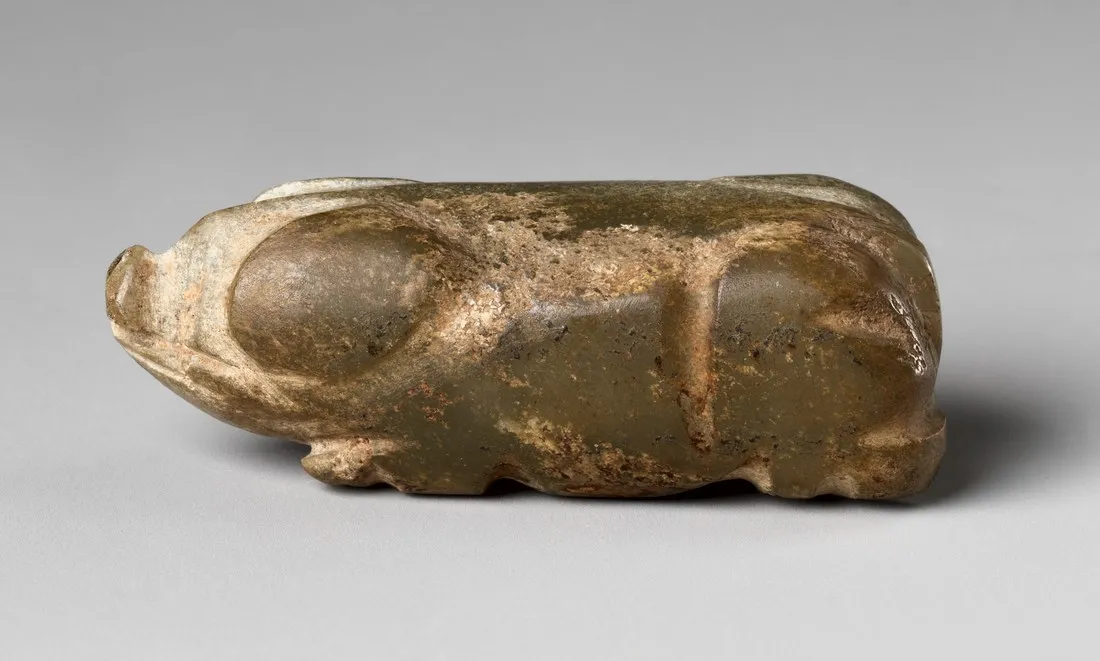
In ancient China the pig stood for wealth. So small pigs of jade or soapstone were placed in the hands of the dead, to make them rich in the afterlife too. The Chinese call them 握猪 wòzhū, “pigs to hold”. The large piece at the top left is almost 11 centimetres long and comes from the Eastern Han dynasty, the 1st or 2nd century.
The carver made only a few slanting cuts, and yet you see a lying pig at once. This sparing style is known in China as 汉八刀 Hàn bā dāo, “the eight cuts of the Han”. The shape fits exactly into a closed hand.
A pair and a little brother
The piece next to it has the same size and the same cuts, came to the museum in the same gift as the first and was probably its partner for the other hand. The smallest, only 5 centimetres long, is worked more softly: instead of notches it has smooth, rounded surfaces, and the greenish stone is slightly translucent. All three were on show in the same 2019 exhibition.
Pig in Recumbent Position, China, Eastern Han dynasty (25–220), 1st–2nd century. Jade (nephrite), H. 3.2 cm, L. 10.8 cm. The Metropolitan Museum of Art, New York, Gift of George Coe Graves, 1930, accession nos. 30.120.128 and 30.120.129. Small pig: Han dynasty, 1st–2nd century, jade, H. 1.9 cm, L. 5.1 cm, Bequest of Florance Waterbury, 1968, accession no. 68.149.1. All public domain (CC0), not on view.
The Pig in the Chinese language: eight idioms
In the horoscope the Pig brings luck, in the language it fares less well: there it often stands for stupidity, laziness or bad company. Some of the nicest expressions play with the old word 豕 shǐ.
鲁鱼亥豕
lǔ yú hài shǐ · “Lu” for “fish”, “hai” for “pig”.
Copying errors. After a story in the Lüshi chunqiu: someone in Wei read from a chronicle that “the army of Jin crossed the river with three pigs 三豕”. The scholar Zixia saw that 己亥, a date, was meant. The characters 亥, the Pig’s branch, and 豕 “pig” are easy to mix up.
辽东豕
Liáodōng shǐ · The pig from Liaodong.
From the Book of the Later Han: a man from Liaodong thought a piglet with a white head was a marvel and set off to give it to the emperor. On the way, in Hedong, he saw that all the pigs there had white heads, and turned back ashamed. Today: taking something ordinary for something special.
一龙一猪
yī lóng yī zhū · One a dragon, the other a pig.
After a 9th-century poem by Han Yu to his son: two children start out alike, but by thirty the one who studied is a dragon and the other a pig. Praise of learning.
狼奔豕突
láng bēn shǐ tū · Wolves run, wild boars charge.
Wild chaos, people fleeing or rampaging in a panic. Often said of a beaten army.
人怕出名猪怕壮
rén pà chūmíng zhū pà zhuàng · People fear fame as pigs fear getting fat.
The fat pig is slaughtered first, and a famous person attracts envy and trouble. Advice to stay modest.
死猪不怕开水烫
sǐ zhū bù pà kāishuǐ tàng · A dead pig is not afraid of boiling water.
Someone who has already lost everything no longer cares. Said of a person nothing can impress any more, often as a reproach.
没吃过猪肉,还没见过猪跑
méi chī guo zhūròu, hái méi jiàn guo zhū pǎo · Never eaten pork, but never seen a pig run either?
Even without first-hand experience you know roughly how something works. A very common everyday saying.
猪朋狗友
zhū péng gǒu yǒu · Pig friends and dog pals.
Bad company, drinking buddies who are only good for a party.
Eight idioms with the animal before the Pig, among them 挂羊头卖狗肉 “hang up a goat’s head and sell dog meat”, are on the page about the Chinese zodiac Dog.
Pigs on Chinese stamps: the 1983 Pig stamp
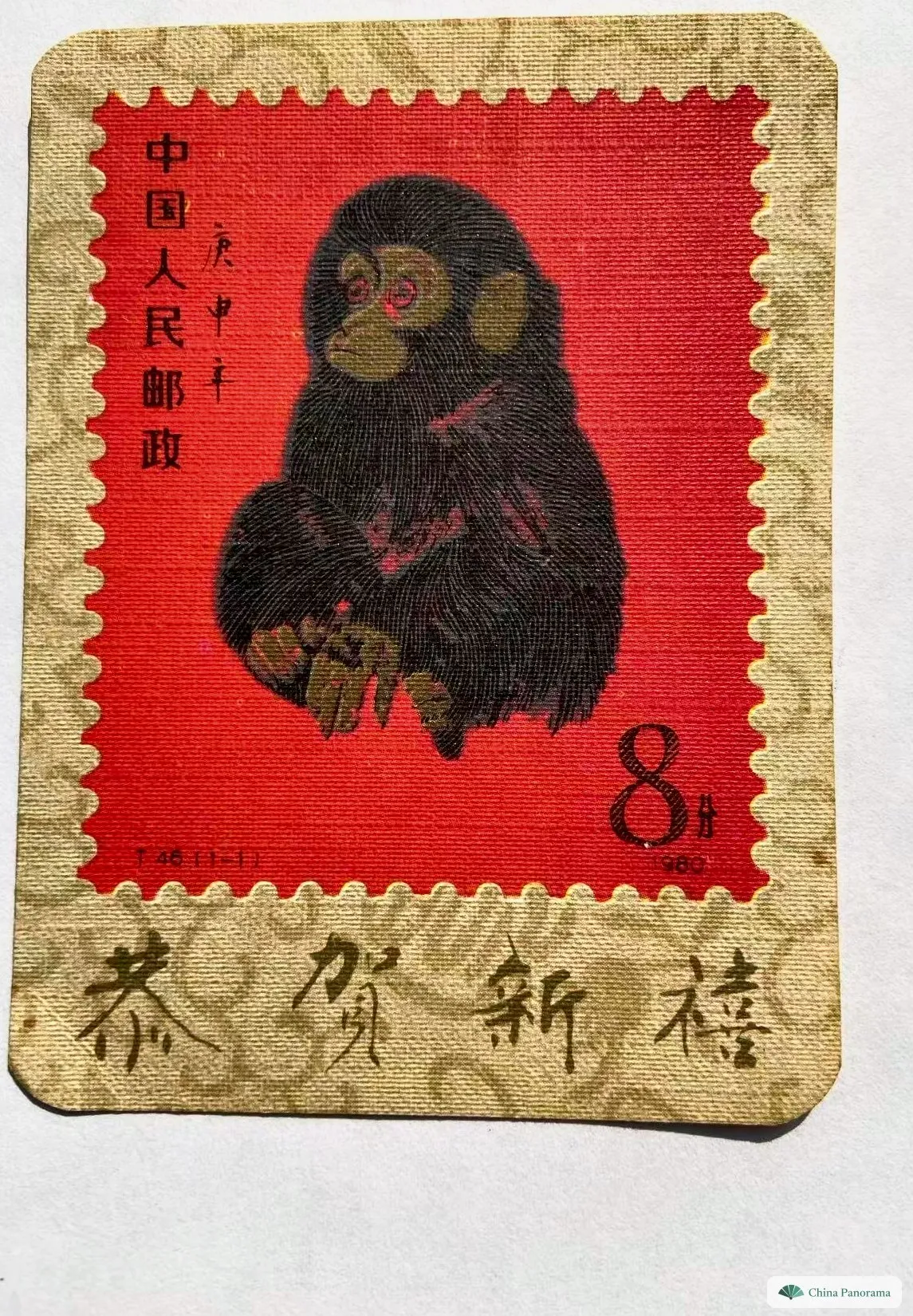
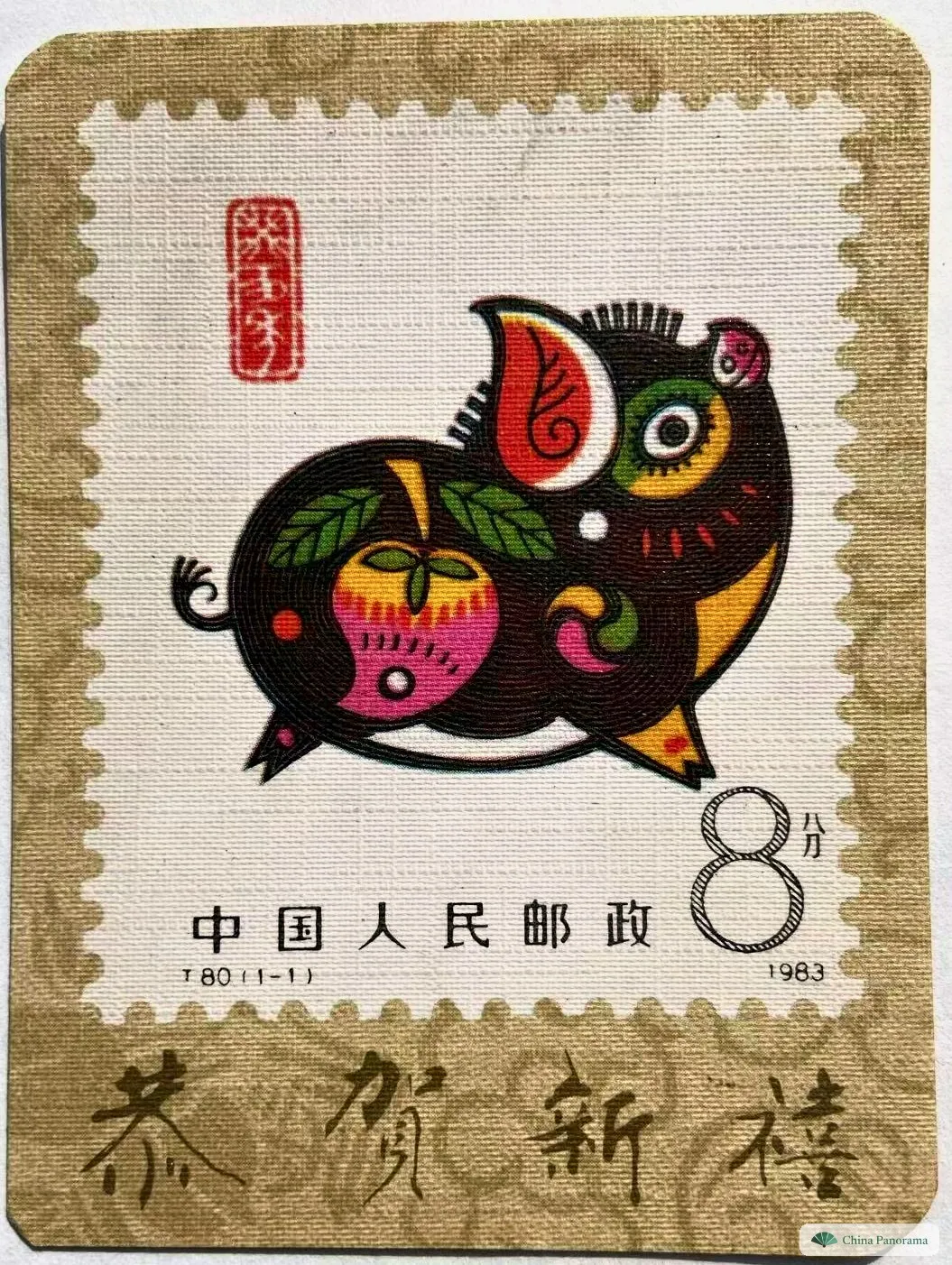
China Post has issued a zodiac stamp every year since 1980. The series began with the Monkey, so the Pig is the fourth stamp in every round: 1983 癸亥年, 1995 乙亥年, 2007 丁亥年, 2019 己亥年. The next one is due in 2031. The first Monkey stamp and the first Pig stamp are shown here side by side, as pictures on two New Year cards of the same kind.
1980: the “Golden Monkey” 庚申年
The series started with this stamp: a black monkey with a golden face on a bright red ground, painted by Huang Yongyu 黄永玉 and issued on 15 February 1980. Today it is the best-known stamp of the People’s Republic. More about it is on the page about the Chinese zodiac Monkey.
New Year card with the design of stamp T.46 “Year Gengshen” (1980, painting Huang Yongyu, design Shao Bailin). Photo: China Panorama.
1983: the paper-cut Pig 癸亥年
Stamp T.80 “Year Guihai” came out on 5 January 1983 and cost 8 fen. On a white ground stands a black, round-as-a-ball pig in the style of a paper cut, with a red ear, a colourful eye and a pink snout. On its belly sits a peach with leaves, in China a sign of long life. So the pig becomes a double New Year wish: wealth and health.
It was designed by the painter Han Meilin 韩美林, whose red seal sits at the top left. He loved animals in bold folk-art shapes and 36 years later also designed the Pig stamps of 2019. As with the Dog, there was also a stamp booklet in 1983.
New Year card with the design of stamp T.80 “Year Guihai” (1983, design Han Meilin). Photo: China Panorama.
The New Year cards
Neither photo shows the stamp itself, but cards that reprint the design large: with rounded corners, on linen-textured paper, with printed perforations and the greeting 恭贺新禧 “Happy New Year” in brush script. Frame and lettering match, the cards clearly belong to the same series. The details of the stamps are printed too: 中国人民邮政 “Chinese People’s Post”, the value 8 fen, on the Pig at the bottom the number T80 (1-1), stamp 1 of 1, and the year 1983. Compare the two: the Monkey has a red ground and is painted, the Pig has a white ground and looks cut from paper.
1995 乙亥年
The Pig stamp of the second round, which began with the Monkey in 1992. In this round each animal got two stamps.
2007 丁亥年
The Pig stamp of the third round, which had begun with the Monkey in 2004. In this round there was again only one stamp per animal.
2019 己亥年
Two stamps, again by Han Meilin, the designer of the first Pig stamp: “A fat pig brings good fortune” 肥猪旺福 and “Five blessings gathered” 五福齐聚.
The Pig in the kitchen: “meat” means pork
On a trip through China you will meet the pig mostly on your plate. If a menu just says 肉 ròu, “meat”, it almost always means pork. China eats about half of all the pork in the world, and many of the best-known dishes would be nothing without it:
- 咕咾肉Sweet and sour porkThe Cantonese classic, crisp outside, with pineapple and peppers.
- 蜜汁叉烧Char siuRed-glazed pork belly or neck from the roast meat shop.
- 小笼包XiaolongbaoShanghai dumplings with pork and hot broth inside.
- 饺子JiaoziThe classic New Year filling: pork with Chinese cabbage.
- 馄饨WontonsWafer-thin dumplings with pork in broth.
- 皮蛋瘦肉粥Congee with porkThe Cantonese breakfast with century egg.
True or false? Six claims about the Pig
Tap first, then read the answer.
1The first Chinese zodiac stamp with a Pig came out in 1983.
True
On 5 January 1983 China Post issued stamp T.80 for the year Guihai 癸亥, the fourth zodiac stamp after the Monkey, Rooster and Dog. It was designed by Han Meilin 韩美林, whose seal sits at the top left of the stamp.
2Anyone born in January 1983 is a Water Pig.
False
Only from 13 February. That day the Year of the Water Pig began. Anyone born from 1 January to the day before still belongs to the Year of the Water Dog.
3The Chinese character for “family, home” contains a pig.
True
家 jiā is a roof 宀 with 豕 shǐ, the old word for pig, underneath. A house with a pig in it was a real home. The explanation is widespread in China, though scholars of the script still argue whether the pig lived in the house or was a sacrificial animal.
4The Pig is last because it came last in the Jade Emperor’s race.
No evidence
That is what a popular folk tale says: the Pig stopped to eat and fell asleep on the way. There is no old written source for it. Animals for the twelve branches already appear in texts from the 3rd century BC, so the order is much older than the story of the race.
5In the Han period the dead were given jade pigs to hold.
True
Small pigs of jade or soapstone, 握猪 wòzhū “hand pigs”, were placed in the hands of the dead. The pig stood for wealth, and people wished them wealth in the afterlife too. You can see three of them in the museum section above.
6The life number is an ancient Chinese teaching.
False
It comes from Western numerology, which claims Pythagoras as its founder. In China it became known mainly through social media. Ancient Chinese number lore like the Hetu diagram 河图 works quite differently.
More on the zodiac: the twelve Chinese zodiac signs and their years, heavenly stems and earthly branches, the zodiac in other Asian countries (in Japan the wild boar takes this place), the animal before the Pig, the Chinese zodiac Dog, and the animal after it, with which the circle starts again, the Chinese zodiac Rat.
FAQ
Which years are Pig years?
1935, 1947, 1959, 1971, 1983, 1995, 2007, 2019, 2031. Each year starts with Chinese New Year between 21 January and 20 February. Anyone born in January or February before that day still belongs to the animal of the year before, the Dog.
When is the next Year of the Pig?
2031. It starts on 23 January 2031 with Chinese New Year, is a Metal Pig (辛亥) and lasts until 10 February 2032. After that comes the Water Pig in 2043.
What colour is the Year of the Pig 2031?
White. The heavenly stem 辛 xīn gives 2031 the element metal, and the colour of metal is white. That is why it is also called the white Pig. Other lucky colours from horoscope sites follow no fixed tradition.
Which Pig am I if I was born in 1983?
A Water Pig (癸亥), if you were born between 13 February 1983 and 1 February 1984. Before that you are a Water Dog. The other Pigs: Wood 1935 and 1995, Fire 1947 and 2007, Earth 1959 and 2019, Metal 1971 and 2031.
What is the personality of the Chinese zodiac Pig?
In China the Pig is said to be generous, good-natured, honest and fond of the good life, someone who attracts luck and wealth. Its weak sides are said to be gullibility, laziness and a habit of overdoing the pleasures. That is folk belief, not a personality test.
Which signs are compatible with the Pig?
In the classical teaching the Rabbit and Goat (三合 sānhé) match best, plus the Tiger (六合 liùhé). The Snake is the opposite (冲 chōng), the Monkey is difficult (害 hài). That is tradition, not a forecast.
What does the 2027 horoscope say for the Pig?
By the classical teaching 2027 is a good year for the Pig. Pig, Rabbit and Goat form the wood trine 三合 亥卯未, so from 6 February 2027 to 25 January 2028 the Goat counts as an ally. Chinese horoscope charts also count with the elements: the year 丁未 is fire over earth, and earth dams water, the Pig’s element. Detailed yearly horoscopes on love, money and health are fortune-telling, with no fixed tradition behind them.
What does the 2026 horoscope say for the Pig?
In the classical teaching the Pig has no fixed relation to the Horse, so 2026 counts as a neutral year. Chinese horoscope charts count with the elements, though: the year 丙午, which lasts until 5 February 2027, is double fire and stands against the water of the branch 亥. So each of the five Pigs gets its own advice, see “The Pig’s five elements”.
What element is the Pig?
There are two right answers. The branch 亥 itself always belongs to water, yin water. On top of that each year gets its own element from its heavenly stem: Metal Pig 1971 and 2031, Water Pig 1983, Wood Pig 1995, Fire Pig 1947 and 2007, Earth Pig 1959 and 2019. The last digit of the birth year tells you: 1 metal, 3 water, 5 wood, 7 fire, 9 earth.
What are the Pig’s lucky numbers and colours?
Horoscope sites usually give 2, 5 and 8 and the colours yellow, grey, brown and gold. There is no old Chinese source for that. What is certain: the branch 亥 belongs to water, whose colour in the five elements is black. The colour of a particular Pig year comes from its heavenly stem, 2031 for example white.
How do I calculate my life number?
Add up all the digits of your date of birth until only one digit is left. Example 29 July 1983: 1 + 9 + 8 + 3 + 0 + 7 + 2 + 9 = 39, then 3 + 9 = 12, then 1 + 2 = 3. The life number comes from Western numerology, not from Chinese tradition.
Sources and status
The New Year dates come from our checked table, each recalculated against the astronomical new moon in China time. The life-number texts and the advice for 2026 give widely shared Chinese social-media charts in our own words. The Pig illustration is our own, and so are the photos of the two cards. The four pieces from New York are in the public domain (CC0), the museum releases the photos for any use. The Palace Museum in Taipei releases the photos of the pig-dragon at this size into the public domain (CC0) as well. We only adjusted the crop, brightness and contrast slightly.
- Wikipedia: Pig (zodiac), years and elements
- Wikipedia: Earthly Branches, branch 亥, hour and direction
- Wikipedia: 纳音, the 60 pairs and their nayin elements (Chinese)
- Lüshi chunqiu, 察传: 晋师三豕涉河 (Chinese)
- Hou Han shu, chapter 33: Zhu Fu, the pig from Liaodong (Chinese)
- Han Yu, 符读书城南: 一龙一猪 (Chinese)
- Wikipedia: 猪八戒, Zhu Bajie (Chinese)
- USC US-China Institute: Han Meilin and the Pig stamps of 1983 and 2019
- Wikipedia: Numerology, the life number and Pythagoras
- Palace Museum, Taipei: 玉豬龍, jade pig-dragon, Hongshan culture, 購玉000316, CC0 (Chinese)
- The Metropolitan Museum of Art: Celebrating the Year of the Pig, 2019
- The Metropolitan Museum of Art: Pig, 1985.208.1, CC0
- The Metropolitan Museum of Art: Pig in Recumbent Position, 30.120.128, CC0
- The Metropolitan Museum of Art: Pig in Recumbent Position, 30.120.129, CC0
- The Metropolitan Museum of Art: Pig in Recumbent Position, 68.149.1, CC0
Changelog (1)
- 2026-11-13Page created.