
Lhasa
The city at 3,650 m around the Potala Palace and the Jokhang. Plan it in the reverse of the usual order: first the permit, then the altitude, then the sights.
拉萨 · Lāsà · Tibet · 29.65° N, 91.12° E · 3,650 m
Permit first
Foreign tourists need a Tibet Travel Permit, available only through an accredited agency, which also provides your guide and car. You cannot book Lhasa as an independent trip. How it works →
3,650 m
That is 700 m above the top of the Zugspitze, and you can land there in a morning. See your doctor first, and leave the first days empty. What to expect →
Where is Lhasa?
Lhasa is in the far south-west of China. Chengdu is 1,250 km to the east, Xining, where many take the train, 1,260 km to the north-east, and Beijing 2,560 km away. At 29.65° N, Lhasa is level with Chongqing, Cairo and New Orleans. It lies on the Tibetan Plateau in south-west China, north of the Himalayas, in the valley of the Lhasa River. Tap any city on the map to measure the distance.
Straight-line distances from the Potala Palace, rounded to the nearest 10 km — not travel distances.
Tibet is highlighted. Tap a city to measure the distance from Lhasa.
- Region
- Tibet西藏自治区
- Altitude
- 3,650 m64 % air pressure
- Latitude
- 29.65° Nlevel with Cairo
- Airport
- LXAGonggar · 62 km by road
- Metro
- Noneagency car, buses, taxis
- Time zone
- UTC+8Beijing time
Lhasa and the classic route through Tibet
The distances are long and the heights keep rising. The classic route runs from Lhasa to Yamdrok Lake, Shigatse, Everest Base Camp and Namtso. Tap a place to see how far it is from the Potala, and how high.
Tap a place on the map or in the list.
4,441 m. The first trip out of the city for most visitors. Details below ↓
5,013 m, on the boulder at the top. On the road east to Nyingchi. Details below ↓
About 4,718 m. Over a thousand metres higher than the city. Details below ↓
About 3,840 m. The second city of Tibet, on the way to Everest.
About 3,000 m, greener and lower, 3.5 hours by train. Some areas here are closed to foreign visitors.
About 5,200 m. Far higher than Mont Blanc. Agencies say a further permit is needed.
Straight-line distances from the Potala Palace, rounded — not travel distances.
The Tibet Travel Permit: what foreigners must arrange first
This comes before everything else, because it decides how your trip works. Below, the official rule sits beside what agencies add. Official wording comes from the German Foreign Office’s China page as of 30 October 2026, which is the clearest public statement we could find. China’s Foreign Ministry confirmed on 1 April 2025 that the government applies “certain management and protection measures” to foreigners entering Tibet, citing its geography and climate, without listing the steps. We are not a travel agency and we do not sell or recommend tours.
Do I need a permit on top of my visa?
OfficialYes, in every case, to travel in the region as a tourist: a Tibet Travel Permit (also Tibet Entry Permit) from the Tibet Tourism Bureau in Lhasa.
Reported by agencies, not officialBeing visa-free for China does not replace it. In Chinese it is called the 入藏函.
Can I apply myself?
OfficialNo. Only through a travel agency accredited by the Tibet Tourism Bureau.
Reported by agencies, not officialAgencies do not offer “permit only”: you book a tour with them. The tour operator Gebeco says it cannot be applied for in Germany.
What about the group size?
OfficialThe German Foreign Office says: a group of at least five.
Reported by agencies, not officialMany agencies sell private tours for one or two. These two statements disagree, so ask for written confirmation for your party.
Do I need a guide and car?
OfficialYes. The agency must provide transport and a guide for the entire route.
Reported by agencies, not officialAgencies say foreign visitors arrive by plane or train only, not by driving, cycling or walking in.
Which documents?
OfficialA scan of your passport and Chinese visa, and details of your occupation.
Reported by agencies, not officialFor visa-free travellers, agencies say no visa is needed. Gebeco’s 2024 notes ask travellers aged 75 or over for a signed statement about the altitude.
How long does it take?
OfficialUsually five to seven working days, according to the Tibet Tourism Bureau.
Reported by agencies, not officialAgencies ask for 20 days to a month in advance. For the train or the plane you will need the document itself, in a form your agency tells you.
Can it be stopped at short notice?
OfficialYes. Temporary restrictions and travel bans recur and as a rule are not announced publicly. The Gyirong crossing to Nepal is closed in both directions until further notice.
Reported by agencies, not officialAgencies list stops around February and March in many years. Ask about refunds before you pay.
Am I covered as a journalist, climber or family visitor?
OfficialNo. Mountaineers, journalists, business travellers and family visitors fall under special rules, case by case.
Reported by agencies, not officialForeign journalists and diplomats go through foreign-affairs channels, not a travel agency.
Does Chinese heritage change anything?
OfficialA notice of the Tibet authorities names foreigners including Tibetans with foreign citizenship.
Reported by agencies, not officialAgencies say what counts is the passport. A foreign passport means the same procedure, whatever your family’s origin.
The steps, in order
1 · Check your entry to China
Visa or visa-free stay: the whole trip must fit in it. Check your passport. The end date of the waiver is at the bottom of this page.
2 · Choose an agency and an itinerary
Ask whether it is accredited by the Tibet Tourism Bureau, whether your party size is allowed, and which areas on the plan need further permits. Get the answers in writing, along with refund terms.
3 · Send your documents
Passport scan, visa if you have one, and your occupation. Allow plenty of time, a month if you can.
4 · Only now book your long-distance travel
You need the permit to board a flight or train to Lhasa. Ask the agency what form you must carry, and buy refundable tickets where you can.
5 · Arrive and go slowly
Your guide meets you and takes care of the bookings for the Potala and the temples. The first days are for adjusting.
Which places can foreign visitors not go to?
There is no complete official list we could find. A 2021 notice from the Tibet authorities says that foreigners going to border areas not open to them need the permit and a separate Alien’s Travel Permit, and Medog has required a border pass since 1 March 2021. The rest comes from agencies:
Reported closed
Medog, the Namyi Valley, Yadong. Some sources add Chayu and the Lebu Valley.
Sources disagree
The Yarlung Tsangpo Grand Canyon and parts of Nyingchi: closed according to some, permit-only according to others.
Usually arranged by the agency
Everest Base Camp and other areas outside Lhasa need a further permit, which your guide’s agency obtains. Details differ by source.
Closed-area lists change without notice. Have every stop confirmed before you pay.
Which kind of trip suits you?
Real free travel is not on offer, but these three are the closest forms of it. Tick what applies.
What matters to you? Tick what applies.
Tick a situation above and the option that fits best is marked.
Small group tour
A fixed itinerary and shared costs
A set route with set dates, with other travellers. It is what the German Foreign Office’s rule of at least five people describes most directly, and the agency handles the permit, guide and vehicle.
- Freedom
- Low: the group’s programme
- Cost
- Usually the lowest per person
- Watch out for
- Fixed days up high, whoever feels ill
- First time in Tibet: Proven routes and everything arranged.
- One or two of us: Others fill the group, so two people are not a problem.
- We want to set the pace: The programme is fixed.
- Lowest cost: Permit, car and guide are shared.
- Worried about the altitude: The group cannot wait for you if the altitude hits you.
Chartered car with guide
Your own car and guide, on an agreed route
A private vehicle, driver and guide for your party on an agreed plan. Ask in writing whether this is possible for your group size, as sources differ.
- Freedom
- Medium: small changes on the way
- Cost
- Higher, and falls as more people share
- Watch out for
- Fix the route with the agency in advance
- First time in Tibet: Your guide can adapt, but you must agree the plan.
- One or two of us: The whole cost falls on fewer people. Check the group-size rule.
- We want to set the pace: Stops are yours, within the approved route.
- Lowest cost: In between, and better with three or four people.
- Worried about the altitude: You can add a rest day if the agency has allowed for it.
Tailor-made private trip
The plan is written for you
The itinerary is designed around you, including extra nights in Lhasa before going higher. Even so, it is an approved route with a guide, not independent travel.
- Freedom
- Highest available, within the permit
- Cost
- Highest
- Watch out for
- Confirm the group-size rule for your party
- First time in Tibet: Good if you know what you want. More for you to decide.
- One or two of us: Check the group-size rule before you pay.
- We want to set the pace: The closest to free travel that the rules allow.
- Lowest cost: The most expensive way.
- Worried about the altitude: You can build in slow days and a lower route from the start.
The comparison is our own and contains no agency recommendation. Costs depend on the agency and the season, and we have not checked them. The German Foreign Office names a group of at least five for the application, so ask about your party first.
How high is Lhasa, and how will it feel?
About 3,650 m. Our phone’s GPS read 3,620 to 3,670 m around the Potala and the Barkhor on 24 April 2019. At that height the air pressure is about 64 % of sea level and water boils at about 87.6 °C. Guess first, then tap any place for its numbers.
Tap a place on the scale for its air and its boiling point.
Lhasa 拉萨
3,650 mThe city on this page
The city. Our phone read about 3,620–3,670 m around the Potala and the Barkhor
- Air pressure
- 64 %
- Water boils at
- 87.6 °C
64 % of sea level — so about 36 % less oxygen in every breath. Tea and noodles cook cooler; pasta takes longer.
Altitudes: Wikipedia (Lhasa rounded, Xining, Nyingchi, Shigatse, Yamdrok Lake, Namtso, Tanggula Pass), the painted boulder at Mila Pass, Everest Base Camp as commonly given, and standard reference heights for the Alpine places. Air pressure from the standard atmosphere, boiling points computed from it.
The city of Lhasa or the summit of the Zugspitze?
Lhasa 3,650 m · Zugspitze 2,962 m
Lhasa is 688 m higher than Zugspitze.
Lhasa, by almost 700 m. Here you sleep, eat and walk at a height well above Germany’s highest mountain top.
Lhasa or the Jungfraujoch station?
Lhasa 3,650 m · Jungfraujoch 3,454 m
Lhasa is 196 m higher than Jungfraujoch.
Lhasa, by about 200 m. Most people spend a couple of hours at the Jungfraujoch. Here you stay for days.
Yamdrok Lake or the summit of the Matterhorn?
Yamdrok Lake 4,441 m · Matterhorn 4,478 m
Matterhorn is 37 m higher than Yamdrok Lake.
The Matterhorn, but only by 37 m. And you can reach the lake by car in a morning.
Everest Base Camp or the summit of Mont Blanc?
Everest Base Camp 5,200 m · Mont Blanc 4,806 m
Everest Base Camp is 394 m higher than Mont Blanc.
Base Camp, by about 400 m. You arrive by car, which is exactly why you must have spent days working up to it.
Planning your ascent
- See your doctor when you start planning, particularly with heart or lung disease, high blood pressure, anaemia or pregnancy, and ask whether you should take acetazolamide. Dose and suitability are for your doctor to decide.
- Flying breaks the usual advice. The CDC’s guidance says to avoid going straight to a sleeping height of 2,750 m or more in one day. Flying to Lhasa does exactly that, so if you can, spend some nights at a medium height first.
- Then rise slowly. Above 3,000 m, do not raise your sleeping height by more than 500 m a night, and add a rest night for every 1,000 m. A night in Lhasa does not make Namtso or Base Camp easy. Ask your agency to build this in.
- The first two days: walk slowly, avoid alcohol and hard effort, and keep the plan flat. Fitness does not protect you.
Recognising altitude sickness
- Common at first: a headache with tiredness, nausea, dizziness or loss of appetite, usually 2 to 12 hours after arrival. It normally eases within a day or two if you do not go higher.
- What to do: stop climbing and tell your guide. Going down at least 300 m helps quickly.
- Emergency, go down now: confusion, drowsiness or unsteady walking, or breathlessness at rest, a wet cough and tightness in the chest. These can be signs of fluid in the brain or lungs, and they can kill. Get medical help and descend without delay.
Based on the CDC Yellow Book. General information only, and no substitute for medical advice. Read also our page on bringing medication to China.
What’s the weather like in Lhasa each month?
Dry, sunny and bigger in range than you expect: 8 °C by day in January and 25 °C in June, and nights well below freezing in winter. China runs on Beijing time, so the day runs late: the sun rises at 06:55 in June, and sets at 18:58 in December and as late as 20:57 in June. Tap a month for temperatures, daylight and what is on.
Scale in °C. Bars run from the average daily low to the average daily high. Source: monthly temperature data, last checked 2026-07-30.
Lhasa in November
Cool- Average high
- 13 °C
- Average low
- -3 °C
- Sunrise / sunset
- 08:20 – 19:01
- Daylight
- 10 h 41 min
On in Nov
- Potala low-season ticket from 1 November
Spring
March – MayDry and bright, with fresh snow on the high passes.
March averages 13 °C by day and April 17 °C, with nights around freezing in March. Our late-April photographs show both faces of it: blue sky and bare willows just greening in the city, and snow down to the road at 5,000 m on Mila Pass that same morning. Foreign travel has been stopped for weeks around February and March in many earlier years, so confirm this period with your agency before you book.
What to wear: Layers, a warm jacket for evenings and passes, sunglasses, a hat and strong sun cream.
Summer
June – AugustThe warmest months, with evening rain and full hotels.
June reaches 25 °C by day, July 24 °C and August 23 °C, with nights around 12 °C. This is the rainy season, though much of it falls at night, and it is also the peak of Chinese domestic travel. The Shoton festival falls around July or August. Book the Potala as early as your agency can.
What to wear: Light layers, a rain jacket, sun protection and a warm top for the evenings.
Autumn
September – NovemberClear air and steady weather: the months we would pick.
September averages 22 °C by day and October 18 °C. The rain has stopped and the views to the mountains are at their best, which matters if you go on to Namtso or Everest. Avoid Golden Week, 1 to 7 October. By November it is 13 °C by day and below freezing at night.
What to wear: Warm layers, a windproof jacket, gloves for the passes and sun protection.
Winter
December – FebruarySunny, cold at night and quiet, with lower prices.
January reaches about 8 °C by day in strong sun and −8 °C at night. Pilgrims come in from the countryside and there are few other tourists. A “Winter Tour of Tibet” policy reportedly waives entry at many scenic areas: in press reports for 2026–27 it runs from 15 October 2026 to 15 March 2027, with temples excepted. We could not read the official text, so ask your agency. High passes and lakes may be cold and iced over.
What to wear: A real winter coat for early mornings and evenings, thermal layers, gloves, a hat and sun cream.
September, at about 22 °C by day, and October, at 18 °C, are the months we would pick, outside Golden Week. For how Lhasa compares with the rest of the country, see the best time to visit China.
Things to do in Lhasa
14 places: the Potala and the buildings around it, the Jokhang and the Barkhor in the old town, the great monasteries on the edge of the city, and three high places beyond it. First, three photographs to read.
What am I looking at?
Tap a number on the photograph.
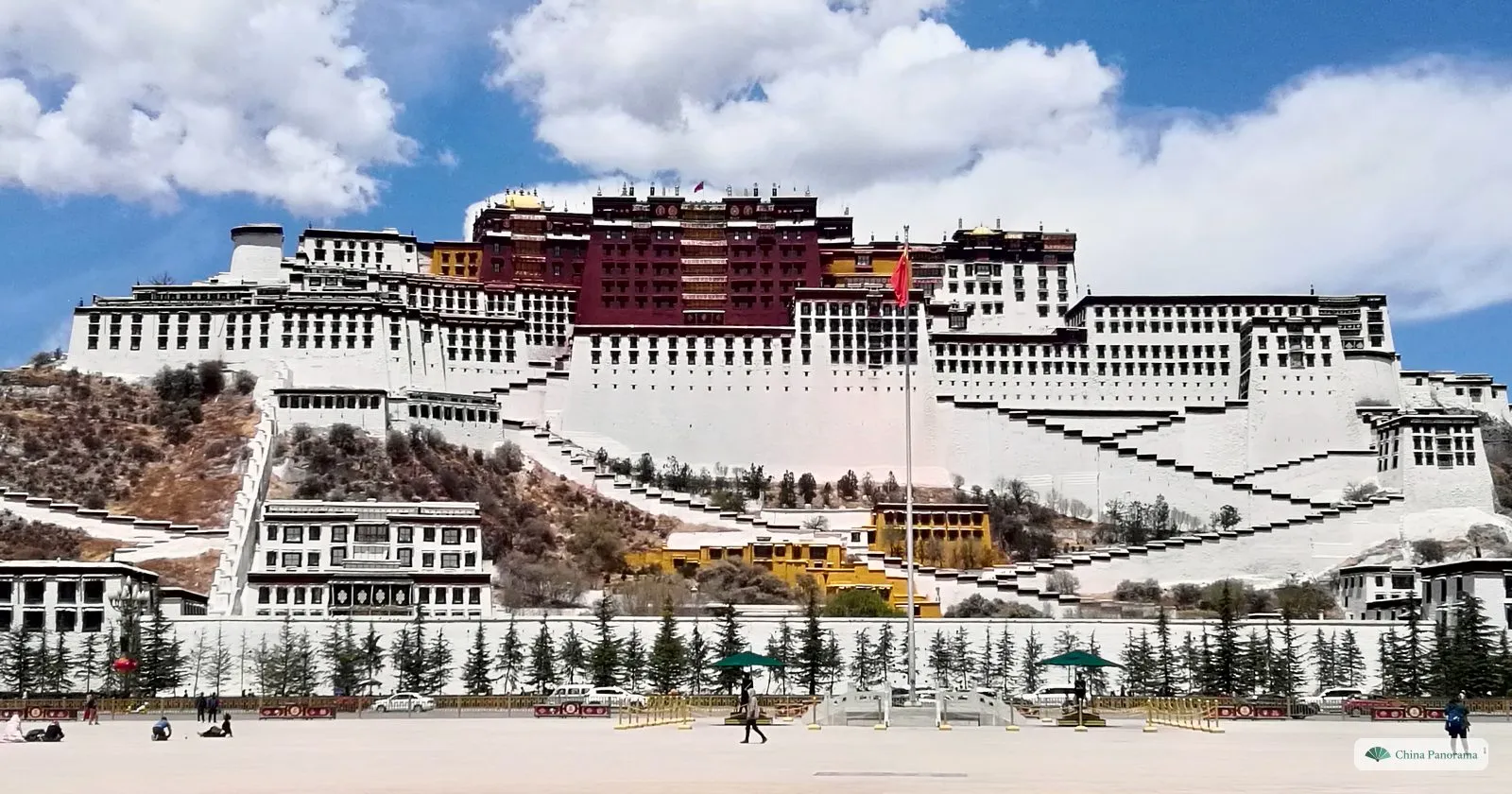
1The Red Palace
红宫 · The religious heart, 1690–1694
The dark red block in the middle holds the halls, the chapels and the gilded tombs of the Dalai Lamas. This is where your visit ends up, and where the climbing gets you.
The palace in the list below →Tap a number on the photo, or a name in the list.
14 places in and around Lhasa
Filter by district: Chengguan is the city, the rest lies further out.
Potala Palace
布达拉宫LandmarkChengguan · 城关区IndoorsThe building that fills every picture of Lhasa: 13 storeys and more than 1,000 rooms on Marpo Ri, the Red Hill, 400 m from east to west and rising 119 m above the hill. A palace stood here from the 7th century, under King Songtsen Gampo. What you see was begun in 1645 by the 5th Dalai Lama: the White Palace first, which he and his government moved into in 1649, then the Red Palace in the middle, added from 1690 to 1694, with the halls and the gilded tombs. It was the residence of the Dalai Lamas until 1959 and is now a museum. UNESCO listed it in 1994, and added the Jokhang in 2000 and Norbulingka in 2001. Inside you climb all the way, on stairs, at about 3,700 m: it is the wrong thing to do on your first day.
Foreign visitors go in with their guide, and the agency handles the booking. Reported for 2026: Route 1 200 CNY and Route 2 100 CNY from 1 May to 31 October, 100 CNY from 1 November to 30 April, concessions half. Real-name booking up to ten days ahead in the palace's WeChat mini program, nothing sold at the gate. Reported opening: 09:00 with last entry 15:40 in summer, 09:30 with last entry 15:20 in winter, closed on Mondays except public holidays. Entry was reported free under last winter's “Winter Tour of Tibet” policy, from 1 November 2025 to 15 March 2026, still with a booking. We could not confirm the same for this winter. We have not read the main-ticket notice itself, so treat all of this as unverified.
- Entry
- Price not verified — check on site
- Opening hours
- Hours not verified — check on site
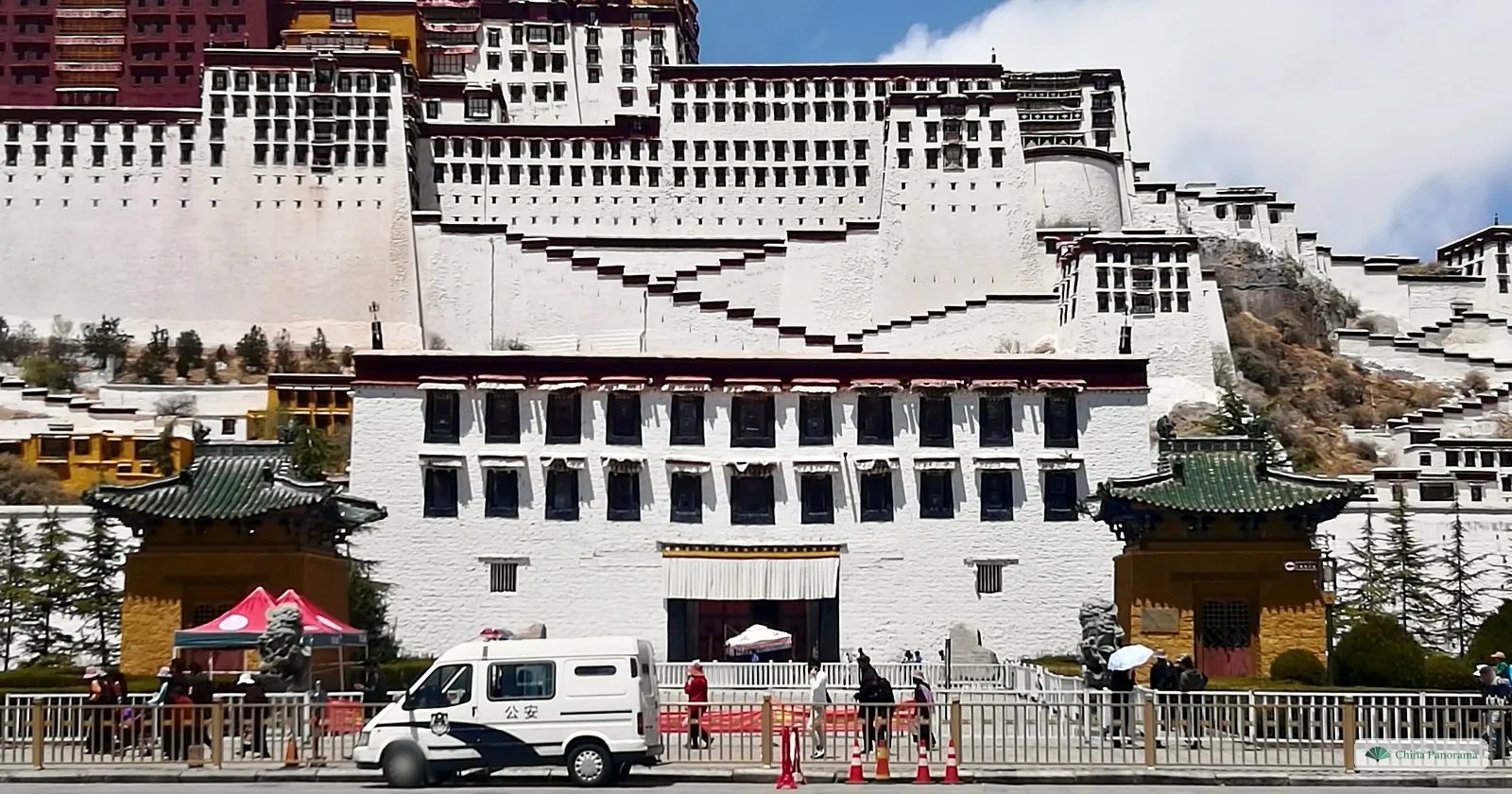 LandmarkChengguan · 城关区Indoors
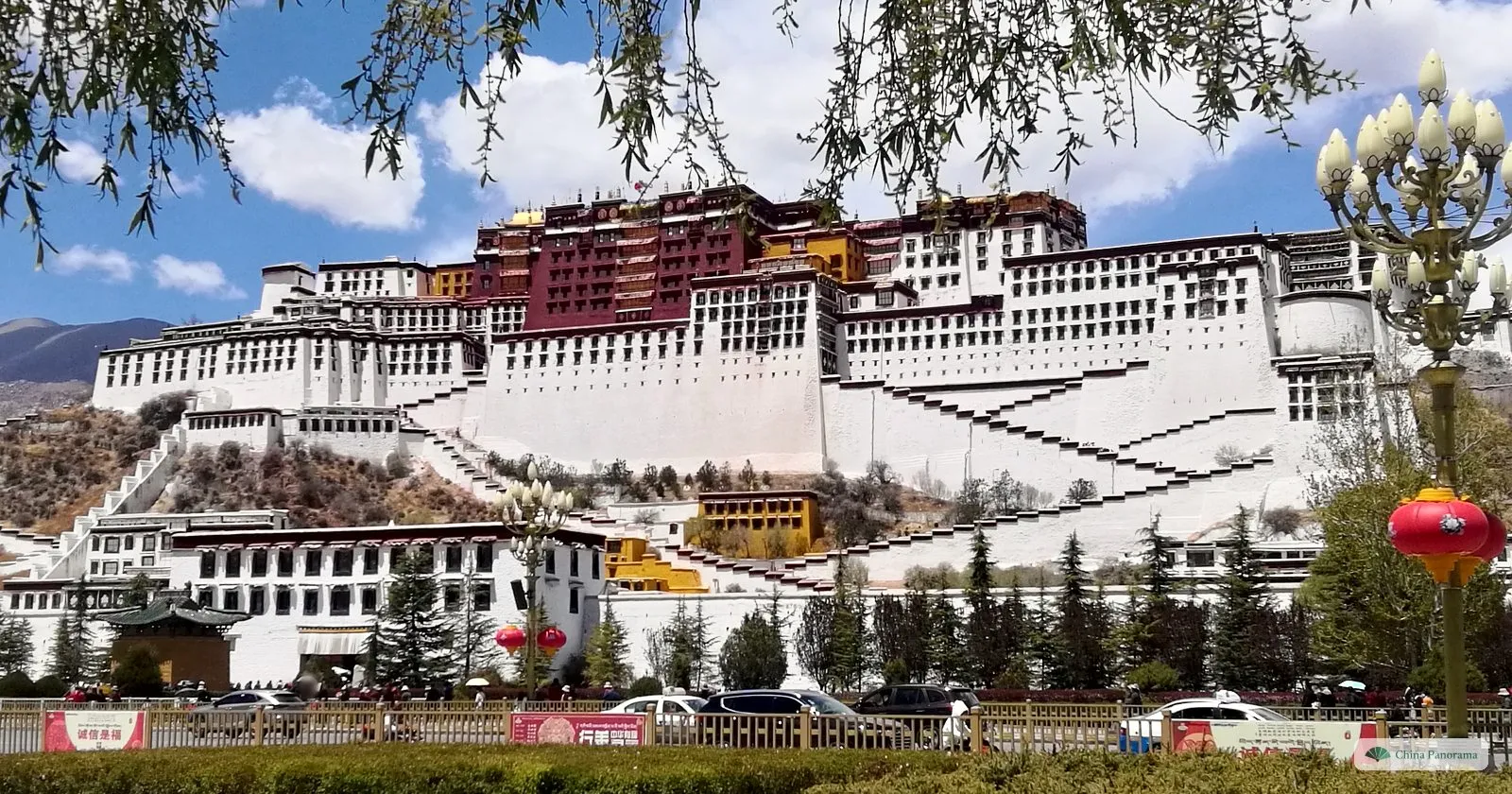
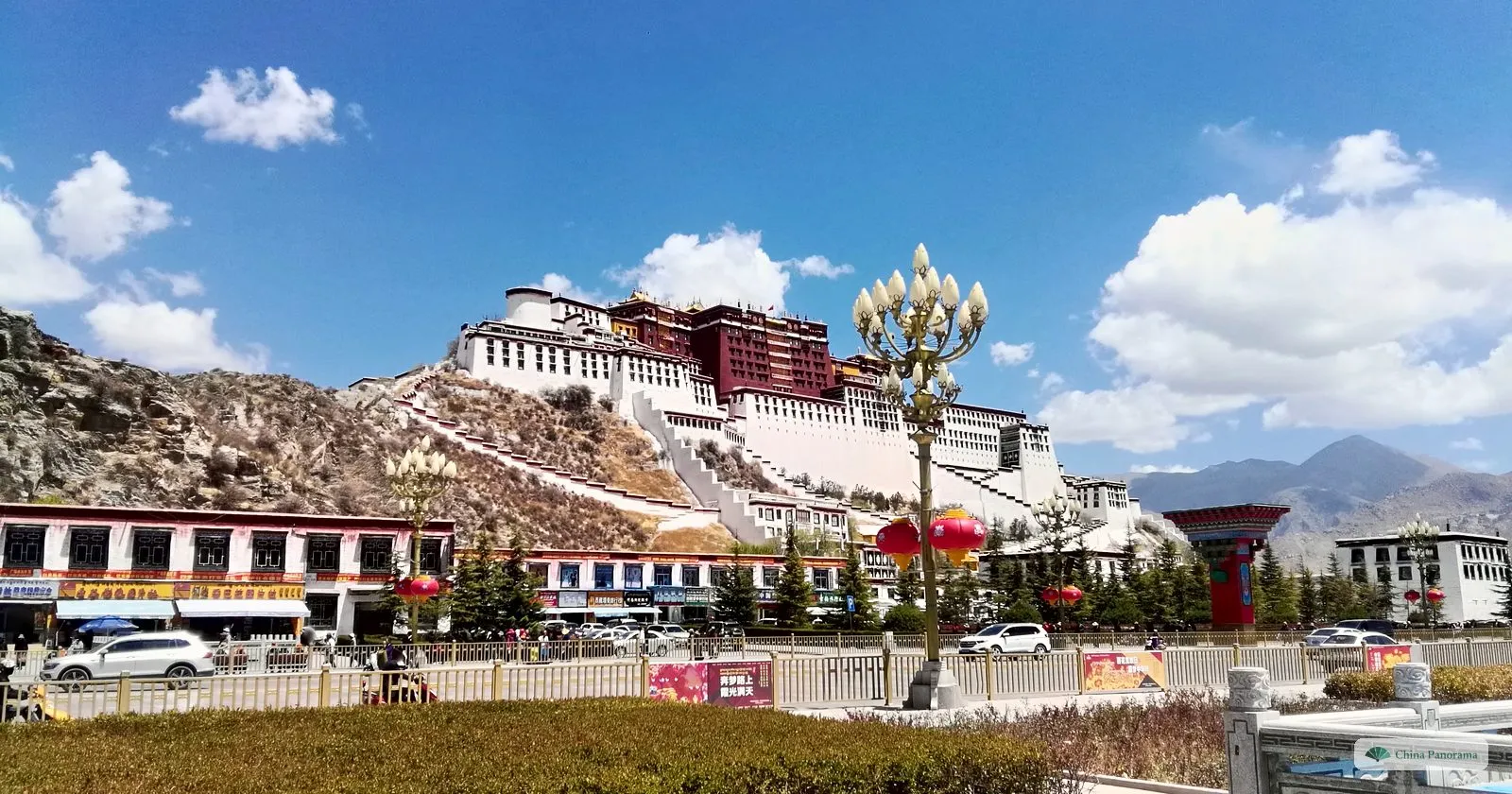
The walled quarter below the south face, which served the palace: offices, a treasury, a mint and a prison. Since 20 September 2026 it has been a visitor route with its own ticket. The notice lists noble residences, the Shol prison, a treasure hall and the treasury with its mint. The route does not enter the main palace buildings, so it is no substitute for the Potala ticket, but it is short, nearly level and easier on the lungs.
Official notice of the Potala Palace Administration, 16 September 2026: 25 CNY from 1 May to 31 October (09:00, last entry 15:40), 10 CNY from 1 November to 30 April (09:30, last entry 15:20), concessions half, free during the “Winter Tour of Tibet” policy. Booking only in the WeChat mini program “布达拉宫官方票务预订系统”. In through the East or South Gate, out through the Snow City West Gate. Telephone 0891-6332558.
- Entry
- 25 CNY
- Opening hours
- 09:00–15:40 last entry (May–Oct), 09:30–15:20 last entry (Nov–Apr)
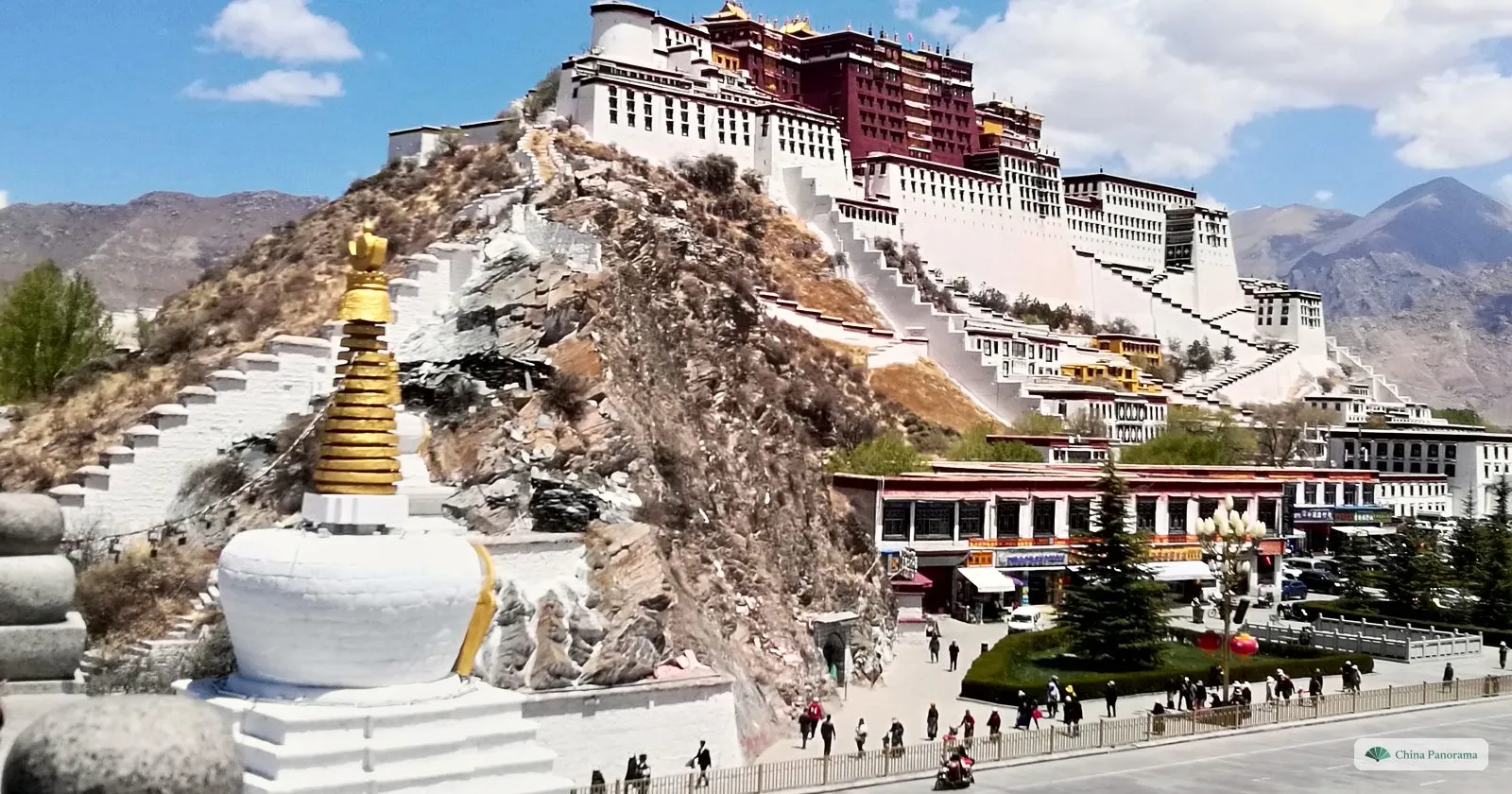 LandmarkChengguan · 城关区Outdoors
The rocky hill just south-west of the palace, called Yaowang Shan, Medicine King Hill, in Chinese. From the terrace on its eastern shoulder you see the Potala side-on, with its whole staircase running up the rock: the view on the back of the 50-yuan note. White stupas with gilded spires stand along the balustrade, so you get a foreground for free. Our photographs are from half past one on 24 April 2019, when the terrace was busy.
On Beijing Middle Road, about 300 m in a straight line from Potala Square. Steps lead up from the road, so take them slowly. We have not checked whether there is a charge or any closing time.
- Entry
- Price not verified — check on site
- Opening hours
- Hours not verified — check on site
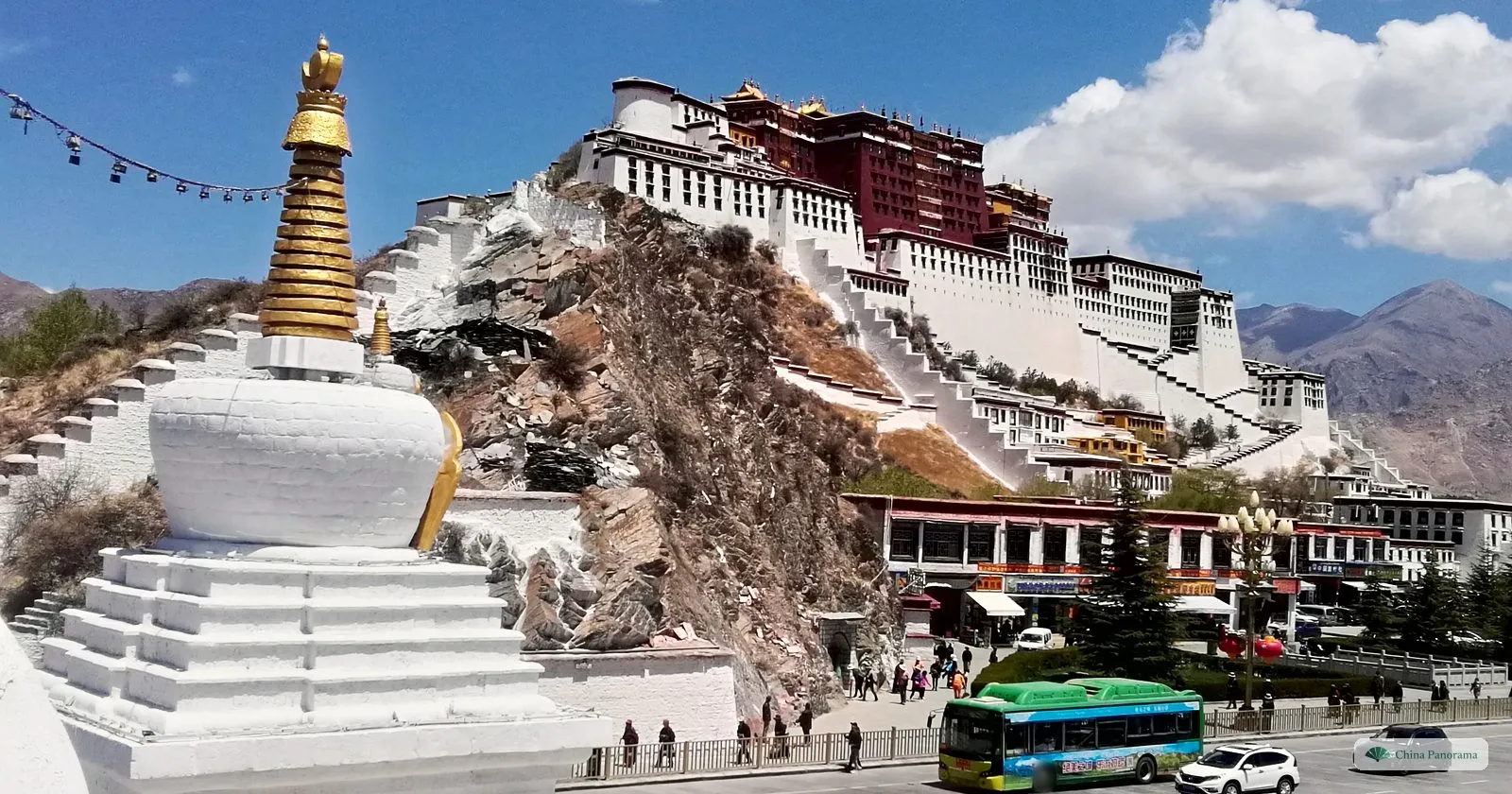
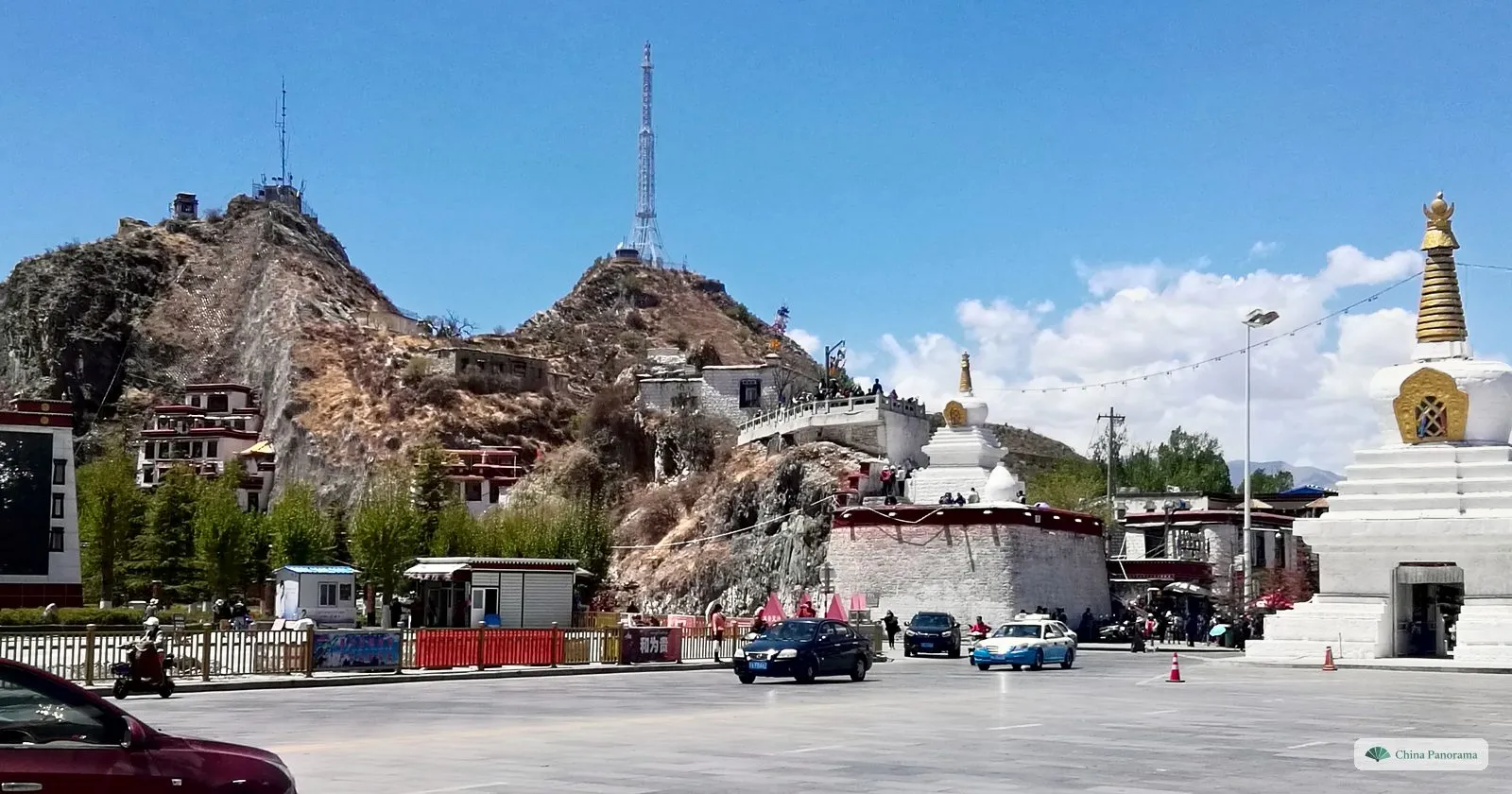
- ParkChengguan · 城关区Outdoors
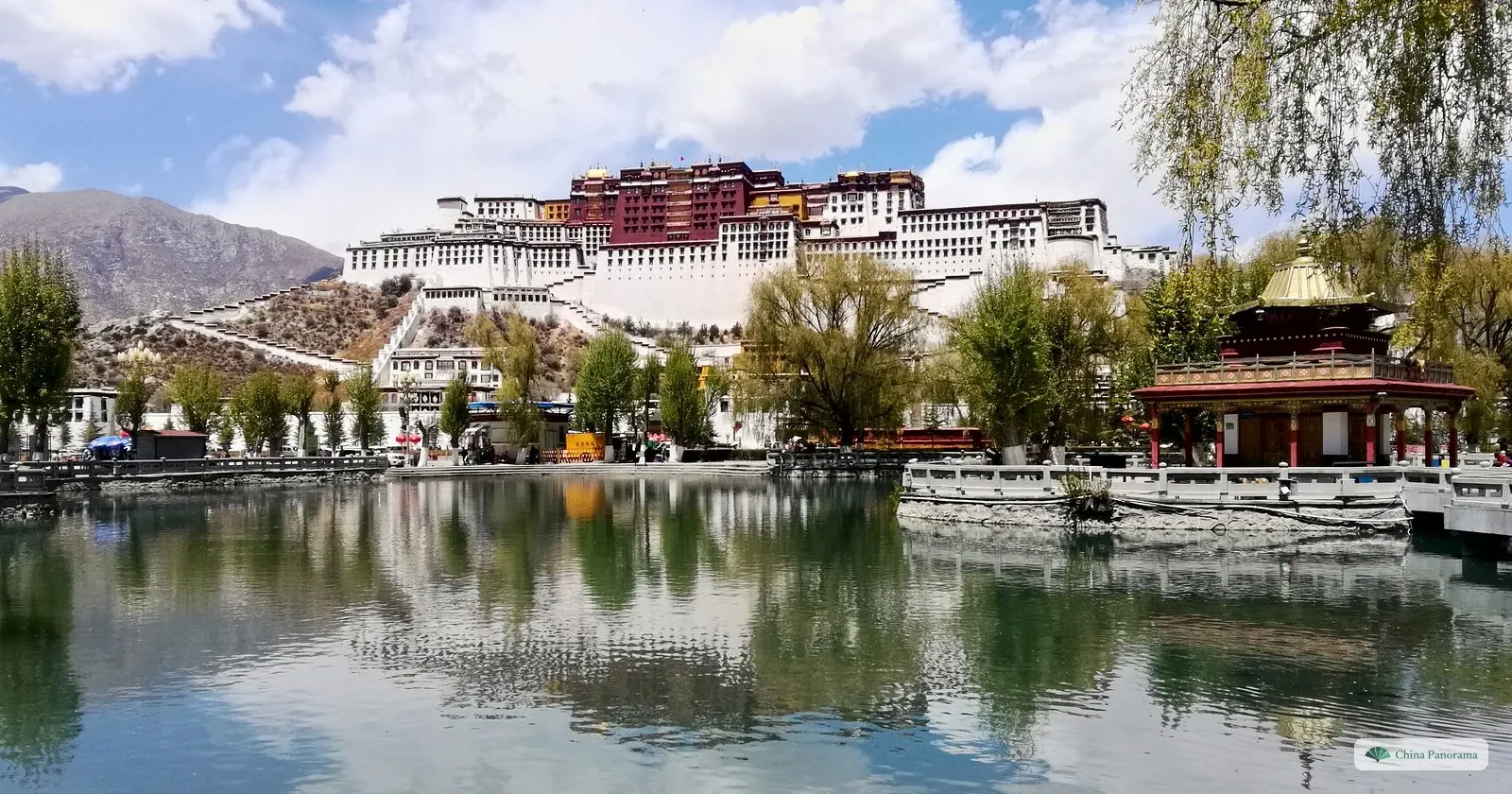
The great paved square opposite the south face, across Beijing Middle Road. It is where the full-frontal picture comes from, and the best one comes from further east, at a pond with willows and a red-and-gold pavilion, where the palace stands in the water. In late April the willows were just coming into leaf. On the south side of the square rises the Monument to the Peaceful Liberation of Tibet, a tall pale concrete slab, and the national flag flies on a mast in front of the palace.
Open square, a short walk from the palace entrance. Our photographs: 13:55 to 14:29 on 24 April 2019. The light on the south face is good from late morning into the afternoon.
- Entry
- Free
- Opening hours
- Open at all hours
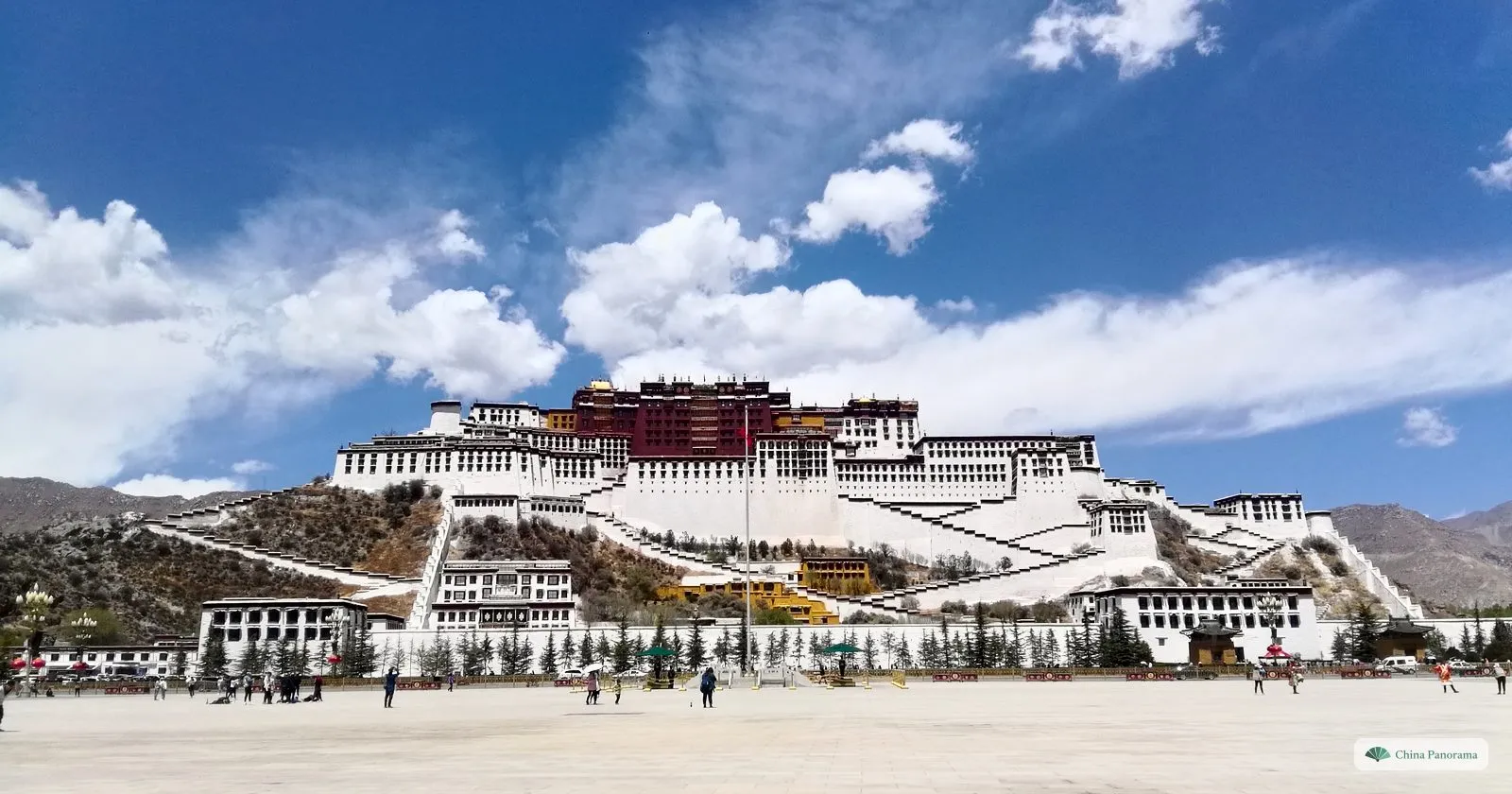
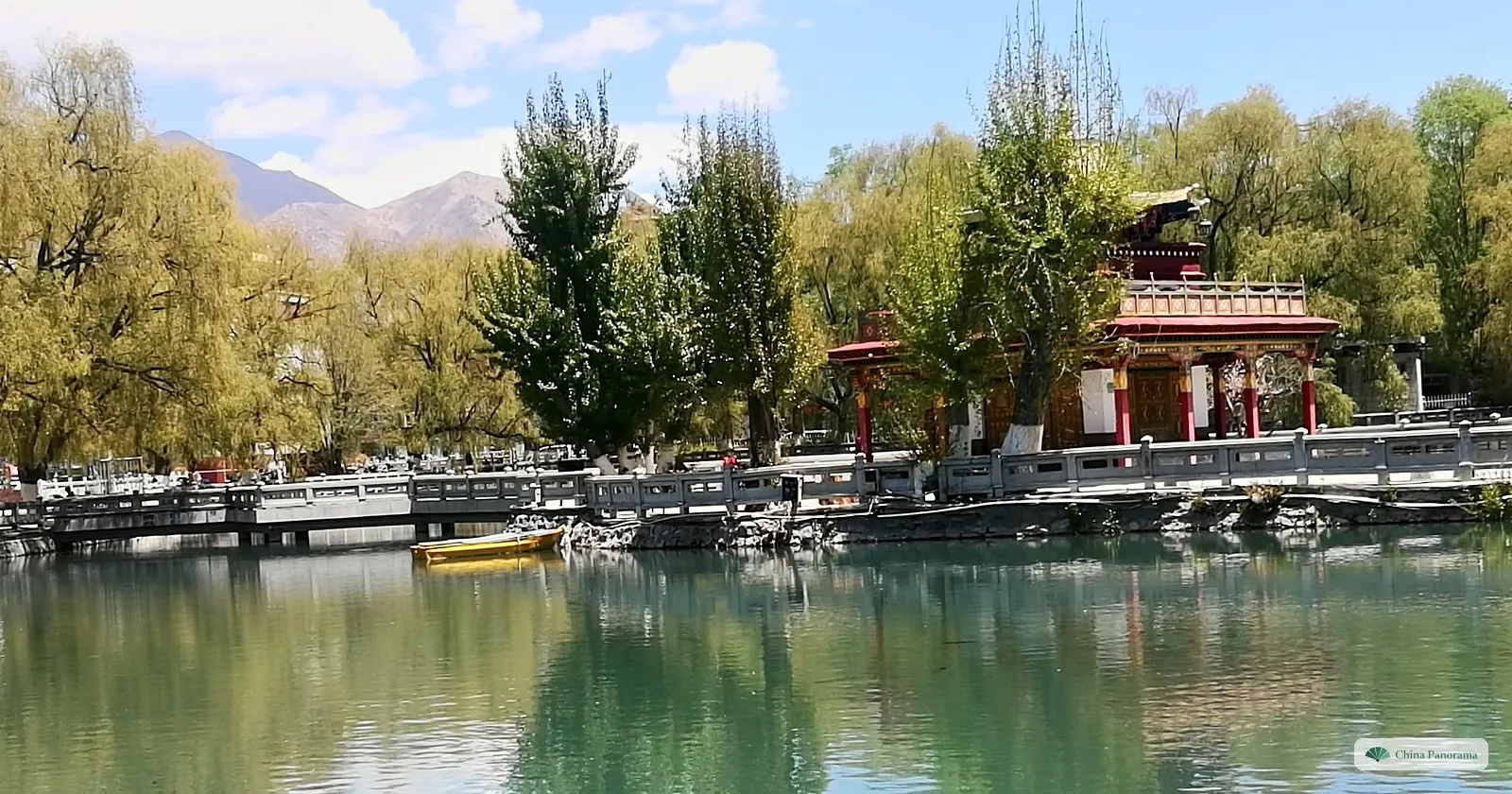
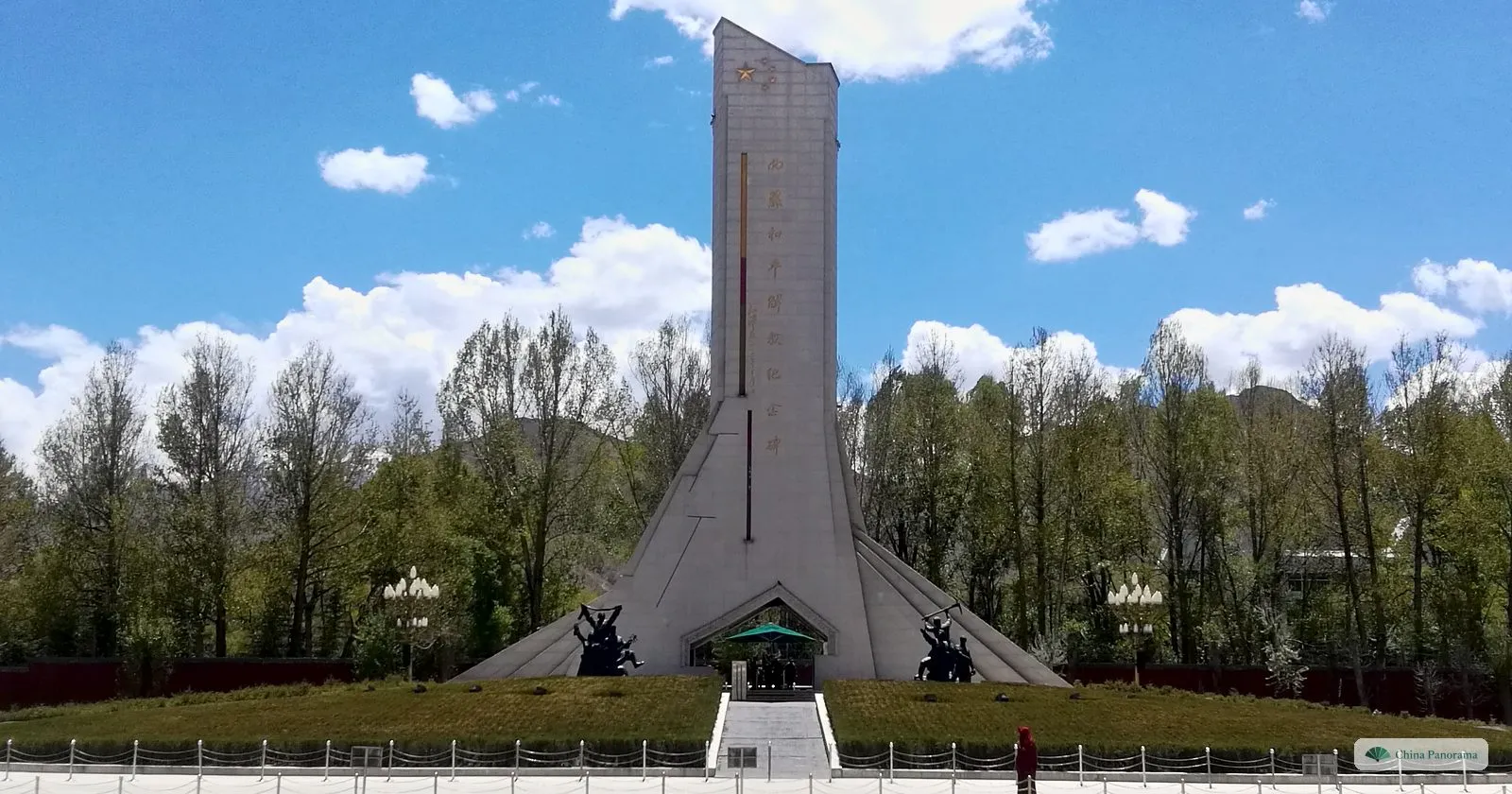
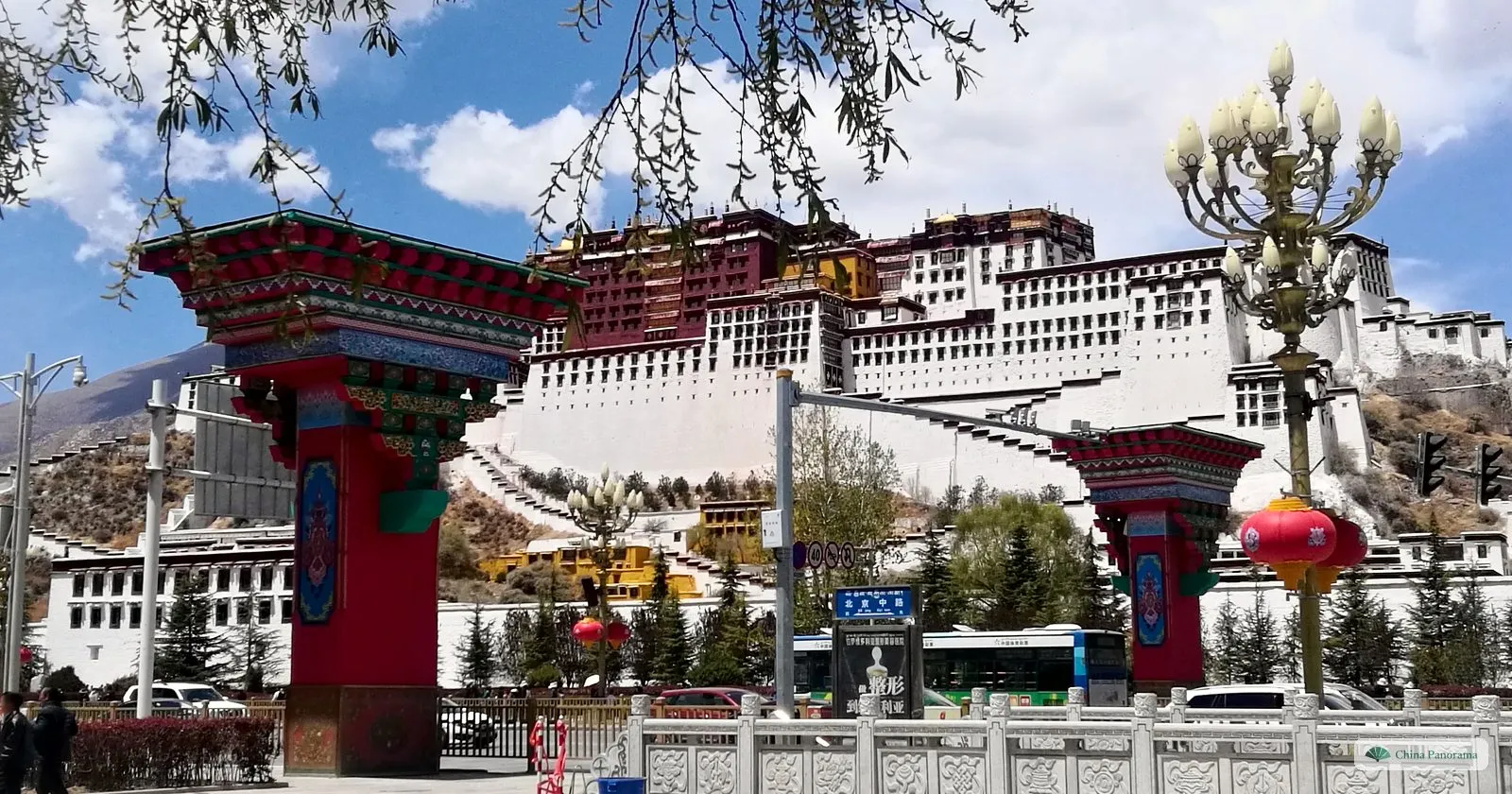
 StreetChengguan · 城关区Outdoors
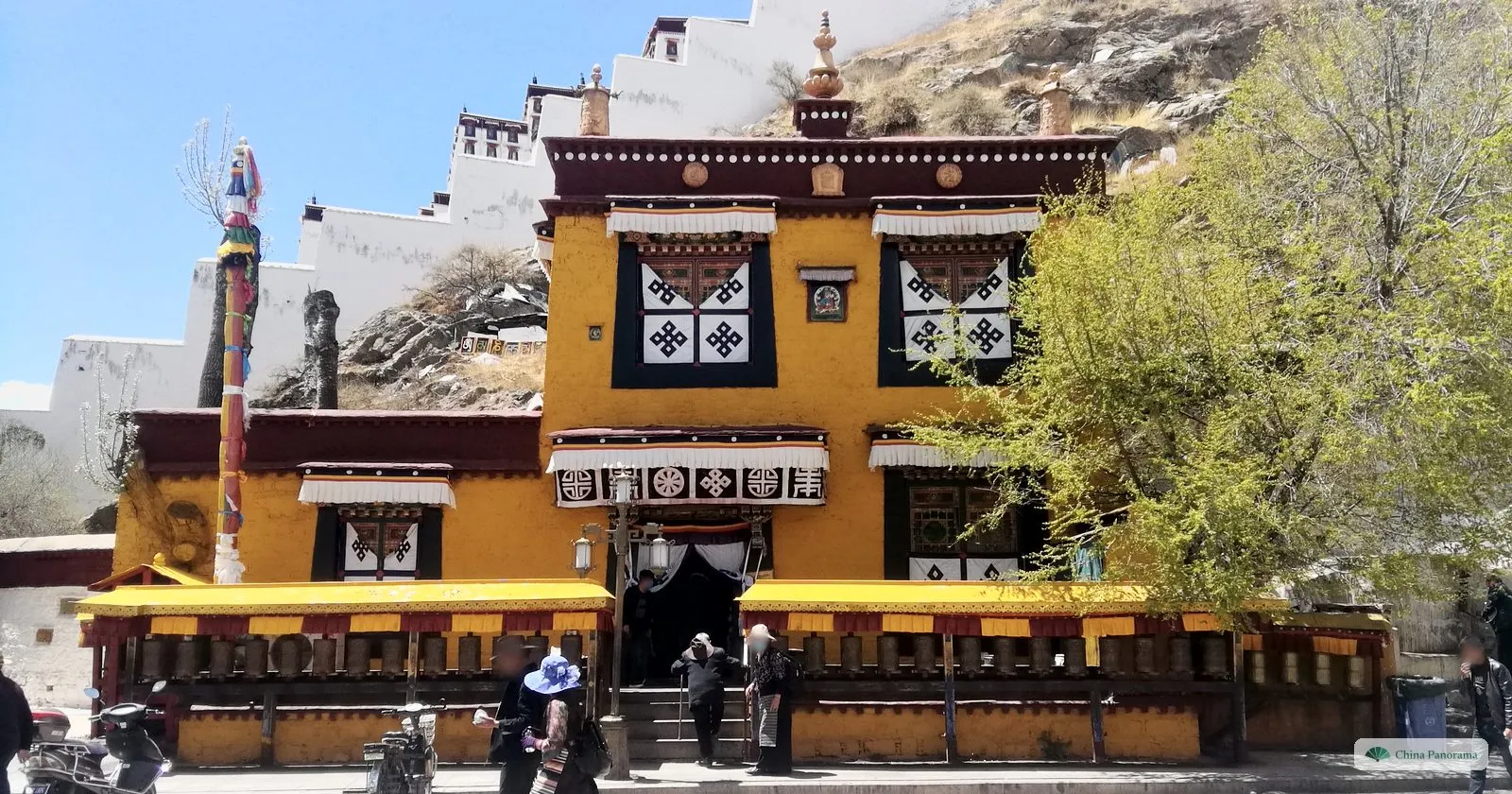
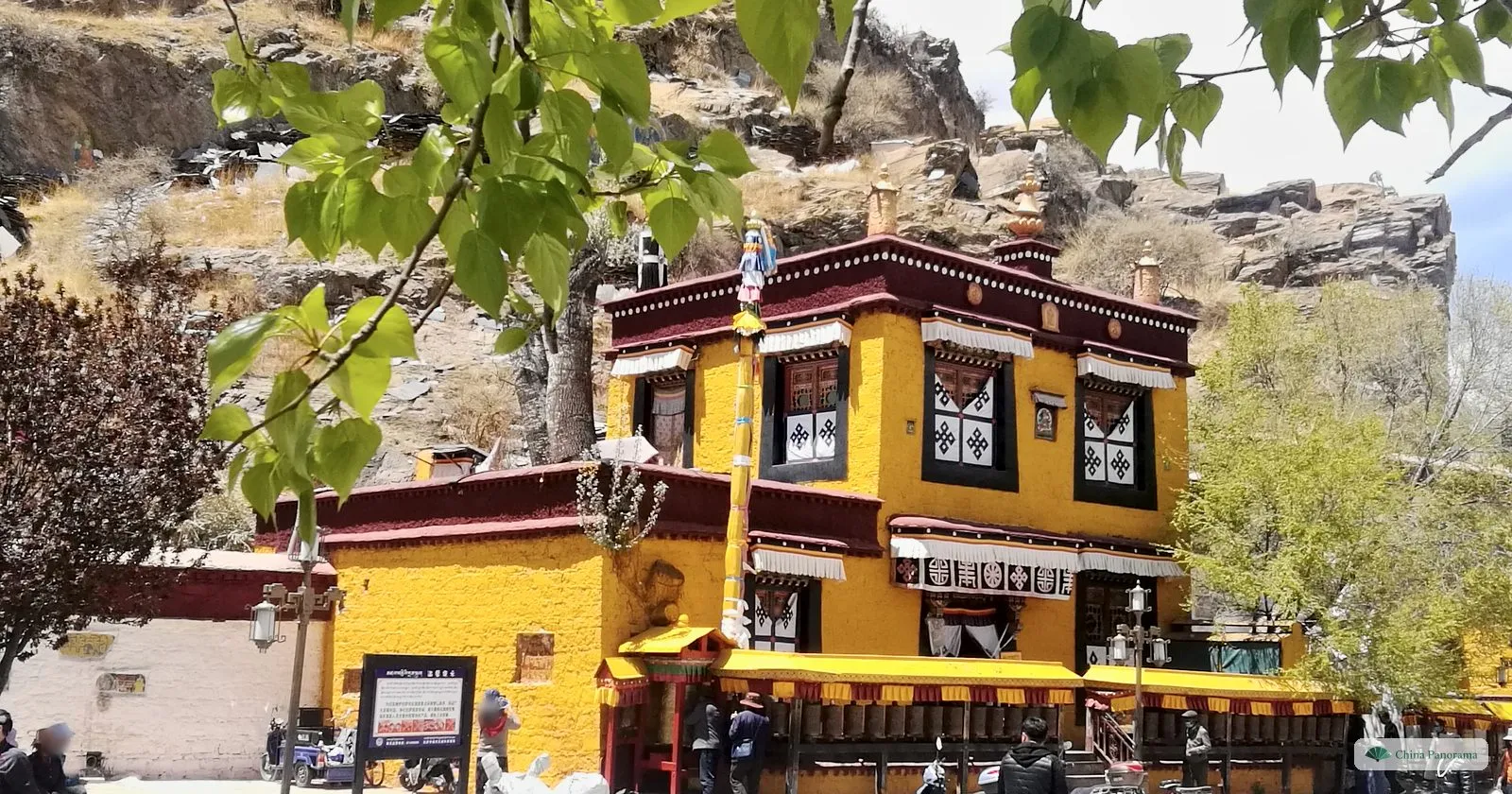
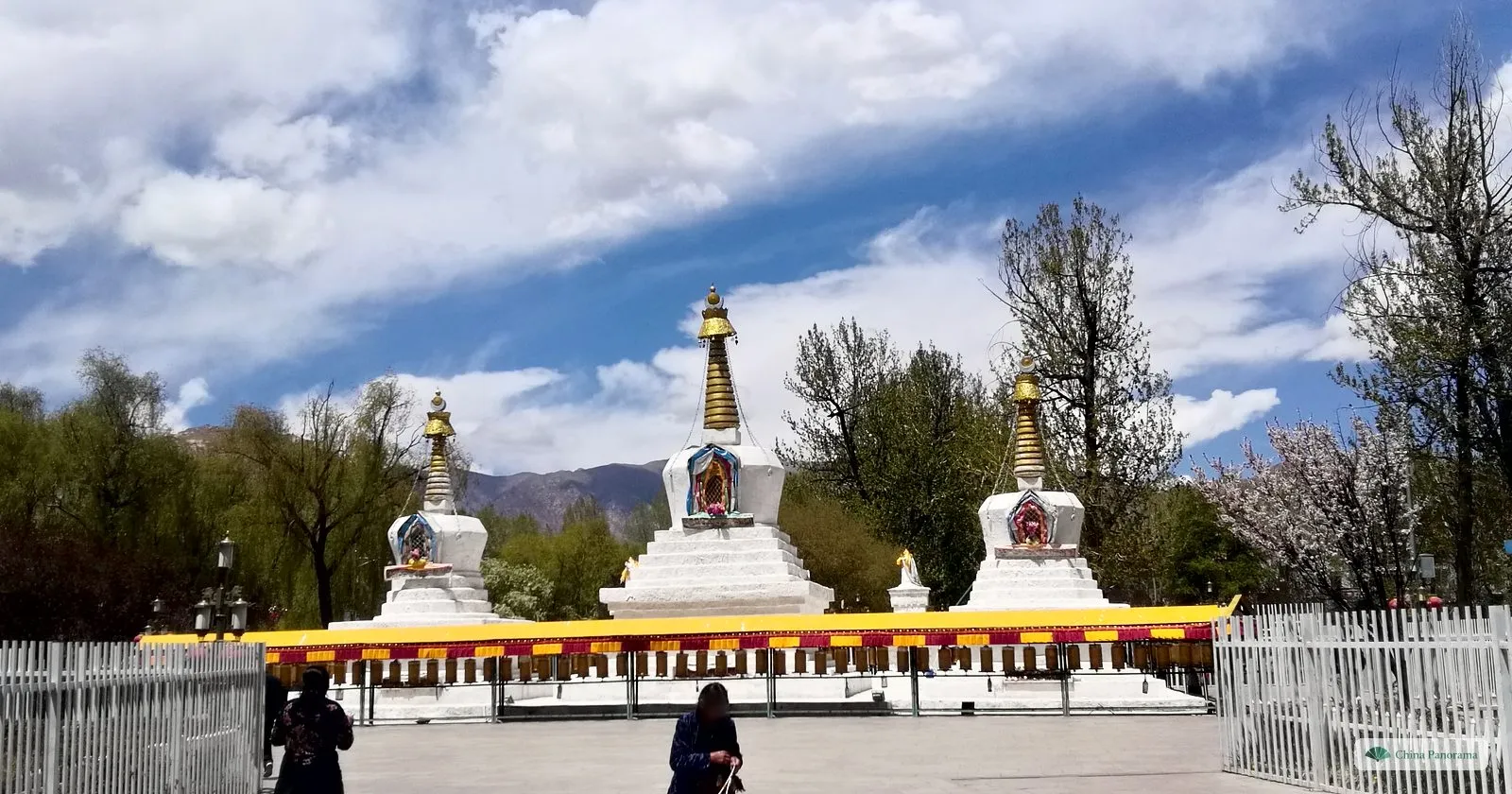
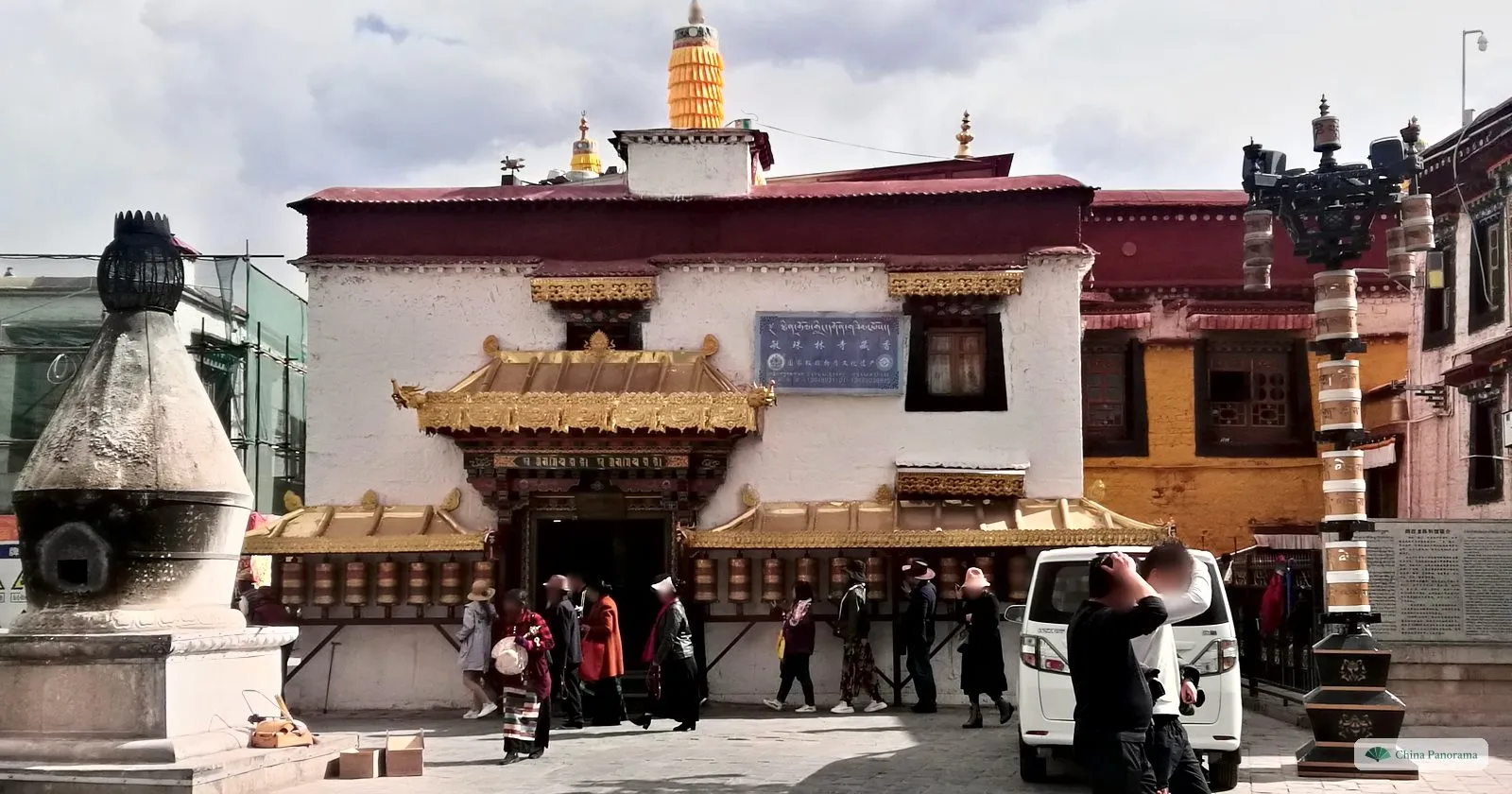
Pilgrims walk clockwise around the foot of the palace, turning the long rows of prayer wheels set into the wall. On the east side we passed a small chapel in strong yellow with black-and-white window frames and a tall prayer pole, and on the north side three white stupas above a yellow-draped gate. No ticket is needed, and it is the easiest way to spend an hour here without climbing anything. Walk clockwise, as everyone else does.
Starts anywhere around the palace. Our photographs: 14:35 and 14:45 on 24 April 2019. We could not establish the name of the yellow chapel.
- Entry
- Free
- Opening hours
- Open at all hours
 TempleChengguan · 城关区Indoors
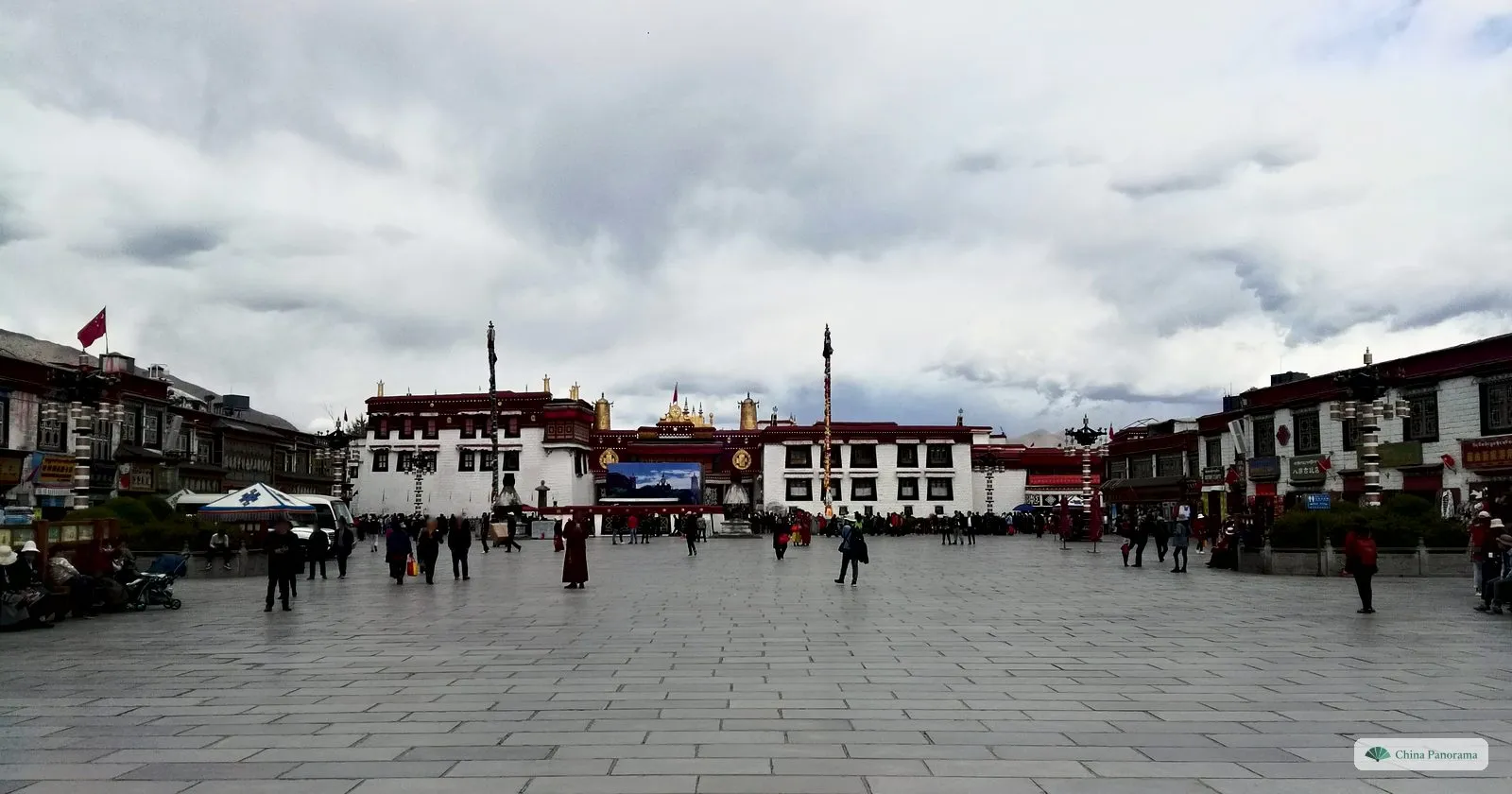
The temple that Lhasa grew around, and for Tibetan Buddhists the holiest in the country. It goes back to King Songtsen Gampo in the 7th century, built for the statues his two queens brought: one from Nepal, one from Tang China. The Jowo Shakyamuni, the seated Buddha brought by Princess Wencheng, is what pilgrims have come so far to see, some of them prostrating themselves the whole way round. In front lies Barkhor Square, with two stone incense burners and tall prayer poles. It joined the Potala on the World Heritage List in 2000.
Reported on 29 October 2026 by a travel site: real-name reservation one day ahead in the temple's WeChat mini program, time slots from 08:30 to 13:30, no slot needed in the afternoon, pay at the ticket office after showing the code. Ask your agency whether it books this for you, as it is not automatically part of a tour. We have not checked the price or the hours against an official source.
- Entry
- Price not verified — check on site
- Opening hours
- Hours not verified — check on site
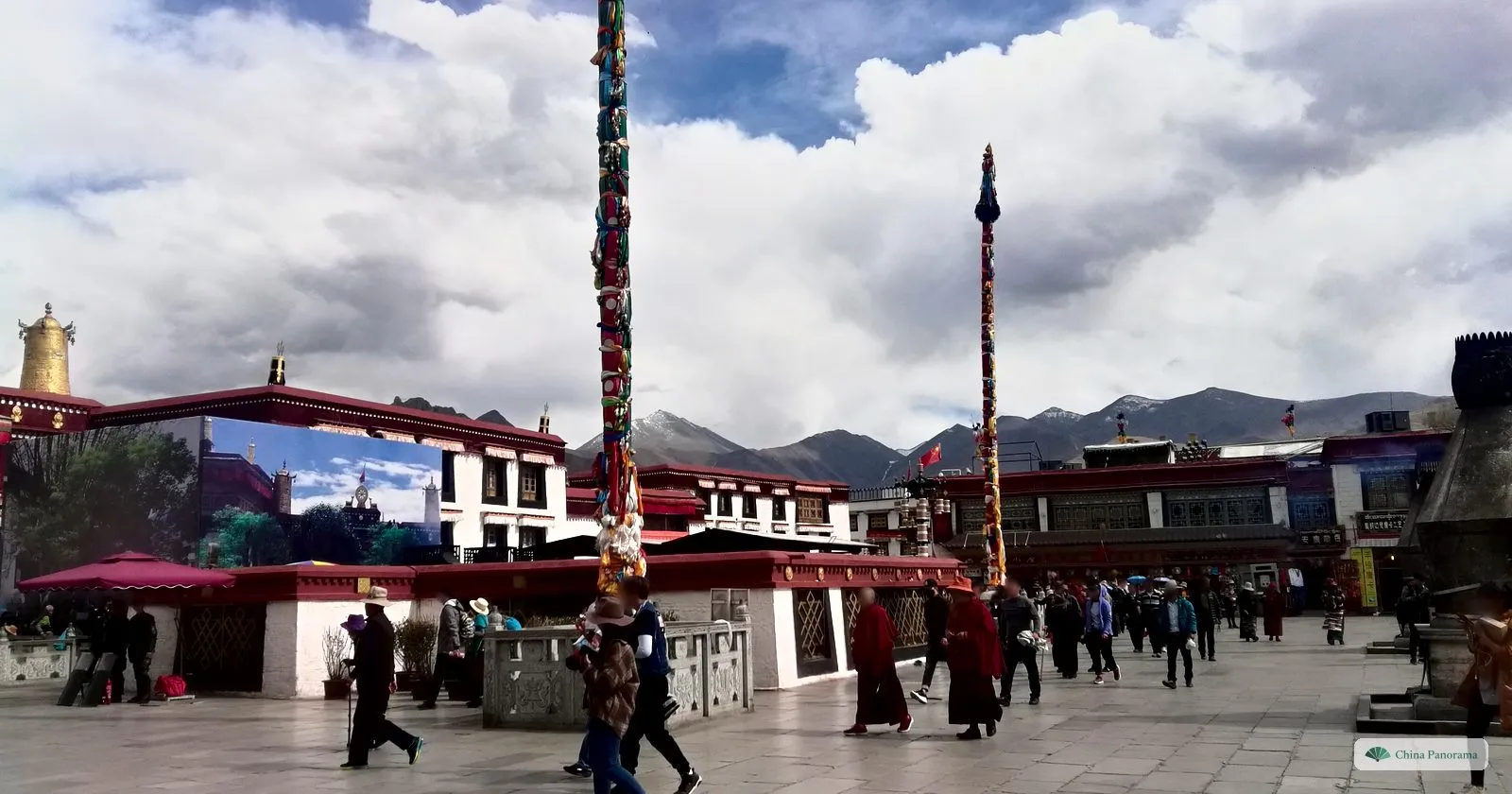
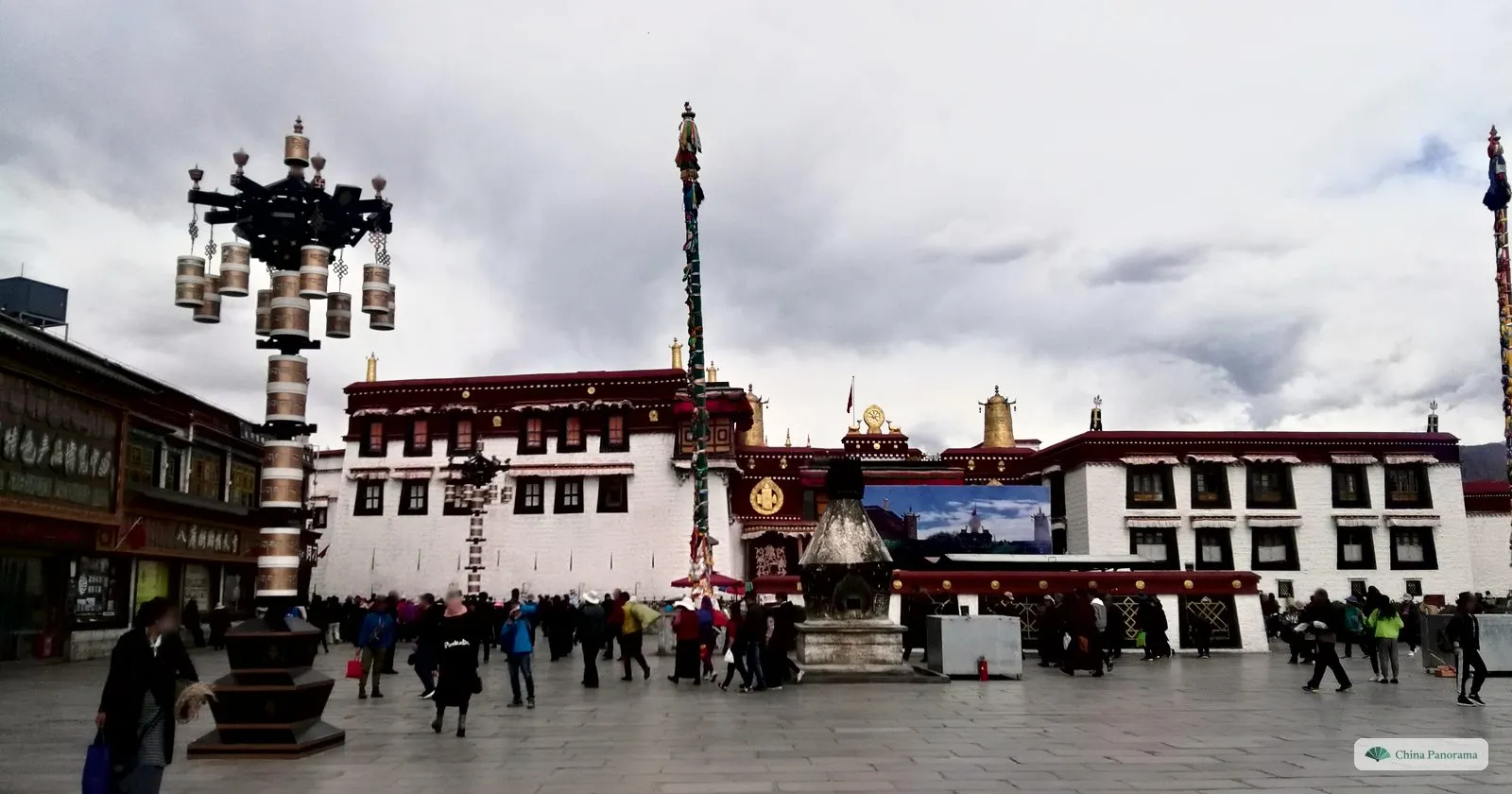
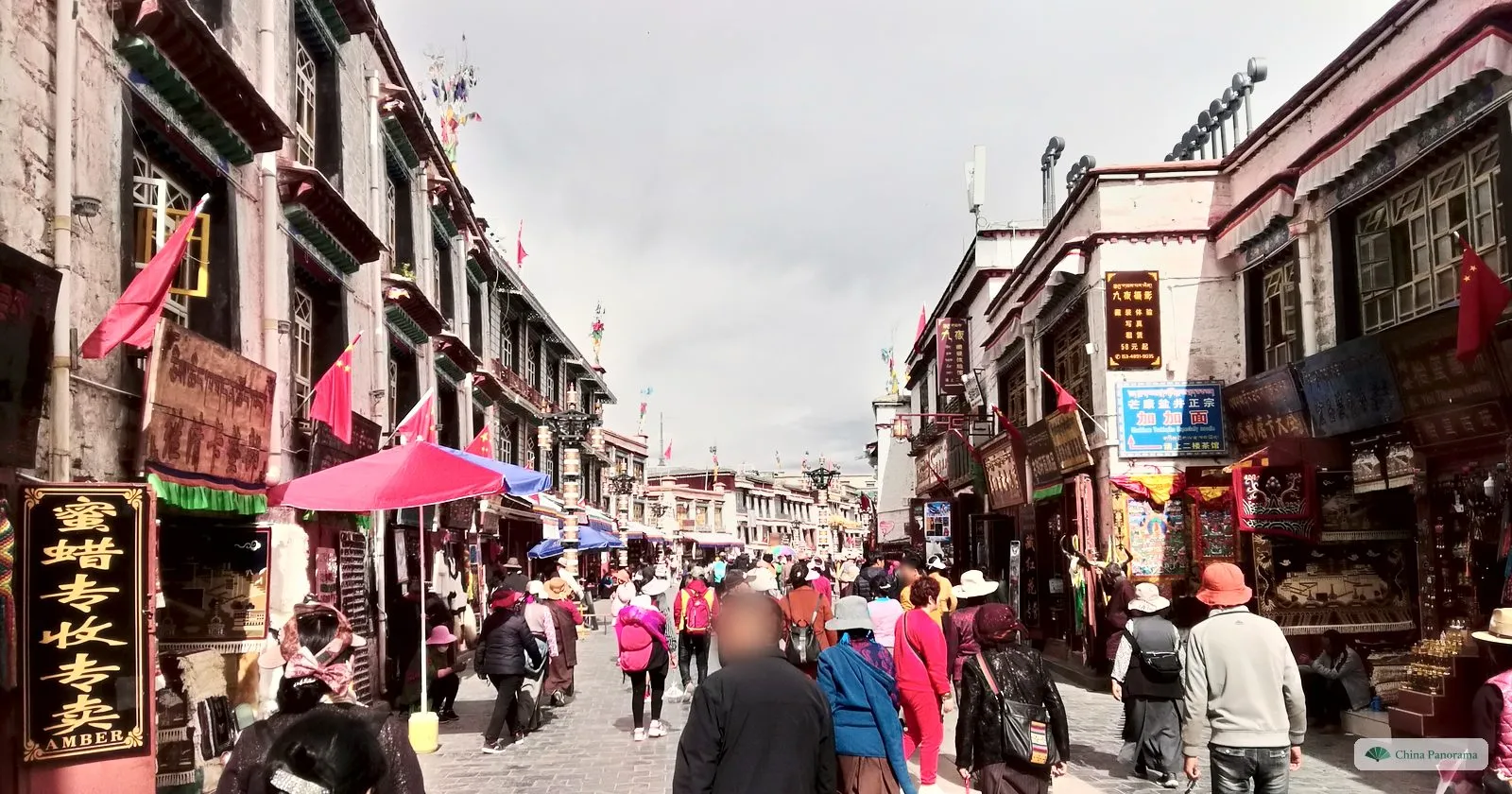 StreetChengguan · 城关区Outdoors
The ring of old streets around the Jokhang, and the pilgrim circuit: about 20 minutes on foot if you do not stop, and you will stop. Pilgrims in long chubas, with prayer wheels spinning, walk it clockwise beside the tourists and the shops selling amber, incense, butter lamps and thangkas. Square incense burners smoke at the corners. On our late afternoon on 24 April 2019 the crowd was thick from the square all the way around to the east side, under a grey sky. It feels nothing like the wide avenues outside.
Free and open at all hours. Our photographs: 16:56 to 17:36. Walk clockwise, and ask before you photograph anyone at close range. It is level, so it suits your first days in the city.
- Entry
- Free
- Opening hours
- Open at all hours
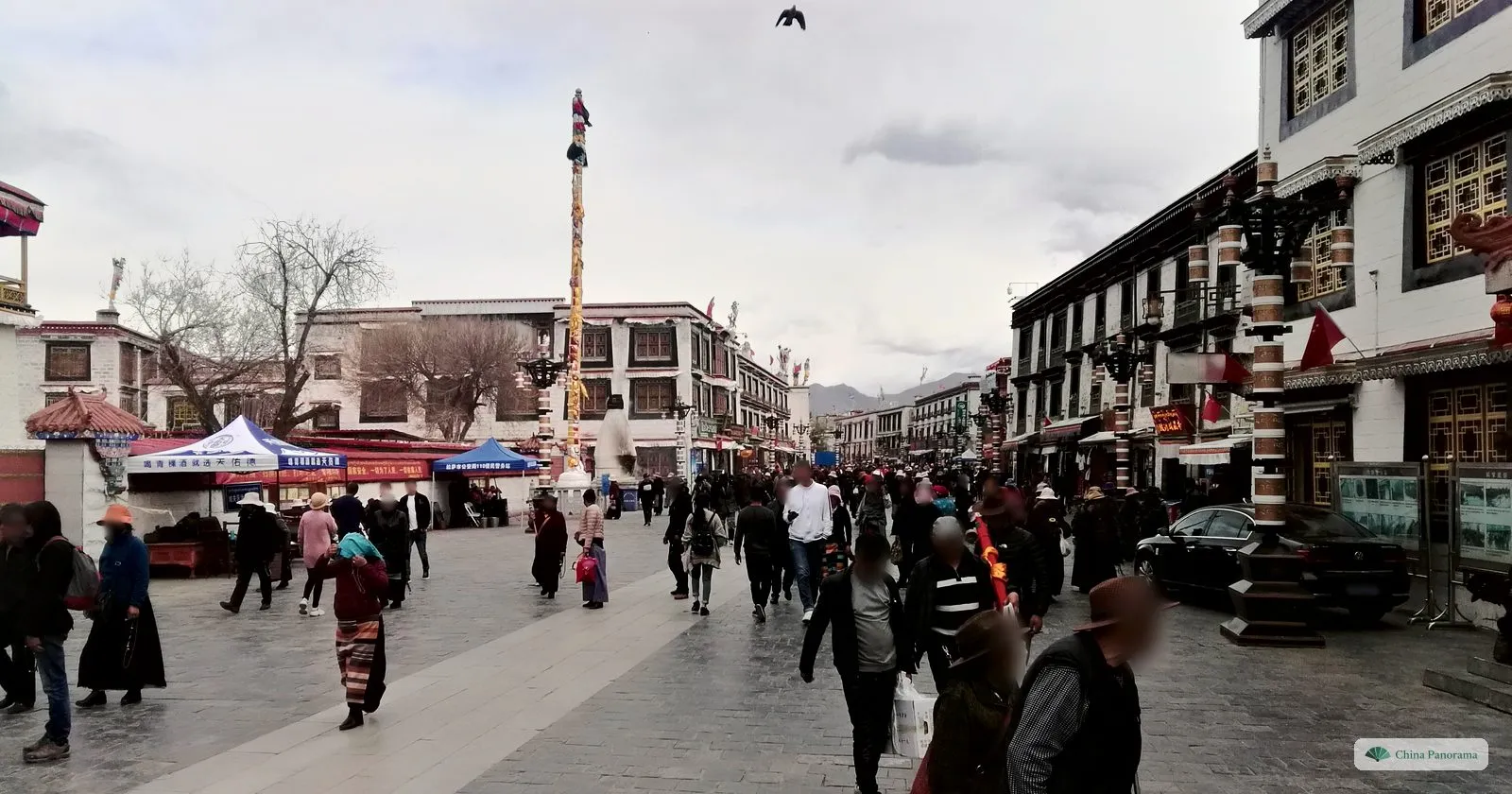
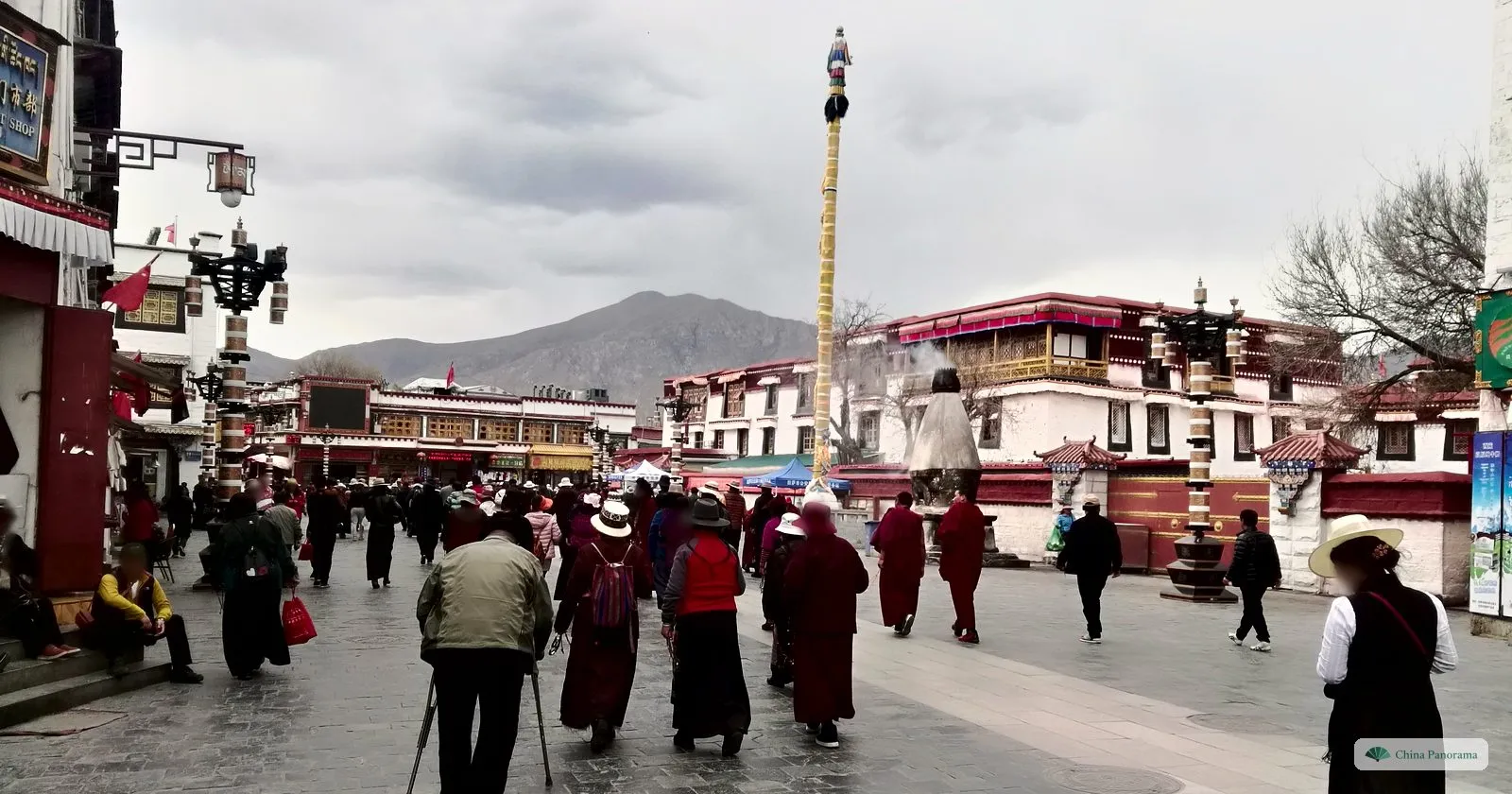
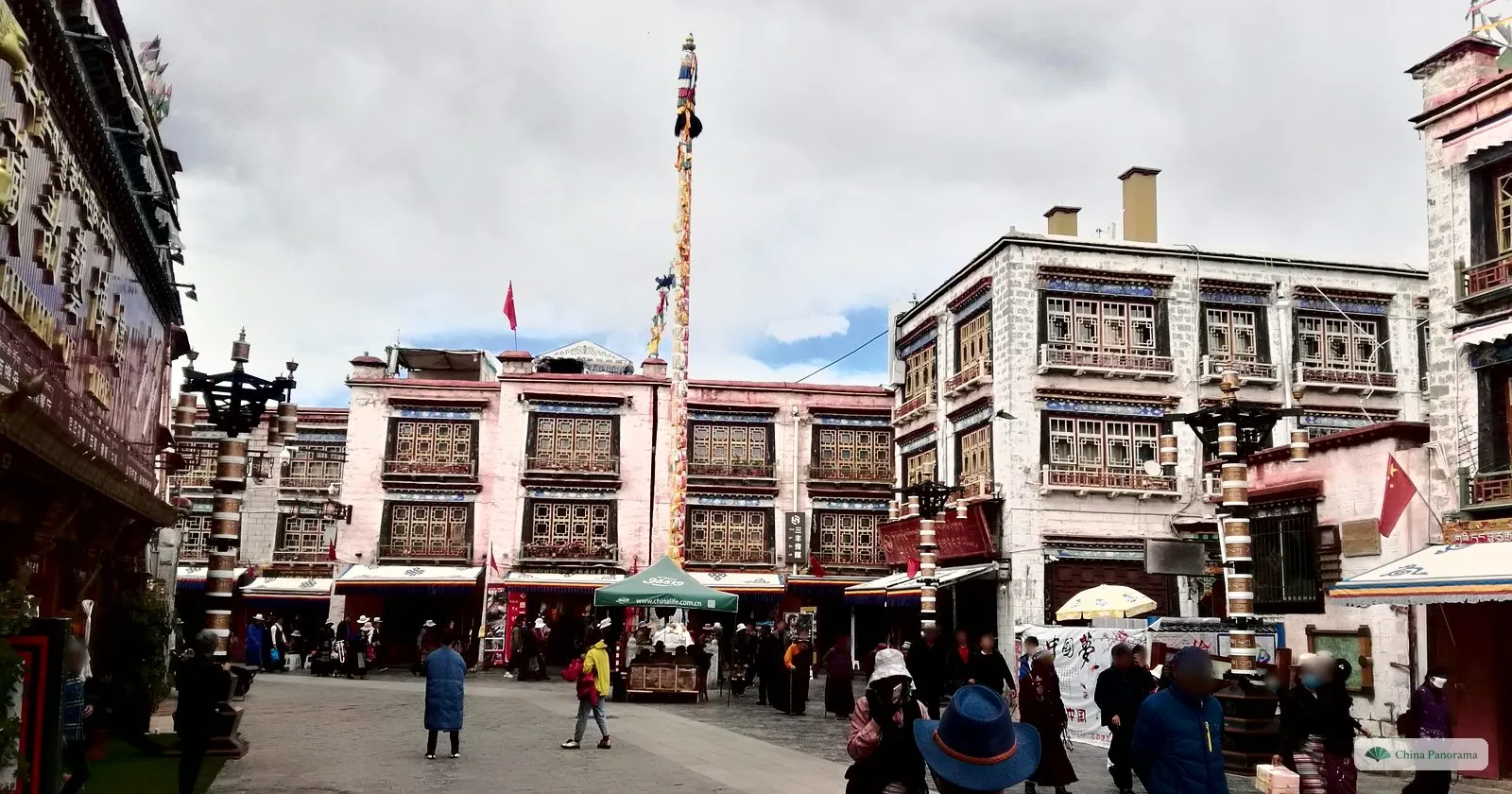
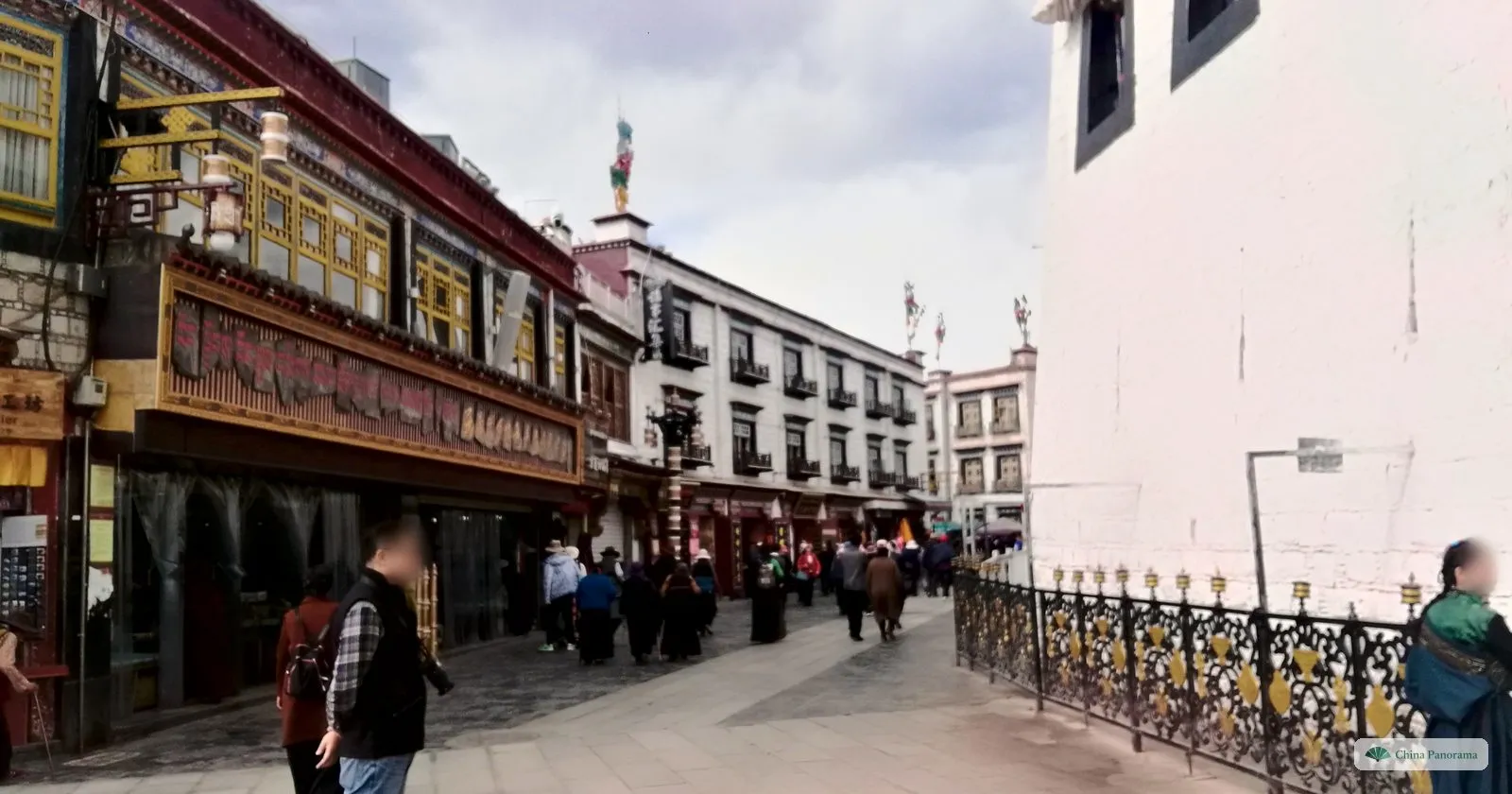
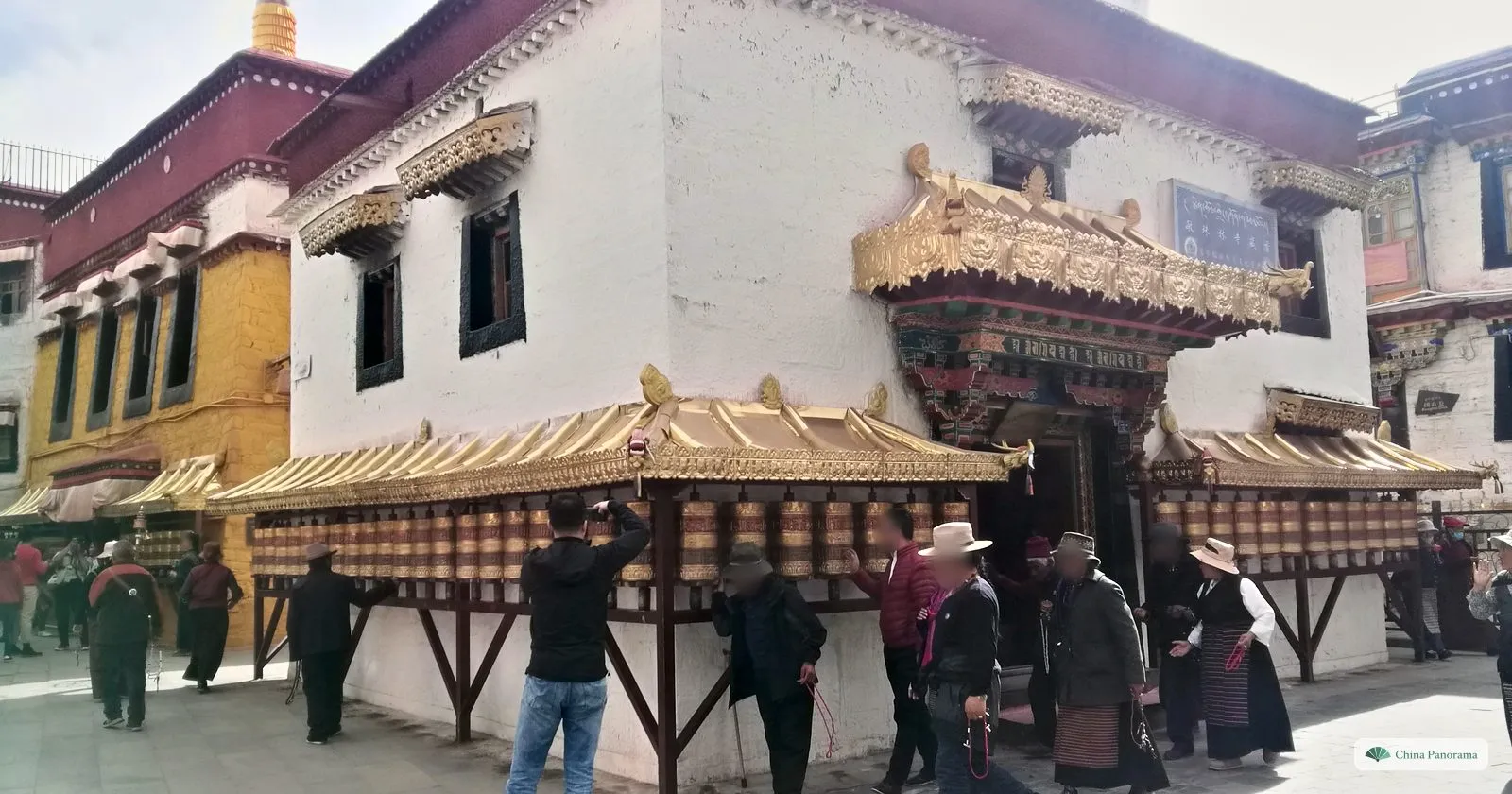
The former Qing Amban's Office
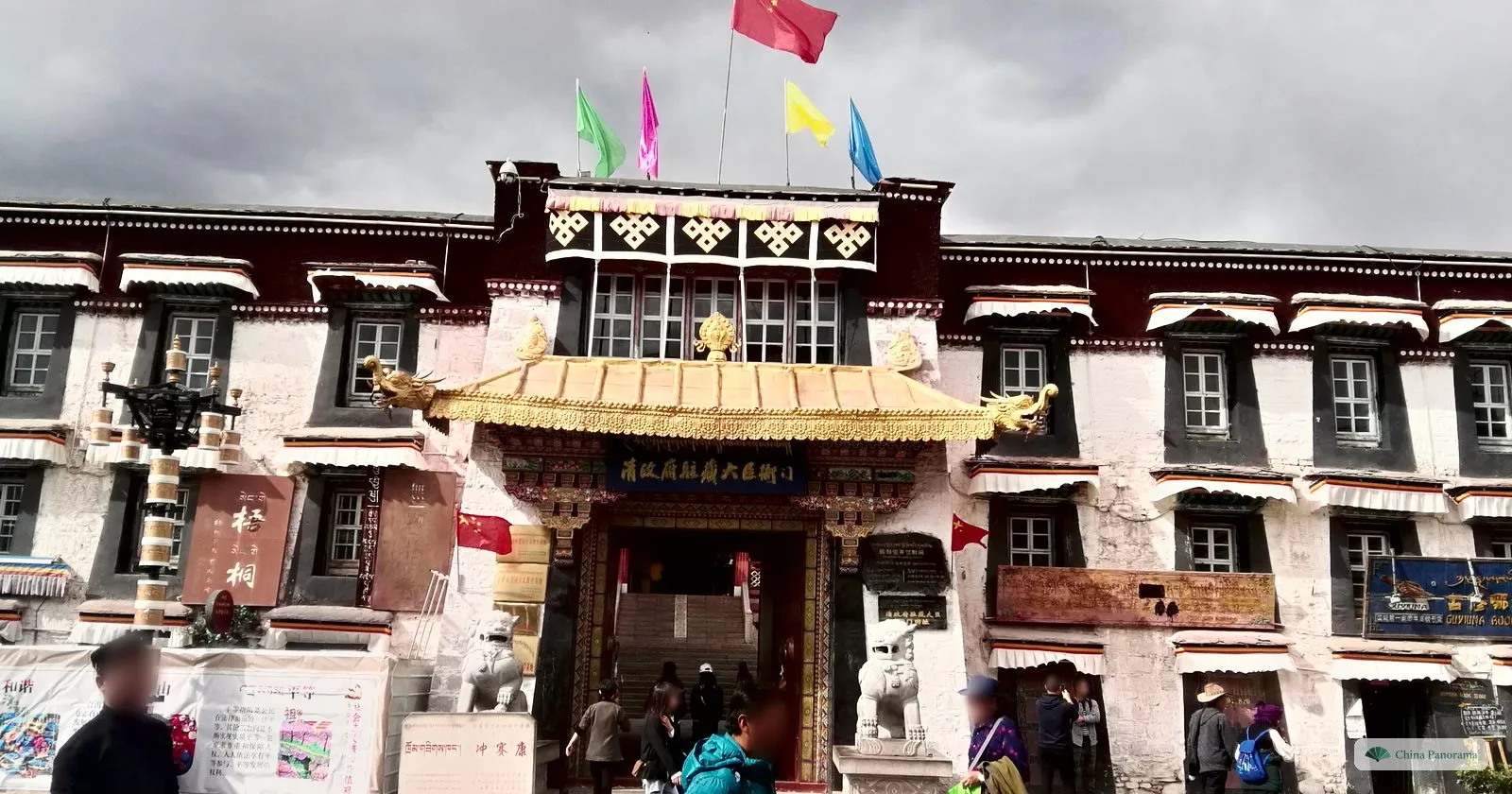
清政府驻藏大臣衙门旧址MuseumChengguan · 城关区IndoorsOn the north side of the Barkhor, behind a gilded porch with two dragons, a board reads 清政府驻藏大臣衙门: the office of the Qing government's resident ministers, the Ambans, whom Beijing posted to Lhasa from the 18th century on. A stone at the door gives the old name of the neighbourhood, Chongsaikang. The building now houses an exhibition on those years. It is a rare chance to see the Lhasa of the Qing dynasty, a few steps from the pilgrims.
We read the board at 17:17 on 24 April 2019. We have not checked current entry conditions or hours.
- Entry
- Price not verified — check on site
- Opening hours
- Hours not verified — check on site
Norbulingka
罗布林卡Classical gardenChengguan · 城关区OutdoorsThe summer palace of the Dalai Lamas, in a large walled park about 3 km west of the Potala. The name means “jewel park”. The 7th Dalai Lama began it in 1755, and later rulers each added buildings. It joined the World Heritage List in 2001. The Shoton festival, the “yogurt festival” with Tibetan opera, is held here in the seventh lunar month, around July or August. It is level and shady, and good for a slow day at altitude.
About 3 km from the Potala, with your agency's car. We have not checked the price or the hours.
- Entry
- Price not verified — check on site
- Opening hours
- Hours not verified — check on site
- TempleChengguan · 城关区Indoors
One of Lhasa's two great Gelug monasteries, founded in 1419 at the foot of the hills on the northern edge of the city. Most visitors come for the afternoon debates, when monks argue doctrine in pairs in a walled courtyard, clapping their hands to close each point. Sources give the hour as about 14:00 to 16:00, shifting with the season.
About 5 km north of the Potala in a straight line. Ask your guide whether the debate is on that day. We have not checked the price or the hours.
- Entry
- Price not verified — check on site
- Opening hours
- Hours not verified — check on site
- TempleChengguan · 城关区Indoors
Founded in 1416 and once the largest monastery in Tibet, with thousands of monks in the 1930s and about 300 at the Lhasa site today. Its white buildings are stacked on the mountainside west of the city, which gives you a good view and a steep walk between the halls. Save it for after your first days.
About 7 km west of the Potala in a straight line. We have not checked the price or the hours.
- Entry
- Price not verified — check on site
- Opening hours
- Hours not verified — check on site
Yamdrok Lake
羊卓雍措NatureShannan · 山南市OutdoorsA long turquoise lake at 4,441 m, about 75 km south-west of Lhasa in a straight line and usually reached over the Kamba La pass, given as about 4,790 m. It is the classic first trip out of the city, and the usual stop on the road to Shigatse and Everest. The climb from Lhasa is about 800 m in a morning, so go only once you feel well in the city.
Only as part of your agency's itinerary. We have not checked entry conditions.
- Entry
- Price not verified — check on site
- Opening hours
- Hours not verified — check on site
Namtso
纳木措NatureNagqu · 那曲市OutdoorsA vast salt lake at about 4,718 m, some 125 km north of Lhasa in a straight line, with the Nyenchen Tanglha range on its southern shore. It is more than a thousand metres above the city. A night at the lake is the hardest part of most itineraries, and many travellers go and return the same day instead. It is frozen for much of the winter.
Only as part of your agency's itinerary. Agencies say you may need extra paperwork beyond the Tibet Travel Permit. Ask them. We have not checked entry conditions.
- Entry
- Price not verified — check on site
- Opening hours
- Hours not verified — check on site
 NatureMaizhokunggar · 墨竹工卡县Outdoors
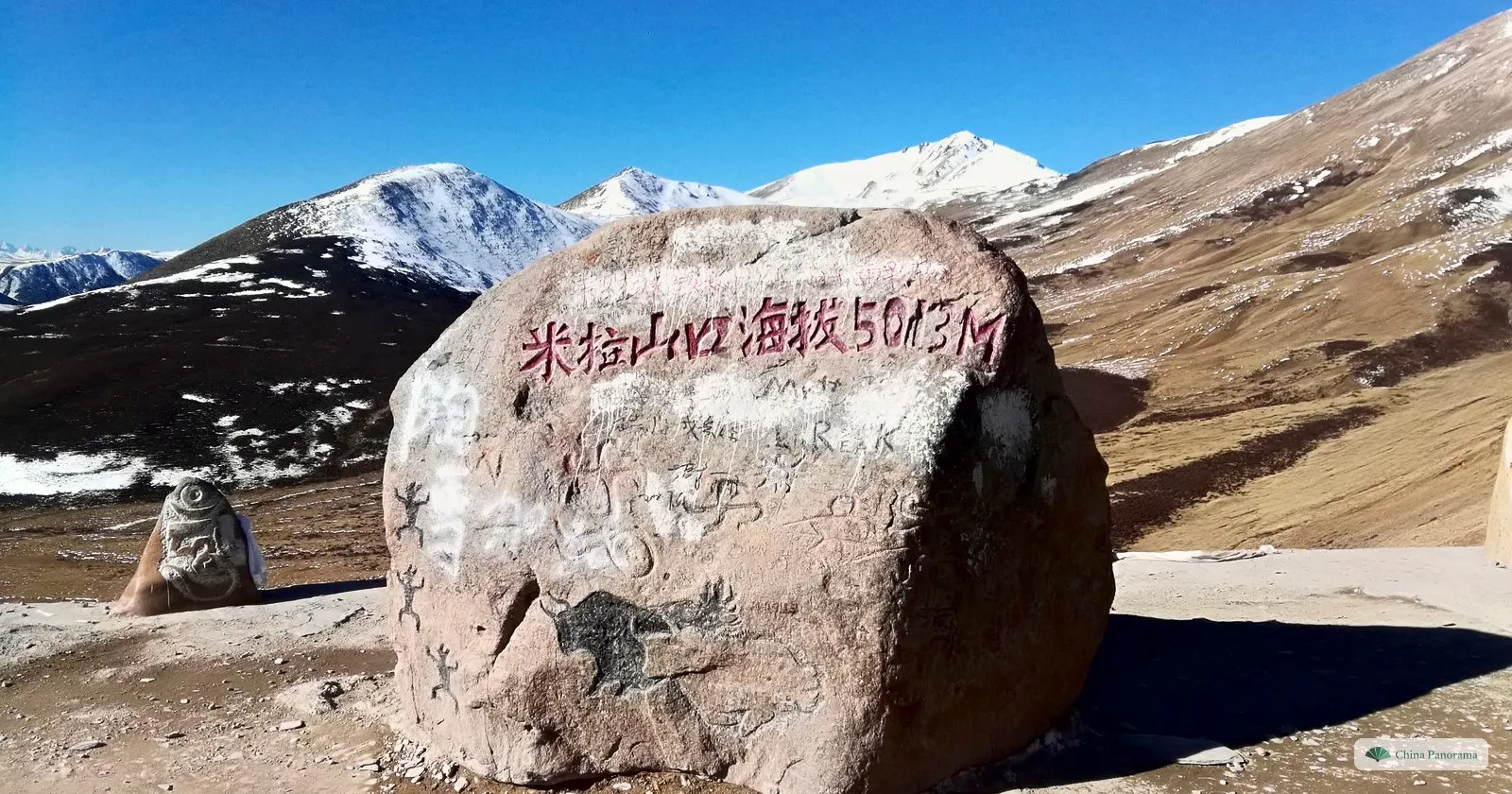
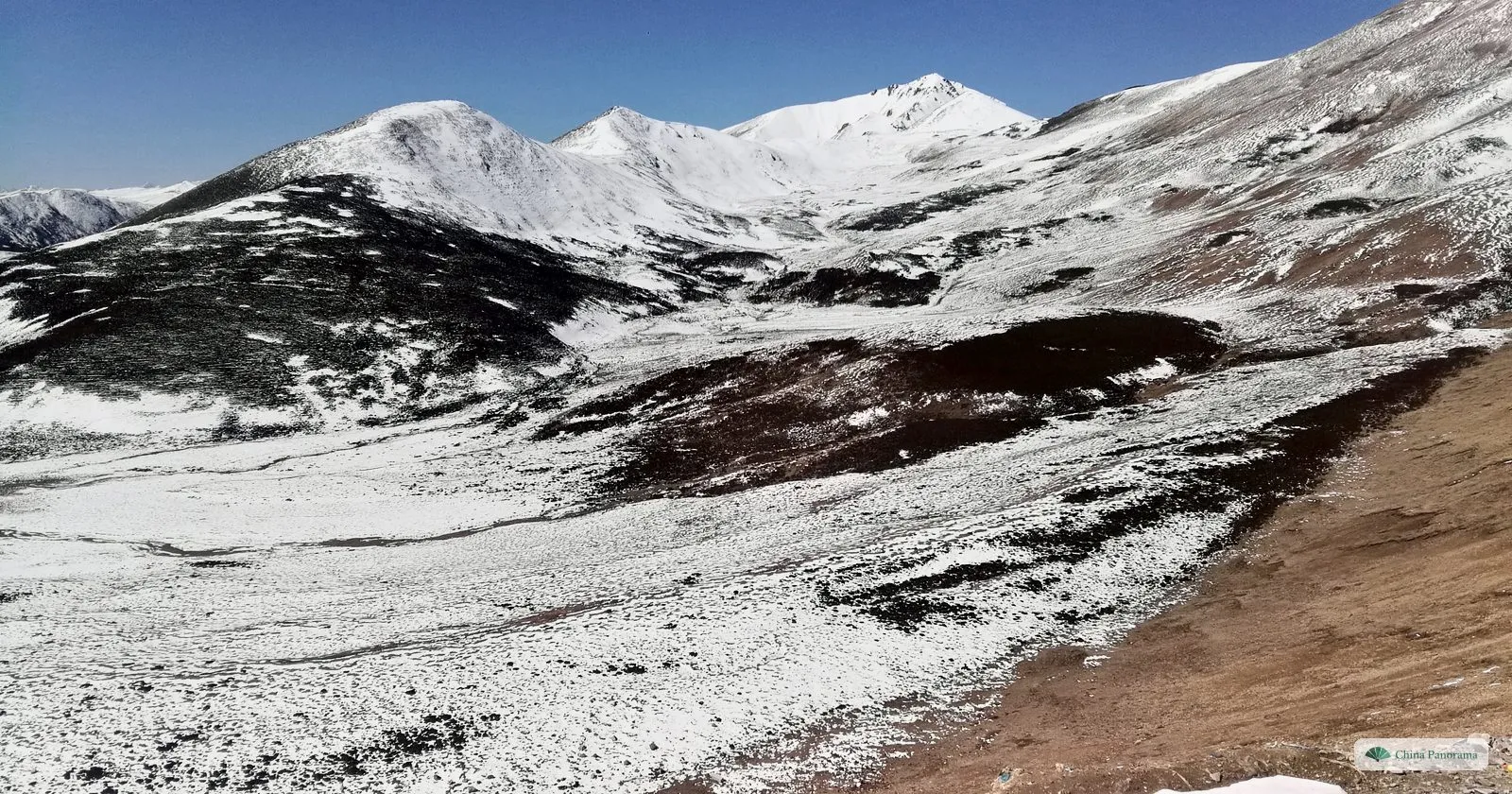
The highest point of the road from Lhasa towards Nyingchi. A boulder at the top is painted 米拉山 海拔5013M, Mila Mountain, 5,013 m, and our phone's GPS read about 4,950 m beside it. On 24 April 2019 fresh snow lay on the slopes down to the road. Below the pass, yaks grazed on brown pasture still patched with snow.
About 120 km east of Lhasa in a straight line. For foreign visitors only on an agency itinerary, which also has to arrange any further permits. Our photographs: 10:33 to 10:42 on 24 April and 09:33 on 25 April 2019. The road is free, and the pass is not a place to linger if you have a headache.
- Entry
- Free
- Opening hours
- Open at all hours
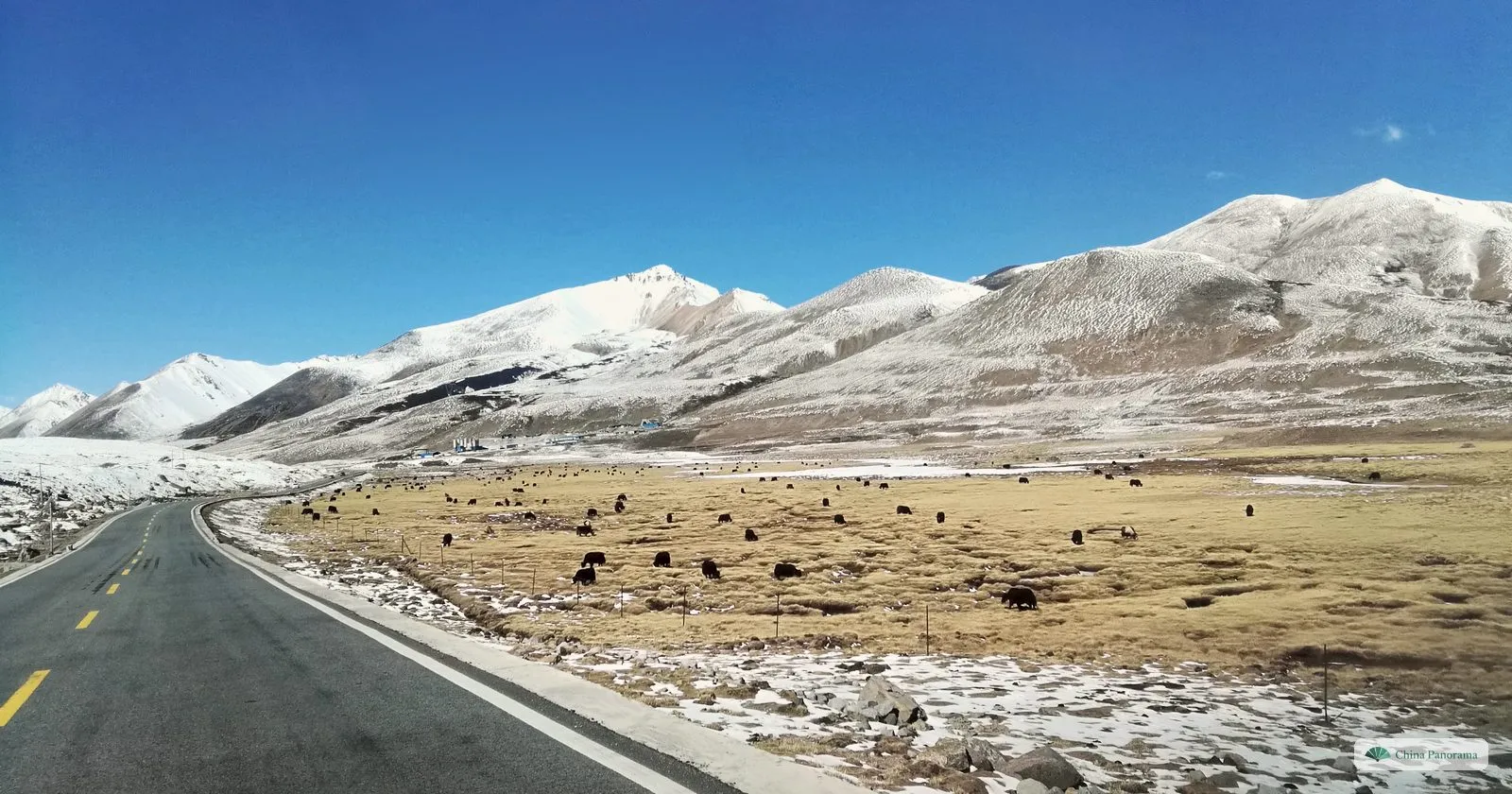
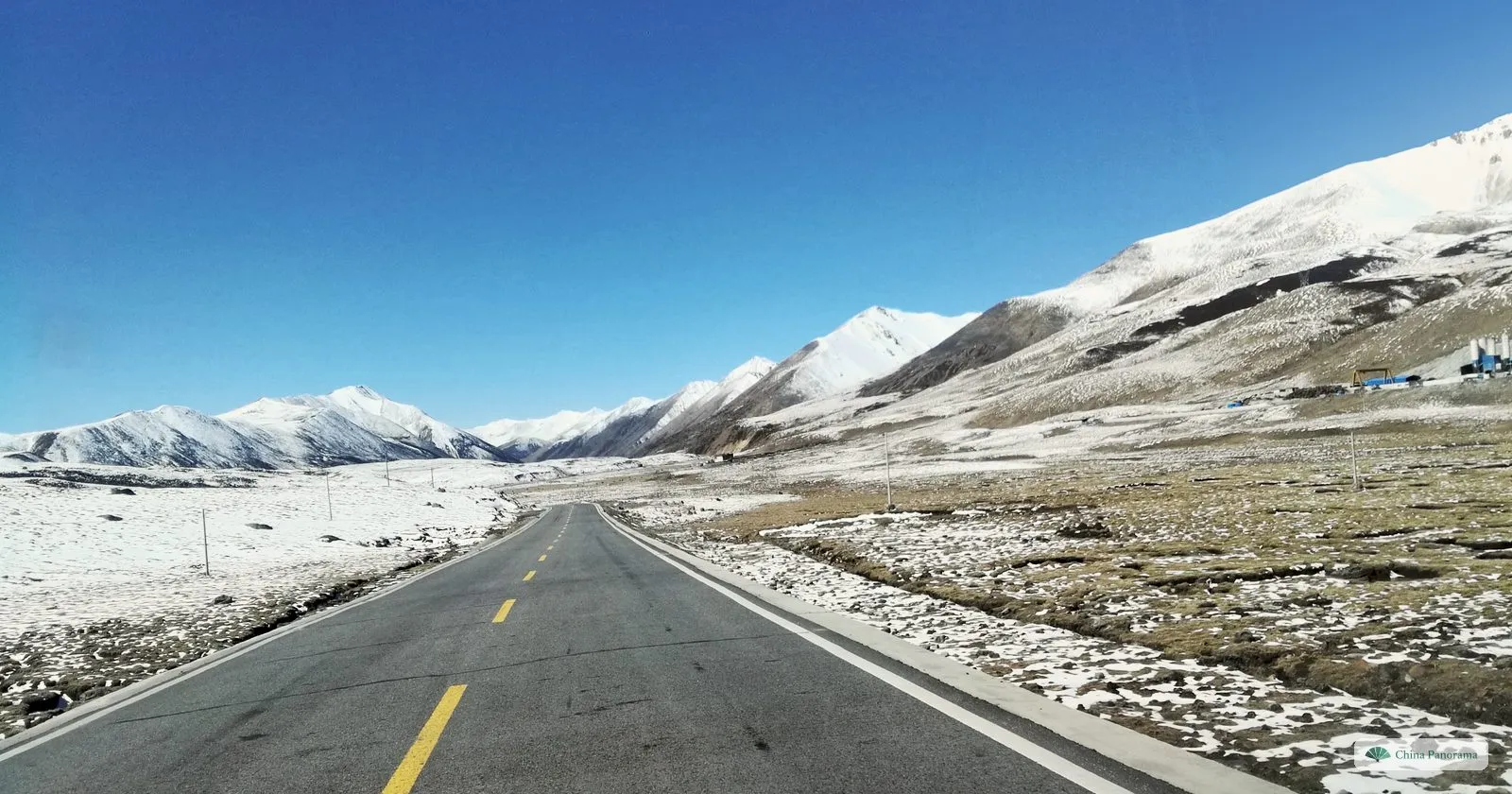
Entry prices and opening hours are marked unverified where we have not checked them against an official source. We would rather show a gap than a number we made up.
Routes and trips
Your first days in the city
Day 1 · Arrive and do almost nothing
A short walk near the hotel, an early night. No stairs, no alcohol.
Day 2 · On the flat
The Barkhor at the pace of the pilgrims, or the shady park at Norbulingka.
Day 3 · The Potala or the Jokhang
Only if you feel well. Your agency’s booking fixes the day, so ask for the Potala to be no earlier than this.
Day 4 · Monasteries and on to the lakes
The debate at Sera in the afternoon. Only after this, the first trip higher, to Yamdrok Lake.
Our afternoon on foot
From the Chakpori viewpoint past the square to the old town, as we walked it on 24 April 2019. The walking times assume a normal pace, so expect to be slower.
An easy afternoon · about 4.5 km on foot
Chakpori viewpoint
Walk 19 min· 1.4 km
Potala Square
Walk 6 min· 400 m
The pond
Walk 8 min· 600 m
Pilgrim circuit, east side
Walk 18 min· 1.3 km
Jokhang Square
Walk 5 min· 400 m
Barkhor Street and the Amban's Office
Walk 5 min· 400 m
Barkhor, the east and south sides
7 stops · 61 min walking
Stop by stop
From the Potala to the Barkhor on foot
Our afternoon of 24 April 2019: all outdoors and almost level, except the steps to the viewpoint. It suits day two or three, before you climb inside the palace. Your guide will set the actual pace and order.
1Chakpori viewpoint
药王山观景台Start with the side view of the palace from the terrace among the white stupas. We were there at 13:30.
- Entry
- Not verified
- Hours
- Not verified
Walk 19 min· 1.4 km
2Potala Square
布达拉宫广场The frontal view across the great square, and the monument on its south side. Ours: 13:55.
- Entry
- Free
- Hours
- Open at all hours
Walk 6 min· 400 m
3The pond
广场东侧水池The palace mirrored in the water, willows and a pavilion alongside. Ours: 14:03 to 14:17.
- Entry
- Free
- Hours
- Open at all hours
Walk 8 min· 600 m
4Pilgrim circuit, east side
布达拉宫转经道Cross Beijing Middle Road and join the circuit beneath the east wall, where the yellow chapel stands. Ours: 14:35.
- Entry
- Free
- Hours
- Open at all hours
Walk 18 min· 1.3 km
5Jokhang Square
大昭寺广场East along the old town to the temple. Pilgrims make their prostrations in front of the doors. We arrived at 16:56.
- Entry
- Free
- Hours
- Open at all hours
Walk 5 min· 400 m
6Barkhor Street and the Amban's Office
八廓街 · 清政府驻藏大臣衙门旧址Clockwise along the north side to the gilded porch with its board. Ours: 17:11 to 17:17.
- Entry
- Free
- Hours
- Open at all hours
Walk 5 min· 400 m
Around the corner with the pilgrims and back towards the square. Ours: 17:23 to 17:36.
- Entry
- Free
- Hours
- Open at all hours
Easy add-ons: Inside the Potala and the Jokhang, on separate booked days. Norbulingka and Sera are the usual next stops in the city.
* Walking times and distances are computed from OpenStreetMap footpaths at a normal pace on 30 October 2026. At 3,650 m you will be slower. Clock times are from our photographs on 24 April 2019.
Longer trips from Lhasa
Trip lengths commonly advertised by agencies, with the highest point of each. They are a starting point for your question to an agency, and you may well want more days.
About 5 days · Lhasa and Yamdrok Lake
Highest point: about 4,790 m at Kamba La. The gentlest introduction.
About 8 days · To Everest Base Camp
Highest point: about 5,200 m. Through Shigatse and over high passes, with a further permit.
About 10 days · Everest and Namtso
Adds Namtso, at about 4,718 m, to the Everest route. Long days and several high nights.
About 15 days · Ngari and Mount Kailash
Far western Tibet, weeks above 4,000 m. For experienced travellers with a clear medical check.
Getting there and getting around
By air
Lhasa Gonggar Airport (LXA) is about 62 km by road from the Potala: 63 minutes without traffic on OpenStreetMap. It lies at about 3,600 m, so you land at altitude and feel it the same day. Flights connect with Chengdu and other Chinese cities, about 2 hours and 25 minutes from Xining as reported. You need the permit to board, according to agencies.
Schedules and journey times not yet verified against an official timetable.
By train
The Qinghai–Tibet Railway reached Lhasa on 1 July 2006, and it crosses the Tanggula Pass at 5,072 m. From Xining it is about 1,950 km and 20.5 to 22 hours, as reported. Every seat has an oxygen outlet. The climb is slower than a flight, but much of it lies above the altitude of Lhasa itself, so it does not spare you the effects. You need the permit to board, and agencies report that the original may be asked for. Check the timetable on 12306.
Schedules and journey times not yet verified against an official timetable.
By road
You cannot drive, cycle or walk in on your own. The German Foreign Office says the agency must provide transport for the whole route, and agencies say foreign visitors enter by plane or train only. The Gyirong border crossing with Nepal is closed in both directions until further notice, according to the same Foreign Office page of 30 October 2026.
On to Nyingchi
The electrified railway from Lhasa to Nyingchi opened on 25 June 2021: 435 km at up to 160 km/h, about 3.5 hours. It is part of the Sichuan–Tibet Railway, which is not yet complete. As a foreign visitor you can use it only if it is on your agency's itinerary.
Schedules and journey times not yet verified against an official timetable.
Nonstop from Europe
Our flight list has no nonstop route from Europe to Lhasa. Airlines and frequencies →
Flight data checked 12 September 2026.
The station
- Lhasa 拉萨站The only station you will need, south-west of the centre across the Lhasa River. Trains from Xining and beyond on the Qinghai–Tibet Railway, and east to Nyingchi.
No metro: how to get around
Lhasa has no metro, and on a tour you will rarely need public transport: the agency must provide your transport for the whole route. The old town around the Barkhor is on foot anyway.
- Agency carThe rule from the German Foreign Office: the accredited agency must provide transport and a guide for the entire itinerary. This also covers the airport or station pick-up.
- On footFrom the Potala to the Jokhang is about 1.5 km in a straight line, along flat streets. Our afternoon route is on this page. Walk slowly for the first days.
- City buses and taxisBoth run in the city, and our photographs show buses on Beijing Middle Road. We have not checked fares or routes, or how far a foreign visitor may use them away from the guide.Not verified.
Source and date: Auswärtiges Amt, China travel advice, as of 30 October 2026, for the agency rule. Distances from coordinates, 30 October 2026.
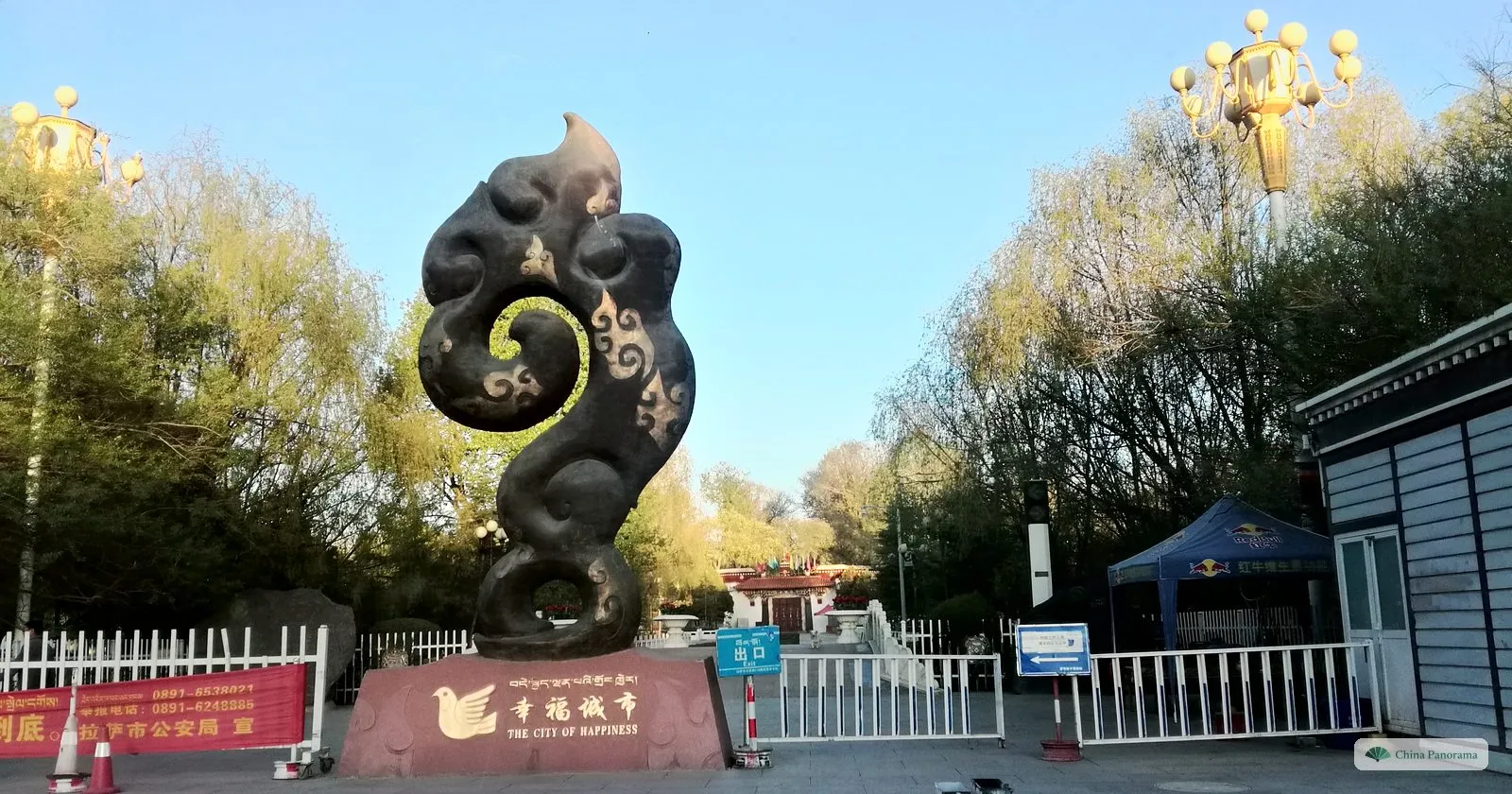
Before you go
Entry to China and the Tibet permit are two different things, and you need both. Most European passports are visa-free for a short trip, under a one-sided waiver with an end date worth checking before you book. The dates in social-media posts can be out of date, so check here:
- UK passport
Visa-free up to 30 days per trip, currently until 31 December 2026.
- EU passports
Dutch, German, French, Irish, Nordic and most other EU passports: visa-free up to 30 days, currently until 31 December 2026.
- US passport
No general waiver: a visa, or the 10-day visa-free transit if you fly on to a third country.
China’s 10-day visa-free transit applies at designated entry ports, for travellers continuing to a third country. Before you rely on it for Tibet, ask your agency. Check your passport.
- Visa-free extension status
Whether the waiver runs on past its current end date.
- Pre-trip checklist
Payments, SIM and apps. WeChat is the booking channel for the temples and the palace.
- Medication and health
Which medicines you can bring into China.
- Chengdu
A common place to stop before you fly to Lhasa, at about 500 m.
- Kunming
A city at about 1,890 m, for time at a medium height first.
- Golden Week
1–7 October: the fullest week of the year at the Potala.
FAQ
Do foreigners need a permit to visit Lhasa?
Yes. According to the German Foreign Office, foreigners always need a special permit, the Tibet Travel Permit or Tibet Entry Permit, from the Tibet Tourism Bureau in Lhasa to travel in the Tibet Autonomous Region as tourists. This applies whichever way you enter China, and being visa-free for China does not replace it.
Can I apply for the Tibet Travel Permit myself?
No. The application can only be made through a travel agency accredited by the Tibet Tourism Bureau. The agency must also provide transport and a guide for your whole route. In its October 2024 notes, the German tour operator Gebeco says that the permit cannot be applied for in Germany and has to be arranged through the operator and its local partner.
Can I travel to Lhasa independently?
Not in the usual sense. Foreign tourists travel with an agency, a guide and a vehicle on an approved route, even with a private tour. You can have free time in the old town of Lhasa, but ask your agency what the guide must accompany. Agencies say a guide must go with you inside the Potala.
Do I need a group of five people?
The German Foreign Office says the application can only be made for a group of at least five. Many agencies advertise private tours for one or two people. We could not resolve the difference, so get written confirmation from the agency that your exact party will be permitted before you pay anything.
How far ahead should I arrange the permit?
The German Foreign Office gives five to seven working days of processing, according to the Tibet Tourism Bureau. Agencies usually advise starting at least 20 days to a month before arrival, because trains, flights and Potala tickets depend on it. Start earlier for summer and Golden Week.
Is Tibet ever closed to foreign tourists?
Yes. The German Foreign Office warns of repeated temporary restrictions and travel bans, which as a rule are not announced publicly. Travel agencies list closures around February and March in many past years. One agency reported that no March stop was expected in 2026, but that is no promise for the next spring. Book with cancellation terms you can live with.
How high is Lhasa, and will I get altitude sickness?
Lhasa is at about 3,650 m, higher than any town in the Alps, with about 64 % of the air pressure at sea level. Water boils at about 87.6 °C. Headache, nausea, dizziness and tiredness are common in the first days and normally settle within a day or two if you do not go higher. Your risk cannot be predicted by fitness. Talk to your doctor before you book, especially with heart or lung problems or if you are pregnant.
What should I do if I get altitude sickness in Lhasa?
Stop going up, rest, drink and do not push on. Tell your guide. Mild symptoms improve with rest, and any descent of 300 m or more helps fast. Confusion, unsteady walking, or breathlessness at rest and a wet cough are emergencies: get medical help and go down immediately.
Should I fly or take the train to Lhasa?
Flying is quick, but it takes you from low altitude to 3,600 m in a couple of hours. The train from Xining takes about 21 hours, as reported, so you can adjust more gradually, but it climbs to 5,072 m at the Tanggula Pass on the way, higher than Lhasa itself. Neither avoids the altitude. Either way, plan easy days at the start.
Is the Potala Palace free in winter?
Last winter it reportedly was, under the “Winter Tour of Tibet” policy, from 1 November 2025 to 15 March 2026, but you still had to book. For 2026–27 the official Snow City notice says that route is free during the policy, and press reports give the policy dates as 15 October 2026 to 15 March 2027, with temples excepted. We could not confirm the main palace ticket for this winter, so ask your agency.
How many days do I need in Lhasa?
Plan at least four nights in the city before going anywhere higher: the first day is for rest, the second for the Barkhor, the third for the Potala or the Jokhang. Tours of five days cover Lhasa and Yamdrok Lake, and those to Everest Base Camp are commonly about eight days.
Which places in Tibet are closed to foreign visitors?
Border areas that have not been opened to foreigners require extra documents, the Foreign Office says closures can occur at any time, and agencies list Medog, the Namyi Valley and Yadong as areas foreign tourists cannot visit, with some sources adding Chayu and Lebu. Sources disagree on the Yarlung Tsangpo Grand Canyon. Have your agency confirm every stop in writing.
Do journalists or people on business need something different?
Yes. According to the German Foreign Office, mountaineers, journalists, business travellers and people visiting family are subject to special rules, which you need to ask the relevant Chinese authorities about case by case.
Do I need a visa for Lhasa?
A visa-free entry to China counts for the country, and the Tibet permit comes on top. British, Irish, Dutch, German, French, Nordic and Australian passports are visa-free for up to 30 days per trip, under a one-sided waiver that currently runs until 31 December 2026. US passport holders have no general waiver. The 10-day visa-free transit applies only at designated entry ports and only if you fly on to a third country, so ask your agency whether a transit stay would work for Tibet at all.
Sources and status
All photographs on this page are ours: Mila Pass at 10:33 to 10:42 on 24 April 2019 and 09:33 on 25 April 2019, the Potala from 13:07 to 14:45 and the Jokhang and the Barkhor from 16:56 to 17:36 on 24 April, and the road out of the city at 07:38 on 25 April. Faces of passers-by and car number plates have been blurred. We could not open the websites of the Tibet government from our location on 30 October 2026: the 2021 border-area notice and the 2026–27 winter policy dates reach you second-hand, through search-engine excerpts and press reports, so check them with your agency. Data sources: China: travel and safety advice, section on Tibet, as of 30 October 2026 (German Foreign Office, German), Press conference, 1 April 2025: management measures for foreigners entering Tibet (Chinese Foreign Ministry, Chinese), Notice on the Snow City route and its tickets, 16 September 2026 (Potala Palace Administration, in Beijing News, Chinese), The same notice (People's Daily via Guangming, Chinese), Border pass needed for Medog from 1 March 2021 (Tibet Department of Culture and Tourism, Chinese), High-altitude travel and altitude illness (CDC Yellow Book), Altitude sickness (Arzneiverordnung in der Praxis, 2018, German), Visa information China and Tibet, October 2024 (Gebeco tour operator, German), Tibet Travel Permit guide: an example of what agencies report (China Highlights), When Tibet has been closed to foreigners (Yowangdu, a travel agency), Jokhang Temple reservations (GoAsia, October 2026), Historic Ensemble of the Potala Palace, Lhasa (UNESCO World Heritage List), Potala Palace (Wikipedia), Jokhang (Wikipedia), Norbulingka (Wikipedia), Sera Monastery (Wikipedia), Drepung (Wikipedia), Yamdrok Lake (Wikipedia), Lhasa (Wikipedia), Qinghai–Tibet railway (Wikipedia), Sichuan–Tibet railway (Wikipedia), Lhasa Gonggar Airport (China Highlights), Xining to Lhasa by train (China Highlights), Monthly temperature data, Lhasa.
Changelog (1)
- 2026-10-30Page created, with our own photographs from 24–25 April 2019. Permit rules checked against the German Foreign Office page as of 30 October 2026. The Snow City ticket is from the official notice. Other prices, hours and closed-area lists are quoted as reported and marked unverified.