China Panorama
China Panorama
Entry
Holidays
Flights
Food
Cities
Newsletter
Last verified: 5 Oct 2026

Chinese Hot Pot (Huo Guo) 火锅

Hot pot (火锅, huǒ guō) is a pot of simmering broth in the middle of the table. You cook raw meat, tofu and vegetables in it yourself; a split pot gives you a spicy and a mild side.

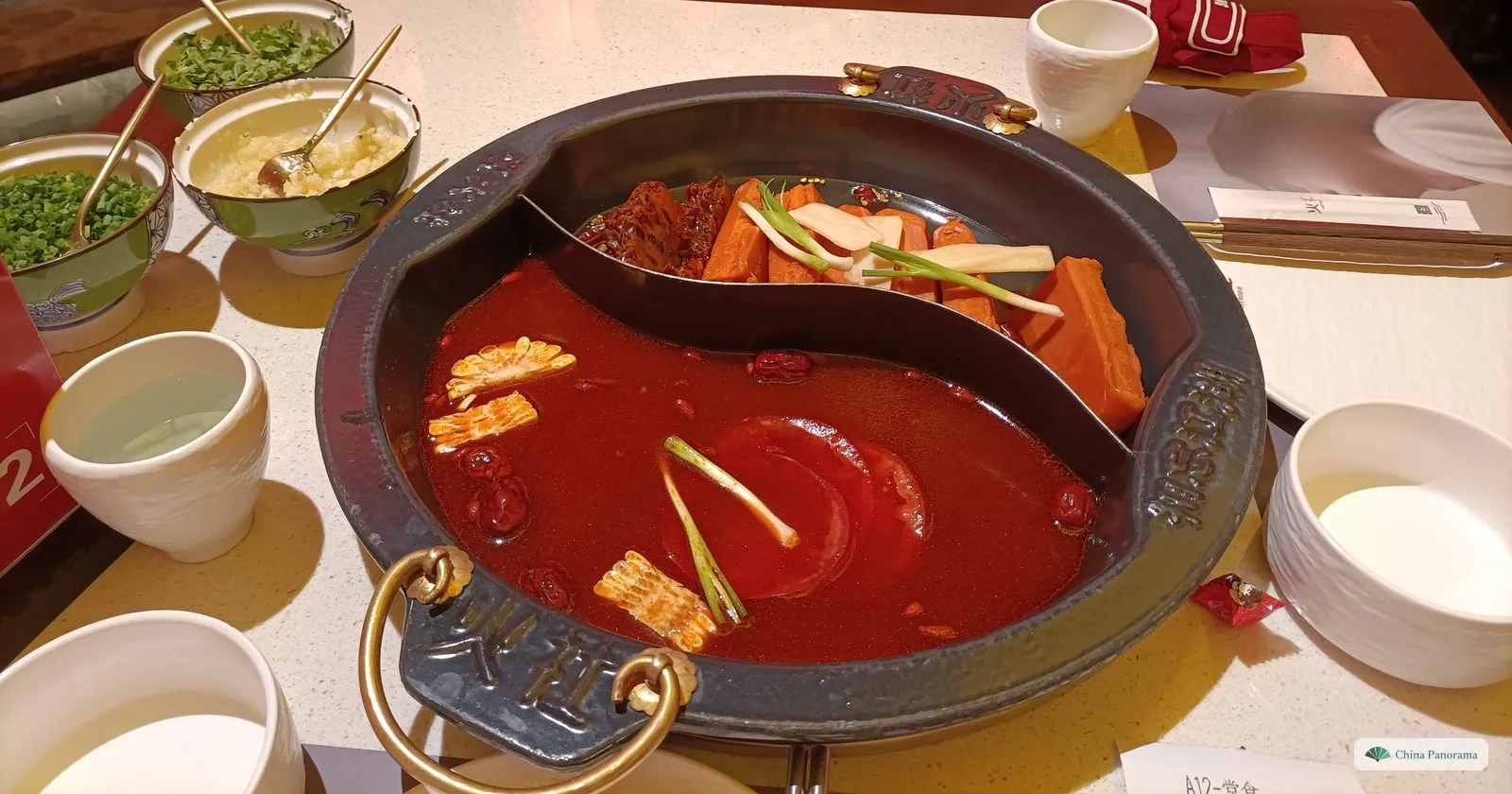
A round black hot pot split by a curved metal wall: red tomato broth with tomato slices, red dates and scallion in front, pieces of carrot and yam behind, with small bowls of chopped scallions and minced garlic and white cups on the table
A split pot at a hot pot restaurant in Shanghai, 2021: tomato broth in front, clear broth with carrot and yam behind, and scallions and garlic from the sauce bar on the left.

What is hot pot?

A pot of broth sits on a burner built into the table. Everyone orders plates of raw ingredients – thinly sliced beef and lamb, meatballs, tofu, mushrooms, greens – drops them into the broth, fishes them out a few seconds or minutes later and dips them into a sauce they mixed themselves. It is a slow, shared meal: one pot is made for four to six people, and a hot pot dinner easily takes two hours. Expect to pay about ¥80–150 per person at an ordinary restaurant in a big city (2026).

The style most visitors meet is the one from Chongqing and Sichuan, with a fiery red broth – almost always as a split pot, with a mild broth on the other side. If you have eaten fondue chinoise in Switzerland or Germany, you know the idea: it is the European version of Chinese hot pot.

What it tastes like. The spicy side hits twice: chilli heat first, then a buzzing numbness on your lips from Sichuan pepper – that tingle is the má (麻) in mala. Everything you cook takes on its broth, so the same slice of beef tastes completely different from the two sides of a split pot. The sauce does the rest: sesame oil and garlic cool the chilli down, sesame paste makes it rich.

Read the pot: tap the numbers

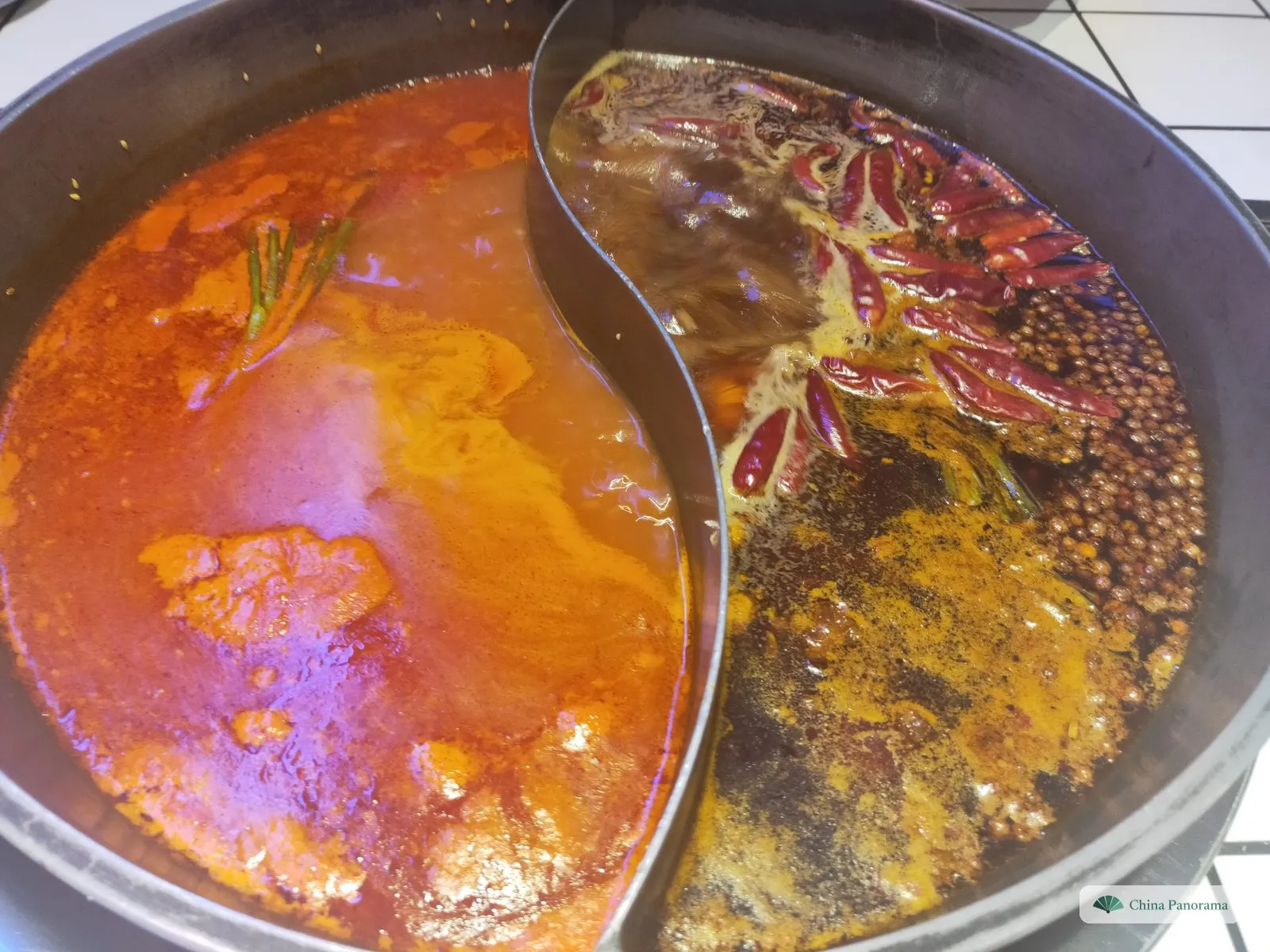
Close-up of a split hot pot: on the right, oily dark broth with whole dried red chillies and a heap of brown Sichuan peppercorns; on the left, an orange-red broth; a curved steel wall between them
A split pot at a hot pot restaurant in Shanghai, 2020, just before the first ingredients go in.

1Dried chillies

干辣椒 gān là jiāo

Whole dried chillies give the heat. Nobody eats them – leave them in the pot.

Tap a number on the photo, or a name in the list.

Is hot pot spicy?

Only if you order it spicy. The red mala broth is hot and numbing, but tomato, mushroom and clear broths have no chilli at all – and a split pot (鸳鸯锅) gives you one of each. You choose the broth first, in the 锅底 section of the menu; these are the words you will see there.

Broth words on the menu
Chinese and pinyinMeaning
锅底guō dǐPot base. The menu section where you choose the broth. You order it first.
麻辣锅 · 红汤má là guō · hóng tāngMala broth · “red broth”. Chilli and Sichuan pepper in beef tallow: hot and numbing.
番茄锅fān qié guōTomato broth. Sweet-sour, not spicy. The usual mild side of a split pot.
菌汤锅jūn tāng guōMushroom broth. Light and savoury, not spicy.
清汤锅qīng tāng guōClear broth. Plain stock, not spicy. Tastes of whatever you cook in it.
白粥锅bái zhōu guōRice congee broth. Plain rice porridge, not spicy. A southern broth: you eat the congee at the end.
沙茶锅 · 海鲜锅shā chá guō · hǎi xiān guōShacha broth · seafood broth. Southern broths, not or barely spicy. Both contain shrimp or other seafood.
鸳鸯锅yuān yang guōSplit pot. One pot with a divider and two broths – usually one spicy, one not.
九宫格jiǔ gōng géNine-grid pot. Chongqing style: one mala broth, a grid of nine sections to keep track of your food.
小火锅xiǎo huǒ guōSmall hot pot. One small pot per person, each with the broth they chose.
牛油 · 清油niú yóu · qīng yóuBeef tallow · vegetable oil. The two fats a mala broth is made with. 清油 is the one without beef.
不辣 · 微辣 · 中辣 · 特辣bú là · wēi là · zhōng là · tè làNot · mildly · medium · extra spicy. The heat levels you can pick for the spicy side.

Which pot should you order?

1. How much chilli can you take?
2. How many of you?
3. Anything you don’t eat?

Order this

鸳鸯锅:番茄 + 微辣

yuān yang guō: fān qié + wēi là

Split pot: tomato + mildly spicyMild

Taste the spicy side first, then retreat to the tomato side. Even 微辣 (mild) at a Sichuan-style place is hot for most visitors.

How do you eat hot pot?

In five steps – each one is explained further down, with something to try out.

  1. 1

    Choose the broth · 锅底

    The pot base comes first on the menu. Not sure about chilli? A split pot gives you a spicy and a mild side.

    Go to it ↓
  2. 2

    Order the raw ingredients · 点菜

    Usually by scanning the QR code on the table, sometimes by ticking a paper menu with a pencil. Plates arrive raw; many places sell half portions (半份).

    Go to it ↓
  3. 3

    Mix your dipping sauce · 调料

    At the self-service sauce bar. Many restaurants charge a small fee per person for it.

    Go to it ↓
  4. 4

    Cook, dip and eat · 涮

    Drop a few pieces in, fish them out when done, dip them in your sauce. Thin meat takes seconds, potatoes minutes.

    Go to it ↓
  5. 5

    Finish and pay · 买单

    Noodles go in last, into the broth that is left. Pay at the counter or on the same QR-code page you ordered from.

    Go to it ↓

What goes in the pot – and for how long

Most hot pot restaurants now take your order by a QR code on the table: scan it with Alipay or WeChat and order on your phone – it works like our QR-code ordering walkthrough. Others hand you a paper menu to tick with a pencil. Either way the menu is usually in Chinese only, so here are the 22 things you will see most, as they are written on it.

Tap Cook it to see how long each one takes, and Add to order to build a list you can show the staff in large characters.

  • 肥牛

    féi niú

    ⏱ 10–20 s

    Thin-sliced fatty beef

    Safe bet

    Done as soon as no pink is left. Cook a few slices at a time.

  • 羊肉卷

    yáng ròu juǎn

    ⏱ 10–20 s

    Thin-sliced lamb

    Safe bet

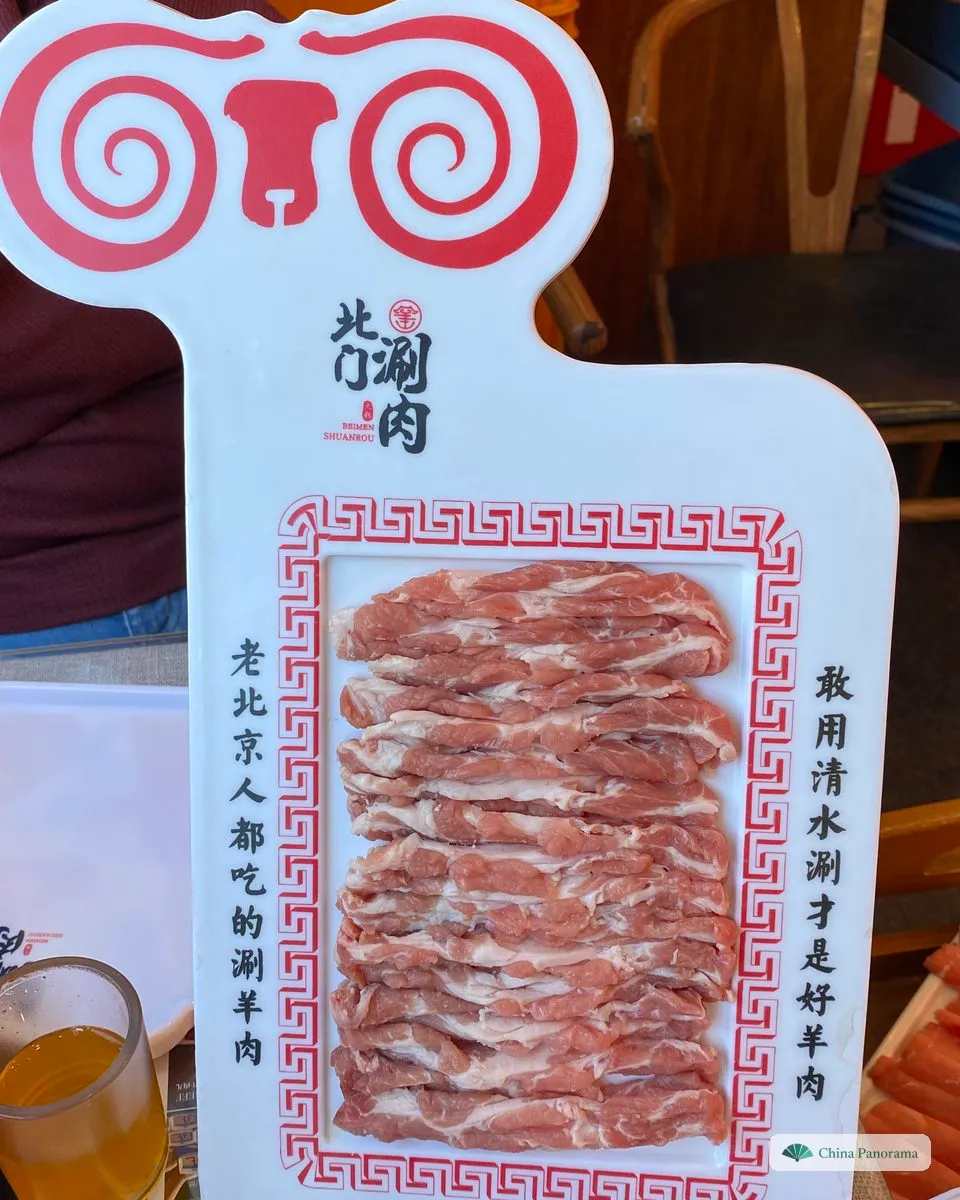
    Done as soon as no pink is left. In Beijing it comes as fresh slices on a board.

  • 午餐肉

    wǔ cān ròu

    ⏱ 1–2 min

    Luncheon meat, like Spam

    Safe bet

    Already cooked – it only needs to heat through.

  • 虾滑

    xiā huá

    ⏱ 3–4 min

    Shrimp paste

    Safe betAllergen B · Crustaceans

    Scrape it into the broth in small lumps with the spoon it comes with. Done when the pieces float and turn pink-white.

  • 牛肉丸

    niú ròu wán

    ⏱ 4–5 min

    Beef balls

    Safe bet

    Done a minute or two after they float.

  • 鱼丸

    yú wán

    ⏱ 3–4 min

    Fish balls

    Safe betAllergen D · Fish

    Done when they float and puff up.

  • 鹌鹑蛋

    ān chún dàn

    ⏱ 2–3 min

    Quail eggs, boiled and peeled

    Safe betAllergen C · Eggs

    Already cooked – they only soak up the broth.

  • 毛肚

    máo dǔ

    ⏱ about 15 s

    Beef tripe

    Adventurous

    七上八下 (qī shàng bā xià, “seven up, eight down”): hold it with your chopsticks and dip it in and out of the boiling broth. Left in, it turns rubbery.

  • 鸭肠

    yā cháng

    ⏱ 10–15 s

    Duck intestines

    Adventurous

    Hold it with your chopsticks; done when it curls up.

  • 黄喉

    huáng hóu

    ⏱ 30–60 s

    Beef aorta

    Adventurous

    Crunchy rather than chewy. Done when the edges curl.

  • 鸭血

    yā xuè

    ⏱ 3–5 min

    Duck blood cubes

    Adventurous

    Soft and smooth, like tofu. It sinks, so fish it out with the ladle.

  • 脑花

    nǎo huā

    ⏱ about 10 min

    Pig brain

    Adventurous

    Usually cooked in a small ladle sitting in the broth, until firm all the way through.

  • 生菜

    shēng cài

    ⏱ 10–20 s

    Lettuce

    Safe bet

    Just let it wilt.

  • 娃娃菜

    wá wa cài

    ⏱ 2–3 min

    Baby napa cabbage

    Safe bet

    Done when the white stems turn soft.

  • 金针菇

    jīn zhēn gū

    ⏱ 1–2 min

    Enoki mushrooms

    Safe bet

    Cook the bundle whole, then pull it apart.

  • 土豆片

    tǔ dòu piàn

    ⏱ 3–5 min

    Potato slices

    Safe bet

    Done when soft. They sink – fish them out with the ladle.

  • 藕片

    ǒu piàn

    ⏱ 3–5 min

    Lotus root slices

    Safe bet

    Stays crunchy even when cooked.

  • 冬瓜

    dōng guā

    ⏱ 4–6 min

    Winter melon

    Safe bet

    Done when it turns see-through.

  • 冻豆腐

    dòng dòu fu

    ⏱ 3–5 min

    Frozen tofu

    Safe betAllergen F · Soybeans

    Spongy: it soaks up the broth and stays very hot inside.

  • 腐竹

    fǔ zhú

    ⏱ 3–5 min

    Tofu skin sticks

    Safe betAllergen F · Soybeans

    Done when soft all the way through.

  • 宽粉

    kuān fěn

    ⏱ 5–8 min

    Wide sweet-potato noodles

    Safe bet

    Done when see-through and chewy. Stir so they don’t stick.

  • 手擀面

    shǒu gǎn miàn

    ⏱ 3–5 min

    Hand-rolled noodles

    Safe betAllergen A · Cereals containing gluten

    Order them last and cook them in the broth that is left.

Mix your sauce at the sauce bar

Most places have a self-service sauce bar (调料台, tiáo liào tái): a counter of bowls and jars from which you mix your own dip, and go back as often as you like. Many restaurants charge a small fee per person for it (调料费). Sesame and peanuts are the two allergens to watch – both turn up in several jars. Try it here: tap the containers, or start from one of the three regional classics.

For mala hot pot

油碟yóu diéChongqing oil dip

香油 ×3 · 蒜泥 ×2 · 葱花 ×1 · 香菜 ×1 · 蚝油 ×1

Sesame oil with plenty of garlic. The oil coats each bite and cools the chilli down; many people add a spoon of oyster sauce.

For copper-pot lamb

麻酱má jiàngBeijing sesame dip

芝麻酱 ×3 · 韭菜花 ×1 · 腐乳 ×1 · 辣椒油 ×1 · 香菜 ×1

Thick, nutty and salty: sesame paste with chive-flower sauce and fermented tofu, chilli oil to taste.

For Chaoshan beef hot pot

沙茶shā cháChaoshan shacha dip

沙茶酱 ×2 · 小米辣 ×1

Shacha sauce on its own, with fresh chilli if you like. It contains shrimp and fish.

Tap the containers to fill your bowl – or start from one of the three classics.

Letters are the EU allergen groups; letters in brackets depend on the brand. Every restaurant stocks its own sauces – when an allergy matters, ask before you mix.

What not to do at hot pot?

Nobody expects visitors to know the rules, and there are not many. 10 situations – do it, or don’t?

  1. 1Drink the spicy broth at the end.

    Don’t

    The mala broth is mostly chilli oil and beef tallow – it is for cooking in, not for drinking. Tomato and mushroom broths are different: ladle some into your small bowl and sip it.

  2. 2Tip a whole plate of sliced beef into the pot at once.

    Don’t

    Thin slices are done in seconds. Cook a few at a time with your chopsticks and eat them straight away – a whole plate gets lost in the pot and overcooked.

  3. 3Fish things out with the slotted ladle.

    Do it

    The slotted ladle (漏勺, lòu sháo) is for potatoes, tofu and anything that sinks. Tip it into your own bowl first – food comes out of the pot very hot.

  4. 4Stand your chopsticks upright in a bowl of rice.

    Don’t

    It looks like the incense sticks at a funeral. Lay them across your bowl or on the rest.

  5. 5Cook with the chopsticks you eat with.

    It depends

    Among friends many people do. Many restaurants now also put out serving chopsticks (公筷, gōng kuài) – if they are on the table, use them for raw meat and the shared pot.

  6. 6Ask for more broth when the level drops.

    Do it

    The broth boils down. Wave to the staff and say 加汤 (jiā tāng) – topping up is part of the service.

  7. 7Put on the apron the staff hand you.

    Do it

    Chilli oil splashes. Many hot pot restaurants hand out aprons, and some give you a small bag for your phone.

  8. 8Throw your empty skewers away at a chuanchuan restaurant.

    Don’t

    The sticks are your bill: at the end the staff count them. Put them in the holder on the table.

  9. 9Leave a tip for good service.

    Don’t

    Tipping is not expected in mainland China, not even at the chains famous for their service. Just pay the bill.

  10. 10Eat the wild mushrooms as soon as they look done (Yunnan mushroom hot pot).

    Don’t

    Wild mushrooms have to boil for the full time the staff give you – often marked with a timer or an hourglass on the table. Undercooked, some can make you seriously ill.

Hot pot across China

Hot pot is not one dish. Every region cooks it differently – 6 styles you can find on a trip, from the mala pot of Chongqing to the coconut chicken of Hainan. Tap a number or a region.

1 · Chongqing & Sichuan

Mala hot pot

麻辣火锅má là huǒ guō

Spicy and numbing

Broth
Beef tallow melted with dried chillies, Sichuan pepper and fermented bean paste.
In the pot
Beef tripe, duck intestines and beef aorta are the classics; everything else works too.
Dip
Sesame oil with crushed garlic (油碟).

The style you find all over China – usually as a split pot, with a mild broth on the other side.

Want the bigger picture? The eight great regional cuisines of China on one map.

Small pots, skewers and street stalls

Not all hot pot is one big shared pot. Three relatives you will meet in China: a pot for each person, everything on a stick, and a pot that is already cooking when you arrive. Tap the numbers on the photos.

Small hot pot: one pot each 小火锅

At a small hot pot restaurant (小火锅, xiǎo huǒ guō) nobody shares a pot. Every seat has its own little clay pot on its own burner, and everyone chooses their own broth – one person has mala, the next plain rice congee. Only the raw food is shared: fresh-cut beef, seafood, tofu and greens on plates in the middle of the table.

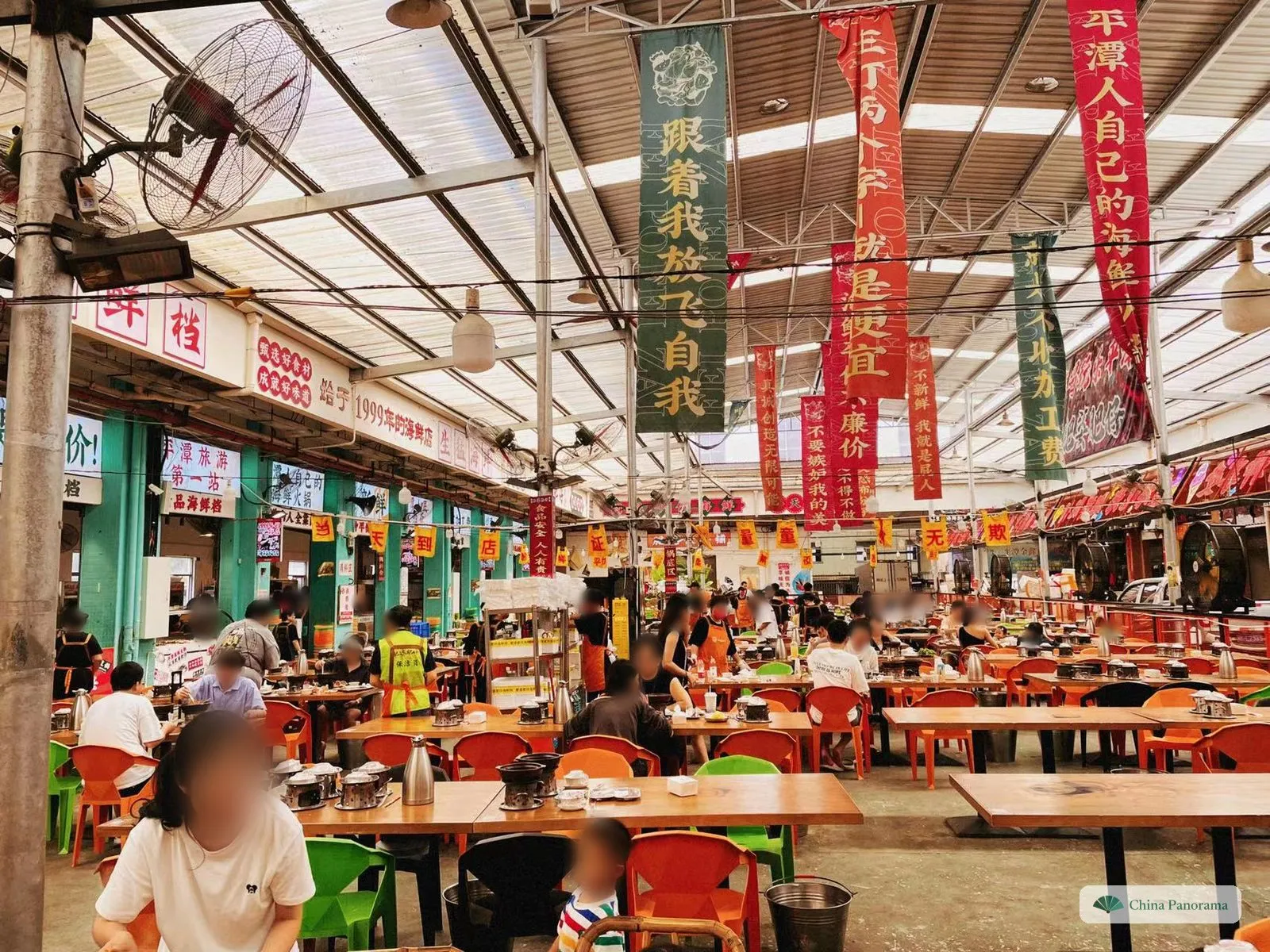
Many places call it Chaoshan small hot pot (潮汕小火锅), after the region in eastern Guangdong known for its fresh beef and its congee. You find it all over the south, often in big, noisy food halls like this one. The usual broths are mala red oil, seafood, rice congee and shacha – all four are in the menu words above.

It is the easiest hot pot for a mixed table. Nobody has to agree on how spicy, nobody else’s chopsticks go into your broth, and with a shellfish allergy you can keep other people’s prawns out of your pot – though the plates and the sauce bar are still shared.

A large covered food hall with a translucent roof, long wooden tables and orange and green plastic chairs; a small pot on a burner stands at every seat, and long red and green banners with Chinese slogans hang from the roof
A hot pot food hall in southern China: a small pot at every seat. Faces blurred.
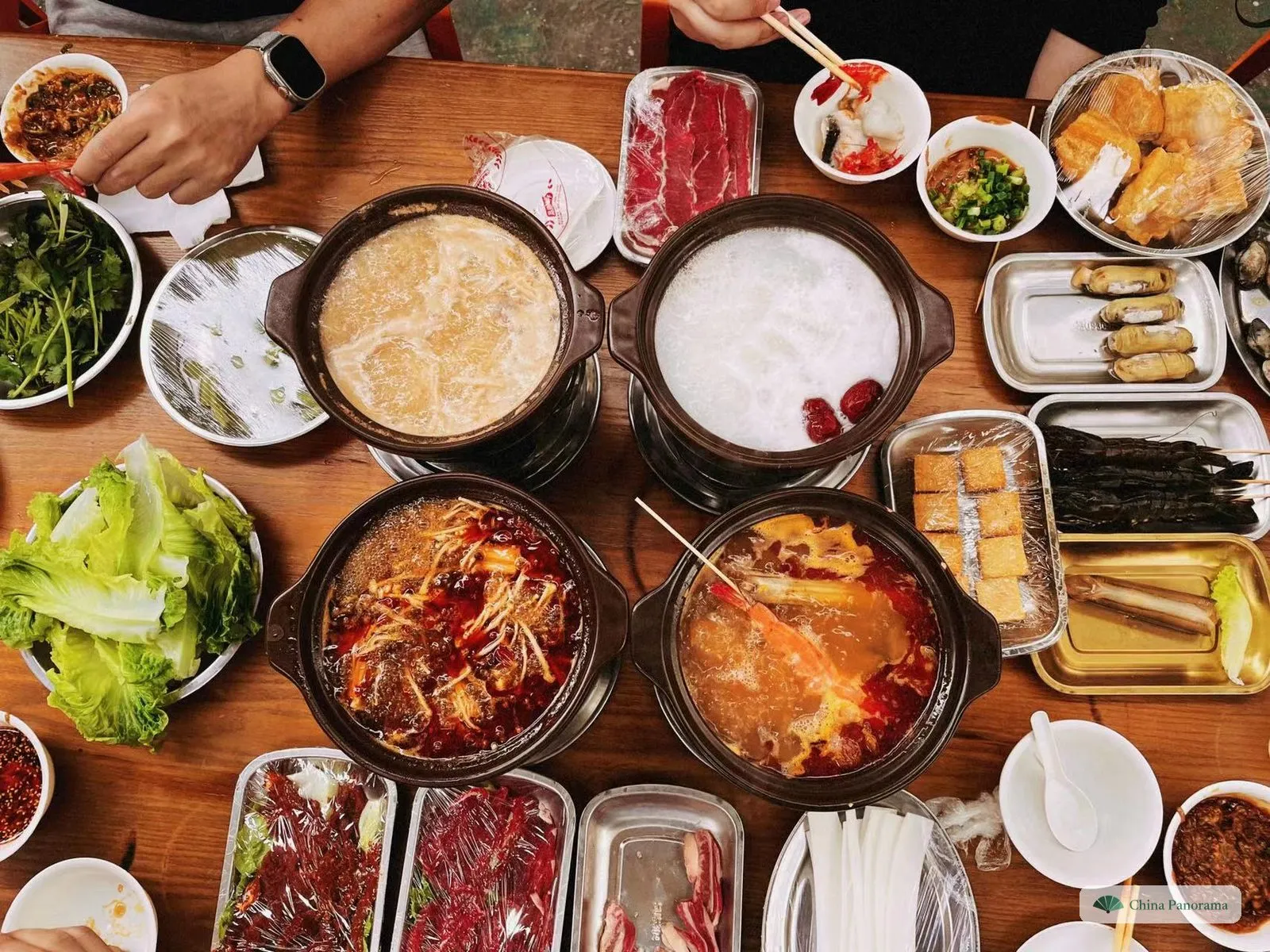
Top view of a wooden table with four small clay hot pots, each on its own burner: a pale shacha broth, white rice congee with two red dates, a red chilli-oil broth with enoki mushrooms and an orange seafood broth with a prawn on a skewer; around them plates of raw beef slices, razor clams, skewered prawns, fish tofu, lettuce and coriander
Four small pots, four broths – shacha, rice congee, mala and seafood – with fresh-cut beef and seafood around them.

1Shacha broth

沙茶锅底 shā chá guō dǐ

Made with shacha sauce, the savoury paste of dried shrimp, fish and garlic that Chaoshan also uses as a dip. Rich and creamy, at most mildly spicy – and not for anyone allergic to shellfish or fish.

Tap a number on the photo, or a name in the list.

What is chuanchuan? 串串香

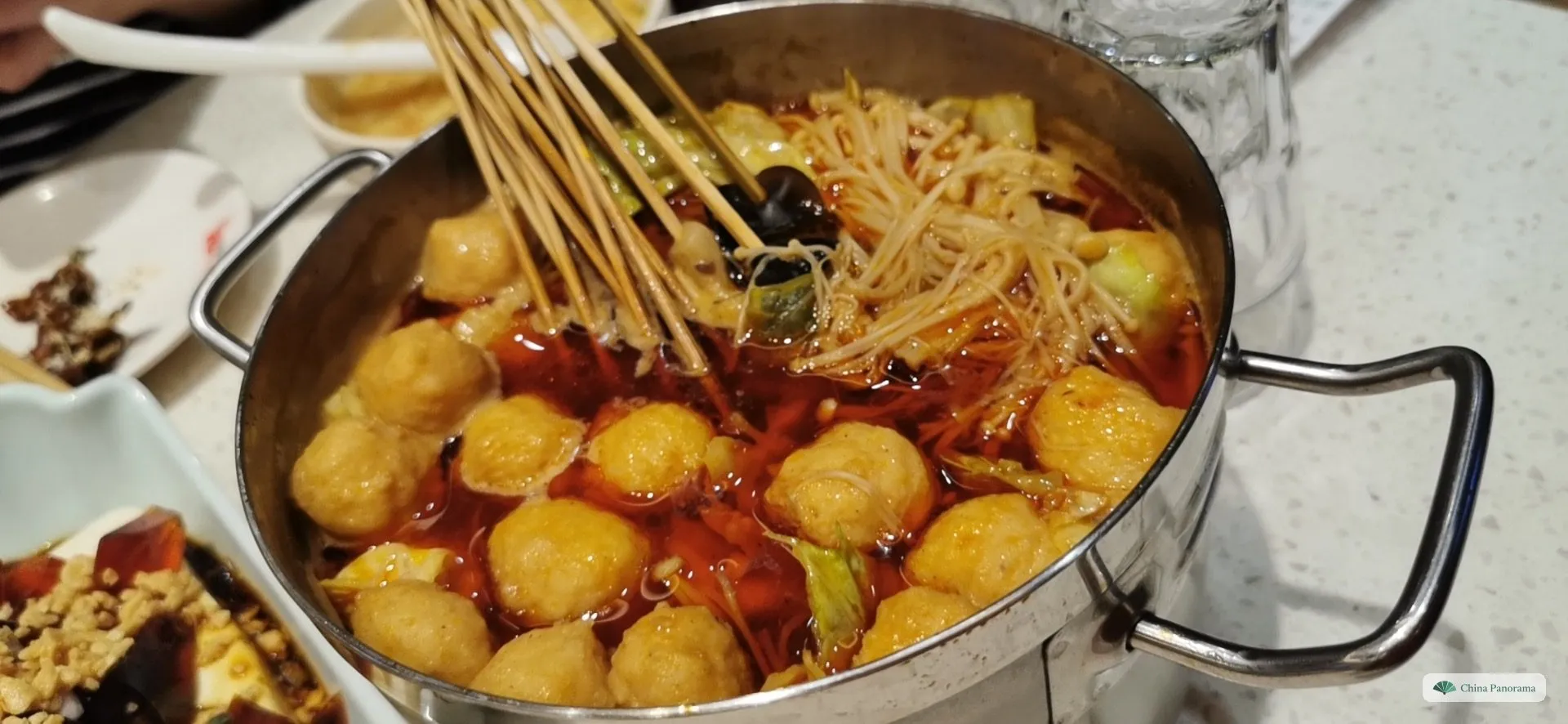
Chuanchuan (串串香, chuàn chuan xiāng, “fragrant skewers”) is Chengdu’s casual take on hot pot. Everything comes on bamboo skewers – beef, offal, tofu, mushrooms, greens. You take the skewers you want from a fridge or tick them on the menu, cook them in a mala broth at your table and lift them out by the stick, so nothing gets lost in the pot.

At the end the staff count your empty sticks, and that is the bill – so keep them in the holder on the table. Chuanchuan is cheaper and quicker than hot pot, and the broth is nearly always mala. In Chengdu you also find cold-pot skewers (冷锅串串, lěng guō chuàn chuan): cooked in the kitchen and served soaking in chilli oil, with no burner on the table.

A steel pot of red chilli-oil broth full of golden balls, enoki mushrooms, cabbage and wood ear, with a bundle of bamboo skewers being lifted out; in the corner a dish of tofu with century egg
Chuanchuan in a mala broth, 2020, with century-egg tofu on the side.

1Everything on a stick

串 chuàn

Each bamboo skewer holds a few pieces of one thing. Drop a handful in, lift them out by the sticks – and keep the empty sticks, because they are your bill.

Tap a number on the photo, or a name in the list.

What is guandong zhu? 关东煮

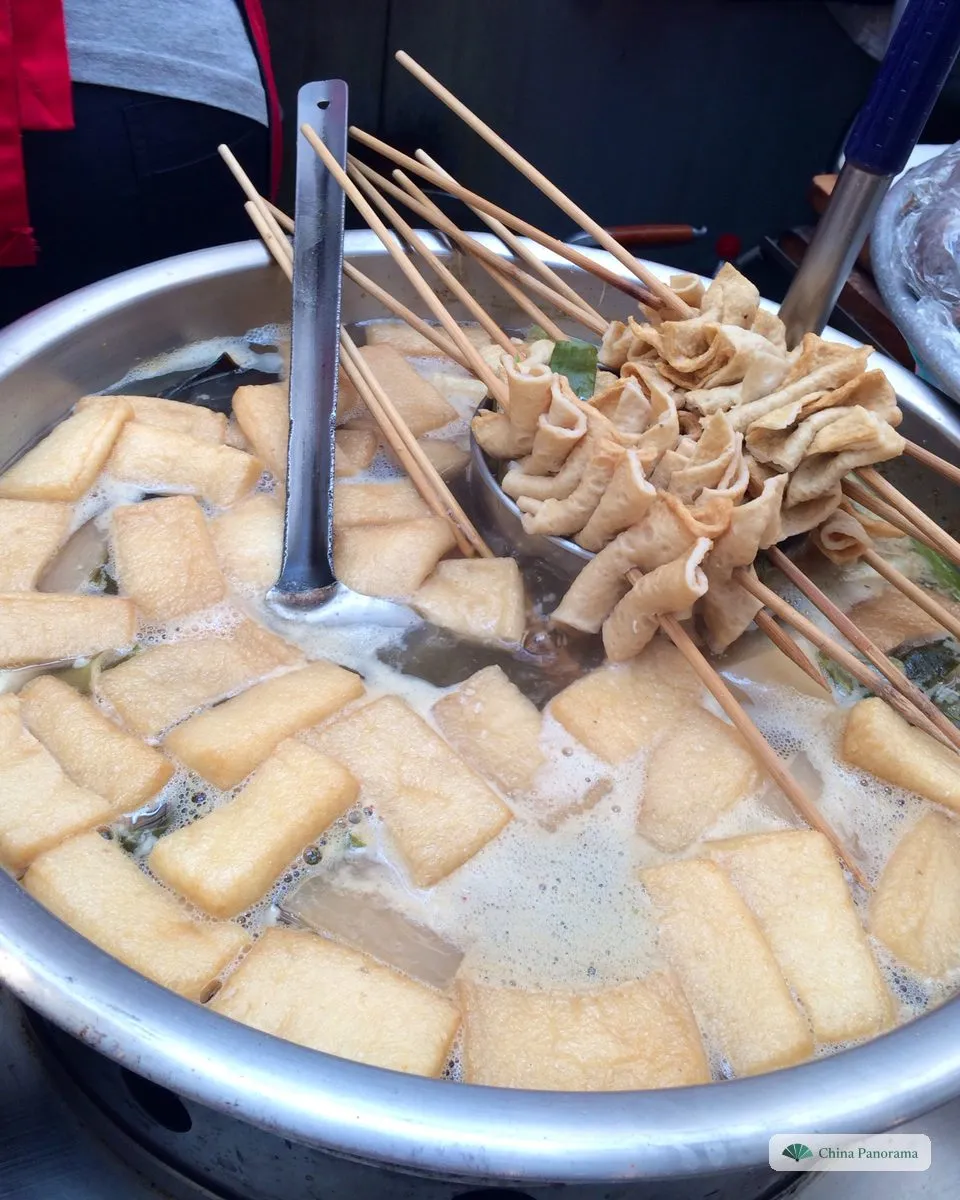
Guandong zhu (关东煮, guān dōng zhǔ) is the hot pot nobody cooks themselves: a wide pot simmering all day at a street stall or on the counter of a convenience store, full of fish cakes, fish balls, tofu, radish, kelp and eggs. Point at what you want, take it away in a paper cup with some broth and pay per piece. A cheap, warm snack, especially in winter.

The name, “Kantō stew”, gives it away: guandong zhu is Japanese oden, and it spread across China with the convenience stores. But 关东 (guān dōng) is also an old name for Northeast China, so many people think of it as a northern dish – and in northern cities it is sold at street stalls like this one, not only in shops.

A wide steel pot at a street stall filled with golden fried fish cakes, pieces of white radish and kelp in a light broth, with a ladle and dozens of bamboo skewers of folded fish cake resting on the rim
Guandong zhu at a street stall, 2014.

1Pay per piece

Point at what you want. It goes into a paper cup or bowl with a ladle of broth, and you pay per skewer or piece.

Tap a number on the photo, or a name in the list.

Hot pot, chuanchuan, malatang or guandong zhu?

All five are things cooked in broth, and they are easy to mix up. The difference is who does the cooking, and how you pay.

Who cooksHow you chooseHow you payWhere
Hot pot火锅huǒ guōYou, in a pot the table sharesPlates from the menu or the QR codePer plate, plus the brothSit-down restaurants; a long evening meal
Small hot pot小火锅xiǎo huǒ guōYou, each in your own potA broth for each person, plates for the tablePer pot of broth, plus the platesRestaurants and food halls, mostly in the south
Chuanchuan串串香chuàn chuan xiāngYou, at the tableSkewers from a fridge or the menuPer skewer – the staff count your sticksCasual Sichuan-style restaurants
Malatang麻辣烫má là tàngThe kitchenRaw ingredients from a fridge, into a bowlBy weightFast-food shops; a quick meal for one
Guandong zhu关东煮guān dōng zhǔNobody – it is already simmeringPoint at pieces in the potPer pieceConvenience stores and street stalls; a snack

Is hot pot Chinese or Korean?

Chinese. Hot pot – 火锅, huǒ guō, literally “fire pot” – is eaten all over China. Korea and Japan have their own dishes cooked in a pot at the table, which is where the confusion comes from. Outside Asia, a “hot pot restaurant” is usually a Chinese one: several big Chinese hot pot chains have branches in Europe and North America.

BrothHow it is cookedDip
Chinese hot pot 火锅Your choice: spicy mala, tomato, mushroom, bone broth – two at once in a split potYou cook raw ingredients yourself, a few at a timeA sauce you mix at the sauce bar
Korean jeongol, budae-jjigaeA seasoned stew broth, often with gochujang chilli pasteEverything goes in together and simmers as a stewUsually none – eaten with rice
Japanese shabu-shabuKombu (kelp) brothYou swish thin slices through the broth one at a timePonzu or sesame sauce

How to order hot pot in Chinese

Tap a card to show it full-screen to the staff. Most of what you need is on the QR-code menu; these are for everything else.

  • 要鸳鸯锅

    yào yuān yang guō

    A split pot, please

  • 不要辣

    bú yào là

    Not spicy, please

  • 微辣

    wēi là

    Only mildly spicy

  • 要半份

    yào bàn fèn

    A half portion, please

  • 请加汤

    qǐng jiā tāng

    More broth, please

  • 火小一点

    huǒ xiǎo yì diǎn

    Turn the heat down a little

  • 请给我们公筷

    qǐng gěi wǒ men gōng kuài

    Serving chopsticks, please

  • 买单

    mǎi dān

    The bill, please

Allergens and diet

The broth itself usually contains wheat and soy – from the fermented bean paste and the ready-made hot pot base in the spicy side. The bigger risk sits at the sauce bar: sesame is in the oil and the paste, peanuts in the crushed nuts and often in the sesame paste. Everything you order adds its own; the cards in What goes in the pot show the obvious ones.

In the broth (split pot)

  • ACereals containing gluten· US: Wheat
  • FSoybeans· US: Soybeans

From the fermented bean paste and the hot pot base in the spicy side.

At the sauce bar

  • NSesame· US: Sesame
  • EPeanuts· US: Peanuts
  • BCrustaceans (sometimes)· US: Crustacean shellfish
  • DFish (sometimes)· US: Fish
  • RMolluscs (sometimes)

Sesame oil and paste, crushed peanuts; shacha sauce contains shrimp and fish, oyster sauce molluscs.

These are estimates from how the dish is usually made, not a restaurant’s declaration. Every kitchen and every sauce brand is different – always tell the staff about an allergy. Chinese kitchens often fry in peanut oil, and chilli oil may be made with it too; we don’t repeat that for each dish.

Vegetarian, no beef

Hot pot looks easy for vegetarians and mostly isn’t: the spicy broth is usually made with beef tallow, and tomato and mushroom broths are often made with meat stock. Some restaurants have a vegetarian broth, many don’t – ask before you order. Without beef, ask for the spicy broth made with vegetable oil (清油锅底, qīng yóu guō dǐ).

  • 有素的锅底吗?

    yǒu sù de guō dǐ ma?

    Do you have a vegetarian broth?

  • 我不吃牛肉

    wǒ bù chī niú ròu

    I don’t eat beef

  • 我对花生过敏

    wǒ duì huā shēng guò mǐn

    I’m allergic to peanuts

  • 我对芝麻过敏

    wǒ duì zhī ma guò mǐn

    I’m allergic to sesame

  • 我对虾过敏

    wǒ duì xiā guò mǐn

    I’m allergic to shrimp

More at a hot pot restaurant

Two things on almost every Sichuan-style hot pot menu that don’t go in the pot – or only sometimes.

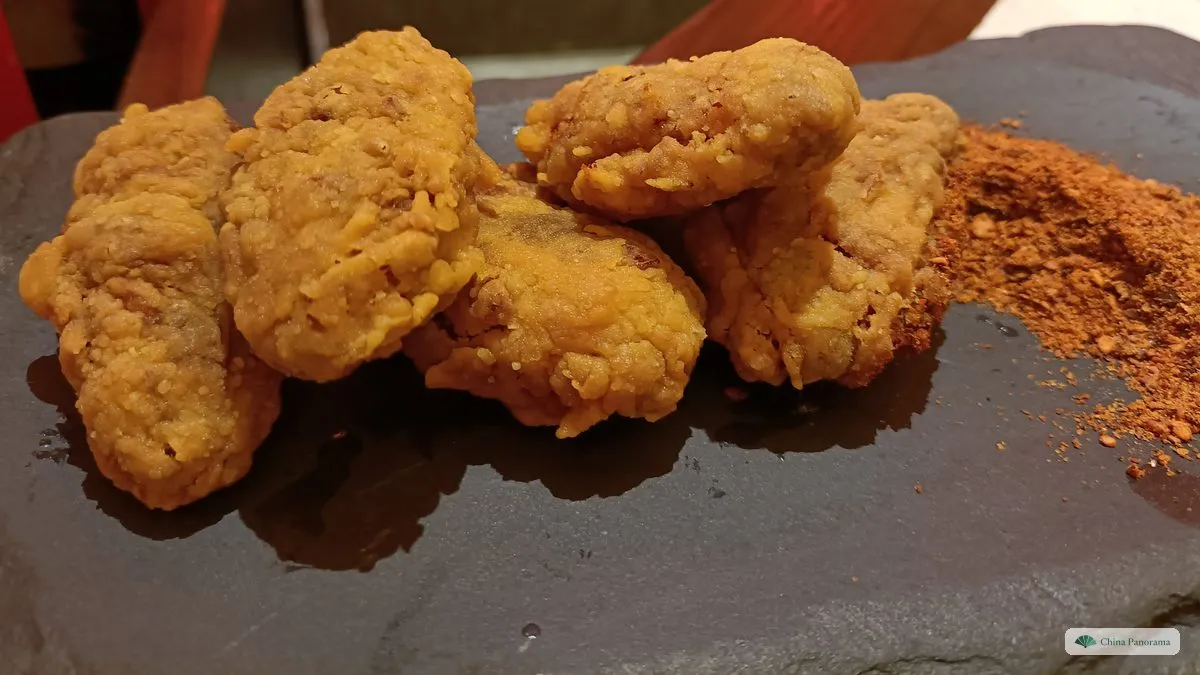
Golden, crumbly fried pork pieces on a dark stone plate, next to a small heap of red chilli powder
At the same Shanghai hot pot restaurant as the split pot above, 2021.

小酥肉xiǎo sū ròu

Crispy fried pork strips

Not spicySafe bet

Strips of pork fried in a sweet-potato-starch batter and served with chilli powder for dipping – a snack at almost every Sichuan-style hot pot place. Some people drop them into the broth.

¥25–40 · typical in a big city (2026) · allergens A cereals containing gluten, C eggs

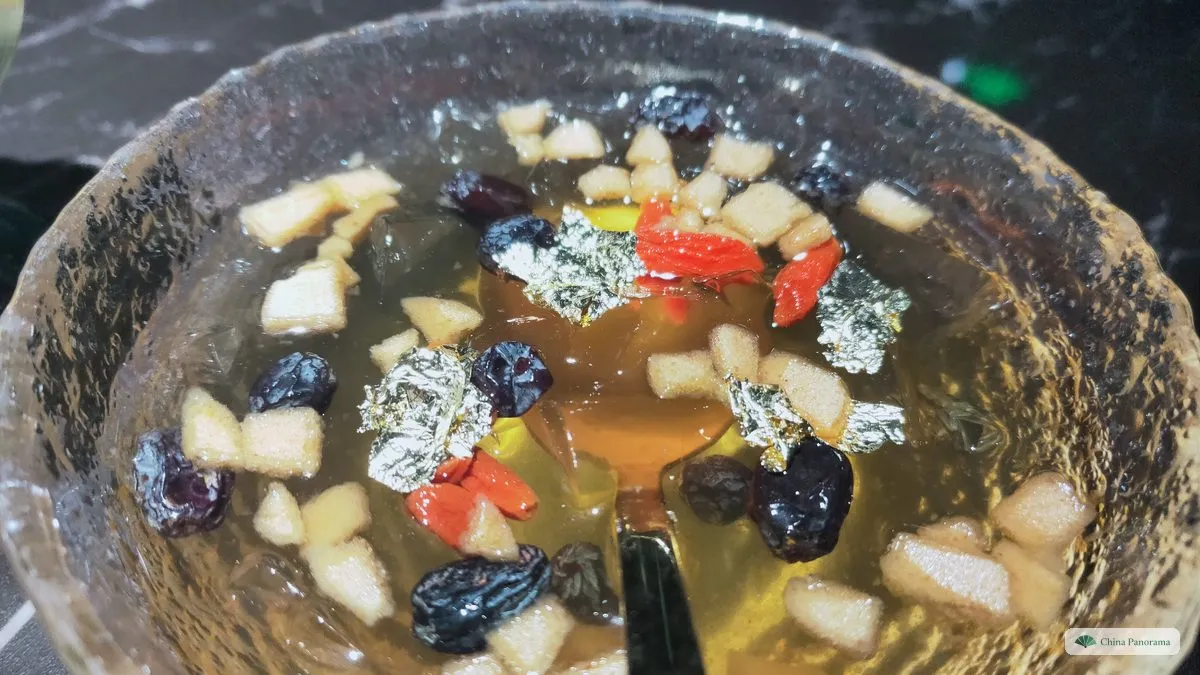
A glass bowl of clear, golden jelly in syrup with diced apple, raisins, goji berries and flakes of gold leaf, a spoon in it
Shanghai, 2020.

冰粉bīng fěn

Ice jelly with apple, raisins and goji

Not spicyVeganSafe bet

Cold, clear jelly made from the seeds of the shoo-fly plant, in sweet syrup with fruit on top – the usual way to cool down after a Sichuan hot pot.

¥15–30 · typical in a big city (2026) · allergens O sulphites

Eating somewhere without table service? The canteen and fast-food walkthrough covers trays, pointing and paying at the till. More dishes explained: jiaozi, fried rice, chow mein and wontons.

FAQ

Is hot pot healthy?

It can be. You choose what goes in, and a tomato or mushroom broth with plenty of vegetables and tofu is a light meal. The mala broth is very oily and salty, and it is easy to eat a lot of processed balls and luncheon meat.

What is the difference between hot pot and malatang?

At hot pot you cook at your own table. At a malatang (麻辣烫) shop you pick raw ingredients from a fridge into a bowl, pay by weight, and the kitchen cooks it all in broth for you – a quick, cheap meal for one. Chuanchuan (串串) is hot pot with everything on skewers, paid per skewer. The table under “Small pots, skewers and street stalls” compares them all.

Can I eat hot pot alone?

Yes. At a small hot pot restaurant (小火锅) everyone gets their own pot anyway, and elsewhere a single diner with a split pot and half portions (半份) is nothing unusual.

How much does hot pot cost in China?

About ¥80–150 per person at an ordinary restaurant in a big city (2026). The broth is charged per pot, the ingredients per plate, and many places add a small fee per person for the sauce bar.

How many people share one hot pot?

One pot is made for four to six people. Two or three can share one just as well; for a bigger group, ask for a second pot. At a small hot pot restaurant (小火锅) everyone gets their own pot.

What do people drink with hot pot?

Cold drinks that calm the chilli: soy milk, sour plum juice (酸梅汤, suān méi tāng), herbal tea and beer.

Do I need to book a hot pot restaurant?

Usually not, but popular places have queues at dinner time and at weekends. Going early or late avoids most of it.

Photos and sources

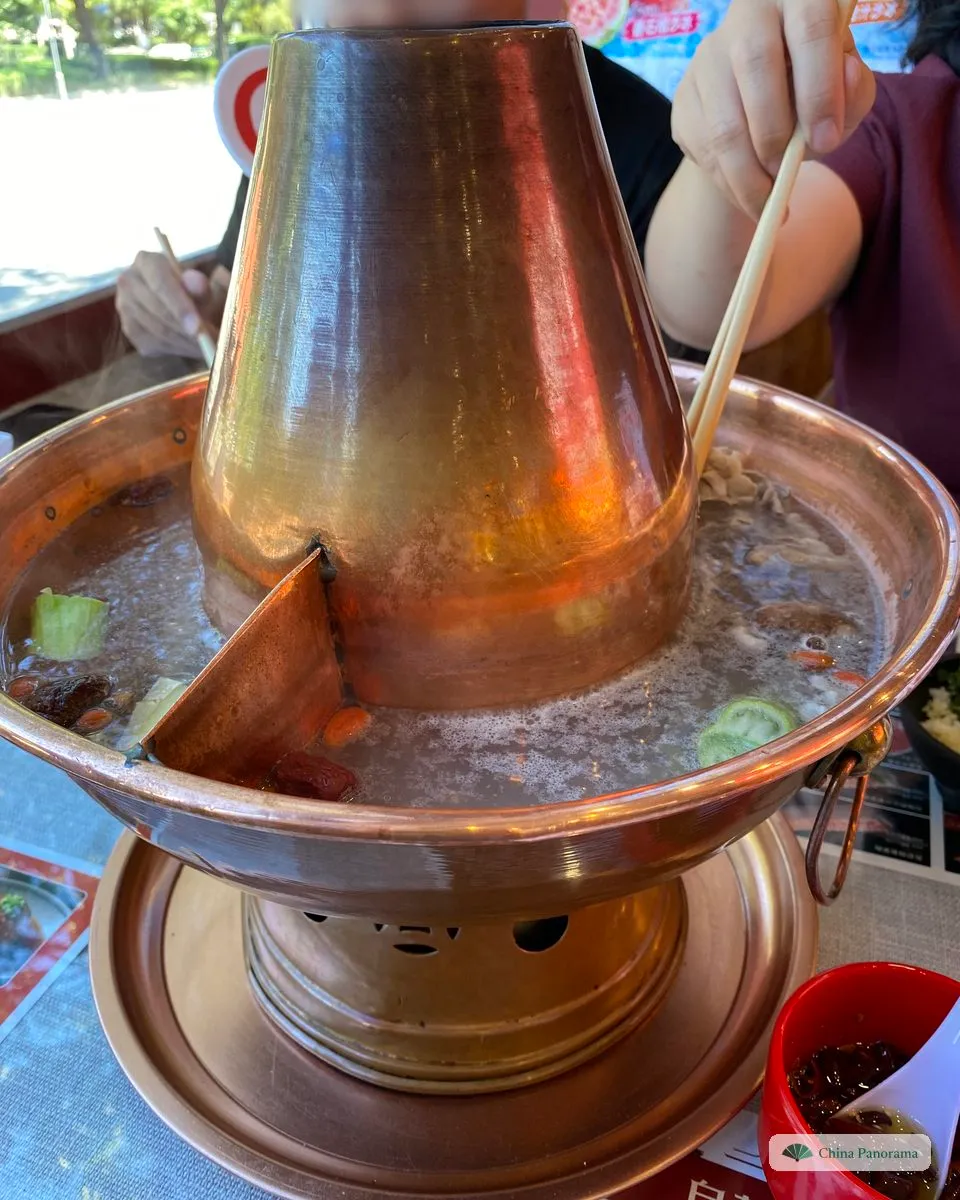
All photos are our own: the split pots at restaurants in Shanghai in 2020 and 2021, the copper pot and lamb at a Beijing-style restaurant in September 2026, the small pots and a food hall in southern China, chuanchuan in 2020 and a guandong zhu street stall in 2014. Faces are blurred. Prices come from our dish library and are typical for an ordinary restaurant in a big city; allergens are estimated from the usual recipe. Cooking times are rough guides – when in doubt, cook it longer.

Changelog (2)
  • 2026-10-01Added small hot pot (one pot each), chuanchuan and guandong zhu with our own photos, a table comparing them with hot pot and malatang, and the congee, shacha and seafood broths to the menu words.
  • 2026-09-30Page created, with our own photos from Shanghai (2020, 2021) and a Beijing-style copper-pot restaurant (2026). Cooking times, sauce allergens and regional styles are general guidance, not measured by us.