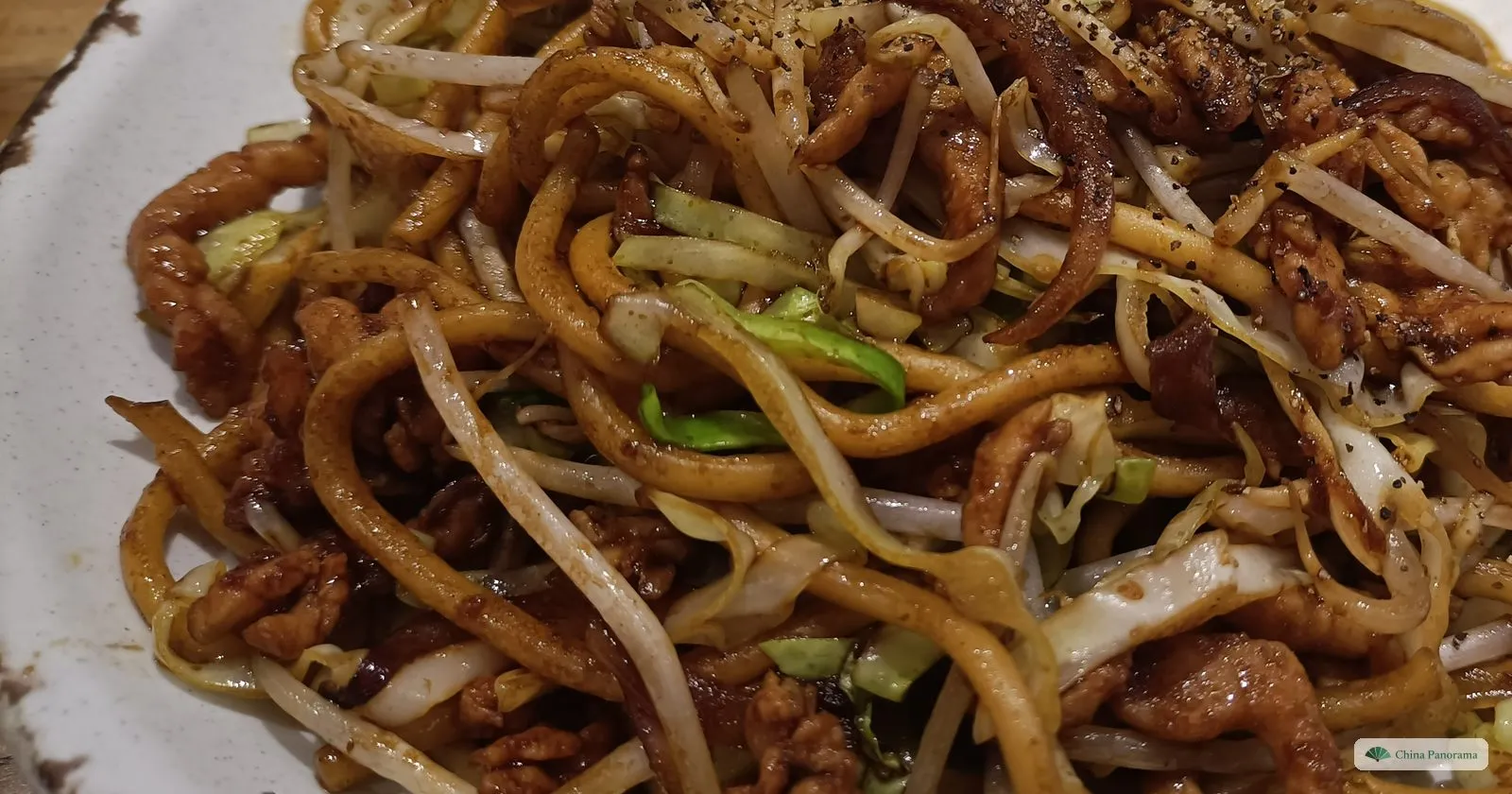
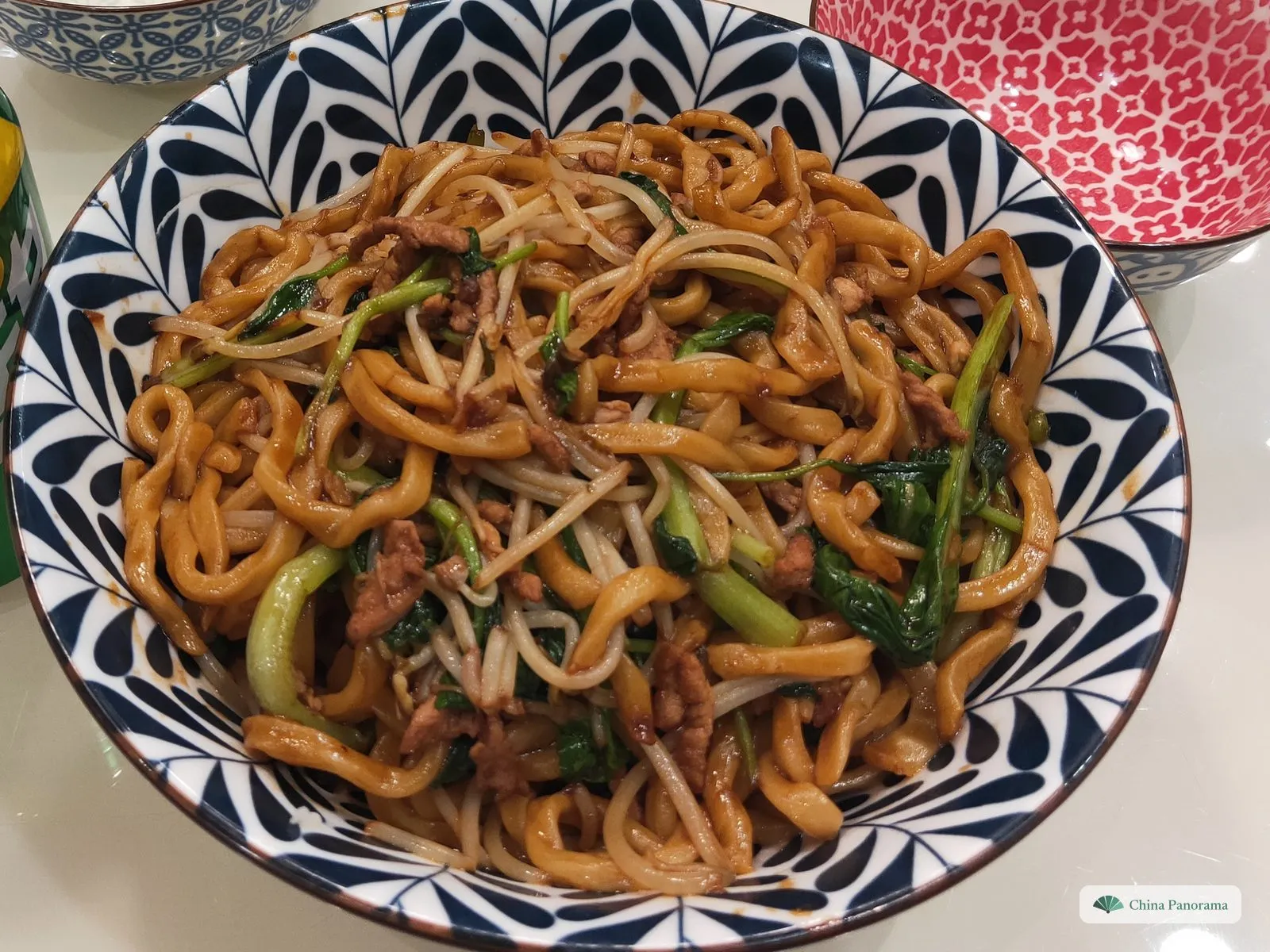
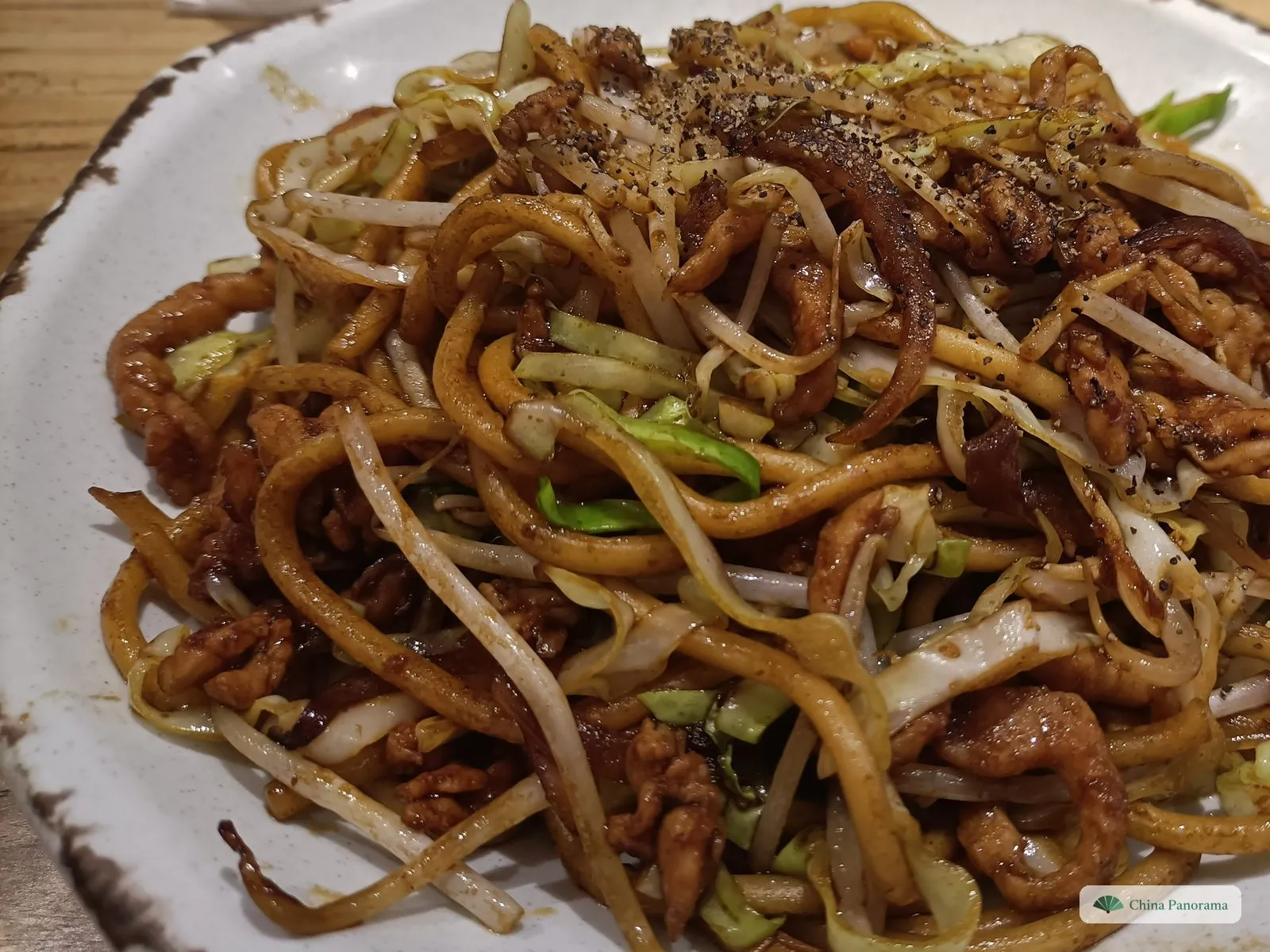
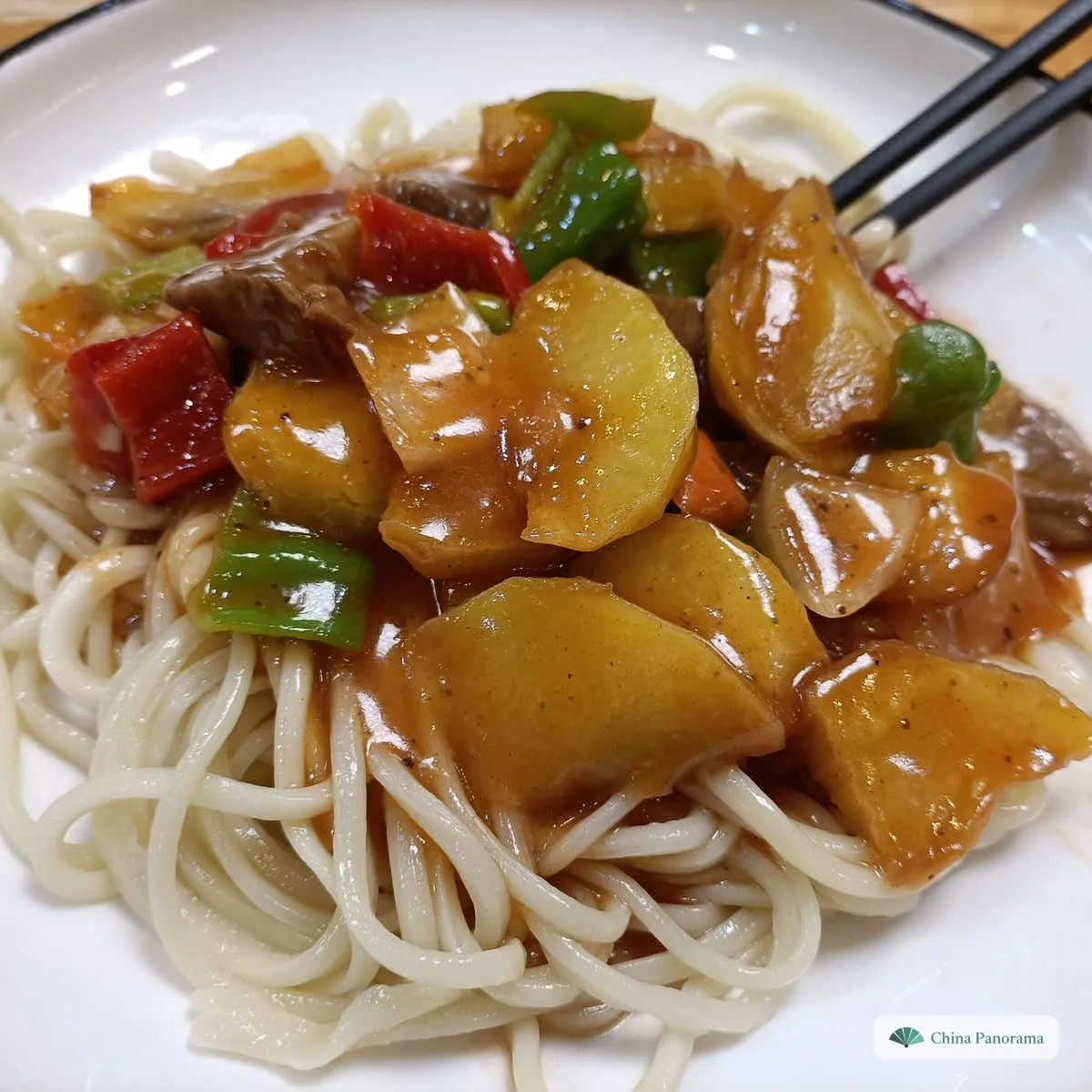
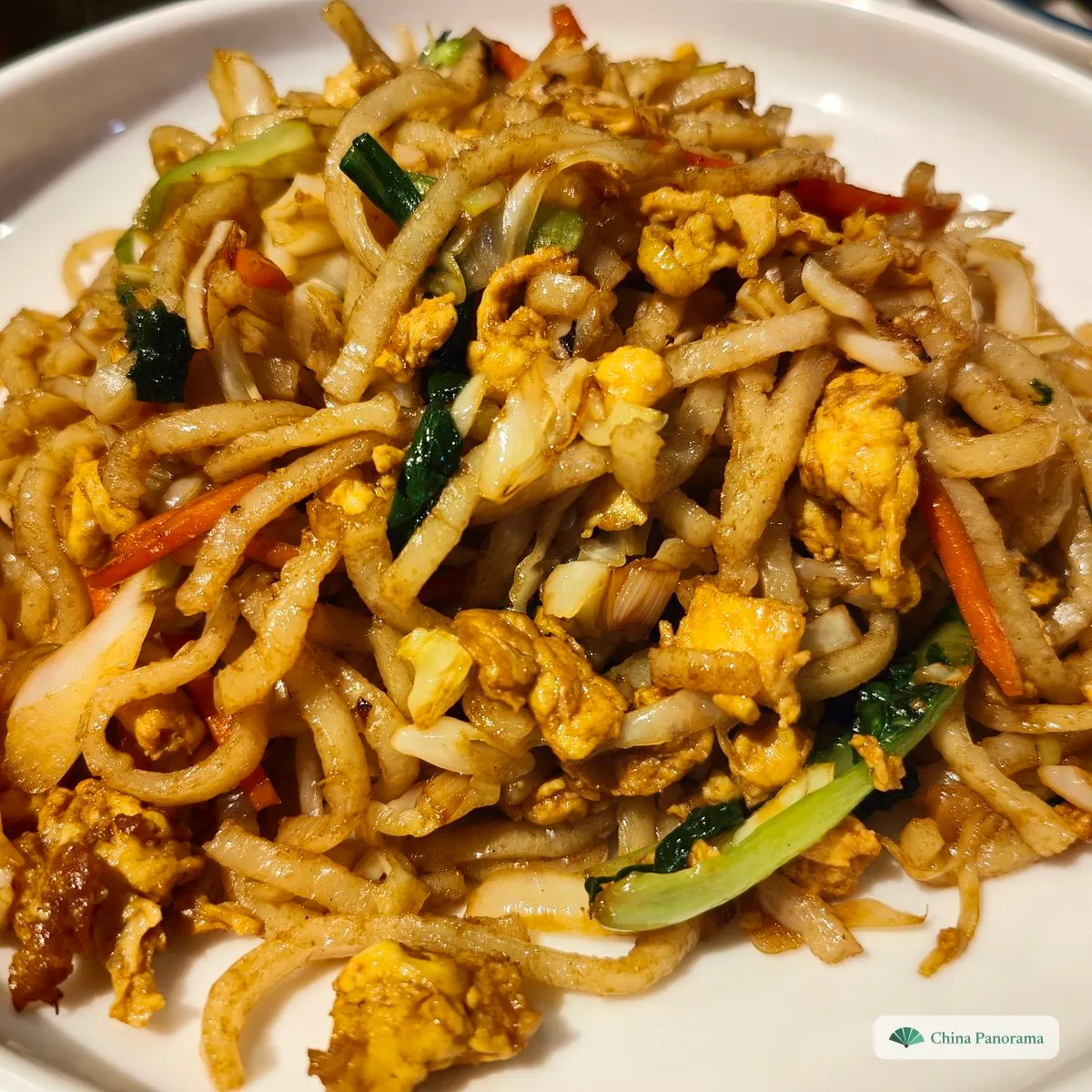
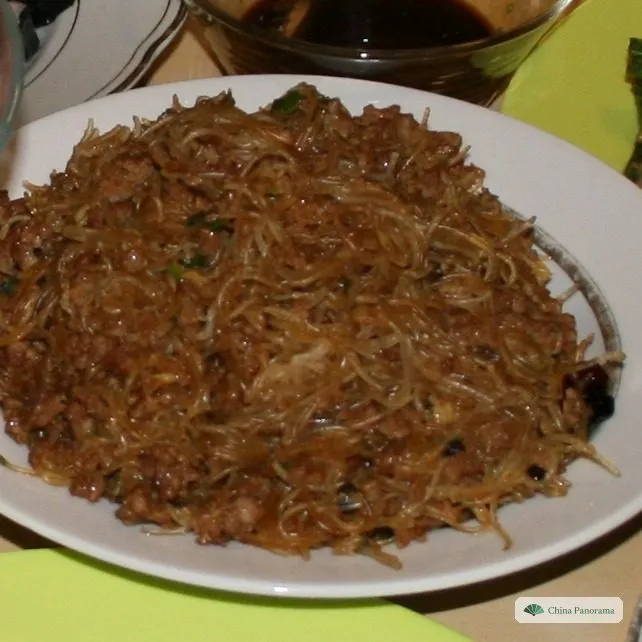
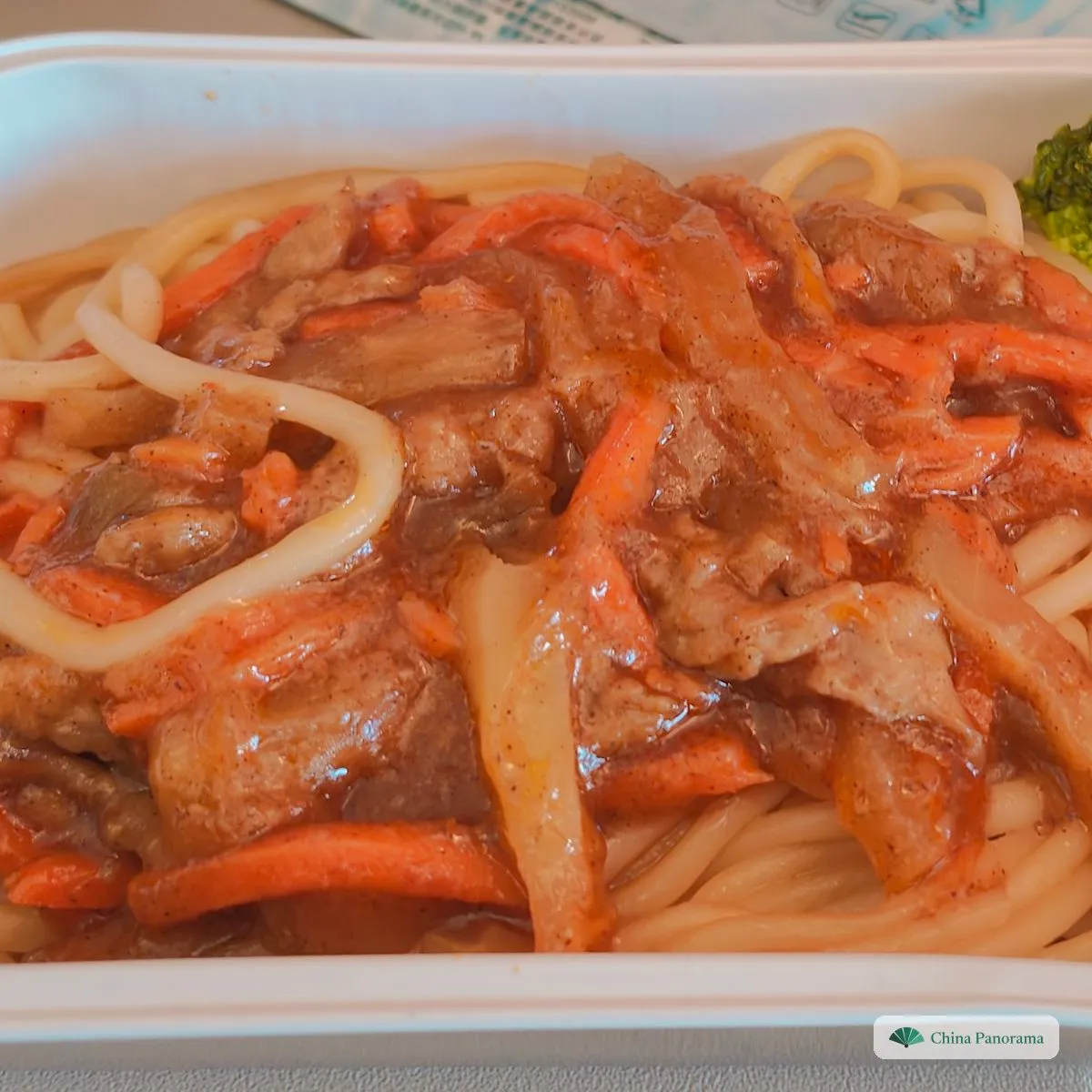
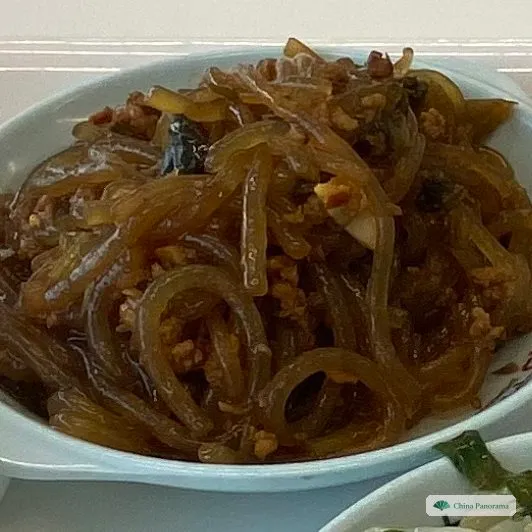
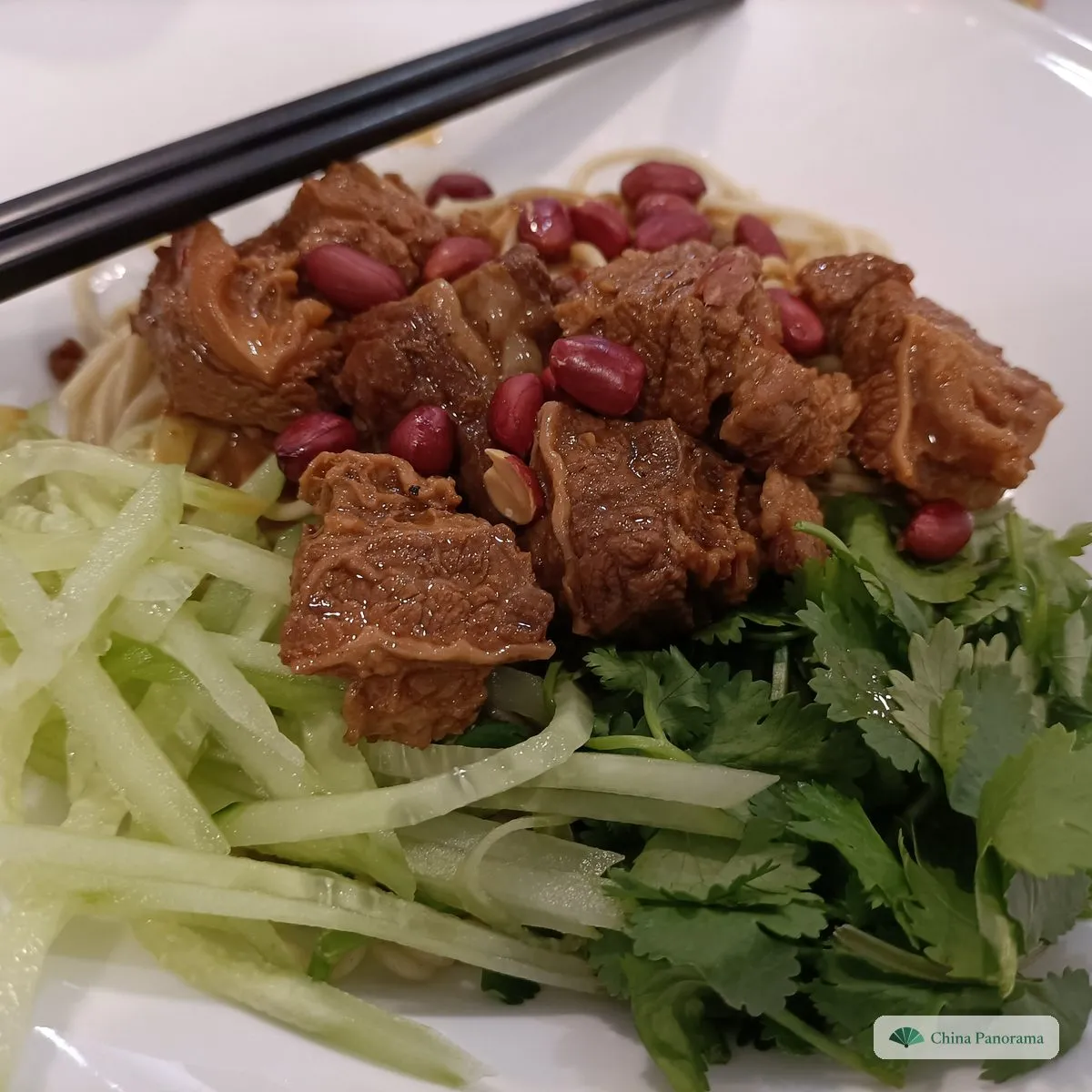
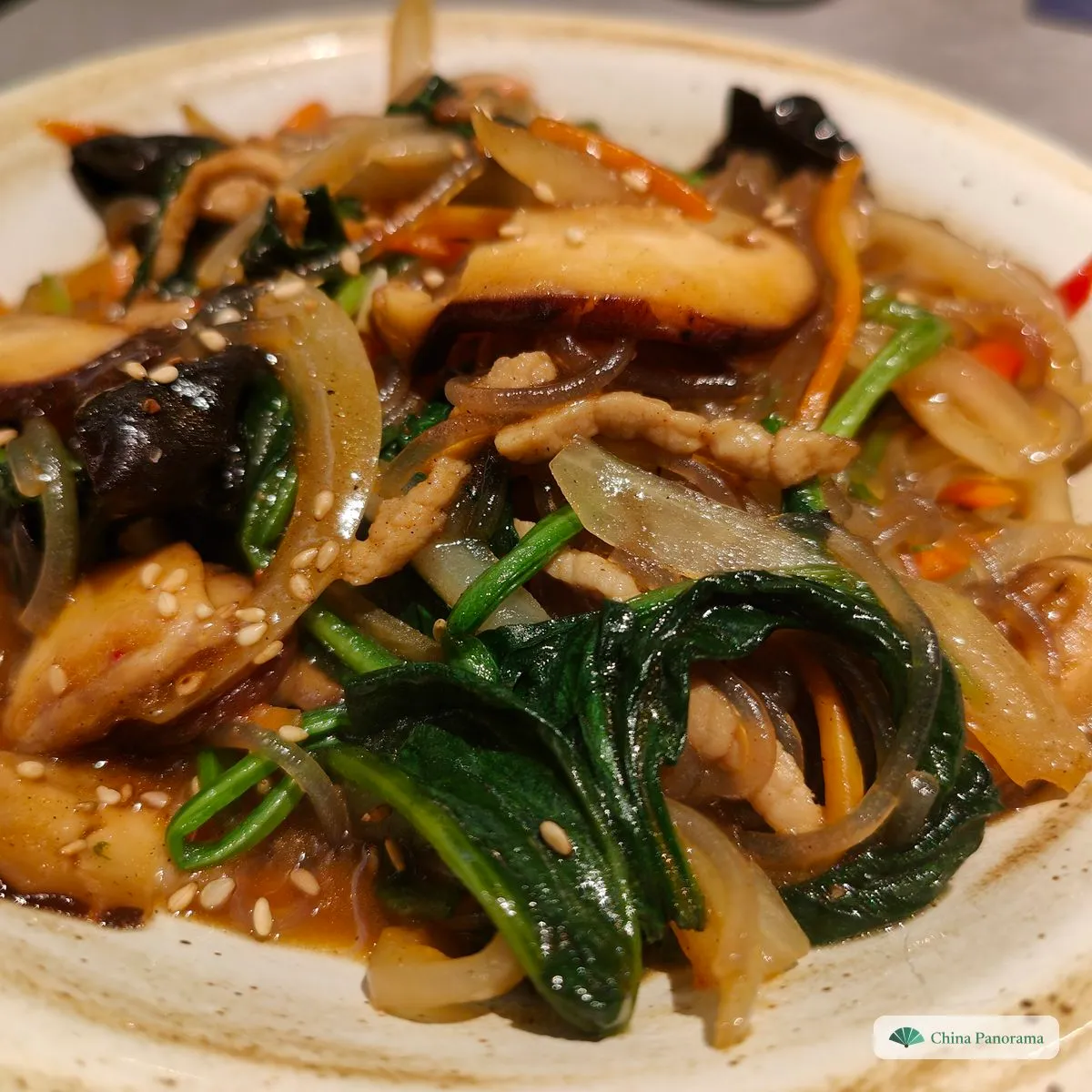
Chow mein (炒面) is Chinese stir-fried noodles: wheat noodles that are boiled first, then tossed in a very hot wok with soy sauce and whatever the kitchen pairs them with – shredded pork, beef, egg, cabbage, bean sprouts, greens – until glossy and dry. That is all the name says: 炒 (chǎo), stir-fried, and 面 (miàn), wheat noodles. In China it is a way of cooking rather than one recipe.
You find it in noodle shops, fast-food places, canteens, Cantonese restaurants and Lanzhou hand-pulled noodle shops, and each uses its own noodles. In Shanghai they are thick and round; in a Cantonese restaurant, thin egg noodles; at a lamian shop the cook pulls the noodles by hand for your order and fries them a minute later. A plate costs about ¥20–35 in an ordinary restaurant in a big city (2026), less in a canteen.
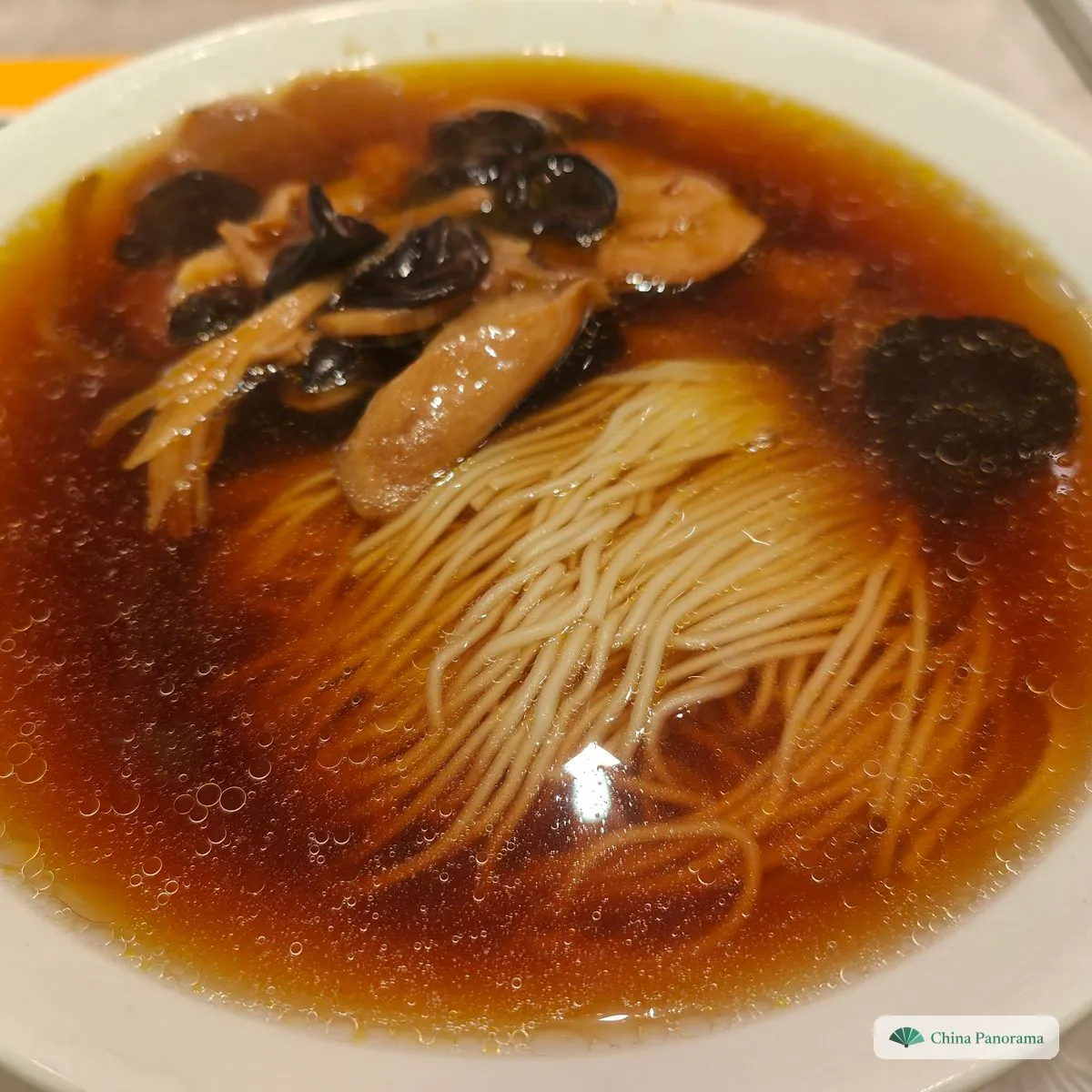
The real alternative on a Chinese menu is not lo mein but noodle soup. A name that simply ends in 面 – 牛肉面, beef noodles – is a big bowl of broth. Only 炒 in the name gets you fried noodles.
What it tastes like. Chewy, glossy noodles, savoury from soy sauce with a faint sweetness, and a slightly smoky edge where they caught the hot wok. Bean sprouts and cabbage add crunch; shredded pork or egg makes it a meal. Thick Shanghai noodles are soft and bouncy; at a lamian shop the noodles were pulled by hand minutes before, so they are chewier and a little uneven. It is not spicy – chilli oil and vinegar are on the table. A plate is a full meal for one.
A bit like… Japanese yakisoba, which started out as Chinese chow mein – or a soy-sauce take on fried leftover spaghetti.