China Panorama
China Panorama
Entry
Holidays
Flights
Food
Cities
Newsletter
Last verified: 5 Oct 2026

Wontons in China (Hun Tun) 馄饨 · 云吞

Wontons (馄饨, hún tun) are small parcels of minced pork or shrimp in a thin, square wheat wrapper, cooked and served in a light broth – the dish behind “wonton soup”. Guangdong calls them 云吞, Sichuan 抄手; in Shanghai they come big or small.

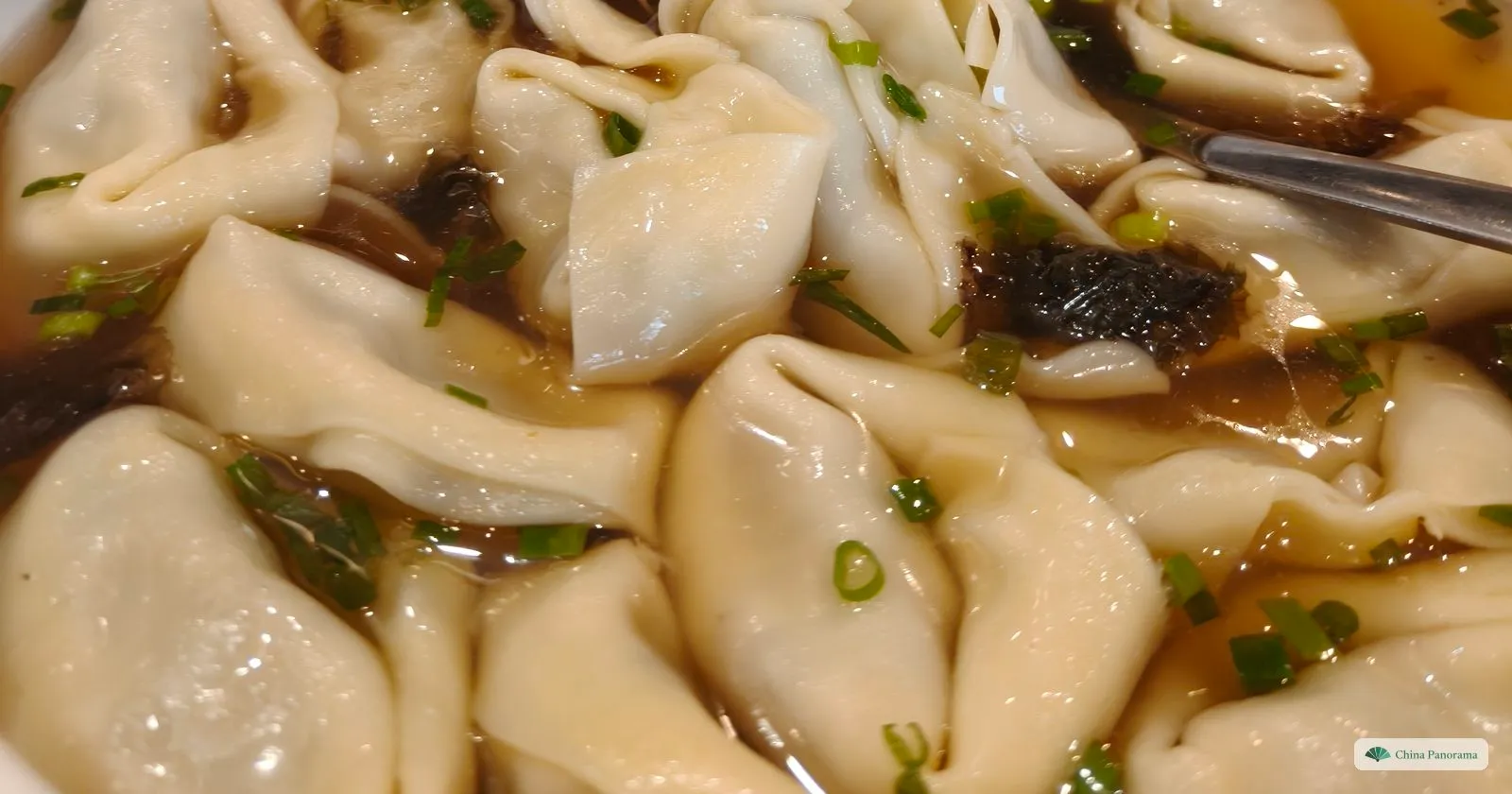
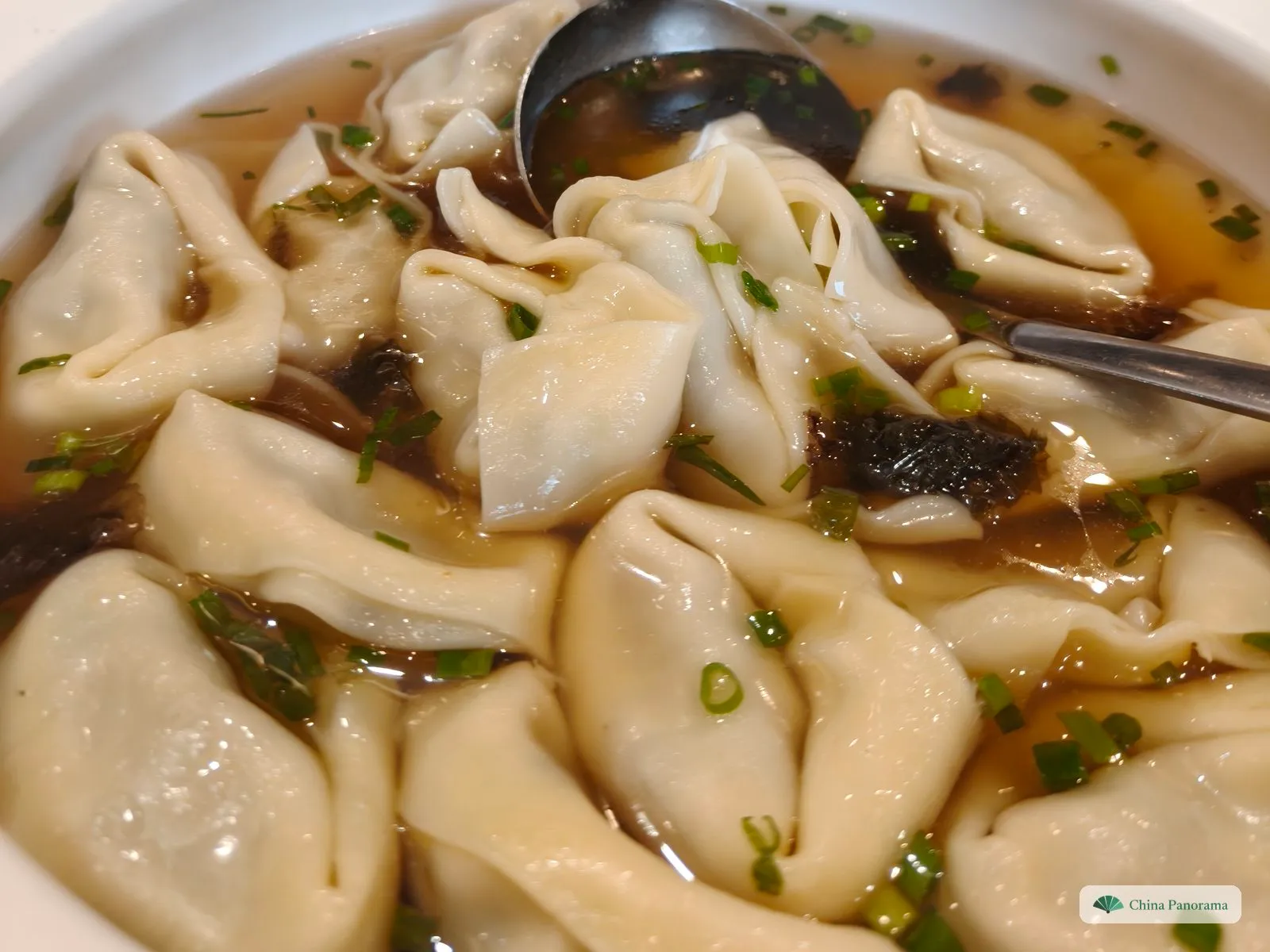
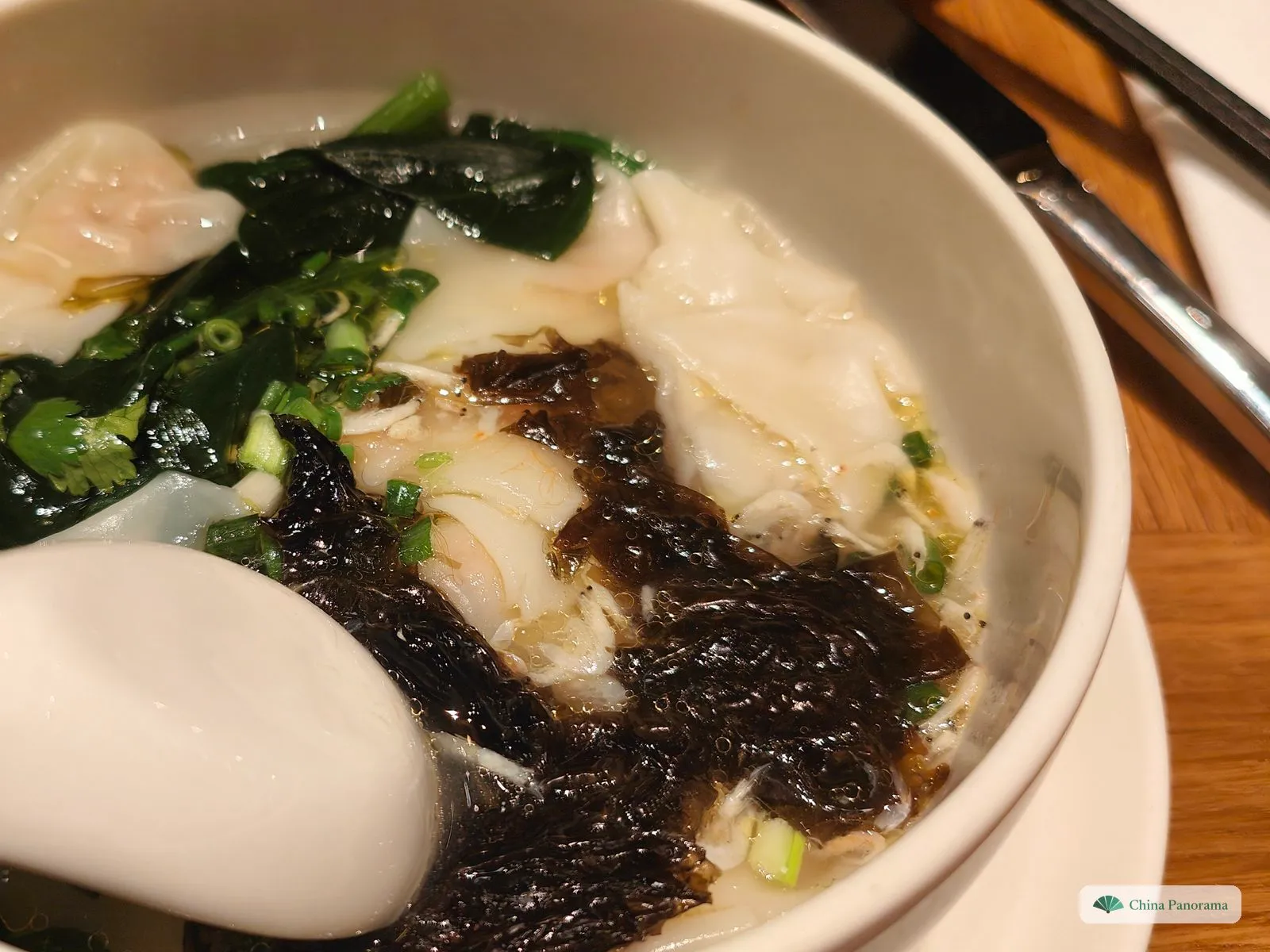
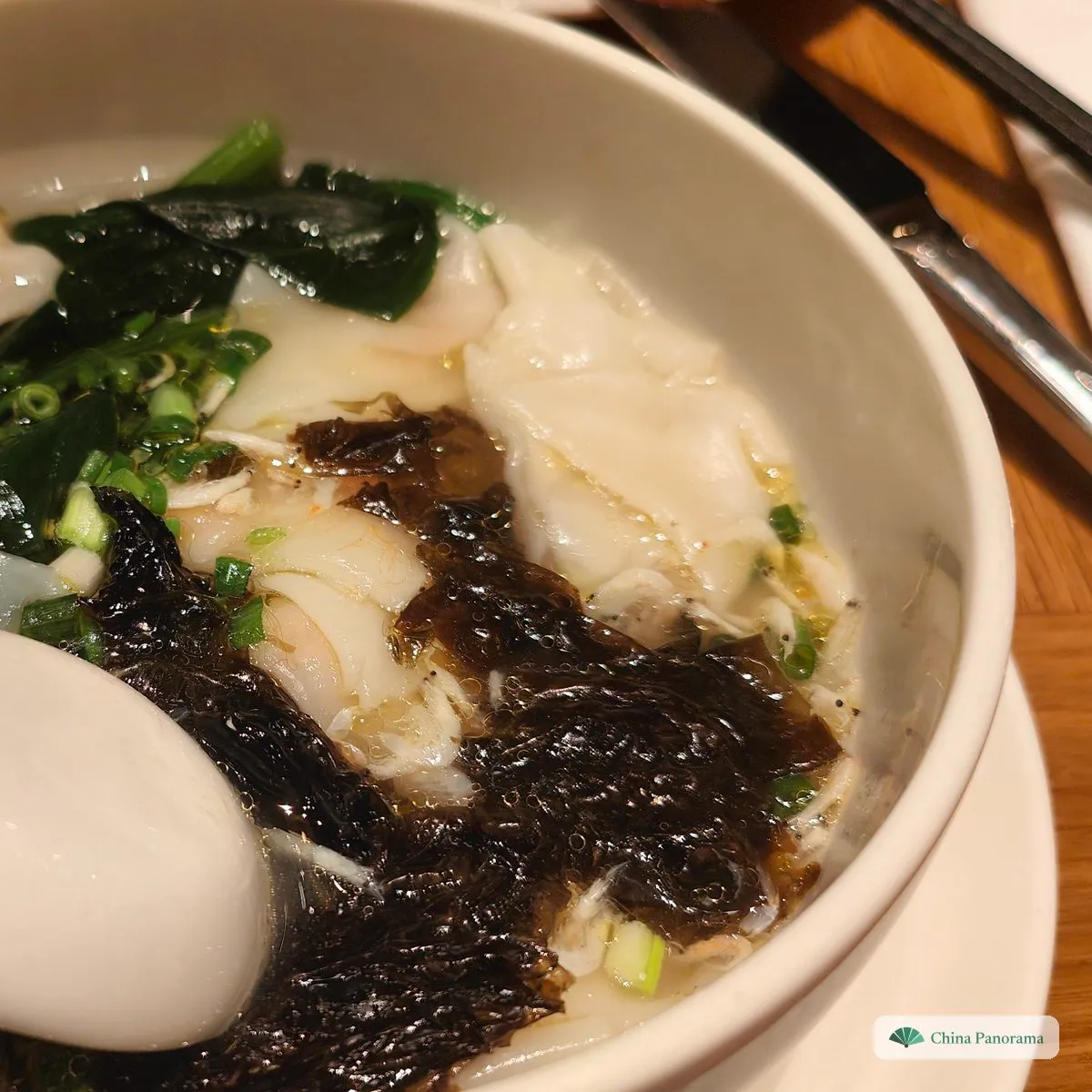
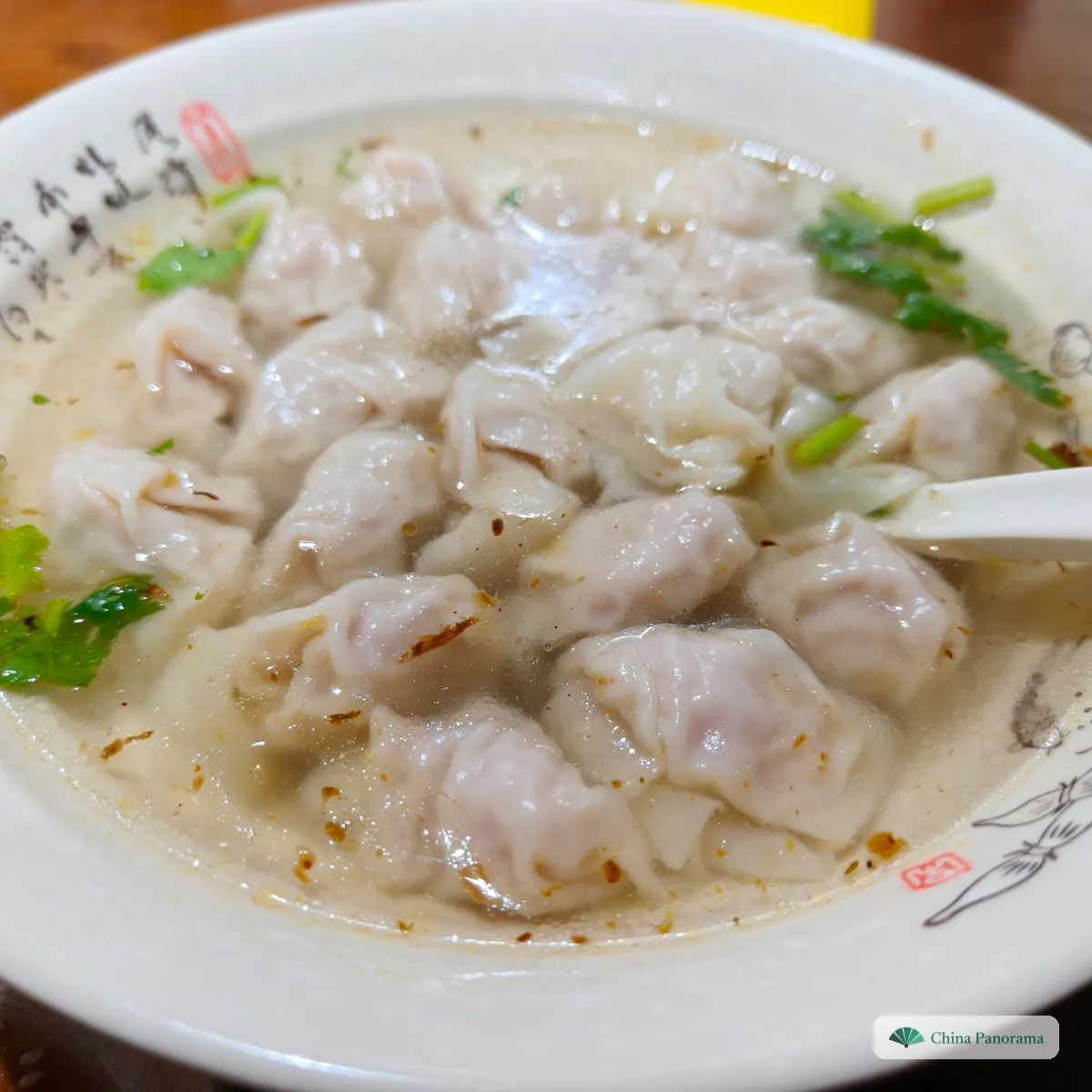
A white bowl crowded with large, loosely folded wontons with soft frilled edges in light brown broth, scattered with seaweed and chopped spring onion
Big wontons (大馄饨) in clear broth with seaweed and dried shrimp, at a banquet, 2025.

What is a wonton?

A wonton is a Chinese dumpling made from a thin, square wheat wrapper – thinner than a jiaozi’s – folded loosely around a little filling: usually minced pork, often with shrimp or greens. Wontons are boiled for a few minutes and almost always eaten in broth, with a spoon. The English word comes from the Cantonese 云吞 (wàhn tān); standard Chinese says 馄饨 (hún tun).

In China they are everyday food, not a starter. Small wontons are breakfast in Shanghai and the cities around it, big wontons are lunch, Sichuan’s 抄手 come in chilli oil and Cantonese 云吞 sit on egg noodles. A bowl is one person’s portion and costs about ¥15–25 in an ordinary restaurant in a big city (2026).

You rarely see “wonton soup” on a Chinese menu: 馄饨 on its own already means a bowl of wontons in broth – more on how it differs from takeout below.

What they taste like. Soft, slippery wrappers around a juicy, savoury pork filling, in a light, salty broth that tastes of the sea when it has seaweed and dried shrimp in it. Big wontons are chewy at the folded edges and filling enough for a meal; small wontons are mostly silky wrapper and broth, a light breakfast. Sichuan wontons in chilli oil are something else again: sweet, garlicky, hot and a little numbing. A dash of black vinegar from the table suits all of them.

A bit like… Tortellini in brodo – pasta parcels in clear broth – but with thinner, silkier wrappers and looser folds. Wontons vs tortellini ↓

What’s in a bowl of wontons? Read the bowl

Tap the numbers on four bowls we ate in China: big wontons at a banquet, small wontons for breakfast in Shanghai, Sichuan wontons in pickled-greens soup and Cantonese shrimp wontons.

Large wontons with frilled, folded edges crowding a bowl of light brown broth with seaweed, chopped spring onion and a ladle
Big wontons (大馄饨) in clear broth with seaweed and dried shrimp, at a banquet, 2025.

1The ingot fold

元宝 yuán bǎo

Rolled around the filling, the two ends pinched together and a soft flap left standing: Shanghai’s big wontons look like little silver ingots.

How it is folded

Tap a number on the photo, or a name in the list.

Wonton, 云吞 or 抄手? One dumpling, many names

Wontons are eaten all over China, but the menu calls them something different in almost every region. Knowing the local word helps you find them – and tells you roughly what will be in the bowl: shrimp with 云吞, chilli oil with 抄手, peanut-sauce noodles on the side with 扁肉.

Pick a name, or tap the map.

North and east

馄饨hún tun

The standard name

The characters
A sound name, usually linked to 混沌 (hùn dùn), the shapeless chaos before the world began.
On a menu
The name in standard Chinese and on menus in the north and around Shanghai. Shanghai and the cities around it have two kinds: big wontons (大馄饨), a meal, and small wontons (小馄饨), a breakfast.
Big and small in our photos →

7 names; the areas are where each name is the usual one on menus – borders are not exact, and menus for visitors often fall back on 馄饨.

What is wonton soup in China – and how is it different from takeout?

Wonton soup in China is simply a bowl of wontons in a light broth – 馄饨 on the menu, a meal for one rather than a starter. The takeout version abroad grew out of the Cantonese bowl: shrimp-and-pork wontons in chicken broth, with greens. In China the bowl is simpler and changes with the region – a light broth seasoned in the bowl in Shanghai, a broth of dried flounder and shrimp roe in Guangdong, chilli oil in Sichuan. Some of the wonton dishes you know from home have no Chinese twin at all.

Pick the wonton dish you know and see what to order in China instead.

What you get at home

Wonton soup from a Chinese takeout

US, UK, and as Wan-Tan-Suppe in Germany

Pork or pork-and-shrimp wontons with long, floppy tails in chicken broth, with bok choy and spring onion, sometimes a few slices of red roast pork. Crispy fried wonton strips on the side.

In China

The closest is Cantonese shrimp wontons. In Shanghai the soup is plainer: hardly any vegetables, and the broth is often hot water seasoned in the bowl with soy sauce, lard, seaweed and dried shrimp. No fried strips – vinegar and chilli oil are on the table instead.

Order this instead

  • 鲜虾云吞xiān xiā yún tūnShrimp wontons in broth (Cantonese)
  • 鲜肉大馄饨xiān ròu dà hún tunBig pork wontons in broth (Shanghai)
See it on the wonton menu ↓

Wontons vs tortellini: “Chinese tortellini in broth”?

Put a bowl of wontons in front of someone from Bologna and they will say: tortellini in brodo. Both are thin wheat dough folded around a little meat, cooked and eaten in broth. That makes Italian pasta the easiest way to explain 馄饨 to friends at home.

“Chinese tortellini in broth”

The best match for wontons in soup – small, folded, eaten from a bowl of broth with a spoon. Works for 大馄饨, 小馄饨 and Cantonese 云吞.

“Chinese ravioli”

Fine for the dry ones in chilli oil (红油抄手) or sesame sauce. One catch: in Boston “Peking ravioli” has meant jiaozi since a Chinese restaurant there named them that in the 1950s.

Why do wontons look like tortellini?

  1. 1

    Not Marco Polo

    The story that Marco Polo brought pasta – or wontons – home from China in 1295 is a myth: filled pasta was eaten in Italy before he came back. The tale spread in the 20th century, helped along by an American pasta-industry magazine in 1929.

  2. 2

    The same idea, twice

    Northern China and northern Italy are both wheat country with cold winters. Wrapping a little meat in thin dough makes it go further, and cooking the parcels in broth turns them into a hot meal. Both kitchens got there on their own.

  3. 3

    Almost the same fold

    Tortellini: a square folded into a triangle, the two corners wrapped round a finger and pinched into a ring. Fold a 抄手 or a Shanghai big wonton and your hands do nearly the same thing.

    See the wonton folds ↓
  4. 4

    Two winter soups

    In Bologna, tortellini in brodo are the Christmas dish. In Suzhou and Shanghai an old saying puts wontons on the table at the winter solstice: 冬至馄饨夏至面, “wontons at the winter solstice, noodles at the summer solstice”.

  5. 5

    Two origin legends

    Bologna says an innkeeper peeked at Venus through a keyhole and shaped tortellini after her navel. Chinese writers link 馄饨 to 混沌, the shapeless chaos before the world began. Neither is history – both are better stories than “someone was hungry”.

  6. 6

    Cousins in between

    Along the old Silk Road runs a chain of small dumplings in broth: 曲曲 (chüchüre) in Xinjiang, chuchvara in Uzbekistan, düşbərə in Azerbaijan. One family that travelled, or the same good idea again and again? Nobody has proved either.

Wonton, tortellini and ravioli compared

Dough, filling and cooking: Chinese wontons and Italian filled pasta
Wonton 馄饨Tortellini in brodo Ravioli
FromAll over China; the English word from Guangdong, big and small ones from ShanghaiBologna and Modena, in Emilia-RomagnaAll over Italy
Flour and doughWheat flour, water and a little salt – no egg in most. Cantonese wrappers add egg and alkaline water (碱水) for a yellow, springy wrapper. Usually machine-rolled and bought ready-madeSoft wheat flour (tipo 00) and whole eggs, no water: the yellow egg pasta Bologna calls sfoglia, rolled out by handUsually the same egg pasta as tortellini
Thickness and bitePaper-thin; in broth it turns silky, slippery and almost see-throughThin but firmer – it keeps a little biteLike tortellini, a little thicker at the sealed edges
Size and shapePalm-sized square, folded loosely, with soft, frilly edgesA square of about 3–4 cm, folded into a triangle, the corners wrapped round a finger into a ringFlat pillows, square or round, sealed all round with a crimped edge
FillingRaw minced pork with ginger, spring onion, soy sauce, rice wine and sesame oil, often shrimp or greens. It cooks inside the wrapperPork loin, prosciutto, mortadella, Parmigiano-Reggiano, egg and nutmeg (the Bologna recipe registered in 1974) – cooked or cured before it is wrappedRicotta and spinach, meat or cheese – it depends on the region
CookingBoiled in plain water for a few minutes, then ladled into a bowl of broth – often just hot water poured over soy sauce, lard, seaweed and dried shrimpSimmered right in the broth: a clear stock of capon, or beef and chickenBoiled in salted water and drained
On topSpring onion; vinegar and chilli oil from the table. Dry versions come in chilli oil (红油抄手) or sesame sauceGrated Parmigiano. Outside Bologna also served with cream or butterA sauce: butter and sage, tomato, ragù
WhenAny day: small ones for breakfast, big ones for lunch. Suzhou and Shanghai eat them at the winter solsticeSunday lunch – and above all ChristmasEveryday and festive
AllergensA wheat, F soy; often B (dried shrimp) and N (sesame oil); C in egg wrappersA wheat, C egg, G milk (Parmigiano); L celery in the brothA wheat, C egg; G milk with ricotta or cheese

The short version: same idea, different dough and seasoning. Tortellini are egg pasta with a cured-meat and cheese filling, cooked in rich stock; wontons are a thinner water dough around raw pork with ginger and soy sauce, in a lighter broth you season at the table. For allergies that means: tortellini always have egg and milk; wontons have no milk and often no egg, but often shrimp and soy.

How are wontons folded?

The fold is the quickest way to tell where a wonton is from. Small Shanghai wontons are squeezed shut in one movement, big ones are rolled into an ingot, Sichuan cooks cross the corners, Cantonese cooks gather the wrapper into a pouch with a frilly top. Pick a fold and step through it.

1 / 3一抹yì mǒ

A dab of meat

A thin square wrapper, smaller than your palm. With a flat bamboo stick or a chopstick, wipe a pea-sized dab of pork onto one corner.

小馄饨xiǎo hún tunSmall wontons

Wonton vs dumpling: what’s the difference?

In English both are dumplings. In Chinese a wonton (馄饨) and a jiaozi (饺子) are different things, with different wrappers, folds and ways of eating them.

Wonton 馄饨Jiaozi 饺子
WrapperThin and square, usually bought ready-madeRound and thicker, rolled from dough
ShapeLoose bundle with soft, trailing edgesHalf-moon, sealed tight along one edge
InsideA little filling: pork, shrimp, sometimes greensPlenty of filling: meat and vegetables, or egg and vegetables
ServedIn broth, with a spoon; sometimes in chilli oil or friedOn a plate with a vinegar dip; sometimes steamed or pan-fried
Ordered byThe bowl (碗)The plate, or by weight (两) in northern dumpling shops

Soup dumplings and buns are two more things English calls dumplings. All four side by side, with a photo quiz, on our jiaozi page.

How to order wontons in China

Six things to know, from finding a wonton place to the spoon.

  1. 1

    Find a wonton place · 馄饨 · 云吞 · 抄手

    Breakfast and noodle shops in Shanghai and the east (馄饨), Cantonese restaurants and Hong Kong-style cafés (云吞), Sichuan snack shops (抄手), Shaxian snack shops everywhere (扁肉).

  2. 2

    Big or small? · 大 · 小

    Shanghai menus have both. Big wontons are a meal; small wontons are breakfast or a snack, often with pan-fried buns (生煎) on the side.

  3. 3

    One bowl, one person · 一碗

    A bowl (碗, wǎn) is one portion, about ¥15–25 in an ordinary restaurant in a big city (2026). Some menus print how many are in it: 十只 means ten.

  4. 4

    Order and pay first · 先付款

    Wonton and noodle shops usually take your order and money at the counter or by QR code, then bring the bowl or call your number.

    Canteen and fast-food walkthrough
  5. 5

    Vinegar and chilli · 醋 · 辣椒油

    Dark vinegar and chilli oil are on the table. A dash of vinegar in the broth is how many people eat them.

  6. 6

    Use the spoon · 勺子

    Wontons come with a spoon: lift one with a little broth, blow, eat. Drinking the broth is normal; leaving it is fine too.

Ordering by QR code instead? It works like our QR-code ordering walkthrough. For everything else, tap a card to show it full-screen.

  • 一碗小馄饨

    yì wǎn xiǎo hún tun

    One bowl of small wontons, please

  • 一碗荠菜鲜肉大馄饨

    yì wǎn jì cài xiān ròu dà hún tun

    One bowl of big wontons with shepherd’s purse and pork, please

  • 一碗红油抄手,微辣

    yì wǎn hóng yóu chāo shǒu, wēi là

    Wontons in chilli oil, only a little spicy, please

  • 一碗几个?

    yì wǎn jǐ gè?

    How many are in a bowl?

  • 汤里有虾皮吗?

    tāng lǐ yǒu xiā pí ma?

    Is there dried shrimp in the broth?

  • 不要虾皮

    bú yào xiā pí

    No dried shrimp, please

  • 有醋吗?

    yǒu cù ma?

    Do you have vinegar?

  • 打包

    dǎ bāo

    To take away, please

Big, small, Cantonese or Sichuan?

Eight bowls from our photos. Big wontons (大馄饨), small wontons (小馄饨), Cantonese 云吞 or Sichuan 抄手 – which is which? Look at the wrapper and the broth.

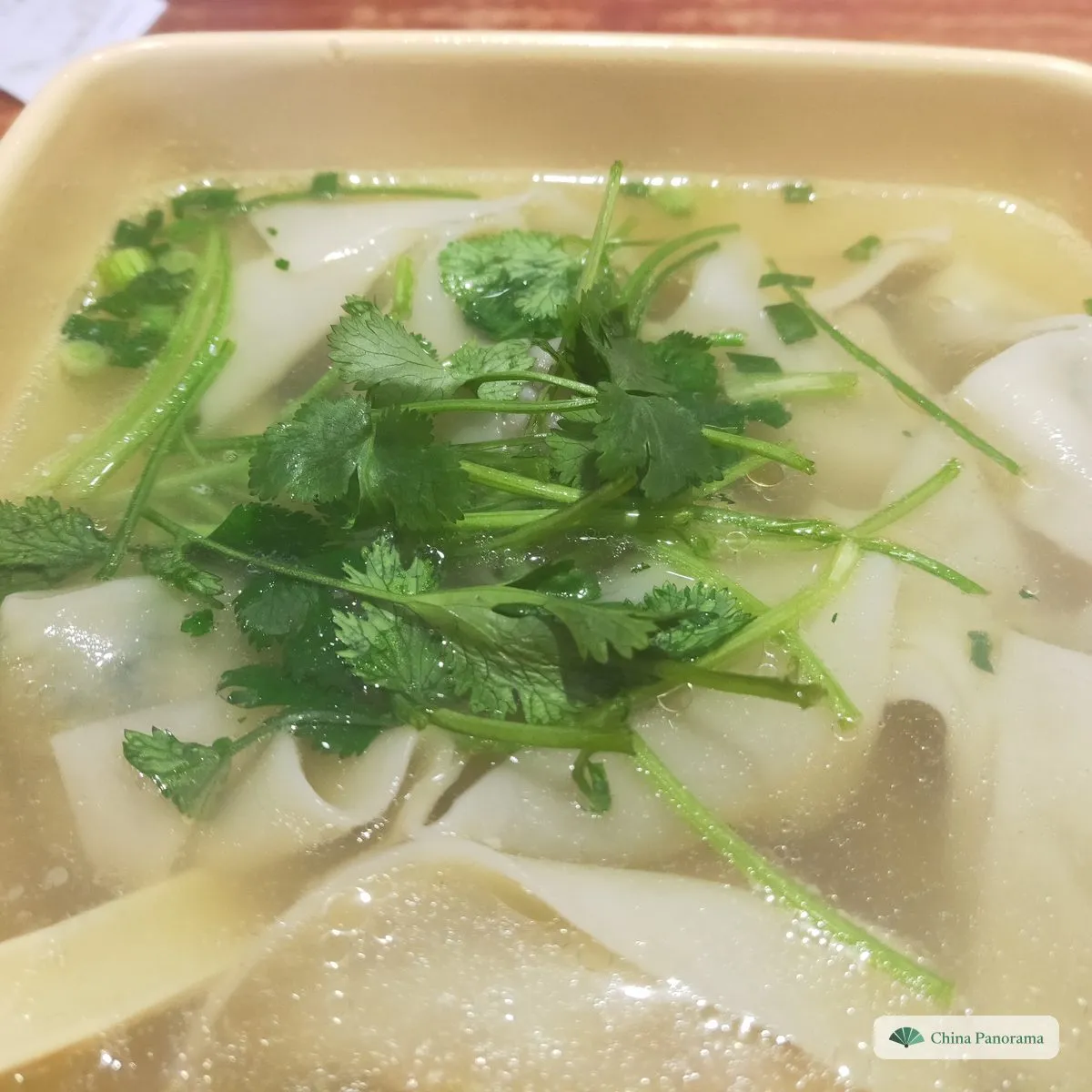
  1. Wide, flat wontons in pale broth under a heap of fresh coriander, in a square cream bowl1

    大馄饨 Big wontons

    大馄饨dà hún tun

    Big wontons with coriander

    Wide, flat wrappers with long, soft edges and a green-flecked filling – Shanghai’s big wontons, here under a heap of coriander.

    Shanghai, 2019

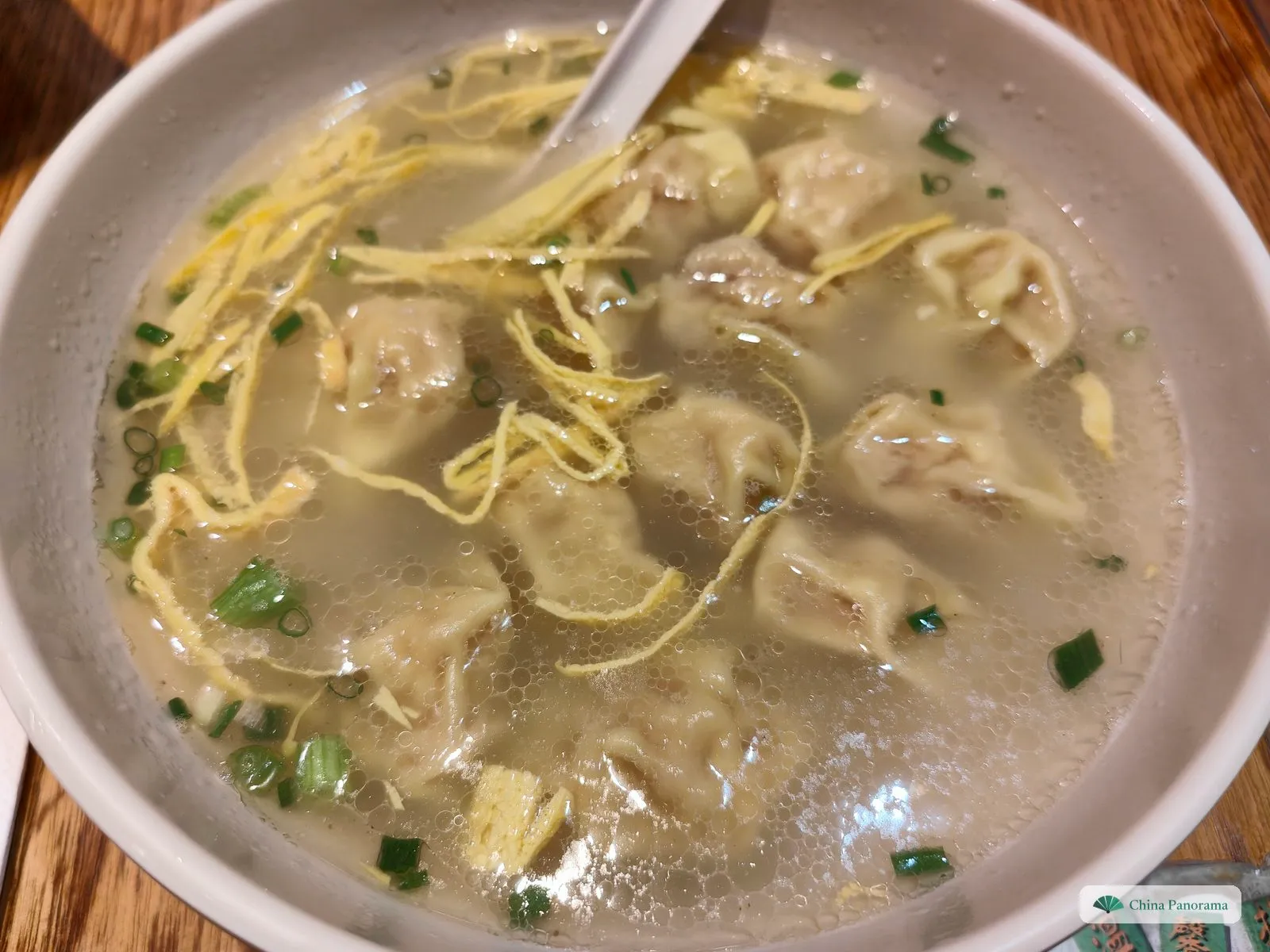
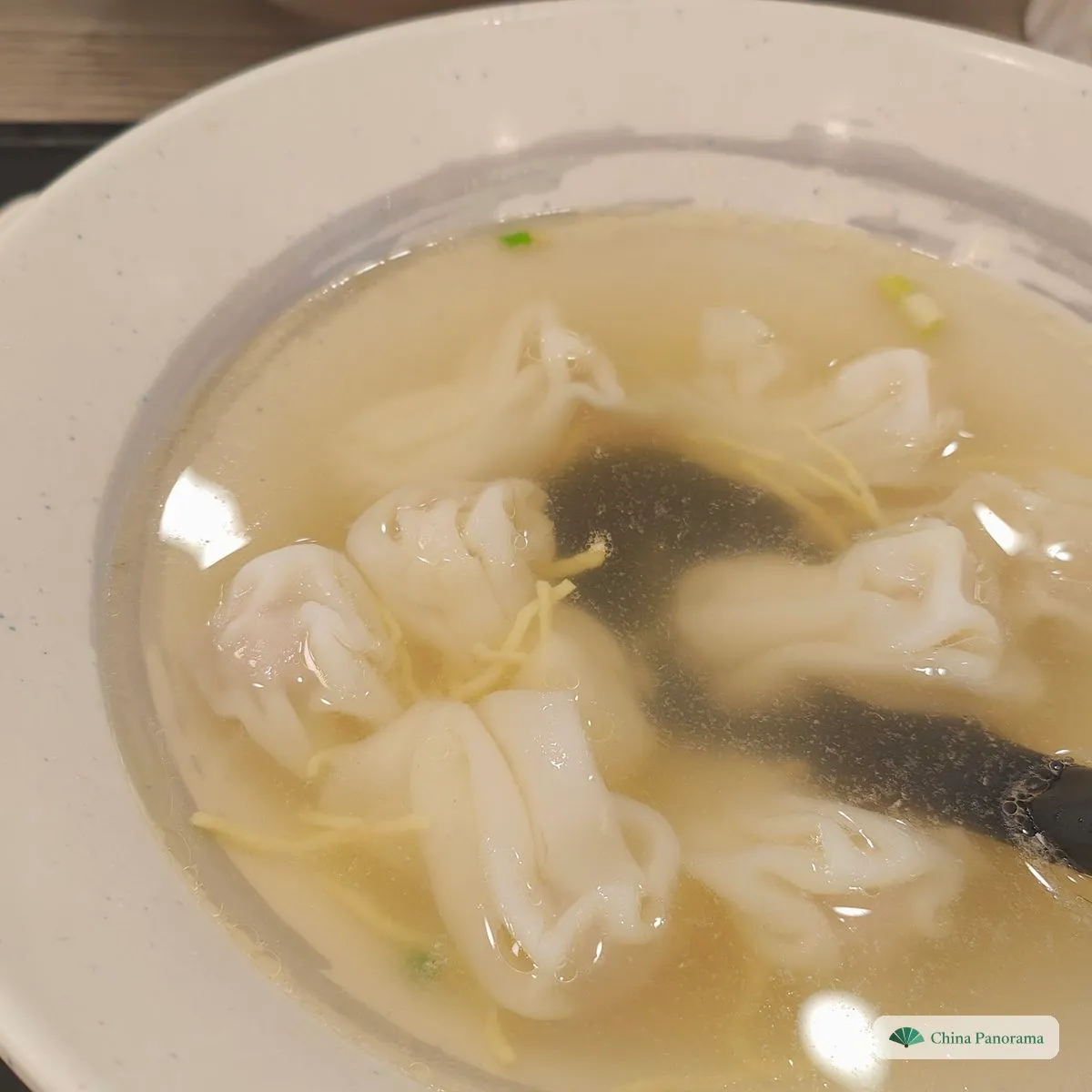
  2. Loose, crumpled little wontons in clear broth with a sheet of dark seaweed and a few strands of egg, a black spoon at the side2

    小馄饨 Small wontons

    小馄饨xiǎo hún tun

    Small wontons

    Loose little bundles, wrappers so thin you see the pink pork through them, with egg strips and a sheet of seaweed in clear broth: small wontons at a Shanghai breakfast chain.

    Shanghai, 2024

  3. Smooth white wontons with dark green spinach and a heap of black seaweed in a deep white bowl3

    云吞 Cantonese

    鲜虾云吞xiān xiā yún tūn

    Shrimp wontons

    Smooth, translucent wrappers around whole shrimp, with spinach and seaweed – Cantonese 云吞. Outside Guangdong the same bowl may be called 鲜虾馄饨.

    Shanghai, 2024

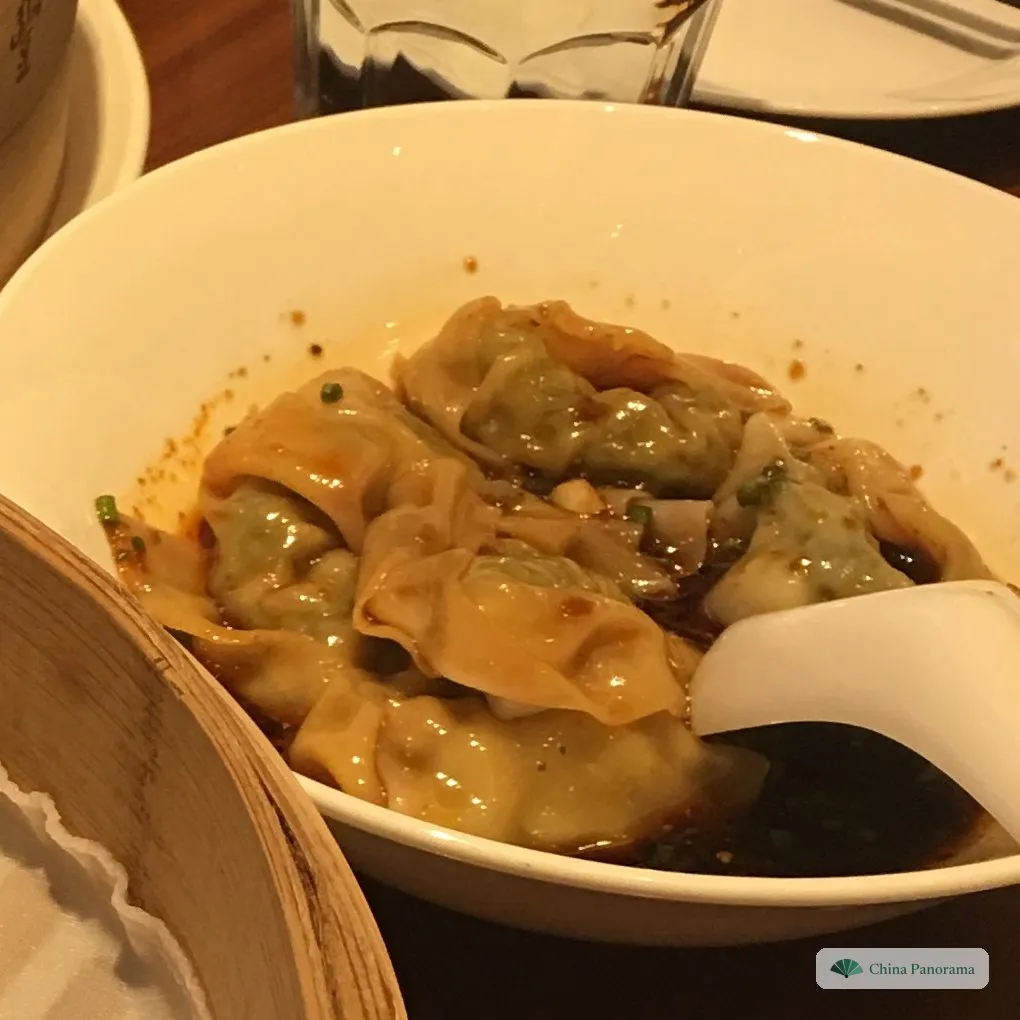
  4. Wontons with a green filling in a pool of red chilli oil and dark sauce, a white spoon in the bowl4

    抄手 Sichuan

    红油抄手hóng yóu chāo shǒu

    Wontons in chilli oil

    No broth, a pool of red chilli oil and soy sauce: Sichuan’s 红油抄手. This kitchen filled them with pork and greens and made the sauce sweet.

    2017

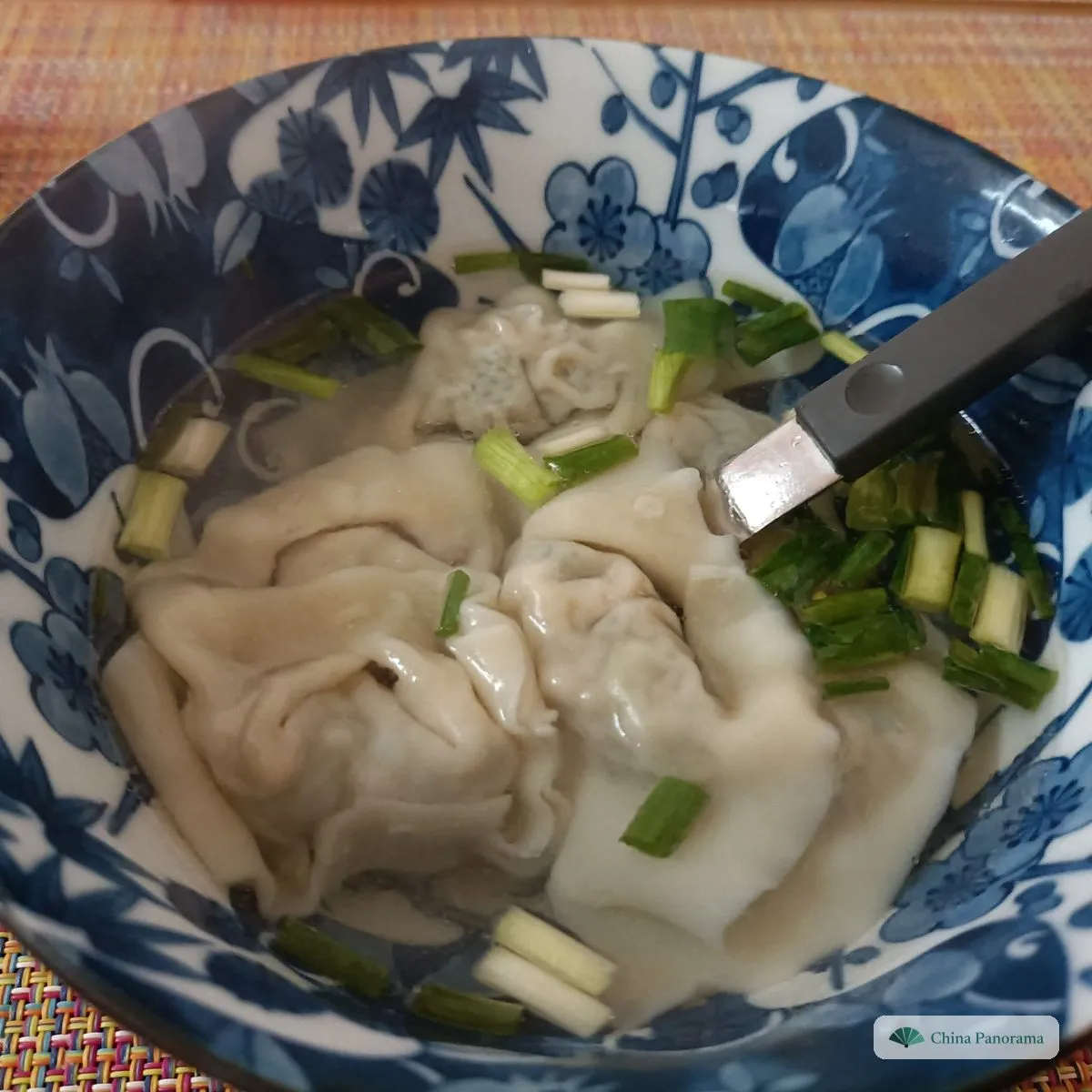
  5. Big, loosely folded wontons in a little broth with spring onion, in a blue-and-white bowl with a metal spoon5

    大馄饨 Big wontons

    菜肉大馄饨cài ròu dà hún tun

    Big wontons, made at home

    Big, loosely folded wontons with greens showing through, in a little broth with spring onion – the kind families wrap by the hundred and freeze.

    Made at home, Shanghai, 2021

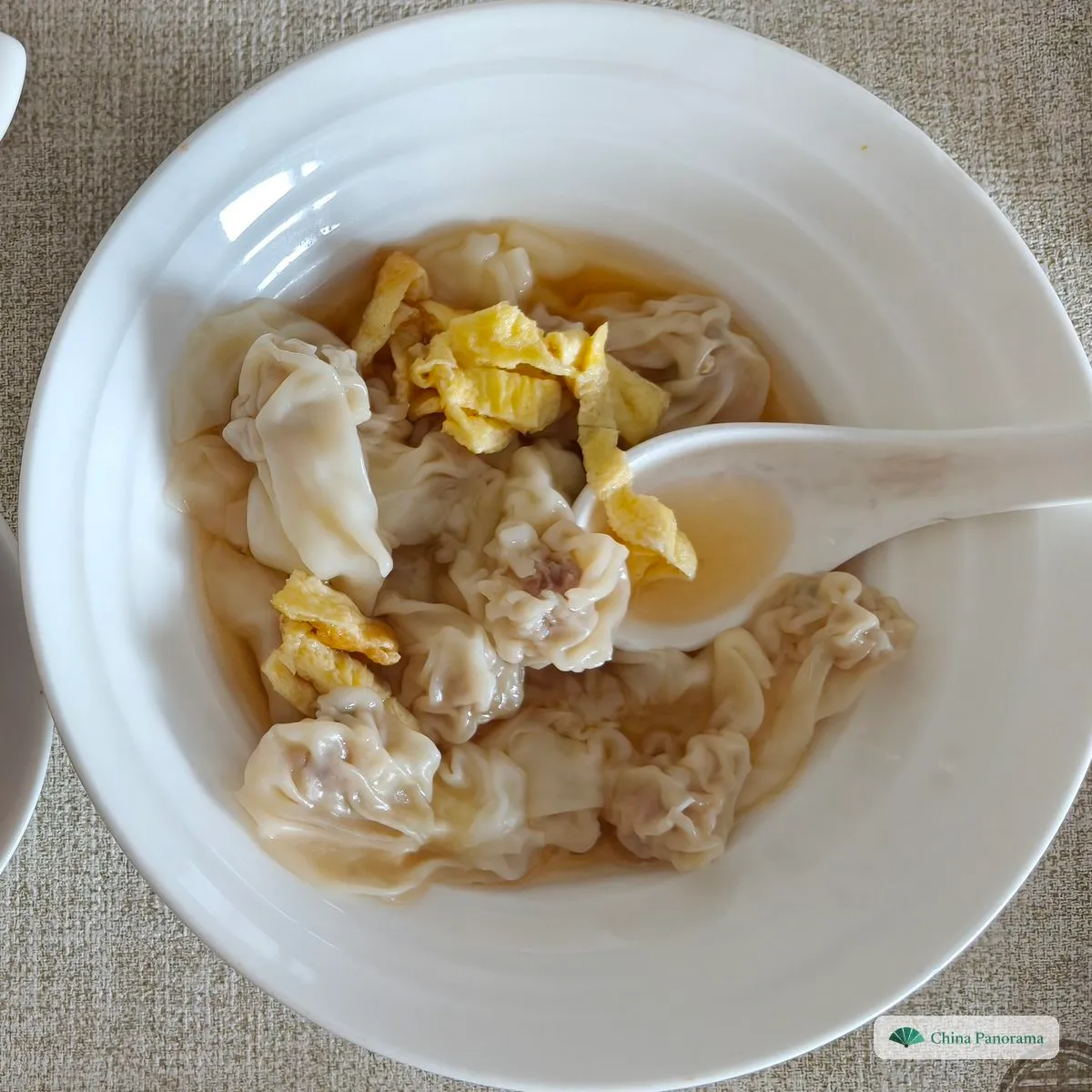
  6. Small crumpled wontons with yellow scraps of egg crepe in a white bowl, a spoon in the broth6

    小馄饨 Small wontons

    蛋皮馄饨dàn pí hún tun

    Wontons with egg crepe

    Small, crumpled wontons with strips of thin egg pancake, the classic topping of small wontons.

    Breakfast, 2025

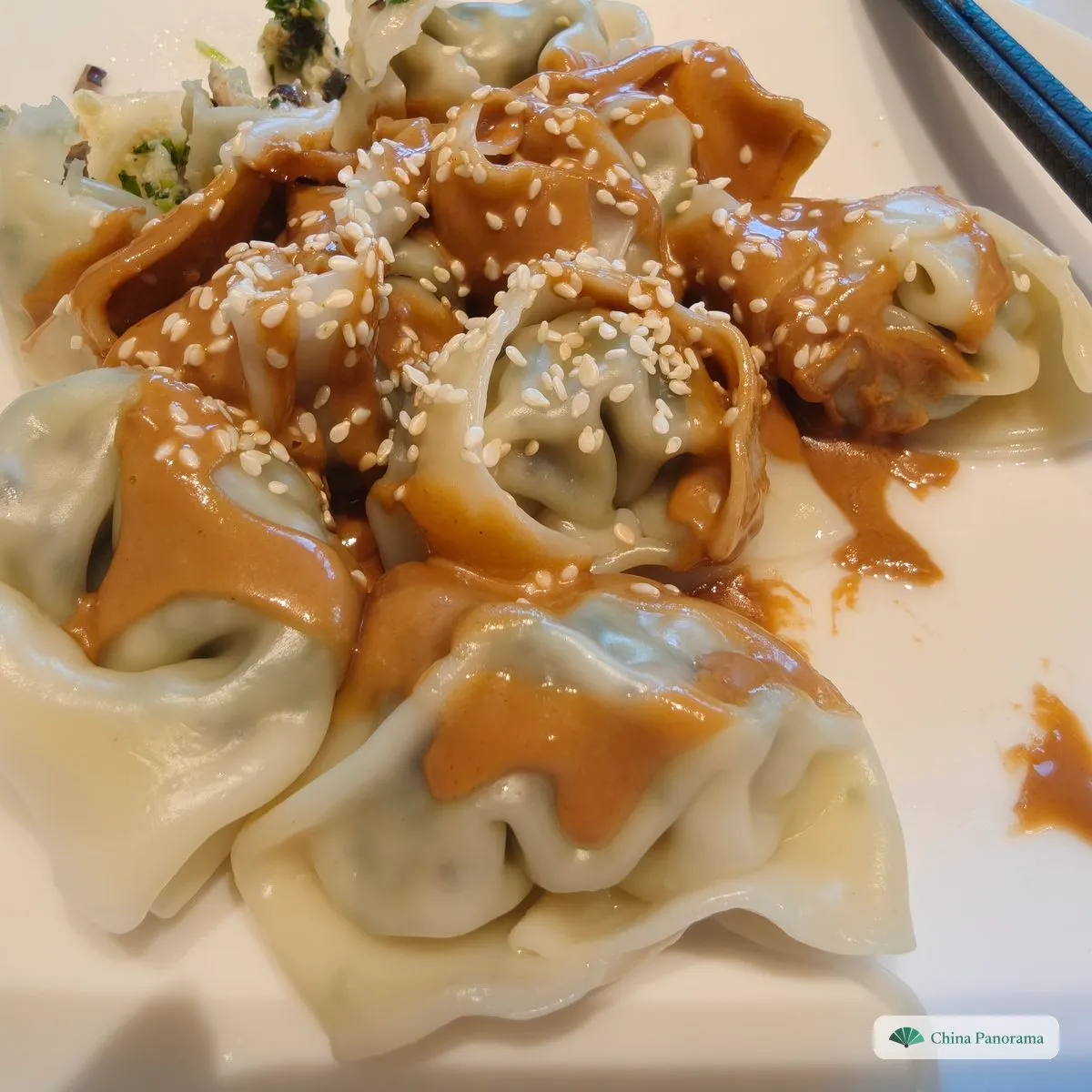
  7. Big wontons with a green filling on a plate, without broth, covered in brown sesame sauce and white sesame seeds7

    大馄饨 Big wontons

    麻酱馄饨má jiàng hún tun

    Wontons in sesame sauce

    No broth at all – but the long folded shape and the green filling give them away as big wontons. Sesame sauce and sesame seeds on top: sesame (N), and often peanut (E) in the sauce.

    2026

  8. A pile of many tiny wontons in cloudy broth with dried shrimp, coriander and red flecks of chilli oil8

    小馄饨 Small wontons

    小馄饨xiǎo hún tun

    Small wontons

    The red specks are chilli oil, but this is not 抄手: a pile of tiny wontons with dried shrimp (虾皮) and coriander in a cloudy broth.

    Breakfast, 2025

Allergens and diet

Every wonton has wheat in the wrapper, and nearly every broth and sauce has soy sauce. The rest hides in the broth and the toppings: dried shrimp in Shanghai broth, egg crepe on small wontons, egg in Cantonese wrappers, sesame oil on top. The menu cards mark each one.

Wrapper

  • ACereals containing gluten· US: Wheat
  • CEggs (sometimes)· US: Eggs

Wheat flour. Cantonese wrappers, and some others, are made with egg.

Broth and seasoning

  • FSoybeans· US: Soybeans
  • BCrustaceans (sometimes)· US: Crustacean shellfish
  • DFish (sometimes)· US: Fish
  • NSesame (sometimes)· US: Sesame

Soy sauce (soy, and wheat again). Shanghai broth often has dried shrimp (虾皮), Cantonese broth dried flounder and shrimp roe; sesame oil on top.

Filling and toppings

  • BCrustaceans (sometimes)· US: Crustacean shellfish
  • CEggs (sometimes)· US: Eggs

Shrimp in 云吞 and 虾仁 wontons; egg crepe strips on small wontons.

Sauces and sides

  • EPeanuts (sometimes)· US: Peanuts
  • NSesame (sometimes)· US: Sesame

Sesame sauce on 麻酱馄饨 is often cut with peanut butter; the peanut-sauce noodles served with 扁肉 have peanuts. Some chilli oils contain sesame.

These are estimates from how the dish is usually made, not a restaurant’s declaration. Every kitchen and every sauce brand is different – always tell the staff about an allergy. Chinese kitchens often fry in peanut oil, and chilli oil may be made with it too; we don’t repeat that for each dish.

Vegetarian, vegan, no pork

Almost every wonton is pork, and a broth that looks clear may be seasoned with lard (猪油), dried shrimp (虾皮) or chicken powder (鸡精). Vegetable wontons (素馄饨) exist, mostly in vegetarian and temple restaurants – ask about the broth even there. Without pork the choice is thin: shrimp wontons usually contain some pork too, and halal 曲曲 with lamb or beef are a Xinjiang dish.

  • 我吃素

    wǒ chī sù

    I’m vegetarian

  • 有素馄饨吗?

    yǒu sù hún tun ma?

    Do you have vegetable wontons?

  • 汤里有猪油吗?

    tāng lǐ yǒu zhū yóu ma?

    Is there lard in the broth?

  • 我不吃猪肉

    wǒ bù chī zhū ròu

    I don’t eat pork

  • 我对虾过敏

    wǒ duì xiā guò mǐn

    I’m allergic to shrimp

  • 我对鸡蛋过敏

    wǒ duì jī dàn guò mǐn

    I’m allergic to eggs

  • 我对花生过敏

    wǒ duì huā shēng guò mǐn

    I’m allergic to peanuts

  • 我对芝麻过敏

    wǒ duì zhī ma guò mǐn

    I’m allergic to sesame

Next on the menu: Chinese dumplings (jiaozi), chow mein in China, fried rice, Chinese hot pot, and our Shanghai guide – the city of big and small wontons.

FAQ

What is a wonton?

A Chinese dumpling made from a thin square wheat wrapper folded loosely around a little filling – usually minced pork, often with shrimp or greens – boiled and served in broth. Standard Chinese calls it 馄饨 (hún tun), Cantonese 云吞, Sichuan 抄手.

What does wonton mean?

The English word comes from the Cantonese wàhn tān, written 云吞 – literally “swallowing clouds”, characters chosen for the sound. Standard Chinese writes 馄饨, a word usually linked to 混沌 (hùn dùn), the shapeless chaos before the world began. Sichuan’s 抄手 means “crossed hands”, after the fold.

What is the difference between 馄饨, 云吞 and 抄手?

They are the same thing under regional names: 馄饨 in standard Chinese, the north and Shanghai; 云吞 in Guangdong and Hong Kong; 抄手 in Sichuan and Chongqing. What changes with the region is the filling, the fold and the broth – shrimp in Cantonese 云吞, chilli oil with Sichuan 抄手, big and small wontons in Shanghai.

What is wonton soup?

A bowl of wontons – thin wheat wrappers folded around minced pork or shrimp – in a light broth with spring onion. In China it is ordered simply as 馄饨 (or 云吞, 抄手) and eaten as a meal for one, for breakfast or lunch, not as a starter.

What is the difference between wontons and dumplings?

Wontons (馄饨) have a thin, square wrapper, a little filling and loose, trailing edges, and are eaten in broth with a spoon. Jiaozi (饺子), what most people mean by Chinese dumplings, have a thicker round wrapper, more filling and a sealed half-moon shape, and come on a plate with a vinegar dip.

What is wonton soup made of in China?

Wontons in a light broth. In Shanghai the broth is often hot water seasoned in the bowl with soy sauce, lard, seaweed and dried shrimp; Cantonese broth is traditionally made with pork bones, dried flounder and shrimp roe. Chopped spring onion goes on top, vinegar and chilli oil are on the table.

Is wonton soup spicy?

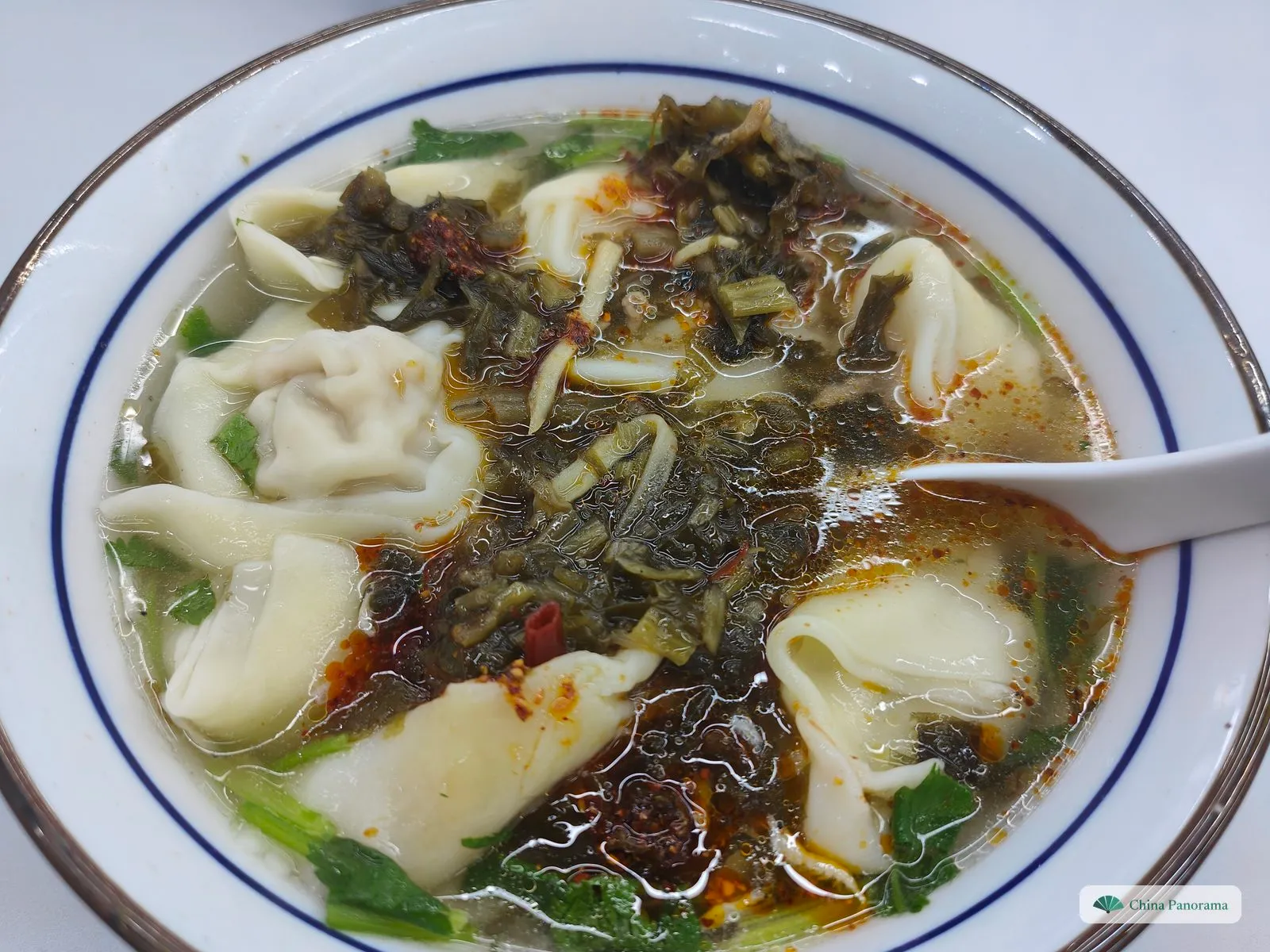
No. Wontons in broth are not spicy. Sichuan wontons are the exception: 红油抄手 come in chilli oil with Sichuan pepper, and 酸菜抄手 have a spoon of chilli oil in the soup. Ask for 清汤抄手 for the mild version.

Are wontons a breakfast food in China?

Small wontons are: in Shanghai and the cities around it they are a classic breakfast, often with pan-fried buns. Big wontons, Sichuan wontons and Cantonese wonton noodles are eaten at any time of day.

Are wontons gluten-free?

No. The wrapper is wheat, and the broth and sauces are seasoned with soy sauce, which is brewed with wheat. There is no gluten-free version in ordinary Chinese restaurants.

How much do wontons cost in China?

About ¥15–25 for a bowl in an ordinary restaurant in a big city (2026). Small wontons at a breakfast shop cost less; shrimp wontons and hotel restaurants cost more.

Can you get crab rangoon in China?

No. Crab rangoon – fried wonton wrappers filled with cream cheese and crab – is an American invention, and cream cheese is not a Chinese ingredient. For crunch, order fried wontons (炸馄饨) or Shanghai pan-fried wontons (煎馄饨).

Are wontons Chinese tortellini or Chinese ravioli?

Not literally – there is no historical link – but it is the easiest way to explain them. Wontons in soup are closest to tortellini in brodo: small, folded, cooked and eaten in broth. The difference is the wrapper (thinner, usually without egg) and the filling (raw pork with ginger and soy sauce instead of cured meats and Parmigiano). “Chinese ravioli” works too, but in Boston “Peking ravioli” means jiaozi.

Do people eat wontons at the winter solstice?

In Suzhou and around Shanghai, yes: an old saying goes 冬至馄饨夏至面, “wontons at the winter solstice, noodles at the summer solstice”. In northern China the winter-solstice dish is jiaozi.

Photos and sources

All photos are our own, from our dish library: restaurants and breakfast shops in Shanghai between 2019 and 2024, wontons made at home in 2021, a banquet in 2025, and meals in 2017, 2025 and 2026. Prices come from the same library and are typical for an ordinary restaurant in a big city; allergens are estimated from the usual recipe. The regional names, the takeout versions abroad, the wonton menu and the folds are general knowledge – kitchens differ.

Changelog (1)
  • 2026-10-05Page created, with our own photos from the dish library: restaurants and breakfast shops in Shanghai between 2019 and 2024, wontons made at home in 2021, a banquet in 2025, and meals in 2017, 2025 and 2026. The regional names, the takeout versions abroad, the wonton menu and the folds are general guidance, not checked by us.