
How to Order at a Restaurant in China: Point, Tick, Share, Pay
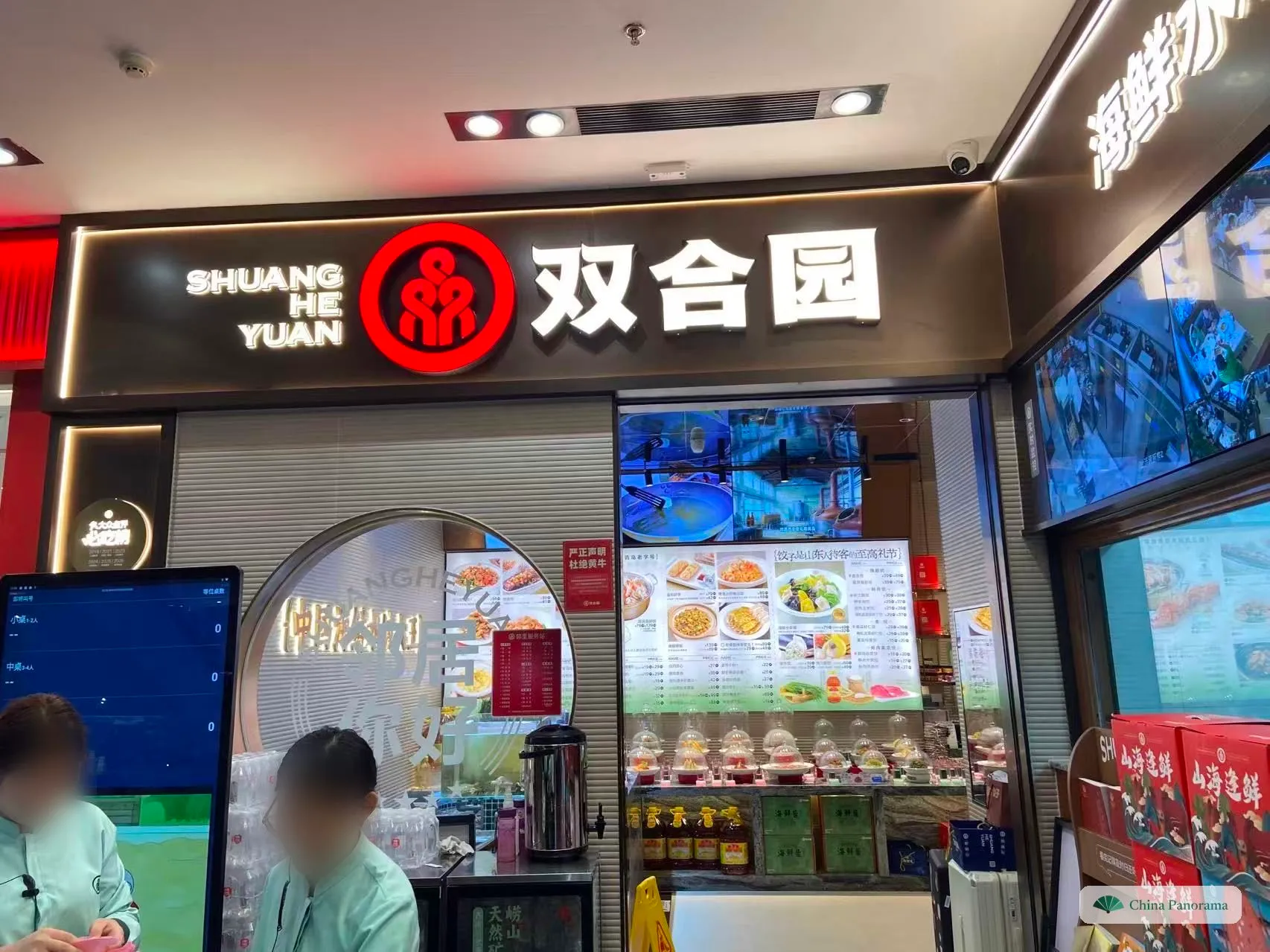
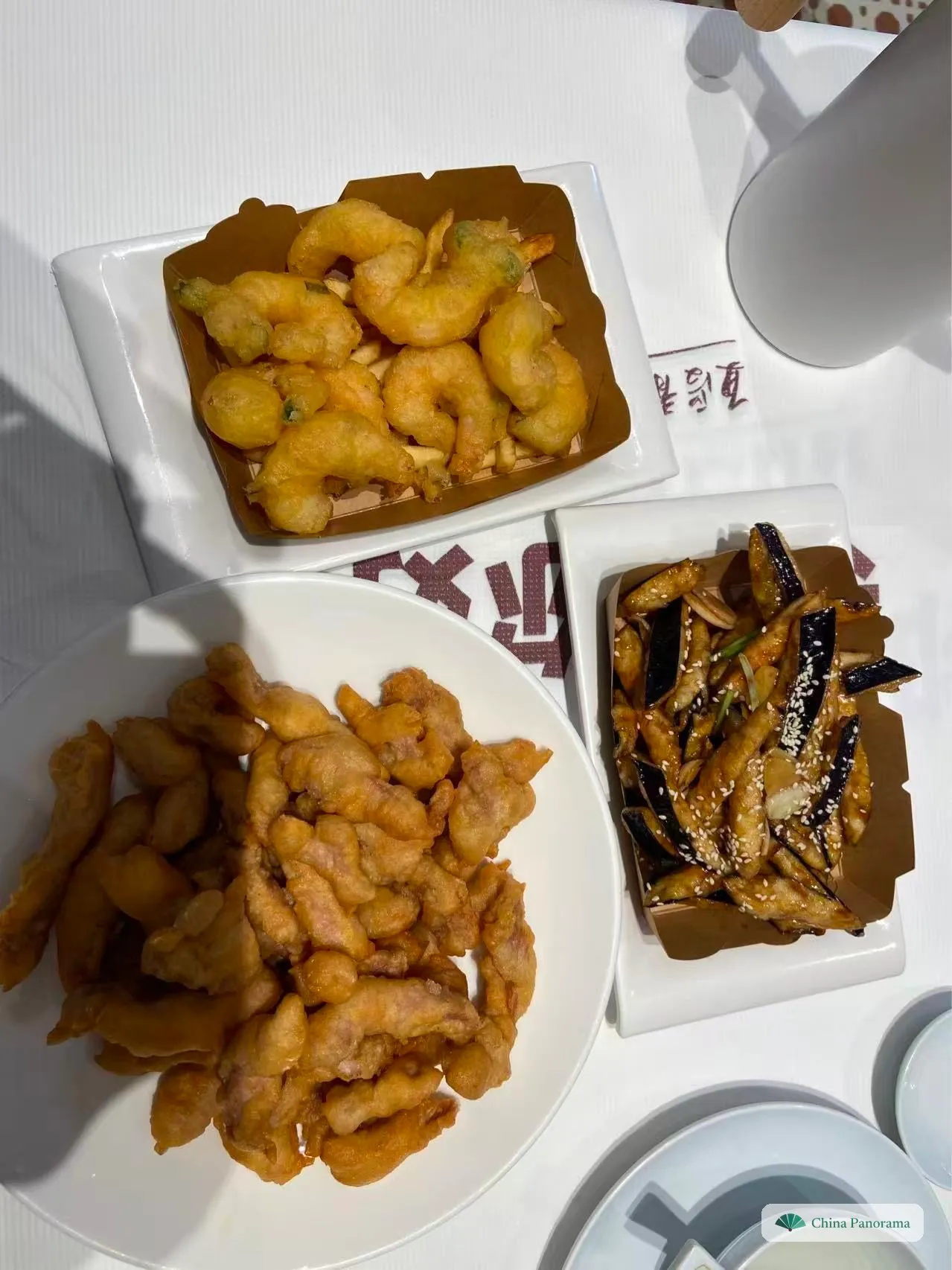
A sit-down restaurant is where the best food is – and where most visitors get stuck: a menu in Chinese only, portion sizes you don’t know, rice that never comes, a bill you can’t read. Play through one meal here first, step by step, at a real restaurant: 双合园 (Shuanghe Yuan), a seafood-dumpling restaurant in a Qingdao mall, where lunch – three dishes – cost us ¥89.
What you need: Alipay or WeChat on your phone with an international card linked, or cash. The apps are easier to set up at home – they are on the China travel checklist.
How to order at a Chinese restaurant: the short version
- 1Book or queueBook by phone or WeChat mini program, or take a queue number at the front desk.
- 2Say how many几位? – hold up your fingers or say 两位 (two).
- 3Point to orderAt the display by the door, or tick the paper menu at your table.
- 4Order riceIt is not included: ask for 米饭 (mǐ fàn) by the bowl.
- 5ShareDishes come one by one and everyone eats from all of them.
- 6Pay, no tip服务员,买单! – WeChat Pay, Alipay or cash. Tipping is not expected.
Play through a restaurant meal: ten steps, one table
Tap the numbered dots for a translation. Along the way you queue for a table, tell the waitress how many you are, point at dishes on the real picture board, pick a table, tick the paper menu, watch your dishes arrive, pay and get your own bill – all with the restaurant’s real prices. Photos are marked as real; the practice screens are simplified.
Guests 2Table —Ordered 0 · ¥0
营业时间
Opening hours – an example11:00 – 15:00
17:00 – 24:00
营业中 open
13:00
Blood alcohol, mg per 100 ml – tap a band
Thresholds from China’s national standard GB 19522
Step 1 of 10
Find a restaurant and say how many you are
找饭店 · 几位 · zhǎo fàn diàn · jǐ wèi
Sit-down restaurants – 饭店 (fàn diàn) or 餐厅 (cān tīng) – line the streets and fill whole floors of shopping malls. This one is in a mall in Qingdao. Not sure what kind of place you are looking at?
- Staff at the door, tables, a menuA restaurant – this page.
- Trays and a counter of ready dishesA canteen →
- A counter and a QR code, no waitersOrder by QR code →
Tap the numbered dots in the photo. Then try “Take a number”.
Interactive – the first question: a waitress at the door asks:
Waiter
您好,几位?
Nín hǎo, jǐ wèi?
Hello – how many?
How many of you are there? Your answer is used in every later step.
Interactive – queue for a table: popular restaurants don’t take you in straight away. You take a number at the front desk (前台 qián tái) – 取号 (qǔ hào) – and wait by the door until it is called (叫号 jiào hào). Many put out chairs, tea and snacks for the queue, free of charge.
Book ahead: 预订 yù dìng
To skip the queue, book a table: by phone, or through the restaurant’s WeChat mini program (search its name in WeChat). A hotel receptionist can call for you – show them the sentence below.
我想订一张桌子,今天晚上六点,两位。Wǒ xiǎng dìng yì zhāng zhuōzi, jīntiān wǎnshang liù diǎn, liǎng wèi.
I’d like to book a table for tonight at six, for 2.
要等多久?Yào děng duō jiǔ?
How long is the wait?
我过号了。Wǒ guò hào le.
I missed my number.
Step 2 of 10
Order at the display: point at the real dish
点菜区 · diǎn cài qū
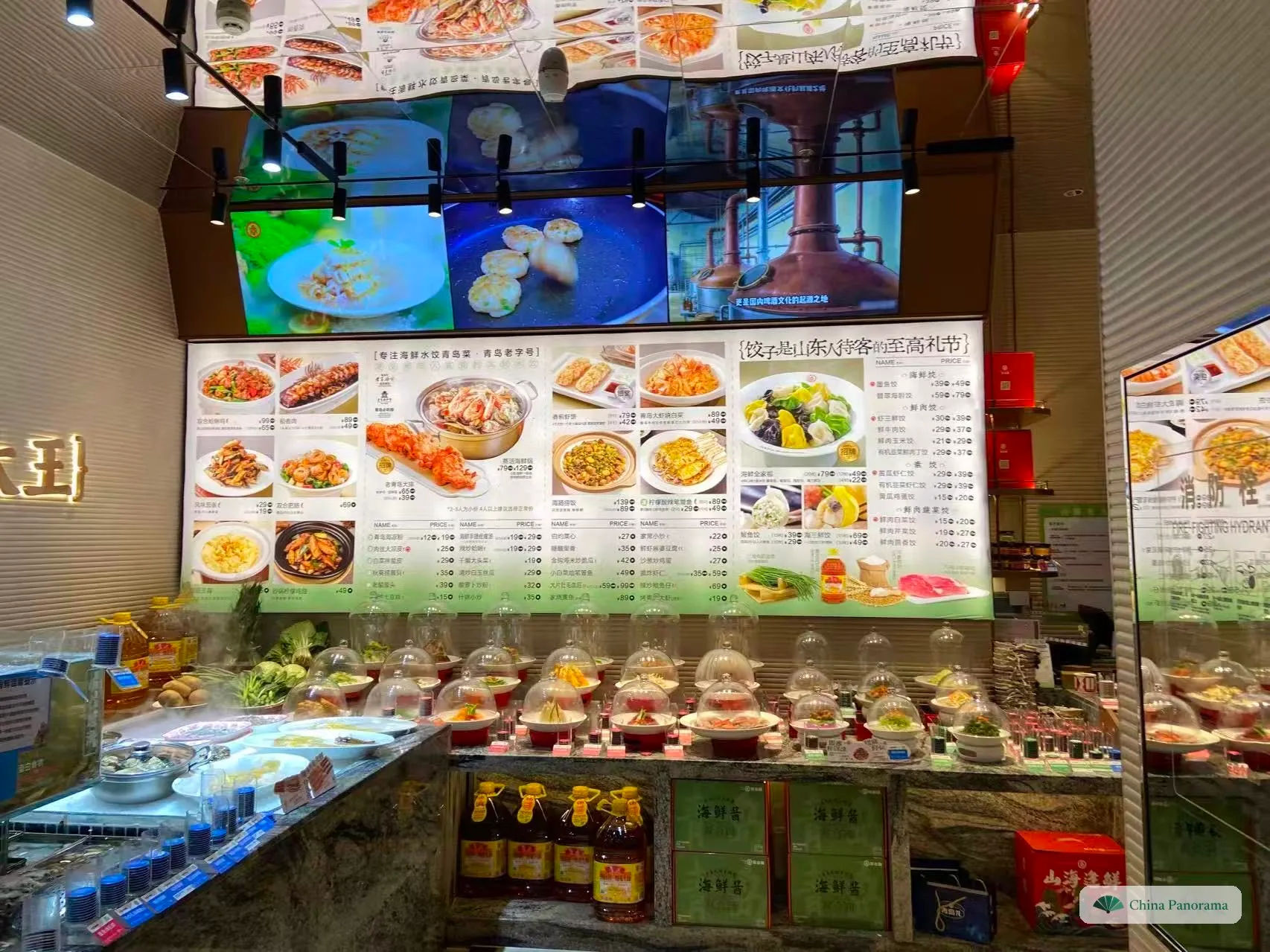
Many restaurants put an ordering area – 点菜区 (diǎn cài qū) – by the entrance: sample plates of the dishes, a picture board with prices, sometimes the day’s specials. Point at what you want and a waiter writes it down. For visitors this is the friendliest way to order: you see the finished dish, not just a name.
Tap the numbered dots in the photo. Then open “The board”.
Zoom into a part of the board and tap the dots: name, translation and every price.
Quick check: 脆炸虾仁 costs ¥35 小份 · ¥59 大份. You are two people. Which do you order?
Interactive – point and order: every dish on the board, with the real prices. Pick a size; the waiter’s pad fills up in the scene. You can order more at the table in step 4.
Nothing ordered yet.
老青岛大排lǎo Qīngdǎo dà pái
Old Qingdao pork chop, breaded and fried – the house signature (招牌)
蒸活海鲜锅zhēng huó hǎi xiān guō
Steamed pot of live seafood
香煎虾饼xiāng jiān xiā bǐng
Pan-fried prawn cakes
青岛大虾烧白菜Qīngdǎo dà xiā shāo bái cài
Qingdao prawns braised with Chinese cabbage
海肠捞饭hǎi cháng lāo fàn
Rice with spoon worm (海肠, “sea intestine”), a Qingdao speciality
柠檬酸辣笔管鱼níng méng suān là bǐ guǎn yú🌶
Lemon hot-and-sour baby squid
海鲜全家福hǎi xiān quán jiā fú
Seafood dumpling platter: cuttlefish, mackerel, sea urchin and “three seafood” dumplings
鲅鱼饺bà yú jiǎo
Spanish mackerel dumplings
海三鲜饺hǎi sān xiān jiǎo
“Three seafood” dumplings
青岛海凉粉Qīngdǎo hǎi liáng fěn
Qingdao seaweed jelly, cold
肉丝大凉皮ròu sī dà liáng pí
Wide cold noodles with shredded pork
白菜拌蜇皮bái cài bàn zhé pí
Chinese cabbage with jellyfish, cold
秋葵捞扇贝qiū kuí lāo shàn bèi🌶
Okra with scallops, cold
老醋蛰头lǎo cù zhé tóu
Jellyfish in aged vinegar, cold
酸辣土豆丝suān là tǔ dòu sī🌶
Hot-and-sour shredded potato
海鲜手搓疙瘩汤hǎi xiān shǒu cuō gē da tāng
Seafood soup with hand-rubbed dough drops
辣炒蛤蜊là chǎo gé lí🌶
Spicy stir-fried clams
干煸大头菜gān biān dà tóu cài🌶
Dry-fried cabbage
清炒白玉丝瓜qīng chǎo bái yù sī guā
Stir-fried luffa (silk gourd)
酸萝卜炒粉suān luó bo chǎo fěn🌶
Glass noodles fried with pickled radish
什锦小炒shí jǐn xiǎo chǎo
Mixed stir-fry
白灼菜心bái zhuó cài xīn
Blanched choy sum
糖醋里脊táng cù lǐ ji
Sweet-and-sour pork tenderloin
金钩海米炒脆瓜jīn gōu hǎi mǐ chǎo cuì guā🌶
Crisp melon stir-fried with dried shrimp
小白菜烩笔管鱼xiǎo bái cài huì bǐ guǎn yú
Baby squid braised with bok choy
大片肚毛血旺dà piàn dǔ máo xuè wàng🌶🌶
Tripe and blood curd in a hot, spicy broth
家烧黄鱼jiā shāo huáng yú
Home-style braised yellow croaker
家常小炒jiā cháng xiǎo chǎo🌶
Home-style stir-fry
鲜虾麻婆豆腐xiān xiā má pó dòu fu🌶🌶
Mapo tofu with fresh shrimp
沙葱炒鸡蛋shā cōng chǎo jī dàn
Scrambled egg with sand onion, a wild chive
脆炸虾仁cuì zhá xiā rén
Crispy fried shrimp
辣炒鲍鱼仔là chǎo bào yú zǎi🌶🌶
Spicy stir-fried baby abalone
烤青岛大虾kǎo Qīngdǎo dà xiā
Grilled Qingdao prawn (tiger prawn)
这个。Zhège.
This one.
要小份。Yào xiǎo fèn.
The small portion, please.
这个辣吗?Zhège là ma?
Is this spicy?
不要辣。Bú yào là.
No chilli, please.
我们两个人,够吗?Wǒmen liǎng ge rén, gòu ma?
There are two of us – is that enough?
Step 3 of 10
Get a table – and its number
入座 · rù zuò
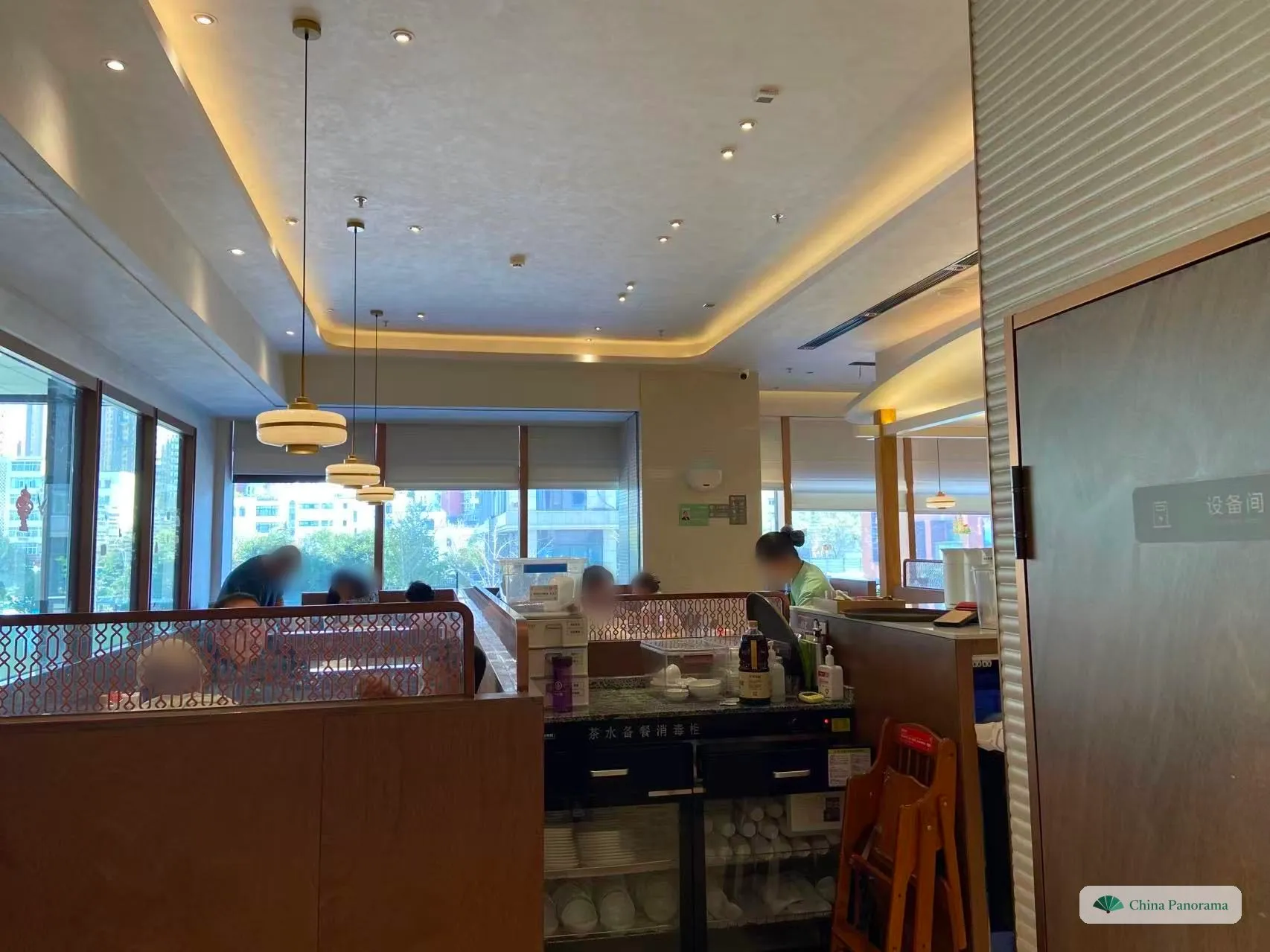
A waiter takes you to a table and gives you a seat. You don’t have to accept the first one: if it is by the door or too small, ask for another. Every table has a number, and the order is booked to it – so the kitchen knows where your dishes go and the till knows whose bill it is.
Tap the numbered dots. Then try “Pick a table”.
Waiter
这边请,107号桌。
Zhè biān qǐng, 107 hào zhuō.
This way, please – table 107. (For 2 guests.)
Don’t like it? Tap another free table – the window seats, for example – to ask for a change.
可以换一张桌子吗?Kěyǐ huàn yì zhāng zhuōzi ma?
Could we have another table?
我们想坐靠窗的。Wǒmen xiǎng zuò kào chuāng de.
We’d like a table by the window.
有包间吗?Yǒu bāojiān ma?
Do you have a private room?
Step 4 of 10
Order more from the menu
看菜单点菜 · kàn cài dān diǎn cài
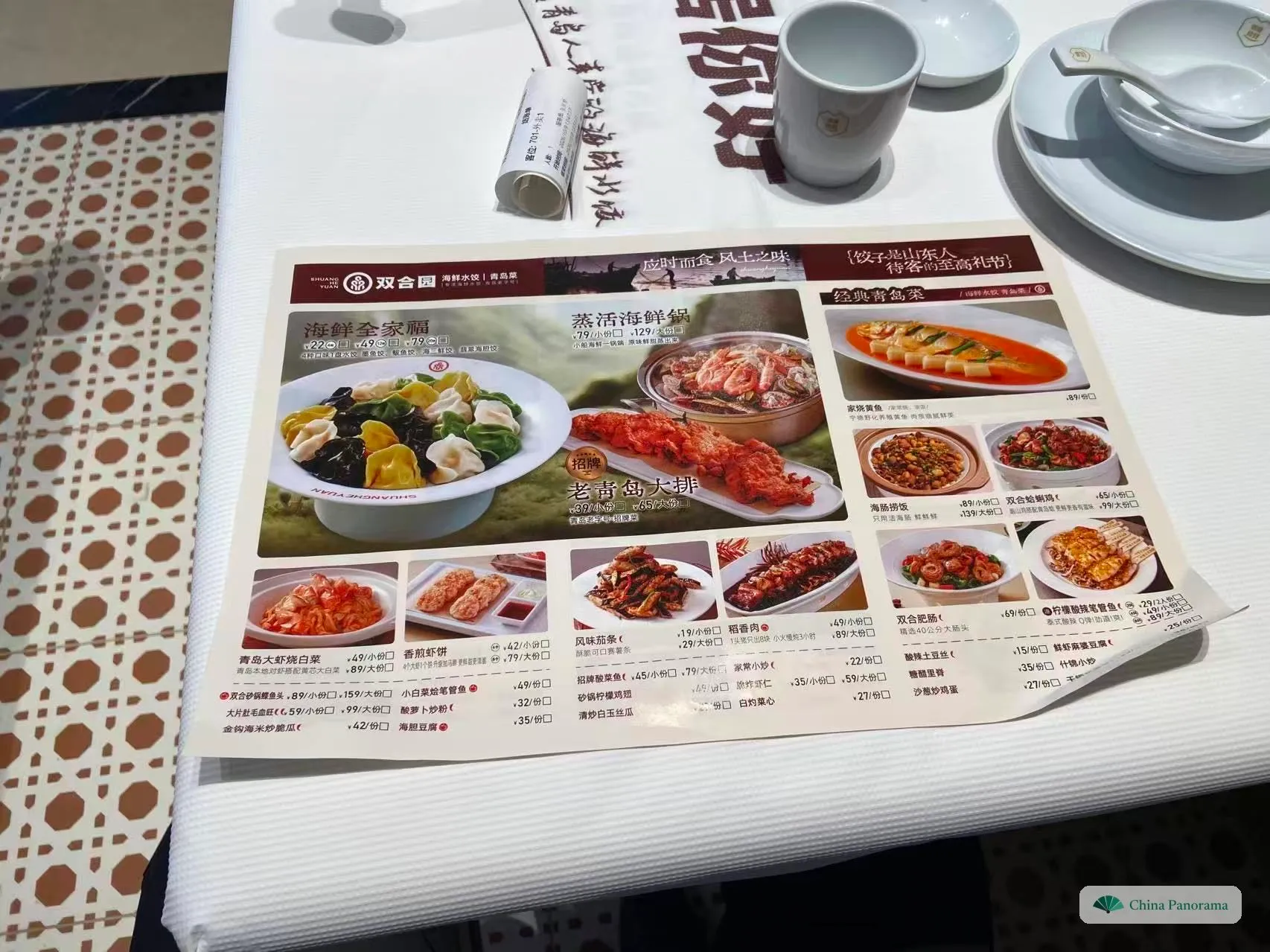
Once you sit down, you can go on ordering from the menu. Some menus have pictures; most list only names and prices. Here it is a paper menu with a box next to every price: you tick the boxes and hand it to the waiter. Other restaurants use a tablet, or a QR code on the table – how QR ordering works.
Rice is ordered separately. Unlike Chinese restaurants in Europe, where every main comes with rice, here you ask for it: 米饭 (mǐ fàn), by the bowl. In a dumpling restaurant like this one, dumplings are the staple.
Tap the dots. Then try “Tick the menu”.
Interactive – tick the boxes: the dishes on the paper menu, with its prices. Then hand the order to the waiter.
Nothing ordered yet.
招牌 · 经典青岛菜 · Signatures and Qingdao classics
老青岛大排lǎo Qīngdǎo dà pái
Old Qingdao pork chop, breaded and fried – the house signature (招牌)
蒸活海鲜锅zhēng huó hǎi xiān guō
Steamed pot of live seafood
香煎虾饼xiāng jiān xiā bǐng
Pan-fried prawn cakes
青岛大虾烧白菜Qīngdǎo dà xiā shāo bái cài
Qingdao prawns braised with Chinese cabbage
海肠捞饭hǎi cháng lāo fàn
Rice with spoon worm (海肠, “sea intestine”), a Qingdao speciality
柠檬酸辣笔管鱼níng méng suān là bǐ guǎn yú🌶
Lemon hot-and-sour baby squid
海鲜全家福hǎi xiān quán jiā fú
Seafood dumpling platter: cuttlefish, mackerel, sea urchin and “three seafood” dumplings
家烧黄鱼jiā shāo huáng yú
Home-style braised yellow croaker
稻香肉dào xiāng ròu
Slow-braised pork belly
双合肥肠Shuāng hé féi cháng
Braised pork intestines, house style
双合砂锅鲽鱼头Shuāng hé shā guō dié yú tóu
Flounder head in a clay pot, house style
招牌酸菜鱼zhāo pái suān cài yú🌶
Fish with pickled mustard greens, a house signature
家常菜 · Everyday dishes
酸辣土豆丝suān là tǔ dòu sī🌶
Hot-and-sour shredded potato
清炒白玉丝瓜qīng chǎo bái yù sī guā
Stir-fried luffa (silk gourd)
酸萝卜炒粉suān luó bo chǎo fěn🌶
Glass noodles fried with pickled radish
什锦小炒shí jǐn xiǎo chǎo
Mixed stir-fry
白灼菜心bái zhuó cài xīn
Blanched choy sum
糖醋里脊táng cù lǐ ji
Sweet-and-sour pork tenderloin
金钩海米炒脆瓜jīn gōu hǎi mǐ chǎo cuì guā🌶
Crisp melon stir-fried with dried shrimp
小白菜烩笔管鱼xiǎo bái cài huì bǐ guǎn yú
Baby squid braised with bok choy
大片肚毛血旺dà piàn dǔ máo xuè wàng🌶🌶
Tripe and blood curd in a hot, spicy broth
家常小炒jiā cháng xiǎo chǎo🌶
Home-style stir-fry
鲜虾麻婆豆腐xiān xiā má pó dòu fu🌶🌶
Mapo tofu with fresh shrimp
沙葱炒鸡蛋shā cōng chǎo jī dàn
Scrambled egg with sand onion, a wild chive
脆炸虾仁cuì zhá xiā rén
Crispy fried shrimp
更多 · More from the menu
风味茄条fēng wèi qié tiáo🌶
Crispy aubergine strips
海胆豆腐hǎi dǎn dòu fu
Tofu with sea urchin
有菜单吗?Yǒu càidān ma?
Do you have a menu?
有带图片的菜单吗?Yǒu dài túpiàn de càidān ma?
Is there a menu with pictures?
再要两碗米饭。Zài yào liǎng wǎn mǐfàn.
And two bowls of rice.
你们的招牌菜是什么?Nǐmen de zhāopái cài shì shénme?
What is your signature dish?
How much to order? A common rule of thumb is one dish per person, plus a staple. Prices are per dish, and every dish is shared – everyone eats from all of them.
Step 5 of 10
Wait for the dishes
等上菜 · děng shàng cài
Now you wait – usually 10 to 30 minutes, depending on the dish and how busy the kitchen is. A cold dish is ready in minutes; a stew or a whole fish takes longer. The dishes come to the table one by one, as they are ready, not in courses – start eating when the first one arrives.
Tap the dots: our lunch, ¥89. Then try “Your table”.
No order of your own yet – this shows our three dishes. Order in step 2 or 4 to see yours.
These are practice timings to show the order things come in, not measurements.
我们的菜还要多久?Wǒmen de cài hái yào duō jiǔ?
How much longer will our food be?
麻烦催一下。Máfan cuī yí xià.
Could you hurry it up, please?
米饭先上。Mǐfàn xiān shàng.
Bring the rice first, please.
菜上齐了吗?Cài shàng qí le ma?
Is that all our dishes?
Rice often comes at the end, because many Chinese diners eat it last. If you want it with the dishes, say so when you order: 米饭先上 (mǐfàn xiān shàng).
Step 6 of 10
Tableware, tea and napkins
餐具 · cān jù
The tableware is usually laid out before you sit down: a cup for tea, a bowl with a soup spoon, a side plate, chopsticks. In some restaurants it comes shrink-wrapped as one set.
Plain hot water – 白开水 (bái kāi shuǐ) – is usually free with a meal; just ask for it.
Tap the dots on our table.
In Guangdong: rinse it first
In Guangdong (Canton) and many places with Cantonese habits, people rinse cup, bowl and chopsticks with hot tea or hot water before the meal, and pour the water into a spare bowl. Nobody minds if you do it elsewhere, too.
The bill lists 纸巾 (zhǐ jīn, napkins) for ¥2, although you never asked for them. Is that a trick?
Step 7 of 10
Eat – chopsticks, no time limit
用餐 · yòng cān
Chopsticks are standard. If you need a knife and fork, ask – but not every restaurant has them. A spoon gets you through a lot.
Nobody hurries you: there is no time limit on a table. What does exist are opening hours, and many restaurants close between lunch and dinner – for example 11:00–15:00 and 17:00–24:00. Arrive at 15:30 and the door may be shut, or the kitchen closed.
Open. Order in time: kitchens often stop taking orders a little before closing.
服务员!Fúwùyuán!
Excuse me! (calling a waiter)
有刀叉吗?Yǒu dāochā ma?
Do you have a knife and fork?
请给我一杯热水。Qǐng gěi wǒ yì bēi rè shuǐ.
A glass of hot water, please.
帮我打包一下。Bāng wǒ dǎbāo yí xià.
Could you pack this up for me?
打包盒要钱吗?Dǎbāo hé yào qián ma?
Do the takeaway boxes cost extra?
你们几点关门?Nǐmen jǐ diǎn guān mén?
What time do you close?
Leftovers are normal to take away – ask the waiter to pack them: 打包 (dǎ bāo). Some restaurants charge extra for the boxes (打包盒 dǎ bāo hé).
Step 8 of 10
If you drink, don’t drive
酒后不开车 · jiǔ hòu bù kāi chē
Beer comes with many meals – this restaurant is in Qingdao, home of Tsingtao beer. But if you drink, don’t drive: China has some of the strictest drink-driving laws anywhere. Two thresholds count, measured in blood:
饮酒驾驶 yǐn jiǔ jià shǐ · drink-driving: from 20 mg per 100 ml
An administrative offence: your driving licence is suspended for 6 months and you are fined ¥1,000–2,000. A second time: up to 10 days’ detention and the licence is revoked.
醉酒驾驶 zuì jiǔ jià shǐ · drunk driving: from 80 mg per 100 ml
A crime (“dangerous driving”): criminal detention of 1 to 6 months and a fine, the licence is revoked, and you may not get a new one for 5 years.
For comparison: 20 mg per 100 ml is 0.2 ‰ – the limit in much of Europe is 0.5 ‰. A single beer can be enough to reach it.
One bottle of beer with lunch, then drive back to the hotel?
代驾 dài jià · the designated driver
Someone who drives your car home for you. That is why in the evening drivers wait outside restaurants, often with a folding scooter they ride back on. You can also book one in an app.
我开车,不能喝酒。Wǒ kāi chē, bù néng hē jiǔ.
I’m driving, I can’t drink.
帮我叫个代驾。Bāng wǒ jiào ge dàijià.
Please call me a designated driver.
Most visitors don’t drive in China – a foreign licence alone isn’t valid there. But your Chinese hosts might, and this is why they will turn down a toast.
Step 9 of 10
Ask for the bill and pay
结账 · jié zhàng
When you have finished, call a waiter – 服务员,买单! (fúwùyuán, mǎi dān) – or walk to the till (收银台 shōu yín tái) and give your table number. Pay with WeChat Pay, Alipay or cash.
No tip. Tipping is not expected in Chinese restaurants. If a restaurant charges for service, it is printed on the bill as 服务费 (fúwù fèi).
Tap the numbered dots. Then try “Practise paying”.
The bill for our lunch: ¥89. At the till, the cashier scans you: open your payment code and hold it under the scanner.
Tap “Open my payment code”.
服务员,买单!Fúwùyuán, mǎi dān!
The bill, please!
可以用微信吗?Kěyǐ yòng Wēixìn ma?
Can I pay with WeChat?
可以用支付宝吗?Kěyǐ yòng Zhīfùbǎo ma?
Can I pay with Alipay?
我付现金。Wǒ fù xiànjīn.
I’ll pay in cash.
You were happy with the service. Do you leave ¥10 on the table?
Step 10 of 10
Read the bill – and get parking validated
账单 · 停车 · zhàng dān · tíng chē
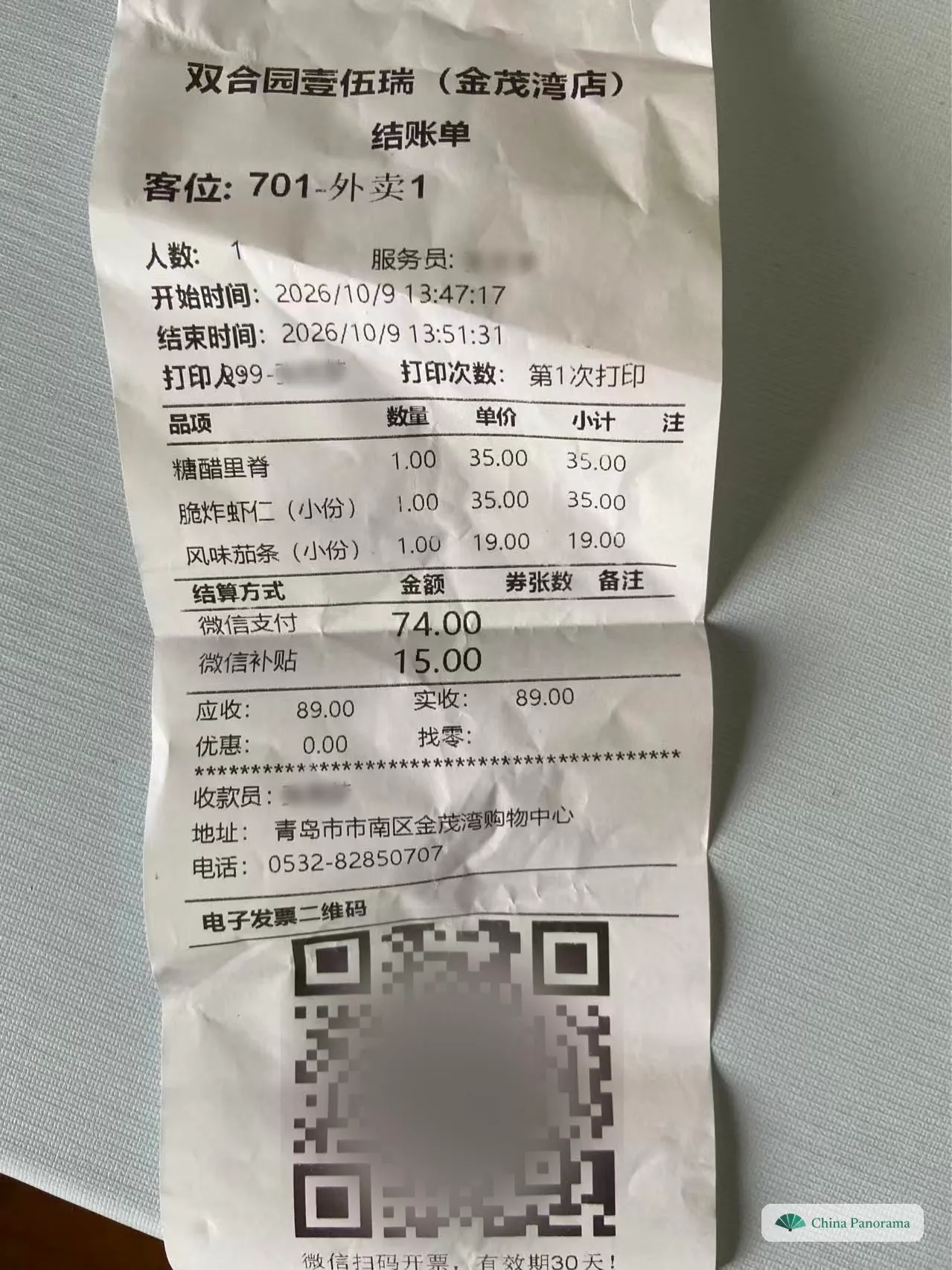
After paying you get a printed bill, a 结账单 (jié zhàng dān). This is ours: three dishes, ¥89 – no service charge, no tax line, no tip.
Tap the dots next to each line.
No order of your own yet – this shows our lunch. Order in step 2 or 4 to print your own.
On our bill, which line shows what the restaurant actually received?
Came by car? If the restaurant shares a car park with the mall, ask after paying to have your parking fee reduced or waived. They enter your number plate in the car park’s system.
可以减免停车费吗?Kěyǐ jiǎnmiǎn tíngchē fèi ma?
Can you validate my parking?
我要开发票。Wǒ yào kāi fāpiào.
I need an official invoice.
The bill is not an official tax invoice. For company expenses, scan the e-invoice code printed on it, or ask: 我要开发票.
Photos: our own, taken at lunchtime on 9 October 2026. Faces, staff names and the e-invoice QR code are blurred. Dish names and prices are read off the restaurant’s board, its menu and our bill; they will change.
Eating at a Chinese restaurant: the ten steps
- 1
Find a restaurant and say how many you are · 找饭店 · 几位
Sit-down restaurants line the streets and fill whole floors of shopping malls; you can book by phone or through a WeChat mini program. At the door, staff ask 几位? (jǐ wèi, how many?): hold up your fingers or say 两位 (liǎng wèi, two). Popular places hand out queue numbers at the front desk; if you miss your call, you are moved back a few places, not to the end.
- 2
Order at the display: point at the real dish · 点菜区
Many restaurants have an ordering area by the entrance: sample plates of the dishes, a picture board with prices, sometimes the day’s specials. Point at what you want and a waiter writes it down – the friendliest way to order if you can’t read Chinese, because you see the finished dish.
- 3
Get a table – and its number · 入座
A waiter takes you to a table. If you don’t like it, ask for another. Every table has a number, and everything you order and pay is booked to that number.
- 5
Wait for the dishes · 等上菜
Dishes usually take 10 to 30 minutes, depending on the dish and how busy the kitchen is. They come to the table one by one as they are ready, not in courses.
- 6
Tableware, tea and napkins · 餐具
The tableware is usually on the table before you sit down. In Guangdong people rinse it with hot tea or water first. Plain hot water is usually free; some restaurants charge ¥1–2 for napkins – that is normal, not a trick.
- 7
Eat – chopsticks, no time limit · 用餐
Chopsticks are standard; ask for a knife and fork – not every restaurant has them. Nobody hurries you, but many restaurants close between lunch and dinner, for example 11:00–15:00 and 17:00–24:00. Leftovers can be packed to take away; some restaurants charge for the boxes.
- 8
If you drink, don’t drive · 酒后不开车
China punishes drink-driving hard: 20 mg of alcohol per 100 ml of blood is already an offence, 80 mg is a crime. That is why designated drivers (代驾 dài jià) wait outside restaurants in the evening.
- 9
Ask for the bill and pay · 结账
Call a waiter – 服务员,买单! (fúwùyuán, mǎi dān) – or go to the till. Pay with WeChat Pay, Alipay or cash. Tipping is not expected; a service charge, where there is one, is printed on the bill.
- 10
Read the bill – and get parking validated · 账单 · 停车
You get a printed bill. If the restaurant shares a car park with the mall, ask after paying to have your parking fee reduced or waived – they need your number plate.
Eating out in China vs the US: the biggest differences
The same meal, two routines. What surprises American visitors most – and what Chinese visitors find odd in the US.
Getting a table
In ChinaWalk in, or take a queue number at the front desk and wait by the door; book by phone or WeChat mini program.
In the USA host seats you; bookings by phone or an app such as OpenTable.
Ordering
In ChinaPoint at sample dishes by the door, tick boxes on a paper menu, or scan a QR code. Waiters write down what you point at.
In the USA server takes the order at the table, often with questions about sides and dressings.
Who eats what
In ChinaDishes are shared: everyone eats from every plate. Order roughly one dish per person.
In the USEach person orders an entrée for themselves.
Portions
In ChinaMany dishes come small (小份) or large (大份); small is meant for 2–3 people.
In the USOne size per dish, usually generous.
Rice and sides
In ChinaNot included: rice is ordered separately, by the bowl.
In the USSides usually come with the entrée; bread is often free.
Water and drinks
In ChinaPlain hot water is usually free; iced tap water is not the norm. Drinks are ordered like dishes.
In the USIced water arrives free and is refilled; soda refills are often free.
Pace
In ChinaDishes arrive one by one as they are ready, not in courses. Rice often comes last unless you ask.
In the USAppetizer, entrée, dessert – one course after another.
Getting attention
In ChinaCall 服务员 (fúwùyuán) or wave – normal, not rude.
In the USThe server checks on your table; calling out is unusual.
The bill
In ChinaAsk for it – 买单 – or pay at the till with your table number. WeChat Pay, Alipay or cash.
In the USThe check comes to the table; you pay there, mostly by card.
Tax and tip
In ChinaNo tip. Menu prices are final – no tax added; a service charge only if printed on the bill.
In the USSales tax is added on top, and a tip of about 15–20% is expected.
Small extras
In ChinaSome places charge ¥1–2 for napkins or for takeaway boxes.
In the USNapkins and to-go boxes are free.
Leftovers
In ChinaAsk to pack them: 打包 (dǎ bāo). Normal everywhere.
In the USAsk for a to-go box. Normal everywhere.
Alcohol and driving
In ChinaOffence from 20 mg per 100 ml of blood (0.02%) – a crime from 80 mg. Designated drivers (代驾) wait outside.
In the USLimit 0.08% in most states. ID checks for alcohol under 21.
| In China | In the US | |
|---|---|---|
| Getting a table | Walk in, or take a queue number at the front desk and wait by the door; book by phone or WeChat mini program. | A host seats you; bookings by phone or an app such as OpenTable. |
| Ordering | Point at sample dishes by the door, tick boxes on a paper menu, or scan a QR code. Waiters write down what you point at. | A server takes the order at the table, often with questions about sides and dressings. |
| Who eats what | Dishes are shared: everyone eats from every plate. Order roughly one dish per person. | Each person orders an entrée for themselves. |
| Portions | Many dishes come small (小份) or large (大份); small is meant for 2–3 people. | One size per dish, usually generous. |
| Rice and sides | Not included: rice is ordered separately, by the bowl. | Sides usually come with the entrée; bread is often free. |
| Water and drinks | Plain hot water is usually free; iced tap water is not the norm. Drinks are ordered like dishes. | Iced water arrives free and is refilled; soda refills are often free. |
| Pace | Dishes arrive one by one as they are ready, not in courses. Rice often comes last unless you ask. | Appetizer, entrée, dessert – one course after another. |
| Getting attention | Call 服务员 (fúwùyuán) or wave – normal, not rude. | The server checks on your table; calling out is unusual. |
| The bill | Ask for it – 买单 – or pay at the till with your table number. WeChat Pay, Alipay or cash. | The check comes to the table; you pay there, mostly by card. |
| Tax and tip | No tip. Menu prices are final – no tax added; a service charge only if printed on the bill. | Sales tax is added on top, and a tip of about 15–20% is expected. |
| Small extras | Some places charge ¥1–2 for napkins or for takeaway boxes. | Napkins and to-go boxes are free. |
| Leftovers | Ask to pack them: 打包 (dǎ bāo). Normal everywhere. | Ask for a to-go box. Normal everywhere. |
| Alcohol and driving | Offence from 20 mg per 100 ml of blood (0.02%) – a crime from 80 mg. Designated drivers (代驾) wait outside. | Limit 0.08% in most states. ID checks for alcohol under 21. |
Tipping in China, and the small extra costs
No tip, no tax line: what is printed on the menu is what you pay. A few small things work differently from Europe or the US.
| What | Cost | Good to know |
|---|---|---|
| Tip | — | Not expected. Nobody adds one, and you don’t leave one. |
| 服务费 · service charge | only if printed | Some restaurants charge one; then it is a line on the bill. Ours had none. |
| 白开水 · plain hot water | usually free | Just ask for it. |
| 纸巾 · napkins | ¥1–2 at some places | A small, normal charge – not a trick. |
| 打包盒 · takeaway boxes | sometimes charged | For packing up leftovers. |
| 米饭 · rice | extra | Ordered separately, by the bowl. |
Price levels at the restaurant we photographed, a mid-range seafood-dumpling chain: vegetable dishes ¥15–42, meat¥22–99, seafood ¥19–159, cold dishes ¥12–39, dumplings and other staples ¥22–139a plate.
A Chinese restaurant menu, translated
Every dish on the picture board at the entrance, with every portion size and price, plus the dishes that are only on the paper menu at the table. Other restaurants cook other dishes, but the way prices are written – 小份 and 大份, per piece, per portion – is the same everywhere. 🌶 marks the dishes the restaurant marks as spicy.
Signature dishes (the big pictures)
- 老青岛大排Old Qingdao pork chop, breaded and fried – the house signature (招牌)小份 ¥39大份 ¥65
- 蒸活海鲜锅Steamed pot of live seafood小份 ¥79大份 ¥129
- 香煎虾饼Pan-fried prawn cakes小份 · 4个 ¥42大份 · 8个 ¥79
- 青岛大虾烧白菜Qingdao prawns braised with Chinese cabbage小份 ¥49大份 ¥89
- 海肠捞饭Rice with spoon worm (海肠, “sea intestine”), a Qingdao speciality小份 ¥89大份 ¥139
- 柠檬酸辣笔管鱼🌶Lemon hot-and-sour baby squid2人份 · 2只 ¥29小份 · 4只 ¥49大份 · 8只 ¥89
Dumplings
- 海鲜全家福Seafood dumpling platter: cuttlefish, mackerel, sea urchin and “three seafood” dumplings4枚 ¥2212枚 ¥4920枚 ¥79
- 鲅鱼饺Spanish mackerel dumplings小份 · 10枚 ¥29大份 · 15枚 ¥39
- 海三鲜饺“Three seafood” dumplings小份 · 10枚 ¥49大份 · 15枚 ¥69
The price list
- 青岛海凉粉Qingdao seaweed jelly, cold小份 ¥12大份 ¥19
- 肉丝大凉皮Wide cold noodles with shredded pork份 ¥25
- 白菜拌蜇皮Chinese cabbage with jellyfish, cold份 ¥29
- 秋葵捞扇贝🌶Okra with scallops, cold份 ¥35
- 老醋蛰头Jellyfish in aged vinegar, cold份 ¥39
- 酸辣土豆丝🌶Hot-and-sour shredded potato份 ¥15
- 海鲜手搓疙瘩汤Seafood soup with hand-rubbed dough drops小份 ¥19大份 ¥29
- 辣炒蛤蜊🌶Spicy stir-fried clams小份 ¥19大份 ¥29
- 干煸大头菜🌶Dry-fried cabbage份 ¥19
- 清炒白玉丝瓜Stir-fried luffa (silk gourd)份 ¥29
- 酸萝卜炒粉🌶Glass noodles fried with pickled radish份 ¥32
- 什锦小炒Mixed stir-fry份 ¥35
- 白灼菜心Blanched choy sum份 ¥27
- 糖醋里脊Sweet-and-sour pork tenderloin份 ¥35
- 金钩海米炒脆瓜🌶Crisp melon stir-fried with dried shrimp份 ¥42
- 小白菜烩笔管鱼Baby squid braised with bok choy份 ¥49
- 大片肚毛血旺🌶🌶Tripe and blood curd in a hot, spicy broth小份 ¥59大份 ¥99
- 家烧黄鱼Home-style braised yellow croaker份 ¥89
- 家常小炒🌶Home-style stir-fry份 ¥22
- 鲜虾麻婆豆腐🌶🌶Mapo tofu with fresh shrimp份 ¥25
- 沙葱炒鸡蛋Scrambled egg with sand onion, a wild chive份 ¥27
- 脆炸虾仁Crispy fried shrimp小份 ¥35大份 ¥59
- 辣炒鲍鱼仔🌶🌶Spicy stir-fried baby abalone份 ¥69
- 烤青岛大虾Grilled Qingdao prawn (tiger prawn)只 ¥19
Only on the paper menu
- 风味茄条🌶Crispy aubergine strips小份 ¥19大份 ¥29
- 稻香肉Slow-braised pork belly小份 ¥49大份 ¥89
- 双合肥肠Braised pork intestines, house style份 ¥69
- 双合砂锅鲽鱼头Flounder head in a clay pot, house style小份 ¥89大份 ¥159
- 招牌酸菜鱼🌶Fish with pickled mustard greens, a house signature小份 ¥45大份 ¥79
- 海胆豆腐Tofu with sea urchin份 ¥35
The board’s small print: “small portions are for 2–3 people; for 4 or more we suggest the normal size”. Rice (米饭) was not on the parts of the menu we photographed – ask for it, and for its price.
How to read a Chinese restaurant bill
This is the bill for our lunch – a 结账单 (jié zhàng dān). Three dishes add up to ¥89.00 (应收), and ¥89.00 is what the restaurant received (实收): no service charge, no tax line, no tip. A WeChat Pay promotion covered ¥15 of it.
| Chinese | Pinyin | Meaning, and what our bill says |
|---|---|---|
| 双合园壹伍瑞(金茂湾店) | Shuāng hé yuán … Jīn mào wān diàn | Restaurant and branch – Jinmao Bay branch |
| 结账单 | jié zhàng dān | Bill |
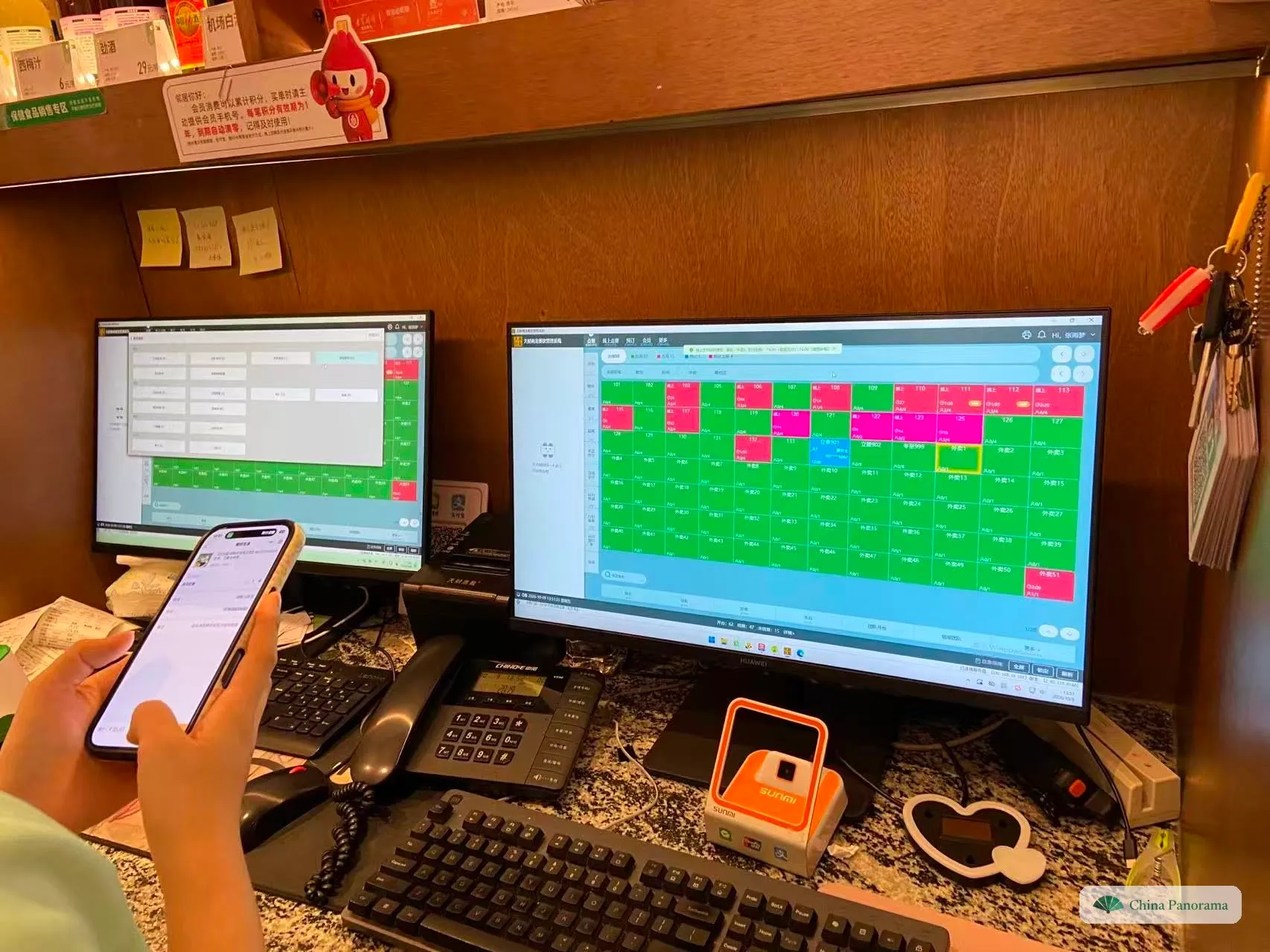
| 客位 | kè wèi | Table – 701-外卖1Normally your table number. Ours was booked to one of the till’s takeaway slots (外卖, wài mài). |
| 人数 | rén shù | Number of guests – 1 |
| 服务员 | fú wù yuán | WaiterThe name of the staff member. We blurred it. |
| 开始时间 | kāi shǐ shí jiān | Opened – 2026/10/9 13:47:17When the order was opened. Dates run year/month/day. |
| 结束时间 | jié shù shí jiān | Closed – 2026/10/9 13:51:31When the bill was settled. |
| 打印人 | dǎ yìn rén | Printed by – a staff number and name (blurred) |
| 打印次数:第1次打印 | dǎ yìn cì shù | Copy: first printA reprint would say 第2次. |
| Chinese | Pinyin | Meaning, and what our bill says |
|---|---|---|
| 品项 | pǐn xiàng | Item |
| 数量 | shù liàng | Quantity |
| 单价 | dān jià | Unit price |
| 小计 | xiǎo jì | Line total |
| 注 | zhù | NoteFor special requests, such as 不要辣 (no chilli). Empty here. |
| 糖醋里脊 | táng cù lǐ ji | Sweet-and-sour pork tenderloin – 1 × ¥35.00 = ¥35.00 |
| 脆炸虾仁(小份) | cuì zhá xiā rén (xiǎo fèn) | Crispy fried shrimp, small – 1 × ¥35.00 = ¥35.00 |
| 风味茄条(小份) | fēng wèi qié tiáo (xiǎo fèn) | Crispy aubergine strips, small – 1 × ¥19.00 = ¥19.00 |
| Chinese | Pinyin | Meaning, and what our bill says |
|---|---|---|
| 结算方式 | jié suàn fāng shì | Payment methodColumns: amount (金额), number of vouchers (券张数), remarks (备注). |
| 微信支付 | Wēi xìn zhī fù | WeChat Pay – ¥74.00What was taken from the payer’s WeChat wallet. |
| 微信补贴 | Wēi xìn bǔ tiē | WeChat Pay subsidy – ¥15.00A WeChat Pay promotion paid ¥15 of the bill. The restaurant still received the full ¥89. |
| 应收 | yīng shōu | Amount due – ¥89.0035 + 35 + 19. No service charge, no tax line, no tip. |
| 实收 | shí shōu | Amount received – ¥89.00 |
| 优惠 | yōu huì | Discount – ¥0.00 |
| 找零 | zhǎo líng | ChangeOnly for cash payments. |
| 收款员 | shōu kuǎn yuán | CashierWe blurred the name. |
| 地址 | dì zhǐ | Address – Jinmao Bay shopping centre, Shinan district, Qingdao |
| 电话 | diàn huà | Phone |
| 电子发票二维码 | diàn zǐ fā piào èr wéi mǎ | QR code for an e-invoice“Scan with WeChat to issue the invoice, valid for 30 days.” Only needed for company expenses. We blurred the code. |
Drink-driving in China: the two thresholds
Measured as alcohol in the blood. A breath test is converted at 1 : 2200. For comparison, much of Europe allows 0.5 ‰ – China’s first threshold is 0.2 ‰.
| Offence | Blood alcohol | Penalty (private car) |
|---|---|---|
| 饮酒驾驶Drink-driving | 20–79 mg/100 ml | Licence suspended for 6 months, fine of ¥1,000–2,000. Second offence: up to 10 days’ detention, same fine, licence revoked. |
| 醉酒驾驶Drunk driving | from 80 mg/100 ml | A criminal offence (dangerous driving): criminal detention of 1–6 months and a fine; licence revoked, no new licence for 5 years. |
Sources: thresholds from the national standard GB 19522—2024, table 1 (text published by the Beijing traffic police); penalties from the Road Traffic Safety Law, article 91 (full text), and the Criminal Law, article 133-1. Checked 10 October 2026.
Chinese words you will need in a restaurant
Menus, bills and the waiter’s questions use the same handful of words. Screenshot this list before the trip.
| Chinese | Pinyin | Meaning |
|---|---|---|
| 饭店 · 餐厅 | fàn diàn · cān tīng | Restaurant |
| 预订 | yù dìng | Book a table – by phone or in a WeChat mini program |
| 几位? | jǐ wèi? | How many of you? – the first question at the door |
| 排号 · 取号 | pái hào · qǔ hào | Queue number · take a queue number |
| 叫号 · 过号 | jiào hào · guò hào | Number called · missed your number |
| 点菜 | diǎn cài | Order dishes |
| 菜单 | cài dān | Menu |
| 小份 · 大份 | xiǎo fèn · dà fèn | Small portion · large portion |
| 份 · 只 · 枚 | fèn · zhī · méi | Per portion · per piece (prawns, squid) · per piece (dumplings) |
| 招牌菜 | zhāo pái cài | Signature dish |
| 凉菜 | liáng cài | Cold dish |
| 米饭 · 主食 | mǐ fàn · zhǔ shí | Rice · staple (rice, noodles, dumplings) |
| 卖完了 | mài wán le | Sold out |
| 服务员 | fú wù yuán | Waiter, waitress – also how you call one |
| 买单 · 结账 | mǎi dān · jié zhàng | The bill, please · settle the bill |
| 服务费 | fú wù fèi | Service charge – printed on the bill if there is one |
| 白开水 | bái kāi shuǐ | Plain hot water – usually free |
| 打包 · 打包盒 | dǎ bāo · dǎ bāo hé | Pack up leftovers to take away · takeaway box (sometimes charged) |
| 代驾 | dài jià | Designated driver who drives your car home |
| 停车减免 | tíng chē jiǎn miǎn | Parking validation |
Want to know what you are ordering? Our dish pages explain the classics, from jiaozi dumplingsto hot pot – and the regional cuisines page shows what each part of China cooks.
FAQ
How do you order in a restaurant in China if you can’t read Chinese?
Point. Many restaurants have an ordering area by the entrance with sample dishes and a picture board with prices; a waiter writes down what you point at. At the table, picture menus, the translate function of your phone camera, or a QR-code menu in Alipay or WeChat help with the rest.
Do you need to book a restaurant in China?
Usually not, but popular restaurants have queues at mealtimes. You can book by phone or through the restaurant’s WeChat mini program. Without a booking, take a queue number at the front desk and wait by the door; many restaurants offer chairs, tea and snacks to people waiting, free of charge. If you miss your number, you are usually moved back a few places – for example three – rather than to the end of the queue.
Is rice included with dishes in China?
No. Unlike Chinese restaurants in Europe, a dish in China comes without rice: you order rice (米饭, mǐ fàn) separately, by the bowl. If you want it with the dishes rather than at the end, say 米饭先上 (rice first).
What do 小份 and 大份 mean on a Chinese menu?
小份 (xiǎo fèn) is the small portion and 大份 (dà fèn) the large one. The restaurant we photographed in Qingdao notes on its board that small portions are for 2–3 people and the normal size for 4 or more. A price with just 份 means there is one size.
How much does a restaurant meal cost in China?
At the mid-range restaurant we photographed in Qingdao in October 2026, vegetable dishes cost ¥15–42, meat dishes ¥22–99 and seafood ¥19–159; dumplings ¥22–139 a plate. Our lunch – three dishes – came to ¥89.
Do you tip in restaurants in China?
No. Tipping is not expected. If a restaurant charges for service, it is printed on the bill as 服务费 (fúwù fèi). Our ¥89 bill had no service charge and no tax line.
How do you pay in a Chinese restaurant?
Call the waiter – 服务员,买单! (fúwùyuán, mǎi dān) – or go to the till and give your table number. Pay with WeChat Pay or Alipay by showing your payment code, or in cash.
What is the drink-driving limit in China?
20 mg of alcohol per 100 ml of blood is drink-driving: a 6-month licence suspension and a fine of ¥1000–2000. From 80 mg it is drunk driving, a crime punished with criminal detention and a fine; the licence is revoked for 5 years. Use a taxi or a designated driver (代驾, dài jià).
Is water free in Chinese restaurants?
Plain hot water (白开水, bái kāi shuǐ) is usually free – ask for it. Some restaurants charge ¥1–2 for napkins, and some charge for takeaway boxes when you pack up leftovers.
Do Chinese restaurants close in the afternoon?
Many do: a lunch service, for example 11:00–15:00, and a dinner service, for example 17:00–24:00. Restaurants in malls and big cities are more often open all day. There is no time limit on a table while the restaurant is open.