
China travel quiz
10 questions, 3 minutes: are you ready for China? Recognise dishes and places in our own photos, and find out what to expect at the border, when you pay and on the way. Each question comes with a short explanation, and at the end a reading list for anything you missed.
All 35 questions with answers
Food & drink
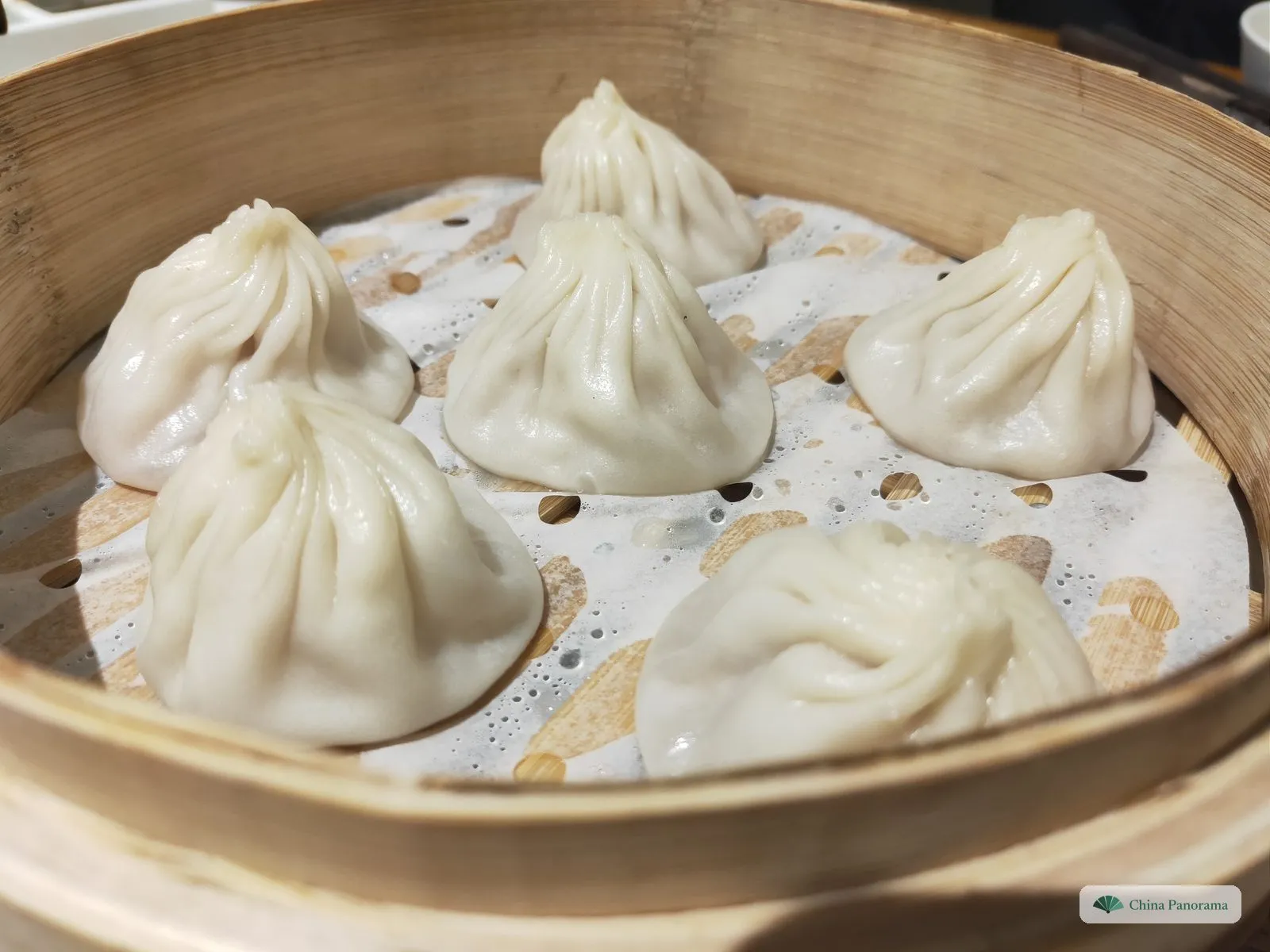
What is this dish called?
- Xiaolongbao ✓ right
- Jiaozi
- Baozi
Xiaolongbao are soup dumplings from Shanghai: a thin wrapper around pork and hot broth. Bite a small hole and drink the soup first.
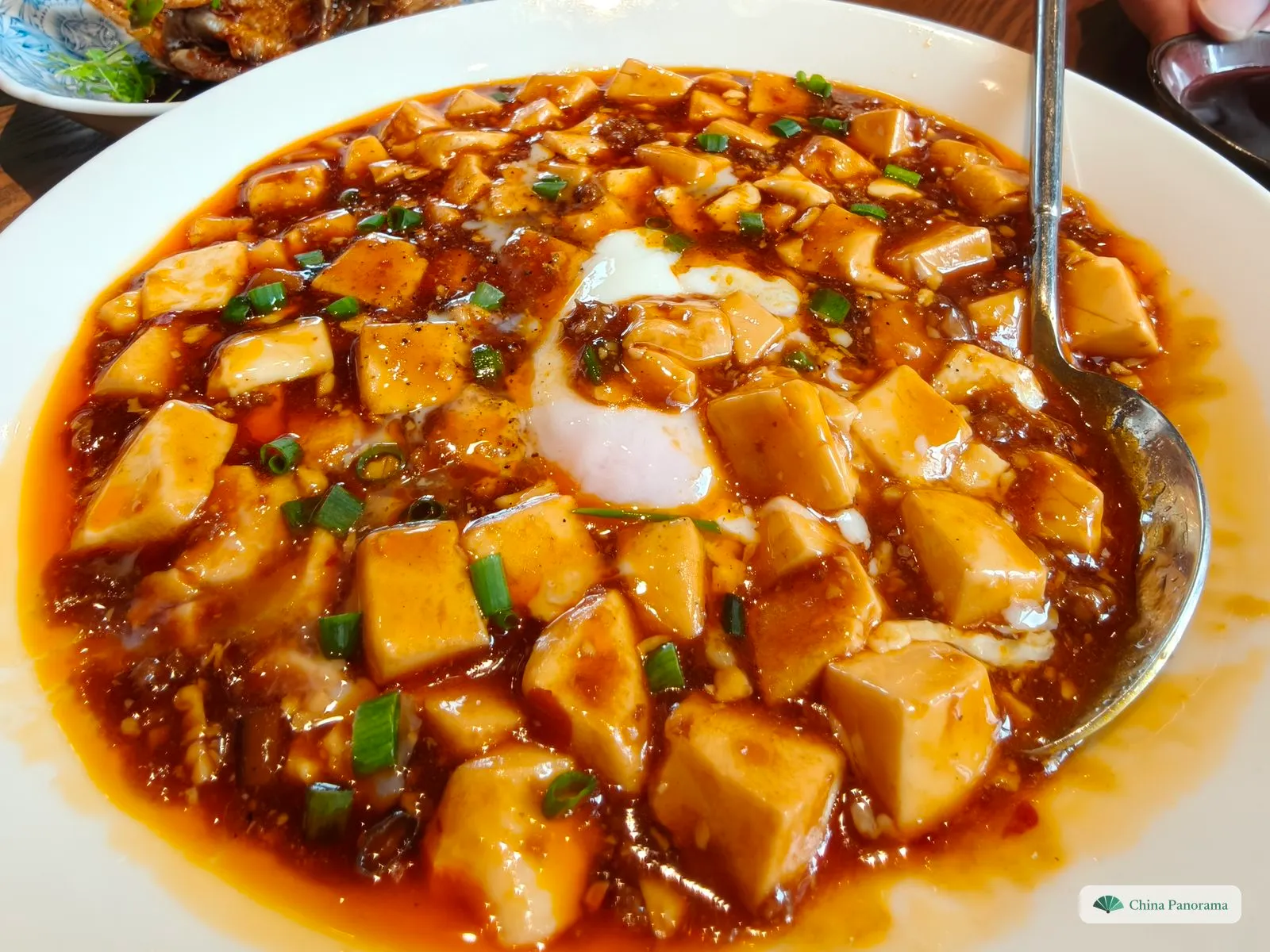
Which region does this dish come from?
- Sichuan ✓ right
- Canton (Guangdong)
- Shandong
This is mapo tofu, a classic from Sichuan: soft tofu in a red sauce with chilli and Sichuan pepper, which makes your lips tingle.
Which photo shows gu lao rou, the sweet and sour pork from Canton?
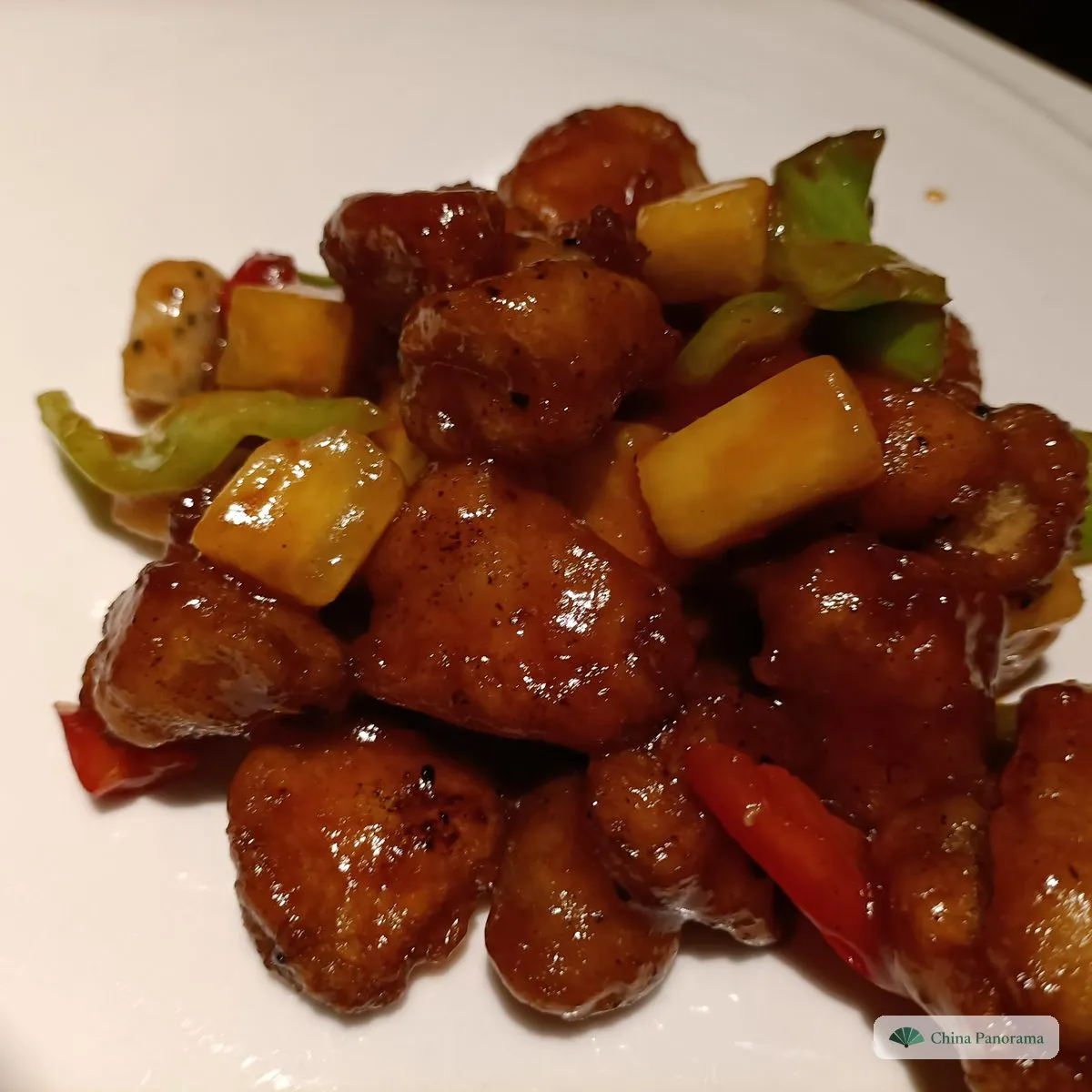 Photo with pineapple and peppers ✓ right
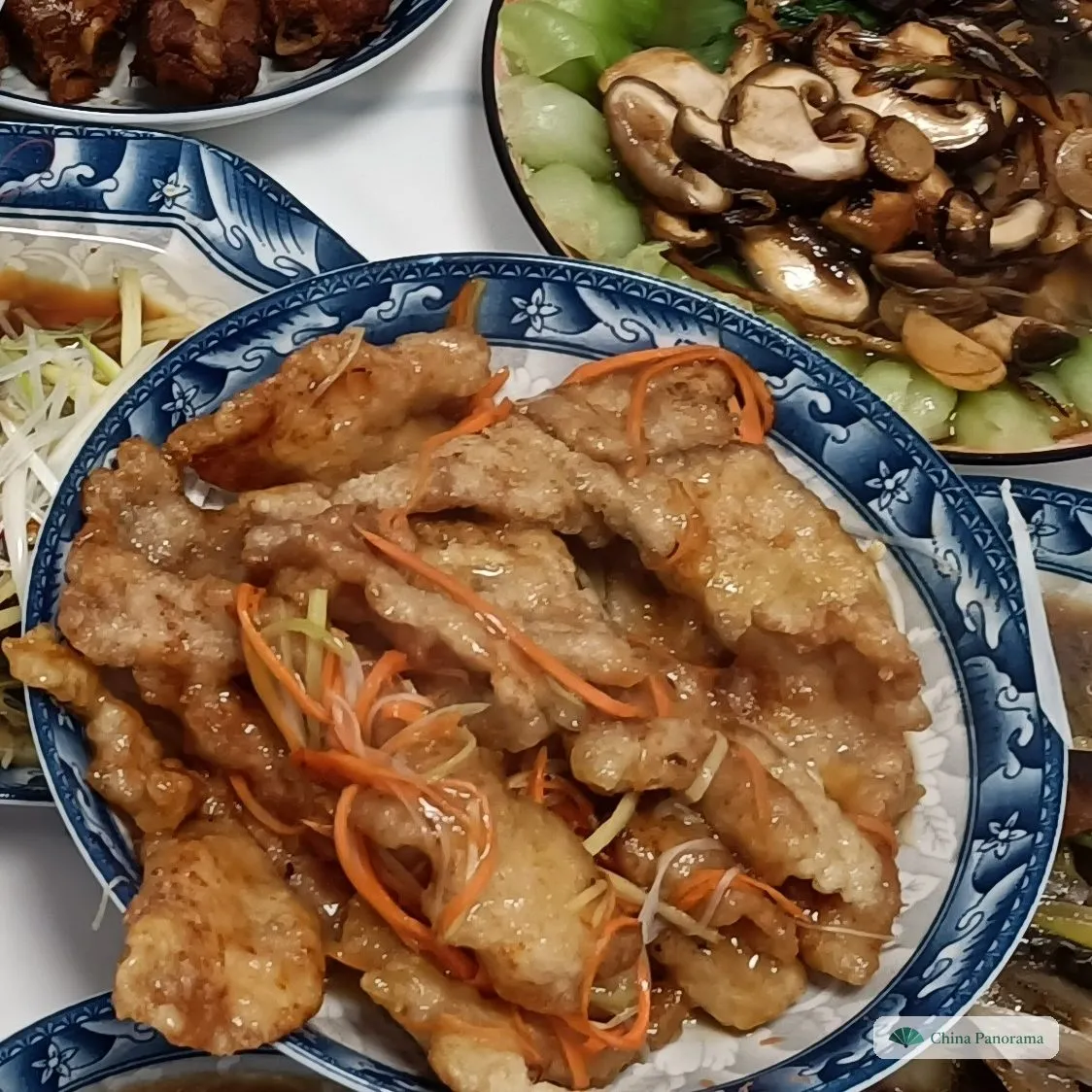 Large flat golden slices
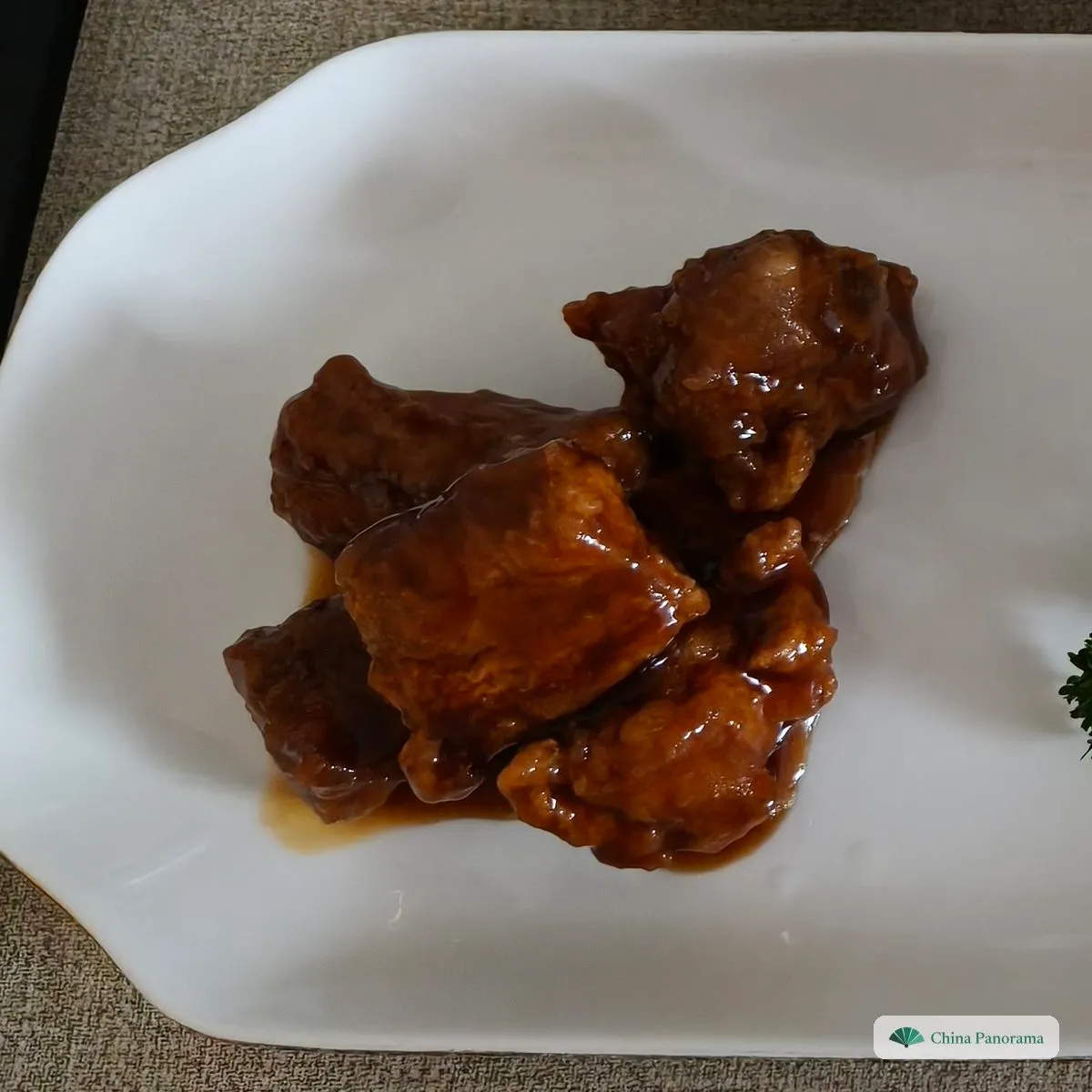 Dark glossy ribs
Gu lao rou (咕咾肉) is bite-sized battered pork in a glossy sauce with pineapple and peppers. The flat slices are guobaorou from Harbin, the ribs are sweet and sour ribs from Shanghai.
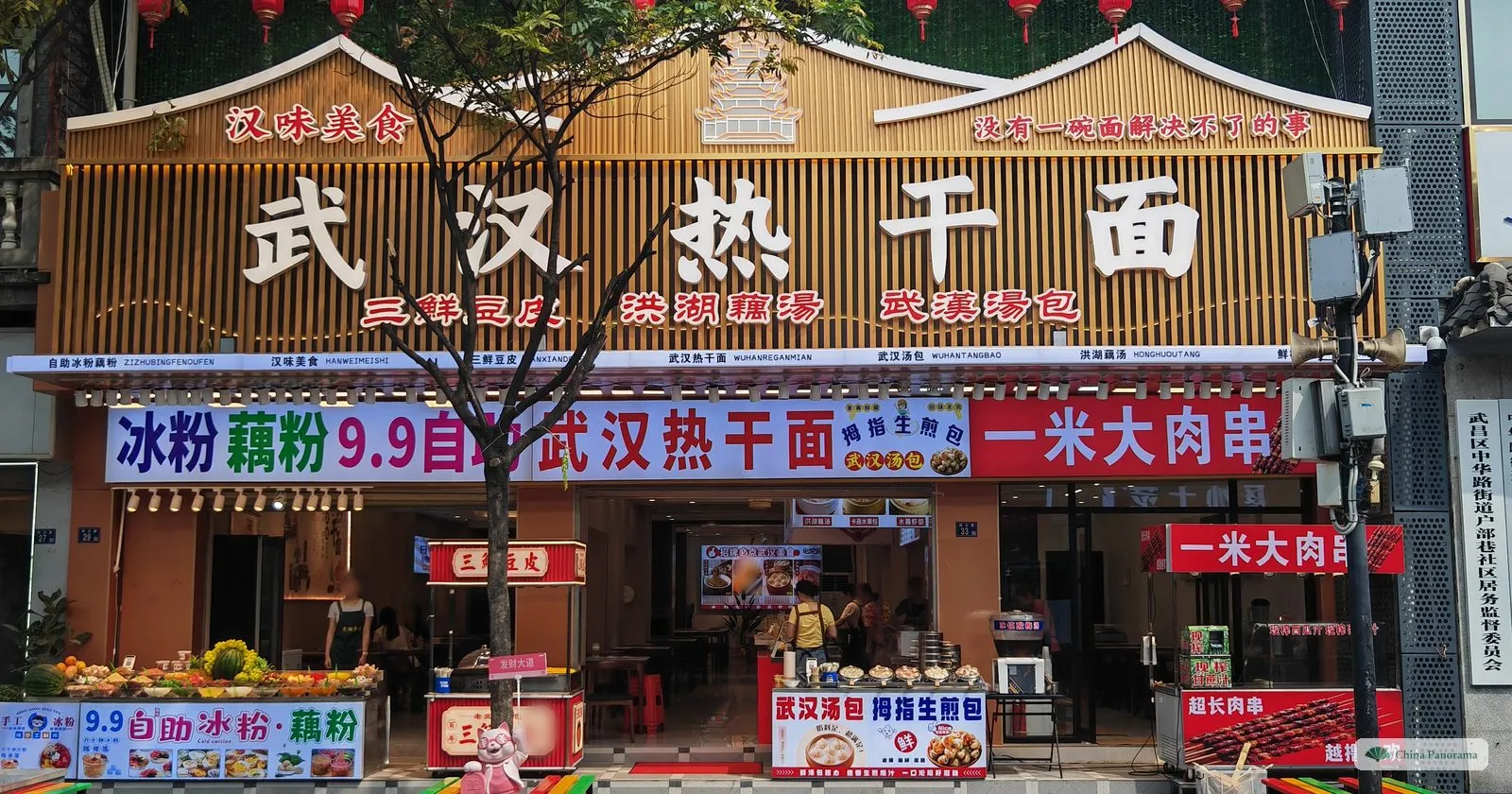
Which breakfast is this city famous for?
- Hot dry noodles (reganmian) ✓ right
- Xiaolongbao
- Rice porridge
The big characters say 武汉热干面: Wuhan hot dry noodles, tossed in sesame paste and eaten in the morning, often on the way to work.
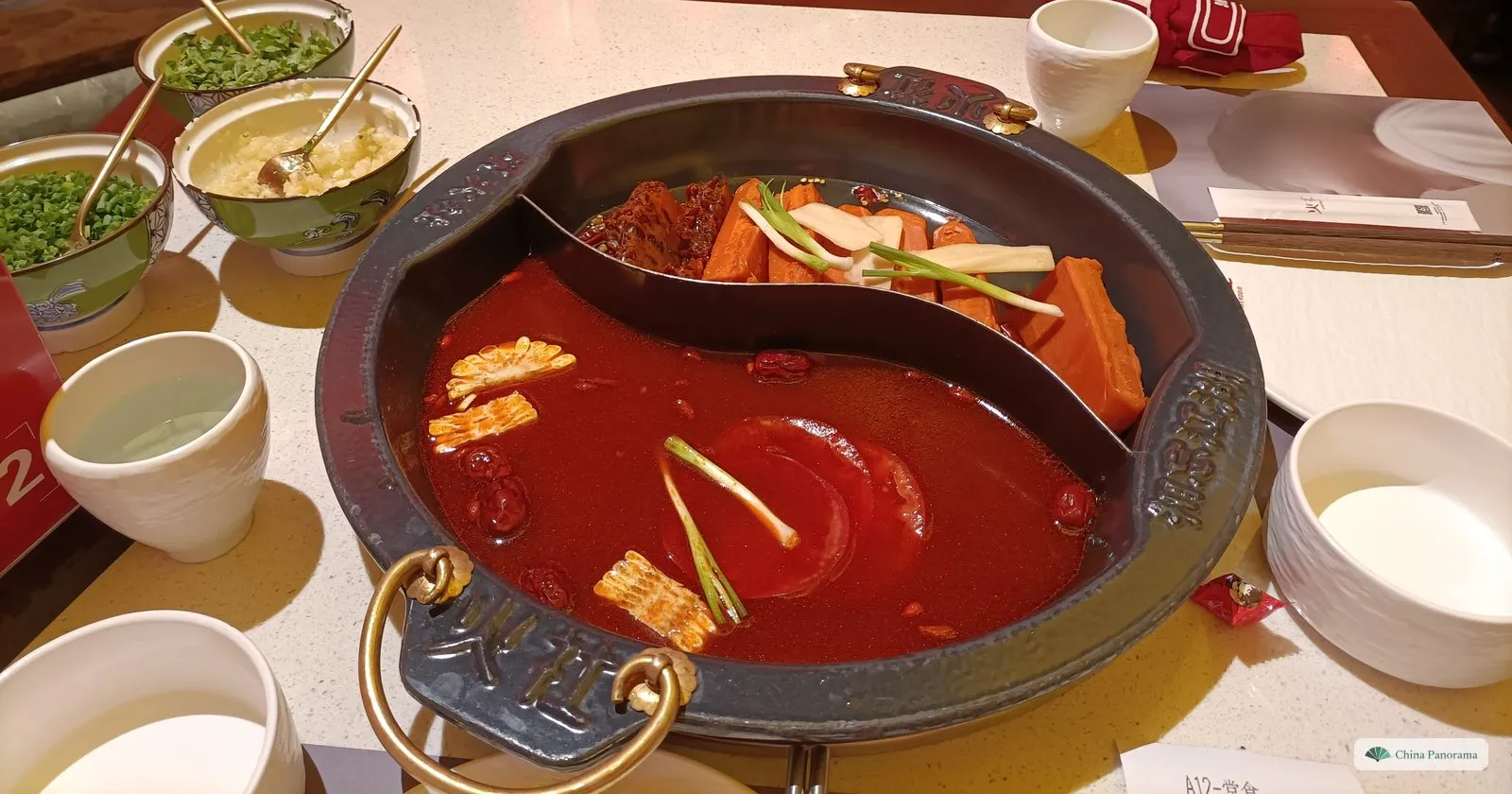
Why does this pot have two halves?
- One spicy and one mild broth ✓ right
- One for meat, one for fish
- Two tables share one pot
It is a yuanyang pot (鸳鸯锅): a spicy mala broth on one side and a mild one on the other, so everyone at the table can choose.
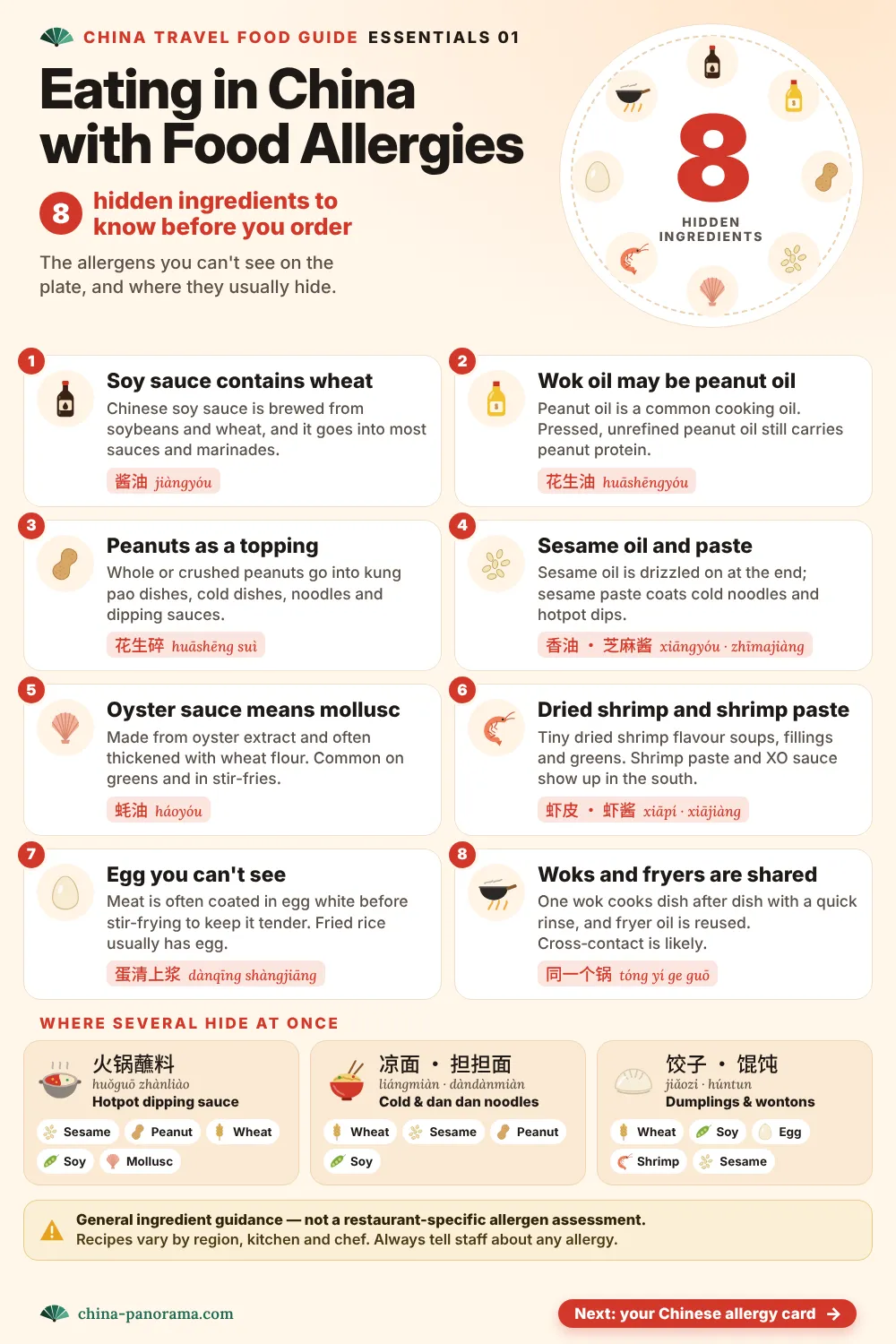
What is in many Chinese dishes even when you cannot see it?
- Soy sauce (with wheat) and peanut oil ✓ right
- Milk and butter
- Nothing but salt
Soy sauce is brewed with wheat, and woks are often oiled with peanut oil. With a food allergy, say so before you order.
Can you drink tap water in China?
- Better not: drink boiled or bottled water ✓ right
- Yes, everywhere
- Only in the north
Locals do not drink it from the tap either. Hotel rooms usually have a kettle and often free bottled water.
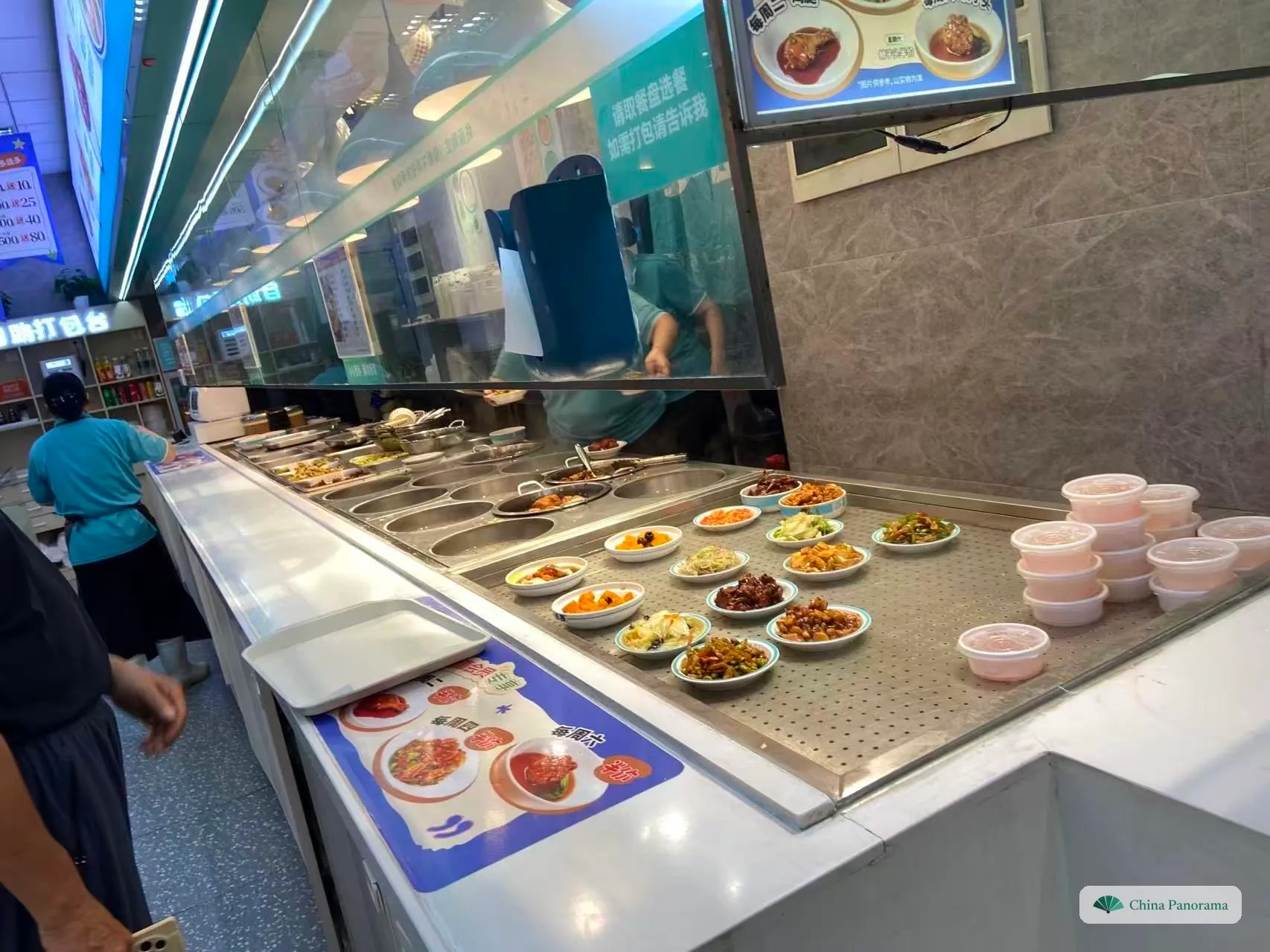
How do you order in a canteen like this (食堂)?
- Take a tray, pick the plates, pay at the till ✓ right
- Order at the table from a waiter
- Scan a QR code on the table
The dishes are ready on the counter. You point or take the plates, add rice and soup and pay at the till before you sit down. Nobody takes an order.
Paying & phone
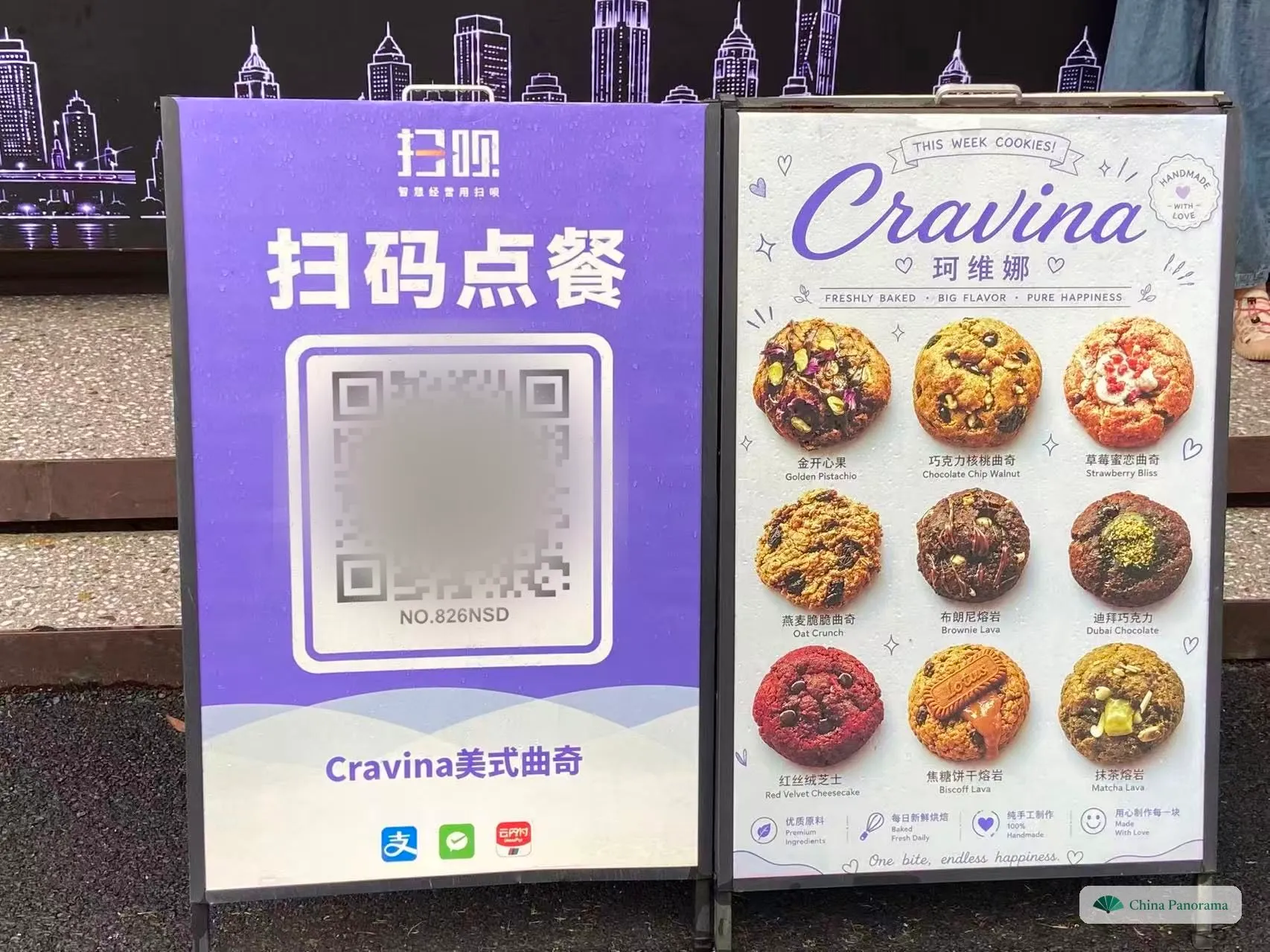
What do you do with this QR code?
- Scan it with your phone to order and pay ✓ right
- Get the Wi-Fi password
- Rate the restaurant
The sign says 扫码点餐: “scan the code to order”. The menu opens on your phone, and you pay with Alipay or WeChat Pay.
How do most people in China pay?
- With their phone (Alipay, WeChat Pay) ✓ right
- In cash
- By credit card
Almost everything is paid by phone, from street stalls to taxis. Cash is accepted by law, but many places have no change.
Can you use Alipay with a foreign credit card?
- Yes, you add the card in the app ✓ right
- No, only with a Chinese bank account
- Only in Hong Kong
Visa and Mastercard credit cards (and many debit cards) can be linked in the international version of Alipay. Set it up at home, not at the till.
Which map app do most people in China use?
- Amap (Gaode) or Baidu Maps ✓ right
- Google Maps
- Here WeGo
Amap (高德地图) has an English interface and knows metro exits, bus lines and opening hours.
Will a European plug with round pins (Schuko) fit Chinese sockets?
- No – pack a travel adapter ✓ right
- Yes, everywhere
- Only in hotels
Chinese sockets are type A and I, with flat pins. Many also take the thin two-pin Europlug, but not a Schuko plug. Voltage is 220 V.
Entry & customs
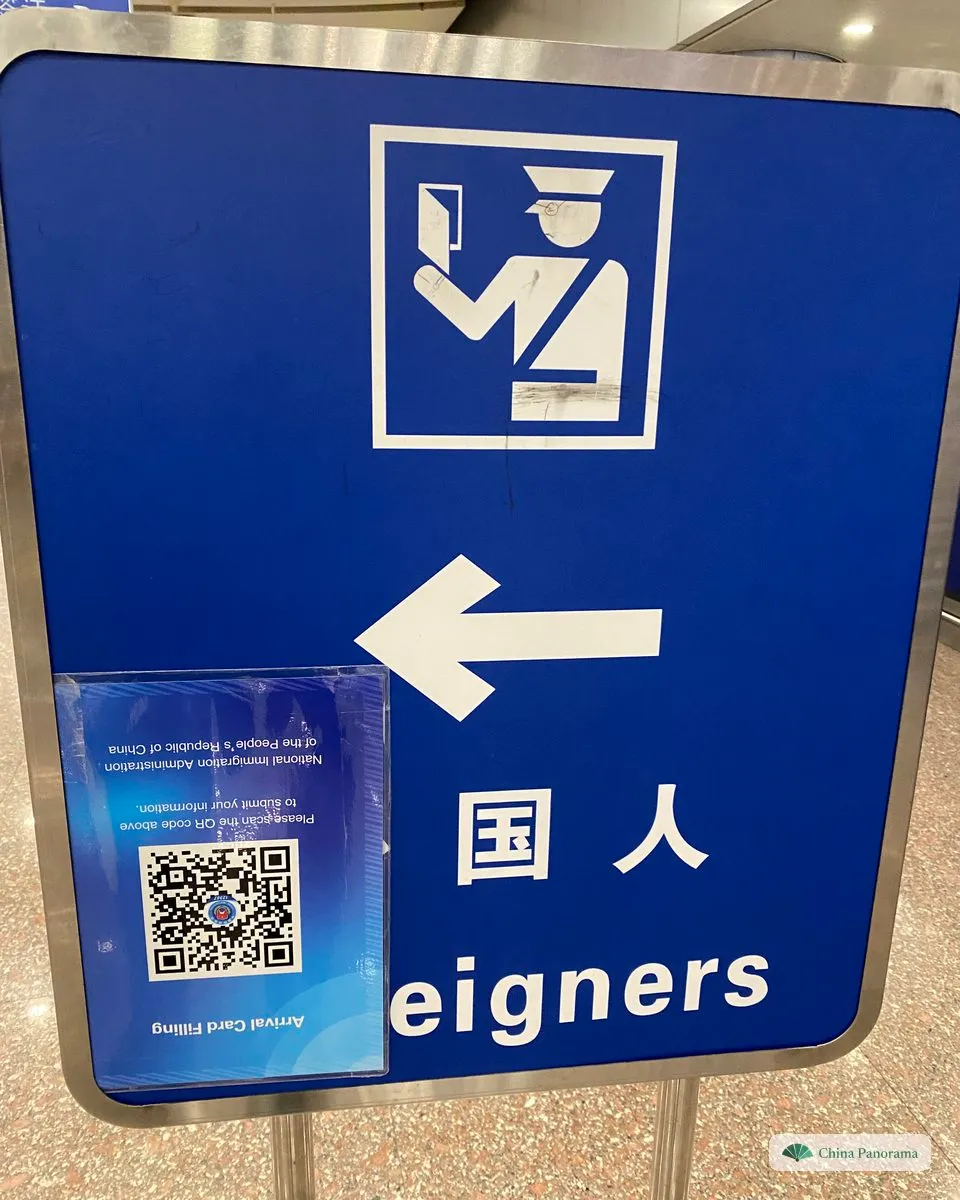
What is this QR code at the airport for?
- Filling in the arrival card online ✓ right
- Applying for a visa
- Calling a taxi
The sign by the foreigners’ lanes leads to the official arrival card form. It is free; you can also fill it in at home, up to 3 months before you arrive.
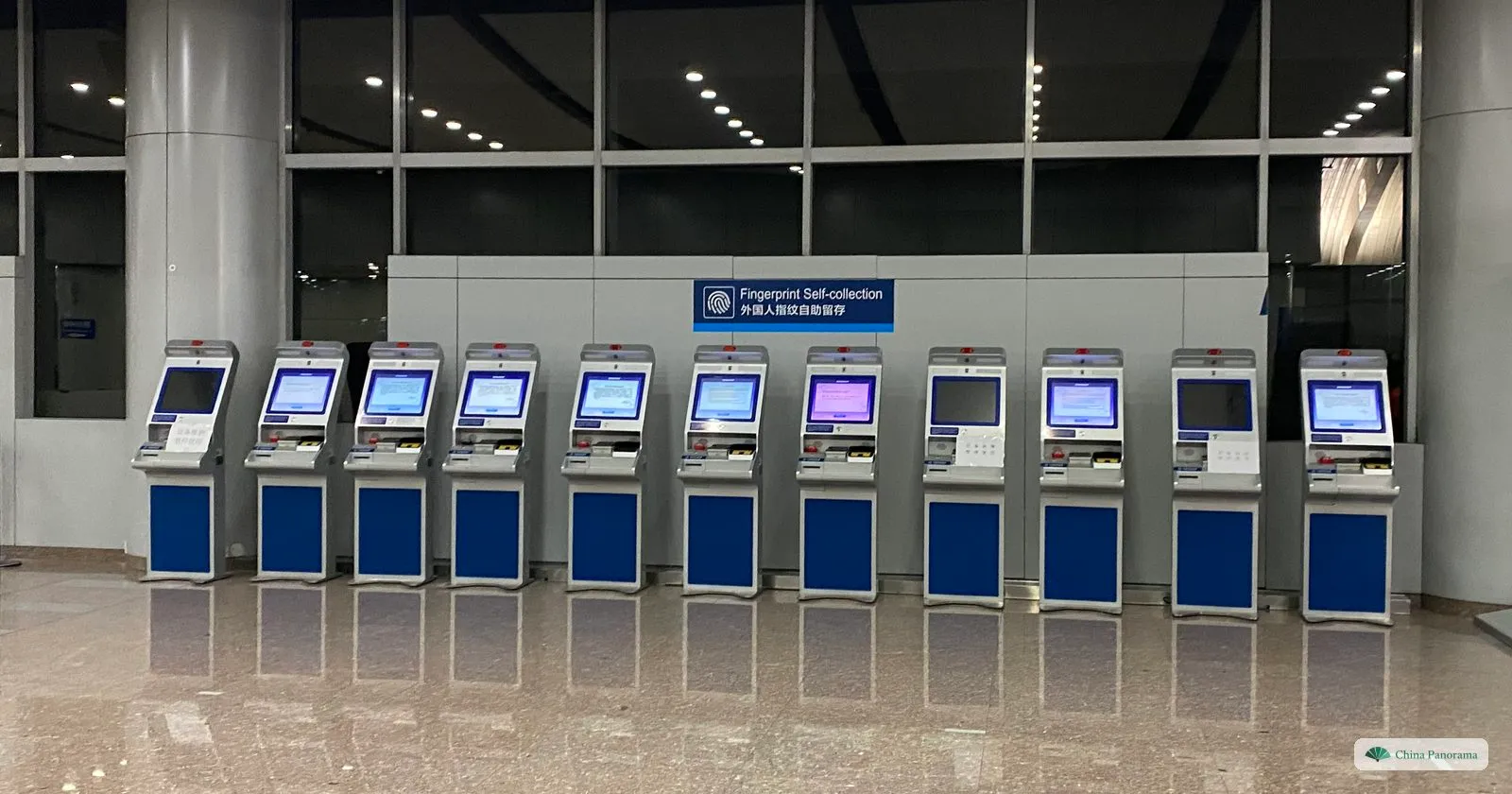
What happens at these machines?
- Fingerprints are taken ✓ right
- Changing money
- Buying a SIM card
Foreigners aged 14 to 70 have their fingerprints taken on entry. The machines are before the passport desks.
For how many days can Germans (and many other Europeans) currently travel to China without a visa?
- 30 days ✓ right
- 15 days
- 90 days
Visa-free entry for 30 days currently applies until 31 December 2026. Whether it will be extended is tracked on our status page.
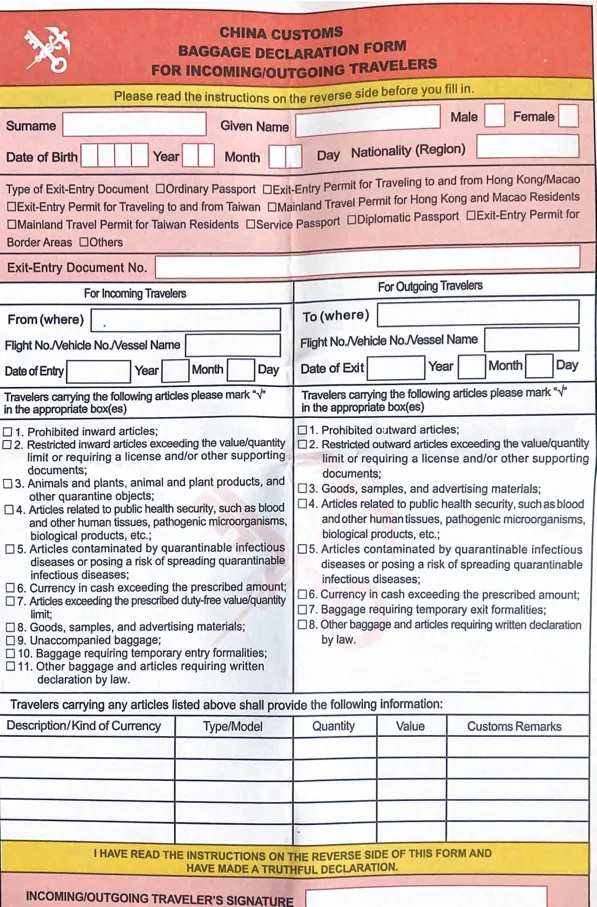
From what amount of foreign cash do you have to declare it on arrival?
- More than 5,000 US dollars ✓ right
- More than 1,000 US dollars
- More than 20,000 US dollars
Foreign currency worth more than 5,000 US dollars (in euros too) goes on the customs form, and so do more than 20,000 yuan.
What should you carry for prescription medicines?
- The original packaging and a doctor’s letter in English ✓ right
- Nothing – medicines are unrestricted
- A certified Chinese translation
For personal use, in an amount that fits your trip: original packaging with the leaflet, and a doctor’s letter in English naming the active ingredient.
Getting around
What happens at the entrance to almost every metro station?
- Bags go through an X-ray machine ✓ right
- Your passport is stamped
- You can only pay cash
Every station has a security check (安检) like at an airport: bags on the belt, a quick scan. No ID is needed for it.
What do you need to buy a ticket for a high-speed train?
- Your passport ✓ right
- A Chinese ID card
- Only cash
Train tickets are issued in your name, so you need your passport to buy one and again at the station gate. The metro needs no ID.
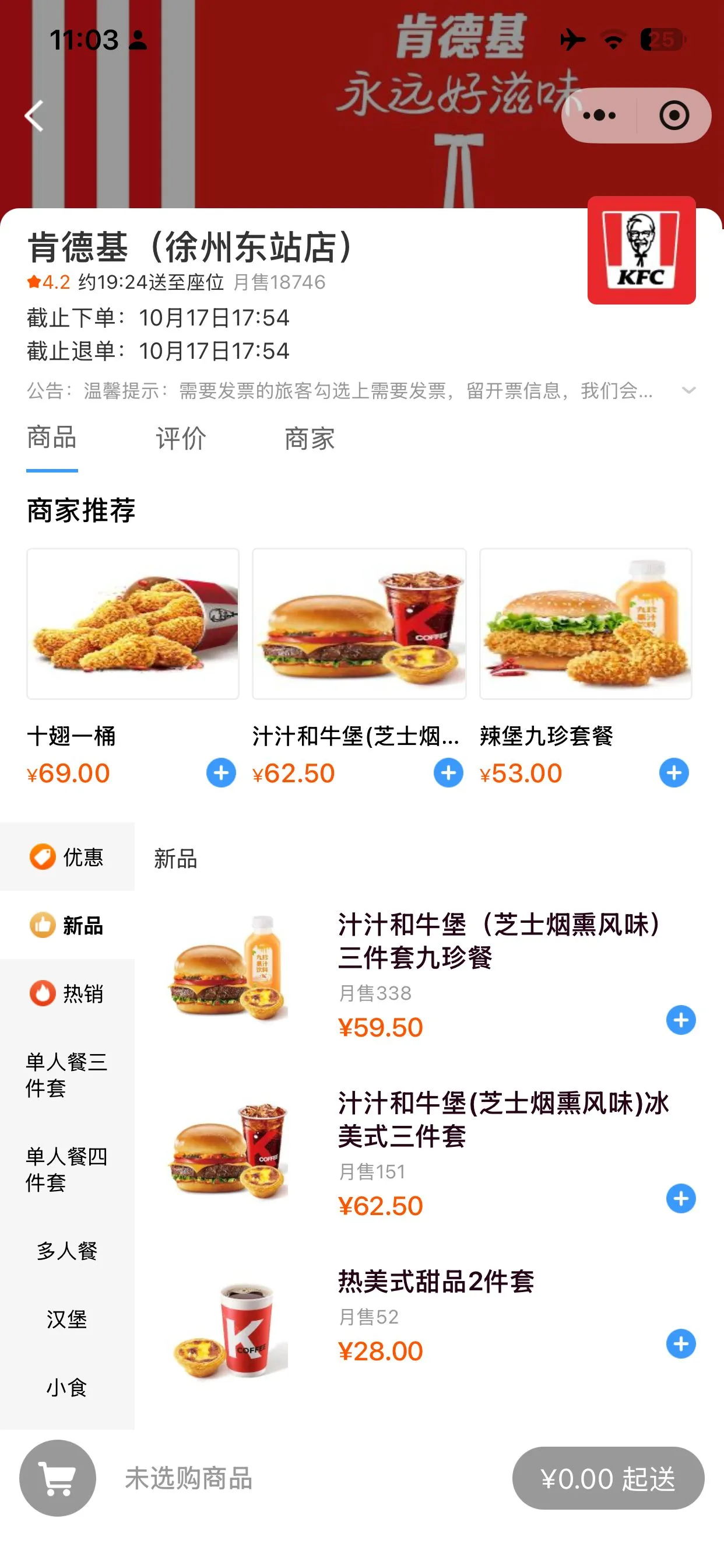
Can you order food to your seat on a high-speed train?
- Yes, through 12306 ✓ right
- No, only in the dining car
- Only in first class
In the 12306 app or WeChat mini-program you order before you board, even from restaurants at stations on the way, and it is brought to your seat.
About how long is a nonstop flight from Frankfurt to Beijing?
- About 9½ hours ✓ right
- About 5 hours
- About 14 hours
Air China’s scheduled time Frankfurt–Beijing Capital is about 9½ hours; the way back takes a little longer.
How many time zones does China use?
- One ✓ right
- Three
- Five
The whole country runs on Beijing time (UTC+8), even far west in Xinjiang, where the sun rises very late as a result.
Recognise the place
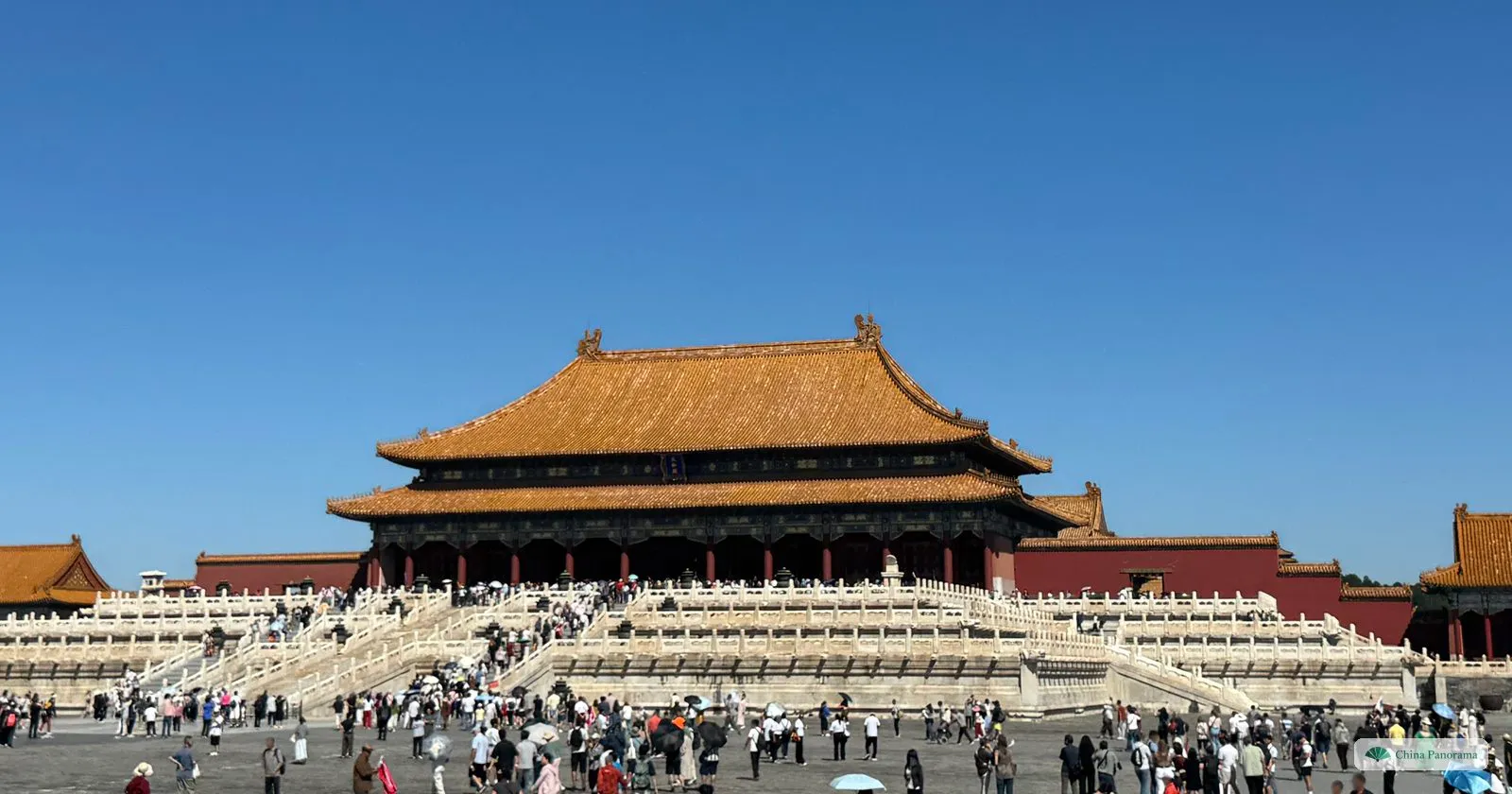
Which city is this hall in?
- Beijing ✓ right
- Xi’an
- Nanjing
The Hall of Supreme Harmony in the Forbidden City, the emperors’ palace from 1420 to 1912. Tickets are released online in advance.
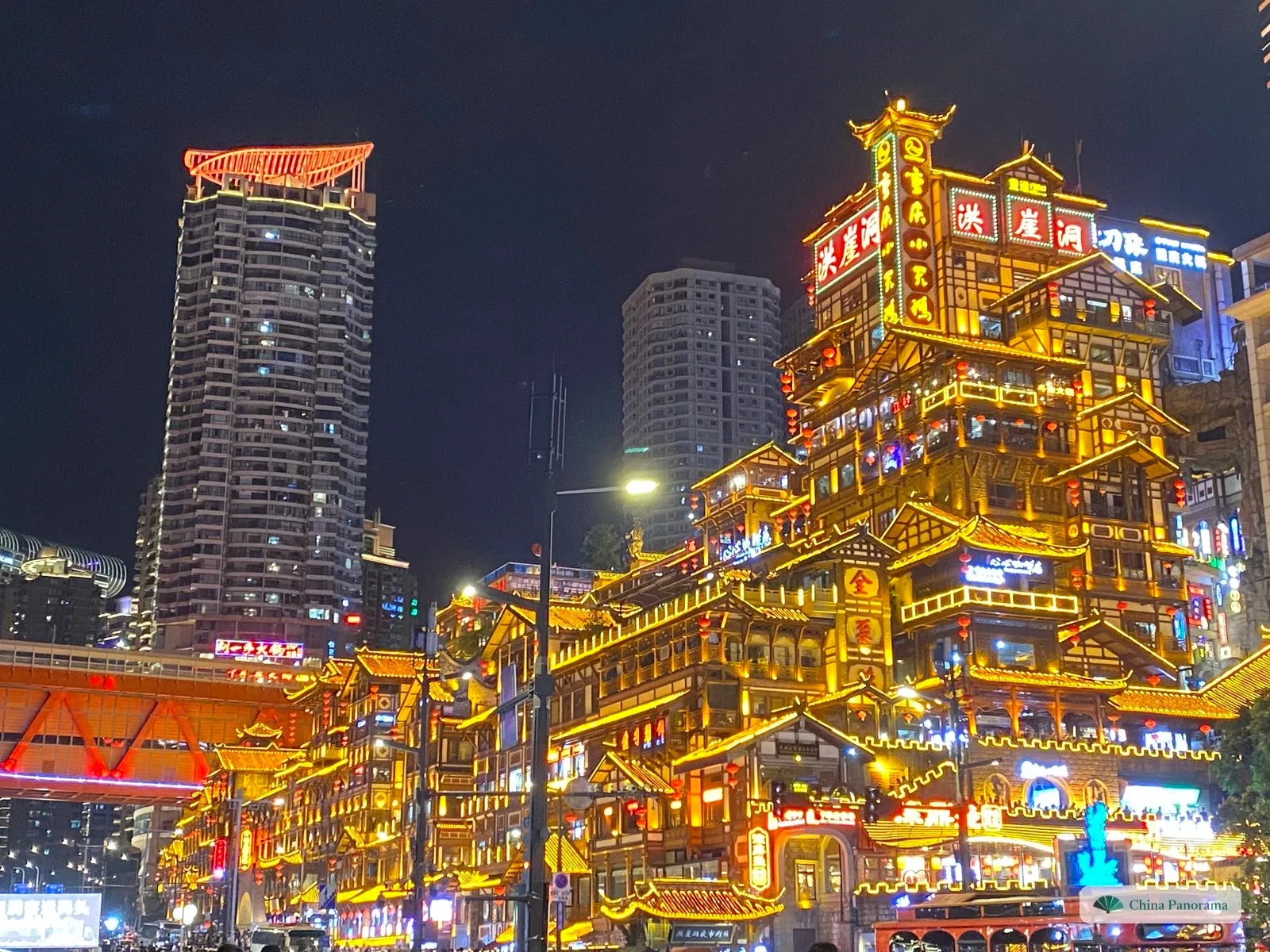
Which city is this?
- Chongqing ✓ right
- Shanghai
- Wuhan
Hongyadong in Chongqing: eleven floors of wooden balconies against the cliff. It looks old but opened in 2006.
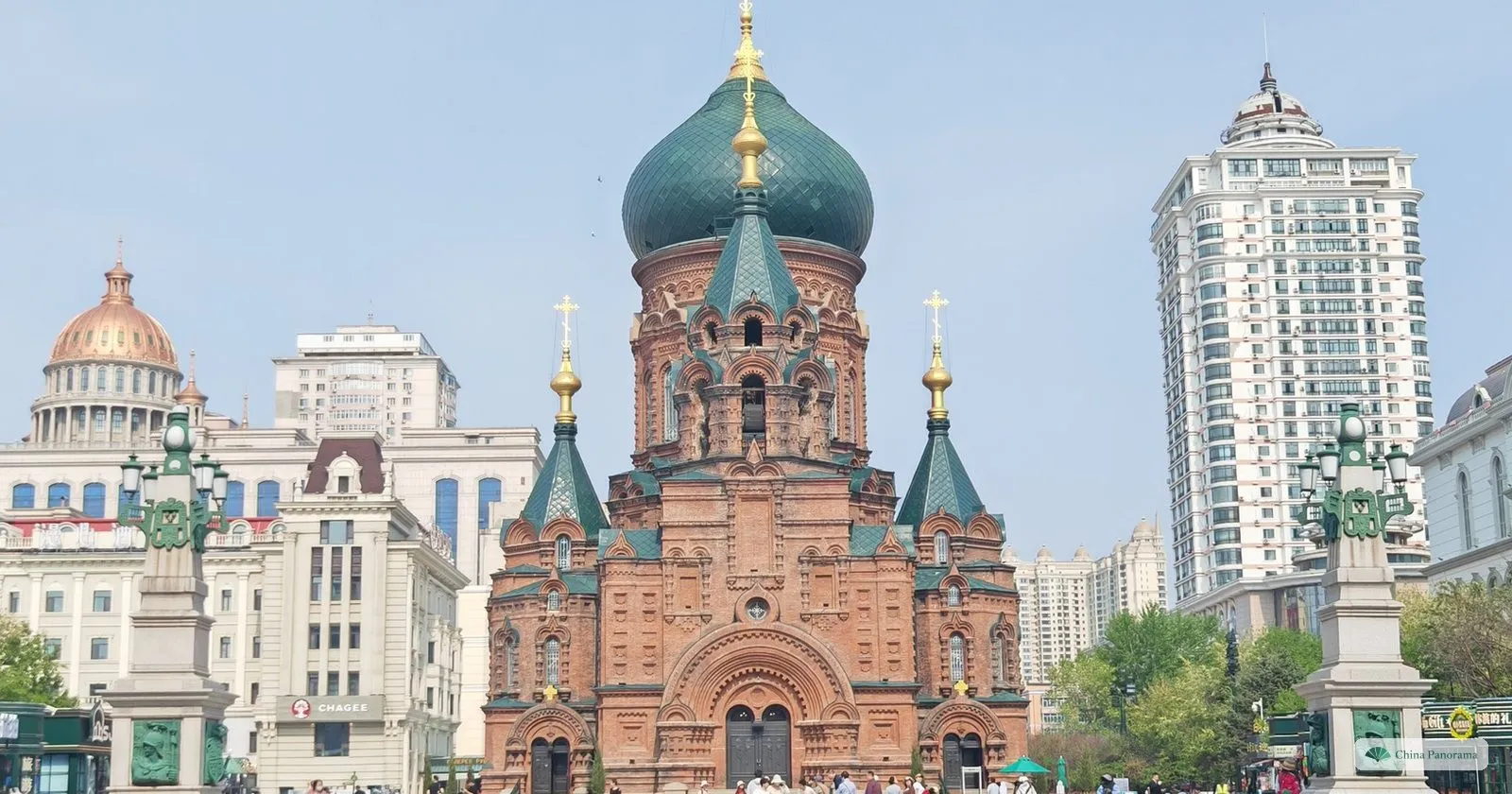
Where does this church stand?
- Harbin ✓ right
- Qingdao
- Shenyang
St Sophia Cathedral in Harbin, an Orthodox church from the city’s Russian railway era, finished in 1932. Today it is a museum.
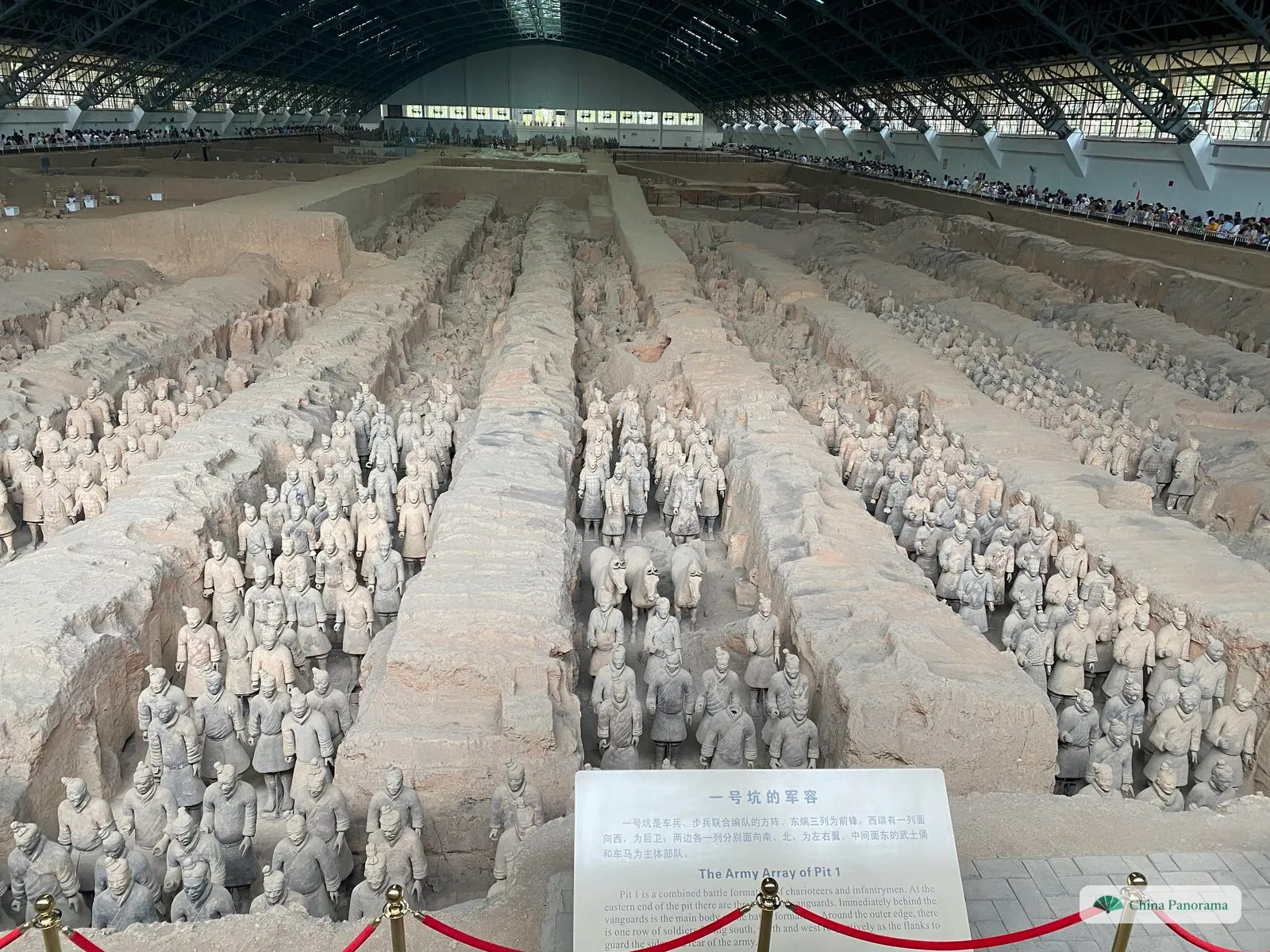
In which city can you see this?
- Xi’an ✓ right
- Beijing
- Luoyang
Pit 1 of the Terracotta Army outside Xi’an: the buried army of the first emperor, found by farmers in 1974.
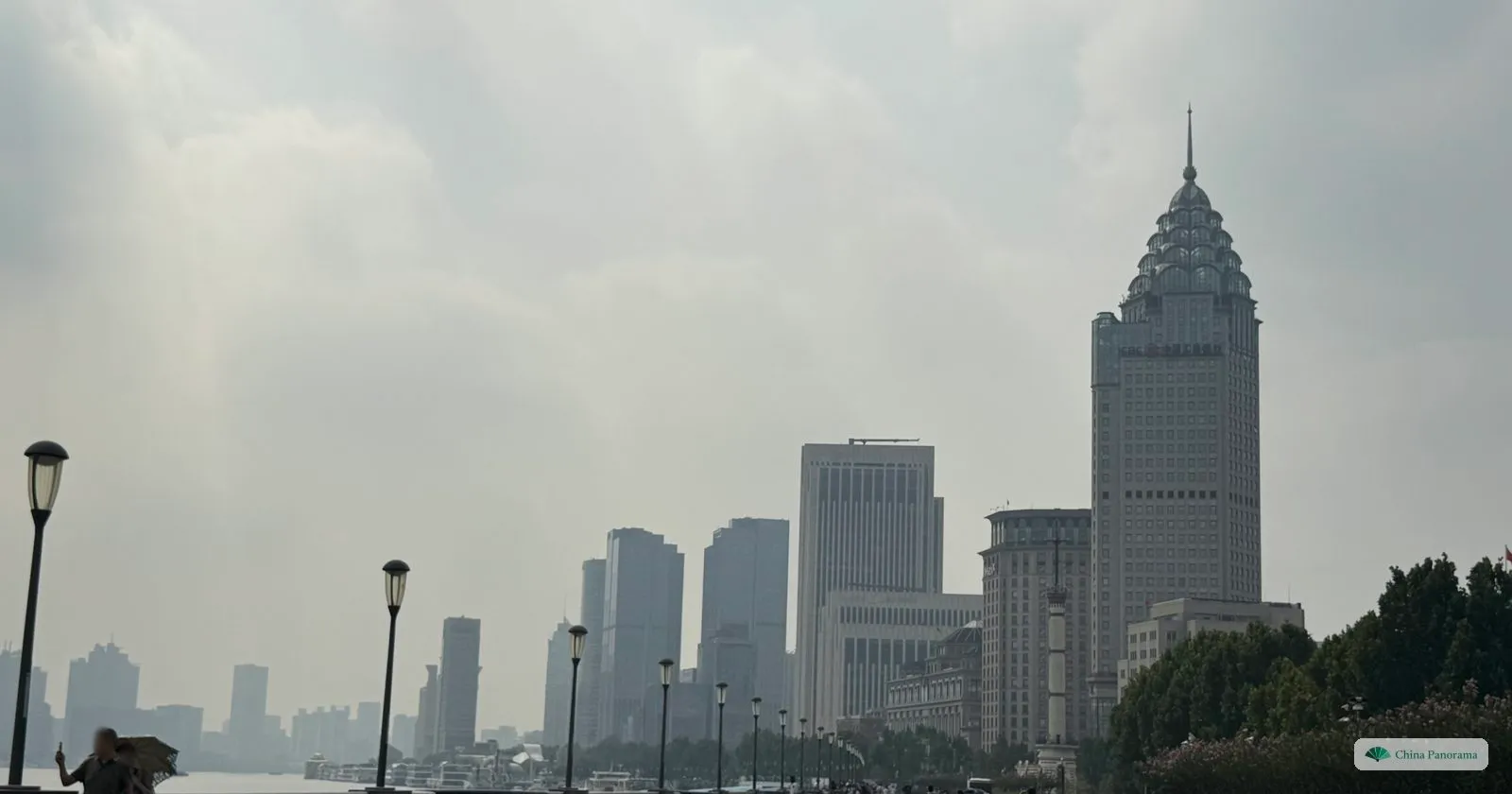
Which waterfront is this?
- The Bund in Shanghai ✓ right
- Victoria Harbour in Hong Kong
- The Pearl River in Guangzhou
The Bund: about 1.6 km of early 20th-century banks and hotels along the Huangpu River, with the towers of Lujiazui opposite.
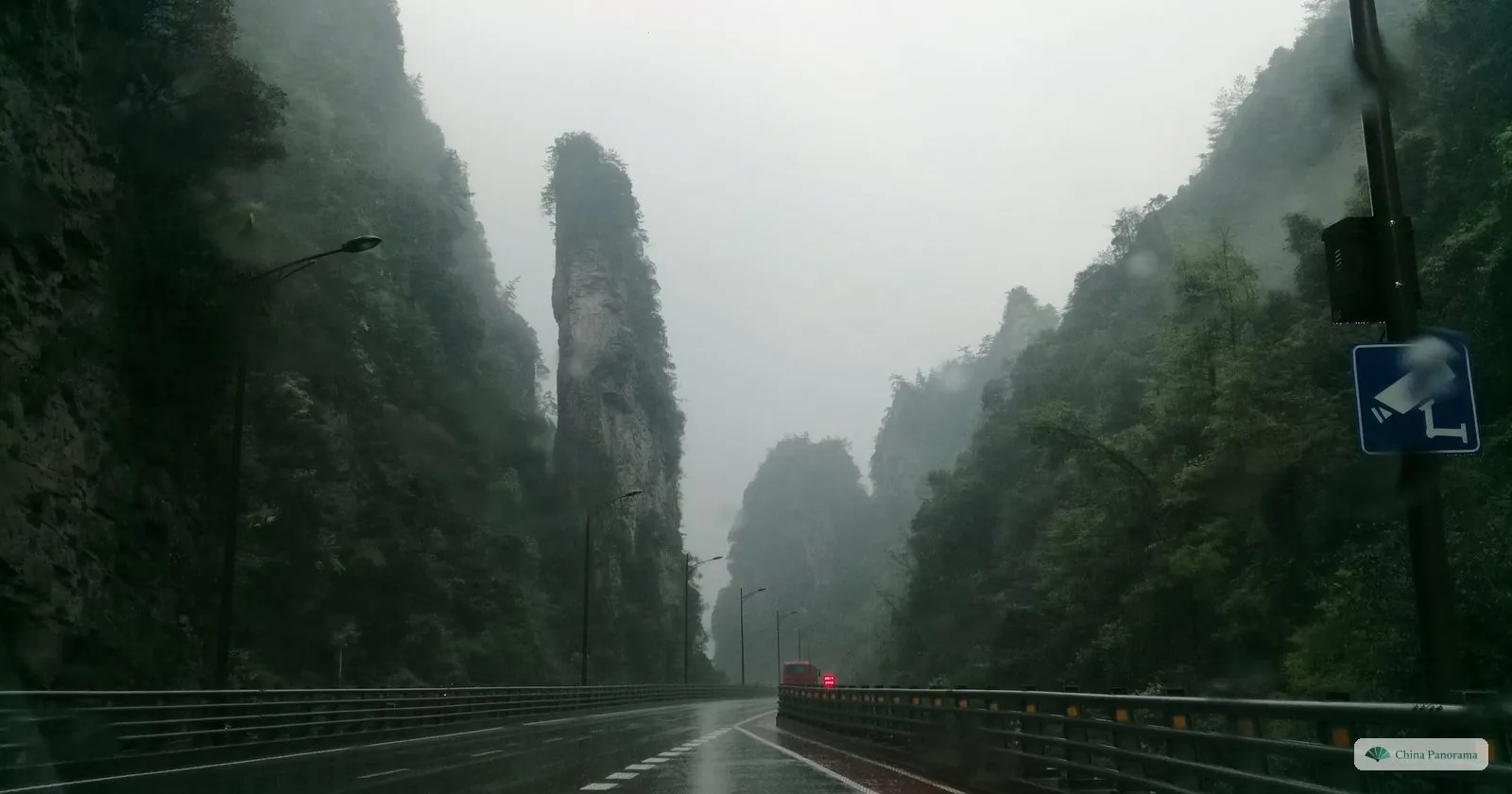
Which landscape is this?
- Zhangjiajie ✓ right
- Guilin
- Huangshan
Thousands of sandstone pillars, often in cloud: the Wulingyuan area at Zhangjiajie in Hunan is a World Heritage Site.
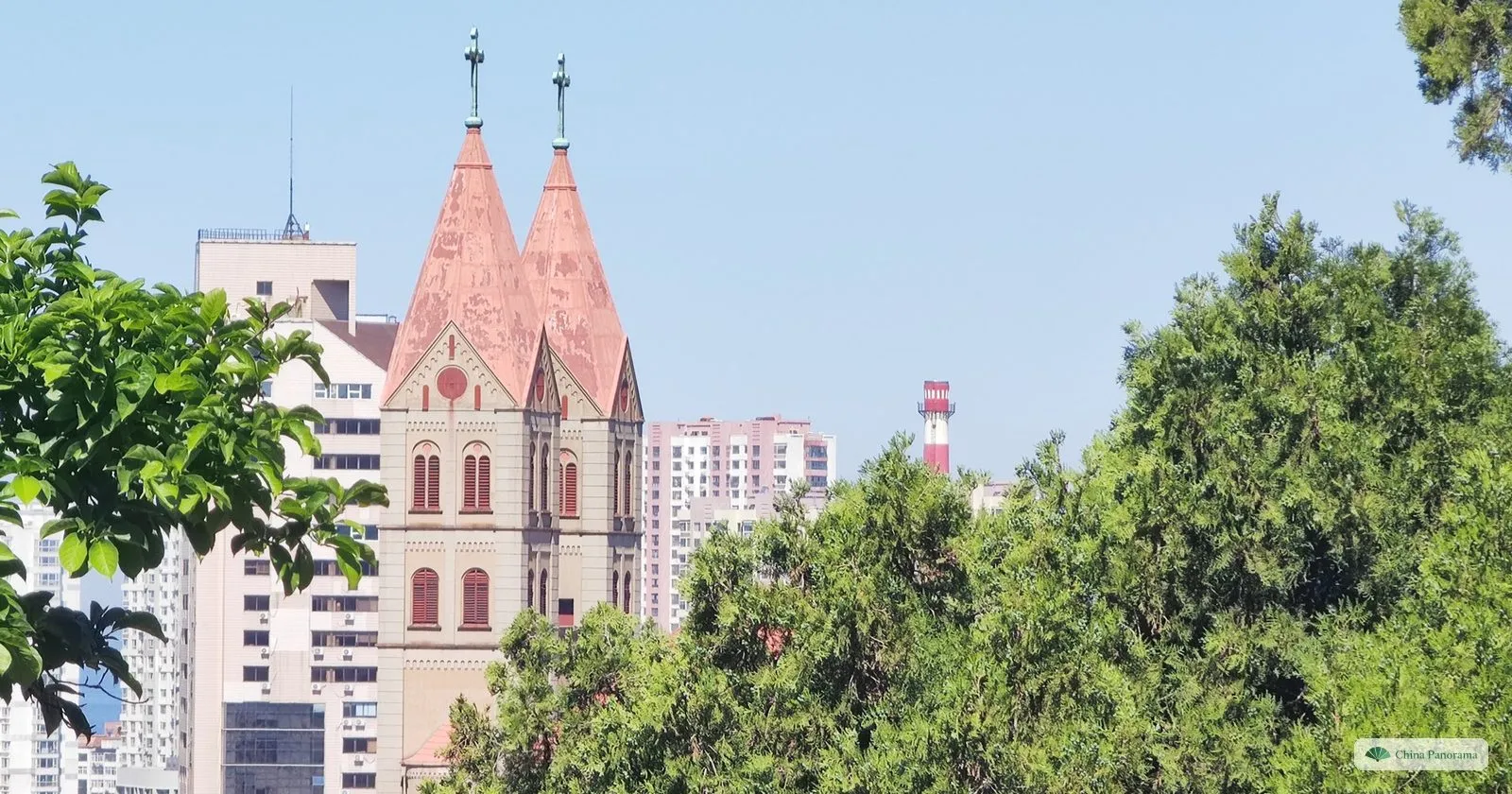
In which city does this twin-spired church stand?
- Qingdao ✓ right
- Tianjin
- Harbin
St Michael’s Cathedral in Qingdao, designed by a German architect and finished in 1934. Qingdao was a German leased territory until 1914.
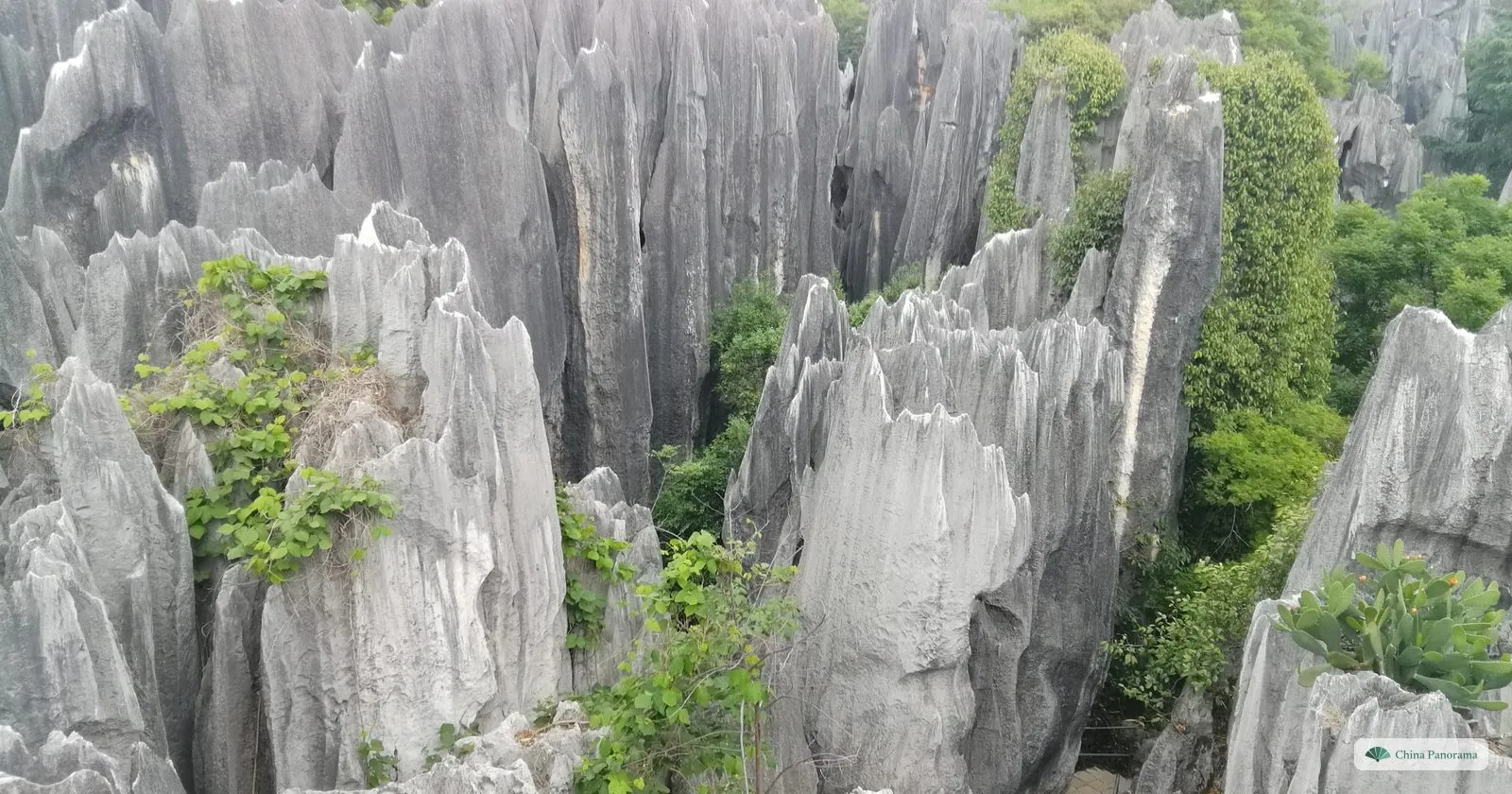
Where is this “stone forest”?
- Near Kunming ✓ right
- Near Zhangjiajie
- Near Guilin
The Stone Forest (石林), about 67 km from Kunming in Yunnan: grey limestone pinnacles up to some 30 m high.
Culture & calendar
Is tipping usual in Chinese restaurants?
- Mostly not ✓ right
- Yes, 10 %
- Yes, 20 %
Nobody expects a tip, and nobody adds one. A service charge, if there is one, is printed on the bill. A thank-you – 谢谢 (xièxie) – is enough.
When does Golden Week begin?
- On 1 October ✓ right
- In early May
- At the end of December
National Day starts a week off for the whole country, with full trains and crowded sights. The May Day holiday is shorter but busy too.
What do you call out in a restaurant to ask for the bill?
- 服务员,买单!(fúwùyuán, mǎi dān) ✓ right
- 干杯!(gān bēi)
- 你好!(nǐ hǎo)
“Waiter, the bill!” – it is not rude in China. Gānbēi means “cheers”, nǐhǎo “hello”.
What does 调休 (tiáoxiū) mean?
- Make-up workdays: a weekend is worked to make a holiday longer ✓ right
- Company holidays in summer
- A half day off
For long holidays, a Saturday or Sunday before or after becomes a workday. Shops and sights are open as usual then; schools and offices are too.
How this quiz was made
All 35 questions come from the pages of this site, where they are explained in more detail – every answer links to the page. 19 are photo questions. The photos and screenshots are our own, taken on our trips in China; the customs form is the official one.
Numbers that can change – how many days visa-free entry allows (currently until 31 December 2026), from what amount cash must be declared, who gives fingerprints – are not written into the quiz but come from the same data as our pages on visa-free entry and customs. We check them every month. The quiz counts nothing: your answers stay on your device.
FAQ
How long does the China travel quiz take?
About three minutes for 10 questions, a little over one for 5. There is no time limit: after each answer you read the explanation and move on when you are ready.
Are my answers stored?
No. Your browser only remembers your best score and which questions you saw last, on your own device, so that you get new ones next time. None of it is sent to us or anyone else.
Can I share the quiz with friends?
Yes. At the end, tap “Share my result”. The link opens the same questions in the same order for your friends, so you can compare scores directly.
Read before you travel
- China provinces quiz →The next quiz: find all 33 provinces on the map.
- Customs allowances →Duty-free allowance, cigarettes, alcohol and cash at a glance.
- China arrival card →The online form explained field by field, with a practice run.
- Set up Alipay →Paying in China, step by step with screenshots.
- Health & medication →Vaccinations, travel kit and which medicines are banned.
- Travel checklist →Everything to sort out before you fly.
Changelog (1)
- 2026-10-25Quiz published with 35 questions.