
Chinese Dumplings (Jiaozi) 饺子
Jiaozi (饺子, jiǎo zi) are half-moon wheat dumplings filled with minced pork and vegetables, boiled and dipped in black vinegar – everyday food all over China and the New Year dish of the north.
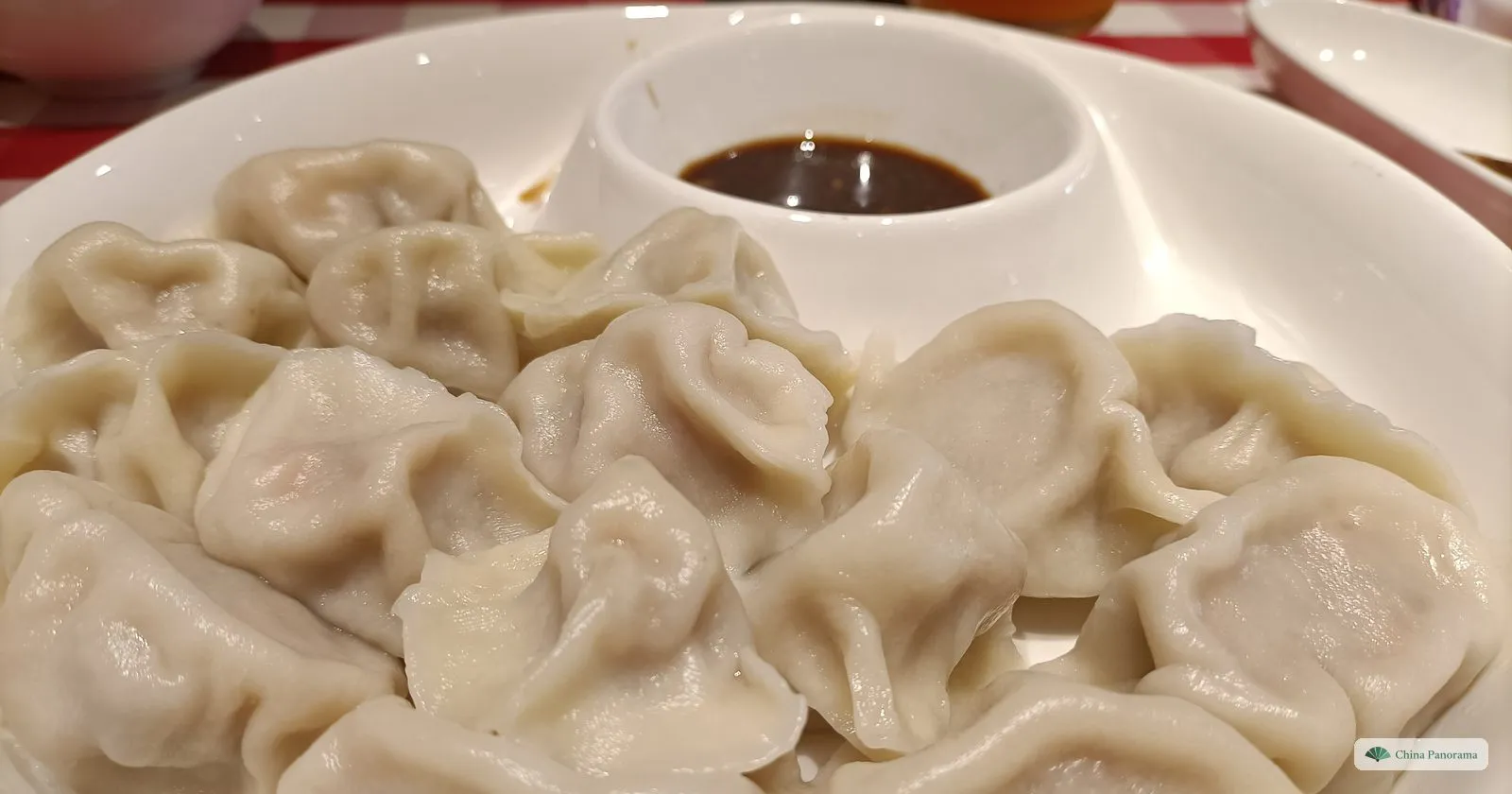
What are jiaozi?
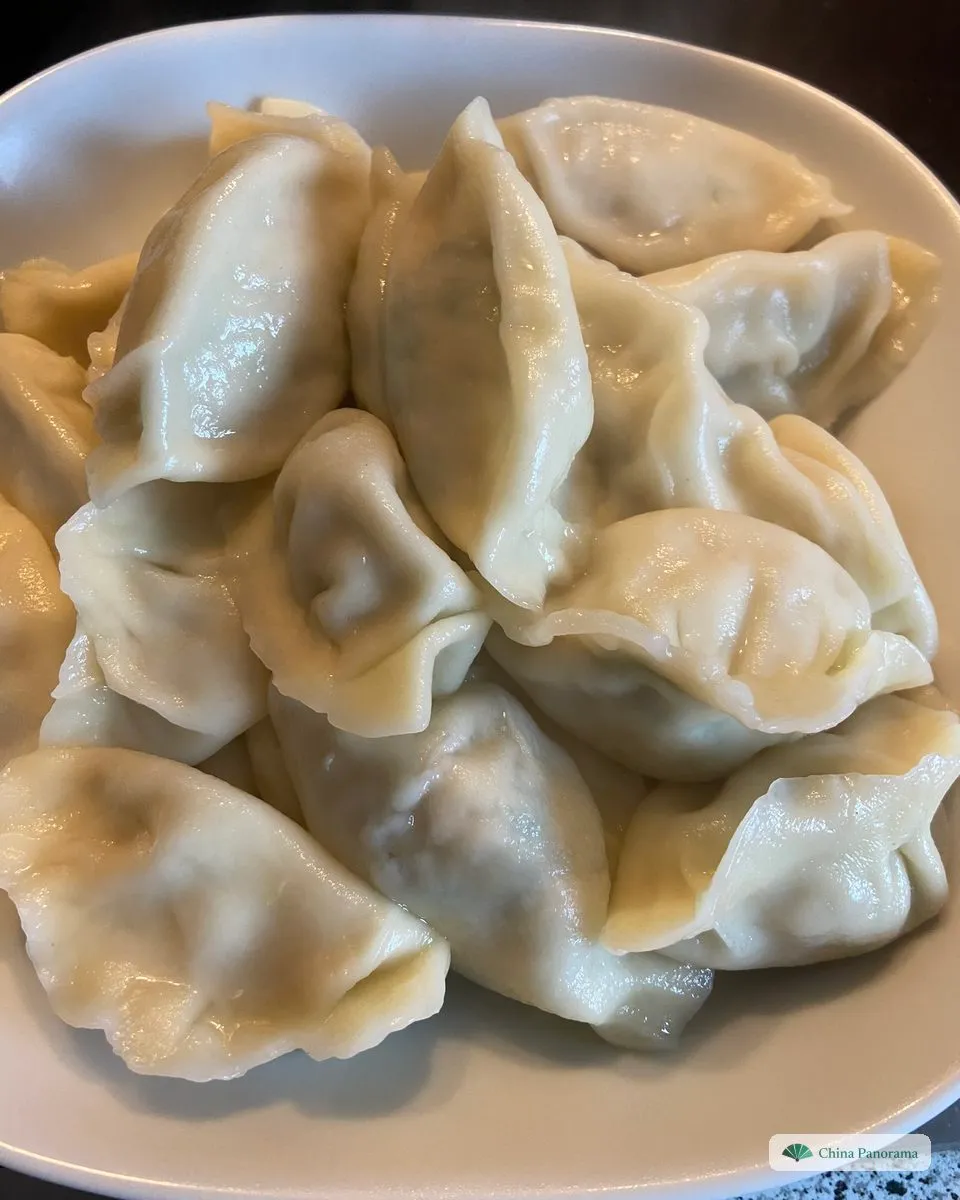
A jiaozi is a disc of rolled wheat dough folded around a spoonful of filling – most often minced pork with napa cabbage, chives or fennel – and pinched shut into a half-moon. They are boiled by the dozen and served on a plate, with a little dish of dark vinegar for dipping. In the north they are a meal in themselves, from breakfast to late dinner; there are whole restaurants that serve nothing else (饺子馆, jiǎo zi guǎn).
English has one word, “dumpling”, for a dozen different things on a Chinese menu. Jiaozi are the half-moons; wontons, soup dumplings and buns are something else – there is a photo quiz further down.
What they taste like. A soft, slightly chewy wrapper around a hot, juicy filling – the first bite can squirt, so take it carefully. Pork and napa cabbage, the classic, is mild and savoury; most of the flavour comes from the dip: dark rice vinegar, sour and a little sweet, sharpened with crushed garlic or chilli oil if you like. A plate is a meal on its own.
A bit like… Pierogi or Maultaschen – wheat dough around a minced filling, boiled. Japanese gyoza are the pan-fried descendants of jiaozi.
Boiled, steamed or pan-fried?
The filling is one half of the order, the cooking is the other. These are the words you will see on the menu – often as headings, with the fillings listed underneath.
| On the menu | How it’s cooked | What it’s like | Where you meet it |
|---|---|---|---|
| 水饺shuǐ jiǎoBoiled dumplings | Boiled in water and served on a plate, without the water. | Soft, slightly chewy wrapper, juicy inside. | The default – if a menu just says 饺子, these are what you get. |
| 汤饺tāng jiǎoDumplings in soup | Boiled, then served in a bowl of light broth. | Like boiled ones, eaten with a spoon. | Breakfast shops and hotel breakfast buffets. |
| 蒸饺zhēng jiǎoSteamed dumplings | Steamed in a bamboo or metal steamer and served in it. | Firmer skin that keeps its shape; often a crimped edge. | Dumpling shops, breakfast, dim sum. |
| 煎饺jiān jiǎoPan-fried dumplings | Fried in a little oil, then steamed under a lid with a splash of water. | Crisp, golden underside, soft top. | Breakfast, snacks, and leftover boiled dumplings the next day. |
| 锅贴guō tiēPotstickers | Fried the same way, usually longer and often open at both ends. | Crisp on one side, the rest soft. | Breakfast and snack shops. |
| 冰花煎饺bīng huā jiān jiǎoLace-crust dumplings | Pan-fried with a thin batter that sets into a lacy sheet, turned out crust side up. | Brittle, lacy crust around soft dumplings. | Breakfast and snack shops, restaurant buffets. |
Read the plate: tap the numbers
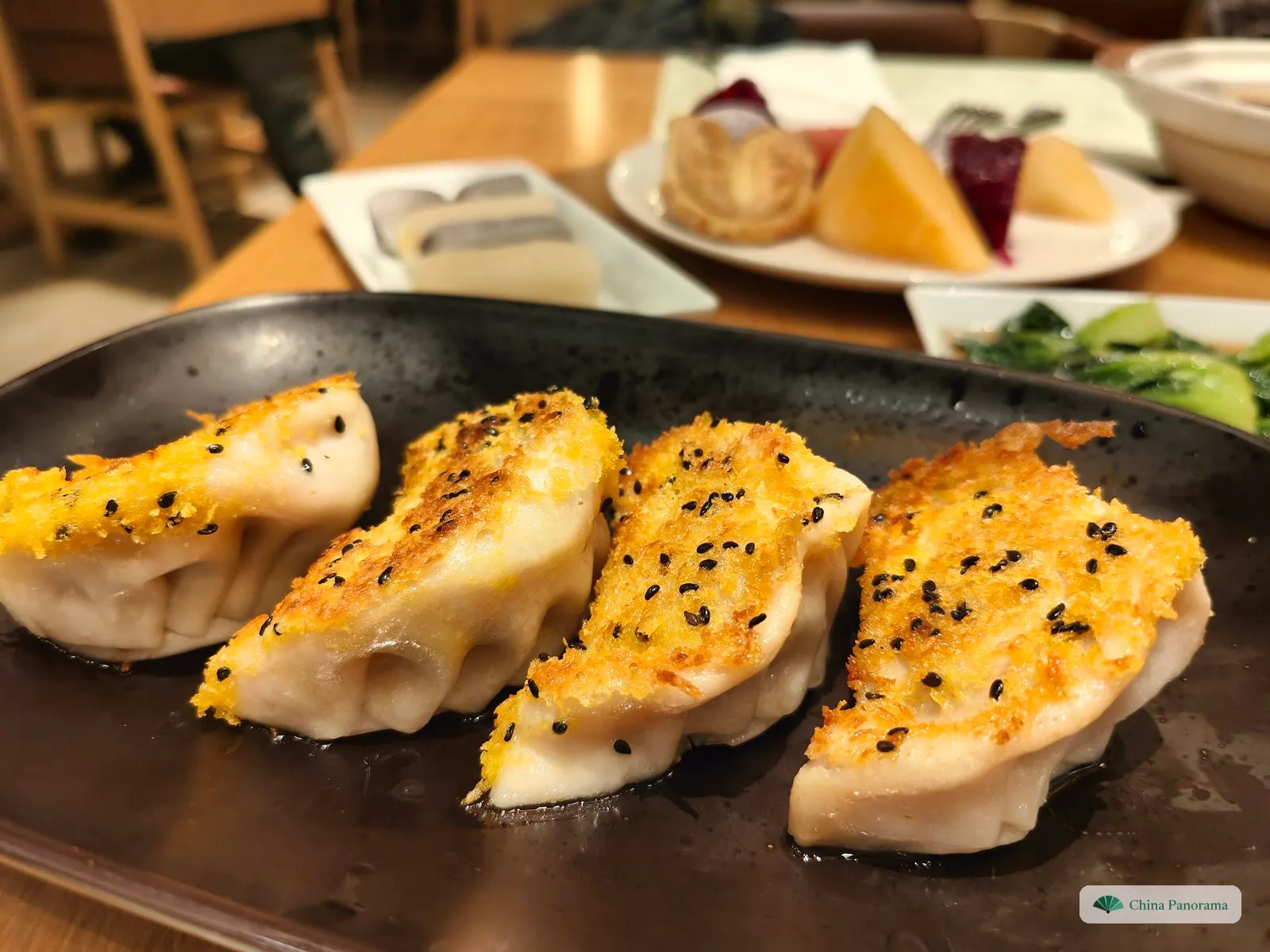
1The “ice flowers”
冰花 bīng huā
A thin batter of flour or starch and water, poured into the pan around the dumplings. It fries into a brittle, lacy sheet, and the cook turns everything out crust side up.
Tap a number on the photo, or a name in the list.
冰花煎饺bīng huā jiān jiǎo
Pan-fried dumplings with lace crust
Pan-fried dumplings cooked with a thin batter that fries into a crisp, lacy sheet – the “ice flowers” (冰花) – and served crust side up, often with black sesame.
¥15–30 · typical in a big city (2026) · allergens A cereals containing gluten, F soybeans, N sesame
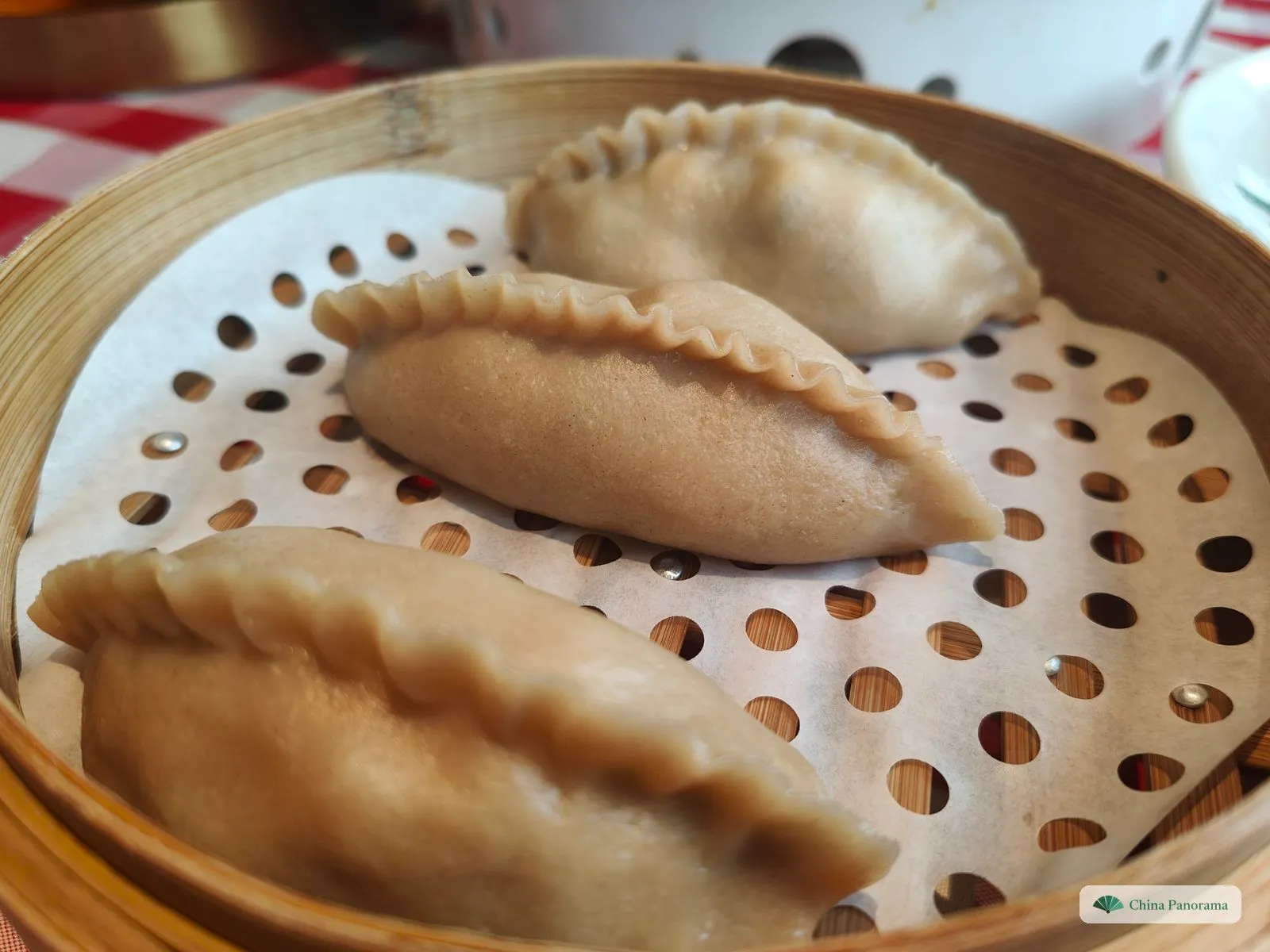
荞麦蒸饺qiáo mài zhēng jiǎo
Steamed buckwheat-flour dumplings
Steamed dumplings with a light-brown wrapper made partly from buckwheat flour, served in the bamboo steamer. The wrapper still contains wheat.
¥20–35 · typical in a big city (2026) · allergens A cereals containing gluten, F soybeans
What’s inside? The fillings on the menu
A dumpling shop menu is mostly a list of fillings (馅, xiàn), written as their main ingredients: 猪肉白菜 is simply “pork, napa cabbage”. Here are the 17 you will see most, as they are written on the menu.
Filter by what you eat, or by allergens you avoid. Tap Add to order to build an order – filling, cooking style, how many – that you can show the staff in large characters.
Every filling comes in a wheat wrapper (A) and is usually seasoned with soy sauce (F) and sesame oil (N) – the cards only show what the filling adds. “I avoid” also hides fillings that only sometimes contain it.
猪肉白菜
zhū ròu bái cài
Pork and napa cabbage
Safe bet
The classic, on every menu: mild, juicy and savoury.
猪肉大葱
zhū ròu dà cōng
Pork and green onion
Safe bet
Big, sweet Chinese green onions – a northern favourite, especially in Shandong.
猪肉韭菜
zhū ròu jiǔ cài
Pork and garlic chives
Worth a try
Strong and garlicky. People love it or leave it.
猪肉茴香
zhū ròu huí xiāng
Pork and fennel greens
Worth a try
Feathery fennel fronds with an aniseed taste. Common in the north, rare in the south.
玉米猪肉
yù mǐ zhū ròu
Pork and sweet corn
Safe bet
Sweet and popping with corn kernels – a children’s favourite.
芹菜猪肉
qín cài zhū ròu
Pork and celery
Safe betAllergen L · Celery
Crunchy and fresh-tasting. Celery is an allergen in the EU list.
荠菜猪肉
jì cài zhū ròu
Pork and shepherd’s purse
Worth a try
A wild spring green with a grassy taste – a Shanghai and east-China favourite.
酸菜猪肉
suān cài zhū ròu
Pork and pickled cabbage
Worth a try
Northeast China: sour, fermented napa cabbage with fatty pork. Our Harbin guide →
三鲜
sān xiān
“Three delicacies”
Safe betAllergen B · CrustaceansSometimes C · Eggs
Usually pork, shrimp and chives or egg – which three depends on the shop.
牛肉洋葱
niú ròu yáng cōng
Beef and onion
Safe bet
Sweet onion and minced beef. The safe choice if you don’t eat pork.
羊肉胡萝卜
yáng ròu hú luó bo
Lamb and carrot
Worth a try
The carrot makes it sweet. Found at northwestern and Muslim (清真, halal) restaurants, which serve no pork.
香菇鸡肉
xiāng gū jī ròu
Chicken and shiitake
Safe bet
Light and earthy.
鲅鱼
bà yú
Spanish mackerel
Worth a tryAllergen D · Fish
Qingdao and the Shandong coast: big dumplings with a soft, rich fish filling. Our Qingdao guide →
韭菜鸡蛋
jiǔ cài jī dàn
Garlic chives and egg
Safe betNo meatAllergen C · EggsSometimes B · Crustaceans
The most common meat-free filling. Often has tiny dried shrimp (虾皮) in it too.
素三鲜
sù sān xiān
“Vegetarian three delicacies”
Safe betNo meatAllergen C · EggsSometimes B · Crustaceans
Usually egg, chives and mushrooms or glass noodles. Can contain dried shrimp.
西葫芦鸡蛋
xī hú lu jī dàn
Courgette and egg
Safe betNo meatAllergen C · Eggs
Soft and mild.
西红柿鸡蛋
xī hóng shì jī dàn
Tomato and egg
Safe betNo meatAllergen C · Eggs
Very juicy – bite a hole first or the tomato juice runs down your chin.
How to order jiaozi in a dumpling shop
Six steps, from the menu on the wall to the bowl of cooking water at the end.
- 1
Pick a filling · 馅
The menu lists fillings, often on a board on the wall; many shops also have a QR code on the table. Boiled is the default.
The fillings ↑ - 2
Say how many · 两 · 份 · 个
Northern dumpling shops often sell by weight: one liang (两, 50 g) is roughly 5 or 6 dumplings, and three to five liang is a meal for one. Others sell by the plate (份) or the piece (个) – the unit is next to the price.
- 3
Boiled, steamed or fried · 水饺 · 蒸饺 · 煎饺
If the shop does more than one, say which. Pan-fried takes longest.
The difference ↑ - 4
Pay · 买单
In many dumpling shops you order and pay at the counter first and get a number – just like a canteen. Elsewhere you pay at the end.
Canteen walkthrough - 5
Mix the dip · 醋 · 蒜 · 辣椒油
Dark vinegar, crushed garlic and chilli oil stand on the table or at a counter. Mix your own in the little dish.
- 6
Drink the water · 饺子汤
Some shops give you a bowl of the cooking water. Northerners say 原汤化原食: “the broth digests the food that was cooked in it.”
Ordering by QR code instead? It works like our QR-code ordering walkthrough. For everything else, tap a card to show it full-screen.
有什么馅的?
yǒu shén me xiàn de?
Which fillings do you have?
一两几个?
yì liǎng jǐ gè?
How many dumplings in one liang?
要水饺
yào shuǐ jiǎo
Boiled, please
要煎饺
yào jiān jiǎo
Pan-fried, please
要醋和蒜
yào cù hé suàn
Vinegar and garlic, please
有辣椒油吗?
yǒu là jiāo yóu ma?
Do you have chilli oil?
来一碗饺子汤
lái yì wǎn jiǎo zi tāng
A bowl of the dumpling water, please
打包
dǎ bāo
To take away, please
What does jiaozi symbolize at Chinese New Year?
Wealth, mostly. A jiaozi has the shape of an old Chinese silver ingot (元宝, yuán bǎo), so a plate of them is a plate of money. The name helps too: 饺子 sounds like 交子, “the turn of the 子 hour” – the hour around midnight when the old year becomes the new one.
In northern China the whole family wraps dumplings together on New Year’s Eve and eats them around midnight. A few have something hidden inside, and whoever bites on it is lucky for the year. In the south, New Year food is more often rice cakes or sweet rice balls; jiaozi are the northern custom – our own New Year’s Eve batch is further down. Chinese New Year 2027 falls on 6 February – our public holidays page has the dates of the holiday week.
Find the coin
Twelve dumplings, four with something hidden inside. Tap one to take a bite.
What can be hidden inside
- 硬币 yìng bìA coinMoney in the new year. Washed, boiled – and bitten into carefully.
- 糖 tángA sugar cubeA sweet life.
- 花生 huā shēngA peanutA long life – peanuts are called 长生果, “fruit of long life”.
- 红枣 hóng zǎoA red date枣 (zǎo) sounds like 早, “early”: good luck that comes soon, or a baby soon.
Peanut allergy? At a family New Year table, ask before you bite – peanuts are a common hidden “luck”.
More days for dumplings
除夕chú xī
New Year’s Eve · 5 February 2027
The family wraps dumplings together in the evening and eats them around midnight, as the old year turns into the new.
破五pò wǔ
The fifth day · Fifth day of the new year
In the north, dumplings again: pinching the edges shut “pinches off” bad luck for the year.
冬至dōng zhì
Winter solstice · Around 21–22 December
A northern saying: if you don’t eat dumplings at the solstice, your ears freeze off. The legend says dumplings were first made ear-shaped, to cure frostbite.
上车饺子shàng chē jiǎo zi
Before a journey · Any day
“Dumplings when you get on the train, noodles when you get off”: a family sends you off with dumplings and welcomes you home with noodles.
Wrapping jiaozi at home
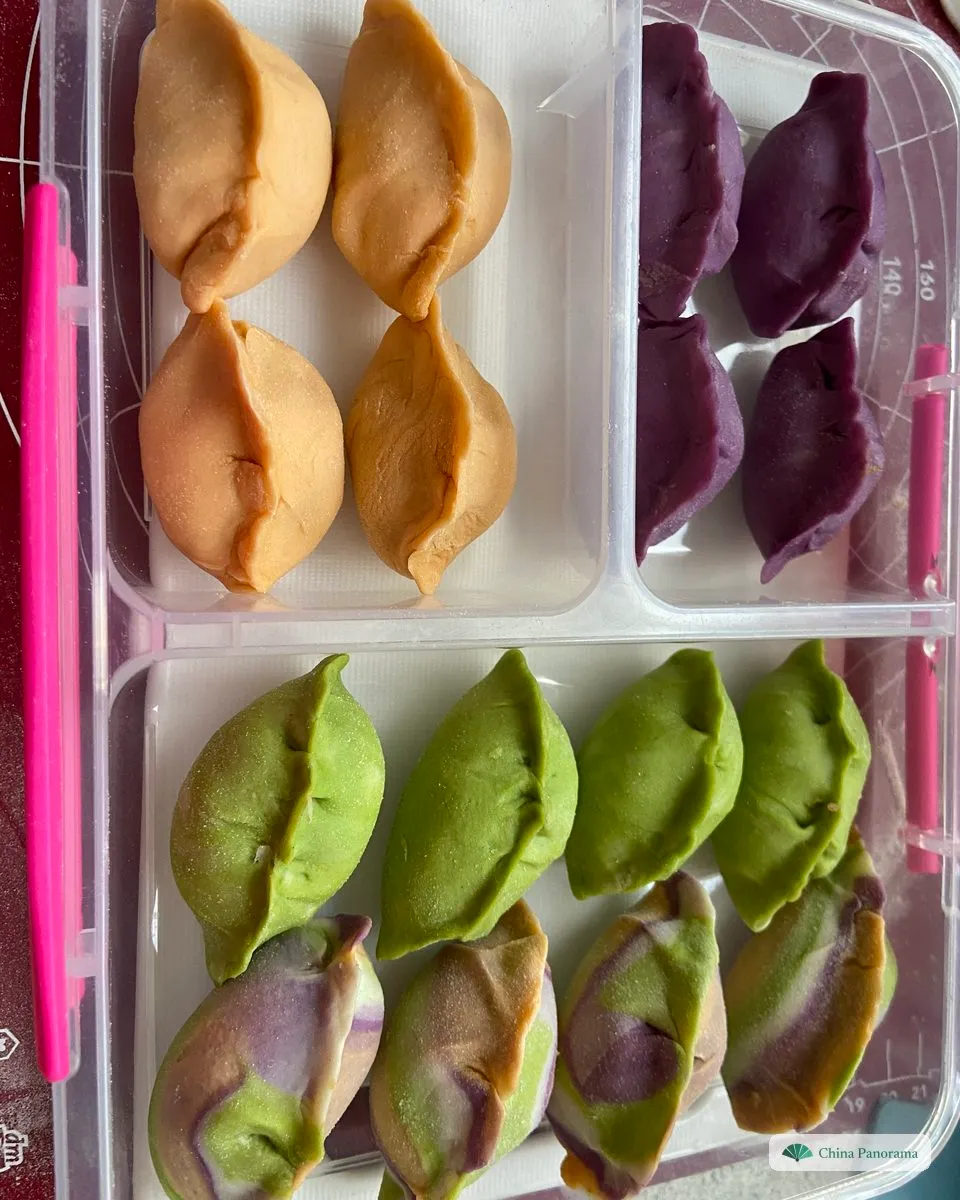
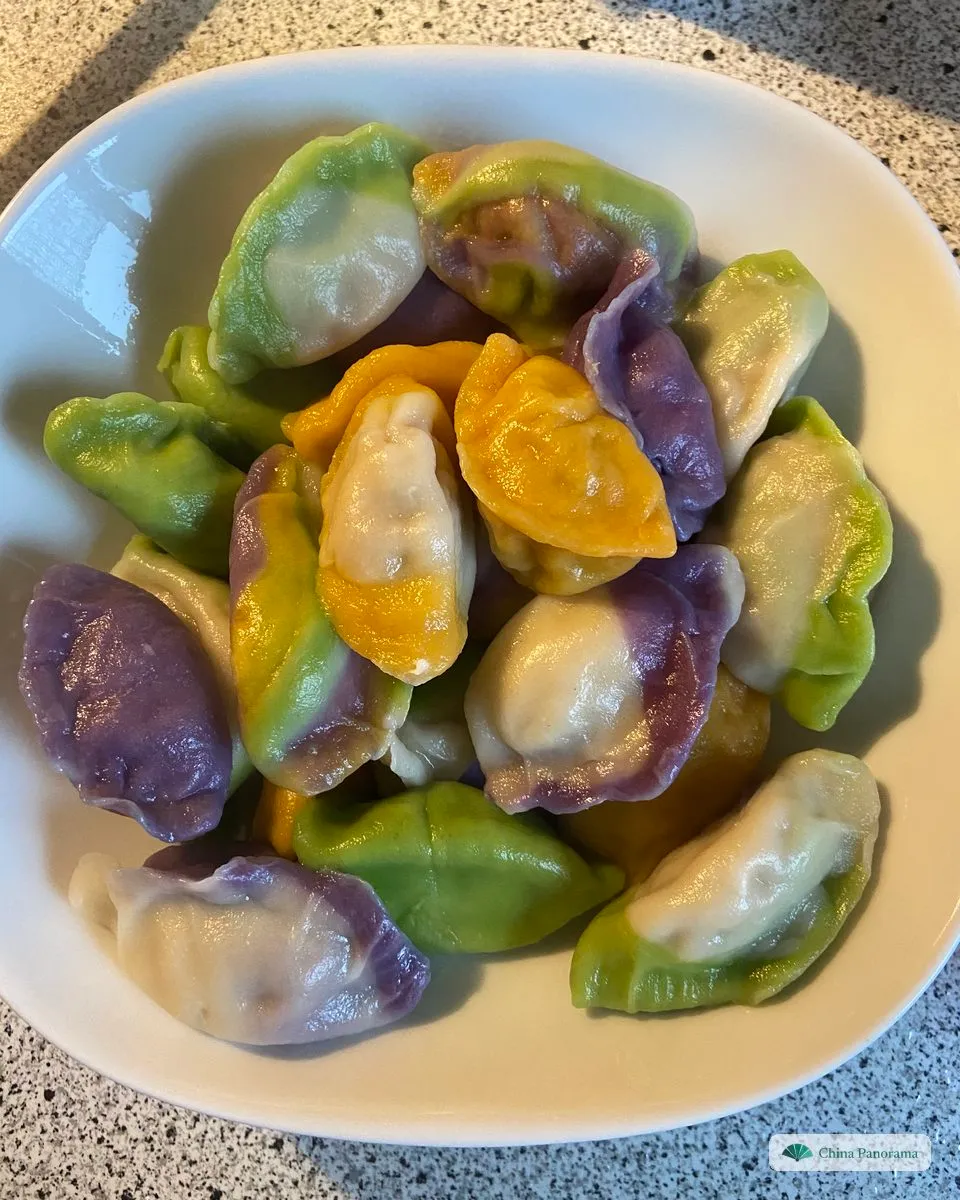
Plenty of jiaozi in China are still wrapped at home – for New Year, and on any ordinary weekend. Everyone sits round the table: one person rolls wrappers, the others fill and fold, and the tray fills up in rows. These are our own batches: one from Chinese New Year’s Eve 2018, and a coloured one from February 2021, raw and boiled the same day.
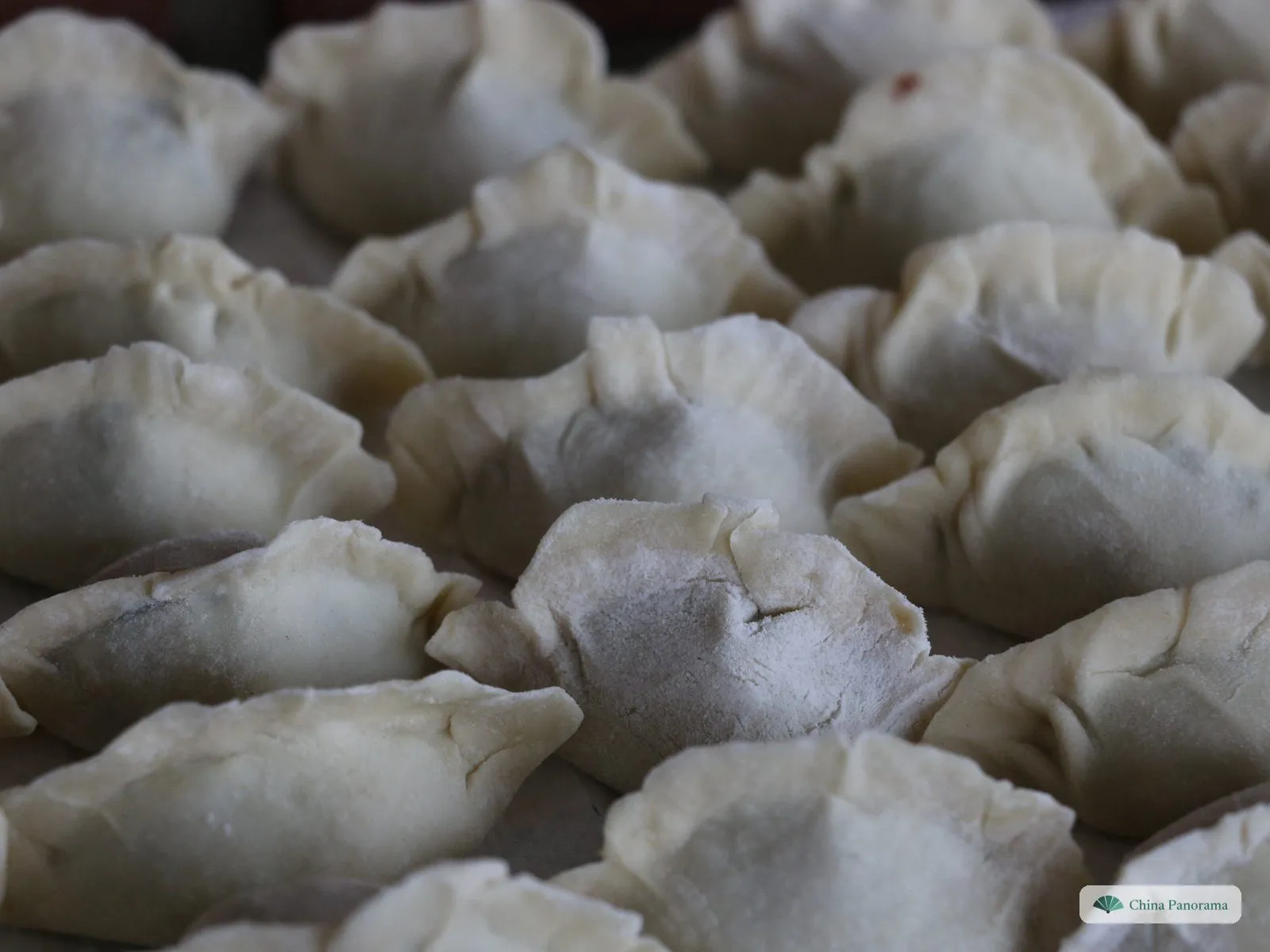
1The pleats
褶 zhě
Pinched up into a crest along the top. Folded like this, the dumplings sit upright on the tray.
Tap a number on the photo, or a name in the list.
How to fold one
The fold takes a minute to learn and years to make neat – children join in anyway. Step through it, or press play.
1 / 7擀皮gǎn pí
Roll the wrapper
A small piece of wheat dough is rolled into a disc – thin at the edge, a little thicker in the middle so it doesn’t tear.
Colour the dough
Knead the flour with vegetable juice instead of water and the wrapper changes colour: green from spinach, yellow from carrot, purple from red cabbage. Pick a pattern and the doughs, and see what comes out.
三色饺子sān sè jiǎo zi
Marbled: spinach + carrot + red cabbage
The vegetables colour the dough; you barely taste them. The filling inside is the usual one.
1 · Pattern
2 · Dough – pick 3
Wonton vs dumpling: what’s the difference?
A wonton is a different dumpling: a thin, square wrapper, a small dab of filling, and almost always served in broth. Jiaozi have a thicker round wrapper, more filling, and usually come on a plate. Soup dumplings and buns are two more things English calls “dumplings”.
| Jiaozi 饺子 | Wonton 馄饨 | Soup dumpling 小笼包 | Bun 包子 | |
|---|---|---|---|---|
| Wrapper | Round, rolled from wheat dough | Thin and square, often bought ready-made | Very thin, rolled round | Risen dough, like bread |
| Shape | Half-moon, pinched along one edge | Loose bundle with soft, trailing edges | Small and round, pleats gathered on top | Fist-sized, pleats twisted on top |
| Inside | Meat and vegetables, or egg and vegetables | A small amount of pork, sometimes shrimp | Pork and hot soup | Meat, vegetables, or something sweet |
| Served | On a plate with a vinegar dip; sometimes in soup or pan-fried | In a bowl of broth | In the steamer basket, with vinegar and ginger | Steamed, eaten by hand – breakfast |
| Also called | 水饺, 蒸饺, 煎饺, 锅贴 | 云吞 in Guangdong, 抄手 in Sichuan | Xiao long bao, a Shanghai speciality | Bao, baozi; pan-fried: 生煎 |
Jiaozi, wonton or bun? Guess from our photos
Eight things we ate in China. Two of them catch almost everyone out.
 1
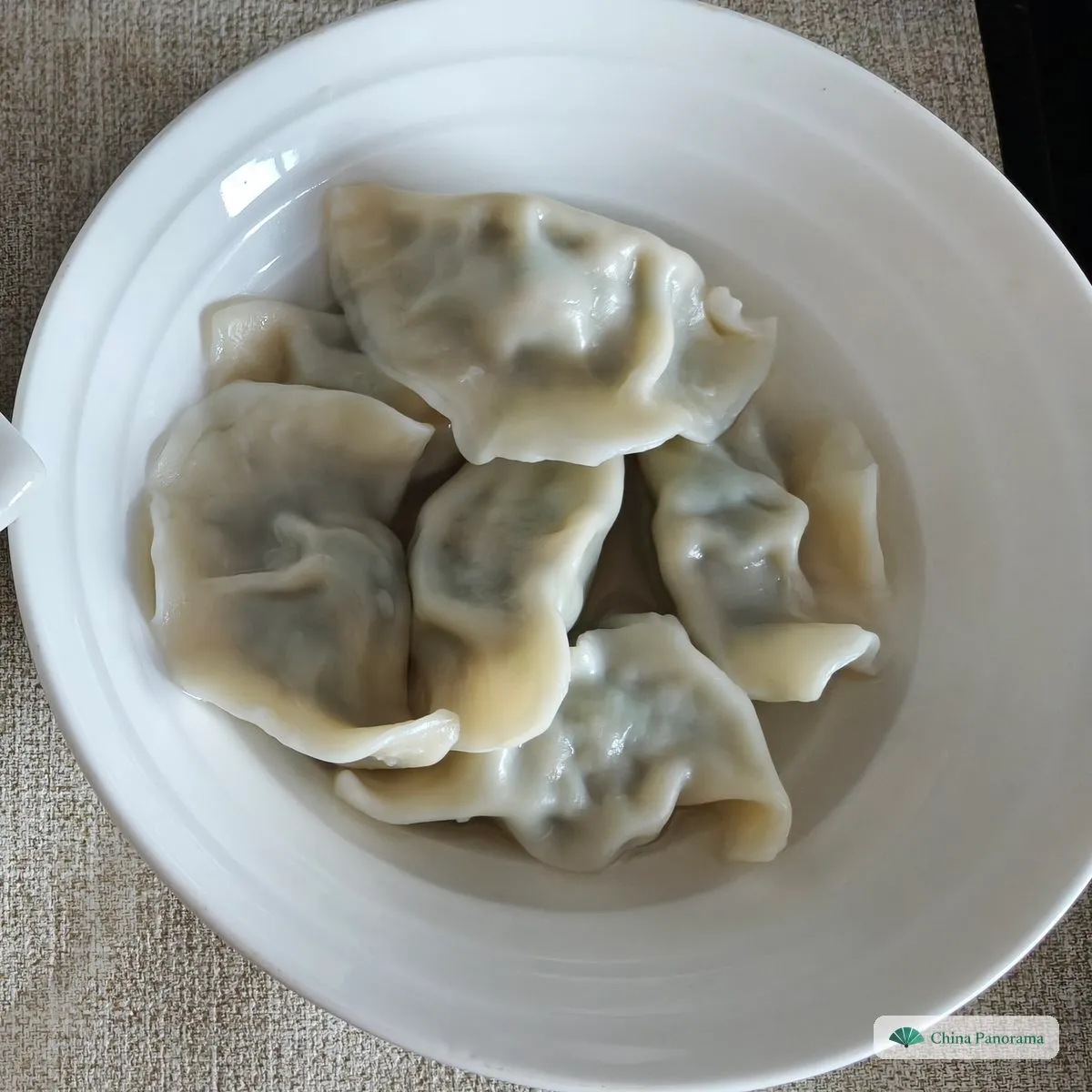
1Jiaozi · 饺子
荠菜水饺jì cài shuǐ jiǎo
Boiled jiaozi with shepherd’s purse
A half-moon of rolled dough, pinched along one edge, served without broth. The green shows through the thin wrapper.
Breakfast, 2025
 2
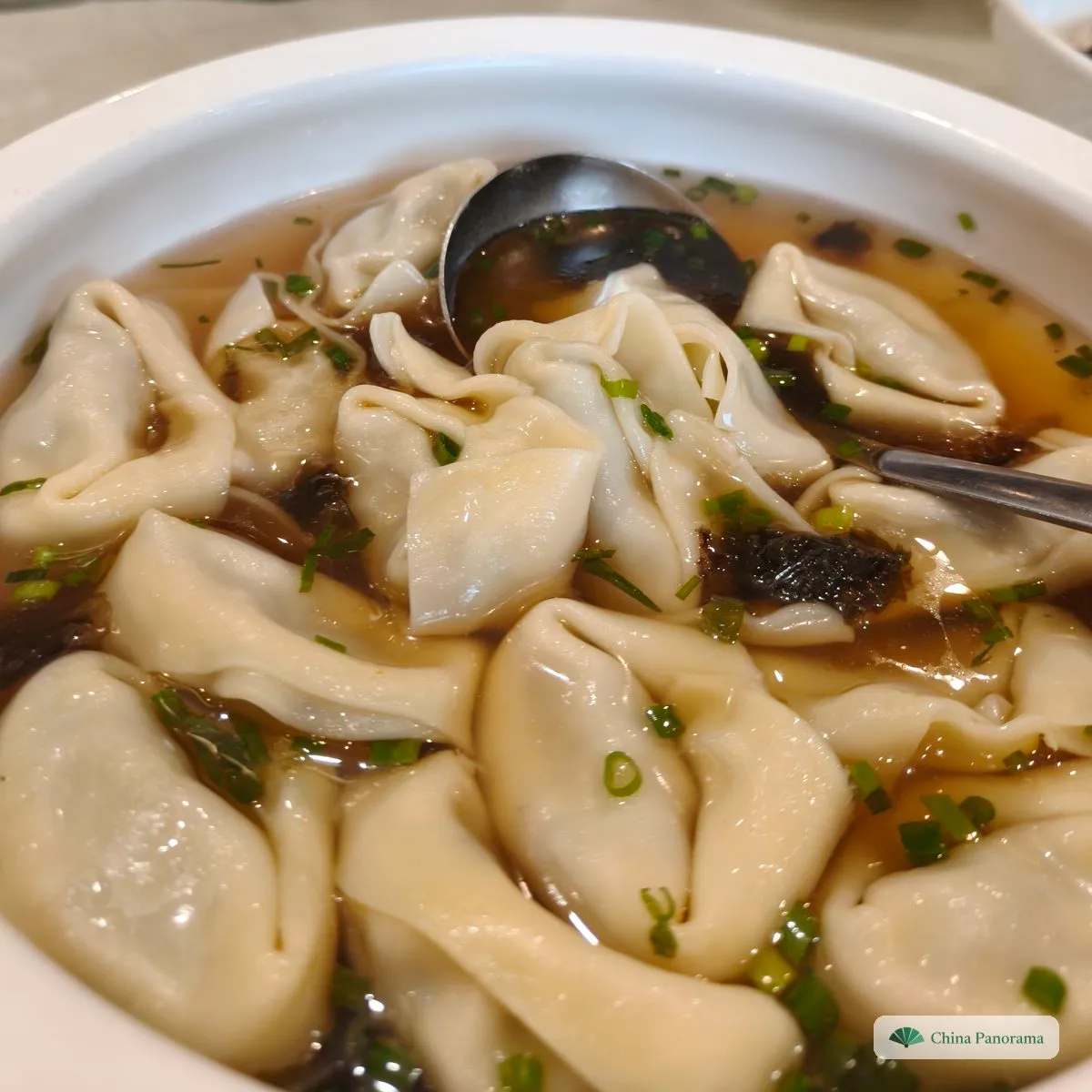
2Wonton · 馄饨
大馄饨dà hún tun
Large wontons in broth
Thin, square wrappers folded into loose bundles with soft, trailing edges – and they swim in a bowl of broth with seaweed and dried shrimp.
A banquet, 2025
 3
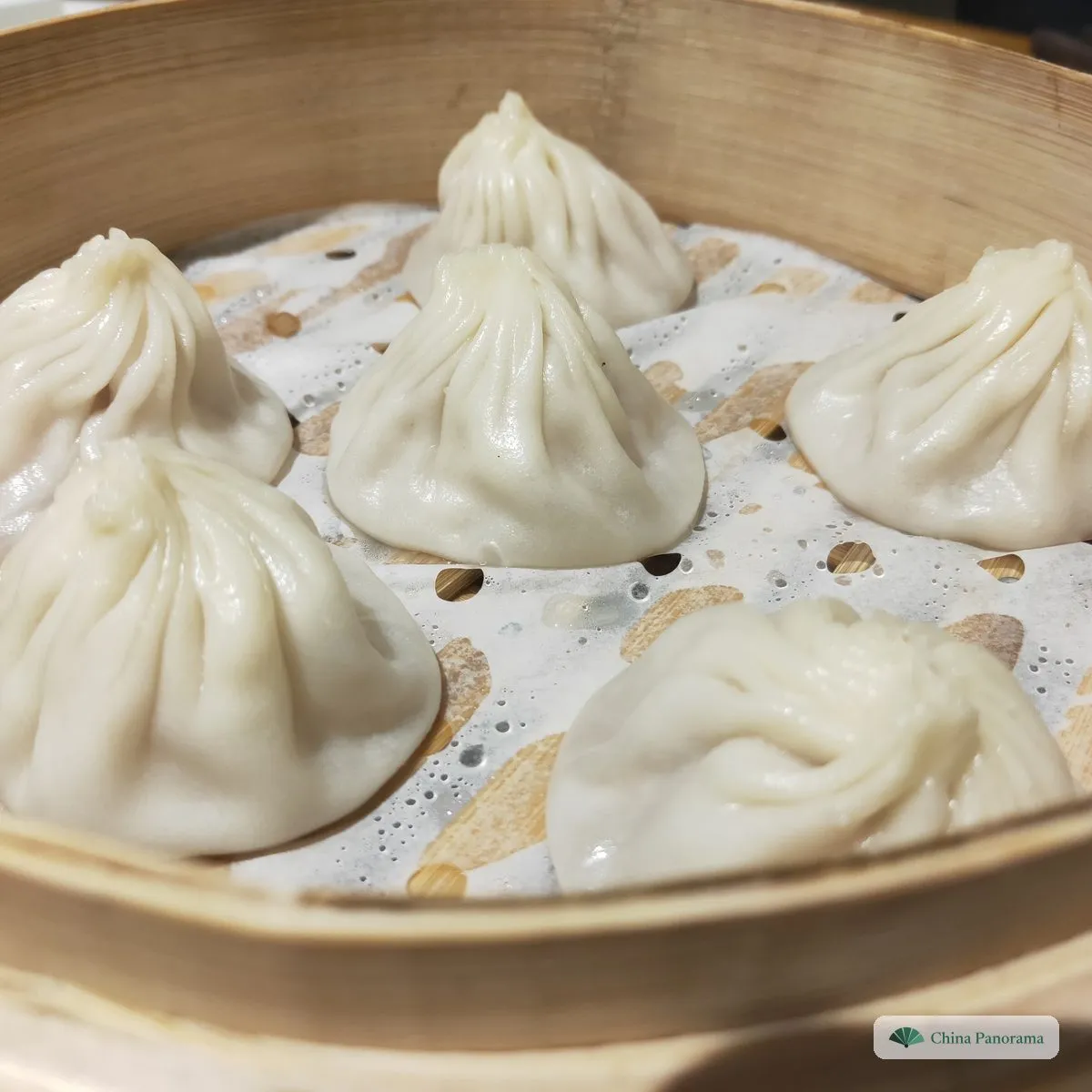
3Soup dumpling · 小笼包
小笼包xiǎo lóng bāo
Soup dumplings
A thin skin gathered into a twist at the top, sitting in the steamer basket. Inside is pork and hot soup.
Shanghai, 2019
 4
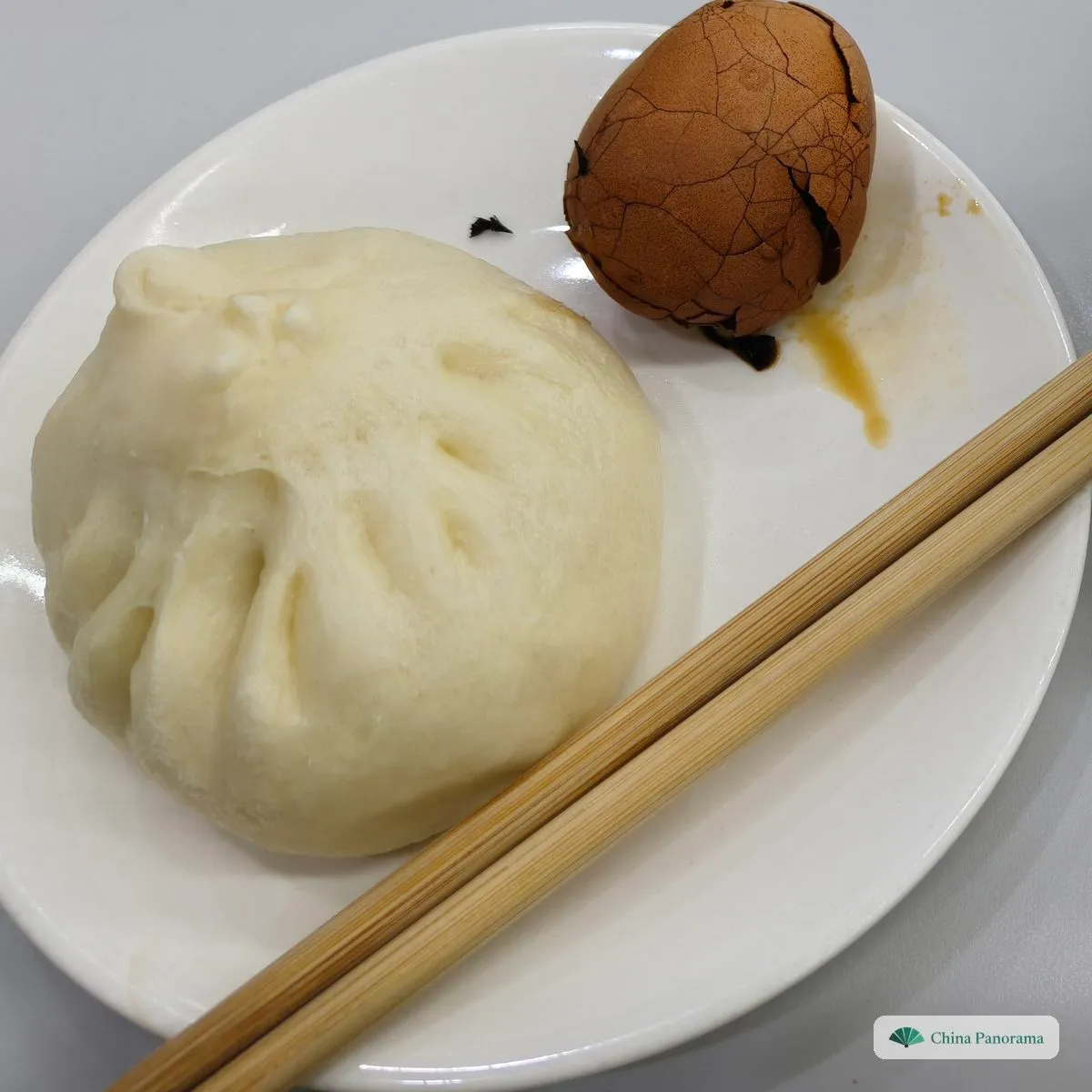
4Bun · 包子
大肉包dà ròu bāo
Steamed pork bun
Fluffy, risen dough like bread – that makes it a bun (包子), not a dumpling. Size of a fist.
Breakfast, 2025
 5
5Jiaozi · 饺子
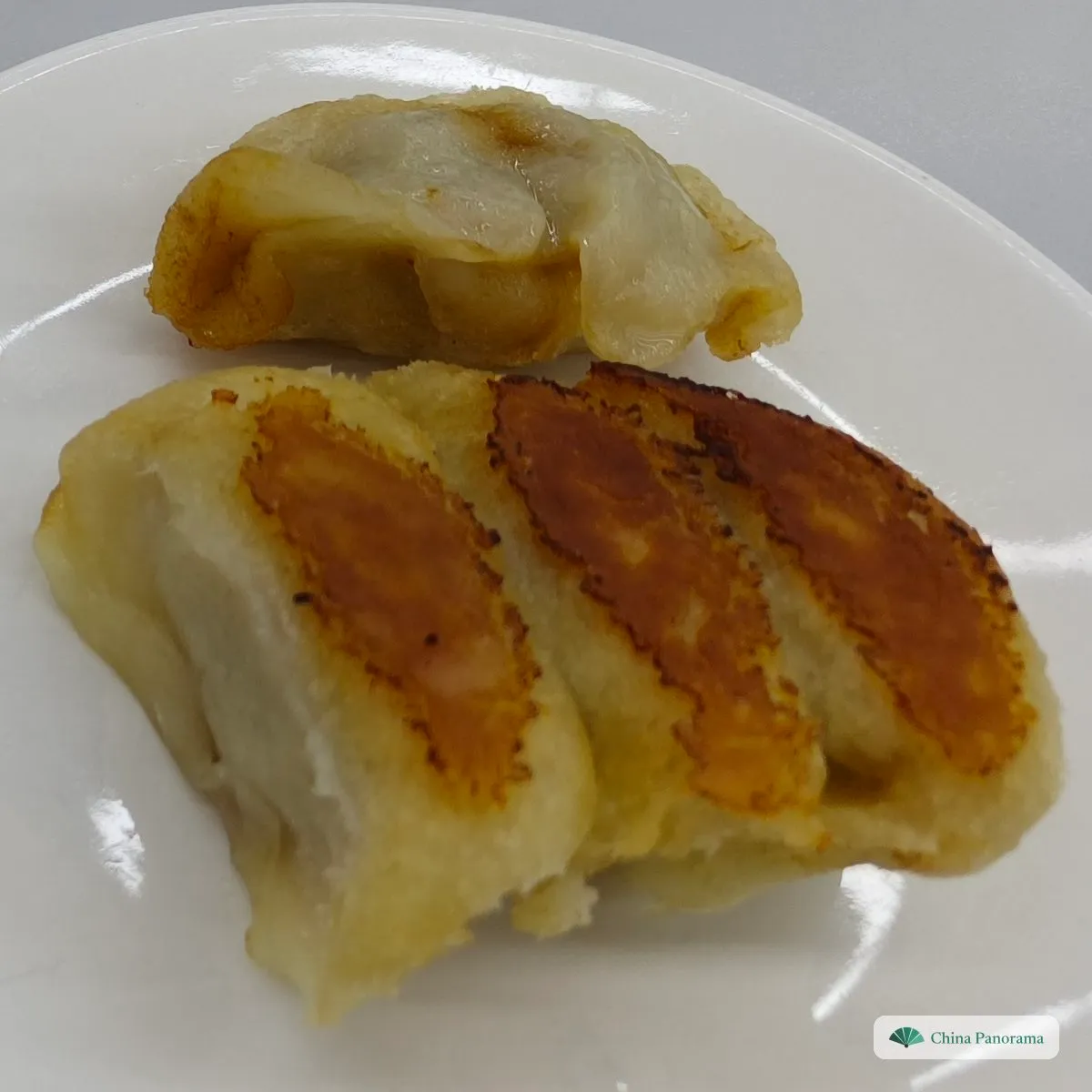
锅贴guō tiē
Potstickers
Pan-fried until the bottom is brown, but the dough and the fold are the same as boiled jiaozi. Still jiaozi.
Breakfast, 2026
 6
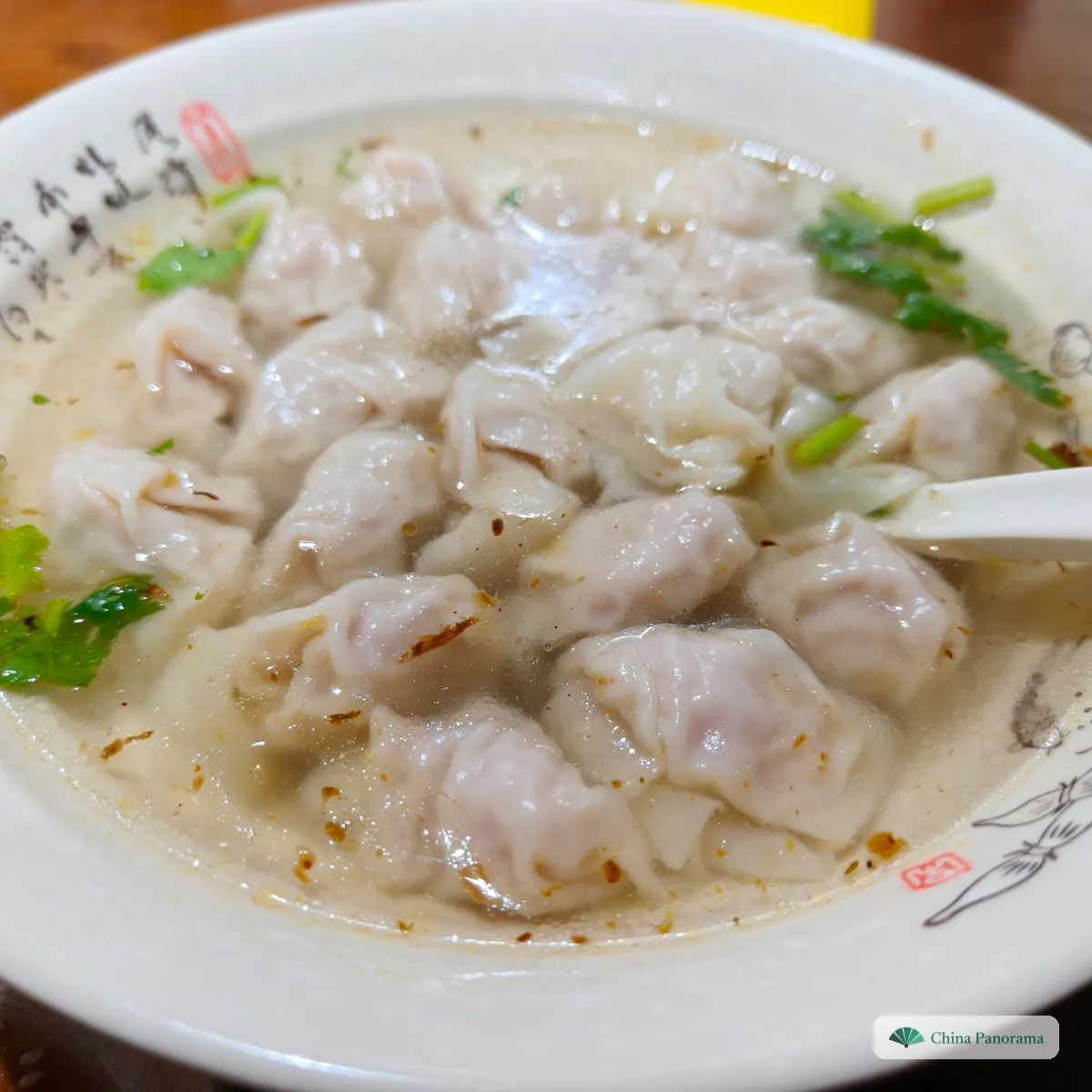
6Wonton · 馄饨
小馄饨xiǎo hún tun
Small wontons
Tiny, almost see-through wrappers with a dab of pork, in broth with dried shrimp and coriander – a Shanghai breakfast.
Breakfast, 2025
 7
7Bun · 包子
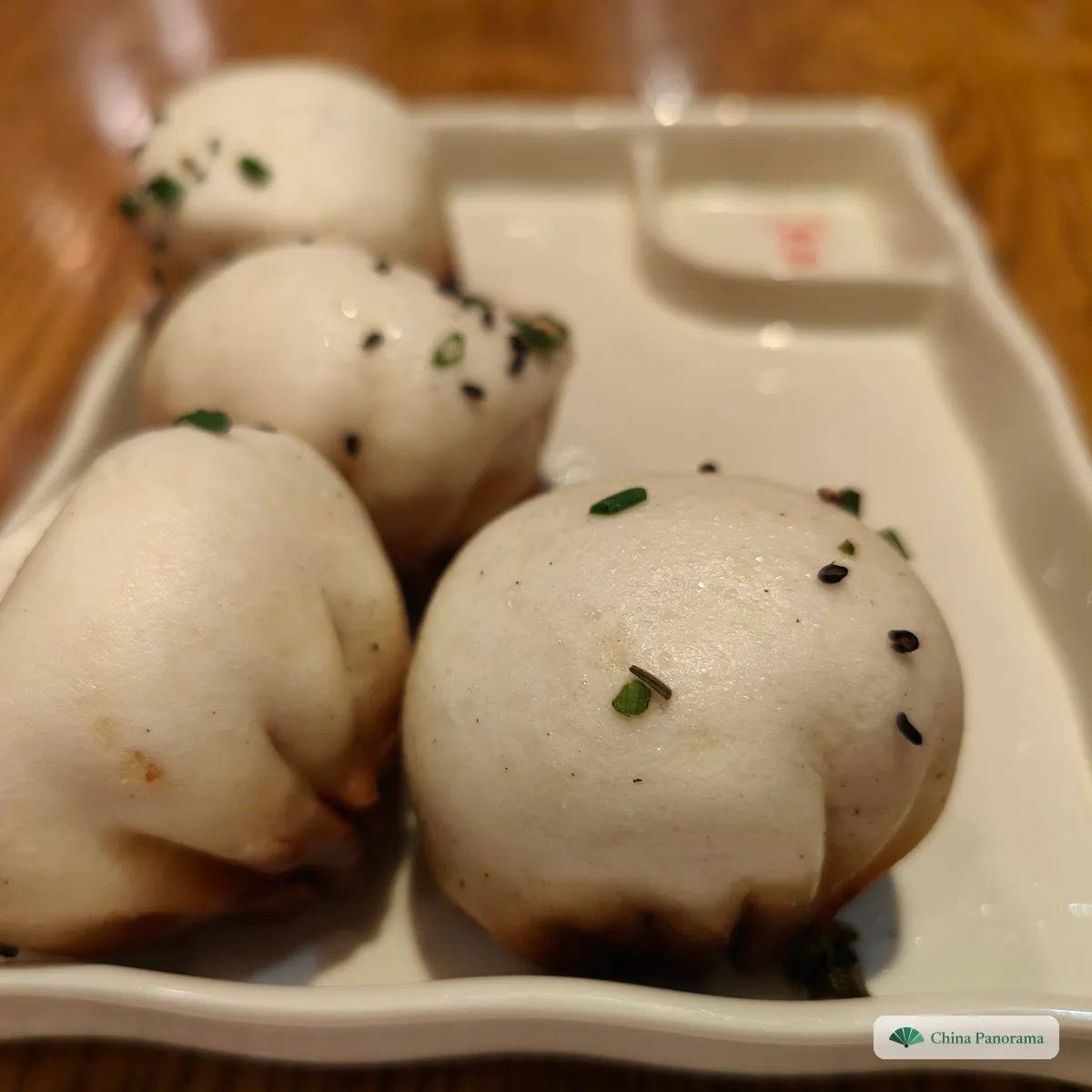
生煎包shēng jiān bāo
Pan-fried buns
Fried like potstickers, but the dough is risen – a bun. Shanghai’s other famous breakfast, full of soup like a soup dumpling.
Shanghai, 2024
 8
8Wonton · 馄饨
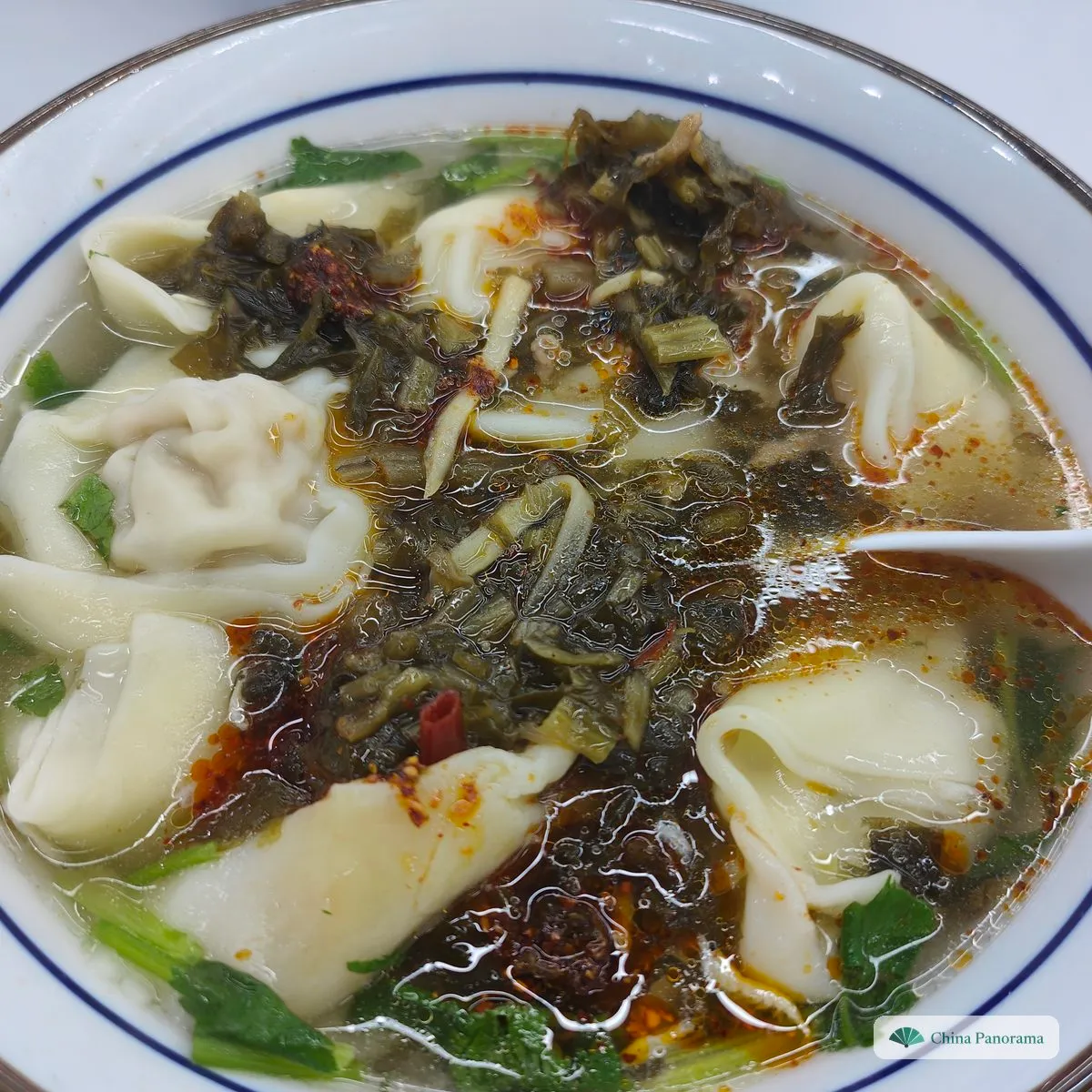
酸菜抄手suān cài chāo shǒu
Sichuan wontons in pickled-greens soup
Sichuan calls wontons 抄手, “folded hands”, after the way the two corners are crossed. In Guangdong they are 云吞.
Shanghai, 2024
Soup dumplings and pan-fried buns are Shanghai breakfasts – more in our Shanghai guide. Wontons have a page of their own: wontons and wonton soup in China, with 云吞, 抄手 and the other regional names.
Allergens and diet
Every jiaozi contains wheat, and most contain soy and sesame from the seasoning. The filling adds its own: egg in nearly all meat-free ones, shrimp in 三鲜 and often in egg fillings, fish in mackerel dumplings, celery in 芹菜. The filling cards mark each one.
Every jiaozi
- ACereals containing gluten· US: Wheat
- FSoybeans (sometimes)· US: Soybeans
- NSesame (sometimes)· US: Sesame
The wrapper is wheat dough. Soy sauce and sesame oil season most fillings.
Depends on the filling
- CEggs (sometimes)· US: Eggs
- BCrustaceans (sometimes)· US: Crustacean shellfish
- DFish (sometimes)· US: Fish
- LCelery (sometimes)
Egg, shrimp (also tiny dried shrimp, 虾皮), fish and celery – see the filling cards.
The dip
- ACereals containing gluten· US: Wheat
- FSoybeans· US: Soybeans
- NSesame (sometimes)· US: Sesame
Vinegar and soy sauce; sesame oil and chilli oil.
These are estimates from how the dish is usually made, not a restaurant’s declaration. Every kitchen and every sauce brand is different – always tell the staff about an allergy. Chinese kitchens often fry in peanut oil, and chilli oil may be made with it too; we don’t repeat that for each dish.
Vegetarian, no pork
Most dumpling shops have one or two meat-free fillings (素馅, sù xiàn), and nearly all of them contain egg – vegans will rarely find anything. Ask about dried shrimp, which turns up in egg fillings. If you don’t eat pork, choose beef, lamb, chicken or fish, or go to a Muslim (清真, qīng zhēn) restaurant, which serves no pork at all.
有素馅的吗?
yǒu sù xiàn de ma?
Do you have a meat-free filling?
我不吃猪肉
wǒ bù chī zhū ròu
I don’t eat pork
里面有虾吗?
lǐ miàn yǒu xiā ma?
Is there shrimp in it?
我对鸡蛋过敏
wǒ duì jī dàn guò mǐn
I’m allergic to eggs
我对芝麻过敏
wǒ duì zhī ma guò mǐn
I’m allergic to sesame
我对花生过敏
wǒ duì huā shēng guò mǐn
I’m allergic to peanuts
Next on the menu: Chinese hot pot, fried rice, chow mein, and the canteen and fast-food walkthrough for trays, pointing and paying at the till. Sitting down with a waiter? The restaurant walkthroughplays through a meal at a seafood-dumpling restaurant in Qingdao.
FAQ
What is the difference between jiaozi, gyoza and potstickers?
Gyoza are the Japanese version of jiaozi – the same characters, 餃子, read in Japanese. In Japan they are usually pan-fried, with a thinner wrapper and more garlic; in China the default is boiled. “Potstickers” is the American name for pan-fried jiaozi, from 锅贴 (guō tiē), “stuck to the pot”.
Are jiaozi gluten-free?
No. The wrapper is wheat dough, and the buckwheat ones are mixed with wheat too. An ordinary dumpling shop has no gluten-free version.
Can you eat jiaozi for breakfast?
Yes. Boiled dumplings, dumplings in soup and pan-fried dumplings are standard at breakfast shops and on hotel breakfast buffets – several photos on this page are from breakfast trays.
How do you eat jiaozi?
With chopsticks: pick one up, dip it in the vinegar and eat it in one or two bites. Careful with the first bite – the juice inside is hot. Dumplings in soup are eaten with the spoon.
Can I buy frozen jiaozi in China?
Every supermarket has a freezer full of them (速冻水饺, sù dòng shuǐ jiǎo), labelled by filling in the same words as a restaurant menu. Useful if your apartment has a kitchen: boil them until they float and puff up.
Photos and sources
All photos are our own: from our dish library – restaurants in Shanghai between 2019 and 2024, breakfasts and meals in 2025 and 2026 – and dumplings we wrapped ourselves in 2018, 2020 and 2021. Prices come from the same library and are typical for an ordinary restaurant in a big city; allergens are estimated from the usual recipe. The fillings, the liang rule of thumb and the New Year customs are general knowledge – shops and families differ.
Changelog (1)
- 2026-10-01Page created, with our own photos from Shanghai (2019–2024), from breakfasts and restaurants in 2025 and 2026, and of dumplings we wrapped at home in 2018, 2020 and 2021. Filling allergens, the liang rule of thumb and the New Year customs are general guidance, not checked by us.