
Chinese zodiac vs Western zodiac: one counts years, the other days
Ask someone in Europe or America for their star sign and they think of their birthday: Aries, Leo, Pisces. In China the question is usually a different one: what animal are you? It means the year you were born. So the Chinese zodiac is not a Chinese version of the Western signs. The two measure two different kinds of time.
The Chinese zodiac sign follows the year.
The Western zodiac sign follows the day and month.
One is a folk calendar.
The other is a celestial symbol for personality.
One puts you in a circle of twelve years.
The other puts you on the path of the Sun.
Both are tied to your birth, but they read two very different kinds of time.
Find your Chinese and Western zodiac signs
Enter your date of birth. Your animal lights up on the Chinese wheel, which turns once in twelve years, and your sign on the Western wheel, which turns once a year. The finder starts with 10 February 1980: Aquarius in the West, but still Goat in China, because the Year of the Monkey only began on 16 February 1980.
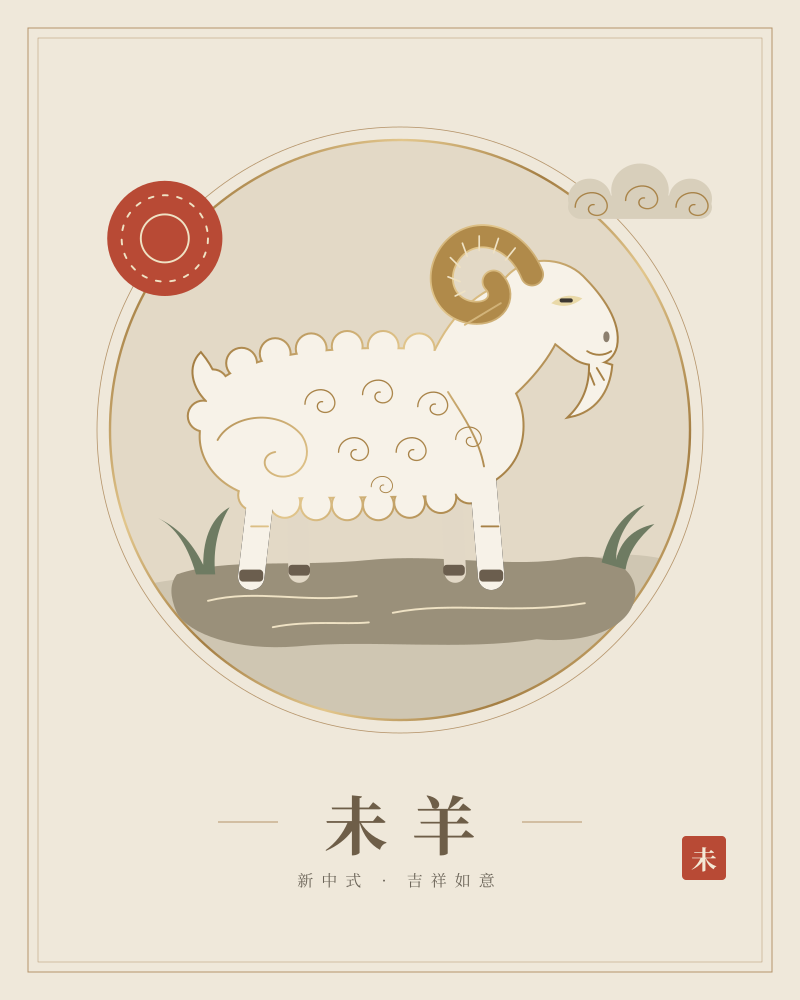 Chinese zodiac signGoat 羊 yáng
Year of the Earth Goat · 己未 · Element Earth
Your zodiac year ran from 28 January 1979 to 15 February 1980.
Same animal: everyone born in that year, and every twelfth year: 1955, 1967, 1991, 2003.
Born before the Chinese New Year of 1980 (16 February): your animal is the one of 1979.
Element Air
The Sun was in Aquarius from 20 January 1980, 21:48 UTC to 19 February 1980, 12:02 UTC.
Same sign: everyone born at this time of year, in any year.
Inner ring: start of each sign in 1980. Times are UTC, the dates are UTC dates too. If your birthday is within a day of a change, convert your birth time to UTC: in London subtract an hour in summer, in New York add five hours, in Sydney subtract ten.
Chinese vs Western zodiac at a glance
| Feature | Chinese zodiac sign 生肖 | Western zodiac sign 星座 |
|---|---|---|
| What counts | the year of birth | the day and month of birth |
| Based on | the calendar of the twelve earthly branches | the position of the Sun on its path, the ecliptic |
| One turn takes | twelve years | one year |
| The sign changes | at Chinese New Year, between 21 January and 20 February | every month, between the 18th and the 24th |
| You share it with | everyone born in your zodiac year, and every twelfth year | everyone born at the same time of year, in any year |
| Elements | five: Wood, Fire, Earth, Metal, Water, by the last digit of the year | four: Fire, Earth, Air, Water, by the sign |
| More detail from | month, day and hour, the four pillars 八字 bāzì | ascendant and Moon, which need the time and place of birth |
| Origin | China, the animals are recorded from the 3rd century BC | Babylonia, twelve equal signs around the 5th century BC, with Greek names |
| In daily life | age, generations, New Year and your own year 本命年 | personality, love horoscopes, small talk |
| How to ask in China | 你属什么? Nǐ shǔ shénme? | 你是什么星座? Nǐ shì shénme xīngzuò? |
What both have in common: they are culture, not science. In a double-blind test published in Nature in 1985, astrologers could not match birth charts to the right personality profiles any better than chance. That is why we show how the systems work, but make no predictions.
Chinese zodiac: the year is what counts
Every year belongs to one of the twelve earthly branches, 子 zǐ, 丑 chǒu, 寅 yín and so on, and every branch has its animal: Rat, Ox, Tiger, Rabbit, Dragon, Snake, Horse, Goat, Monkey, Rooster, Dog, Pig. Ten heavenly stems add the element. Stem and branch together make a cycle of 60 years. 2027 is 丁未, the Year of the Fire Goat, and the same pair only comes back in 2087.
The animal changes at Chinese New Year, which falls between 21 January and 20 February. Fortune tellers who work with the four pillars 八字 start the year at the solar term 立春 lìchūn instead, the beginning of spring around 4 February. In daily life, New Year is what counts.
Why twelve? The usual explanation is Jupiter, which China called the year star 岁星 suìxīng. It takes just under twelve years to circle the sky, moving on by a twelfth every year. The animals came later and are recorded from the 3rd century BC.
Where the stems and branches come from and why there are 60 pairs is on our page about the heavenly stems and earthly branches. There you can also work out your own four pillars.
Every year of each animal is on the page with the twelve Chinese zodiac signs, and the next New Year on the page about Chinese New Year 2027, with a finder that checks every date from 1924.
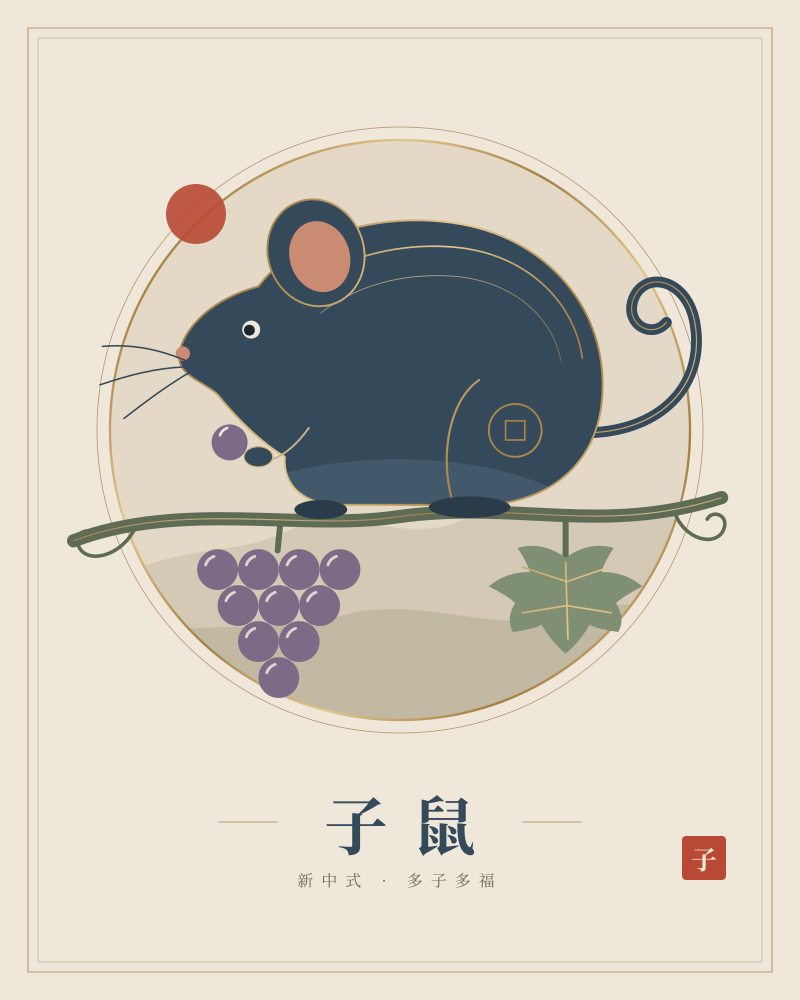 子Rat
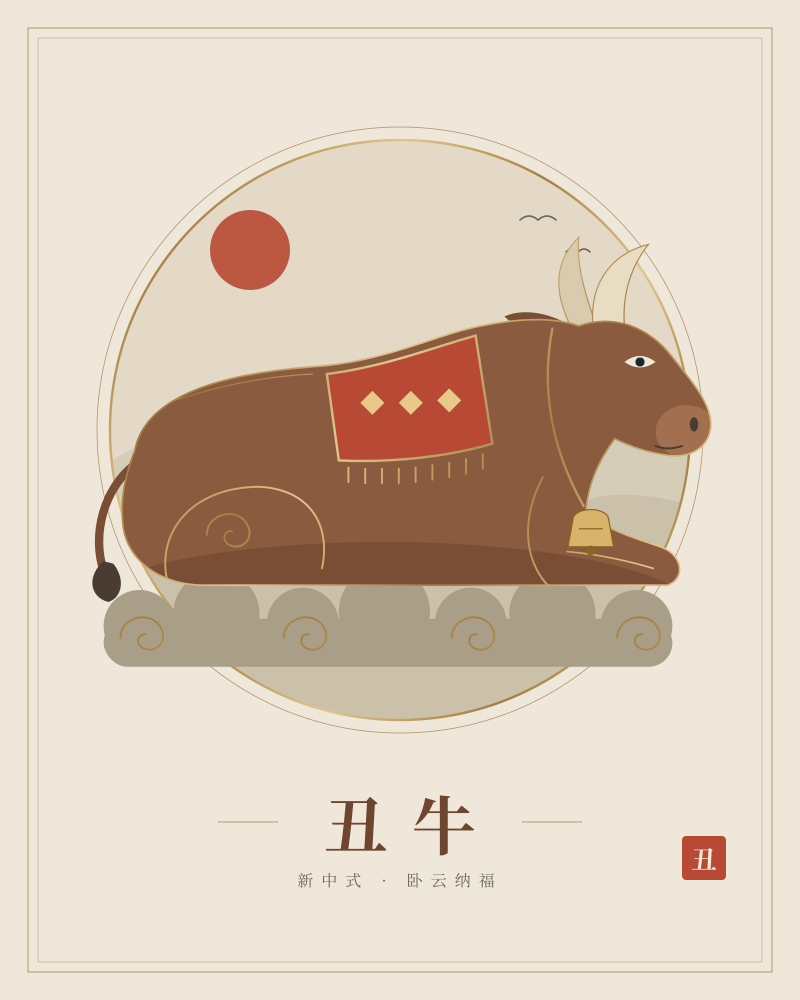 丑Ox
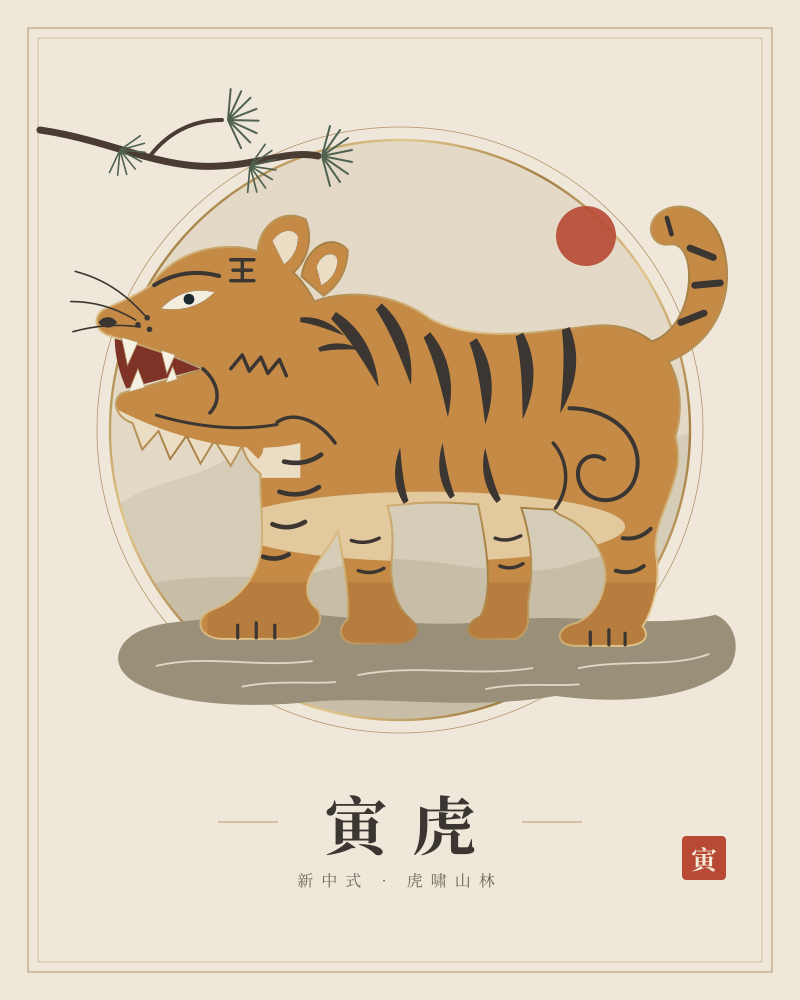 寅Tiger
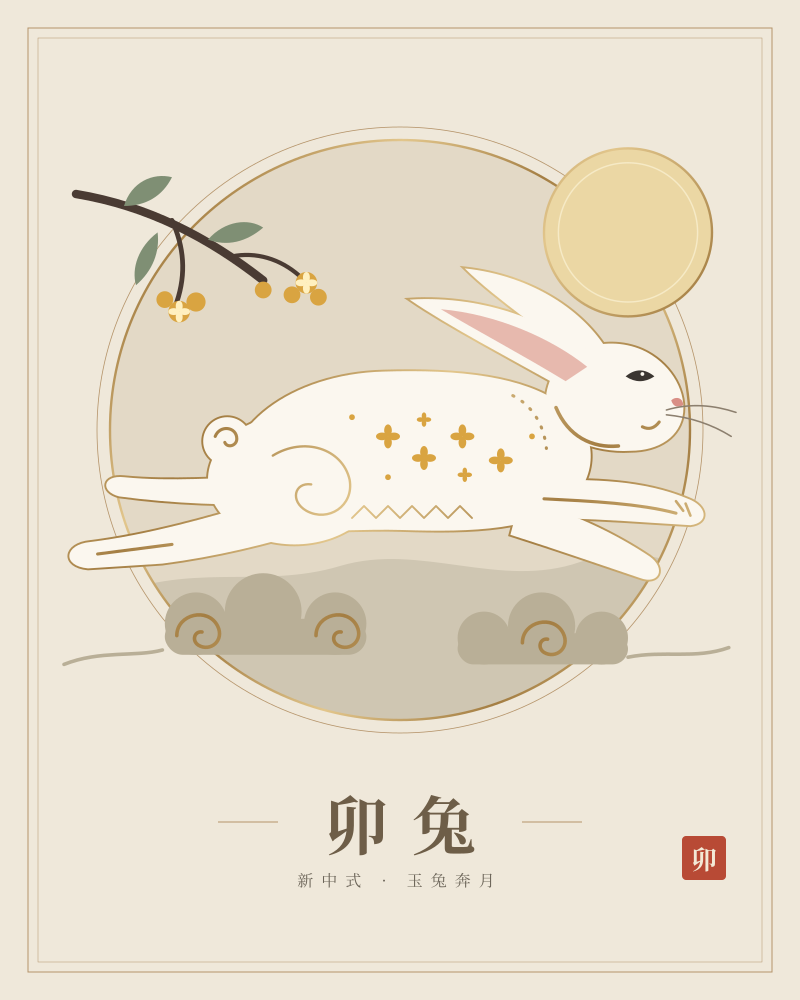 卯Rabbit
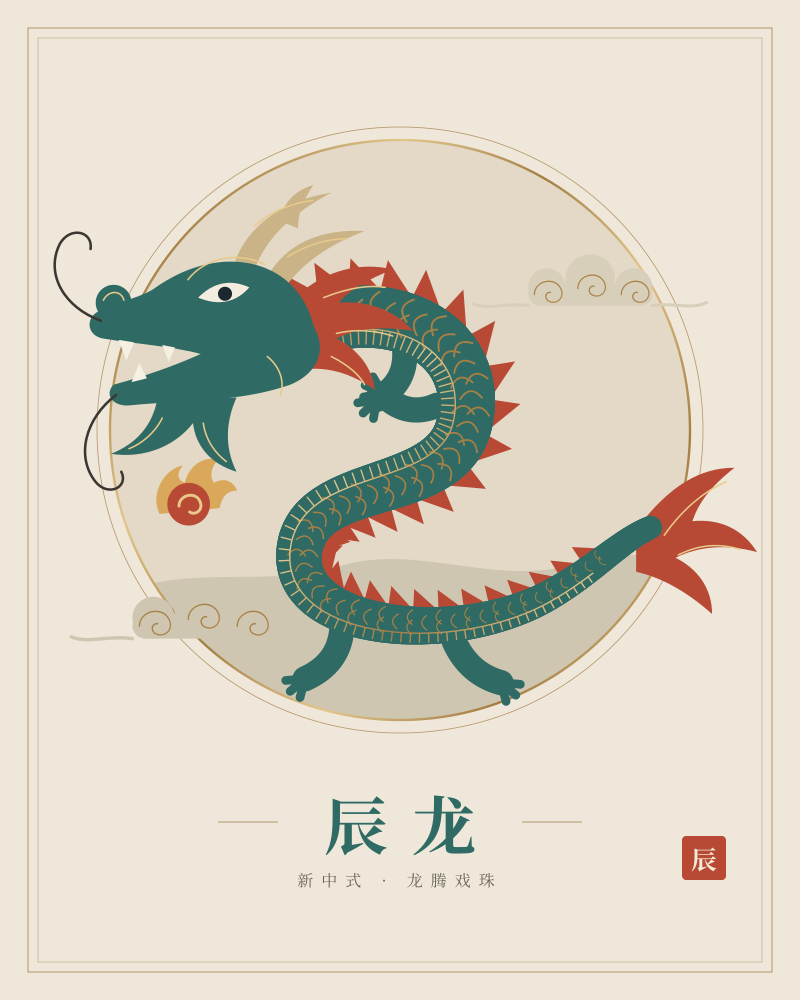 辰Dragon
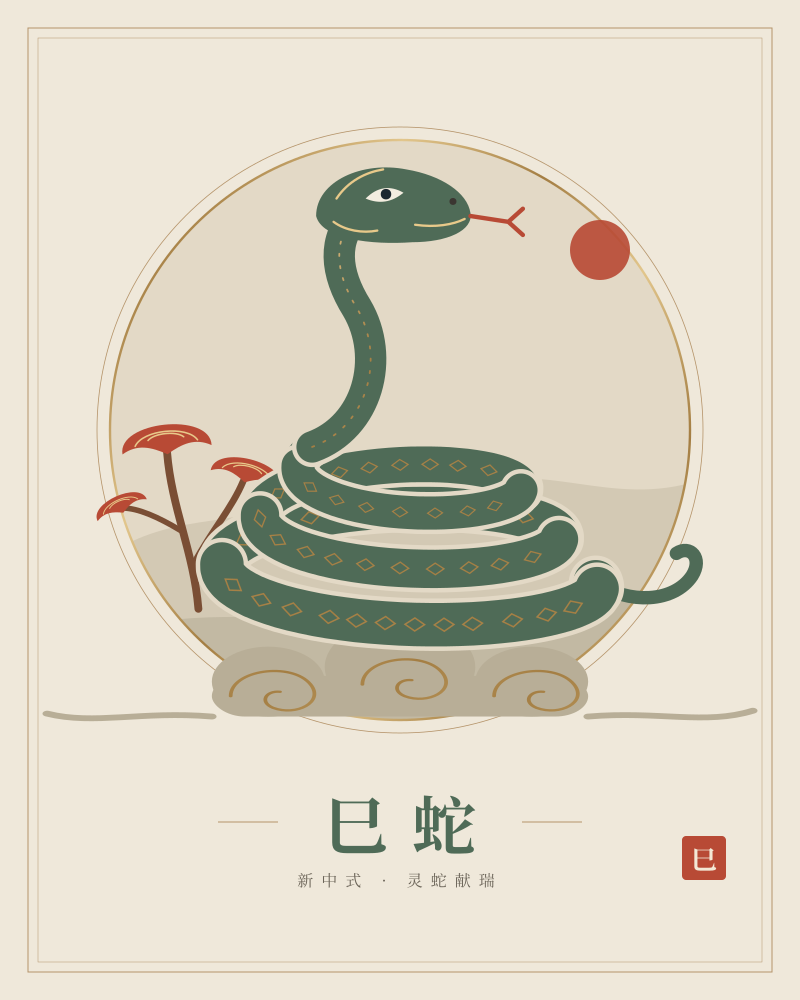 巳Snake
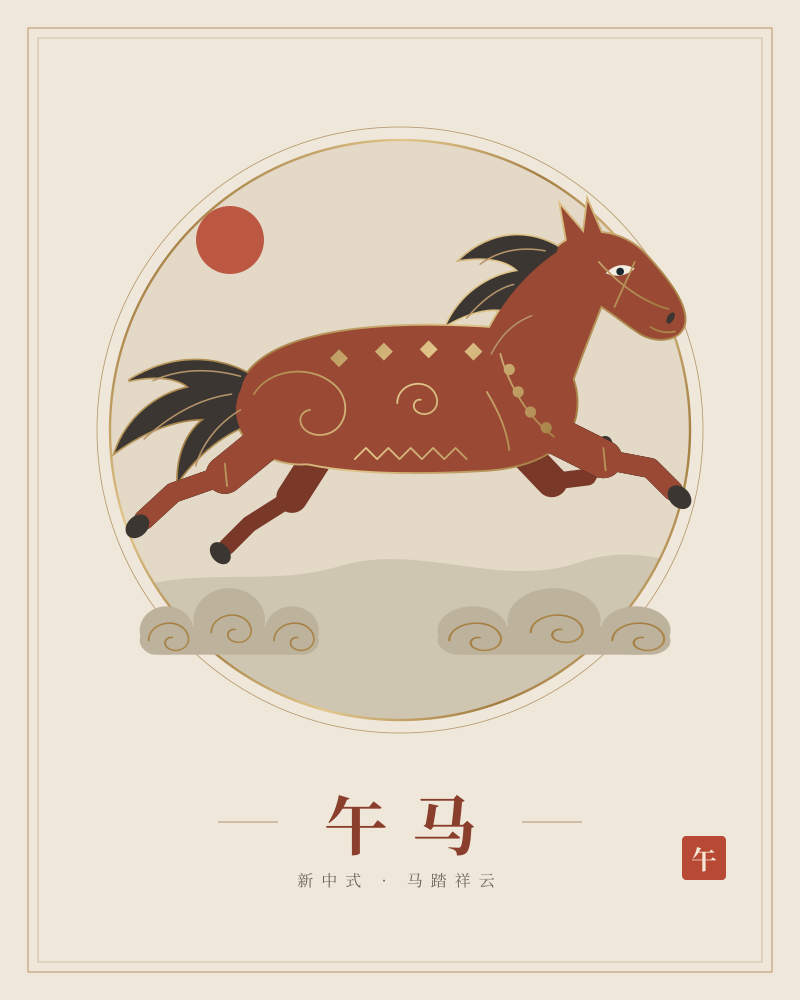 午Horse
- 未Goat
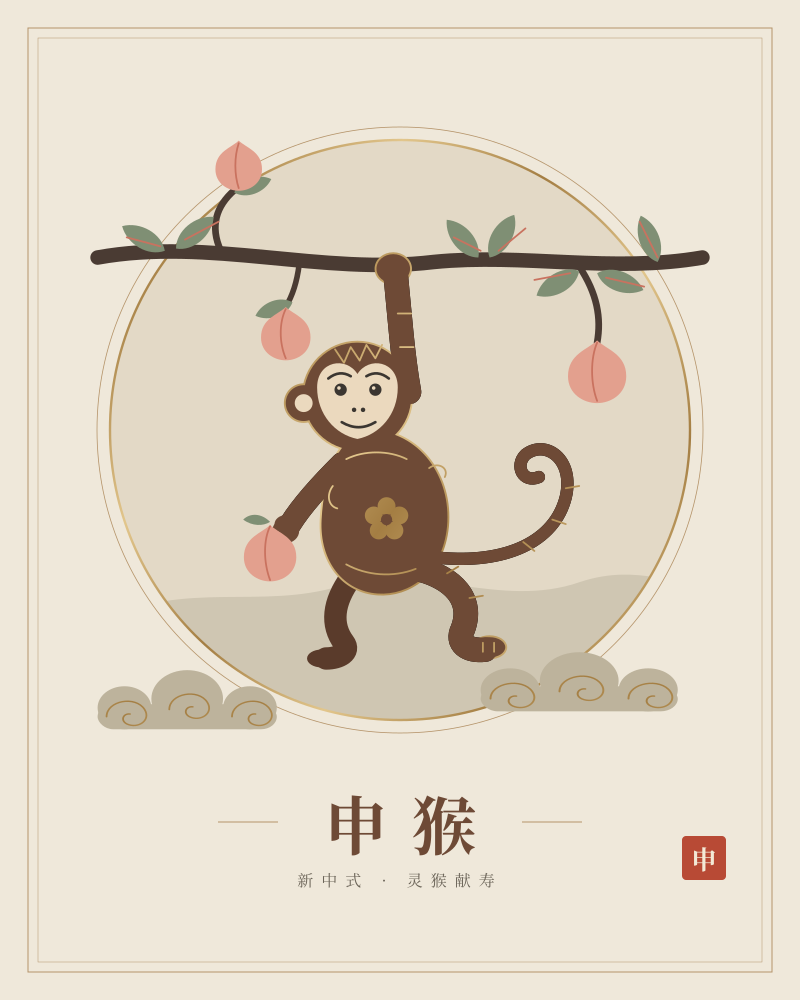 申Monkey
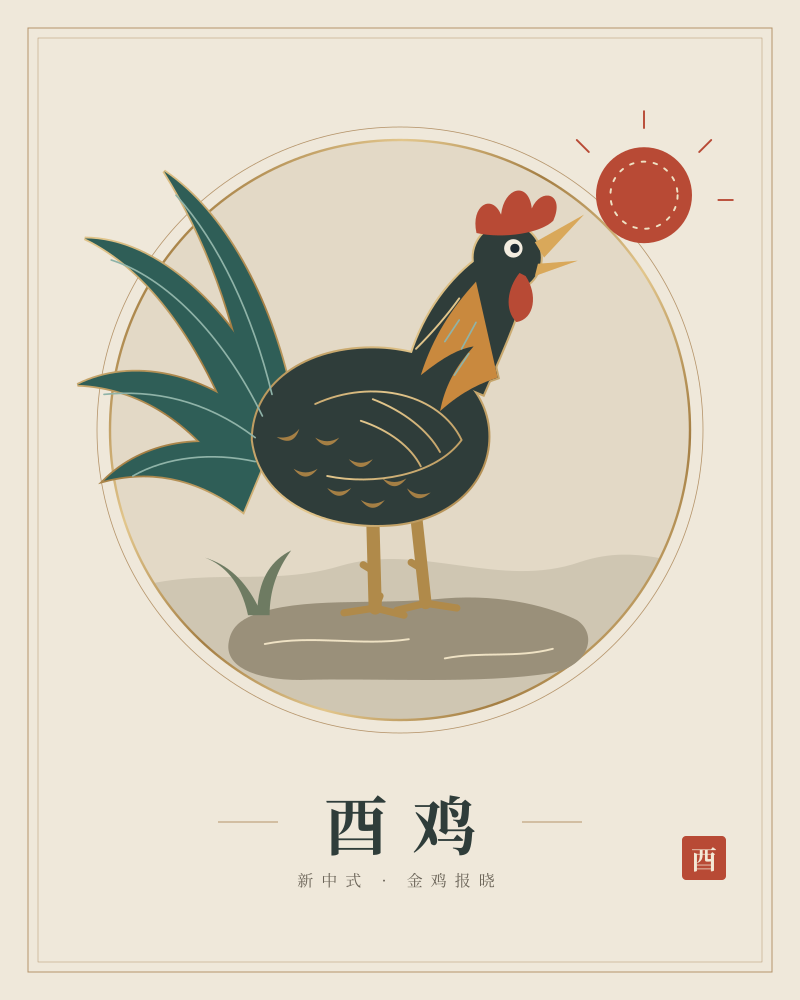 酉Rooster
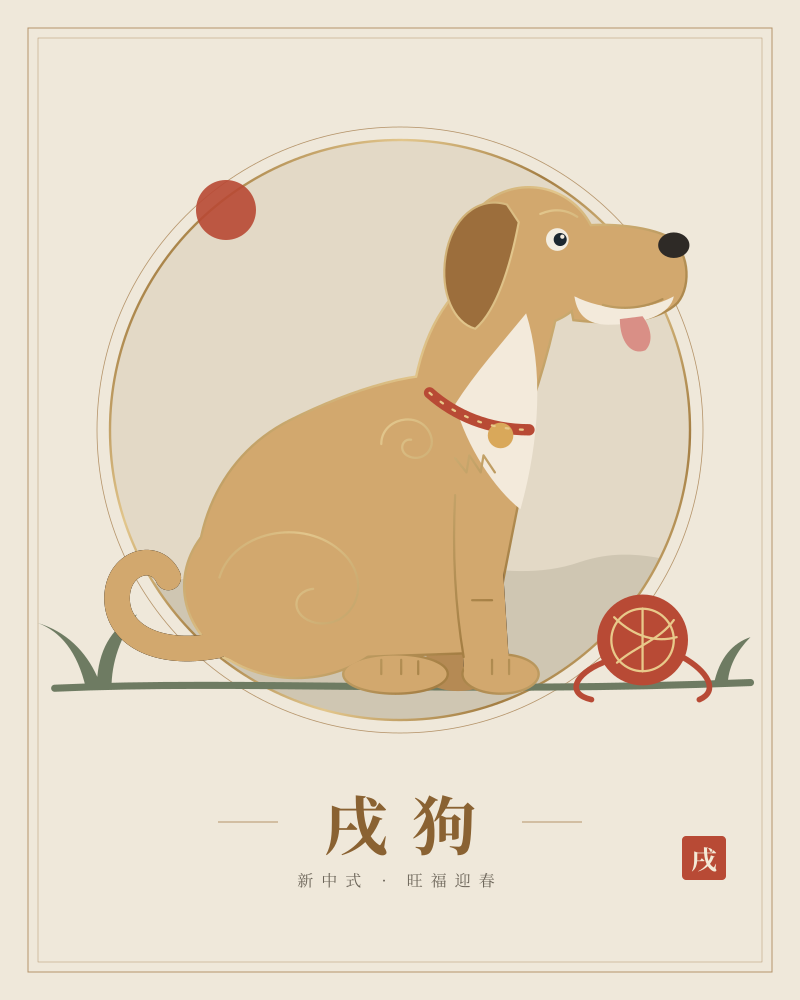 戌Dog
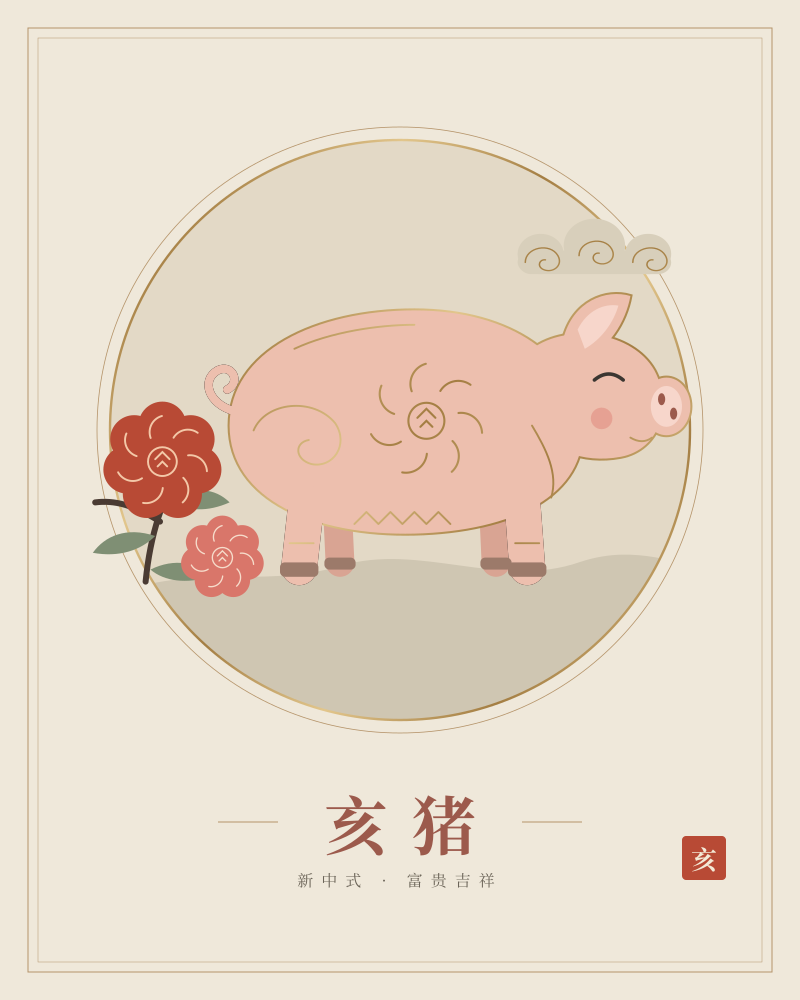 亥Pig
Western zodiac: the position of the Sun is what counts
Seen from the Earth, the Sun moves once around the sky in a year. Its path is called the ecliptic. Astrology divides it into twelve equal sections of 30 degrees, starting at the spring point, where the Sun stands at the March equinox. Your sign is the section the Sun was in when you were born. The division comes from Babylonia, around the 5th century BC, and the names of the signs are Greek.
Zodiac sign dates: when each sign begins
Many horoscopes give fixed dates, such as 21 March to 19 April for Aries. The Sun does not keep to them. A calendar year is not exactly one orbit long, and the leap day corrects that every four years, so each border moves by one or two days. We worked out every change from 1924 to 2045:
| Sign | Chinese name | Element | Starts, 1924 to 2045 |
|---|---|---|---|
| Aquarius | 水瓶座 shuǐpíngzuò | Air | on 19, 20 or 21 January, usually the 20th |
| Pisces | 双鱼座 shuāngyúzuò | Water | on 18 or 19 February, usually the 19th |
| Aries | 白羊座 báiyángzuò | Fire | on 19, 20 or 21 March, usually the 20th |
| Taurus | 金牛座 jīnniúzuò | Earth | on 19, 20 or 21 April, usually the 20th |
| Gemini | 双子座 shuāngzǐzuò | Air | on 20, 21 or 22 May, usually the 21st |
| Cancer | 巨蟹座 jùxièzuò | Water | on 20, 21 or 22 June, usually the 21st |
| Leo | 狮子座 shīzizuò | Fire | on 22 or 23 July, usually the 23rd |
| Virgo | 处女座 chǔnǚzuò | Earth | on 22, 23 or 24 August, usually the 23rd |
| Libra | 天秤座 tiānchèngzuò | Air | on 22, 23 or 24 September, usually the 23rd |
| Scorpio | 天蝎座 tiānxiēzuò | Water | on 22, 23 or 24 October, usually the 23rd |
| Sagittarius | 射手座 shèshǒuzuò | Fire | on 21, 22 or 23 November, usually the 22nd |
| Capricorn | 摩羯座 mójiézuò | Earth | on 21 or 22 December, usually the 22nd |
In UTC. If you were born on one of these days, you need the time of birth: the finder above gives the exact time for every year.
Zodiac signs are not constellations
The signs carry the names of the constellations the Sun stood in front of a little over 2,000 years ago. Since then the Earth’s axis has turned on, and the spring point has moved by almost a whole sign. On 21 March the Sun now stands in front of the constellation Pisces, but the sign of Aries begins all the same.
What about Ophiuchus?
Under the constellation borders the International Astronomical Union drew in 1930, the Sun passes through 13 constellations, through Ophiuchus, the Serpent Bearer, from about 29 November to 18 December. That does not make it a 13th sign, because the signs are twelve equal sections of the path.
Where the two meet: the Sun in the Chinese calendar
The Chinese calendar does not only follow the Moon. It also divides the Sun’s path into 24 solar terms 节气 jiéqì of 15 degrees each, which farmers went by. Twelve of them, the 中气 zhōngqì, sit exactly where the Western signs begin. When Capricorn begins, China has the winter solstice 冬至 dōngzhì, a day when people in the north eat dumplings.
| Western sign begins | 2027, UTC | Chinese solar term | 2027, China time |
|---|---|---|---|
| Aquarius | 20 January, 07:30 | 大寒 dàhán, Great cold | 20 January, 15:30 |
| Pisces | 18 February, 21:33 | 雨水 yǔshuǐ, Rain water | 19 February, 05:33 |
| Aries | 20 March, 20:25 | 春分 chūnfēn, Spring equinox | 21 March, 04:25 |
| Taurus | 20 April, 07:18 | 谷雨 gǔyǔ, Grain rain | 20 April, 15:18 |
| Gemini | 21 May, 06:18 | 小满 xiǎomǎn, Grain buds | 21 May, 14:18 |
| Cancer | 21 June, 14:11 | 夏至 xiàzhì, Summer solstice | 21 June, 22:11 |
| Leo | 23 July, 01:05 | 大暑 dàshǔ, Great heat | 23 July, 09:05 |
| Virgo | 23 August, 08:14 | 处暑 chǔshǔ, End of heat | 23 August, 16:14 |
| Libra | 23 September, 06:02 | 秋分 qiūfēn, Autumn equinox | 23 September, 14:02 |
| Scorpio | 23 October, 15:33 | 霜降 shuāngjiàng, Frost descent | 23 October, 23:33 |
| Sagittarius | 22 November, 13:16 | 小雪 xiǎoxuě, Minor snow | 22 November, 21:16 |
| Capricorn | 22 December, 02:42 | 冬至 dōngzhì, Winter solstice | 22 December, 10:42 |
The beginning of spring 立春, where fortune tellers start the Chinese year, lies exactly in the middle of Aquarius, at 315 degrees. Both cultures watched the same Sun, but China made it into a calendar for sowing and festivals, not into signs.
The Western zodiac in China: more than 1,000 years old
The twelve signs reached China from India in the 6th century, in a Buddhist text. In a mural in cave 61 at Dunhuang they surround a Buddha, and in a 12th-century tomb near Zhangjiakou they appear next to the 28 Chinese lunar mansions. The poet Su Shi (1037–1101) wrote that like his model Han Yu he was born under 磨蝎, Capricorn, which is why both had met with so much praise and slander. Today the signs are called 白羊座, 金牛座 and so on in China, and among young people 星座 is a favourite topic.
Why your Chinese zodiac sign gives away your age
In China people ask »你属什么?«, literally: what do you belong to? Someone who says they are a Horse is usually 12, 24, 36, 48, 60, 72 or 84 in 2026, and a glance at their face settles the rest. That way you learn someone’s age without asking. In a family, the animals show who is how many rounds older, and every twelve years each person has their own year 本命年 běnmìngnián, when they traditionally wear something red. A Western sign tells you nothing about age.
- Rat 鼠6, 18, 30, 42, 54, 66, 78, 90
- Ox 牛5, 17, 29, 41, 53, 65, 77, 89
- Tiger 虎4, 16, 28, 40, 52, 64, 76, 88
- Rabbit 兔3, 15, 27, 39, 51, 63, 75, 87
- Dragon 龙2, 14, 26, 38, 50, 62, 74, 86
- Snake 蛇1, 13, 25, 37, 49, 61, 73, 85
- Horse 马0, 12, 24, 36, 48, 60, 72, 84
- Goat 羊11, 23, 35, 47, 59, 71, 83, 95
- Monkey 猴10, 22, 34, 46, 58, 70, 82, 94
- Rooster 鸡9, 21, 33, 45, 57, 69, 81, 93
- Dog 狗8, 20, 32, 44, 56, 68, 80, 92
- Pig 猪7, 19, 31, 43, 55, 67, 79, 91
The age reached on the birthday in 2026. Anyone born in January or February before New Year belongs to the animal of the year before, and is one year younger than the table says.
How to ask in China
- 你属什么?
- Nǐ shǔ shénme? · What animal are you? (literally: what do you belong to?)
- 我属马。
- Wǒ shǔ mǎ. · I am a Horse.
- 你是什么星座?
- Nǐ shì shénme xīngzuò? · What is your star sign?
- 我是狮子座。
- Wǒ shì shīzizuò. · I am a Leo.
For the animal you say 属 shǔ, “to belong to”, for the sign 是 shì, “to be”. You belong to a year, but you are a Leo.
Month and hour: the Chinese ascendant
A Western horoscope gets more detailed with the ascendant and the Moon, which need the time and place of birth. The Chinese system has a counterpart: the four pillars 八字 bāzì, year, month, day and hour, each with its own stem and branch. The day has twelve double hours, and each belongs to an animal. Horoscope sites often call the animal of your birth hour your Chinese ascendant.
- 子 Rat23:00–01:00
- 丑 Ox01:00–03:00
- 寅 Tiger03:00–05:00
- 卯 Rabbit05:00–07:00
- 辰 Dragon07:00–09:00
- 巳 Snake09:00–11:00
- 午 Horse11:00–13:00
- 未 Goat13:00–15:00
- 申 Monkey15:00–17:00
- 酉 Rooster17:00–19:00
- 戌 Dog19:00–21:00
- 亥 Pig21:00–23:00
Strictly speaking it is the solar time at the place of birth that counts, not the clock. In Madrid, for example, the Sun runs about an hour and a quarter behind the clock in winter and more than two hours in summer. So anyone born shortly after an odd full hour often still belongs to the animal before.
True or false? Eight claims about the Chinese and Western zodiac
Guess first, then see what the sources say.
1The Chinese zodiac is the Chinese version of the Western star signs.
False
They are two separate systems with separate origins. The Chinese one counts years in a circle of twelve, the Western one divides the Sun’s path into twelve sections. Both have twelve signs for different reasons: in China probably Jupiter, which circles the sky in just under twelve years, in the West the twelve months of a solar year.
2Anyone born in January always has the Chinese sign of the year before.
False
Up to 20 January that is always true, because Chinese New Year falls on 21 January at the earliest. After that it depends on the year: in 2004 the Year of the Monkey already began on 22 January 2004. And in February you can still belong to the year before, in 1985 up to 19 February.
3The Western signs begin on the same day every year.
False
The borders move, because a calendar year is not exactly one orbit long and the leap day corrects that every four years. Aquarius, for example, began on 19, 20 or 21 January (UTC) between 1924 and 2045, depending on the year. The finder above knows every border to the minute.
4If you are an Aries, the Sun was in the constellation Aries when you were born.
False
The signs are equal sections of 30 degrees counted from the spring point, not the constellations. Because the Earth’s axis slowly wobbles, the spring point has moved by almost a whole sign since antiquity. On 21 March the Sun now stands in front of the constellation Pisces.
5There is a 13th zodiac sign, Ophiuchus.
False
A constellation, yes, a sign, no. The Sun passes in front of the constellation Ophiuchus, the Serpent Bearer, from about 29 November to 18 December. But the twelve signs are equal sections of the Sun’s path, not constellations, so Ophiuchus is not one of them.
6The Chinese calendar follows the position of the Sun, too.
True
Besides the Moon it counts the 24 solar terms, which divide the Sun’s path into sections of 15 degrees. Twelve of them, the 中气 zhōngqì, fall exactly on the days when the Western signs change: the winter solstice 冬至 is the start of Capricorn.
7The Western zodiac was known in China 900 years ago.
True
It reached China in the 6th century in a Buddhist text. The poet Su Shi (1037–1101) wrote that like Han Yu he was born under 磨蝎, Capricorn. A 12th-century tomb near Zhangjiakou shows the twelve signs next to the 28 Chinese lunar mansions.
8You can tell someone’s age from their Chinese sign.
True
Almost. Someone who says they are a Horse is usually 12, 24, 36, 48, 60, 72 or 84 in 2026. Together with their looks, that usually leaves one answer, which is exactly why people in China like to ask. A Western sign says nothing about age.
More on the zodiac: the twelve Chinese zodiac signs and their years, Chinese New Year 2027 and the Chinese zodiac in other Asian countries, where for example the cat replaces the rabbit.
FAQ
What is the difference between the Chinese zodiac and the Western zodiac?
The Chinese zodiac sign depends on the year of birth: everyone born in the same zodiac year has the same animal, and it comes back every twelve years. The Western sign depends on the birthday: it shows which twelfth of its path the Sun was in, and it repeats every year.
What is my Chinese zodiac sign if I was born in January or February?
That depends on Chinese New Year in your year of birth, which falls between 21 January and 20 February. Before it, the animal of the year before still applies. Someone born on 10 February 1980 is a Goat, not a Monkey, because the Year of the Monkey only began on 16 February 1980. The finder on this page checks every date from 1924.
Can you combine your Chinese and Western zodiac signs?
Everyone has both, for example Aquarius and Goat. Horoscope books turn that into 144 combinations with descriptions of their own. That is a modern mix, it does not exist in Chinese tradition.
What is the Chinese ascendant?
That is what horoscope sites call the animal of your birth hour. The Chinese day has twelve double hours, and each belongs to an animal, the Rat from 23:00 to 01:00, the Ox from 01:00 to 03:00 and so on. In the Chinese system of the four pillars (八字) the hour is one of four parts, next to year, month and day.
What are the dates of the twelve zodiac signs?
In most years (UTC): Aquarius from 20 January, Pisces from 19 February, Aries from 20 March, Taurus from 20 April, Gemini from 21 May, Cancer from 21 June, Leo from 23 July, Virgo from 23 August, Libra from 23 September, Scorpio from 23 October, Sagittarius from 22 November, Capricorn from 22 December. Each border moves by up to a day between years, so if you were born close to one, the finder above gives the exact time for your year.
Is Ophiuchus the 13th zodiac sign?
No. Ophiuchus is a constellation the Sun stands in front of from about 29 November to 18 December. The zodiac signs are twelve equal sections of the Sun’s path, not constellations.
Sources and status
We computed the sign changes ourselves with the PyEphem library from the apparent position of the Sun, rounded to the minute. The Chinese New Year dates are checked against the astronomical new moon. Jupiter as the origin of the twelve is the common explanation, but not the only one.
- Wikipedia: Earthly Branches, the twelve branches and Jupiter
- Wikipedia: Zodiac, the twelve signs and their origin in Babylonia
- Wikipedia: Solar term, the 24 solar terms and their longitudes
- Wikipedia: Ophiuchus (astrology), the Serpent Bearer and the IAU constellation borders
- The World of Chinese: Western astrological signs in ancient China, the 6th-century text, Dunhuang and Zhangjiakou
- Wikisource: 東坡志林, fascicle 1, Su Shi on 磨蝎, Capricorn (Chinese)
- Carlson (1985): A double-blind test of astrology, Nature 318
- PyEphem: we used it to compute every sign change from 1924 to 2045 and checked them against the equinoxes and solstices
- Zodiac Fonts: the symbols of the Western signs, SIL Open Font License 1.1
The pictures of the Chinese animals are our own illustrations. The symbols of the Western signs are from Zodiac Fonts, © 2025 Zodiac Fonts, under the SIL Open Font License 1.1.
Changelog (1)
- 2026-11-04Page created.